EnRoute Jobs

Country Guides

Visa rules, tax, cost of living, safety, and healthcare for 71+ countries — researched for geo-flexible professionals.

AL

Albania

Europe

The light in Albania lands differently. It comes off the Adriatic in thin sheets, makes the old Ottoman houses of Berat glow like candles at noon, and disappears fast in the mountains — leaving a cold that feels older than Europe. This is a country that has been closed, opened, broken, rebuilt, and is now in the middle of figuring out what it wants to be. For a geo-flexible professional, that ambiguity is a gift.

$1,500/mo
AD

Andorra

Europe

You cross into Andorra through a tunnel in the Pyrenees, or you do not cross at all. There is no airport. There is no train. The mountains decide when you arrive. Then the valley opens and you are in something that is neither France nor Spain — a thin strip of duty-free commerce, ski lifts, and medieval stone churches that has been governing itself with uninterrupted sovereignty since 1278. Remote work in Andorra occupies a peculiar position: extraordinarily appealing on paper, quietly strange in practice.

$3,200/mo
AR

Argentina

South America

Buenos Aires arrives at you rather than the other way around. The city is enormous, operatic, and permanent — not permanent in the physical sense, for Buenos Aires demolishes and rebuilds itself constantly, but permanent in its insistence on being taken seriously. The smell of coffee and facturas at 8am in Palermo. The long avenues of jacaranda. The way porteños treat a dinner reservation at midnight as perfectly normal. For geo-flexible professionals working remotely from Argentina, the experience is one of the richest and most complicated in South America.

$1,700/mo
AU

Australia

Oceania

Australia is large in a way that reorganizes your sense of scale. The flight from Sydney to Perth is longer than the flight from London to Cairo. The light on the Bondi headland at 6am is a specific gold that occurs in very few other places on earth. And yet working remotely from Australia in 2026 is a distinctly calibrated proposition — one that hinges on your passport, your client base, and your tolerance for what things cost.

$3,900/mo
AT

Austria

Europe

Vienna is a city that has been taking culture seriously since before most countries existed. You feel this in the weight of the architecture — the Ringstrasse built as a monument to imperial confidence — and you feel it in the coffee houses, where a single Melange buys you an afternoon and a newspaper and nobody will ask you to leave. Working remotely from Austria means choosing a country that has arranged comfort and beauty into an operating system.

$3,400/mo
BE

Belgium

Europe

Belgium is the only place in Europe where you can eat the best fries in the world, drink beer brewed by Trappist monks at altitude, and then walk to a meeting at a European Commission building. It is a small country that has absorbed centuries of conquest, division, and administrative complexity into a collective shrug — and somehow produced, from all that complexity, one of the most comfortable places to live and work on the continent.

$3,300/mo
BT

Bhutan

Asia

Bhutan occupies a geography and a philosophy that almost no other country has preserved. The Himalayas press in from every direction, the dzongs (fortress-monasteries) occupy the river valleys like red-and-white arguments against impermanence, and the government measures progress not in GDP but in Gross National Happiness — a metric that sounds like a tourism slogan until you have spent a week at altitude watching clouds move over prayer flags. It is not, in any conventional sense, a remote work destination. It is something stranger and more interesting than that.

$1,600/mo
BR

Brazil

South America

The noise of São Paulo arrives before you land. From the descent, the city sprawls in every direction without apparent boundary — 22 million people living in a density that makes Tokyo seem spacious. Then you are in it, and the scale becomes personal: the 3am traffic on Paulista, the rooftop pools above favelas in the hills, the particular energy of a country that has decided to invent itself rather than inherit itself. Remote work in Brazil is, above all, about São Paulo and Rio de Janeiro, and the choice between them is the choice between ambition and beauty.

$1,900/mo
CA

Canada

North America

Canada offers something that most countries cannot fake: genuine space. Not the poetic space of an Albert Camus sentence, but the literal, geographic, slightly vertiginous fact of a country larger than the continental United States with one-tenth the population. Toronto has a skyline and a traffic problem. Vancouver has mountains that appear above the office windows at morning and disappear into cloud by noon. Montreal has French and winter and a creative culture that somehow flourishes in both. For geo-flexible professionals, Canada in 2026 presents as high-quality, high-cost, and more welcoming than its neighbor to the south.

$3,600/mo
CV

Cape Verde

Africa

The Atlantic does something specific to light near the equator. In Cape Verde — ten volcanic islands scattered 600 kilometers off the Senegalese coast — the ocean is not merely present but dominant: the smell of salt arrives before you see the sea, the wind off the water defines the temperature more than the sun, and the silence on the dry hillsides of Santiago or the white beaches of Sal is a particular silence that has traveled a thousand kilometers to reach you without interruption.

$1,650/mo
CO

Colombia

South America

Medellín is the conversion story that every geo-flexible professional has heard by now, which means its reputation is both accurate and slightly behind the reality. Yes, it was the most dangerous city in the world thirty years ago. Yes, it now has cable cars connecting hilltop neighborhoods to metro stations, a world-class startup scene, and coworking spaces that would not look out of place in Berlin. The transformation is real. The transformation is also not a reason to stop paying attention to where you are.

$1,580/mo
CR

Costa Rica

North America

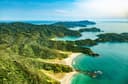
Costa Rica figured out something that the rest of Central America is still working on: how to build a stable, peaceful, educated democracy without oil money, without a military (abolished in 1948), and in a geography that should, by rights, make everything harder. The result is a country that produces more renewable energy than it consumes, that has preserved a quarter of its territory as protected forest, and that greets visitors with the national phrase — pura vida — not as a marketing slogan but as a genuinely operative philosophy.

$2,300/moNomad Visa
HR

Croatia

Europe

The Adriatic is the sea that has been painted most, and you understand why the moment you see it from the height of the Dalmatian coast — that particular shade of blue-green that sits between Mediterranean and cerulean, changing color as clouds move across it, making the stone towns of Dubrovnik and Split seem like accidents of geology rather than human construction. Croatia joined the Schengen Area in 2023, adopted the euro, and formally consolidated its position as the most accessible Adriatic country for EU-passport geo-flexible professionals. The timing was deliberate.

$2,350/moNomad Visa
CY

Cyprus

Europe

Cyprus operates at a peculiar frequency. It is an island at the intersection of three continents — technically European, geographically closer to Syria and Lebanon than to mainland Greece, historically layered with Phoenician, Byzantine, Ottoman, and British occupation that left behind churches converted to mosques converted to museums, and a British road system that drives on the left in a country that surrounds you with continental European signage. For geo-flexible professionals, this multiplicity is not confusion; it is a specific kind of richness.

$2,600/moNomad Visa
CZ

Czech Republic

Europe

Prague is the argument that Europe makes for itself most persuasively. Impossible skyline — Gothic, Baroque, Art Nouveau layers compressed onto a bend in the Vltava — and within it, a city that has preserved more of the twentieth century intact than any other Central European capital precisely because history, at its worst, left the buildings standing. The weight of this architecture is not oppressive. It is, strangely, liberating — a reminder that human beings have been building things worth caring about for a very long time, and that the laptop on the café table exists within a very long story.

$2,400/mo
DK

Denmark

Europe

Denmark does not waste time on modesty. It is, by the metrics that Danes themselves tend to cite, among the happiest, most sustainable, most equitably structured countries on earth. This is accurate. It is also expensive in the particular Scandinavian way that ceases to feel like hardship once you have adjusted to what the money actually purchases: a social contract so well-maintained that the streets are clean not because people fear punishment but because everyone genuinely considers the street theirs to maintain.

$4,100/mo
EC

Ecuador

South America

Cuenca arrived at its reputation as one of the world's premier retirement and remote work destinations in South America by accident of circumstance and stubbornly maintained it by quality of execution. The city sits at 2,500 meters in the southern Ecuadorian Andes, in a valley where four rivers converge, with a colonial center so intact and beautiful that UNESCO designated it a World Heritage Site in 1999. The air is clear. The light is equatorial but filtered by altitude into something more subtle than the Caribbean coast produces. The cost of living for remote workers in Ecuador is among the lowest in South America.

$1,450/mo
EE

Estonia

Europe

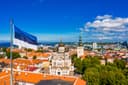
Estonia is the experiment that worked. A country of 1.3 million people that declared independence from the Soviet Union in 1991 and promptly built one of the most digitally sophisticated governance systems on earth — e-Residency, digital voting, a digital health record system, an entire public sector accessible from a laptop anywhere with an internet connection. Skype was built here. TransferWise (now Wise) was founded by Estonians. The philosophy is visible in the infrastructure: things work, digitally and physically, without requiring presence, paperwork, or queuing.

$2,500/moNomad Visa
FI

Finland

Europe

Finland is a country that takes the idea of quiet seriously. Not as a preference but as a philosophy — the Finnish concept of sisu (resilience, grit, the willingness to endure) is built on an understanding that silence and space are not deficits but resources. In the cities, this produces a particular atmosphere: Helsinki in January, the harbor frozen, the light lasting four hours, the café terraces closed under snow — and within all of this, a population going about its business with a contentment that reads, to visitors expecting Nordic melancholy, as almost startling.

$3,700/mo
FR

France

Europe

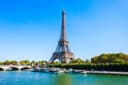
Paris in late September has a specific quality of light — cool and clear and gold, arriving at an angle that makes the stone facades of the 7th arrondissement seem lit from within. Camus wrote about the quality of Algerian light, but he spent years in Paris and understood that European cities have their own versions of this: the moment when summer releases its claim on a city and autumn begins its quiet reclamation. For geo-flexible professionals, Paris is not the obvious choice — it is expensive, the bureaucracy is formidable, and the French relationship with the English language has a long and complicated history. But it is Paris, and Paris has always made its own rules.

$3,650/mo
GE

Georgia

Europe

The light in Tbilisi comes through ancient plane trees that line the Vera district, hits the carved wooden balconies of the old city, and dissolves into something amber and complicated by 6pm. Camus wrote about light as a statement of presence — the specific insistence of the Mediterranean sun on being witnessed. Georgia, in September, makes the same insistence from a different geography: the Caucasus behind it, the Black Sea to the west, five thousand years of winemaking in the valley below. For geo-flexible professionals, Georgia in 2026 is perhaps the clearest single argument in the world for choosing somewhere unexpected.

$1,400/moNomad Visa
DE

Germany

Europe

Germany is serious. This is not a criticism. It is the most precise description of a country that built the postwar world's most successful export economy on the premise that things made well outlast things made cheaply, that punctuality is a form of respect, and that complexity can be managed if the systems are correctly designed. Berlin is the exception that the rest of Germany uses to understand what seriousness looks like when it takes a decade off.

$3,500/moNomad Visa
GR

Greece

Europe

Athens in October belongs to itself. The summer tourists have departed and the city exhales — the Acropolis visible without negotiating a crowd, the tavernas back to their neighborhood rhythms, the particular golden light of an Attic autumn settling onto the marble and the limestone like something calculated. Greece entered the serious remote work conversation when it implemented a Digital Nomad Visa in 2021, but the truth is that geo-flexible professionals had been arriving and quietly working from Athens and the islands long before any official framework existed.

$2,250/moNomad Visa
GL

Greenland

North America

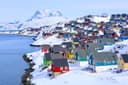
Greenland is not a remote work destination. It is something more extreme and more honest than that designation implies: the largest island on earth, 80% covered by a permanent ice sheet that contains enough frozen water to raise global sea levels by seven meters if it melted, home to 56,000 people distributed across coastal settlements reachable only by boat or small aircraft, and producing, in the summer months, a quality of silence and light that has no counterpart anywhere else on earth.

$3,800/mo
HU

Hungary

Europe

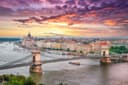
Budapest is a city of thermal water and grand ambition — two things that, in Hungarian history, have consistently overreached and produced something magnificent in the attempt. The Parliament building on the Danube is too large for a country of ten million. The Chain Bridge, the Opera House, the Andrássy Avenue boulevards all belong to a capital that imagined itself as the co-capital of an empire rather than the capital of a landlocked Central European nation. The gap between ambition and circumstance has left Budapest with infrastructure it has not quite grown back into since 1989, and the result is extraordinary: a European capital of genuine architectural grandeur at costs that were, until recently, remarkable by regional standards.

$2,100/moNomad Visa
IS

Iceland

Europe

Iceland arrives as a geological fact before it presents itself as a country. The island is mid-Atlantic Ridge made visible — a place where two tectonic plates are actively pulling apart and filling the gap with lava, where geothermal energy heats 90% of homes, where the light in summer barely sets and in winter barely arrives. It is one of the least populated countries in the world relative to its area. Reykjavik, the capital, is home to two-thirds of the entire nation. The remoteness is not metaphorical.

$4,300/mo
IN

India

Asia

India is not a destination you choose; it chooses you. This sounds mystical until you have been there, at which point it begins to sound accurate. The country operates at a scale and a sensory density that disrupts the operating system of anyone arriving from a quieter geography — the traffic of Bangalore at 8am, the specific quality of dusk over the Ganges at Varanasi, the smell of masala chai on a cold morning in Himachal Pradesh. It takes time to calibrate. Most people who do the calibration find they cannot stop thinking about India for the rest of their lives.

$1,300/mo
ID

Indonesia

Asia

Bali has been described so many times and by so many people that the description has developed its own independent existence — the image of the rice terraces and the temples and the surf and the coworking cafes has become a brand that the island itself both inhabits and exceeds. What the description consistently undersells is the sensory precision of the place: the smell of incense from the daily canang sari offerings that appear on every doorstep and sidewalk and market stall at 6am, the specific green of the paddy terraces in Ubud, the way the Indian Ocean breaks against the Bukit Peninsula in colors that seem post-processed but are simply Bali light at its most honest.

$1,620/moNomad Visa
IE

Ireland

Europe

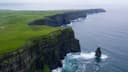
Ireland is small enough to drive corner-to-corner in a day and large enough, in its cultural density and its particular relationship with language and weather, to occupy a person for years. The light on the west coast — Connemara, the Cliffs of Moher, the Aran Islands — is the light that Atlantic storms produce: dramatic, shifting, grey and gold simultaneously, not the Mediterranean warmth of Lisbon but something more provisional and more moving for its impermanence. Dublin in the rain, a pint of Guinness black against the window of a Stoneybatter pub at 6pm, is an argument for choosing difficult over comfortable.

$3,950/mo
IM

Isle of Man

Europe

The Isle of Man sits in the Irish Sea, visible on a clear day from four different countries simultaneously — Ireland, Scotland, England, Wales — and belonging to none of them. A Crown Dependency of the British Crown without being part of the United Kingdom, it runs its own parliament (the Tynwald, the oldest continuous parliament on earth), its own tax system, its own immigration rules, and a motorcycle race that shuts the island for two weeks each year and transforms it into something between a circus and a religious event. Remote work in the Isle of Man in 2026 is, principally, a tax story with a landscape attached.

$3,450/mo
IT

Italy

Europe

Italy is proof that beauty and bureaucracy can coexist indefinitely without resolving their tension. The country has given the world more UNESCO World Heritage Sites than any other, a food culture so rigorous it functions as philosophy, and an administrative system so complex that Italians themselves have developed a semi-mythological relationship with it — the art of navigating around rather than through, a national adaptation to impossible paperwork that produces both frustration and a creative lateral thinking that shows up in the design, fashion, and engineering the country exports.

$3,000/moNomad Visa
JP

Japan

Asia

Japan operates at a precision that makes everything else feel approximate. The trains arrive to the second, the packaging of a department store purchase is executed with the care of a surgeon, the ramen broth has been simmering for eighteen hours, and the conversation about whether you prefer Tokyo to Kyoto to Osaka will be had seriously, because the differences are real and worth discussing. For geo-flexible professionals, Japan in 2026 presents as expensive in some registers and astonishingly affordable in others — a country that requires recalibrating the categories before any useful assessment can be made.

$3,250/mo
KE

Kenya

Africa

Nairobi arrives with the sound of matatus — the minibuses that run everywhere, decorated extravagantly, playing gospel music or Afrobeats at volumes that announce their presence from two blocks away. It is one of the most complicated cities on earth: a financial and technology capital for East Africa, a United Nations headquarters city, home to the largest urban slum in sub-Saharan Africa, and headquarters of a startup ecosystem that has produced M-Pesa (the mobile money system that Africa exported to the world) and a generation of tech entrepreneurs who are building companies for problems that Europe and America have not yet had.

$1,550/mo
LV

Latvia

Europe

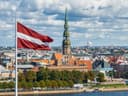
Latvia is the Baltic country that the other Baltic countries will not tell you about because they do not want you to discover it before they have had a chance to enjoy it fully themselves. Riga — the capital, home to half the country's population of two million — is one of the finest Art Nouveau cities on earth: roughly 800 buildings designed in the style between 1897 and 1913, a denser concentration than anywhere else including Vienna, built for a city that briefly thought it was going to be one of the great industrial capitals of the Russian Empire before history intervened. The buildings are extraordinary. The city within them is affordable, connected, Schengen-compliant, and genuinely undervisited.

$2,280/moNomad Visa
LI

Liechtenstein

Europe

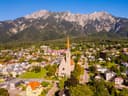
Liechtenstein is 25 kilometers long and 12 kilometers wide — the sixth-smallest country on earth, a constitutional monarchy wedged between Switzerland and Austria, and a tax haven of notable sophistication for a nation of 40,000. The Rhine valley floor is industrial in the polite Liechtenstein way: precision manufacturing, pharmaceutical companies, financial services. The mountains rise immediately above Vaduz and reach peaks that are, proportionally, among the most dramatic in Europe relative to the country they occupy.

$4,500/mo
LT

Lithuania

Europe

Vilnius is the most underrated city in Europe, and Lithuanians know it, and it is unclear whether this knowledge pleases or frustrates them. The old town — a UNESCO World Heritage Site of Baroque architecture that survived what Warsaw, Dresden, and Minsk did not — is small enough to navigate on foot and large enough to contain genuine depth: narrow lanes opening unexpectedly into Baroque courtyards, a self-declared Republic of Užupis (the bohemian quarter that declared independence as a performance art gesture in 1998 and has sustained it as a way of thinking about creative communities ever since), and a café and coworking culture that reflects the specific energy of a country that has been in a hurry since 1990.

$2,250/mo
LU

Luxembourg

Europe

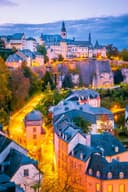
Luxembourg is the financial center of the European Union and, incidentally, one of the smallest countries in the world with one of the highest GDP per capita figures ever recorded. The Grand Duchy — it is a genuine grand duchy, ruled by a grand duke, with a constitution older than most countries — sits at the intersection of France, Belgium, and Germany and has used this intersection to build a financial services sector out of all proportion to its 660,000 residents. The EU institutions, the European Court of Justice, the European Investment Bank — all anchored here.

$4,150/mo
MO

Macau

Asia

Macau is Las Vegas if Las Vegas had been occupied by Portugal for 400 years, then handed to China, and then decided it was going to maintain both identities simultaneously without apology. The former Portuguese colony on the Pearl River Delta — an hour by ferry from Hong Kong, an hour by bus from Guangzhou — is the only place on Chinese soil where gambling is legal, and the casino revenue it generates is the primary fact of the economy. For geo-flexible professionals, Macau is a transit point, a long-weekend destination, and an occasional research visit rather than a base — but it is unlike anything else in Asia.

$3,100/mo
MY

Malaysia

Asia

Kuala Lumpur arrives as a skyline first — the Petronas Towers, still among the most beautiful tall buildings ever constructed, visible from the highway approach and from half the city's viewpoints, shifting in appearance as light and cloud change throughout the day. Then you are in it, and the skyline becomes background to a city of extraordinary food diversity: Malay nasi lemak, Chinese hawker stalls, Indian banana leaf curry, the modern Malaysian cafe scene that synthesizes all of this into something specifically its own. The DE Rantau Digital Nomad Pass has given the country a formal pathway for remote workers, and the combination of infrastructure, affordability, and gastronomic excess makes Malaysia one of the most consistently recommended remote work destinations in Southeast Asia.

$1,750/moNomad Visa
MT

Malta

Europe

Malta is a stone island in the middle of the Mediterranean — all of it stone, the honey-gold limestone that every building has been made from for millennia, absorbing the sun by day and releasing it as warmth into the evening air. The Megalithic Temples are older than Stonehenge and older than the Pyramids. The Knights of St John spent two centuries here. The Maltese survived a two-year siege during World War II with a stubbornness that won the island the George Cross from the British Crown. History has compressed into 316 square kilometers and produced a culture of extraordinary resilience in a very small place.

$2,700/moNomad Visa
MH

Marshall Islands

Oceania

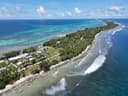
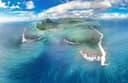
The Marshall Islands are 29 atolls and 5 islands scattered across 2 million square kilometers of the central Pacific Ocean, the largest nation by sea area with one of the smallest by land. The total land area is roughly equivalent to Washington D.C. The highest point is 10 meters above sea level. The country is, in the most literal geological sense, disappearing — sea level rise threatens the nation's existence in a way that is not metaphorical or political but a measurable, documented, ongoing fact. The Marshall Islands is the front line of a global argument about what we owe each other across time.

$2,200/mo
MX

Mexico

North America

Mexico City announces itself with altitude — 2,240 meters, and you notice it in your first hour, a slight shortness of breath, a quicker heartbeat that the locals ignore entirely. Then the food arrives: a plate of tlayudas or a bowl of birria or a tostada of tuna tostada at a Condesa counter, and the altitude becomes irrelevant because you are busy recalibrating your understanding of what food can be. Mexico City is one of the greatest cities on earth by any measure that incorporates culture, food, architecture, and cost-for-quality — and in 2026, it is the most talked-about remote work destination in the Western Hemisphere.

$1,800/mo
MC

Monaco

Europe

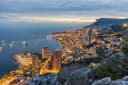
Monaco occupies 2.08 square kilometers — the second-smallest country in the world — on a cliff above the Mediterranean between Nice and the Italian border, and it has made more of those 2.08 square kilometers than almost any other place on earth. The Grand Prix circuit runs through the actual streets of the city-state every May. The casino in Monte Carlo has been operating since 1863. The yachts in the harbor represent accumulated wealth at a scale that makes the usual superlatives inadequate. And yet Monaco, approached on foot from the wrong direction, reveals stone staircases climbing between apartment buildings, neighborhood bakeries, residents walking dogs in quiet alleys, a human scale beneath the spectacle.

$6,500/mo
ME

Montenegro

Europe

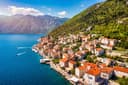
Montenegro occupies the Adriatic coast between Croatia and Albania and the mountains behind it with an efficiency of landscape that seems implausible: within 50 kilometers you can move from medieval coastal towns below sea cliffs, through olive groves, into mountain ranges that top 2,500 meters and receive snow through May. The Bay of Kotor — a drowned river valley that the sea entered after the last ice age — is the most beautiful landlocked bay in the Mediterranean basin, and the old town of Kotor at its end is a Venetian-fortified city that somehow preserved itself through every subsequent century of change.

$1,850/mo
MA

Morocco

Africa

Morocco is where Africa and Europe almost touch across the Strait of Gibraltar — 14 kilometers of water between Tarifa and Tangier — and the contact, close enough to be felt in architecture, language, food, and history, has produced a country of extraordinary complexity. The medinas of Fes and Marrakech are among the most intact medieval urban environments in the world: labyrinths of souks and riads and call to prayer echoing between minaret and minaret that disorient and then, as the geography becomes legible, reveal a city organized by centuries of commercial and residential logic.

$1,480/mo
NL

Netherlands

Europe

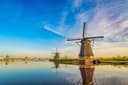
Amsterdam has built a specific version of the good life and been refining it for four hundred years. The canal ring — 165 canals, 1,280 bridges, a UNESCO World Heritage Site that functions as a living city rather than a monument — produces a scale of urban life that is intimate without being provincial: everything within cycling distance, the houseboats and the brown cafes (bruine kroegen, dark wood, decades of smoke absorbed into the walls) and the Vondelpark and the Stedelijk Museum and the best Dutch cheese and the Vietnamese pho and the Ethiopian injera all within 20 minutes of each other by bicycle.

$3,750/moNomad Visa
NZ

New Zealand

Oceania

New Zealand is the end of the world in the direction that produces extraordinary views. The country occupies a position in the South Pacific so remote that it was the last habitable land mass to be settled by humans — the Maori arrived from Polynesia approximately 700 years ago, which, in geological and evolutionary time, is yesterday. The result is a landscape that evolved in the absence of large predators and in the absence of most species that exist elsewhere: giant tree ferns, kiwi birds that cannot fly because nothing required the ability to fly, forests of towering kauri that are among the largest organisms on earth.

$3,550/mo
NO

Norway

Europe

Norway has the fjords and the oil money and the Nobel Peace Prize and the reindeer and the Aurora Borealis and, in the cities, a social democracy so well-maintained that the public infrastructure — hospitals, roads, schools, coastal ferries — makes the rest of the developed world look underachieving. It also has some of the highest prices in the world and a darkness in winter that is not metaphorical. For geo-flexible professionals, Norway is the premium Scandinavian option: everything functions at the highest standard and costs accordingly.

$4,350/mo
PA

Panama

North America

Panama City is the only city in the Americas where you can watch a supertanker slide between two oceans from the window of a skyscraper. The canal — 80 kilometers connecting the Pacific to the Atlantic across the isthmus — is the organizing fact of the country: the reason Panama City is where it is, why the currency is the US dollar, why the economy grew so fast for so long, and why the country has banking infrastructure that attracts a specific profile of internationally mobile professional. The contrast between the glass towers of Punta Pacifica and the Spanish colonial stone of Casco Viejo, ten minutes apart, is not incidental but the condition of a country that has been a crossroads since the 16th century.

$2,250/mo
PE

Peru

South America

Peru''s case for geo-flex professionals is built around two arguments: Lima is one of Latin America''s most sophisticated urban environments at a cost of living well below its cultural and gastronomic output, and the country offers a diversity of environments within accessible distance of the capital — Andes highlands, Amazon basin, desert coast — that is unmatched in South America for geographic density.

$1,520/mo
PH

Philippines

Asia

The Philippines occupies an unusual position in the geo-flex landscape: it is the only country in Southeast Asia where English is a first or co-first language for the professional and educated class, which removes the language barrier that complicates operating in Thailand, Vietnam, or Indonesia. The country is an archipelago of over 7,000 islands, meaning its geography is also its identity — the choice is not just a city but a type of experience, from the dense urbanity of Metro Manila to the island town rhythms of Cebu, Davao, or Siargao.

$1,430/mo
PL

Poland

Europe

Poland has been one of Central Europe''s most consistent overperformers for geo-flex professionals over the past decade. The country entered the EU in 2004, built out its tech infrastructure rapidly on the back of EU structural funds and a strong engineering education system, and now hosts the regional headquarters of dozens of major technology companies alongside a thriving domestic startup scene. Warsaw and Kraków have coworking markets that compete with Western European capitals at a fraction of the cost.

$2,320/mo
PT

Portugal

Europe

Portugal does not simply tolerate remote workers; it recruited them. The D8 digital nomad visa, launched in 2022, made Lisbon the first European capital to offer a dedicated legal pathway for location-independent professionals, and the country has been building on that positioning since. The NHR (Non-Habitual Resident) tax regime offering a decade of reduced rates for qualifying new residents created a secondary pipeline. The result is that Portugal's two main cities are now operating at close to capacity for the remote worker demographic, which has raised prices considerably and created a secondary phenomenon: experienced geo-flex professionals moving to Porto, the Algarve, and the Silver Coast rather than competing for Lisbon's saturated coworking market.

$2,650/moNomad Visa
RO

Romania

Europe

Romania is Central and Eastern Europe''s most compelling value proposition for geo-flex professionals who are not constrained to Western European network effects. Bucharest is one of the cheapest EU capitals by a significant margin, with a coworking market and urban infrastructure that substantially exceeds what the price point implies, and a tech ecosystem that has been growing steadily since Romania entered the EU in 2007 and began producing engineering talent for both domestic companies and EU-headquartered multinationals.

$2,000/mo
WS

Samoa

Oceania

Samoa is the Pacific destination that does not make every geo-flex list, which is part of its character. It is not a conventional remote work hub — the coworking infrastructure is minimal, internet connectivity is improving but not reliable by Southeast Asian or European standards, and the cost structure is higher than most Southeast Asian destinations given the logistics of Pacific island supply chains. What Samoa offers instead is one of the most complete South Pacific cultural experiences available without the tourist saturation of Fiji or French Polynesia, and a pace of life that is genuinely different from most places on this index.

$1,950/mo
SM

San Marino

Europe

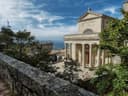
San Marino is a curiosity on any geo-flex list: the world''s oldest republic, a 61-square-kilometer microstate sitting inside Italian territory on the slopes of Monte Titano, with a population of 35,000 people and a tourist economy built entirely around its historic fortified hilltop town. It is not a practical remote work base in the conventional sense; it has no airport, no international rail connection, and its economy is structured around day tourism and its tax status relative to Italy rather than around the infrastructure needs of mobile professionals.

$2,950/mo
RS

Serbia

Europe

Serbia is not in the EU, which is precisely what makes it interesting for a specific category of geo-flex professional: it is outside the Schengen 90-day clock, enabling stays of up to 90 days visa-free for most Western passport holders without consuming Schengen days, and its cost of living is substantially below neighboring EU member states. Belgrade has developed into one of Central Europe''s most compelling value-for-money bases, with a coworking market, restaurant culture, and nightlife that are objectively excellent at prices that remain genuinely low.

$1,680/mo
SC

Seychelles

Africa

Seychelles is the Indian Ocean archipelago that occupies a specific tier in the geo-flex landscape: it is among the world''s most beautiful countries by most objective measures, it has a premium cost structure to match, and it has made a deliberate attempt to attract remote workers with its Workcation Permit — one of the first such programs in the Indian Ocean region. The 115-island archipelago''s central islands (Mahé, Praslin, La Digue) offer white-sand beaches, granite boulder landscapes, and turquoise water that is genuinely among the best in the world, combined with the infrastructure of a functioning independent state.

$2,750/mo
SG

Singapore

Asia

Singapore is where geo-flex professionals go when they have decided that infrastructure reliability, legal clarity, and regional connectivity are non-negotiable. It is not a cheap base; it is one of Asia''s most expensive cities, with one-bedroom apartments in the central areas running 3,000 to 5,000 Singapore dollars per month (2,200 to 3,700 USD in 2026). The case for Singapore is not cost but function: the airport is among the world''s best-connected, the banking system works for international income in multiple currencies, the broadband infrastructure is exceptional, the legal system is predictable, and the city is clean and safe in a way that requires no adjustment from the incoming professional.

$4,000/mo
SK

Slovakia

Europe

Slovakia is the EU member that most geo-flex professionals discover through Bratislava and then realize offers substantially more than its reputation as a Vienna day-trip destination. The capital sits at the western tip of the country, 60 kilometers from Vienna and just across the Danube from Austria — close enough to use Vienna International Airport, far enough to access Slovak cost levels, which are 40 to 50% below Austrian equivalents. For EU nationals, this arithmetic is compelling: full Schengen and EU access, Central European culture and architecture, and Eastern European pricing.

$2,350/mo
SI

Slovenia

Europe

Slovenia is the smallest, and by most livability measures the most accomplished, country in the former Yugoslavia. Ljubljana punches well above its weight: a capital city of 300,000 people that functions with the infrastructure quality of a Scandinavian capital at prices roughly 60% below Western European equivalents. The old town is genuinely beautiful — the Ljubljanica River, the castle hill, the Art Nouveau architecture along the Prešernov trg — and the country''s combination of Alpine and Mediterranean access within a two-hour drive is unique in Europe.

$2,550/mo
ZA

South Africa

Africa

South Africa''s geo-flex proposition is the most polarizing on this list: the country offers extraordinary value, dramatic landscapes, a warm and cosmopolitan culture, and persistent safety challenges that require genuine operational awareness in a way that few other countries on this index do. For geo-flex professionals who engage with it on its own terms, it is one of the most rewarding bases in the world. For those who underestimate the security landscape, it is the most common source of bad experiences.

$1,720/mo
ES

Spain

Europe

Spain was one of the last major Western European economies to address remote workers as a policy matter. The 2023 Startup Law changed that, introducing a digital nomad visa modeled broadly on the Estonian concept but adapted for Spain''s administrative complexity. The visa is real, usable, and carries the Beckham Law tax advantage — 24% flat rate for qualifying foreign workers for up to six years — but processing timelines have run long. The more practical entry point for most geo-flex professionals remains the standard Schengen 90-day framework, within which Spain works very well.

$2,800/moNomad Visa
SE

Sweden

Europe

Sweden occupies a specific position in the geo-flex landscape: it is the Scandinavian country that has made the strongest argument for being a serious long-term base rather than a scenic detour. Stockholm is a genuinely world-class city — compact, walkable, architecturally coherent, and running on an economy that has produced an extraordinary density of globally successful tech companies (Spotify, Klarna, King, Mojang, iZettle, among others) relative to its population. The city''s tech ecosystem is not incidental; it is structural, rooted in a combination of engineering education quality, early internet infrastructure investment, and cultural attitudes toward building things that actually work.

$3,650/mo
CH

Switzerland

Europe

Switzerland is the country geo-flex professionals consider when the priority is functional perfection rather than affordability. It is expensive by any measure — a one-bedroom apartment in Zurich runs 2,200 to 3,500 CHF per month (approximately 2,400 to 3,900 USD in 2026), and the cost of groceries, dining, and services is the highest in Europe by most metrics — but what you receive in return is infrastructure and institutional reliability that most of the world does not match. The trains run on time in Switzerland not as a cliché but as a functional description of the national infrastructure.

$5,000/mo
TW

Taiwan

Asia

Taiwan is the geo-flex destination that most professionals encounter through the tech industry and then discover has substantially more to offer than its hardware manufacturing reputation suggests. Taipei is a dense, functional, and genuinely livable city — one of Asia''s most underrated — with a cost of living that places it above Bangkok and Bali but well below Tokyo, Singapore, or Hong Kong, and an urban infrastructure that routinely outperforms cities costing twice as much.

$2,150/mo
TH

Thailand

Asia

Thailand has been the default starting point for anyone going location-independent for so long that its position in the geo-flex ecosystem now deserves a more careful description. The country is not a beginner''s option; it is a deeply functional working base that rewards people who know what they need and know how to navigate a system that was not designed with foreign remote workers in mind, even if it has lately started adapting.

$1,560/moNomad Visa
AE

UAE

Asia

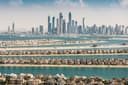
Dubai functions as a city-state within a city-state: the UAE is seven emirates, but for geo-flex professionals the conversation almost exclusively concerns Dubai and, secondarily, Abu Dhabi. Dubai''s proposition is specific and not universally appealing, but for those it suits it is powerful: zero income tax, world-class infrastructure, a cosmopolitan professional environment in which English is the operational language of business, and a geographic position that is within eight hours of most of the world''s major economic centers.

$3,850/moNomad Visa
GB

United Kingdom

Europe

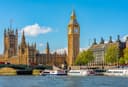
The United Kingdom''s position in the geo-flex professional landscape is paradoxical. London is one of the world''s two or three most significant cities for professional networks, financial services, tech, media, and creative industries — a place where being present materially changes access in ways that remote work from other countries does not replicate. And yet London is also among the most expensive cities in Europe, with one-bedroom apartments in any central borough costing 1,800 to 2,800 pounds per month, and a cost of living structure that means the financial case for basing there is rarely compelling unless income is denominated in pounds or the professional upside is specific.

$3,870/mo
US

United States

North America

The United States presents a different proposition to geo-flex professionals than most countries on this list: it is rarely a destination you go to in order to reduce your cost of living or simplify your visa situation. What it offers instead is the world''s deepest professional network, the most significant concentration of technology companies and capital, and a domestic market so large that time zones, distances, and city characters are internally diverse enough to constitute multiple distinct working environments.

$3,950/mo
VN

Vietnam

Asia

Vietnam''s position in the geo-flex ecosystem is built on a specific arithmetic: the cost of living is among the lowest of any urban Southeast Asian country, the quality of food and street-level life is extraordinary, and the country runs at a pace and density that rewards curious professionals willing to engage on its own terms. The trade is complexity: the visa situation has fluctuated over the years, healthcare access in emergencies is concentrated in the major cities, and the language barrier is more significant than in Thailand or Indonesia.

$1,350/mo