.png)
About Lithuania
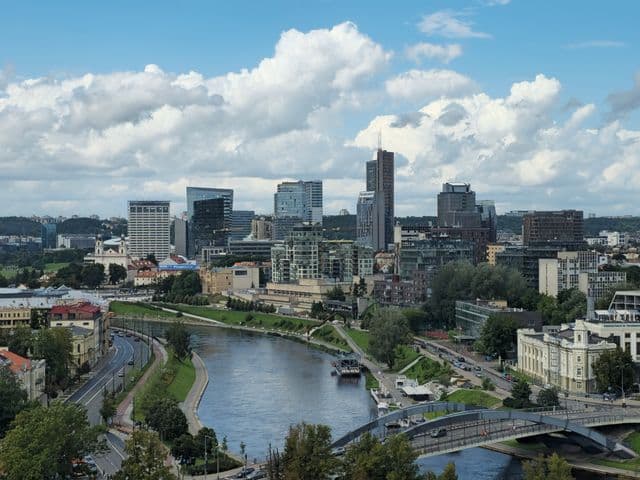
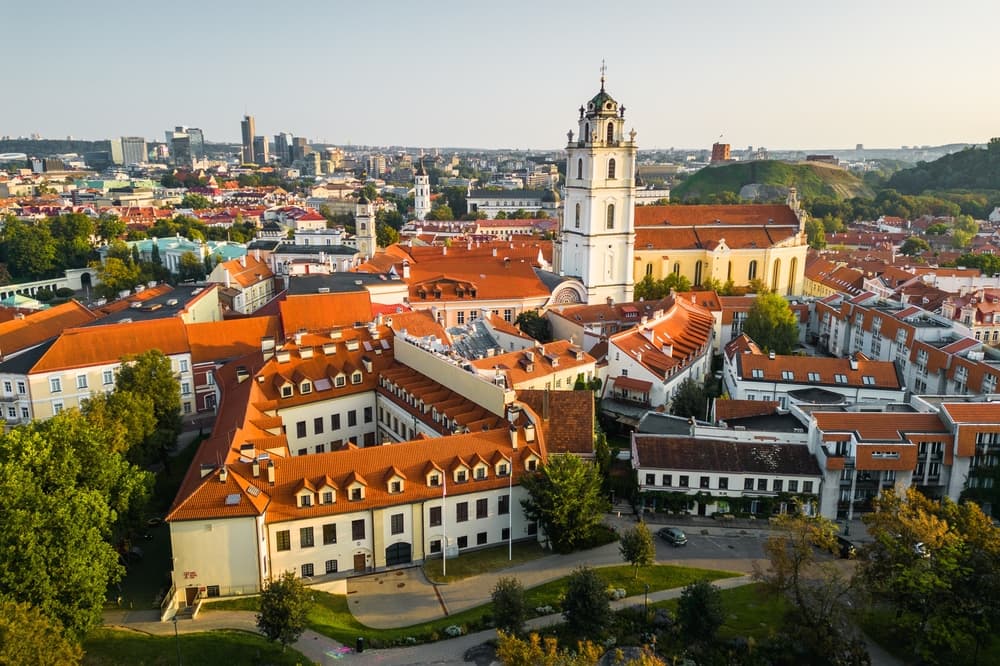
Vilnius is the most underrated capital in Europe, and Lithuanians know it, and it is unclear whether the knowledge pleases or frustrates them. The old town, a UNESCO Baroque ensemble that survived what Warsaw and Dresden did not, is small enough to walk and deep enough to keep surprising; Užupis, the self-declared artists' republic across the river, posts its constitution in thirty languages and its irony everywhere; and the professional city around them built something real: the EU's busiest fintech licensing regime under the Bank of Lithuania, the tech park in a former monastery, coworking depth from Workland to Talent Garden, public Wi-Fi that benchmarks among the world's fastest, and an English-fluent generation that made Lonely Planet's 2025 podium feel overdue. Kaunas runs the interwar-modernist second city at gentler prices, Klaipėda opens the Baltic, and the Curonian Spit's dunes close the map with the country's mythological relationship to forest and sea. Palanga and Nida staff the short Baltic summer, mostly on EU passports, and the Vilnius hostels trade the occasional bed for shifts.
The paperwork story rewards precision. There is no digital nomad visa: the Economy Ministry has floated one for years and several consultancy sites sell a rebranded version of the national visa's other-cases category at an invented threshold, a framing absent from every published Migration Department document. What exists: Schengen's standard 90 in 180 for visa-free nationals, with the EES entry-exit system live at Lithuanian borders and ETIAS now expected in 2027; free movement for EU citizens, three months before local registration; the national D visa, up to twelve months for enumerated purposes at a 140-euro fee and a means test set at the minimum wage, with a 180-day gap required between successive visas; the temporary-residence menu behind it; and the Startup Visa as the genuinely distinctive door, a vetted route for founders in laser tech, ICT, biotech, fintech and adjacent fields that trades a credible business plan for two years of residence, family inclusion, and a real path to permanent residency at year five. For freelancers who localize, the individuali veikla regime taxes individual activity at effective single-digit-to-teens rates and pairs naturally with residence grounds.
The honest context is geopolitical and managed. Lithuania is NATO and EU, fortifying its eastern flank, and living with hybrid-warfare texture: Belarusian smuggling balloons that repeatedly closed Vilnius airport through late 2025 and drew a national emergency-situation declaration, drone debris from Russia's war drifting across the border, GPS interference in the regional airspace, a Belarus land border narrowed to a single, sometimes-closed crossing, and a rule against so much as walking the frontier strip without a permit. None of it touches the café terraces; all of it belongs in the flight-buffer planning; and the US advisory's Level 1, the same tier as Portugal, remains the accurate description of daily life in one of Europe's safest, most quietly excellent capitals.
Widening the search? If you are looking to expand your job hunt across Northern Europe, take a look at Latvia →, Estonia →, and Poland →.
Cost of living
Lithuania prices at the EU's accessible end while delivering its polished middle: Vilnius one-bedrooms run roughly 600 to 900 euros in the desirable districts, Senamiestis and Naujamiestis at the top, the mikrorajonai well below, with Kaunas a solid quarter cheaper and Klaipėda between them. Utilities carry the honest Baltic asterisk, winter heating adding real weight to December-through-March bills, and fiber, among Europe's fastest, costs a rounding error.
Daily life runs gentle: lunch specials at 8 to 12 euros, the cepelinai-and-beer tier below that, specialty coffee at Western quality and two-thirds the price, and supermarkets, Maxima, Lidl, Iki, keeping the cooking economy cheap. Transport is nearly free by Western logic, the Trafi-app bus and trolleybus network at coins, Bolt covering the rest, and the intercity buses and trains putting Kaunas at an hour and the coast at four. Cards and contactless run everything including the market stalls, the euro deletes conversion, and the comfortable single Vilnius life assembles at 1,800 to 2,300 dollars with the winter-heating buffer included. The one seasonal line item worth naming: the long grey winter argues for a heated coworking membership and the occasional cheap Ryanair escape, both of which the budget should simply contain.
- One-bedroom rent: 600 to 900 euros in Vilnius's good districts, a quarter less in Kaunas, with the mikrorajonai far below; winter heating is the honest addition to every utilities estimate.
- Eat at 8-to-12-euro lunch logic: the dienos pietūs specials anchor the food economy, cepelinai and beer sit below, and specialty coffee runs Western quality at Baltic prices.
- Move for coins: Trafi-app buses and trolleybuses cost almost nothing, Bolt fills the gaps, Kaunas sits an hour away and the coast four; the car is optional in a way little of Europe manages.
- Budget the winter architecture: a heated coworking membership, proper cold-weather gear and the occasional budget-airline escape are the December-through-March line items experienced residents never skip.
Cost-of-living calculator
See how your budget stretches in Lithuania.
Estimates use approximate exchange rates and typical monthly costs. Your actual costs will vary.
Visas & Entry
Lithuania runs the standard Schengen stack with 2026's new machinery: visa-free nationals, the US, UK, Canada, Australia and the usual list, receive 90 days in any 180 across the zone, the EES biometric entry-exit system is live at Lithuanian airports and land borders, and ETIAS, the pre-travel authorisation for visa-free travelers, slipped past its 2026 target and is now expected in 2027. EU, EEA and Swiss citizens live and work freely, registering locally after three months.
Beyond 90 days, precision matters because the internet sells a product that does not exist. Lithuania has no digital nomad visa: the Economy Ministry has proposed one repeatedly without legislation, and the widely marketed Lithuania DNV at 5,460 euros monthly is a consultancy rebranding of the national visa's other-cases category, a threshold and framing absent from published Migration Department policy; anyone offered it should verify directly at migracija.lt before paying anyone anything. What genuinely exists: the national D visa, issued for up to twelve months for enumerated purposes, work, study, business establishment, family, at a 140-euro fee, processed in 15 to 45 days, with a means test officially set at the Lithuanian minimum wage, 1,153 euros monthly in 2026, plus return funds and 30,000-euro Schengen-valid insurance, and a rule that a second one-year D visa follows only after 180 days outside; the temporary residence permit menu behind it through the MIGRIS online system, covering employment, business, study and family with biometrics at migration offices or VFS; and the Startup Visa as the country's distinctive offer, a vetted route for founders of innovative businesses, laser technology, ICT, biotech, nanotech, fintech, mechatronics, in which Startup Lithuania's committee evaluates the business plan, approval yields a temporary residence permit of two years extendable as the venture develops, family joins, and the five-year permanent-residency clock runs toward eventual citizenship eligibility, all for a setup cost practitioners put in the low five figures. Freelancers who genuinely localize register individuali veikla, the individual-activity regime, atop a residence ground rather than as one. Permanent residency arrives at five years of legal stay; the passport, for those who go the distance, sits beyond it.
- Treat the marketed Lithuania DNV as fiction: no nomad visa exists in published policy, the 5,460-euro threshold is invented, and two minutes on migracija.lt beats any consultancy's landing page; the Economy Ministry's proposals remain proposals.
- Count Schengen days like money: the 90-in-180 window spans the entire zone, EES now logs entries biometrically, and the Baltic circuit, Vilnius, Riga, Tallinn, spends from one shared allowance.
- Use the D visa for a defined year, not a lifestyle: the twelve-month ceiling, minimum-wage means test and 180-day gap rule make it a bridge to a residence permit rather than a rolling status; file the TRP conversion early if Lithuania is becoming home.
- Founders, take the Startup Visa seriously: the vetting is real and so is the payoff, two extendable years, family, the permanence clock and a credible EU citizenship horizon; the innovative-fields list is broader than the laser-lab stereotype suggests.
- Localize freelancing through individuali veikla: the individual-activity regime's effective single-digit-to-teens taxation is among the EU's friendliest, pairs with residence grounds, and turns the gray zone into a clean structure in an afternoon of registration.
- Watch ETIAS timing, not rumors: the authorisation slipped to a likely 2027 launch, twenty euros and ten minutes online when it arrives, and nothing about it changes the 90-day arithmetic.
| Visa or permit | What it covers |
|---|---|
| Schengen entry | Ninety days in any 180 for visa-free nationals across the zone, with EES biometrics live at Lithuanian entry points and ETIAS now expected in 2027; the standard season most remote stays actually use. |
| EU, EEA and Swiss citizens | Full freedom of movement: live and work without permits, registering with the migration authorities after three months; the Baltic base as birthright for half this page's readers. |
| National D visa | Up to twelve months for enumerated purposes at a 140-euro fee, 15-to-45-day processing, means at the 1,153-euro minimum wage plus return funds, and 30,000-euro Schengen insurance; a second year requires 180 days outside first, and the residence-permit route is the answer for continuity. |
| The DNV that does not exist | No nomad visa has been legislated, the marketed 5,460-euro Lithuania DNV is a consultancy rebranding of the D visa's other-cases category with no published-policy basis, and the Migration Department's own channels are the only place a real launch would appear. |
| Startup Visa, the genuine door | Founders in laser tech, ICT, biotech, nanotech, fintech and mechatronics pitch Startup Lithuania's committee; approval yields a two-year extendable residence permit, family inclusion, and the five-year permanence clock, for low-five-figure setup costs; one of Europe's most credible founder routes. |
| Temporary residence menu | Employment, business, study and family grounds file through the MIGRIS online system with biometrics at migration offices or VFS; the conventional immigration lanes behind the visa layer, and the continuity answer the D visa cannot provide. |
| Permanence and beyond | Permanent residency at five years of legal stay, citizenship eligibility further on with language and constitution requirements; the Startup Visa and residence-permit routes feed the clock, the D visa alone does not build it. |
Good to know: No DNV (the marketed €5,460 "Lithuania DNV" is consultancy rebranding of the D visa's other-cases category; no published-policy basis); real stack: Schengen 90/180 (EES live, ETIAS ~2027), D visa 12 months (€140, minimum-wage means test, 180-day gap rule), Startup Visa as the credible founder route (2 yrs → PR at 5), individuali veikla for localized freelancing.
EnRoute Jobs AI tool
Route Planner
Map visa routes, timelines, and relocation costs for your next destination.
Work & Legal
Lithuanian professional culture runs Baltic-direct under an initial reserve that opens into genuine warmth: meetings start on time and end with substance, small talk is rationed, English carries the entire tech and professional class, and the labas-and-ačiū courtesy of attempting Lithuanian buys disproportionate goodwill. The infrastructure is the quiet flex: Vilnius built the EU's busiest fintech licensing operation under the Bank of Lithuania, the regime that gave Revolut its European banking license, and around it a real ecosystem, the Tech Park in its former monastery campus, Workland and Talent Garden anchoring the coworking tier, free public Wi-Fi that benchmarks among the world's fastest, and a startup community whose events calendar runs dense year-round. Kaunas adds the second-city version and the seaside towns of Palanga and Nida host the state's own summer-workation marketing.
The legal lines are EU-standard: foreign-client remote work during Schengen or D-visa stays is unpoliced and unremarkable, Lithuanian clients or employment require proper grounds, and the individuali veikla regime formalizes freelancing for the genuinely local at effective rates that embarrass most of Europe. The operational notes are the era's: GMT+2 overlaps Europe wholly and reaches US East by afternoon, the winter argues for heated coworking and the summer's white-night evenings repay it, and the one genuinely Lithuanian ops doctrine is aviation slack, the Belarusian balloon episodes taught the community to book flexible tickets, watch the airline app on incident evenings, and know that Kaunas and Riga serve as alternates when Vilnius pauses; the disruptions are occasional, managed and never dangerous, and the buffer day absorbs them.
- Foreign clients ride free, local work formalizes: remote work for overseas employers is unpoliced on any legal stay, Lithuanian clients or employment need proper grounds, and individuali veikla turns local freelancing into a clean, cheaply-taxed structure.
- Plug into the fintech capital: the Bank of Lithuania's licensing regime built the EU's densest fintech cluster, the Tech Park and coworking tier host its community, and the events calendar is the fastest onboarding in the Baltics.
- Work the GMT+2 geometry: Europe overlaps entirely, US East arrives by mid-afternoon, and the summer's near-white nights stretch the productive evening; the winter trades it back and the heated desk is the answer.
- Keep aviation slack in the plan: the balloon-era doctrine is flexible tickets, the airline app on incident evenings, and Kaunas or Riga as alternates; the disruptions are occasional and managed, and the buffer day is the entire countermeasure.
Good to know: Foreign-client work unpoliced on legal stays; individuali veikla = clean local freelance structure at effective single-digit-to-teens rates; EU's fintech licensing capital (Bank of Lithuania/Revolut); GMT+2; balloon-era aviation slack is the one local ops doctrine.
Taxes
Lithuanian tax turns on the 183-day line and the permanent-home test, and 2026 brought reform: the old flat-with-surcharge design gave way to progressive brackets topping at 32 percent, while the individuali veikla regime keeps localized freelancing among the EU's most gently taxed.
| What applies | The rule in 2026 |
|---|---|
| The residency tests | Tax residency attaches past 183 days in a tax year, or through a permanent home and center of personal interests in Lithuania; the Schengen-season visitor stays comfortably clear and the D-visa year is where the arithmetic starts mattering. |
| Non-residents | Owe Lithuanian tax on Lithuanian-source income only, so the visiting remote worker's foreign salary and clients sit outside the net entirely; the standard season files nothing. |
| Residents under the 2026 reform | Worldwide income enters the reformed progressive schedule, rates rising through the brackets to 32 percent at the top; the settled convert's regime, run with a local accountant and softened by treaty credits. |
| Individuali veikla | The individual-activity regime taxes registered freelance income at an effective 5-to-15 percent through its credit mechanism, plus social contributions; among the EU's friendliest freelance structures and the reason localized independents register rather than hide. |
| VAT and the daily layer | The 21 percent VAT rides inside prices, registration thresholds catch only genuinely local businesses, and the visitor's fiscal footprint is the receipt. |
| The fintech-banking corollary | Lithuania's licensing regime makes it one of Europe's easiest jurisdictions for fintech-forward banking, IBANs and e-money accounts open readily, and the structure question, personal versus entity, is worth an hour of advice before the first invoice. |
| Americans specifically | A US-Lithuania income tax treaty stands while no totalization agreement covers self-employment contributions; the FEIE or foreign tax credits carry the US side, and resident converts stack credits against the reformed brackets. |
| The home-country half | Baltic residency does not silence the jurisdiction left behind: residency-based systems keep their claims until properly exited, and the clean version of the Lithuanian move starts with the home-country conversation before the MIGRIS application. |
Verified 20 August 2026: the 183-day and permanent-home tests, non-resident source-only taxation, the 2026 progressive reform topping at 32 percent, individuali veikla's effective 5-to-15 percent range, VAT at 21 percent, and the standing US treaty without totalization. General information, not tax advice.
Good to know: 183-day + permanent-home tests; 2026 reform = progressive brackets to 32%; individuali veikla taxes localized freelancing at effective 5-15% (EU's friendliest tier); non-residents owe nothing on foreign income; VAT 21%; US treaty yes, totalization no.
Healthcare
Lithuanian healthcare pairs a functional public system, PSD-funded and EHIC-reciprocal for EU visitors, with a private tier in Vilnius and Kaunas that serves the professional class quickly and affordably: consultations at 30 to 70 euros, English-speaking physicians standard at the private clinics, imaging and specialists at a fraction of Western prices, and waiting measured in days rather than months. The public flagships carry genuine tertiary depth, Santaros Klinikos in Vilnius and the Kaunas university hospital, the Baltics' largest, anchoring the serious tier, while the private networks handle the routine-through-specialist band the visiting professional actually uses. Dental care is the famous export, Scandinavian patients having flown south for Lithuanian dentistry for decades at quality-to-price ratios the region cannot match.
The practical notes are Northern European: EHIC and GHIC cover EU and UK visitors in the public system, private insurance or cash-pay serves everyone else without drama, pharmacies are professional and everywhere, tap water is excellent, and the health risks are seasonal rather than exotic, the winter's ice underfoot and darkness overhead, tick awareness in the summer forests where encephalitis vaccination is the local norm for mushroom-and-berry people, and the vitamin-D economy of a 55th-parallel winter. Emergencies answer at 112 with response times matching the country's general competence.
- Consultations run 30 to 70 euros at private clinics with English standard and same-week access; EHIC and GHIC cover EU and UK visitors publicly, and everyone else cash-pays or insures without drama.
- Use the dental arbitrage deliberately: the Scandinavian pipeline exists for a reason, and the implant-to-cleaning spectrum prices at a fraction of Western Europe; medical tourism here is just Tuesday.
- Vaccinate for the forest life: tick-borne encephalitis vaccination is the local norm for anyone joining the mushroom, berry and lake culture, and repellent plus tick checks are summer-forest doctrine.
- Respect the winter as a health season: ice underfoot injures more visitors than anything else, the darkness asks vitamin D and light discipline of newcomers, and 112 answers everything with Baltic efficiency.
| Hospital | What to know |
|---|---|
| Vilnius University Hospital Santaros Klinikos | The national flagship: full tertiary depth, the referral answer for complex anything, and the academic apex of the system. |
| Kaunas Clinics (LSMU Kauno klinikos) | The Baltics' largest hospital, the second city's university anchor with comprehensive specialty coverage. |
| Kardiolita Hospital, Vilnius | The established private hospital, surgical and specialist depth with an international-patient practice and English throughout. |
| Northway Medical Centre, Vilnius | The private clinic network the expat community actually uses: same-week access, English-speaking physicians, and the routine-through-specialist band covered. |
| Affidea Lietuva | The diagnostics and imaging network across the cities, fast MRI-to-lab access at prices that make cash-pay reasonable. |
| The dental economy | Lithuanian dentistry's quality-to-price ratio built a decades-old Scandinavian patient pipeline; implants, orthodontics and the routine tier all price at fractions of Northern rates. |
Hospital list compiled 20 August 2026 and not yet confirmed against each facility directly. Treat as indicative and verify before relying on it.
Good to know: Private tier (Northway, Kardiolita, Affidea) at €30-70 with English standard; Santaros and Kaunas Clinics carry tertiary depth; famous dental arbitrage; TBE vaccination is the forest-culture norm; winter ice is the real injury risk; 112.
Safety
Lithuania holds a US Level 1, Exercise Normal Precautions, the tier of Portugal and Japan, and daily life earns it: Vilnius's old town is safe at all hours, violent crime against visitors is rare, solo women report ordinary comfort, and the crime register is pickpockets at tourist sites and transit, thefts from parked cars, and the standard nightlife-district judgment, met with the standard habits, bags closed, phones pocketed forward, taxis by app, bank-lobby ATMs. What makes the page's honest work is the era's texture, which the calm advisories themselves now document: Lithuania is a NATO and EU frontline state living with hybrid-warfare friction, Belarusian smuggling balloons that repeatedly violated the airspace and closed Vilnius airport for evenings through late 2025, drawing a national emergency-situation declaration and temporary border closures; drone debris from Russia's war crossing the frontier on occasion; GPS interference in the regional airspace; and a Belarus land border narrowed to a single crossing that opens and closes with the situation, scheduled buses suspended, Belarusian-plated cars banned, and the Nida crossing to Kaliningrad shut. None of it has changed the advisory tier, because none of it touches daily life; all of it belongs in the operations plan as flight buffers and border awareness.
The rules that follow are concrete. The frontier strip with Belarus and Russia is closed to casual presence, walking near the line requires a border-guard permit, and the border-adjacent districts around Druskininkai and Šalčininkai ask marked roads and a carried passport. Overland plans involving Belarus are simply not plans, the neighbor sitting at the US's Level 4 with consular services suspended. Winter adds the season's genuine hazard, black ice underfoot and on rural roads, with city snow-clearing efficient and the countryside slower. Demonstrations are rare and civic; the political temperature is stable; and 112 answers everything. The honest summary: one of Europe's safest daily environments, wearing the era's geopolitics as managed background rather than lived risk, with the actionable signal being any change in the advisory tier itself.
- Live the Level 1 and plan the era: daily Vilnius is Portugal-tier safe while the geopolitical texture, balloons, drone debris, GPS interference, stays managed background; the actionable signal is a change in the advisory tier, not a headline.
- Build the aviation buffer: the balloon episodes closed Vilnius airport for evenings, not weeks; flexible tickets, the airline app on incident nights, and Kaunas or Riga as alternates absorb the disruption pattern entirely.
- Respect the frontier absolutely: walking the Belarus and Russia border strip requires a permit, the adjacent districts ask marked roads and a carried passport, the Nida crossing is closed, and overland Belarus plans are not plans at the neighbor's Level 4.
- Run ordinary city habits: bags closed at tourist sites and on transit, nothing visible in parked cars, taxis by app at night, bank-lobby ATMs; the pickpocket tier is the entire urban crime register.
- Treat winter as the physical hazard: black ice injures more visitors than anything human, city clearing is efficient and rural roads slower, and the proper-boots-and-slow-driving doctrine is the season's entire answer.
- Know 112 and expect competence: the single number answers police, fire and medical with Baltic efficiency, English works, and STEP enrollment plus the embassy feed complete the kit.
Official travel advisories
| Government | Current position |
|---|---|
| United States | Level 1, Exercise Normal Precautions, with recent updates touching the summary only: generally safe, with pickpocket-and-car-theft texture at tourist sites and the standard urban guidance; the embassy's 2025 alerts covered the balloon disruptions and border closures as they occurred.travel.state.gov → |
| United Kingdom | Standard guidance updated through 2026 with the era's notes: drone incursions linked to Russia's war flagged as new information, border-area rules near Belarus, and the single-crossing status of the land frontier tracked as it shifts.gov.uk → |
| Canada | Normal security precautions; documents the war-debris and smuggler-balloon incursions with their aviation disruptions, the vehicle bans on Russian and Belarusian plates, and the closed Nida crossing on the Curonian Spit.travel.gc.ca → |
| Australia | Standard precautions with border caution: do not travel to Russia or Belarus, expect short-notice crossing closures and transport disruptions near the frontier, and carry your passport even within Schengen; winter black-ice guidance for drivers.smartraveller.gov.au → |
| US Embassy Vilnius | Enroll in STEP; the embassy's security alerts carried the October 2025 border-closure and airport-disruption notices and remain the live feed. Akmenų g. 6, Vilnius; +370 5 266 5500.lt.usembassy.gov → |
Advisory positions verified 20 August 2026: US Level 1 maintained through the balloon-era updates, UK and Canadian texture on drone and balloon incursions with aviation disruptions, the narrowed and fluid Belarus border status with vehicle bans and the closed Nida crossing, the border-strip permit rule, and Belarus itself at the US Level 4. Open the sources before travelling.
Good to know: US L1 (Portugal tier) holding through the era: daily Vilnius extremely safe (pickpocket-tier register); hybrid-warfare texture (smuggler balloons closing airports, drone debris, GPS jamming) is managed background; the ops answer is flight buffers; frontier strip needs permits, Nida crossing closed, Belarus is L4; winter ice is the real hazard; 112.
Climate
Lithuania runs the honest Baltic year: a genuine winter, November through March, Vilnius averaging minus-4 to zero in January with snow that settles, short days that bottom near eight hours, and a city that answers with candlelit cafés, efficient heating and the pirtis sauna culture; then a spring that arrives late and fast in April-May, and the payoff, a summer of 21-to-25-degree days stretched by near-white nights, the sun setting past ten at midsummer, terraces filling the old town, and the lake-and-forest culture at full life. Autumn burns briefly gold through September and retreats by late October. The working calendar writes itself: May through September is the prize, June's Joninės midsummer the peak of the year's light and mood, the winter productive for desk work behind good glass, and the Baltic coast, Palanga's beaches, Nida's dunes, running a short, luminous season the entire country attends. Rain spreads moderately year-round, the maritime edge softens the coast's extremes, and the single most useful preparation remains the unglamorous one: real winter clothing, owned before November.
| Season | What to expect |
|---|---|
| Summer, June to August | The prize: 21 to 25 degrees under near-white nights, terraces and lakes at full life, Joninės midsummer as the year's peak; the season the planning aims at. |
| Winter, November to March | Genuine cold, minus-4-to-zero Januaries with settled snow and eight-hour days; productive behind glass, beautiful under snowfall, and demanding of real clothing and light discipline. |
| The fast shoulders | Spring arrives late and moves quickly through April-May's green explosion; autumn burns gold through September and retreats by late October; both reward flexibility more than planning. |
| The Baltic coast | Palanga and the Curonian Spit run a short luminous season, June through August, dunes, pine forest and cool sea; the summer counterweight the entire country attends. |
Good to know: May-September is the prize with near-white midsummer nights; winter is real, productive and demanding of proper gear; the coast runs short and luminous.
Culture & Customs
Lithuanian culture pairs Baltic reserve with a depth that rewards patience: the initial quiet is not coldness but calibration, and the friendship that opens after it is durable. The identity runs old and fierce, the last pagan nation in Europe, a language among the continent's most archaic, fifty years of Soviet occupation survived through song festivals and the Hill of Crosses' stubborn devotion, and an independence regained in 1990 that the culture still treats as present tense. The relationship with nature approaches the mythological: mushroom and berry season empties offices into forests, the lake summer is institutional, midsummer's Joninės is the year's true holiday, and the pirtis sauna cycle of heat, birch and cold water is social infrastructure. Basketball is the second religion outright, national-team games functioning as holy days.
Vilnius adds its own registers: Užupis, the artists' republic with its ironic constitution posted in thirty languages, the Baroque old town's courtyard culture, a café scene that treats laptops as furniture, and a professional class whose English is effortless and whose appreciation for a visitor's labas and ačiū is genuine. The table runs hearty, cepelinai dumplings, šaltibarščiai's shocking-pink cold beet soup as the summer signature, dark bread as identity, craft beer deep and cheap; tipping runs 10 percent where service pleases; and the codes are light, punctuality respected, shoes off in homes, flowers in odd numbers, and history discussed with the seriousness it earned. The visitor who learns ten words, joins one forest expedition and watches one basketball game with locals is adopted at Baltic speed, which is slower than Mediterranean speed and worth more.
- Read the reserve correctly: the initial quiet is calibration rather than coldness, small talk is rationed, and the friendship that opens after patience is the durable kind; imported effusiveness just resets the clock.
- Learn labas and ačiū at minimum: English carries all professional life and the attempt at Europe's most archaic language still lands as the compliment it is.
- Join the forest religion: mushroom and berry season, the lake summer and the pirtis sauna cycle are the culture's actual church; the invitation to any of them is the true sign of acceptance.
- Respect basketball as sacrament: national-team games are holy days, the sport is identity, and watching one among locals teaches more Lithuanian culture than any museum.
- Eat the seasons: šaltibarščiai's pink shock in summer, cepelinai's heft in winter, dark bread always, and the craft-beer tier deep and cheap; the dienos pietūs lunch special is the daily institution.
- Honor the history's seriousness: occupation, deportations and the independence struggle live in family memory, the KGB museum and the Hill of Crosses are pilgrimage rather than attractions, and the visitor's role is listening.