.png)
About Poland
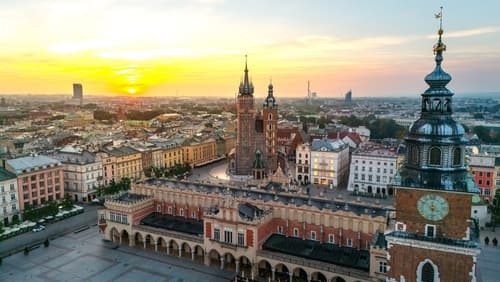
Poland has been Central Europe's most consistent overperformer for a decade: EU membership since 2004 multiplied through structural funds, a formidable engineering-education pipeline, and a tech sector that now counts roughly 850,000 professionals, fourteen unicorns and forty-five thousand IT graduates a year. Warsaw runs the capital-market energy with a skyline Berlin lacks, Kraków pairs the Rynek's medieval theatre with the deepest services-and-startup cluster, Wrocław and Gdańsk carry the second tier with their own gravity, and everywhere the texture holds: Żabka on every corner, trams that work, coworking that fills, and a professional generation whose English is effortless and whose B2B-contracting culture makes the freelance economy the norm rather than the exception.
The visa story rewards route-first thinking, because the label everyone searches for does not exist. Poland has no nomad visa; what it has is better for anyone willing to formalize. The JDG, the one-person business, registers free through the CEIDG portal in about thirty minutes, and a temporary residence card on business-activity grounds runs up to three years with a renewal bar around 600 euros of monthly income, legal stay continuing while applications pend. The tax menu attached is the actual magnet: the progressive scale at 12 and 32 percent, the flat 19 percent liniowy on profit, ryczałt at 8.5 to 15 percent of revenue with most IT landing at 12, and the 5 percent IP Box for qualifying software income, atop flat ZUS contributions with a discounted first stretch. The seasonal permit system, built for the farm calendar, issues by the hundred thousand in normal years, though it mostly serves the near abroad; for Western passports the JDG remains the door.
The catches are two and honest: most non-EU citizens need residence rights that allow self-employment before registering, with the practical sequences running through Type D visas, incubator structures or in-country conversions, while Americans hold the quiet privilege of a 1990 bilateral treaty that opens the JDG to US citizens directly; and the bureaucracy, while genuinely modernizing, labor-market test abolished in 2025, everything moving to the digital-only MOS portal, still asks patience measured in months. The Business Harbour fast-track survives in narrowed form for mainly post-Soviet nationalities, the Blue Card serves the salaried at its threshold, permanence arrives at five years and citizenship three after that, dual nationality tolerated.
The honest context is the frontier's. Poland borders the war, and September 2025 made it explicit when Russian drones crossed en masse and NATO aircraft shot them down over Polish soil, Article 4 invoked by morning. What followed is the era's managed architecture: rolling low-altitude airspace restrictions along the eastern border that never touch passenger aviation, anti-drone towers rising on the Belarus line, border strips closed to casual presence, entry from Belarus and Russia restricted to enumerated exceptions, and temporary checks at even the German and Lithuanian borders that make carrying a passport sensible everywhere. None of it reaches daily life in Warsaw or Kraków, whose streets remain among Europe's statistically safest; all of it belongs in the same mental folder as Lithuania's balloons, the background hum of a region that has decided to be ready. The US advisory's Level 1, reaffirmed through it all, is the accurate summary.
Widening the search? If you are looking to expand your job hunt across Central Europe, take a look at Lithuania →, Czech Republic →, and Germany →.
Cost of living
Poland prices at half of Western Europe while delivering most of its function: Warsaw one-bedrooms run roughly 3,000 to 4,500 złoty, 700 to 1,050 euros, in the districts worth living in, Kraków about a fifth less with Kazimierz and the center at the top, Wrocław and Gdańsk below that, and the złoty's 4.2-to-the-euro arithmetic quickly becoming second nature. Utilities carry the winter-heating weight from December through March, and fiber is fast, cheap and everywhere.
Daily life runs on institutions: the lunch-deal economy at 30 to 45 złoty, the milk-bar tier below it, pierogi as budget policy, Żabka convenience stores on every corner for everything at all hours, and Biedronka-Lidl groceries keeping the cooking economy trivial. Transport is excellent and nearly free by Western logic, trams and buses at commuter-pass prices, Bolt and Uber cheap, and the PKP intercity rail putting Kraków-Warsaw at under three hours. Cards and BLIK mobile payments run everything; cash is optional. The one calendar quirk worth knowing: the Sunday trading ban shutters most shops on most Sundays, Żabka and restaurants excepted, so Saturday is grocery day by law. The comfortable single city life assembles at 1,800 to 2,400 dollars, the budget floor sits near 1,300 for those who cook and ride trams, and the JDG-registered contractor's ZUS line, roughly 1,600 to 1,900 złoty monthly after the discounted start, is the honest addition to any formalized budget.
- One-bedroom rent: 3,000 to 4,500 złoty in Warsaw's good districts, a fifth less in Kraków, below that in Wrocław and Gdańsk; winter heating is the honest utilities addition and fiber costs a rounding error.
- Eat the institutions: 30-to-45-złoty lunch deals, milk bars below, pierogi as budget policy and Żabka for everything at all hours; the food economy resists effort in every city.
- Move for commuter-pass prices: trams and buses cost coins, Bolt is cheap, PKP rail links the cities in hours, and BLIK pays for all of it; the car is genuinely optional.
- Plan around the Sunday ban and the ZUS line: most shops close most Sundays by law, so Saturday is grocery day, and the formalized contractor budgets 1,600 to 1,900 złoty monthly for social contributions after the discounted start.
Cost-of-living calculator
See how your budget stretches in Poland.
Estimates use approximate exchange rates and typical monthly costs. Your actual costs will vary.
Visas & Entry
Poland runs the standard Schengen stack with 2026's machinery: visa-free nationals receive 90 days in any 180 across the zone, the EES biometric system has been rolling at the borders since October 2025, ETIAS slipped past its target toward 2027, and EU, EEA and Swiss citizens live and work freely, registering at the voivodeship office after three months.
Beyond 90 days there is no nomad visa and a better machine instead. The centerpiece is the JDG-plus-residence stack: register a jednoosobowa działalność gospodarcza, the one-person business, free through the CEIDG portal in roughly thirty minutes, then apply for a temporary residence card, karta pobytu, on business-activity grounds, issued for up to three years with renewals judged against a modest income bar practitioners put around 600 euros monthly, legal stay continuing while the file pends. The prerequisite is the honest catch: registering a JDG requires residence rights that allow self-employment, which EU citizens hold automatically, Americans hold by treaty, the 1990 US-Poland economic agreement placing US citizens on Polish footing for sole proprietorships, and most other non-EU nationals must first acquire, via Type D national visas, incubator employment structures, or in-country status conversions. Around the centerpiece: the Type D national visa menu filed through e-Konsulat for work, business and study purposes; the Poland Business Harbour fast-track, suspended, reformed and relaunched in narrowed form for eligible nationalities, mainly post-Soviet, with roughly two-week processing for qualifying IT professionals; the EU Blue Card at its 13,355-złoty monthly salary threshold with two-to-eight-week processing and an accelerated road to EU long-term residence; and the system-wide modernization worth knowing, the labor-market test abolished in June 2025 in favor of a National Occupational Priority list, work-permit fees quadrupled in December 2025, and all residence applications moving to the mandatory digital MOS portal, with paper filings legally invalid after the late-April 2026 cutover. Permanence arrives at five years of continuous residence, citizenship eligibility three years after that, and Poland tolerates dual nationality.
- Think route-first, label-second: no nomad visa exists and none is needed; the JDG-plus-residence stack is the actual product, and the question to answer before anything else is whether your nationality can register the business, EU and US yes, most others via a prior status.
- Americans, use the treaty: the 1990 agreement is the quiet superpower, JDG registration on Polish footing, the karta pobytu on business grounds behind it, and the ryczałt-or-IP-Box menu waiting; the US Fast Track framing on practitioner sites describes exactly this.
- File digital or file nothing: the MOS portal is mandatory with paper legally invalid after the late-April 2026 cutover, the e-Konsulat handles consular filings, and the free official portals beat every paid intermediary the queues used to feed.
- Expect months and plan around them: voivodeship processing runs slow across 2024-2026 backlogs, legal stay continues while files pend, and the stamp-in-passport confirming a pending application is the document that keeps everything calm.
- Price the Blue Card against the JDG honestly: salaried engineers above the threshold get speed and the accelerated EU long-term clock, contractors get the tax menu; the B2B-versus-employment choice is the fork every tech arrival faces.
- Count Schengen days like money until formalized: the 90-in-180 window spans the zone, EES now logs it biometrically, and the JDG conversion is the exit from tourist arithmetic rather than an extension of it.
| Visa or permit | What it covers |
|---|---|
| Schengen entry | Ninety days in any 180 for visa-free nationals across the zone, EES biometrics rolling at the borders since October 2025 and ETIAS now expected in 2027; the standard season, and the platform every longer route files from. |
| EU, EEA and Swiss citizens | Full freedom of movement: live, work and register a JDG without permits, recording residence at the voivodeship office after three months; the Central European base as birthright. |
| The JDG-plus-karta-pobytu stack | Register the one-person business free via CEIDG in thirty minutes, then take the residence card on business-activity grounds, up to three years, renewals against a roughly 600-euro monthly bar, legal stay while pending; the route the contractor economy actually runs on. |
| The American treaty privilege | The 1990 US-Poland economic treaty lets US citizens open Polish sole proprietorships on the same footing as Poles, a privilege most non-EU nationals lack; for American freelancers, Poland's missing nomad visa is a technicality. |
| Type D and Business Harbour | The national visa menu files through e-Konsulat for work, business and study; the Business Harbour fast-track survives in narrowed form for eligible, mainly post-Soviet nationalities at roughly two-week processing for IT professionals. |
| EU Blue Card | The salaried skilled route at a 13,355-złoty monthly threshold, two-to-eight-week processing, no labor-market test, and the accelerated path toward EU long-term residence; the employer-sponsored counterpart to the JDG stack. |
| The modernized machine | Labor-market test abolished June 2025 for a National Occupational Priority list, fees quadrupled December 2025, and the MOS digital portal now mandatory with paper applications legally invalid after late April 2026; permanence at five years, citizenship three after, dual nationality tolerated. |
Good to know: No DNV; the JDG stack is the product: CEIDG registration in ~30 min, karta pobytu on business grounds up to 3 yrs (~€600/mo renewal bar), tax menu of ryczałt 8.5-12% / liniowy 19% / IP Box 5%; Americans register JDG by 1990 treaty right (most non-EU need prior status); Business Harbour narrowed to post-Soviet nationalities; MOS portal digital-only after late-April 2026; PR 5 yrs, citizenship +3.
EnRoute Jobs AI tool
Route Planner
Map visa routes, timelines, and relocation costs for your next destination.
Work & Legal
Polish professional culture runs formal-then-warm: titles and the Pan-Pani register open relationships that loosen quickly among the tech generation, punctuality is respected, directness lands well, and English carries the entire professional class in the major cities. The structural fact that shapes everything is the B2B norm: Polish tech itself runs on contractor arrangements, senior engineers routinely invoicing employers through their own JDGs for the tax menu's sake, which means the foreign freelancer who formalizes is not an anomaly but a participant in the national standard, with accountants, banks and software, inFakt, ifirma, wFirma, built for exactly this life. The ecosystem is deep: roughly 850,000 tech professionals, fourteen unicorns, dense coworking in Warsaw's Wola and Mokotów, Kraków's Zabłocie and Wrocław's center, and a meetup calendar that runs year-round.
The legal lines are EU-standard: foreign-client remote work during Schengen stays is the unpoliced gray zone, Polish clients or local employment require proper status, and the JDG converts everything into clean structure the moment residence rights allow it, with KSeF mandatory e-invoicing arriving on the system's modernization schedule. The operational notes: GMT+1 overlaps Europe wholly and reaches US East by mid-afternoon; the Sunday trading ban shapes the week's logistics; winter argues for good light and a heated desk while the May-September stretch repays everything; and the one frontier-era rule is absolute, recreational drones stay grounded anywhere near the eastern border, where rolling military airspace restrictions make the hobby a genuine legal hazard.
- Join the B2B norm, don't work around it: Polish tech itself runs on JDG contracting, the accountant-and-app infrastructure is built for it, and the formalized freelancer is the standard participant rather than the exception; one local client is the trigger to register, and the tax menu is the reward.
- Work the GMT+1 geometry: Europe overlaps entirely, US East arrives by mid-afternoon, and the Warsaw-Kraków workday serves both sides of the Atlantic without nocturnal sacrifice.
- Plan the week around the Sunday ban: most commerce closes most Sundays by law with Żabka and restaurants excepted, Saturday is logistics day, and the rhythm becomes pleasant once expected.
- Keep drones grounded in the east: rolling military airspace restrictions run 20 to 50 kilometers deep along the Belarus and Ukraine borders, night flying is banned outright in the zones, and the recreational drone stays home anywhere near the frontier.
Good to know: B2B/JDG contracting is the national norm in Polish tech (foreign freelancers join the standard, not the exception); foreign-client work on Schengen stays = standard gray zone; KSeF e-invoicing arriving; GMT+1; Sunday trading ban; drones grounded near the eastern border.
Taxes
Polish tax turns on the 183-day line and the center-of-vital-interests test, and the reason contractors move here on purpose is the menu behind them: three ways to tax a JDG, one of which cuts most IT work to 12 percent of revenue and another of which cuts qualifying software income to 5.
| What applies | The rule in 2026 |
|---|---|
| The residency tests | Tax residency attaches past 183 days in a year or through a center of vital interests in Poland; the Schengen-season visitor stays clear, and the JDG-registered resident is in the system by design rather than accident. |
| Non-residents | Owe Polish tax on Polish-source income only; the visiting remote worker's foreign salary and clients sit outside the net for the standard season. |
| The scale, for context | The default progressive schedule runs 12 percent to 120,000 złoty and 32 above, with a 30,000-złoty tax-free amount; the regime employees live under and contractors usually opt out of. |
| Ryczałt, the headline | The revenue-based flat regime taxes most IT services at 12 percent and various service categories at 8.5, with no expense deductions and radically simple filing; for high-margin laptop work it is among the EU's lowest effective burdens. |
| Liniowy and the IP Box | The flat 19 percent on profit suits expense-heavy businesses, and the 5 percent IP Box applies to qualifying intellectual-property income including much software development; the ryczałt-versus-liniowy-versus-IP-Box choice is the annual conversation with the accountant. |
| ZUS and the health layer | Social contributions run roughly 1,600 to 1,900 złoty monthly on flat bases after the discounted start, the ulga na start and preferential windows softening the first stretch, and JDG registration carries public-health enrollment with EHIC coverage across the EU. |
| VAT and thresholds | The 23 percent standard VAT applies with the small-business exemption threshold raised to 240,000 złoty of annual revenue, foreign B2B services largely reverse-charge, and the KSeF e-invoicing mandate arriving on the modernization calendar. |
| Americans specifically | A US-Poland income tax treaty stands and, rarely for this index, a totalization agreement has been in force since 2009, letting self-employed Americans avoid double social-security contributions; with the FEIE or credits on the income side, the American JDG contractor's stack is among the cleanest in Europe. |
Verified 21 August 2026: the residency tests, the 12-and-32 scale with its thresholds, ryczałt's 8.5-to-15 revenue rates with IT at 12, the 19 percent liniowy, the 5 percent IP Box, flat ZUS with discounted starts, VAT at 23 with the 240,000-złoty exemption, and the standing US treaty plus the 2009 totalization agreement. General information, not tax advice.
Good to know: 183-day + vital-interests tests; the contractor menu is the magnet: ryczałt 12% revenue for IT (8.5% some services), liniowy 19%, IP Box 5%; flat ZUS ~1,600-1,900 PLN/mo after discounted start; VAT 23% with 240k exemption; US treaty AND 2009 totalization (rare); the American JDG stack is among Europe's cleanest.
Healthcare
Polish healthcare splits into a comprehensive public system, the NFZ, funded by the 9 percent health contribution and reciprocal for EU EHIC holders, and a private subscription tier that the professional class actually uses: LUX MED, Medicover and Enel-Med sell abonament packages at roughly 150 to 300 złoty monthly that buy same-week English-speaking access across clinic networks in every major city, the arrangement most tech employers and JDG contractors simply hold as standard kit. Public hospital capability is genuine at the university flagships, Warsaw's central clinical hospitals and Kraków's University Hospital, the country's largest, on its modern Prokocim campus, while public waiting times for non-urgent specialists are the system's honest weakness and the private tier's reason to exist.
The practical texture: JDG registration enrolls the contractor in the NFZ with EHIC coverage across the EU as a byproduct, a quietly valuable feature most nomad destinations cannot offer; pharmacies are professional and everywhere; dental care runs at value levels that draw German and Scandinavian patients; consultations cash-pay at 150 to 250 złoty, 35 to 60 dollars, for anyone outside the subscription economy; and the health risks are Central European seasonal, winter ice, the smog episodes that visit Kraków's valley air in cold snaps, worth an air-quality app and a filter habit, and the tick awareness of the summer forest-and-lake culture, where TBE vaccination is the sensible local norm. Emergencies answer at 112 with urban response matching the country's general competence.
- Buy the abonament like a local: 150 to 300 złoty monthly at LUX MED, Medicover or Enel-Med buys the same-week English-speaking access the professional class treats as standard kit, and cash-pay consultations run 150 to 250 złoty for everyone else.
- Use the JDG's quiet health feature: registration enrolls you in the NFZ with an EU-wide EHIC card as a byproduct, public emergency and hospital care behind it; few nomad structures anywhere include a national health system.
- Run the seasonal kit: winter ice is the injury statistic, Kraków's cold-snap smog episodes reward an air-quality app and filters, and TBE vaccination is the sensible norm for anyone joining the forest-and-lake summer.
- Exploit the dental value deliberately: the quality-to-price ratio draws German and Scandinavian patients westward-in-reverse, and the routine-through-implant spectrum prices at fractions of Western rates; 112 answers everything else.
| Hospital | What to know |
|---|---|
| University Hospital Kraków | Poland's largest hospital on the modern Prokocim campus, the southern flagship with full tertiary depth. |
| Central Clinical Hospital, Warsaw | The capital's university-tier anchor, the referral answer for complex cases in the public system's upper reach. |
| LUX MED network | The country's largest private network: the abonament subscription buys same-week, English-speaking access across clinics in every major city; the professional class's default. |
| Medicover | The second national private network with hospital-grade facilities in Warsaw; the corporate-package standard and a strong cash-pay tier. |
| Enel-Med | The third subscription network rounding out the private tier, clinic coverage across the major cities at competitive package prices. |
| The NFZ public system | Comprehensive and EHIC-reciprocal, strong in emergency and hospital care, slow in non-urgent specialist queues; JDG registration enrolls contractors automatically, EHIC card included. |
Hospital list compiled 21 August 2026 and not yet confirmed against each facility directly. Treat as indicative and verify before relying on it.
Good to know: The abonament subscription tier (LUX MED/Medicover/Enel-Med, 150-300 PLN/mo) is the professional standard; JDG registration includes NFZ + EHIC (rare feature); University Hospital Kraków is the country's largest; dental value draws foreign patients; winter ice + Kraków smog episodes; 112.
Safety
Poland holds a US Level 1, Exercise Normal Precautions, reissued through periodic review with minor edits, and the daily-life half of the picture earns it completely: violent crime is low, Warsaw and Kraków walk safely at all hours in their living districts, and the visitor's crime register is the classic European pair, pickpockets working Warsaw Central Station and Kraków's Rynek crowds, and thefts from parked cars accounting for a third of tourist-crime reports, both answered by ordinary habits. The frontier half is the era's, and this page states it plainly rather than around it: Poland borders the war, and on the night of September 9-10, 2025, up to twenty-one Russian drones crossed Polish airspace via Belarus and Ukraine, NATO aircraft shot them down over Polish territory for the alliance's first direct engagement of the war, Article 4 consultations followed by morning, and airports ran a day of closures and delays. What has followed is managed architecture rather than escalation: rolling low-altitude airspace restrictions 20 to 50 kilometers deep along the eastern border, renewed in three-month cycles and explicitly designed to leave passenger aviation untouched; anti-drone towers rising on the Belarus line; occasional small-drone and balloon activity logged and summoned-over as hybrid testing; and a border regime that closes strips within 15 meters to 2 kilometers of the line to casual presence, restricts entry from Belarus and Russia to enumerated exceptions, bans Russian-plated cars, and runs temporary checks at even the German and Lithuanian frontiers, making the carried passport sensible everywhere.
The distances do the reassuring arithmetic: Warsaw sits 180 kilometers from Belarus and the living map of Polish cities runs far from every restricted strip, daily life in which has not changed. The practical rules that remain: stay off the marked border strips absolutely, plan no overland entry from Belarus or Russia, keep recreational drones grounded in the east, carry the passport at internal borders, and treat any future incident the way the country does, as a night of aviation delays managed by a practiced system. Demonstrations are civic and calendar-driven, the political temperature is loud but democratic, winter ice outranks every human threat as the injury statistic, drivers need an IDP alongside their license, and 112 answers everything.
- Hold both halves of the picture: daily Warsaw and Kraków run among Europe's statistically safest streets while the frontier carries the era's managed architecture; the September 2025 drone night changed the airspace rules, not the city life, and the advisory tier held through it.
- Respect the border geometry absolutely: the 15-meter-to-2-kilometer strips are closed and marked in Polish, overland entry from Belarus or Russia is exception-only, Russian-plated cars are banned, and no itinerary needs any of it; Warsaw sits 180 kilometers from the nearest line.
- Build modest aviation slack: incident nights produce delays and reroutes rather than danger, the eastern low-altitude zones never touch passenger jets, and the flexible-ticket habit plus the airline app absorb the pattern entirely.
- Run the classic city habits: bags closed at Warsaw Central and on the Rynek, nothing visible in parked cars, taxis by app at night; the pickpocket-and-car-theft pair is the entire urban register.
- Carry the passport and the IDP: temporary checks run at even the German and Lithuanian borders, the document habit costs nothing, and drivers need the international permit alongside their license as a genuine legal requirement.
- Treat winter as the actual hazard: ice injures more visitors than anything human, city clearing is efficient and rural roads slower, and 112 answers everything with practiced competence.
Official travel advisories
| Government | Current position |
|---|---|
| United States | Level 1, Exercise Normal Precautions, reissued through periodic review with minor edits and held through the September 2025 drone incursion; the country page restricts entry from Belarus and Russia to enumerated exceptions with the Brest-Terespol humanitarian channel.travel.state.gov → |
| United Kingdom | No advisory against travel: documents the September 2025 incursion's temporary airport closures, tracks the Belarus border's closure-and-reopening cycles, and carries the EES rollout notes on the entry-requirements page.gov.uk → |
| Canada | Normal precautions; maps the closed crossings, the humanitarian-permit requirement for entry from Belarus or Russia, the 15-meter-to-2-kilometer prohibited border strips marked in Polish, and the Russian-vehicle entry ban.travel.gc.ca → |
| Australia | Caution near the Russia, Belarus and Ukraine borders with access restricted to two kilometers in places; do not travel onward to Ukraine; notes the temporary German and Lithuanian border checks and requires the IDP alongside a national license for drivers.smartraveller.gov.au → |
| US Embassy Warsaw | Enroll in STEP; the embassy feed carried the September 2025 alerts and remains the live channel for the rare security item. Aleje Ujazdowskie 29/31, Warsaw; +48 22 504 2000.pl.usembassy.gov → |
Advisory positions verified 21 August 2026: US Level 1 held through the September 2025 incursion and its NATO response, the rolling eastern airspace restrictions in their renewal cycles, the border-strip prohibitions and Belarus-Russia entry exceptions, the temporary internal-border checks, and the IDP requirement. Open the sources before travelling.
Good to know: US L1 held through the Sept 2025 drone night (21 Russian drones, NATO's first direct engagement, Article 4); the response is managed architecture: rolling eastern airspace zones (passenger jets untouched), 15m-2km border strips closed, Belarus/Russia entry exception-only, temporary German/Lithuanian checks; city register is pickpocket-tier; winter ice is the injury statistic; IDP required; 112.
Climate
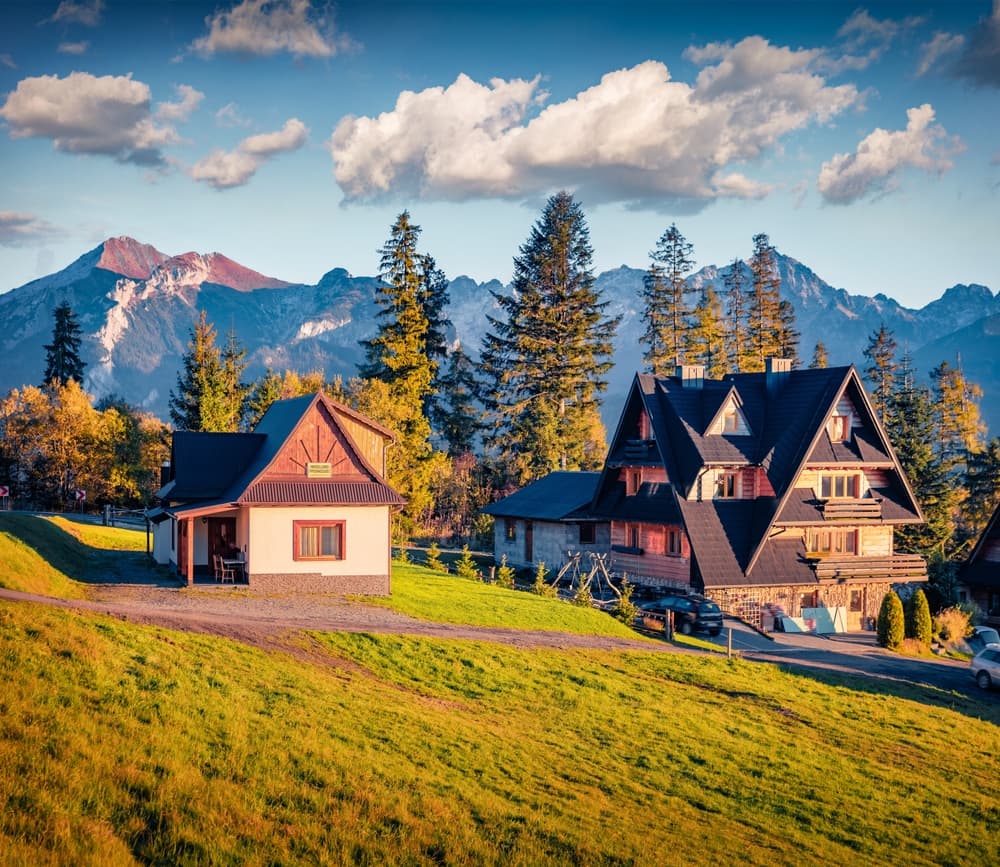
Poland runs the honest Central European year: winters cold and grey from December through February, zero to minus-five with regular snow and short days, Kraków's valley slightly colder and prone to cold-snap smog episodes; springs that arrive fast and green through April-May; summers genuinely pleasant, 18 to 24 degrees in Warsaw's July with long evenings, beer gardens and thunderstorm drama; and autumns that burn gold through September-October before retreating. The working calendar writes itself: May, June and September are the productivity-and-life sweet spots before and after the vacation-season peak, July-August runs the social high season with terraces full and cities relaxed, and the winter is productive desk weather that rewards good lighting, a heated coworking desk and either the embrace of the season, Zakopane's ski winter two hours from Kraków, the Christmas-market December, or the budget-airline escape the low-cost network makes trivial. The Baltic coast at Gdańsk and Sopot runs a short bright season, the Tatras give the south genuine alpine drama, and the mushroom-forest autumn is a national institution worth joining.
| Season | What to expect |
|---|---|
| Late spring and early autumn, May-June and September | The prize windows: green or golden, 15-to-22-degree days, cities at full function before and after the vacation peak; the months the planning aims at. |
| Summer, July to August | The social high season: 18-to-24-degree Warsaw days stretched by long evenings, beer gardens and lake weekends, thunderstorms supplying the drama; the Baltic coast's short bright window runs in parallel. |
| Winter, December to February | Cold, grey and genuine: zero to minus-five with regular snow, short days, Kraków's valley smog episodes in cold snaps; productive desk weather answered by good light, Zakopane's ski season and the Christmas-market December. |
| The fast shoulders | Spring arrives quickly through April, autumn burns gold through October and retreats fast; the mushroom-forest season is the national institution of the latter and worth joining deliberately. |
Good to know: May-June and September are the sweet spots, July-August the social peak, and the real winter is productive desk weather answered by light, Zakopane and cheap flights.
Culture & Customs
Polish culture pairs formality with deep hospitality: the Pan-Pani register and firm handshakes open relationships that, once opened, run warm and durable, the invitation home is meant and the table that follows is serious, and punctuality is respected as basic courtesy. History is present tense here, the partitions, the war, the uprising, the communist decades and the Solidarity victory living in family memory, and the visitor's role around wartime topics is listening with the seriousness they earned; the museums, Warsaw Rising, POLIN, Schindler's Factory, are civic institutions rather than attractions. The Catholic calendar structures the year even for the secular, All Saints' candlelit cemeteries on November 1 among Europe's most moving sights, Christmas Eve's Wigilia the year's emotional center, and Easter's painted eggs and wet Monday its playful counterweight.
Daily texture runs on institutions: pierogi and żurek as comfort policy, the milk-bar tradition surviving as budget treasure, vodka culture ceremonial rather than casual with craft beer running the everyday tier, the name-day sometimes outranking the birthday, and the mushroom-picking autumn emptying cities into forests with a seriousness that surprises newcomers. The codes are light: shoes off in homes, flowers in odd numbers with chrysanthemums reserved for graves, tipping around 10 percent, dress modest in the churches that anchor every old town, and the Sunday trading ban shaping the week's rhythm. Kraków adds its student-city café depth, Warsaw its capital velocity, and everywhere the visitor who learns dzień dobry and dziękuję, eats the pierogi with enthusiasm and treats the history with respect is met with the hospitality the formality was guarding.
- Learn dzień dobry and dziękuję at minimum: English carries the professional cities and the Polish attempt still lands as genuine courtesy in a culture that notices manners.
- Treat history with its earned seriousness: the war, the Uprising and the communist decades live in family memory, the great museums are civic institutions, and the visitor's role around these topics is listening.
- Accept the hospitality when offered: the invitation home is meant, the table is serious, arriving with flowers in odd numbers is the code, and the shoes come off at the door.
- Join the calendar's great moments: All Saints' candlelit cemeteries on November 1, Wigilia's Christmas Eve, the painted-egg Easter; the Catholic year structures the culture even for the secular, and the moments repay respect.
- Eat the institutions: pierogi and żurek as policy, the milk-bar tier as budget treasure, vodka ceremonial and craft beer daily; the 30-złoty lunch deal is the working ritual.
- Plan around Sunday: the trading ban closes most shops most Sundays with Żabka and restaurants excepted; Saturday logistics and Sunday's slower rhythm become pleasant once expected.