EnRoute Jobs

City Guides

Cost of living, neighborhoods, internet, and the nomad scene — city by city.

Nomad 9.2

Chiang Mai

Thailand

Chiang Mai built its geo-flex reputation on three things: serious fiber internet at a fraction of Bangkok prices, a walkable old city moat district that retains genuine character, and a surrounding landscape of mountains and rice paddies that makes the cost of productivity feel earned. For a period in the mid-2010s it was effectively the unofficial capital of remote work culture in Asia.

$1,400/mo

Nomad 9.0

Tbilisi

Georgia

Tbilisi arrived on the geo-flex map around 2015 and the discovery process has been ongoing since. The city offers a specific combination that is rare: genuine Old World architecture (the wooden-balconied Abanotubani sulfur bath district, the churches dating to the 5th century, the Soviet-modernist structures of the Rustaveli Avenue boulevard), costs that remain well below most European capitals, and a Georgian hospitality culture that makes strangers feel immediately less strange.

$1,300/mo

Nomad 9.0

Lisbon

Portugal

Lisbon sits on seven hills above the Tagus and has spent the past decade becoming one of the most discussed cities in Europe, which is both accurate and slightly unfortunate. The discussion attracted exactly the interest it was meant to attract, and costs have followed accordingly. The city that was a reliable budget base for remote workers in 2018 has shifted; Lisbon in 2026 is still cheaper than most Western European capitals, but it no longer undercharges for what it offers.

$3,000/mo

Nomad 8.8

Porto

Portugal

Porto resists the category of ''second city'' with the instinctive stubbornness of a place that knows it was first in several things that mattered. The port wine that bears its name was shipped from here and aged in the lodges of Vila Nova de Gaia across the Douro. The Clérigos tower that defined the skyline before the Dom Luís I bridge was built. The Livraria Lello, which may or may not have inspired J.K. Rowling''s Hogwarts staircase but claims it with some basis, has been selling books since 1906 in a building that functions as a pilgrimage site for people who love bookshops in the way that such people do.

$2,600/mo

Nomad 8.5

Bangkok

Thailand

Bangkok is a city that makes very little effort to explain itself. The traffic is indifferent to logic, the heat in March is genuinely dangerous, and a one-dollar bowl of noodles exists three minutes' walk from a sixty-dollar rooftop cocktail. This tension is not a flaw. It is the organizing principle.

$1,900/mo

Nomad 8.5

Budapest

Hungary

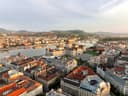
Budapest is a city of thermal springs, a river that divides two halves with genuinely different characters, and an architectural confidence that overreaches in the best possible way. Buda is hills and residences and the castle district looking down at everything. Pest is flat, grid-organized, grand 19th-century boulevards, and the seven districts that contain most of the city's actual life. The division is real enough to matter but bridgeable in nine minutes by the No. 2 tram.

$2,300/mo

Nomad 8.5

Da Nang

Vietnam

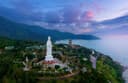
Da Nang makes an argument that most Vietnamese cities do not: you can be simultaneously productive, comfortable, and close to one of Southeast Asia's most beautiful coastlines. The city sits at the midpoint of Vietnam's coast, an hour's flight from both Hanoi and Saigon, and within easy reach of Hoi An's ancient town (30 minutes south) and the Hai Van Pass road north.

$1,400/mo

Nomad 8.5

Bali

Indonesia

Bali has been described so many times that the descriptions have become the obstacle. The spiritual retreats, the surf breaks, the rice terraces: all real, all present, all somewhat flattened by the volume of content produced about them. What is harder to find in the coverage is the practical reality of what makes Bali work as a base for geo-flex professionals.

$1,700/mo

Nomad 8.5

Kuala Lumpur

Malaysia

Kuala Lumpur has a case to make that it doesn't always make loudly enough. It is one of Southeast Asia's most livable cities for geo-flex professionals: genuinely fast internet (Malaysia's national broadband infrastructure is among the region's strongest), a well-developed coworking scene concentrated in the KLCC and Bangsar South areas, a public transit system that functions, and a food culture that makes the daily meal-finding exercise a genuine pleasure.

$2,000/mo

Nomad 8.5

Prague

Czech Republic

Prague has spent three decades working through its own contradictions and has not fully resolved any of them, which is part of why it remains one of the most interesting cities in Europe. The physical city is nearly unrepeatable: a medieval and Baroque core that survived the 20th century with its architecture largely intact, a river that makes the historic center genuinely beautiful from every angle, and neighborhoods beyond the tourist corridor that still feel like a city rather than a managed heritage experience.

$2,700/mo

Nomad 8.5

Tallinn

Estonia

Tallinn is the medieval city that the Soviet Union managed to preserve without intending to: the limited development of the occupation years left the old town (Vanalinn) intact in a way that the organic growth of a capitalist economy would not have. The result is the best-preserved Hanseatic merchant city in the world, a walled hilltop acropolis and a lower merchant town of guild halls, churches, and narrow limestone lanes that tourists walk through and a functioning city operates around them.

$2,600/mo

Nomad 8.5

Barcelona

Spain

Barcelona has spent thirty years building its reputation as the most desirable city in Southern Europe, and the reputation has had consequences. The tourist density in the Gòtic and Born neighborhoods is substantial enough to have generated a local political movement against it; the housing market reflects the global demand for a base in a Mediterranean city with this infrastructure; and the Catalan independence question gives daily life an ongoing political undercurrent that adds complexity to an already complex city.

$3,300/mo

Nomad 8.5

Mexico City

Mexico

Mexico City is one of the great megalopolises and it operates at a scale that first-time visitors find either exhilarating or overwhelming. Twenty-two million people in the valley of Mexico; the largest urban transport system in Latin America; over 150 museums; a food culture that ranges from $1 street tacos to the best restaurants in the hemisphere. The city's altitude of 2,240 meters means it is perpetually spring-like in temperature, even as the pace and noise operate at a completely different register.

$2,200/mo

Nomad 8.3

Medellin

Colombia

The transformation of Medellín is discussed so frequently that it has become its own cliché. Yes, the city that was the world's most dangerous in the early 1990s is now stable and livable and has genuinely changed. This historical context is worth holding lightly. What is more relevant for a geo-flex professional considering a stay here is what Medellín actually is, rather than what it used to be.

$1,700/mo

Nomad 8.3

Taipei

Taiwan

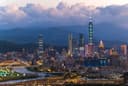
Taipei sits in a basin ringed by mountains, close enough to feel compressed at street level and expansive from any elevation above the city proper. The Yangmingshan National Park borders the northern edge of the urban area; hot springs run from volcanic activity beneath the hills; the city unfolds below in a grid that Japanese colonial administration laid out and that has been built vertically since without much pause.

$2,500/mo

Nomad 8.2

Ho Chi Minh City

Vietnam

Saigon — nobody who lives there uses the official name — operates at a frequency all its own. The motorcycles do not wait for pedestrian crossings; you learn to walk through them at a steady pace. The city has been rebuilt and reinvented so many times that the layers exist simultaneously: colonnaded French villas now housing consulting firms, American-era buildings now used as wedding venues, Soviet-influenced blocks occupied by tech startups.

$1,600/mo

Nomad 8.2

Singapore

Singapore

Singapore is the city-state that other governments study for the gap between its size and its output. Occupying 734 square kilometers at the southern tip of the Malay Peninsula, it has built one of the world's highest-income economies through a combination of geographic positioning, deliberate policy, and an administrative competence that generates both admiration and, among those who prefer a more organic city, a certain unease.

$4,200/mo

Nomad 8.2

Penang

Malaysia

George Town makes a particular claim on its visitors: that it is the best food city in the world. This is contested by Singaporeans, by certain Sicilians, by anyone from Mexico City. But it is argued with a local seriousness that deserves engagement. The morning coffee ritual, the hawker center dinner, the Nyonya laksa at the right stall in Lebuh Kimberley: these are not casual meals. They are the city's primary civic institution.

$1,800/mo

Nomad 8.2

Fukuoka

Japan

Fukuoka is Japan's most livable city by multiple domestic surveys and the one that tends to surprise Western remote workers who have built their Japan expectations around Tokyo or Kyoto. It is a port city of 1.6 million on the northern coast of Kyushu, facing Korea across the strait, with a food culture built around ramen, mentaiko, and the yatai open-air stall culture that sets it apart from every other Japanese city. It is also, by Japanese standards, affordable.

$2,500/mo

Nomad 8.2

Kraków

Poland

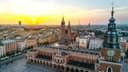
Kraków is Poland's cultural capital in every sense that Warsaw, the political and economic capital, cannot claim. The Wawel Castle above the Vistula, the largest medieval market square in Europe at Rynek Główny, the Jewish quarter of Kazimierz with its history too large and too recent to frame comfortably: these are the things that set Kraków apart not just from other Polish cities but from most European capitals.

$2,400/mo

Nomad 8.2

Berlin

Germany

Berlin is the city where the 20th century conducted its most visible experiments, and the current city carries that weight differently from how it did ten years ago. The cheap rents that sustained its post-reunification identity have risen significantly; the creative communities that made Mitte and Prenzlauer Berg legendary have moved to Neukölln and Wedding and then pushed further. The city is still one of the more affordable major European capitals, but the gap that once made it unique has narrowed.

$3,200/mo

Nomad 8.2

Madrid

Spain

Madrid sits at the geographic center of Spain and has the self-assurance of a capital that has never been seriously challenged by any rival. The Paseo del Arte, the kilometer-long axis that connects the Prado, the Reina Sofía, and the Thyssen-Bornemisza across from each other, is the most extraordinary concentration of art institutions outside of Paris. The food and social culture operates on hours that disorient northerners: breakfast at nine, lunch at two, dinner at ten, the terrace until one in the morning on a Tuesday.

$3,100/mo

Nomad 8.0

Oaxaca

Mexico

Oaxaca is the city that people who have been to Mexico City recommend when they want somewhere that operates at a different scale and intensity. It is a highland city of 300,000 at 1,550 meters in the Sierra Madre del Sur, surrounded by indigenous Zapotec and Mixtec communities that have maintained distinct languages and cultural traditions, and it has a culinary tradition that food writers consider among the most important in the hemisphere.

$1,600/mo

Nomad 8.0

Amsterdam

Netherlands

Amsterdam is the city that perfected the relationship between water and urban life and has been managing the consequences of that perfection ever since. The canal ring, the Golden Age merchant houses, the museum density along the Museumstraat: all extraordinary, all genuine, and all operating under a level of tourism pressure that has forced the city to implement access controls that most major destinations have not yet considered.

$4,200/mo

Nomad 8.0

Osaka

Japan

Osaka is the Japanese city that other Japanese cities go to in order to eat and relax in ways that Tokyo''s social formality doesn''t allow. The Kansai region''s culture of taokonomi (do what you like) produces a different social register from the capital: louder, more direct, more willing to engage strangers at the izakaya bar, and organized substantially around the proposition that food is the most serious form of local pride. Dotonbori and the Namba streets are the most famous expression; the Kuromon Ichiba market (running since 1822) and the Tsuruhashi Korean market in the east are the more local ones.

$2,700/mo

Nomad 8.0

Dubai

UAE

Dubai is a city that decided what it wanted to be and then built it with enough speed that the conversation about whether it should exist at all was still ongoing while the buildings were going up. The result is a place of genuine strangeness: a financial and logistics hub that handles more trade than any city its age has a right to, built in the desert on oil revenue and then transitioned off oil faster than the premise suggested was possible.

$3,800/mo

Nomad 8.0

New York City

United States

New York City is the one city in this database that does not benefit from framing, because everyone already has a frame for it. The useful information is what the frame usually omits: that New York's energy, which is real and does produce a specific kind of creative and professional output that no other city replicates, comes with costs that have continued to escalate beyond what made them famous for being high.

$5,000/mo

Nomad 8.0

Tokyo

Japan

Tokyo is one of the most functional cities ever built and one of the most specifically Japanese, which means it operates according to a logic that rewards patience and close attention and resists quick summary. The scale is disorienting at first: 37 million people in the greater metropolitan area, 23 special wards in the city proper, each with its own character and infrastructure. What the scale conceals is how navigable it actually is once the train network becomes legible.

$3,300/mo

Nomad 8.0

Playa del Carmen

Mexico

Playa del Carmen is the Riviera Maya's working city: the one where the permanent population lives alongside the resort infrastructure, where the coworking spaces have serious fiber connections, and where monthly apartment rentals work out to a reasonable proposition for geo-flex professionals who want Caribbean access without the complete resort-town isolation of Tulum.

$2,300/mo

Nomad 8.0

San Francisco

United States

San Francisco is a city of exceptional physical beauty and significant contradiction. The fog burning off the bay in the morning, the hills that should be impractical and are, the compact geography that packs more distinct neighborhoods into 47 square miles than seems reasonable: the city earns its reputation as one of the more beautiful in North America. The contradiction is the poverty visible on the same blocks as the wealth, and the housing costs that have made the city inaccessible to much of the working population that once gave it its character.

$5,200/mo

Nomad 7.8

Phuket

Thailand

Phuket has reinvented itself several times, and the version that exists today is neither the backpacker island of the 1990s nor the post-tsunami rebuild of the following decade. It is a mature beach economy with fast fiber internet, a coworking scene in the Cherngtalay and Rawai areas, and costs that have risen considerably but remain below comparable beach destinations in the Mediterranean or Caribbean.

$2,000/mo

Nomad 7.8

Cuenca

Ecuador

Cuenca is the highland Ecuadorian city that the expat and geo-flex community discovered around 2010 and whose discovery transformed its rental market and international profile without fundamentally altering its character. It sits at 2,550 meters in the Andes, three hours south of Quito, with a colonial historic center that is smaller and more intimate than Quito's and that has been maintained in excellent condition.

$1,400/mo

Nomad 7.8

Warsaw

Poland

Warsaw was obliterated in the Second World War, 85 percent of it destroyed systematically, and rebuilt from photographs and memories into something that looks old but is almost entirely postwar. Understanding that history explains the city's particular energy: a place that knows what was lost and decided to build anyway. There is something relentlessly constructive about Warsaw that goes deeper than the obvious economic growth story.

$2,600/mo

Nomad 7.8

Valletta

Malta

Valletta is the smallest capital city in the European Union, a fact that underscores everything about it. The historic core, built by the Knights of St. John in the 16th century after the Great Siege of 1565, occupies a peninsula less than a kilometer across and two kilometers long. Every building carries historical weight. Every street ends at the harbor, the sea, or both. Walking the city takes twenty-five minutes; understanding it takes considerably longer.

$3,000/mo

Nomad 7.8

Athens

Greece

Athens is a city whose famous past operates as both asset and burden. The Acropolis is extraordinary and visible from half the city, a constant reminder that this place has been continuously inhabited for longer than most countries have existed. The city has spent decades uncertain about how to position itself relative to that history and has recently begun to find the answer: by becoming itself again, rather than a managed monument.

$2,800/mo

Nomad 7.8

Ljubljana

Slovenia

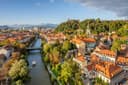
Ljubljana is the capital of Slovenia and is, by any reasonable measure, one of the most pleasant cities in Europe that most people have not yet built an itinerary around. It is small (the population of the city proper sits below 300,000), walkable from one end to the other in under thirty minutes, and organized around a river-threaded center where the car-free Prešernov trg plaza and the castle-topped hill above it create a civic geometry that feels designed for human habitation rather than urban sprawl.

$2,600/mo

Nomad 7.8

Vilnius

Lithuania

Vilnius is the kind of city that travel writers discover and then slightly oversell, so let the understated version be offered first: it is a small, historically layered Baltic capital with a Baroque old town so dense and well-preserved that UNESCO designation was inevitable, a startup scene punching above its weight, and costs that remain genuinely low by Northern European standards. The tourist infrastructure has grown, but the city has not yet fully industrialized itself for visitors.

$2,350/mo

Nomad 7.8

Miami

United States

Miami runs on contradictions and makes them work. It is simultaneously a serious international financial hub and a city where people come specifically to not be serious; a place where architecture ranges from Art Deco masterpieces to glass towers to pastel shotgun houses in the same block radius; a city that functions as a gateway between the United States and Latin America and belongs fully to neither.

$4,200/mo

Nomad 7.8

Vancouver

Canada

Vancouver is the Canadian city that California would build if California were in Canada. The mountains start immediately north of the city, the Pacific is immediately west, and the urban core between them is dense, walkable, and arranged around coffee shops, cycling infrastructure, and a real estate market that has made homeownership implausible for most residents.

$4,400/mo

Nomad 7.8

Belgrade

Serbia

Belgrade is where the Danube and the Sava meet, and the city seems to draw character from the collision. There is something in Belgrade that doesn't bother to charm you first. The Soviet-era blocks and the Ottoman fortress and the 1990s trauma and the current nightlife that is by some accounts the best in Europe all coexist without explanation or apology. It is a city that has survived too much to perform itself.

$1,900/mo

Nomad 7.8

Brno

Czech Republic

Brno is the Czech city that got the architecture and the Austrians and the Moravian wine country and then had the good grace not to spend all its time resenting Prague for being better known. The second city of the Czech Republic has a completeness that modest size sometimes produces: a functioning university (Masaryk University, with 35,000 students who make the city''s café and nightlife culture disproportionate to its population), a tech and startup ecosystem that has been building since the Skoda and IBMengineering heritage gave the city a technical workforce, and a historic center that manages the Gothic, Baroque, and functionalist layers without producing the tourist compression that Prague''s success requires it to absorb.

$2,300/mo

Nomad 7.8

Limassol

Cyprus

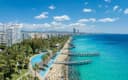
Limassol is Cyprus's fastest-growing city and its most international, shaped in the past decade by the influx of Israeli tech workers, Russian business interests, and the EU passport investment programs that the government has since discontinued but whose consequences for the city's development remain visible. The result is a city that has added gleaming marina developments, high-end restaurant infrastructure, and a coworking ecosystem at a pace that has outrun its historical character.

$3,200/mo

Nomad 7.8

Bogota

Colombia

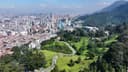
Bogotá sits at 2,640 meters above sea level, and the altitude is the first thing most visitors notice: a mild shortness of breath on the airport walk, a faster heartbeat during the first couple of days, a quality of cool dry air unlike anything at sea level. After three or four days, this passes. What remains is a city that has been working hard to be seen clearly rather than through the lens of what it was twenty years ago.

$1,800/mo

Nomad 7.8

Riga

Latvia

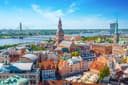
Riga is the Baltic city that got the best architecture and the most complicated twentieth century. The Art Nouveau buildings concentrated in the Quiet Center (Klusais centrs) around Alberta and Elizabetes streets, the largest and densest collection of the style anywhere in the world, were built in the fifteen years before the First World War when Riga was the Russian Empire''s fourth-largest city and a commercial center of genuine ambition. What happened after 1914 was the occupation sequence that defines Baltic history: German, then Soviet, then German again, then Soviet again until 1991, with each period leaving its own layer in the urban fabric.

$2,400/mo

Nomad 7.8

Kyoto

Japan

Kyoto was the capital of Japan for eleven centuries before Tokyo assumed the role, and the city has spent the intervening 150 years deciding what to do with the weight of that. The answer is a careful, sometimes overwhelming preservation of the surface alongside a genuine contemporary city operating beneath it: the Shinkansen arrives in a station designed by Hiroshi Hara with a specific contemporary ambition; Nishiki Market sells its dried fish and pickled vegetables from stalls that have been doing this since the seventeenth century; and the 1,600 Buddhist temples and 400 Shinto shrines are not heritage parks but functioning religious institutions on active land.

$2,800/mo

Nomad 7.8

London

United Kingdom

London is not a city for qualifying statements. It is too large, too internally varied, and too contradictory to summarize without immediately generating legitimate exceptions. What can be said with confidence: it is the most internationally connected city in this database, among the most expensive outside Zurich, and the place where a specific combination of finance, creative industries, tech, and cultural weight creates a professional environment that nowhere else in Europe replicates.

$4,800/mo

Nomad 7.8

Hanoi

Vietnam

Hanoi is a city of condensed history and unhurried morning rituals. The Old Quarter's 36 ancient trade streets still organize themselves loosely around crafts and goods — Hang Gai for silk, Hang Bac for silver, Hang Bong for cotton — even as the street-level economy has diversified into coffee shops and guesthouses. The pace of the older neighborhoods operates on a different register from the Hanoi of glass office towers rising above West Lake.

$1,500/mo

Nomad 7.5

Melbourne

Australia

Melbourne is the city that Sydney residents secretly respect more than they want to admit. It is not organized around a harbor; it does not have a single building that announces itself to the world. What it has is a cultural density and a commitment to the quality of daily life that are harder to build than a landmark and harder to replicate than a climate.

$4,000/mo

Nomad 7.5

Bratislava

Slovakia

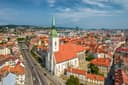
Bratislava is the capital city that gets slightly less attention than it deserves, which is fine with the Bratislavans who live here. The old town center (Staré Mesto), with its cobbled squares, the Michael''s Gate tower, and the medieval lanes leading to the Slovak National Theatre, is compact and genuinely pleasant in the way that central European old towns tend to be when they have not been entirely converted to tourist infrastructure. The castle above the Danube on a basalt rock, visible from the Austrian border, is the city''s landmark.

$2,300/mo

Nomad 7.5

Toronto

Canada

Toronto makes the case for itself through accumulation rather than any single argument: the most diverse city in the world by some measures, the economic capital of Canada, an established and serious coworking and startup ecosystem in the Financial District and the King West corridor, and a food culture that is one of the most genuinely global in the hemisphere. The individual pieces do not always cohere into a city with a strong identity, which is itself a fair characterization of a place still figuring out what it is.

$4,200/mo

Nomad 7.5

Bucharest

Romania

Bucharest is a city that defies easy summary, which is its principal virtue. The communist-era architecture, including the vast Palace of the Parliament that Ceaușescu ordered built at the cost of a significant portion of the historic center, sits alongside Art Deco facades, 19th-century French-inflected boulevards, and a new layer of glass-and-steel development that signals the economic growth of the past decade. The combination is jarring and interesting in ways that more aesthetically consistent cities are not.

$2,000/mo

Nomad 7.5

Seattle

United States

Seattle is a city where the rain is partly mythology and partly real, where the mountains (Rainier to the south, the Olympics across the Sound to the west) frame every clear day with a visual argument against being indoors, and where a remarkable concentration of global technology infrastructure has built up around what was originally a timber and fishing port. Amazon's headquarters, Boeing's design centers, Microsoft's campus fifteen miles east in Redmond: Seattle is not adjacent to the tech industry; it is one of its two or three primary nodes.

$4,200/mo

Nomad 7.5

Munich

Germany

Munich is the city that makes Bavarian conservatism look like the most enjoyable thing in Europe, which is the trick it has been pulling for two hundred years. The beer halls, the Isar River bathing culture (people swim the Eisbach wave in the English Garden in all conditions that allow it, which is most of them), the Hofbräuhaus, and the October festival that has been annually misrepresented as a two-week party rather than the agricultural fair-turned-celebration it originated as: these are genuine features of civic life, not performances for visitors.

$4,000/mo

Nomad 7.5

Buenos Aires

Argentina

Buenos Aires runs on café culture, political argument, and a relationship with time that discourages strict scheduling. Meetings start late; dinner at nine is early; the milonga doesn't begin until midnight. For geo-flex professionals arriving from Northern Europe or North America, the city requires a recalibration: not of your work hours, but of when the rest of life happens around them.

$1,600/mo

Nomad 7.5

Goa

India

Goa is the version of India that most international visitors encounter first, and it is not the representative version — a former Portuguese colony with a distinct architecture, a largely Christian population in the coastal towns, and a beach culture that has operated as a hippie and then backpacker and then higher-end destination for sixty years. This history has layered the coastal strip with everything from the annual Sunburn electronic music festival to serious Ayurvedic retreats, without the two things entirely resolving into a coherent scene.

$1,500/mo

Nomad 7.5

Batumi

Georgia

Batumi is Tbilisi's coastal counterpart: a Black Sea port city that has spent the past fifteen years transforming from a sleepy Soviet resort town into a somewhat bewildering skyline of casino towers and luxury hotels built for Turkish and Russian tourists. The results are architecturally uneven but practically useful for geo-flex professionals who want Georgian affordability with a beach.

$1,100/mo

Nomad 7.5

Edinburgh

United Kingdom

Edinburgh earns its mythic status and then goes further. The castle on the volcanic ridge overlooking the Old Town, the geological drama of Arthur's Seat, the New Town's Georgian grid running downhill toward the sea: these are the things that appear on every list, and they exist exactly as described. What the lists miss is the city's particular texture: the combination of Scottish seriousness with the social warmth Scotland maintains despite the seriousness, and the professional infrastructure of a capital that runs on government, finance, and an increasingly significant tech sector.

$3,500/mo

Nomad 7.5

Stockholm

Sweden

Stockholm is built on fourteen islands where Lake Mälaren meets the Baltic Sea, and the resulting geography gives it a quality that few other European capitals share: the sense that water and city are inseparable, that no street runs far before it opens onto something reflective and still. Design-forward Scandinavian aesthetics are not an abstraction here; they are in the street furniture, the apartment interiors, the transit system, and the coffeehouse architecture.

$4,000/mo

Nomad 7.5

Sydney

Australia

Sydney is the city that established the archetype of the livable Australian city, which is the same as saying it established the competition that all the others define themselves against. The harbor, the Manly ferry crossing in the morning with the heads visible and the CBD behind you, the particular light that photographers come specifically to work in: these are real, functional parts of daily life rather than amenities reserved for weekends.

$4,500/mo

Nomad 7.5

Dublin

Ireland

Dublin grew faster in the past thirty years than its infrastructure was designed to accommodate, which is the honest version of the technology capital story. The corporate headquarters of Google, Meta, LinkedIn, Twitter, Airbnb, and most of the major US tech platforms in Europe are here because of the 12.5% corporate tax rate, the English language, and the EU market access. What followed them was a housing crisis and a cost of living that has made Dublin one of the more expensive European capitals for younger workers.

$4,200/mo

Nomad 7.5

Split

Croatia

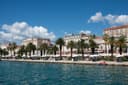
Split is the Dalmatian city that actually functions: a working port, a ferry hub connecting the mainland to the Dalmatian islands, and a 1,700-year-old Roman palace (Diocletian's Palace) whose walls and towers now enclose a living neighborhood of apartments, restaurants, bars, and a cathedral built in the emperor's mausoleum. The palace is not a museum; people live inside it, hang their laundry from the ancient stone windows, and drink coffee in its peristyle square.

$2,900/mo

Nomad 7.5

Copenhagen

Denmark

Copenhagen is what happens when a city decides that cycling is not a recreational activity but an organizing principle, and then follows through long enough that the rest of the infrastructure eventually conforms. The city's famous bike culture is not a feature; it is the skeleton around which everything else is arranged. Bike lanes are separated, maintained, and enforced by social expectation. Car culture is taxed into irrelevance. The result is an urban environment that moves at human scale even while remaining genuinely functional.

$4,200/mo

Nomad 7.5

Florence

Italy

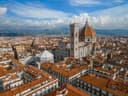
Florence is the city that the Renaissance used as its workshop, and which has been living inside the weight of that fact ever since. The Uffizi Gallery, the Accademia, the Bargello, and a dozen other institutions hold the most concentrated collection of fifteenth and sixteenth-century painting and sculpture in the world, and they are all within walking distance of each other in a city small enough that the center can be traversed in twenty minutes on foot. This is either inspiring or paralyzing depending on your relationship with greatness, and Florentines have had five centuries to develop a pragmatic answer to both reactions.

$3,100/mo

Nomad 7.5

Paris

France

Paris is the city most people carry an idea of before they arrive, and the adjustment to the actual place — noisier, more bureaucratic, more racially and economically diverse than the postcard — takes longer than a short visit allows. What remains after that adjustment is a city of extraordinary depth: the arrondissements unfold differently from each other, the café culture actually does structure daily life, and the Seine-side light on a clear October afternoon is exactly what the painters were trying to capture.

$4,000/mo

Nomad 7.5

Milan

Italy

Milan operates on a different register than the rest of Italy. The other cities romanticize ruins; Milan turns them into aperitivo bars. It is a city of industry, fashion, finance, and an increasingly visible tech layer, where geo-flex professionals find themselves working harder than they planned because the city makes ambition feel reasonable. The Navigli canals at dusk look nothing like the glossy design magazines that celebrate them. Better, in fact; something looser and more honest, locals spilling onto towpath edges with cheap wine and the evening light doing what only northern Italian light can.

$3,600/mo

Nomad 7.5

Vienna

Austria

Vienna operates at a frequency that takes a few days to calibrate to. The city's relationship with its own grandeur, the Habsburg Empire's architectural legacy deployed along the Ringstrasse as a deliberate statement of civilizational ambition, could produce self-consciousness or paralysis. It produces neither. Viennese conduct their lives inside some of the world's most extravagant public buildings with a practicality that is local and particular: the Naschmarkt on a Saturday morning, the U-Bahn at rush hour, the Heuriger wine tavern in Grinzing on a Sunday evening. These things coexist.

$3,600/mo

Nomad 7.5

Montreal

Canada

Montreal is the North American city where Europeans consistently feel most at home, and the feeling is based on something real rather than merely the presence of French signage and good cheese. The city operates with an urban density and a pedestrian culture that most Canadian and American cities have not achieved: the Plateau-Mont-Royal and Mile End neighborhoods are genuinely walkable residential communities with the kind of independent restaurant and cultural institution mix that European cities take for granted.

$3,500/mo

Nomad 7.5

Cape Town

South Africa

Cape Town sets an almost unfair scene. The mountain is always visible; the ocean is twenty minutes from anywhere in the city; the Winelands of Stellenbosch and Franschhoek are an hour away. The light, particularly in the Southern Hemisphere summer, has a quality that painters and photographers recognize immediately. The practical consequence is that Cape Town has become one of the most oversubscribed geo-flex destinations in Africa, with a hospitality and coworking infrastructure — particularly in the City Bowl and Sea Point areas — that has grown substantially over the past five years.

$2,200/mo

Nomad 7.5

Los Angeles

United States

Los Angeles is not one city but a federation of distinct communities loosely organized around a freeway network that is either the city's central organizing principle or its original sin, depending on who you ask. The urban form, sprawling across 500 square miles without a single dominant center, produces a quality of life that is fundamentally dependent on where you choose to live within it.

$4,500/mo

Nomad 7.3

Zagreb

Croatia

Zagreb is the Central European city that Croatia's coast routinely overshadows, which means it is also the city where you can still rent an apartment near the center without paying a tourist premium, find a coffee shop with reliable WiFi and no queue for seats, and spend a weekend without planning around which cruise ships are in port.

$2,600/mo

Nomad 7.2

Auckland

New Zealand

Auckland is where New Zealand begins, if you arrive by air, and where a significant portion of the country''s life is conducted, whether the rest of New Zealand approves or not. The harbor city that sprawls across an isthmus between the Waitemata and Manukau harbours, with the volcanic cones of One Tree Hill and Rangitoto visible from most elevated points, is both the country''s largest city and its most internationally connected: direct flights to Tokyo, Singapore, Los Angeles, London, and Sydney.

$4,000/mo

Nomad 7.2

Helsinki

Finland

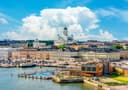
Helsinki operates at the intersection of Scandinavian and Finnish values, which turns out to produce a city that is simultaneously progressive, design-conscious, and deeply serious about the quality of silence. The Finns have a word, sisu, that combines grit, resilience, and a particular relationship with adversity that the city''s relationship with its climate helped produce. The darkness and cold of the long winter are not problems to be managed but conditions to be inhabited with appropriate equipment and a sauna.

$3,800/mo

Nomad 7.2

Nice

France

Nice sits at the point where the Alps collapse into the Mediterranean and makes the most of the arrangement. The Promenade des Anglais is a cliché for a reason, but the city extends far beyond it: into the old town's tangle of Italian-inflected streets, up the hill to the Cimiez neighborhood where Matisse worked, and along a coastline that on clear mornings looks implausibly blue for a real place.

$3,600/mo

Nomad 7.2

Thessaloniki

Greece

Thessaloniki is not Athens and is grateful for it. Greece's second city has spent decades developing an identity distinct from the capital's historical weight and tourist burden: a city of food culture, music, universities, and a Byzantine past layered under the Venetian fortifications and Ottoman architecture that still define its upper neighborhoods. Greek people consistently rank it as their preferred place to actually live, which is a meaningful endorsement from people who know the options.

$2,400/mo

Nomad 7.2

Bordeaux

France

Bordeaux spent two centuries building a reputation on wine and spent the past decade building a different one entirely. Since the LGV high-speed rail line cut the journey from Paris to two hours, the city has pulled a wave of younger arrivals who want the capital's connectivity without its costs or its density. The result is a city that has changed quickly and is still deciding what it wants to be.

$3,200/mo

Nomad 7.2

Hamburg

Germany

Hamburg is the city that Germany builds its commercial relationship with the world through, which means it is different from Munich''s Bavarian confidence and from Berlin''s creative disruption. The port, the second-largest in Europe after Rotterdam, is still functional and still defines the city''s character: the Speicherstadt warehouse district (UNESCO listed, now converted to museums, offices, and the Miniatur Wunderland), the fish market on Sunday mornings, and the Reeperbahn''s entertainment district that has been serving seafarers since the eighteenth century all descend from the same commercial logic.

$3,500/mo

Nomad 7.2

Nicosia

Cyprus

Nicosia is the last divided capital city in the world, and the line running through it — the UN buffer zone, the Green Line, separating the Republic of Cyprus from the Turkish-administered north — is visible and crossable for most people and invisible in its consequences for the city's daily operating rhythm. The old city on the southern side, within the Venetian walls, contains the greatest concentration of historical material and the most interesting street-level culture; the northern old city, accessible through the Ledra Street checkpoint, has its own character.

$3,000/mo

Nomad 7.2

Frankfurt

Germany

Frankfurt is the city that the rest of Germany has decided to take seriously despite its reputation as a financial center rather than a cultural one. The Sachsenhausen district across the Main River, the museums on the Museumsufer (museum riverbank), and the Bahnhofsviertel, the red-light and immigrant district adjacent to the train station that has quietly become the city''s most interesting food and nightlife neighborhood, are the evidence against the corporate skyline''s total dominance.

$3,700/mo

Nomad 7.2

Rome

Italy

Rome does not operate at the scale of urgency that most visitors bring to it, and this is the adjustment: the city is not trying to impress you. It has existed for 2,800 years and has a certain patience with the transient. The ruins emerge from gaps between apartment buildings as if nothing unusual has occurred; the Pantheon serves also as a parish church; the cats sit in the Forum as if the Roman Empire's absence is a reasonably recent and still potentially temporary development.

$3,300/mo

Nomad 7.2

Bangalore

India

Bangalore sits at 920 meters above sea level on the Deccan Plateau, and the altitude moderates the heat that makes most Indian cities difficult for extended stays. The year-round temperatures of 15 to 28°C, the relatively low humidity, and the established expatriate and international professional community have made it the most livable large Indian city for geo-flex professionals by most practical measures.

$1,400/mo

Nomad 7.2

Manchester

United Kingdom

Manchester built the industrial revolution and has spent the subsequent 150 years building everything else. The cotton mills that made it one of the wealthiest cities in the world in the 19th century have been converted into apartments, creative coworking spaces, and cultural venues; the same entrepreneurial energy that drove the original industrial logic has found new forms in media, music, and an increasingly significant tech sector. The Northern Quarter remains the most concentrated expression of what the city has become since the factories closed.

$3,500/mo

Nomad 7.2

Novi Sad

Serbia

Novi Sad is the Serbian city where the Exit Festival takes place, and for a significant portion of its visitors that is the primary context. The festival itself — four days on the Petrovaradin Fortress above the Danube, with lineups that have consistently included the largest names in electronic music and rock — is a genuine cultural event that draws 250,000 people annually to a city of 300,000. Outside of festival week in July, Novi Sad operates as what it actually is: the capital of Vojvodina, Serbia's northern province, a university city with a more Central European character than Belgrade, and a walkable city center that has been thoroughly restored since the 1999 NATO bombing of its bridges.

$1,600/mo

Nomad 7.0

Calgary

Canada

Calgary makes its clearest argument in the winter, which is counterintuitive for a city that sits at 1,045 meters on the edge of the northern Great Plains. The Chinook winds, warm Pacific air that rolls over the Rockies and descends onto the city, can raise temperatures by 20°C in a few hours — from minus 20 to plus 5, on a January afternoon — and the clarity of the sky after a Chinook passes is specific to this geography.

$3,700/mo

Nomad 7.0

Abu Dhabi

UAE

Abu Dhabi is Dubai's quieter older sibling, the actual capital of the UAE and the city where the federal government, the oil wealth, and the long-term cultural projects (the Louvre Abu Dhabi, NYU's campus, the Guggenheim still under construction on Saadiyat Island) are concentrated. It operates at a different pace: less performatively spectacular, more institutionally serious, and noticeably less congested with the tourism infrastructure that has reshaped Dubai's social texture.

$3,800/mo

Nomad 7.0

Brussels

Belgium

Brussels is the city that runs Europe without particularly wanting the credit. The European Parliament, the European Commission, NATO headquarters, and the headquarters of more international organizations than almost anywhere else on earth are conducted here with a particular Belgian pragmatism: serious institutional work accomplished inside a city that is actively, cheerfully unimpressed by its own importance. The Manneken Pis statue, a small bronze figure of a urinating boy that has been the city's official mascot since 1619, is a deliberate statement about this attitude.

$3,500/mo

Nomad 7.0

Marrakech

Morocco

Marrakech is a city that knows what it is and has fully committed to being it. The medina, the souks, the snake charmers in Djemaa el-Fna, the riad guesthouses, the Atlas Mountains visible on clear days to the south: all present, all real, and all experienced alongside several million other visitors annually. The question for geo-flex professionals is not whether Marrakech is genuinely extraordinary, because it is, but whether the tourist infrastructure serves extended productive stays.

$1,600/mo

Nomad 7.0

Perth

Australia

Perth is the most isolated major city in the world, a distinction that shapes everything about it: the self-sufficiency, the particular local pride, and the fact that most international flights require a connection through the eastern cities or Singapore. Once arrived, the isolation resolves into the most Mediterranean of Australia''s climates (hot dry summers, mild sunny winters), a coastline that extends in both directions with surf beaches at one end and sheltered harbor beaches at the other, and a city that operates at a scale below Sydney and Melbourne without any of the self-deprecation that implies.

$3,500/mo

Nomad 7.0

Adelaide

Australia

Adelaide is the Australian city that the other Australian cities describe as livable, which is a form of praise that Adelaide has learned to accept with equanimity and occasionally resent. Livable is accurate but incomplete. The city has a completeness unusual in a metro of 1.4 million: the Adelaide Central Market, running since 1869 and still the country''s best-stocked food market; the Fringe Festival in February and March that transforms every available space into a performance venue; the wine regions of the Barossa Valley and the Clare Valley within an hour; and a urban scale that makes daily life navigable without the coordination costs of Sydney or Melbourne.

$3,500/mo

Nomad 7.0

Lyon

France

Lyon earns its reputation as France's actual food capital without making you feel bad about preferring Paris. It is a working city, built on the confluence of two rivers and a silk-trading past that never entirely left its sense of itself. The Presqu'île district, wedged between the Rhône and the Saône, and the UNESCO-listed old town across the water form a city that is walkable, specific, and considerably underrated by everyone who hasn't lived in it.

$3,200/mo

Nomad 7.0

Brisbane

Australia

Brisbane spent decades being the Australian city that people passed through on the way to the Gold Coast, and then quietly accumulated the infrastructure that made it somewhere people chose. The subtropics (Brisbane is at the same latitude as Cape Town and Los Angeles) gave it a climate that Sydney and Melbourne don''t have; the 2032 Olympics commitment has brought infrastructure spending that is already reshaping the South Bank and the inner suburbs; and the relative affordability compared to the southern cities has been drawing a migration that the city is visibly adjusting to.

$3,700/mo

Nomad 7.0

Reykjavik

Iceland

Reykjavik is the world's northernmost capital, and it carries that distinction with the specific energy of a small city that knows it is extraordinary but does not particularly want to discuss it. The population of the greater metropolitan area sits around 230,000; the walkable city core is small enough to cross on foot in forty minutes. Everything happens within a radius that other capitals would call a single neighborhood.

$4,500/mo

Nomad 7.0

San Jose

Costa Rica

San José is the city that functions as Costa Rica''s necessary but unfashionable center: the capital where the administrative and commercial life of a country that would prefer everyone focus on its beaches and cloud forests actually gets done. The city is not beautiful in the way that the surrounding landscape is beautiful, and most visitors who arrive at Juan Santamaría airport treat it as a transit point rather than a destination. This is both understandable and slightly unfair.

$2,500/mo

Nomad 7.0

Tirana

Albania

Tirana has been changing faster than any capital city in the Balkans for the past decade, and the pace of change is part of what makes it interesting. The concrete blocks of the communist era are being repainted in vivid colors by a civic improvement program that started with former mayor Edi Rama's street art initiative and has expanded into a broader urban renewal project. New boulevards, parks, and pedestrian zones have been cut through the dense central grid in ways that would have been unimaginable twenty years ago.

$1,500/mo

Nomad 7.0

Cork

Ireland

Cork is Ireland's second city and the first to mention that it's the real capital, a civic self-regard the city maintains with enough humor to make it charming rather than insufferable. It is smaller than Dublin by every measure but also less expensive, less clogged with tourism infrastructure, and arranged on an island in the River Lee in a way that gives it a distinctive waterway geography and a center that is entirely walkable.

$3,500/mo

Nomad 7.0

Zurich

Switzerland

Zurich is the most expensive city in this database and offers the least apology for it. The Swiss franc is a serious currency used by a serious economy, and the city it has built is precise, functional, and designed to a standard that other European capitals study without fully replicating. Everything works. This is not a small thing.

$6,500/mo

Nomad 7.0

Graz

Austria

Graz is Austria's second city, and if Vienna is the country looking backward at its own imperial grandeur, Graz is Austria looking sideways at itself and finding something more livable. The Altstadt (old town), a UNESCO World Heritage Site, is compact enough to walk entirely in an afternoon and dense enough in late-Renaissance and Baroque architecture to reward doing so slowly. The Schlossberg, the forested hill rising directly from the center with a clock tower visible from most of the city, is Graz''s organizing landmark: everything orients toward it.

$3,000/mo

Nomad 7.0

Chicago

United States

Chicago is the American city that tends to be underestimated by people who have spent more time in New York or Los Angeles, which is their loss. It is organized on the lake with a formal clarity that New York's organic growth never managed, the downtown grid anchored by the Chicago River on one end and Lake Michigan on the other, neighborhoods running outward in patterns that are navigable within weeks. The architecture, from the 1890s steel frame pioneers to the later Mies van der Rohe buildings to the current generation, is the best concentrated urban building collection in North America.

$3,800/mo

Nomad 7.0

Antwerp

Belgium

Antwerp is Belgium''s commercial soul and the country''s most self-possessed city. The world''s second-largest port (after Rotterdam in Europe) and the global center of the diamond trade since the fifteenth century gave Antwerp a bourgeois confidence and a particular relationship with accumulation that is visible in its architecture, its fashion culture, and the directness of its Flemish civic character. The city has been buying art since Rubens was alive and painting in it.

$3,000/mo

Nomad 7.0

Quito

Ecuador

Quito sits in a narrow valley at 2,850 meters in the Ecuadorian Andes, and the altitude is both its defining characteristic and its most significant adjustment variable for new arrivals. The city is physically extraordinary: colonial churches and convents from the 16th and 17th centuries occupy the steep hillside streets of the centro histórico on one side of the valley, while the modern financial district and the restaurant neighborhoods of La Floresta and La Mariscal extend along the valley floor.

$1,600/mo

Nomad 7.0

Dubrovnik

Croatia

Dubrovnik has become, partly through its role as King's Landing in Game of Thrones and partly through its extraordinary inherent beauty, one of the most visited small cities in Europe. This has significant consequences for geo-flex professionals considering an extended stay: the old city, enclosed within its perfectly preserved medieval walls, operates at tourist-economy prices in high season (June through August) and with tourist-economy crowds that can make walking the marble-paved streets feel like moving through a bottleneck.

$3,200/mo

Nomad 7.0

Panama City

Panama

Panama City is the financial hub of Central America and carries itself accordingly. The banking sector, the Canal authority, and the free trade zone create a business infrastructure that is more sophisticated than most cities its size in the region. The skyline, a cluster of glass towers above the Bay of Panama, looks like Miami viewed from a speedboat — which, depending on your frame of reference, is either an endorsement or a warning.

$2,800/mo

Nomad 6.8

Mindelo

Cape Verde

Mindelo is the city on São Vicente island that defies the expectation of what a Cape Verde city should be. It is bohemian in the best sense: a harbor town with a Portuguese colonial architecture that has been allowed to age rather than demolished, a music culture rooted in morna (the melancholy Cape Verdean genre that the late Cesária Évora carried to international attention), and a carnival tradition that is acknowledged as among the most exuberant in Africa.

$2,200/mo

Nomad 6.8

Podgorica

Montenegro

Podgorica is not a city anyone is writing enthusiastic travel articles about, which is exactly its value proposition. Montenegro's capital is functional, affordable, and sits at the geographic center of a country whose coastline, mountains, and national parks have drawn increasing international attention without yet pricing themselves out of range. Podgorica itself serves as the operational base from which that country becomes accessible.

$1,800/mo

Nomad 6.8

Lima

Peru

Lima is a city shrouded, literally, for much of the year. The garúa, the Pacific fog that settles over the city from June through October, turns the sky the color of wet concrete and the light flat and grey. This is not what most people expect from a coastal South American city, and it is the single variable that most affects whether long-term stays feel sustainable.

$1,800/mo

Nomad 6.8

Manila

Philippines

Manila is the Southeast Asian capital that requires the most patience from geo-flex professionals and rewards that patience in specific ways. The traffic is genuinely exceptional: the MMDA estimates that the metro area loses 3.5 billion pesos annually to congestion, and the experience of crossing 8 kilometers of Makati in 90 minutes during rush hour is consistent with that figure. The flooding during typhoon season can immobilize entire districts. The infrastructure gaps are real and should be understood before arrival rather than discovered on arrival.

$1,600/mo

Nomad 6.8

Sao Paulo

Brazil

São Paulo does not seduce. It functions. The largest city in the Southern Hemisphere, and the financial, cultural, and media capital of Brazil, operates on a scale and at a speed that makes most other Latin American cities feel like warm-up acts. The city is not easy to love quickly. It rewards people who are willing to work for it.

$2,400/mo

Nomad 6.8

Oslo

Norway

Oslo is expensive and makes no apologies for it. The government revenue that flows from North Sea oil has built a city of exceptional public infrastructure, where the tram arrives on schedule, the trails above the city are free and well-maintained, and the social contract is visibly intact. For geo-flex professionals, the question is not whether Oslo works as a base; it does, efficiently and reliably. The question is whether the cost of that reliability makes sense against what you're earning.

$5,000/mo

Nomad 6.8

Ottawa

Canada

Ottawa is the city that Canada built for governance and then forgot to also build for pleasure. This is a slight exaggeration. The Rideau Canal, which freezes in winter to become the world's largest natural skating rink, and the Gatineau Hills across the Ottawa River, which turn extraordinary shades in October, and the density of national museums that are free and seriously funded: all of these provide genuine quality of life for the geo-flex professional who values stability over stimulation.

$3,500/mo

Nomad 6.8

Salzburg

Austria

Salzburg is the city that Mozart and the Sound of Music made famous in different centuries for different reasons, and which has spent the intervening time building an identity that earns the attention rather than just inheriting it. The Altstadt on the south bank of the Salzach River, the Hohensalzburg Fortress on the cliff above it, and the Baroque architecture commissioned by the Prince-Archbishops over two centuries have produced a city center that is genuinely among the most beautiful in Central Europe. Not beautiful in the way that ancient ruins are beautiful. Beautiful in the way that an entirely intact, functioning, inhabited city of the seventeenth century is beautiful.

$3,400/mo

Nomad 6.5

Casablanca

Morocco

Casablanca is Morocco's economic capital and largest city, and it operates with the energy and impersonality that distinction implies. It is not the Morocco of riads and medinas that most visitors imagine: the white city of architect and colonial planner ambition that gave it its name, the Art Déco and Mauresque architecture of the 1920s and 30s built by the French Protectorate, and the Hassan II Mosque rising from the Atlantic waterfront are the visual markers of a city that has consistently prioritized commerce and scale over tourist-friendly atmosphere.

$1,700/mo

Nomad 6.5

Rio de Janeiro

Brazil

Rio de Janeiro is the city that makes everything look easier than it is. The mountains ending in ocean, the bays turning blue behind every hillside opening, the carioca walk on the Ipanema promenade at 6am that seems to confirm a specific theory about how life could be lived. None of it is as easy as it looks. The city requires full operational attention on personal security, and the gap between Rio's coastal and mountain leisure landscape and the favela geography that runs beside and through it is visible, close, and not resolved by looking away from it.

$2,200/mo

Nomad 6.5

Venice

Italy

Venice presents a problem that most cities are not honest enough to admit: it was not built for people who need to work. It was built for water, for commerce conducted by boat, for the slow logic of tides. The result is a city of extraordinary beauty and genuine frustration for anyone trying to navigate it with a laptop and a deadline.

$3,600/mo

Nomad 6.5

Berat

Albania

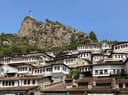
Berat is the Albanian city that most rewards the detour. The White City, as it is known, earns the title: the Ottoman-era houses cascade down the hillside above the Osum River in two tiers, the upper one (Mangalem) on one bank and the lower Christian quarter (Gorica) on the other, each with the whitewashed facades and large windows that give the city its visual character. The Berat Citadel above holds a functioning residential neighborhood within its Byzantine walls.

$1,200/mo

Nomad 6.5

Geneva

Switzerland

Geneva is the city where the world goes to agree on things. The United Nations, the International Committee of the Red Cross, the World Trade Organization, the World Health Organization, and over 400 other international organizations have their headquarters here, producing a professional culture that is uniquely international, multilateral, and institutionally serious. The city itself is small (200,000 people in the city proper), expensive (one of the world''s most expensive cities by most measures), and surrounded by the Alps and the Jura mountains in a lake setting that makes the institutional character less oppressive than it might otherwise feel.

$6,000/mo

Nomad 6.5

Marseille

France

Marseille is the city that France isn't sure what to do with. Paris treats it as a problem to be managed. The rest of France either romanticizes its roughness or avoids it. Marseille itself does not particularly care. It is a Mediterranean port with 2,600 years of history and a talent for absorbing every culture that moves through it, and the energy that produces is unlike anything else in France.

$3,000/mo

Nomad 6.5

Naples

Italy

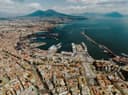
Naples does not try to be approachable. It does not try to be anything, actually; it simply is, indifferent to opinion in a way that most cities spend considerable effort pretending to achieve. The historic center, a UNESCO-listed labyrinth of narrow streets piled over Greek and Roman foundations, operates on a logic that only becomes legible after the first week. Before that it is noise, heat, scooters, and magnificence.

$2,600/mo

Nomad 6.5

Bruges

Belgium

Bruges was the most important city in northern Europe in the fifteenth century. The wealth from the Flemish textile trade and its position as the Hanseatic League''s western terminal produced the art, the architecture, and the canal infrastructure that the city has been carefully preserving ever since. It is, in this sense, the most successfully arrested city in Europe: what you walk through today in the Markt and the Burg squares and along the Groenerei canal is the fifteenth century maintained by the tourist economy into the twenty-first.

$2,800/mo

Nomad 6.5

Luxembourg City

Luxembourg

Luxembourg City is the capital of a country so small that its neighbors sometimes forget it exists, which is fine with Luxembourg. The Grand Duchy has built one of the world''s highest GDP per capita by becoming the banking center for European private wealth, the headquarters of the European Court of Justice, the European Investment Bank, and a third of the European Commission''s administration, and the base for steel, satellite technology, and fintech in a configuration that the country''s founders in 1815 could not have predicted.

$4,500/mo

Nomad 6.5

Bergen

Norway

Bergen is Norway's second city in population and its first in rain. The seven mountains that ring the city catch weather systems rolling off the North Atlantic with an efficiency that keeps everything green and everything slightly damp. Locals call it raining when the sky does anything other than shine, which means they acknowledge it often. This does not stop them from being outside continuously.

$4,500/mo

Nomad 6.5

Nairobi

Kenya

Nairobi is East Africa's commercial capital, and the gap between how it is discussed in travel media — cautiously, with references to traffic and security — and the reality of professional life in the city is significant. For geo-flex professionals, Nairobi offers a specific proposition: altitude-moderated climate, strong mobile internet infrastructure (Safaricom's network is among the best on the continent), and a local technology and startup scene known collectively as Silicon Savannah that creates genuine professional community.

$1,800/mo