.png)
About Budapest
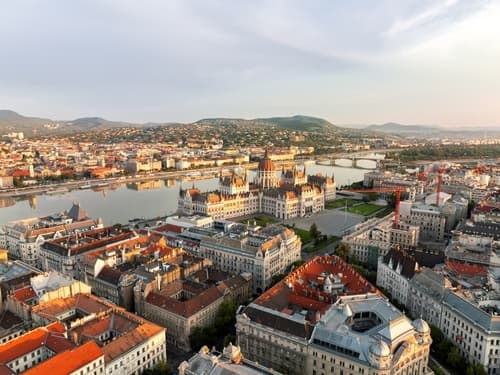
Budapest is a city of thermal springs, a river that divides two halves with genuinely different characters, and an architectural confidence that overreaches in the best possible way. Buda is hills and residences and the castle district looking down at everything. Pest is flat, grid-organized, grand 19th-century boulevards, and the seven districts that contain most of the city's actual life. The division is real enough to matter but bridgeable in nine minutes by the No. 2 tram.
For digital nomads and remote workers, Budapest remains among the best value propositions in Central Europe. A furnished one-bedroom apartment in the seventh or eighth district, or in the increasingly popular Ferencváros area, runs €600 to €950 a month. The seventh district's ruin bar culture, which emerged from the gap between communist-era building stock and post-1989 emptiness, is an accidental infrastructure of late-night social life that nothing planned has equaled. Coworking is solid: Impact Hub Budapest, Kolibri Coworking, and a cluster of independent operators fill the market.
Connectivity is good throughout the inner districts. The city's cost structure for food, coffee, and services remains lower than its Western European peers, which means the daily friction of living here costs less than almost anywhere comparable.
The political climate under the current administration has introduced complexity for some nationalities, and those planning extended stays should research the visa and tax environment. Beyond that: best months are April through June and September through October, when temperatures are comfortable and the city's outdoor social infrastructure operates fully.
Cost of living
Cost-of-living calculator
See how your budget stretches in Budapest.
Estimates use approximate exchange rates and typical monthly costs. Your actual costs will vary.
- Coffee
- $2
- Cheap meal
- $7
- Coworking (day)
- $15
- Mid-range meal for 2
- $35
- Rent (1BR, center)
- $750
- Transit (monthly)
- $25
- Internet (monthly)
- $15
- Rent (1BR, outside)
- $550
EnRoute Jobs AI tool
Real Value Calculator
See what a salary actually leaves you in the country you want to live in.
Neighborhoods
7th District (Erzsébetváros)
Remote workers, ruin bar culture, medium stays
The Jewish Quarter and ruin bar district: the highest concentration of nightlife, international residents, and independent cafés in Budapest. Kazinczy and Dob utca hold the daily food and café infrastructure. Costs are mid-range and the location is excellent.
Ferencváros (9th District)
Creatives, lower costs, emerging
The neighborhood south of the center that has been developing the fastest since 2018: new restaurant openings on Ráday utca, the Bálna cultural center on the Danube, and costs still below the 7th district. Well worth considering.
Buda (1st / 2nd District)
Families, quieter residential, nature access
The hilly western bank: the Castle District for architecture and tourism management, but the 2nd district (Rózsadomb, Pasarét) for genuine residential life with forest access, lower density, and a wealthy established community. Costs are higher than Pest but the quieter environment justifies it for those who want it.
Zugló (14th District)
Budget, families, longer stays
The outer residential district northeast of the center: lower costs, Városliget (City Park) as the green infrastructure, and the Metro 1 line providing direct access to the center. Less immediately interesting but functional and affordable.
Culture
Budapest is Central Europe's grand imperial capital split by the Danube: the hilly Buda side with its castle, thermal baths, and leafy bourgeois streets; the flat Pest side with its Jewish Quarter, ruin bars, Art Nouveau treasures, and relentless energy. It is one of Europe's most beautiful cities and increasingly its most bittersweet, a place of extraordinary architecture, thermal bath culture, and café society that currently operates under a political system critics describe as illiberal. For visitors, the tension between beauty and politics is the background noise of a magnificent city.
Climate & best time to visit
Continental: hot summers (July 23–30°C) and cold winters (January −3 to 2°C). Spring (April–May) and autumn (September–October) offer the most comfortable conditions; the thermal baths are most appealing from October through March when outdoor temps are cold.
Best months: April, May, September, October
Tips & safety
- •The BKK monthly pass covers all Metro, tram, HÉV suburban rail, and bus within Budapest zones; buy at any Metro station
- •The széchenyi thermal baths (1,800 HUF for full-day entry) and the Rudas are both functional public amenities rather than tourist products; Széchenyi fills with visitors on weekends but runs normally on weekday mornings
- •Lángos (fried dough with sour cream and cheese) from a market stall costs 600-900 HUF and serves as either breakfast or dinner; the Great Market Hall (Nagycsarnok) is tourist-priced but the second floor lángos is an exception
- •The Budapest Card provides 24/48/72-hour unlimited transit plus free museum entry; useful for orienting
- •Monthly apartment costs in the 7th or 8th district run €600-900; the Belváros (5th district) is significantly more expensive
- •The ruin bar culture in the 7th district (Romkocsmák) runs on the concept of repurposed buildings; Szimpla Kert on Kazinczy utca is the original but any of the side streets hold alternatives with less tourist density
- •Emergency: 112; 107 (police), 104 (ambulance); Hungarian-first but English available at command level
- •Budapest is generally safe; pickpocketing on the Metro and in tourist areas around the Basilica is the primary concern
- •Unlicensed taxis from outside nightclubs charge exploitative rates; use Bolt for transparent pricing
- •Tap water is safe and good quality throughout Budapest
Areas to avoid: The Keleti train station area at night; while not dangerous in the western European sense, it has a concentration of unlicensed money changers and persistent soliciting, Party boats on the Danube during peak season; the noise levels and crowding on and near the boats create an environment incompatible with the surrounding neighborhoods' normal functioning