.png)
About Hungary
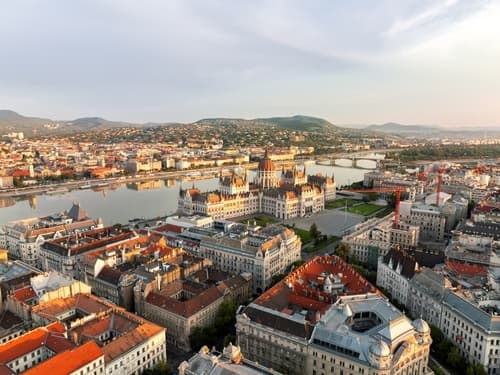
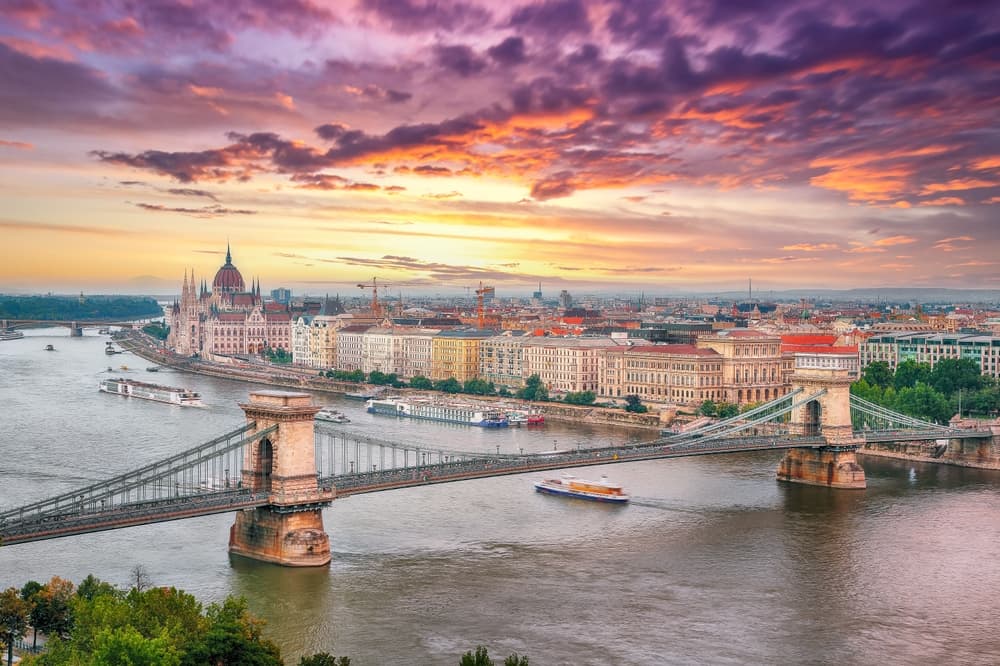
Budapest is a city of thermal water and grand ambition, two forces that in Hungarian history have consistently overreached and produced something magnificent in the attempt. The Parliament is too large for a country of ten million, the boulevards were built for an empire that dissolved, and the result is one of the most beautiful working environments in Europe, priced like the empire never sent the invoice. The coffee house tradition predates laptops by a century and was designed for exactly what remote workers do, sitting for hours over one drink while thinking; the ruin bars of the seventh district turned decaying courtyards into the continent's most original nightlife; and the baths, Széchenyi, Gellért, Rudas, are not attractions but infrastructure, used weekly by locals as maintenance for body and mood.
The White Card makes the practical case simple for those it fits: a real Schengen residence permit, a low bar by Western European standards, an application that runs through the Enter Hungary online platform, and behind it the EU's lowest flat income tax at 15 percent. The fits-whom question is the honest one, because the permit is deliberately narrow: solo applicants only, two years maximum, no ladder toward permanence, and a strict wall against any Hungarian income. It is a chapter, engineered as one, and excellent on those terms. Beyond the card, the seasonal economy does its own hiring: Lake Balaton staffs every summer, Budapest's hostels trade beds for shifts year-round, and EU citizens take both without paperwork.
Hungarian culture carries the awareness of its own improbability, a Finno-Ugric language island in a Slavic and Germanic sea, a nation that produced Liszt, Bartók and half the physicists of the twentieth century, and a temperament that pairs formal courtesy with a melancholic wit visitors either acquire or miss entirely. Warmth arrives slowly and stays. Politics is loud at the national level and irrelevant to the daily safety of a foreign professional, though worth reading about before opining at dinner; the city, meanwhile, gets on with being one of Europe's best places to live cheaply and beautifully.
Widening the search? If you are looking to expand your job hunt across Central Europe, take a look at Austria →, Czech Republic →, and Croatia →.
Cost of living
Budapest is the best value of Europe's grand capitals, full stop. A one-bedroom in the districts foreigners actually choose, the fifth through seventh near the center, leafy Buda across the river, up-and-coming eighth and ninth, runs roughly HUF 250,000 to 400,000 a month, call it 650 to 1,050 dollars, with the forint's long softness against dollar and euro quietly improving the deal each year. Utilities are modest, though old buildings with gas heating spike in winter.
Daily life prices read like a decade ago: a lunch menu at HUF 2,500 to 3,500, excellent third-wave coffee under HUF 1,000, a bath entry around HUF 10,000 for a full day of Habsburg-grade luxury, and a transit pass near HUF 8,000 monthly for a network that runs all night on weekends. The traps are as famous as they are avoidable, tourist-strip restaurants without printed prices, street currency changers, and nightlife bills in Váci utca territory; a resident learns the two-street rule in the first week and never pays the tax again. The forint, not the euro, is the money, cards work nearly everywhere, and bank ATMs with conversion declined are the only sensible cash source.
- One-bedroom rent: roughly HUF 250,000 to 400,000 in central Pest and good Buda, with two months' deposit standard; the lease itself is a White Card requirement, so paper matters here.
- Eating out: lunch menus HUF 2,500 to 3,500, serious dinner for two under HUF 20,000 off the tourist strips, and market halls where the produce costs what produce should.
- Baths as a utility: HUF 8,000 to 12,000 per visit, less with passes; budget them like a gym membership, because that is how the city uses them.
- Transit: around HUF 8,000 a month for metro, trams and night buses via BudapestGO; Bolt fills the gaps for a few thousand forint a ride.
Cost-of-living calculator
See how your budget stretches in Hungary.
Estimates use approximate exchange rates and typical monthly costs. Your actual costs will vary.
Visas & Entry
Hungary is a full Schengen member, so the baseline is 90 days in any 180 for visa-free Western passports under EES biometric logging, with ETIAS expected later in 2026. The nomad route is the White Card, formally the residence permit for gainful activity performed remotely, launched in 2022 under Government Decree 35/2022 and now governed by the 2023 immigration act.
The current requirements are stricter and cleaner than the internet's memory of them. Income must be at least 3,000 euros net a month, a bar raised from 2,000 in 2024, evidenced across the six months before applying and, per the immigration authority's factsheet, maintained throughout the stay; roughly 10,000 euros in savings is the standard supporting evidence, and housing must be secured for the entire permit, lease or ownership, since the address is part of the file. Work must sit entirely outside Hungary, foreign employer, foreign own-company, or foreign clients, and the exclusions have teeth: no Hungarian employment, no Hungarian clients, and no shareholding in a Hungarian company, any of which can void the card. Applications run through the Enter Hungary online platform or a consulate, visa-required nationals travel on a D visa to collect the card, decisions typically land within weeks rather than months, and the permit runs one year, renewable once, with renewal expecting genuine residence in the country. At the two-year ceiling the routes forward are a different permit category or departure; the White Card itself leads nowhere further by design, and family members cannot be attached to it at any stage.
- The number is 3,000 euros net, not 2,000: the threshold rose in 2024 and half the guides never updated; the authority's factsheet also requires the income level to hold for the entire stay, not just the application window.
- Solo means solo. No spouse, no children, no family reunification under any staging; couples each qualify independently or choose another route, and this is the permit's most decisive filter.
- Two years is a wall, not a milestone: no renewal beyond the second year, no credit toward permanent residence, and the plan for year three belongs in the plan for year one.
- The Hungarian-income wall is absolute, covering employment, clients and even shares in a Hungarian company; the enforcement instrument is revocation, and the correct home for local ambitions is the Single Permit or the investor route.
- Housing is part of the visa file: a lease or ownership covering the full permit period, with the address registered, so the apartment hunt precedes the application rather than following it.
- Apply digitally through Enter Hungary where eligible, with fees around HUF 39,000 on paper and less online; decisions run faster than the Central European stereotype, often within a month.
| Visa or permit | What it covers |
|---|---|
| Schengen visa-free entry | Ninety days in any 180 for most Western passports under EES; ETIAS pre-authorization expected later in 2026. The scouting window, with remote work in it the usual unpoliced European gray zone. |
| White Card (nomad permit) | One year, renewable once to a two-year hard cap, for remote work serving foreign employers, a foreign own-company or foreign clients, at 3,000 euros net monthly maintained throughout. Solo only, no family attachment, no path to permanent residence, and no Hungarian income of any kind. |
| D visa (entry stage) | For visa-required nationals, the national visa issued after approval to enter Hungary and collect the White Card; a mechanism, not a separate status. |
| Single Permit (employment) | The standard sponsored route for jobs with Hungarian companies, combining work and residence with a fast statutory clock when employers are prepared, and the natural conversion for a nomad who goes local. |
| EU Blue Card | High-skill employment at one of the EU's more accessible salary thresholds, with better family and mobility rights than national permits; the other conversion path for the technically employable. |
| Guest investor residence | Hungary's 2024-era investment route, ten-year residence against qualifying investment from 250,000 euros, solving the permanence and family questions the White Card deliberately does not. |
| EU and EEA citizens | Freedom of movement: no permit needed, registration after 90 days, and none of the White Card's restrictions apply. |
Verified 20 August 2026 against the immigration authority's factsheet: 3,000 euros net over six months and throughout the stay, one-plus-one years, no family reunification. The 2,000-euro figure still circulating is the pre-2024 threshold.
Good to know: White Card: €3,000 NET/month (raised from €2,000 in 2024) held throughout the stay, 1+1 years hard cap, solo only, no PR path, no Hungarian income or shareholding; apply via Enter Hungary.
EnRoute Jobs AI tool
Route Planner
Map visa routes, timelines, and relocation costs for your next destination.
Work & Legal
Hungarian professional culture is formal at first contact and loyal underneath. Titles and surnames open relationships, meetings run structured, and the national conversational register, ironic, historically literate, allergic to easy optimism, rewards visitors who listen more than they enthuse. English is the working language of Budapest's international economy and thins quickly outside it; Hungarian is famously unlearnable and every attempted köszönöm is banked at generous exchange rates.
For White Card holders the legal position is unusually explicit in both directions. Foreign-source remote work is precisely what the permit authorizes, the clearest statement of nomad legality in Central Europe alongside Czechia's program. The wall around Hungarian income is equally explicit: no local employment, no local clients, no ownership stake in a Hungarian company, with revocation as the sanction, so the freelancer whose Budapest network starts generating Budapest invoices has outgrown the permit and needs the Single Permit or a business route. One structural note for the long game: Hungary's old KATA small-business regime, once the nomad accountant's favorite, was gutted in 2022 and is no longer the play it appears in dated articles.
- The White Card is explicit legal authorization for foreign-source remote work, ending gray-zone anxiety for its two-year term; tourist-status remote work remains the usual quiet European default for shorter stays.
- Local income is a revocation matter, not a fine: employment, clients and company shares in Hungary are all off-limits on the card, and the clean response to local opportunity is switching permit categories.
- Budapest's coworking and expat infrastructure is deep, from KAPTÁR and Impact Hub to the café economy that has hosted laptop workers since laptops existed; the community solves most practical problems faster than any authority.
- Ignore dated KATA advice: the beloved flat-tax small-business regime was restricted to Hungarian-client sole traders in 2022, so the structures older blog posts recommend no longer exist for foreigners.
Good to know: White Card explicitly legalizes foreign-source remote work; absolute wall on Hungarian employment, clients and shareholding; KATA regime no longer available to this population.
Taxes
Hungary runs the EU's lowest flat income tax at 15 percent, which is the true headline; the false one is the claim that the White Card carries a tax exemption. It does not. The ordinary rules decide everything: under 183 days you are a non-resident whose foreign income Hungary ignores, past it you are a resident taxed on worldwide income at the flat rate.
| What applies | The rule in 2026 |
|---|---|
| No special nomad exemption | Contrary to persistent marketing, the White Card grants no tax holiday. Residency follows the general tests, and the permit's only tax significance is that living here long enough to renew it usually makes you resident. |
| Residency: 183 days or vital interests | Presence of 183 days in the calendar year, counted cumulatively, or a center of vital interests in Hungary, home, family, main ties, makes you tax resident. A sub-half-year stay on the card leaves foreign income entirely outside Hungarian tax. |
| The flat 15 | Residents pay a flat 15 percent on worldwide income, no brackets, no municipal add-ons, the lowest headline personal rate in the EU and the honest core of Hungary's pitch to mobile professionals. |
| Social contributions | The second line that determines real burdens: Hungarian social security at 18.5 percent attaches to Hungarian employment and can reach residents in some configurations, while remote workers on foreign contracts usually remain in their home systems; this is the question to put to an accountant before the 183rd day. |
| Non-residents | Taxed only on Hungarian-source income, which a compliant White Card holder has none of by definition; the card and the tax system agree perfectly on this point. |
| VAT | Twenty-seven percent standard, the highest rate in the world, folded invisibly into prices and the quiet reason Hungarian receipts run higher than Hungarian menus suggest. |
| Americans specifically | The US terminated its tax treaty with Hungary effective the start of 2024, so no treaty protections apply: no tiebreakers, no treaty rates on investment income. The FEIE and foreign tax credits still work through domestic US law, and at Hungary's 15 percent the credit arithmetic is usually manageable, but cross-border investment income deserves professional attention it did not need before. |
| Filing, if resident | Hungarian returns are largely pre-filled by the tax authority for standard cases and due in May; residents with only foreign employment income should still expect to declare it, treaty or no treaty, and the local accountant hour is cheap insurance. |
Verified 20 August 2026. The corrected claims: no White Card tax exemption exists, and the US-Hungary treaty has been terminated since 2024. Residency at 183 days or vital interests; 15 percent flat for residents. General information, not tax advice.
Good to know: No nomad tax exemption: standard 183-day/vital-interests residency; residents pay flat 15% on worldwide income; US-Hungary treaty terminated from 2024; VAT 27% is the world's highest.
Healthcare
Hungarian healthcare splits into a strained public system and a private tier in Budapest that serves the foreign community well at prices Western Europe forgot. A private GP consultation runs 30 to 60 euros with English routine at the international clinics, specialists follow within days, and the private hospitals that have grown up over the past decade handle most planned care to a good standard. The public system is competent at its strongest hospitals and under-resourced elsewhere, with upfront payment expectations and thin English outside the capital, which is why the White Card's insurance requirement is also simply good advice.
The world-class corner is dental. Budapest is the dental capital of Europe by volume and arguably by value, an industry built on Western European patients flying in for implants and crowns at half home prices, and residents inherit that infrastructure at local rates. Pharmacies are professional and prescription rules stricter than Southern Europe; the emergency number is 112, answered with an English option.
- Private consultation: 30 to 60 euros, typically same week, English standard at the international clinics; the private tier is where the foreign community simply lives.
- The White Card requires comprehensive insurance valid in Hungary, and the requirement doubles as the correct setup, since public hospitals expect payment and paperwork foreigners are poorly placed to navigate.
- Dental care is the famous bargain: implant-grade dentistry at roughly half Western prices in a market built for international patients; even the skeptical should get a cleaning and a quote.
- Emergency number 112, with English menus; for anything non-urgent, the private clinics' own lines beat the queue every time.
| Hospital | What to know |
|---|---|
| Semmelweis University clinics, Budapest | The historic medical university's clinical network, the country's academic anchor and the deepest specialist bench in the system. |
| Dr. Rose Private Hospital, Budapest | The established private hospital on Széchenyi Square, in-patient and surgical care with concierge-grade service for the international community. |
| Duna Medical Center, Budapest | The large modern private hospital on the Danube, broad specialist and surgical coverage and a standard choice for planned private care. |
| FirstMed, Budapest | The long-running American-style private clinic serving the expat and diplomatic community, English-first, with urgent-care hours. |
| Medicover, Budapest and nationwide | The international private network offering membership primary care, diagnostics and its own hospital, the subscription option many foreign professionals choose. |
| Buda Health Center, Budapest | Private multi-specialty center on the Buda side, strong in orthopedics and imaging, rounding out the direct-pay tier. |
Hospital list compiled 20 August 2026 and not yet confirmed against each facility directly. Treat as indicative and verify before relying on it.
Good to know: Private Budapest tier at €30-60 consultations is the expat standard; dental tourism capital of Europe; insurance required and genuinely needed.
Safety
Hungary is one of Europe's safer countries and Budapest one of its safer capitals, with violent crime below Western European averages and every government this site tracks at its lowest advisory tier. The actual risk list is financial and short: pickpockets working the 4-6 tram, Váci utca and the bath queues in season; the tourist-strip restaurants and bars whose pricing games are documented enough to have their own genre of consumer journalism; street money-changers who should simply never be used; and nightlife drink-spiking noted by several governments, worth the standard vigilance in the party district.
Context worth stating plainly: Hungary borders Ukraine, and every advisory pairs its green rating for Hungary with a firm instruction not to cross onward into the war next door; Budapest sits 300 kilometers from that border and daily life carries no trace of it. Demonstrations cluster around the political calendar, the 2026 election season included, and are events to route around rather than attend, since joining is unwise for foreigners anywhere and Hungarian assembly law has tightened in recent years. On the social climate: same-sex activity is legal and central Budapest is visibly tolerant, while the official register and the 2025 assembly-law restrictions on Pride-type events make the country's politics colder than its capital's streets; LGBTQ+ residents largely report ordinary lives in the city and more discretion advisable outside it.
- Pickpockets work the obvious places: the 4-6 tram at night, Váci utca, Keleti and Nyugati stations and the bath changing queues; ordinary bag discipline retires the entire category.
- Never change money on the street, ever: bank ATMs with dynamic conversion declined are the only sensible forint source, and the ATM clusters in nightlife zones with lurid fee screens are their own small scam.
- Choose your own bar and see printed prices: the party-district promoter economy and the menu-free tourist restaurants are the city's one genuine hustle, ended by a two-street walk.
- Watch drinks in the ruin-bar district; spiking appears in multiple governments' notes, and the standard rules, your drink in your hand, arrivals watched, apply as they would anywhere.
- Route around demonstrations, which are frequent, registered, mostly peaceful and no place for a foreigner in an election year; assembly rules have tightened and participation is not your fight.
- Do not cross into Ukraine. Every advisory says it in bold; Hungary is green precisely because the war stays on the far side of a border 300 kilometers from your café.
Official travel advisories
| Government | Current position |
|---|---|
| United States | Level 1, Exercise Normal Precautions, reissued 15 April 2026, with country-page notes on pickpocketing, demonstration activity around the political calendar, and the 2025 assembly-law changes.travel.state.gov → |
| United Kingdom | No advisory against travel; guidance updated through 2026 covers EES border mechanics, bag-snatching and pickpocketing in Budapest, and occasional disorderly demonstrations.gov.uk → |
| Canada | Take normal security precautions, with petty-crime notes for transit hubs and tourist areas and standard Schengen entry guidance.travel.gc.ca → |
| Australia | Exercise normal safety precautions, with explicit advice not to travel onward from Hungary into Ukraine, notes on severe drug penalties, and upfront-payment expectations in parts of the health system.smartraveller.gov.au → |
| US Embassy Budapest | Enroll in STEP for alerts. Szabadság tér 12; switchboard +36 1 475 4400.hu.usembassy.gov → |
Advisory positions verified 20 August 2026, including Smartraveller directly. All four governments hold Hungary at their lowest tier; the risk list is financial, concentrated and avoidable. Open the sources before travelling.
Good to know: Lowest tier from all four governments; risks are pickpockets, exchange scams and tourist-strip pricing; do-not-cross-into-Ukraine is the standing regional line.
Climate
Hungary runs four honest Central European seasons with a continental edge: winters cold and often gray around freezing, summers genuinely hot with July spikes past 35 degrees that make air conditioning a work requirement, and two superb shoulders. April-May and September-October are the working sweet spots, terrace weather with the city at its most photogenic, and they bracket a summer whose heat the baths and the Danube islands were practically designed to answer. Winter's compensation is atmosphere and economics, the Christmas markets, the thermal steam rising into cold air, and a tourist-thinned city at its cheapest and most local.
| Season | What to expect |
|---|---|
| Winter, December to February | Around freezing, gray and frequently damp, with occasional snow that flatters the architecture; bath season at its most theatrical and the city at its quietest and best value. |
| Spring, April to May | Fast, green and glorious: terraces open, the hills bloom, and May is the connoisseur's Budapest month before summer crowds and heat arrive. |
| Summer, June to August | Warm to hot, 24 to 30 with heat-wave spikes past 35; Balaton season for the nation, Sziget festival for the world, and afternoons that argue for air conditioning and river breezes. |
| Autumn, September to October | Golden and stable, the light at its finest on the Danube; September rivals May as the year's best working month, and the wine harvest gives the countryside its excuse. |
Good to know: Shoulder seasons are the prize; July-August heat requires cooled workspace; winter is gray, cheap and atmospheric.
Culture & Customs
Hungarian culture runs on a current of proud improbability. The language is related to nothing around it, the history is a catalogue of magnificent defeats commemorated with total seriousness, and the national temperament blends formal courtesy, deep cultural literacy and a melancholic irony that visitors mistake for gloom until they get the jokes. Hospitality, once triggered, is lavish; the path to it runs through respect, patience and showing up more than once. The coffee house is the historic social institution, built for lingering, and the bath is the living one, where the city conducts its actual wellness culture in ninety-degree water under century-old domes.
Etiquette is light but noticed. Greetings are exchanged entering shops and elevators, shoes come off in homes, clinking beer glasses is famously avoided by tradition dating to 1849, though younger Hungarians increasingly shrug at it, and toasts are made with eye contact and egészségedre, a word worth practicing before it is needed. Names run family-name first in Hungarian order, tipping is a genuine 10 to 15 percent told to the server since service is rarely included, and politics, which Hungarians debate with skill and passion among themselves, is a topic where the wise newcomer holds a listening brief for the first year.
- Learn the bath protocol: flip-flops, a cap only for the swimming lanes, quiet in the thermal pools, and the chess players at Széchenyi are a national monument not a photo prop; go weekly and it becomes the best habit the city gives you.
- Tip 10 to 15 percent by telling the server the total, since service charges are rare and leaving coins reads oddly; card terminals now prompt, and the number is still expected.
- Toast with eye contact and never clink beer at traditional tables, a courtesy to 1849 that older Hungarians keep sincerely; wine and pálinka clink freely, and refusing pálinka outright takes diplomacy.
- Greet on entry, everywhere: the jó napot into a shop, the greeting in the lift, the goodbye leaving; the formal courtesy layer is thin but its absence is noticed instantly.
- Hold a listening brief on politics. Hungarian public life is loudly contested and deeply historical; opinions are welcome from those who have earned context and grating from those who have not.
- Take the culture seriously and cheaply: the opera, the concert halls and the museums run at prices that make weekly attendance a reasonable habit rather than a splurge, and Hungarians respect nothing more than someone who shows up for Bartók.