.png)
About Oaxaca
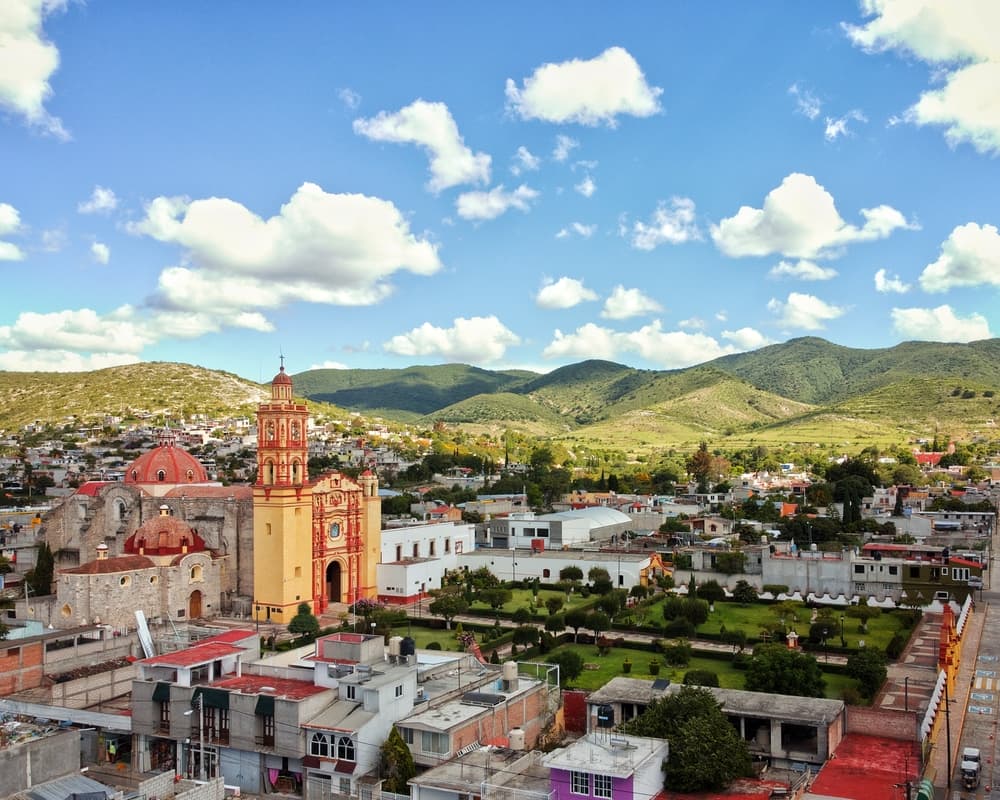
Oaxaca is the city that people who have been to Mexico City recommend when they want somewhere that operates at a different scale and intensity. It is a highland city of 300,000 at 1,550 meters in the Sierra Madre del Sur, surrounded by indigenous Zapotec and Mixtec communities that have maintained distinct languages and cultural traditions, and it has a culinary tradition that food writers consider among the most important in the hemisphere.
For digital nomads and remote workers, Oaxaca offers a Mexico proposition at significantly lower cost than CDMX: monthly rents in the centro histórico and the Jalatlaco neighborhood run $500 to $900 for a furnished apartment. The coworking scene is limited but growing; the coffee shop culture is well-developed. Fiber internet is available in most modern accommodation; power outages during the rainy season are occasional rather than exceptional.
The artisan traditions of the surrounding region, the black pottery of San Bartolo Coyotepec, the woven textiles of Teotitlán del Valle, the hand-carved painted animals (alebrijes) of San Martín Tilcajete, are all within 30 minutes of the city and are produced in active family workshops rather than factory settings.
October through March is the prime remote working period: dry, warm days (22 to 26°C), clear mountain light, and the extraordinary Day of the Dead celebrations in late October that are among the most significant in Mexico.
Cost of living
Cost-of-living calculator
See how your budget stretches in Oaxaca.
Estimates use approximate exchange rates and typical monthly costs. Your actual costs will vary.
- Coffee
- $2
- Cheap meal
- $3
- Coworking (day)
- $8
- Mid-range meal for 2
- $18
- Rent (1BR, center)
- $400
- Transit (monthly)
- $10
- Internet (monthly)
- $18
- Rent (1BR, outside)
- $280
EnRoute Jobs AI tool
Real Value Calculator
See what a salary actually leaves you in the country you want to live in.
Neighborhoods
Jalatlaco
Longer stays, cobblestone character, quieter
The most photogenic neighborhood in Oaxaca: narrow cobblestone streets, bougainvillea-covered walls, and a community of artists and longer-term international residents in restored colonial houses.
Centro Histórico
Maximum access, short stays, cultural density
The historical center around the zócalo: churches, markets, and the restaurants and cafés that define Oaxacan food culture. Higher tourist density but every significant cultural institution is here.
Reforma / Xochimilco
Residential, lower costs, local life
The residential neighborhoods outside the tourist center: local markets, lower rents, and the authentic daily rhythm of the city.
Culture
Oaxaca's culture is the ongoing negotiation between the colonial Spanish city and the indigenous Zapotec and Mixtec communities that surround and predate it. The Saturday market in Tlacolula, 30 kilometers east, is one of the oldest continuously operating markets in the Americas. The mole negro, mole coloradito, and mole amarillo that define Oaxacan cooking represent centuries of indigenous and colonial culinary synthesis rather than a fixed historical recipe. The mezcal culture here is the source rather than a derivative: the small-batch productions from villages in the Central Valleys are what the international mezcal industry is attempting to reproduce at scale and cannot.
Climate & best time to visit
Highland Mediterranean-ish (1,550m): warm and sunny most of the year (18–28°C). Rainy season June–September with afternoon showers; dry season October–May. October–March is the prime working season: dry, comfortable, and the Day of the Dead in late October.
Best months: October, November, December, March
Tips & safety
- •Oaxaca City is compact and walkable; the zócalo (main square) is the social center and everything of significance is within 20 minutes on foot
- •Mezcal here is consumed as a serious cultural product rather than a tourist novelty; the markets and the distilleries in the surrounding villages (Matatlán is the world's mezcal capital) provide genuine access
- •Monthly apartment costs in the Centro Histórico or Jalatlaco run $400-700 USD furnished; Oaxaca remains one of the best-value cultural cities in Latin America
- •The weekly markets rotate through the Valley of Oaxaca: Tlacolula (Sunday) for the largest, Zaachila (Thursday) for the meat and produce, Etla (Wednesday) for the cheese and crafts
- •The Guelaguetza festival in July is the most important regional cultural event in Mexico; accommodation must be booked months ahead
- •The surrounding Sierra Norte mountains provide extraordinary hiking (Pueblos Mancomunados) and mountain biking infrastructure 1.5 hours from the city
- •Emergency: 911
- •Oaxaca City is generally safe for visitors; the security situation in the state's rural areas and coastal highway is more complex
- •The altitude (1,550m) produces mild adjustment for some arrivals; the same hydration advice as Mexico City applies
- •Tap water is not safe; use bottled or filtered water
Areas to avoid: Highway 200 toward the coast at night; the Oaxacan coast road has seen periodic incidents and limited lighting, Political demonstrations (Oaxaca has a strong tradition of street protest); being caught in a confrontation between protesters and police is a real risk during election periods