.png)
About Bogota
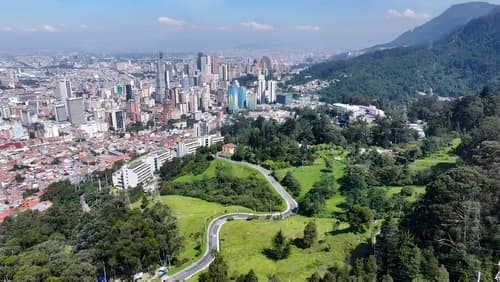
Bogotá sits at 2,640 meters above sea level, and the altitude is the first thing most visitors notice: a mild shortness of breath on the airport walk, a faster heartbeat during the first couple of days, a quality of cool dry air unlike anything at sea level. After three or four days, this passes. What remains is a city that has been working hard to be seen clearly rather than through the lens of what it was twenty years ago.
For remote workers, Bogotá offers a compelling South American alternative to the coasts: a genuine ten-million-person metropolis with serious business infrastructure, a coworking scene that ranges from casual coffee shop setups in Usaquén and Chapinero to professional facilities in the financial zone, and a cost of living that sits below comparable cities at this level of development.
Rents in Chapinero Alto and the Zona Rosa run $400 to $900 per month; the Parque 93 area, which attracts a more corporate international population, runs $700 to $1,200. The TransMilenio bus rapid transit system is functional and covers the city, though traffic at peak hours is significant everywhere.
The climate is spring-like year-round, with temperatures of 7 to 19°C and two rainy seasons. The perpetual cool takes adjustment for those arriving from equatorial cities. Bogotá's street food, the hot chocolate and cheese, the ajiaco soup, the fresh juice vendors on every corner, is the most immediate and honest argument for the altitude.
Cost of living
Cost-of-living calculator
See how your budget stretches in Bogota.
Estimates use approximate exchange rates and typical monthly costs. Your actual costs will vary.
- Coffee
- $2
- Cheap meal
- $4
- Coworking (day)
- $10
- Mid-range meal for 2
- $22
- Rent (1BR, center)
- $500
- Transit (monthly)
- $30
- Internet (monthly)
- $20
- Rent (1BR, outside)
- $350
EnRoute Jobs AI tool
Real Value Calculator
See what a salary actually leaves you in the country you want to live in.
Neighborhoods
Chapinero Alto / Quinta Camacho
Remote workers, LGBTQ+ community, mid-range
The most livable neighborhood for the international professional community in Bogotá: good café and restaurant density on Carrera 5 and Calle 69, the LGBTQ+ commercial infrastructure concentrated in Chapinero Central, and costs below Zona Rosa.
Usaquén
Higher-end residential, families, Sunday market
The northern colonial village absorbed into the city, with a Sunday antiques and food market, excellent restaurants, and a wealthier residential character. More suburban than Chapinero; requires more planning for transit.
La Candelaria
Short stays, culture, budget
The historic center: the Gold Museum, the Plaza de Bolívar, the García Márquez cultural center, and colonial architecture at every turn. Energetic and cultural; requires significant street awareness as a residential base.
Teusaquillo
Quieter base, good value
The residential neighborhood west of Chapinero with Art Deco residential architecture, the Parque Simón Bolívar as the green anchor, and lower costs than Zona Rosa or Usaquén. Well-connected by TransMilenio.
Getting around
- overview
- TransMilenio BRT and Sitp buses cover the city. Cycling infrastructure excellent; Ciclovia closes streets Sunday. Uber widely used.
Culture
Bogotá is one of Latin America's most serious cultural cities, and the Colombians take a certain pleasure in pointing this out to visitors who expected something more provincial. The Luis Ángel Arango library is among the most-visited in the world. The Gold Museum holds pre-Columbian gold work that is genuinely extraordinary. The independent bookshop culture on Calle 60 is real. The Ciclovía on Sunday mornings, when 120 kilometers of city roads are closed to cars and opened to cyclists and pedestrians, is the city's best argument for itself: a collective act of urban reclamation that attracts nearly a million people weekly. Bogotá decided it wanted to be a city worth living in. The decision shows.
Climate & best time to visit
High-altitude equatorial (2,640m): cool and consistent year-round (7–20°C). No summer or winter; two rainy seasons (March–May, September–November) and two drier seasons. Altitude affects new arrivals; acclimatization takes a few days. December–February and July–August are the driest periods.
Best months: December, January, July, August
Tips & safety
- •The TransMilenio BRT is the fastest way across the city but runs at significant crowding during peak hours; the Sitp local bus network covers areas the BRT doesn't reach
- •Bogotá's Ciclovía (Sunday 7am-2pm) closes 120km of roads to cars; it is one of the world's largest weekly active transport events and a genuine cultural institution
- •The altitude (2,600m) affects new arrivals for the first 2-5 days; headaches and reduced energy are normal; alcohol hits harder at altitude
- •Monthly apartment costs in Chapinero or Zona Rosa run COP 2.5-4M (€600-1,000); La Candelaria is significantly cheaper but less convenient
- •The best espresso coffee in Colombia is in Bogotá's Chapinero district; the Pergamino, Catación Pública, and Azahar brands are the reference points for quality
- •Bogotá is cold year-round at altitude (8-18°C); think Manchester in autumn, every day
- •Emergency: 123 (police), 132 (Red Cross ambulance)
- •Altitude sickness (soroche): allow 2-3 days to acclimatize before demanding physical activity; drink water, avoid alcohol initially, and descend or seek medical care if symptoms are severe
- •Bogotá's security has improved dramatically since 2000 but remains uneven; the northern neighborhoods (Chapinero, Usaquén, Chicó) are meaningfully safer than the center and south
- •Use Cabify, InDriver, or hotel/restaurant-called taxis rather than street hails; avoid unmarked vehicles
Areas to avoid: La Candelaria and the south of the historic center after dark; pickpocket and robbery risk increases significantly at night in these areas, Displaying expensive electronics in street-level cafés in unfamiliar areas; express kidnapping (paseo millonario) is a real if rare risk for visible wealth