.png)

About Colombia
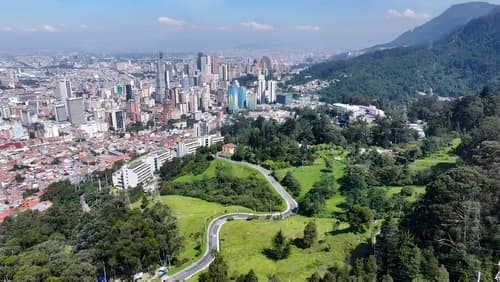
Medellin is the conversion story every geo-flexible professional has heard by now, which means its reputation runs both accurate and slightly behind the reality. Yes, it was the most dangerous city on earth thirty years ago. Yes, it now runs cable cars up to hillside neighborhoods, cools itself at a permanent 24 degrees in what locals call eternal spring, and hosts one of the largest remote-work communities in the hemisphere. The city knows exactly what it has survived and carries a self-aware pride about it that is closer to Berlin than to anywhere else in Latin America. Bogota, higher, cooler and less advertised, is the country's actual center of gravity: eight million people, the best restaurants and museums between Mexico City and Buenos Aires, and a professional depth Medellin borrows from.
The practical case improved sharply in late 2022, when Colombia turned the region's biggest gray zone into a two-year legal category. The nomad visa's bar is among the lowest of any serious program in the world, and what it buys matters more here than elsewhere: a cedula de extranjeria, which unlocks Colombian banks, formal leases and the ordinary machinery of settled life that tourists rent around at a premium. Dollars and euros go far, the time zone sits on top of US Eastern, and the flight home is short enough for a long weekend. For work that is not remote, the classics hold: language institutes in Bogota and Medellin hire English teachers year-round, and the hostels of the gringo trail have traded beds for bar shifts since before the city was safe to advertise.
Honesty is the price of writing about Colombia usefully, so here it is. The country's conflict is not history; it is geography. The departments where armed groups operate are real, listed by every Western government, and almost impossible to enter by accident from the places foreigners actually live. The cities ask for behavioral fluency rather than fear: the local phrase no dar papaya, do not hand them the papaya, is the entire safety manual in four words. People who learn it live well here. People who cannot be bothered are the ones the statistics are made of.
Widening the search? If you are looking to expand your job hunt across Latin America, take a look at Panama →, Ecuador →, and Peru →.
Cost of living
Colombia is one of the cheapest serious bases in the Americas for anyone earning in dollars or euros, and the exchange rate has spent years making it more so. A furnished one-bedroom in Medellin's El Poblado or Laureles, the neighborhoods where the foreign community actually lives, runs roughly 2.5 to 4.5 million pesos a month, call it 750 to 1,350 dollars, and that is the premium tier; local-market unfurnished flats cost half of it once you hold a cedula and can sign a real lease. Bogota prices similarly in Chapinero and Chico and drops fast outside them.
Daily life is where the arithmetic gets almost unfair. A menu del dia lunch of soup, a main and juice runs 15,000 to 20,000 pesos, some of the world's best coffee costs a dollar in the neighborhood it was grown near, and app rides across town rarely clear five dollars. The costs that surprise people run the other way: imported anything, electronics above all, carries heavy duty, and the furnished-apartment premium aimed at foreigners in Medellin has inflated year after year with demand. The cedula is the discount card; the sooner you hold one, the sooner you stop paying tourist rates for housing.
- Furnished one-bedroom: roughly 2.5 to 4.5 million COP in El Poblado or Laureles and similar in Bogota's north; local unfurnished leases cost half once a cedula lets you sign one.
- Coworking desk: 400,000 to 700,000 COP a month in Medellin or Bogota, with strong communities at Selina, Tinkko and the local independents.
- Menu del dia: a full set lunch for 15,000 to 20,000 COP, still the best-value meal in the hemisphere.
- App rides: most crosstown trips under 20,000 COP; the metro in Medellin, the continent's cleanest, costs pennies.
Cost-of-living calculator
See how your budget stretches in Colombia.
Estimates use approximate exchange rates and typical monthly costs. Your actual costs will vary.
Visas & Entry
Colombia grants 90 days on arrival to US, UK, EU, Canadian, Australian and most Western passports, extendable once at Migracion Colombia to a maximum of 180 days per calendar year. For decades that stamp was the entire story, and Medellin's remote-work community lived on it. Since October 2022 the country has run a dedicated route instead: the Visa V for digital nomads under Resolucion 5477, one of the most accessible programs in the world, granting up to two years for remote work serving employers or clients outside Colombia.
The 2026 requirements are stricter than the program's easy reputation. The income floor is three times the minimum wage, and a 23 percent minimum-wage increase decreed in December 2025 pushed it to 5,252,715 pesos a month, roughly 1,400 dollars; the Council of State provisionally suspended that wage decree in February and a transitional decree kept the identical figure, so the number stands while the case is argued. Proof is bank statements only, each of the last three months must clear the bar individually with no averaging, and the ministry converts foreign currency at the rate on the day it opens your file, which is the quiet argument for applying with a healthy buffer. Applications run online through the Cancilleria, from abroad or from inside Colombia on a valid entry, with a 30-day official window that runs 45 to 60 days in practice, and approvals have grown more selective and more openly discretionary this year.
- No averaging, and the rate is set the day they open your file. Each of three consecutive monthly statements must individually clear 5,252,715 pesos; a strong month cannot rescue a weak one, and exchange-rate drift between filing and review sinks borderline applications. Apply showing 1,600 dollars or more.
- Bank statements are the only primary proof. Invoices, tax returns and accountant letters support but do not substitute; deposits should visibly match your stated employer or clients.
- Insurance rules tightened in 2026: the policy must be genuine all-risk cover for the full visa period including repatriation, and travel insurance is rejected. This now catches more applicants than the income bar.
- An apostilled criminal check under 90 days old is required, the federal fingerprint version for Americans, and its short validity window is what should sequence your paperwork: order it last, file fast.
- Register and collect your cedula within 15 days of the visa being stamped if the grant runs past three months; the cedula, not the visa, is what banks and landlords accept.
- Two years buys no residency. Visitor time never counts toward the five years permanent residency wants, so treat the nomad visa as a chapter and the M categories as the plot.
| Visa or permit | What it covers |
|---|---|
| Visa-free entry | Ninety days stamped on arrival for most Western passports, extendable once at Migracion Colombia to 180 days per calendar year. Remote work for foreign clients on this status is the old gray zone: unpoliced in practice, authorized by nothing. |
| Visa V, Nomadas Digitales | Up to two years for remote workers, freelancers and founders of foreign companies, at three times the minimum wage, 5,252,715 pesos a month in 2026, shown in bank statements with no averaging. Grants a cedula de extranjeria, bank access and real leases. Foreign income only, and time on it does not count toward residency. |
| Visa M, the residency track | The Migrant category, via marriage, a Colombian employer, investment or retirement, is what actually accrues time toward permanent residency. Anyone whose plan is staying should sequence into an M visa rather than renewing the nomad loop. |
| Visa M, work | Employer-sponsored for jobs with Colombian companies, the only route that permits local employment and local clients. |
| Visa M, pensionado | The retirement route for those with a qualifying pension of roughly three times the minimum wage, long the standard path for North American retirees and a genuine road to residency. |
| Visa V, student and short categories | Study, events and other visitor purposes each carry a V subcategory; like the nomad visa, visitor time builds no residency clock. |
Verified 20 August 2026. The 2026 threshold reflects a 23 percent minimum-wage increase whose decree is provisionally suspended before the Council of State with the figure held in force by transitional decree; confirm the current number before filing.
Good to know: Nomad visa since Oct 2022: up to 2 years, 3x minimum wage (COP 5,252,715/month in 2026), no averaging, all-risk insurance, apostilled criminal check; visitor time never counts toward residency.
EnRoute Jobs AI tool
Route Planner
Map visa routes, timelines, and relocation costs for your next destination.
Work & Legal
Colombian professional culture is warm before it is punctual, and misreading that order is the classic foreign mistake. Relationships open doors that credentials do not, meetings begin with genuine conversation about family and football, and the person who skips the greeting to get to business has already lost the room. Bogota runs more formal and more on time than the coast or Medellin, but everywhere the underlying rule holds: trust first, transaction second, and ahorita means a time between now and eventually.
Legally the picture is now clean at the top and unchanged underneath. The nomad visa explicitly authorizes remote work for foreign employers and clients, converting what a decade of Medellin laptops did quietly into a stated legal category. Tourist-status remote work remains the unpoliced default for shorter stays. The hard line is local: invoicing Colombian clients or taking Colombian employment requires an M work visa, and hiring locally pulls you into a labor code that is emphatically employee-protective, with a thirteenth-month prima, severance accrual and social contributions that make informal arrangements a genuinely bad idea.
- On the Visa V, foreign-source remote work is explicitly legal, which is the entire point of the category and the end of the border-run era for anyone staying past 180 days.
- Colombian clients and employers are off limits on both tourist and nomad status; local work in any form runs through an employer-sponsored M visa.
- The cedula is the practical prize. Bancolombia accounts, leases without a year of rent upfront, and every subscription that rejects foreign cards all open with it.
- Hire locally only through the front door. The prima, cesantias and health-pension contributions are mandatory, audited and back-charged with enthusiasm when arrangements come apart.
Good to know: Visa V explicitly legalizes foreign-client remote work; local clients require an M work visa; labor code is strongly employee-protective.
Taxes
Colombia's tax system contains the sharpest trap on this site for holders of its own nomad visa: the visa grants two years of presence while the tax code makes you resident at 183 days, and nothing in the visa suspends that arithmetic. Croatia wrote its nomads an exemption; Colombia did not.
| What applies | The rule in 2026 |
|---|---|
| The 183-day rule, rolling | More than 183 days of presence in any 365 consecutive days, continuous or accumulated across trips and counting arrival and departure days, makes you a Colombian tax resident. It is a rolling window, not a calendar year, so a four-month stay, a six-week trip home and another season back can add up inside one window. |
| What residency costs | Residents are taxed on worldwide income on a progressive schedule reaching 39 percent, must file a Colombian return, and must declare foreign assets annually. The nomad visa does nothing to prevent any of this; it is an immigration document, not a tax ruling. |
| The compliant nomad pattern | Stay under 183 days in every rolling window and your foreign income never touches the Colombian net. The two-year visa then works as a generous multi-entry base rather than a residence, which is exactly how the tax-aware use it. |
| Foreign asset declaration and wealth exposure | Residents declare worldwide assets each year, and above statutory thresholds Colombia's equity tax reaches global net worth. For property-owning professionals this, more than the income schedule, is the number to price before choosing residency. |
| Non-residents | Taxed only on Colombian-source income, which a compliant nomad has none of. Colombian rental income or local gains are taxed regardless of status. |
| Enforcement is not theoretical | DIAN sees Migracion's entry and exit records, and matching stay length against filings is exactly the kind of cross-check that has tightened as the nomad population has grown. Plan the day count; do not improvise it. |
| IVA | 19 percent value-added tax on most goods and services, baked into prices, with exemptions on basic foods. The Colombian tax everyone pays from day one. |
| Americans and home obligations | US citizens file regardless; the FEIE shelters earned income if presence tests are met but not self-employment tax, and becoming a Colombian resident adds a second full filing life rather than replacing the first. Treaty coverage is thin, so credits, not treaties, do most of the work. |
Verified 20 August 2026. The 183-day rolling window against a two-year visa is the most consequential mismatch on this page; count days deliberately and take advice in both jurisdictions. General information, not tax advice.
Good to know: No nomad tax exemption: >183 days in any rolling 365 creates residency on worldwide income with foreign-asset declaration; under-183 stays owe nothing on foreign income.
Healthcare
Colombian healthcare is the region's quiet overachiever: the rankings of Latin America's best hospitals are reliably crowded with Colombian names, and the concentration of them in Bogota, Medellin and Cali means a foreign professional in any of the three is closer to top-tier care than in most US cities, at a fraction of the price. A specialist consultation runs 30 to 60 dollars, English-speaking doctors are routine at the major private facilities, and Colombian dentistry is good enough to fly in for.
The system splits into the public EPS insurance scheme, which formal residents join, and the private tier of prepagada plans and direct-pay clinics where the foreign community lives. The nomad visa requires insurance covering the full stay, and a prepagada plan at 60 to 150 dollars a month buys access most Americans have never experienced: same-week specialists, house calls in the big cities, and hospital networks that compete on service. The honest caveat is geographic, as everywhere in the Andes: outside the big three cities and the coast's private clinics, capability thins quickly, and serious cases travel to the capital.
- Specialist consultation: 30 to 60 dollars at the private facilities, typically same week and often direct without a referral.
- Prepagada private plans: roughly 60 to 150 dollars a month depending on age, buying the private network most expatriates use; the visa requires cover for the full stay either way.
- Emergency number: 123 nationwide for police, fire and ambulance.
- Altitude is a medical fact in Bogota: at 2,640 meters, give yourself days before hard exercise and expect prescriptions like sleep and coca tea to be offered seriously.
| Hospital | What to know |
|---|---|
| Fundacion Santa Fe de Bogota | The reference private hospital of the capital, a fixture at the top of Latin American rankings, with an international patient office serving the diplomatic and expatriate community. |
| Fundacion Cardioinfantil, LaCardio, Bogota | The country's leading cardiovascular center and a top-ranked general hospital, in the capital's north near the neighborhoods foreigners favor. |
| Hospital Pablo Tobon Uribe, Medellin | Medellin's most respected hospital, high in the continental rankings, and the default serious-care answer for the city's large foreign community. |
| Hospital Universitario San Vicente Fundacion, Medellin | The historic university hospital of Antioquia, a major transplant and trauma center anchoring the city's public-academic medicine. |
| Fundacion Valle del Lili, Cali | Regularly ranked the best hospital in Colombia and among the top handful in Latin America, the university hospital of the southwest. |
| Clinica Imbanaco, Cali | Cali's leading private clinic, internationally accredited and part of the Quiron network, rounding out the southwest's unusually strong pair. |
Hospital list compiled 20 August 2026 and not yet confirmed against each facility directly. Treat as indicative and verify before relying on it.
Good to know: Latin America's strongest hospital bench concentrated in Bogota, Medellin and Cali; prepagada plans are the expat standard; visa requires full-stay insurance.
Safety
Colombia demands the same honesty Mexico did, because the national advisory and the lived reality describe different maps. The United States holds the entire country at Level 3, Reconsider Travel, but the do-not-travel designations underneath it are surgical: Arauca, Cauca outside Popayan, Valle del Cauca outside Cali, Norte de Santander, and everything within ten kilometers of the Venezuelan border. Those are rural conflict departments where FARC dissidents and the ELN operate, they produced a wave of coordinated attacks in the southwest this spring, and they are places no visitor ends up by accident. Bogota, Medellin, Cartagena and the coffee towns sit outside every one of them.
What the cities ask for instead is behavioral discipline, and the local phrase no dar papaya, do not hand them the papaya, is the entire manual: the phone stays pocketed on the street, the drink stays watched, wealth stays undisplayed, and transport is an app rather than a raised arm. The crimes that actually reach foreigners are phone snatching, express robbery and drugging, the last frequently through dating apps, and every one of them is dramatically less likely with the habits locals consider ordinary. It says something that the US embassy's rules for its own staff, no street taxis, no motorcycles, nothing not prearranged, are simply the same advice.
One current event belongs here: a magnitude 7.4 earthquake struck near San Jose de Palmar in Choco on 10 August 2026, and Colombia declared a state of national disaster. The west felt it hard, Pereira's airport remains closed as this page is written, several regional airports are running reduced schedules, and anyone routing through the coffee region should check aviation and road status before booking.
- No dar papaya is the operating system. Phones pocketed on the street, cash minimal, one card out at a time, nothing flashed. Phone snatching from motorbikes is the signature city crime and it selects for visible screens.
- Transport is an app, full stop. Uber, Cabify, InDriver or a hotel-arranged car; street taxis carry the express-robbery risk, and the US embassy bans them for its own staff.
- Drugging is the crime aimed specifically at foreign men, overwhelmingly through dating apps and bars, using scopolamine and its relatives. Meet in public, keep the drink in hand, and treat a too-smooth evening as the warning it is.
- Paros close highways without notice. Demonstrations and armed strikes can shut intercity roads for days; fly between cities as the default and treat long-distance buses as a fair-weather option.
- The Level 4 map is specific and checkable. Before any regional trip beyond the standard circuit, read the current advisory; the danger is departmental, not national, and entirely avoidable with a map.
- Earthquake aftermath in the west, August 2026: Pereira's airport closed, others on reduced schedules, some highways cut. Check status before coffee-region travel and expect aftershock advisories.
Official travel advisories
| Government | Current position |
|---|---|
| United States | Level 3, Reconsider Travel, issued 31 March 2026, carrying crime, terrorism, unrest, kidnapping and natural-disaster indicators. Level 4, Do Not Travel: Arauca, Cauca except Popayan, Valle del Cauca except Cali, Norte de Santander, and within 10 km of the Venezuelan border. An embassy alert of 27 April 2026 followed coordinated attacks in the southwest.travel.state.gov → |
| United Kingdom | Advises against all but essential travel to specific regions matching the American map, without a country-wide warning, and notes five decades of internal armed conflict as context.gov.uk → |
| Canada | Exercise a high degree of caution overall, with avoid-all-travel zones along the borders and in the conflict departments, and, usefully, normal precautions for San Andres and Providencia.travel.gc.ca → |
| Australia | Exercise a high degree of caution overall, with do-not-travel zones matching the others, a specific warning to reconsider the Pan-American Highway between Cali and Pasto, and current notes on the August 2026 Choco earthquake and national disaster declaration.smartraveller.gov.au → |
| US Embassy Bogota | Enroll in STEP for security alerts, which are frequent and specific here. Embassy switchboard +57 601 275 2000.co.usembassy.gov → |
Advisory positions verified 20 August 2026, including Smartraveller directly. The Level 4 zones are surgical and avoidable; the city risk is behavioral and manageable. The Choco earthquake situation is current and moving; open the sources before travelling.
Good to know: US Level 3 with surgical Level 4 conflict departments; city risk is behavioral (no dar papaya, app transport, drink awareness); August 2026 Choco earthquake aftermath affects western airports and roads.
Climate
Colombia sits on the equator, so the temperature question is never when but how high. Medellin's eternal spring at 1,500 meters holds 18 to 28 degrees every day of the year; Bogota at 2,640 stays sweater-cool at 8 to 18; Cartagena and the coasts run hot and humid without pause. What the calendar changes is rain: two wetter seasons around April to May and October to November bring afternoon storms to the highland cities, and the dry verano from December to March, with a smaller midyear window, is when the country is at its most photogenic. For a remote worker the upshot is the rarest of luxuries, a base where the weather is simply never the problem.
| Season | What to expect |
|---|---|
| Dry season, December to March | The verano: the Andes at their clearest, festival season from Cali's feria through Barranquilla's carnival, and the best sustained working weather of the year everywhere but the always-humid coast. |
| First rains, April to May | Afternoon thunderstorms roll into Medellin and Bogota most days, rarely lasting long; mornings stay workable and the hills turn absurdly green. |
| Midyear window, June to September | The veranillo brings a drier, breezy stretch, most pronounced from June to August; July is the second-best month in the highland cities and high season for whale watching on the Pacific. |
| Second rains, October to November | The wettest stretch of the year in the interior, with the biggest storms and occasional landslide road closures in the mountains. Plan indoor afternoons and flexible intercity plans. |
Good to know: Altitude, not season, sets temperature; Dec–Mar and the midyear veranillo are driest in the highland cities.
Culture & Customs
Colombians are, by the consistent testimony of everyone who lives among them, some of the warmest people on earth, and the warmth is structural rather than performed. Greetings are events, strangers become lunch companions, and the question of how your family is doing expects a real answer. Time bends around relationships: ahorita means soon in a spiritual sense, parties start hours after they start, and the foreigner who treats this as inefficiency rather than priority has misread which of you is doing life correctly. Under the warmth sits formality that surprises people, a courtesy of titles, please-and-thank-you and personal presentation; Colombians dress well as a matter of self-respect, and gym clothes on a city street mark the tourist at a hundred meters.
Two sensitivities are worth knowing before the first dinner. The narco years are a wound, not a theme park: Escobar jokes, cartel-tour enthusiasm and Narcos talk land somewhere between tactless and offensive, above all in Medellin, which lost a generation to the man tourists buy t-shirts of. And the country's regional identities, paisa, rolo, costeno, caleno, are affectionate rivalries with real depth; learning them, and learning to dance at least badly, buys more goodwill than any other cultural investment available.
- Greet everyone, individually, before anything. Buenos dias to the room, the cheek kiss where offered, and how-is-the-family asked like you mean it; skipping the greeting reads as contempt.
- Leave Escobar alone. Medellin in particular buried that history at great cost, and treating it as entertainment is the fastest way to chill a friendly table.
- Dress like you tried. Presentation is respect here; neat casual clears every bar, and beachwear belongs on the beach even in Cartagena.
- Tipping is the voluntary ten percent propina the server asks to add; agreeing is standard, and small cash for deliveries and services is appreciated everywhere.
- No dar papaya is culture, not just crime advice: modesty about wealth is good manners here, and the flash that reads as success elsewhere reads as naivety.
- Spanish is the country. English thins fast outside tourist Cartagena and the coworking bubble; even ugly Spanish is met with delight, and without it you will only ever visit.