.png)
About Tirana
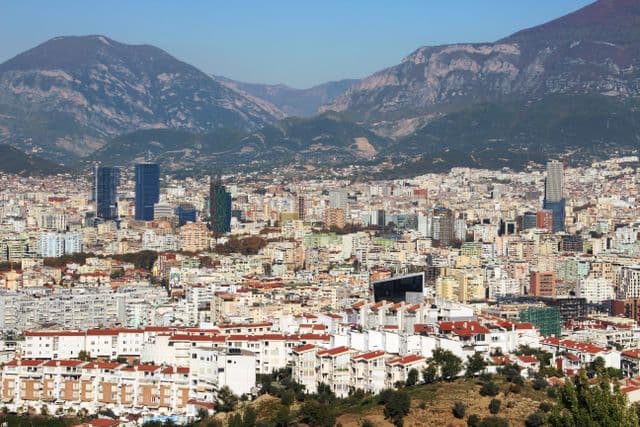
Tirana has been changing faster than any capital city in the Balkans for the past decade, and the pace of change is part of what makes it interesting. The concrete blocks of the communist era are being repainted in vivid colors by a civic improvement program that started with former mayor Edi Rama's street art initiative and has expanded into a broader urban renewal project. New boulevards, parks, and pedestrian zones have been cut through the dense central grid in ways that would have been unimaginable twenty years ago.
For digital nomads, Tirana offers Western Balkans affordability at a Albania gateway position that is increasingly connected to the EU: the country is in accession negotiations, the borders with Kosovo and North Macedonia are essentially open, and the coastline (2 hours west at the Albanian Riviera) provides seasonal relief from the city's summer heat.
Cost of living in Tirana comes down largely to housing. Monthly rents in the Blloku neighborhood, the former communist-era restricted zone for party elite now converted to the city's most active bar and restaurant district, run $400 to $700 for a furnished apartment. Fiber internet is widely available; the coworking scene is limited but growing. The city operates almost entirely in Albanian, though English comprehension among younger professionals is increasingly strong.
The mountains north and east of Tirana, including the Albanian Alps around Shkodër, represent some of the most dramatic and least touristed landscapes in Europe.
Cost of living
Cost-of-living calculator
See how your budget stretches in Tirana.
Estimates use approximate exchange rates and typical monthly costs. Your actual costs will vary.
- Coffee
- $2
- Cheap meal
- $5
- Coworking (day)
- $10
- Mid-range meal for 2
- $22
- Rent (1BR, center)
- $500
- Transit (monthly)
- $15
- Internet (monthly)
- $12
- Rent (1BR, outside)
- $350
EnRoute Jobs AI tool
Real Value Calculator
See what a salary actually leaves you in the country you want to live in.
Neighborhoods
Blloku
Young professionals, nightlife
Once communist elite enclave, now Tirana''s trendiest district.
Centre
Tourists, professionals
Main commercial corridor with grand Italianate architecture.
Getting around
- overview
- Walking easy in centre. Taxis and Bolt cheap and reliable. No metro.
Culture
Albanian culture carries the weight of one of the most isolated communist dictatorships in history: Hoxha's regime (1944 to 1985) sealed the country from the outside world, banned religion, and constructed over 170,000 concrete bunkers across the landscape that are still there, repurposed as wine bars, art installations, and storage. The emergence from this isolation has been rapid and still partially incomplete. The Besa, the Albanian code of hospitality and honor, predates the communist era and persists in the genuine warmth toward visitors that Tirana displays. The National Historical Museum's mosaic facade and the Bunkart bunker-turned-museum both tell the story of the 20th century with a directness that rewards the effort to find them.
Climate & best time to visit
Mediterranean with continental influence: hot dry summers (July 27–33°C) and mild, rainy winters (5–11°C). Spring (April–May) and autumn (September–October) are the most pleasant periods; the mountains north and east are snow-capped October through April.
Best months: April, May, September, October
Tips & safety
- •Walking easy in centre. Taxis and Bolt are cheap and reliable.
- •One of Europe's most affordable capitals. Meals from €3, coffee €1.
- •Tirana is generally safe and low-crime for a Balkan capital; petty theft is the primary risk.
- •Traffic is chaotic and pedestrian right-of-way is not reliably respected; assume vehicles may not stop.
- •Street dogs are present in outer areas; avoid provoking them.
- •Medical care has improved significantly in recent years; check current hospital options before an extended stay.
Areas to avoid: The Kombinat area in southwest Tirana has older housing blocks and higher petty crime; not a visitor area., Some unlit parks and underpasses in outer Tirana warrant caution at night., The Rruga e Kavajës area on the periphery has chaotic traffic — pedestrian care is especially important here.