.png)
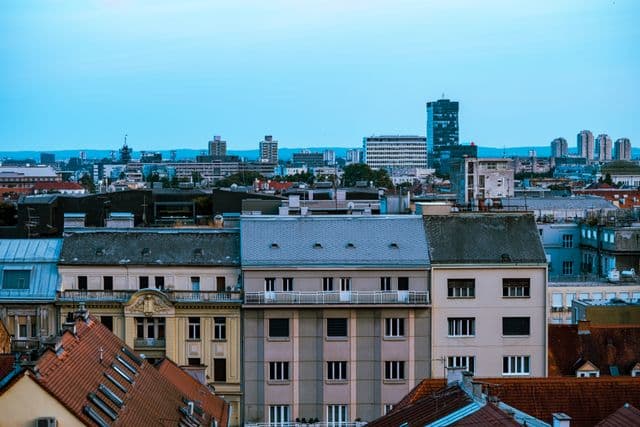
About Zagreb
Zagreb is the Central European city that Croatia's coast routinely overshadows, which means it is also the city where you can still rent an apartment near the center without paying a tourist premium, find a coffee shop with reliable WiFi and no queue for seats, and spend a weekend without planning around which cruise ships are in port.
For digital nomads, Zagreb offers the kind of European urban infrastructure (reliable public transit, good healthcare, walkable city center, serious café culture) at a cost that most comparable Western European capitals stopped offering a generation ago. Rent sets the tone for the cost of living in Zagreb. Monthly rents in the Gornji Grad, Ilica, and Martićeva areas run $500 to $900 for a furnished apartment; fiber internet at 100Mbps is standard.
The Upper Town, with its medieval streets and the funicular connecting it to the Lower Town, represents the historical core; the Lower Town is where daily professional and commercial life operates. The Zagreb street art scene and the independent restaurant culture that has developed in the Kvaternik and Heinzelova areas reflect a city that has been investing in its own liveability rather than its tourist infrastructure.
The primary limitation is weather: Zagreb winters (November through February) are cold and grey, and the social energy of the city drops accordingly. Spring and autumn are excellent; July and August can be warm but never oppressive by Adriatic standards.
Cost of living
Cost-of-living calculator
See how your budget stretches in Zagreb.
Estimates use approximate exchange rates and typical monthly costs. Your actual costs will vary.
- Coffee
- $2
- Cheap meal
- $8
- Coworking (day)
- $15
- Mid-range meal for 2
- $35
- Rent (1BR, center)
- $700
- Transit (monthly)
- $22
- Internet (monthly)
- $18
- Rent (1BR, outside)
- $500
EnRoute Jobs AI tool
Real Value Calculator
See what a salary actually leaves you in the country you want to live in.
Neighborhoods
Gornji Grad Upper Town
Culture, tourism, history
Hilltop medieval town with cathedral, museums, and funicular.
Donji Grad Lower Town
Professionals, shopping, dining
The main commercial and coffee culture zone with beautiful Austro-Hungarian buildings.
Medveščak and Maksimir
Families, professionals
Residential neighbourhoods near the park with excellent quality of life.
Getting around
- overview
- Excellent tram network throughout the city. Walkable upper and lower town. Good cycling infrastructure.
Culture
Zagreb's cultural life operates on a scale that the city's relative obscurity outside Croatia doesn't reflect. The Museum of Broken Relationships is genuinely one of the more unusual and affecting small museums in the world. The Mimara Museum holds a private art collection that was donated to the city and spans Old Masters, Asian artifacts, and applied arts without much organizational logic but with considerable depth. The Zagreb Christmas market was voted Europe's best for several consecutive years, and the local reaction to this honor was approximately as ambivalent as you would expect from a city that had been doing it without prizes for decades.
Climate & best time to visit
Continental: warm summers (July 18–25°C) and cold winters (January −2 to 4°C) with occasional snow. Spring (April–May) and autumn (September–October) are the most pleasant periods; Zagreb Advent in December is a genuinely excellent time to visit.
Best months: May, June, September, October
Tips & safety
- •Excellent tram network. Walkable upper and lower town. Good cycling infrastructure.
- •Very affordable. One-bed rent €600–1,000/month.
- •Zagreb has very low crime rates by European standards; petty theft in tourist areas is the primary concern.
- •The 2020 earthquake damaged some structures in the old town; be aware of ongoing construction around Gornji Grad.
- •Trams are the main way to get around; validate your ticket immediately on boarding.
- •Emergency: 112 (European emergency number), 192 (police), 194 (ambulance).
Areas to avoid: Zagreb is a safe city — there are no genuinely problematic neighborhoods for visitors., The area around the main bus terminal (Autobusni kolodvor) has the typical station-area dynamics; standard luggage awareness applies., Some blocks of Savska Cesta late at night see minor street activity.