.png)
About Croatia
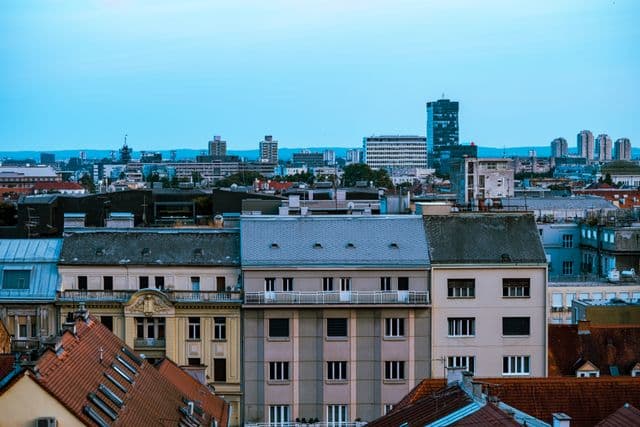
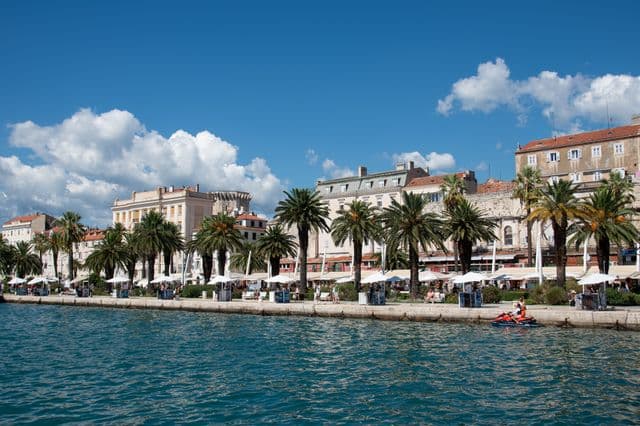
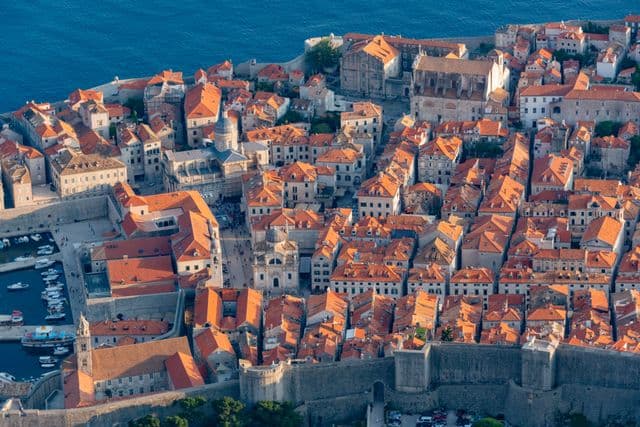
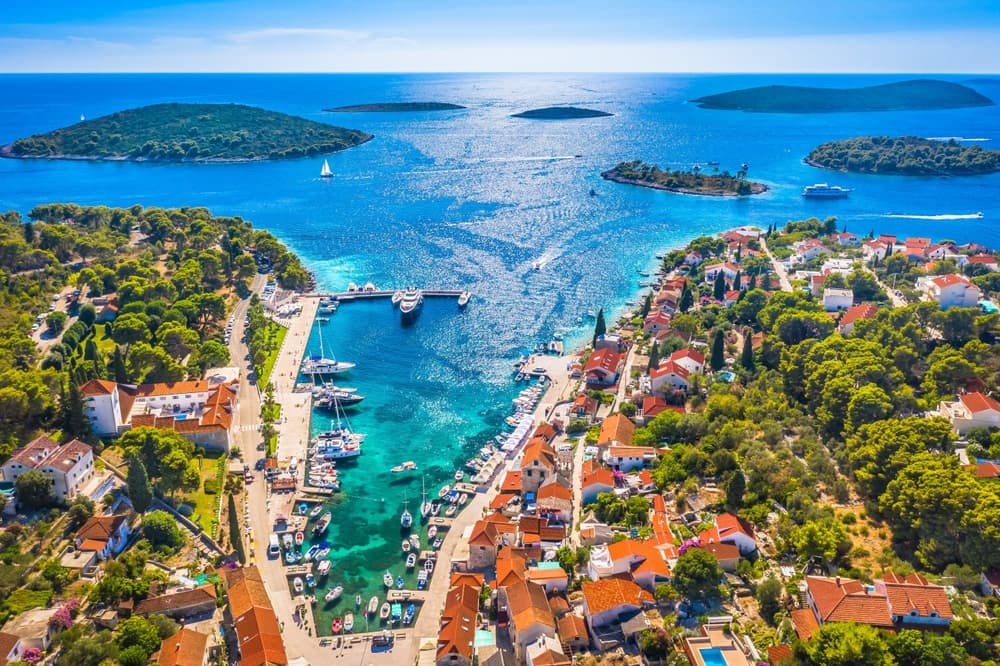
The Adriatic is the sea that has been painted most, and you understand why the moment you see it from the height of the Dalmatian coast road: that particular blue-green that sits between Mediterranean and cerulean, changing as the clouds move, with the stone towns of Split and Dubrovnik set against it like theater. Croatia has a thousand islands, a coastline that unspools for hours, and a light that makes ordinary afternoons feel composed. It also has, less famously, a capital with real Central European bones, because Zagreb belongs to the Vienna-and-Budapest world of courtyards and coffeehouses rather than to the coast, and the two Croatias are an hour apart and barely resemble each other.
The country earned its remote-work reputation early. Croatia launched one of Europe's first digital nomad permits in January 2021, prompted, in a story locals enjoy telling, by a Dutch entrepreneur's open letter to the prime minister, and it has improved the deal steadily since: into the EU in 2013, into Schengen and the euro in January 2023, and up to an 18-month maximum stay in 2025. The tax exemption on foreign remote-work income is written directly into the Aliens Act rather than implied, which is a clarity almost no other European program offers.
The permit is only half the story. Croatia runs the largest yacht-charter fleet in the world, and every spring the marinas of Split and Zadar hire skippers, hosts, and base staff for the season. The coast's hotels and konobas staff up on the same calendar, and the hostels of Split and Hvar have traded beds for shifts as long as anyone can remember. EU passport holders can take all of it without paperwork. What Croatia asks of everyone is respect for its calendar: the coast runs on tourism's tide, and the difference between July in Split and November in Split is the difference between a festival and a village.
Life here is unhurried in a way that is structural rather than decorative. Coffee is a standing appointment measured in hours, konoba dinners run long, and the pace that frustrates anyone in a rush is precisely what people come for. The practical trade-offs are real: summer housing on the coast evaporates into Airbnb, salaries and services thin out on the islands off season, and anything bureaucratic proceeds at police-station speed. Set against that, you get an EU base on the most beautiful coastline in Europe for the cost of a mid-sized American suburb, and eighteen months is long enough to stop feeling like a visitor.
Widening the search? If you are looking to expand your job hunt across Adriatic, take a look at Montenegro →, Slovenia →, and Italy →.
Cost of living
Croatia costs meaningfully less than Italy or Greece for a nearly identical sea, but the number depends entirely on when and where. Zagreb runs on year-round local logic: 600 to 900 euros for a decent one-bedroom, cheap transit, and the best value of the major cities. The coast runs on two calendars. From October to May, Split rents for Zagreb money or less; from June to September, landlords flip apartments to Airbnb, long-term supply evaporates, and what remains prices 30 to 40 percent up or more. Dubrovnik is its own case, roughly a sixth pricier than Split and far more seasonal.
The euro removed the currency friction in 2023 and nudged prices up with it, and Croatia's 25 percent VAT, among the highest in the EU, is baked into everything. Groceries and eating at neighborhood konobas stay reasonable; anything aimed at tourists in season does not. The single best financial decision you can make here is signing a coastal lease in autumn for a term that runs through the following summer.
- Furnished one-bedroom: roughly 600 to 900 euros in Zagreb or off-season Split, rising sharply on the coast from June through September. Dubrovnik prices above both year round.
- Coworking desk: 120 to 220 euros a month in Zagreb or Split, with genuine communities in both and seasonal spaces on Hvar.
- Konoba dinner: a proper meal with wine at a family tavern for 15 to 30 euros a head, and a marenda workers' lunch for well under 10.
- Ferries: Jadrolinija and the fast catamarans connect the islands cheaply and often; a Split to Hvar crossing costs less than a cocktail on Hvar.
Cost-of-living calculator
See how your budget stretches in Croatia.
Estimates use approximate exchange rates and typical monthly costs. Your actual costs will vary.
Visas & Entry
Croatia has been a full Schengen member since January 2023, so most Western passports get the standard 90 days in any rolling 180 across the entire zone, with EES biometric registration at the external border now that the electronic system is in force. For longer stays the country runs its Digital Nomad Residence Permit, technically a temporary stay rather than a visa, and one of the oldest programs of its kind in Europe, operating since January 2021.
The current rules are newer than most of what is written about them. The amended Law on Foreigners, in force since 15 March 2025, raised the maximum stay from 12 months to 18, granted either as a single 18-month permit or as 12 months with a six-month extension filed at least 60 days before expiry. In early 2026 the financial bar moved again, to 3,622.50 euros a month, calculated as 2.5 times the average Croatian net salary and republished each year, with six months of bank statements now required rather than three. The permit remains a closed loop by design: it cannot run past 18 months, it opens no path to permanent residency, and a new application requires six months outside the program after the last one ends. Applications go online, through a Croatian consulate, or, for visa-free nationalities, in person at the local police administration after arriving.
- The 2026 threshold is 3,622.50 euros a month, up from the 3,295 figure most guides still quote, with savings of 43,470 euros for 12 months or 65,205 for 18 accepted instead. Each family member adds roughly 10 percent of the average net salary.
- Six months of bank statements are now required, doubled from three, and officers increasingly probe whether income is genuinely active remote work rather than passive returns.
- Eighteen months is a hard ceiling with a six-month exile after it. There is no renewal, no permanent-residency clock, and no citizenship path; Croatia built a chapter, not a home.
- Register your address with the police within three days of arrival, with a lease or landlord statement in hand. A hotel booking gets you through the online application; the registration wants something real.
- No Croatian clients, no Croatian employer. The permit covers foreign-source work only, and picking up local invoices breaches it.
- Fees are modest: roughly 88 euros in total filing inside Croatia across the stay grant, permit issuance and biometric card, somewhat more through a consulate abroad.
| Visa or permit | What it covers |
|---|---|
| Visa-free entry (Schengen) | Ninety days in any 180 across the Schengen area for US, UK, EU-exempt and most Western passports, counted electronically under EES. Croatian days spend your Schengen allowance, unlike in pre-2023 guides still circulating. |
| Digital Nomad Residence Permit | Up to 18 months for non-EU remote workers serving foreign employers or clients, at 3,622.50 euros a month or equivalent savings, with foreign remote-work income exempt from Croatian income tax by statute. No renewal past 18 months and a six-month wait before reapplying. |
| Nomad permit extension | Permits granted for less than 18 months can be extended to the 18-month ceiling, filed no later than 60 days before expiry at the local police administration. |
| Family reunification | Spouse, unmarried partner and minor children can join once the main permit is approved, with the income requirement rising roughly 10 percent of the average net salary per dependent. |
| Work and residence permit | The employer-sponsored route for taking a job with a Croatian company, subject to labor-market rules. The only path that permits local employment. |
| Temporary stay on other grounds | Study, research, family and property ownership each carry their own temporary-stay category with police-administration filing, the usual road for those who want Croatia beyond what the nomad loop allows. |
Verified 20 August 2026 against Ministry of the Interior guidance. The 18-month duration dates from March 2025 and the 3,622.50-euro threshold from early 2026; most guides show older figures for both. Confirm current numbers before filing.
Good to know: Nomad permit extended to 18 months (March 2025); income threshold €3,622.50/month (2026); statutory tax exemption on foreign remote-work income; 6-month gap before reapplying.
EnRoute Jobs AI tool
Route Planner
Map visa routes, timelines, and relocation costs for your next destination.
Work & Legal
Croatian working culture splits along the same line as the country. Zagreb is Central European: meetings scheduled and kept, email answered, a professional formality that softens after the second coffee. The coast runs on Mediterranean time, where relationships precede transactions, August is functionally a holiday, and pressing for speed is read as bad manners. In both halves, the coffee ritual is where actual business happens, and declining the invitation costs more than the half hour would have.
Legally, Croatia was one of the first EU countries to write remote workers into law, and the permit is the clean mechanism: it explicitly authorizes work performed for foreign employers and clients from Croatian soil, while barring any work for Croatian entities. EU citizens need none of it, holding free movement and full labor rights. Non-EU visitors working quietly from tourist status sit in the same unenforced Schengen gray zone as everywhere else in the zone, and the permit exists precisely so nobody has to rely on it.
- The nomad permit authorizes foreign-source remote work explicitly, a statutory clarity Croatia offered years before most of Europe.
- Croatian clients and employers are off limits on the permit. Local work in any form requires the employer-sponsored work and residence permit instead.
- Long absences endanger the permit. It is a residence, not a parking spot, and extended time outside Croatia during its term can void it; treat it as a place you actually live.
- English is easy on the coast and in Zagreb tech, where fluency is near universal among the young; official paperwork, leases and police-station visits run in Croatian, and a local contact or agent smooths the edges.
Good to know: Permit explicitly legalizes foreign-client remote work; Croatian clients prohibited; extended absence can void the permit.
Taxes
Croatia's tax pitch to nomads is unusually clean because it is written down: permit holders pay no Croatian income tax on qualifying foreign remote-work income, full stop, and the exemption survives the 183-day threshold that flips residency in nearly every other country. The fine print rewards a careful read, but the headline is real.
| What applies | The rule in 2026 |
|---|---|
| The nomad exemption | Carved directly into the Aliens Act framework: qualifying income from foreign employers or your own foreign company is exempt from Croatian income tax and social contributions for the life of the permit, however many days you spend in the country. |
| What the exemption does not cover | It shields the remote-work income and nothing else. Croatian-source income, which the permit forbids anyway, and other income categories fall under ordinary rules, and the permit is not treated as tax-treaty residence, which can matter when your home country asks where you were resident instead. |
| Ordinary income tax | For actual Croatian tax residents, rates are set municipality by municipality since the 2024 reform, with Zagreb at the top at roughly 23.6 percent on the lower band and 35.4 on the higher. Not relevant to a compliant nomad stay, and the schedule that applies if you later settle here properly. |
| VAT (PDV) | 25 percent standard, among the highest in the European Union, folded into displayed prices, with reduced rates on food staples and accommodation. This is the Croatian tax a nomad actually pays, at the register. |
| The 183-day rule for everyone else | Visitors without the permit fall under ordinary rules, where 183 days or an available dwelling can establish residency. The permit is what suspends that arithmetic; a tourist-status long-stayer gets no such shield. |
| Property and rental income | Croatian rental income and real-estate gains are taxed under domestic rules regardless of nomad status; the exemption has nothing to say about them. |
| Americans specifically | Because Croatia collects nothing on the exempt income, there is no Croatian tax to credit against a US return. The Foreign Earned Income Exclusion does the work if you meet its presence tests, and it does not cover self-employment tax. |
| Home-country obligations | The exemption is Croatia's alone. Your own country's residency and worldwide-income rules continue to apply and are usually the binding constraint, particularly since the permit does not hand you a treaty residence to point at. |
Verified 20 August 2026. The exemption is statutory and real; the trap is assuming it settles your taxes anywhere but Croatia. Take advice in both jurisdictions. General information, not tax advice.
Good to know: Statutory exemption on foreign remote-work income for permit holders, surviving the 183-day mark; 25% VAT is the tax nomads actually pay.
Healthcare
Croatian healthcare is solid European public medicine with a growing private tier, concentrated in Zagreb and thinning as the coastline stretches south and the islands scatter. The public system, HZZO, covers citizens and EU visitors on an EHIC card; everyone else pays privately or carries insurance, and the nomad permit requires coverage for the full intended stay. Private care is inexpensive by Western standards, with a consultation at 30 to 70 euros and English-speaking doctors easy to find in the cities.
The practical geography matters more than the quality tier. Zagreb holds the country's serious medicine, and complex cases from the coast referral their way there. Split covers Dalmatia well for most needs, Dubrovnik's general hospital serves the far south, and the islands run on clinics with boat or helicopter transfer behind them, which is worth remembering before wintering somewhere gorgeous and remote. Croatian dentistry is good and cheap enough to have its own tourism.
- Private consultation: 30 to 70 euros, typically same week, with English-speaking doctors routine in Zagreb and Split.
- Insurance is a permit condition covering the full intended stay; in practice some police administrations also steer longer-stay residents toward HZZO enrollment at roughly 120 euros a month, and which way your office leans varies, so budget for the possibility.
- Emergency number: 112, with sea rescue coordinated through it for the islands and channels.
- Pharmacies (ljekarna) are capable and everywhere in season; island pharmacy hours off season are a reason to carry what you depend on.
| Hospital | What to know |
|---|---|
| KBC Zagreb (Rebro) | The country's largest university hospital and the national referral center, where the complex cases end up from everywhere else. |
| KBC Sestre milosrdnice, Zagreb | Major university hospital in the city center with a full specialist range, the other half of Zagreb's serious-medicine duopoly. |
| KBC Split (Firule) | Dalmatia's university hospital and the referral point for the central coast and islands. |
| KBC Rijeka | The university hospital serving Istria and the northern Adriatic, the closest major center to the Kvarner islands. |
| Dubrovnik General Hospital | The principal hospital of the far south, serving a region separated from the rest of the coast by a Bosnian corridor and a long drive. |
| St. Catherine Specialty Hospital, Zagreb | The best-known private hospital in the country, strong in orthopedics and diagnostics, and the private option international patients most often reach for. |
Hospital list compiled 20 August 2026 and not yet confirmed against each facility directly. Treat as indicative and verify before relying on it.
Good to know: Good urban care, Zagreb-centric for complexity; permit requires insurance for the full stay; some offices push HZZO enrollment.
Safety
Croatia is one of the safest countries on the Mediterranean, and all four Western governments this site tracks agree, each sitting at its lowest advisory tier. Violent crime is rare, the coastal towns are safe at any hour in their main areas, and the practical risk is the pickpocket economy that follows summer crowds through Dubrovnik's old town, Diocletian's Palace in Split, and the festival season. Ordinary European awareness covers it.
The one distinctive item is a leftover of the 1990s war: roughly 24.5 square kilometers of suspected minefields remain, in dense forest and rough terrain well away from anywhere tourists go, and the American advisory marks Karlovac and Lika-Senj counties at a higher caution level for it. Lika-Senj includes Plitvice Lakes, which is precisely why the advice matters and why it is undramatic: the park and every marked trail are safe, the warning is about wandering off them into unmarked backcountry, and mined areas carry the international skull-and-triangle sign. Croatia expects demining to be complete by the end of 2026, closing the file for good.
- Pickpockets work the summer crowds in Dubrovnik's old town, Split's palace quarter and the ferry queues; the incident rate collapses with the crowds in October.
- Stay on marked trails in the demining counties. The parks are safe and heavily visited; the residual risk lives in unmarked forest and old front-line terrain, always signed with the red triangle.
- The sea is the real hazard. The bura wind arrives suddenly and violently, closing bridges and ferry routes and turning channels dangerous for small boats; treat the forecast as binding, not advisory.
- Drive the coast road in daylight the first time. The Magistrala is spectacular, narrow and shared with buses; the islands add unlit lanes and confident local drivers.
- Summer sun and stone do arithmetic on you. Heat above 35C bounces off Dubrovnik's limestone; carry water for any city walking in July and August.
Official travel advisories
| Government | Current position |
|---|---|
| United States | Level 1, Exercise Normal Precautions, issued 9 October 2025, with Karlovac and Lika-Senj counties at Level 2 for residual landmines in unmarked backcountry. Marked trails and tourist areas are unaffected.travel.state.gov → |
| United Kingdom | No advisory against travel. Current guidance centers on Schengen entry mechanics under EES and standard passport-validity rules rather than security.gov.uk → |
| Canada | Take normal security precautions, the lowest Canadian tier, with standard notes on summer pickpocketing in tourist centers.travel.gc.ca → |
| Australia | Exercise normal safety precautions, Smartraveller's lowest rating, with reminders to check EES and Schengen entry rules before travel.smartraveller.gov.au → |
| US Embassy Zagreb | Enroll in STEP for alerts. From the US, the State Department consular line is +1 888 407 4747.hr.usembassy.gov → |
Advisory positions verified 20 August 2026. All four governments sit at their lowest tier; the county-level landmine note is the only carve-out and Croatia expects full demining by the end of 2026. Open the sources before travelling.
Good to know: Lowest tier from all four tracked governments; county-level landmine caution for unmarked backcountry only, demining expected complete by end of 2026.
Climate
Croatia runs two climates an hour apart. The Dalmatian coast is classic Mediterranean, long dry summers, mild wet winters, a sea that stays swimmable into October, while Zagreb and the interior are continental, with real winters and warm landlocked summers. For anyone working through the year the coast's shoulder seasons are the prize: May, June, September and early October offer warm sea, open infrastructure and none of the July crush that makes Dubrovnik's old town genuinely difficult to walk through. The bura, the violent cold wind that pours off the Dinaric Alps, is the coast's one meteorological drama, closing bridges and ferries for a day at a time and best admired from inside thick stone walls.
| Season | What to expect |
|---|---|
| Spring, March to May | The coast wakes through April and hits its stride in May, warm, green and empty enough to have places to yourself. Zagreb's cafe terraces reopen at the first sustained sun. May is the single best arrival month. |
| Summer, June to August | Hot, dry and brilliant on the coast, 30 to 35C through July and August, with the tourist volume to match and coastal housing at its scarcest and dearest. Zagreb runs warm and quieter as the city itself decamps to the sea. |
| Autumn, September to October | The connoisseur's season: sea at its warmest, crowds gone by late September, prices down, light gorgeous. September is arguably the best working month of the Croatian year. |
| Winter, November to February | Mild and wet on the coast, with many island and resort businesses shuttered and the bura at its most theatrical. Zagreb turns properly cold, minus 5 to 5C, and answers with one of Europe's best Advent markets. |
Good to know: Shoulder seasons are optimal on the coast; July–August is hot, crowded and expensive; coastal winters are mild but half-shuttered.
Culture & Customs
Croatian daily life is built around the coffee, and taking it seriously is the fastest way to stop being a stranger. A kava is not a beverage but an appointment, a minimum half hour and often two, conducted at a terrace table that nobody will hurry you from, and most things that matter, friendships, favors, apartments, jobs, move through it. The corollary is fjaka, the Dalmatian art of contented idleness, which looks like laziness to the unconverted and is closer to a philosophy of not manufacturing urgency where none exists.
Beneath the ease sits a country with a strong sense of itself. Croatia's independence war is within living memory, feelings about it run deep, and the safest posture for an outsider is interested listening rather than commentary; likewise, calling anything here Yugoslav, or Croatia part of the Balkans in the wrong company, lands badly. Regional pride is fierce and affectionate, Dalmatians and Zagrepčani teasing each other like siblings, and food is regional to the village: Istrian truffles, Pag cheese, peka lifted from under its iron bell. Show up, eat what the konoba suggests, and let the coffee do its work.
- Accept the coffee invitation. It is the social contract in miniature, and rushing it or taking it to go marks you as a tourist faster than any accent.
- Do not relitigate the war or the map. The 1990s are personal history here, not a conversation starter, and Yugoslav framing of anything Croatian is quietly resented.
- Dress for the church you are entering. Shoulders and knees covered in Dubrovnik's cathedral and every island church; the coast is relaxed about beachwear until the moment it is not.
- Tip modestly, in cash. Rounding up or 10 percent for good service; service charges are rare and card terminals often skip the tip line.
- Respect the beach flags and the bura forecast. Both are treated as law by locals, and both exist because the Adriatic is less gentle than it looks.
- Learn ten words of Croatian. Dobar dan, hvala and molim open faces everywhere, precisely because so few visitors bother on a coast that speaks English fluently.