.png)
About Dubrovnik
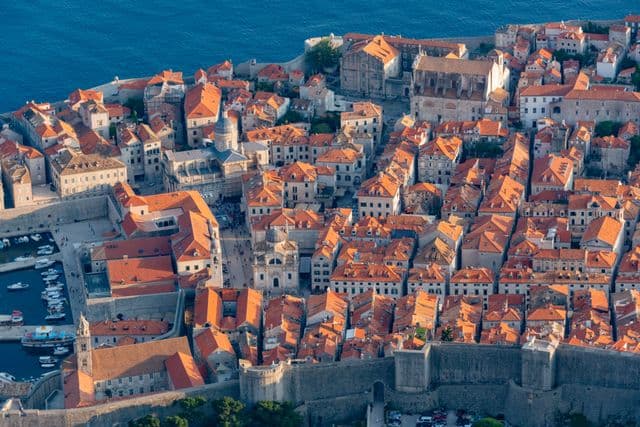
Dubrovnik has become, partly through its role as King's Landing in Game of Thrones and partly through its extraordinary inherent beauty, one of the most visited small cities in Europe. This has significant consequences for geo-flex professionals considering an extended stay: the old city, enclosed within its perfectly preserved medieval walls, operates at tourist-economy prices in high season (June through August) and with tourist-economy crowds that can make walking the marble-paved streets feel like moving through a bottleneck.
The case for Dubrovnik as an extended working base improves significantly outside peak season. May, September, and October offer the Mediterranean climate, the extraordinary coastal setting, and the old city at a pace that is actually livable. The cost of living in Dubrovnik is mostly a rent question. Monthly rents in the Lapad and Gruž neighborhoods, the residential areas outside the old walls, run $700 to $1,200 from October through April and significantly more in peak season.
The coworking scene is limited: Dubrovnik is primarily organized around tourism rather than remote work infrastructure. The fiber internet availability in modern accommodation is generally good. The ferry connections from Dubrovnik port to the Dalmatian islands (Hvar, Korčula, Mljet) make the city a practical base for island exploration across the wider region.
The old city walls walk, 2 kilometers completed in 90 minutes, is the best single activity in Croatia and is most rewarding at sunrise before the day-trippers arrive from the cruise ships.
The season hires as hard as it prices: the hotels and the charter fleet staff up from April, mostly on EU passports.
Cost of living
Cost-of-living calculator
See how your budget stretches in Dubrovnik.
Estimates use approximate exchange rates and typical monthly costs. Your actual costs will vary.
- Coffee
- $3
- Cheap meal
- $12
- Coworking (day)
- $20
- Mid-range meal for 2
- $55
- Rent (1BR, center)
- $1,200
- Transit (monthly)
- $30
- Internet (monthly)
- $25
- Rent (1BR, outside)
- $850
EnRoute Jobs AI tool
Real Value Calculator
See what a salary actually leaves you in the country you want to live in.
Neighborhoods
Old Town Stari Grad
Tourists, short-term stays, honeymoons
The UNESCO walled city; stunning but expensive in peak season.
Lapad
Long-term residents, families, value
Quieter peninsula west of Old Town with beaches and local restaurants.
Gruz
Locals, budget-conscious, authentic
The port and market district; less touristy and more affordable.
Getting around
- overview
- Old Town entirely walled and walkable. Buses connect to Lapad. Ferries to islands. Cable car to Mt Srd.
Culture
Dubrovnik's historical identity as the Republic of Ragusa, the independent merchant republic that maintained its autonomy between Venice and the Ottoman Empire from 1358 to 1808 through a combination of diplomatic skill, trade, and strategic payments to both powers, gives the city a distinct cultural character. The Ragusans developed maritime trade routes to Alexandria, Flanders, and the New World, and their merchant traditions produced the wealth visible in the Rector's Palace, the Sponza Palace, and the Dominican Monastery library. The 1991 to 1992 Serbian and Montenegrin shelling of the city during the Yugoslav dissolution, which damaged much of the old town, is documented in the War Photo Limited gallery with an unflinching directness that the polished tourist experience otherwise conceals.
Climate & best time to visit
Hot Mediterranean coastal: hot dry summers (July 26–32°C) and mild winters (January 7–12°C) with the Bora wind. Peak tourist crowds in July–August make the walled city dense; May–June and September–October are significantly more pleasant and less crowded for longer stays.
Best months: May, June, September, October
Tips & safety
- •Old Town is entirely walled and walkable. Buses connect to Lapad and surroundings. Ferries to islands.
- •Tourist prices in peak season: extremely expensive June-August. Shoulder season is excellent value.
- •Pickpocketing is the primary concern; keep your wallet secure in the Stradun and Pile Gate areas during high season.
- •The limestone streets inside the walls get extremely slippery when wet; decent footwear is essential year-round.
- •Heatstroke risk is real in summer; the walls walk is fully exposed. Bring water and go in the early morning.
- •Driving into the old town is prohibited; use the Pile Gate bus and walk in.
Areas to avoid: There are no genuinely unsafe areas in Dubrovnik — it is an extremely low-crime city., The crowds inside the Old City walls in summer (June to August) create pickpocketing conditions; keep bags secured in dense areas near Pile Gate and the Stradun.