.png)
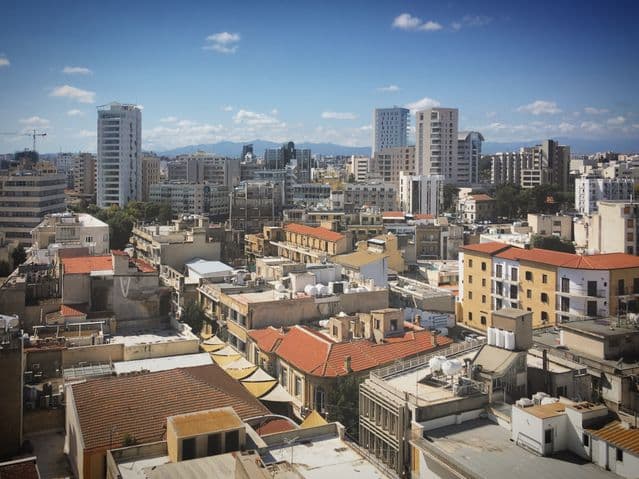
About Nicosia
Nicosia is the last divided capital city in the world, and the line running through it (the UN buffer zone, the Green Line, separating the Republic of Cyprus from the Turkish-administered north) is visible and crossable for most people and invisible in its consequences for the city's daily operating rhythm. The old city on the southern side, within the Venetian walls, contains the greatest concentration of historical material and the most interesting street-level culture; the northern old city, accessible through the Ledra Street checkpoint, has its own character.
For remote workers, Nicosia's case is less obviously appealing than Limassol's coast or Paphos's tourist infrastructure: it is an inland city, genuinely hot in summer (Cyprus's highest summer temperatures regularly exceed 40°C in the Nicosia basin), and operating as the governmental and administrative capital rather than as an international lifestyle destination.
What it offers instead: the Cypriot cultural heritage in its most concentrated form, the least tourist-mediated experience of the island's Greek character, and rents that are significantly lower than Limassol at $700 to $1,200 for a furnished apartment in the Strovolos and Engomi residential areas. The university population provides a consistent intellectual and social energy.
Best months are October through May; June through September the Nicosia basin reaches extreme heat, with summer temperatures regularly exceeding 40°C and minimal coastal breeze relief compared to the island's coastal cities. The university populations and diplomatic community maintain a year-round social calendar that partly compensates for the August emptiness.
Cost of living
Cost-of-living calculator
See how your budget stretches in Nicosia.
Estimates use approximate exchange rates and typical monthly costs. Your actual costs will vary.
- Coffee
- $3
- Cheap meal
- $10
- Coworking (day)
- $18
- Mid-range meal for 2
- $40
- Rent (1BR, center)
- $850
- Transit (monthly)
- $25
- Internet (monthly)
- $25
- Rent (1BR, outside)
- $650
EnRoute Jobs AI tool
Real Value Calculator
See what a salary actually leaves you in the country you want to live in.
Neighborhoods
Old Town Walled City
Culture, history, arts
The historic walled city on both sides of the Green Line; remarkable and complex.
Engomi and Strovolos
Professionals, families
Modern residential suburbs west of the old city.
Getting around
- overview
- Old town walkable. Buses serve wider city. Car recommended. Taxis widely available.
Culture
Nicosia's divided status gives it a cultural complexity that no other European capital shares. The Buffer Zone through the center, with its abandoned buildings and UN observation posts, is a physical reminder of an unresolved political situation that has been frozen since 1974. The Home for Cooperation at the Ledra Palace checkpoint has worked for twenty years to use the buffer zone as a space for intercommunal contact and cultural exchange between Greek and Turkish Cypriots. The archaeological museum on Museum Street holds the most important collection of Cypriot antiquities from Bronze Age through Byzantine periods, including objects from sites that are now inaccessible in the northern part of the island.
Climate & best time to visit
Hot continental: the hottest capital city in the EU. Very hot summers (July–August: 34–40°C in the inland basin) and mild winters (December–February: 8–14°C). October–April is the workable productive period; summers are intense and require excellent air conditioning.
Best months: March, April, October, November
Tips & safety
- •Old town walkable. Buses serve the wider city. Car recommended for flexibility. Taxis widely available.
- •Moderate. One-bed rent €700–1,200/month.
- •Nicosia is among the lowest-crime capitals in the EU; standard precautions apply.
- •Heat in summer is extreme; the city has the hottest temperatures in Cyprus with very little sea breeze.
- •The Green Line crossing at Ledra Street requires a valid passport to cross into the northern part of the city.
- •Driving is on the left (UK system); watch for this if coming from mainland Europe.
Areas to avoid: The UN buffer zone dividing the city is clearly marked — do not enter or photograph the restricted military zones., Parts of old Nicosia just north of the buffer zone can feel rundown but are generally safe; just be aware of the boundary., There are no genuinely dangerous neighborhoods in Nicosia — it is consistently among the safest EU capitals.