.png)
About Cyprus
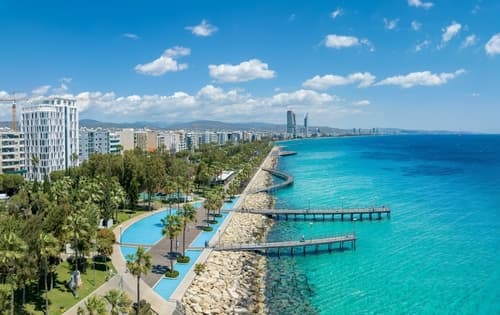
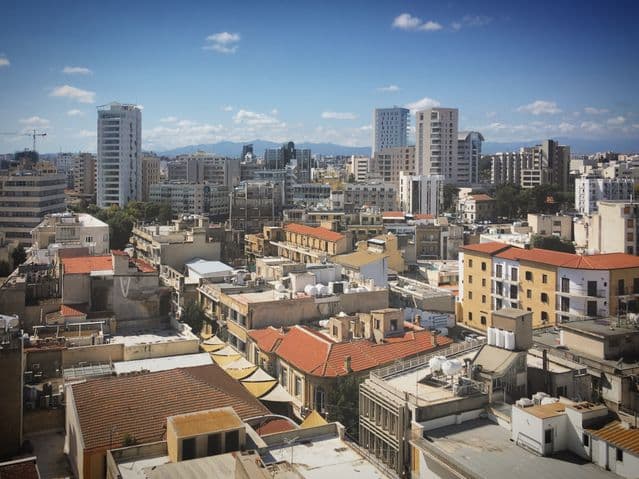
Cyprus operates at a peculiar frequency. It is an island at the intersection of three continents, technically European, geographically closer to Beirut than to Athens, layered with Phoenician, Byzantine, Ottoman and British history, and functionally the eastern Mediterranean's business services hub. Limassol has spent a decade becoming a de facto international city, its seafront towers filled with fintech, shipping and iGaming firms and its cafés running in English, Greek, Russian and Hebrew; Nicosia, the world's last divided capital, does the government and professional work behind the beach postcard; Paphos and Larnaca hold the gentler, cheaper versions of the island life. The summer season hires in volume from Paphos to Ayia Napa, mostly on EU passports, and the marinas of Limassol crew up each spring.
The nomad proposition is really a tax proposition wearing a visa. The Digital Nomad Visa itself is orthodox, capped, and pleasantly cheap to obtain; what distinguishes Cyprus is what becomes available to those who stay: tax residency achievable under the unique 60-day rule, non-dom status that zeroes tax on foreign dividends and interest for seventeen years, a corporate rate of 12.5 percent, and an English-speaking professional infrastructure, lawyers, accountants, banks, built precisely to operate it. For the salaried remote employee the island is a sunny, safe, Anglophone base; for the owner-operator paying themselves in dividends it can be transformative, which is why the accountants of Limassol never lack for work.
The honest ledger has entries on both sides. The island is outside Schengen, which historically meant Cypriot days spent no European allowance, though accession is progressing and will eventually retire the feature. The division of the island since 1974 is a managed fact rather than a danger, with its own entry rules worth taking literally. And 2026 delivered a reminder of the neighborhood: the US-Iran conflict that began in February brushed the island when a drone struck the British base at Akrotiri, advisories jumped and then subsided, and life in the cafés continued essentially unbothered, which is itself the most Cypriot fact in this paragraph. Summers are furnace-hot, driving is on the left, and the meze, properly done, takes three hours.
Widening the search? If you are looking to expand your job hunt across Eastern Mediterranean, take a look at Greece →, Malta →, and Italy →.
Cost of living
Cyprus prices split by city and season. Limassol, gilded by its international business economy, is the expensive answer: a one-bedroom in the tower-and-marina zone runs 1,000 to 1,500 euros and ordinary stock 800 to 1,100, with the city's restaurant tier priced for its fintech payroll. Nicosia, Larnaca and Paphos tell the gentler story at 550 to 850 euros for equivalent apartments, and the inland villages cheaper still. Summer electricity, which is to say air conditioning from June through September, is the utility line that ambushes newcomers, and cars are near-mandatory outside the city cores.
Daily life runs moderate: excellent coffee at 3 to 4 euros in a café culture built for lingering, lunch at 10 to 14, the full meze ritual at 20 to 30 a head, and supermarket costs a notch above mainland Greece thanks to island logistics. The compensations are structural, no currency friction on the euro, taxis replaced by Bolt in the main cities, halloumi at source prices, and a wine tradition, Commandaria being the world's oldest named wine, that overdelivers per euro. Petrol, insurance and the left-side driving school of thought complete the car budget that most residents simply accept as the price of the island's best parts.
- One-bedroom rent: 1,000 to 1,500 euros in Limassol's international zone and 550 to 850 in Nicosia, Larnaca and Paphos; the lease or deed is a visa requirement, so housing precedes paperwork.
- Eating well: lunch at 10 to 14 euros, the three-hour meze at 20 to 30 a head, and café culture priced for the lingering it expects.
- Summer power bills: air conditioning June through September adds a real line, 100 to 200 euros in the hot months, and the budget built on May's bill fails in July.
- The car assumption: outside the city cores the island is car-shaped, 300 to 450 euros monthly all-in, on the left side of the road with British-legacy roundabouts.
Cost-of-living calculator
See how your budget stretches in Cyprus.
Estimates use approximate exchange rates and typical monthly costs. Your actual costs will vary.
Visas & Entry
Cyprus is an EU member outside the Schengen Area, so its 90 visa-free days for US, UK, Canadian, Australian and most Western passports run on Cyprus's own clock and spend nothing from the Schengen allowance, the strategic feature that has long made the island a rotation base; accession to Schengen is actively progressing and will eventually fold Cypriot days into the common count, so multi-year plans built on the separation should be checked against current status. Entry and exit run legally only through Larnaca and Paphos airports and the southern seaports; the Republic does not consider arrival via Ercan in the north lawful, and using it can poison future residence applications.
The Digital Nomad Visa, approved in October 2021, is a capped scheme with a lively history: 100 permits at launch, 500 from March 2022, suspension when the ceiling filled, and a March 2025 reopening with a fresh 500-permit allocation and reported further expansion since, which makes apply-while-open the standing advice. Eligibility is orthodox: non-EU nationals working remotely by telecommunications for employers registered abroad or as self-employed with foreign clients, at 3,500 euros monthly net after taxes and contributions, one of Europe's few take-home thresholds, plus 20 percent for a spouse and 15 percent per child. Applications file at the Civil Registry and Migration Department in Nicosia within three months of arrival, or through consulates, with biometrics, roughly 140 euros in fees, 30,000 euros of health and accident insurance, accommodation evidence, a clean record and 5-to-7-week decisions. The permit runs one year with a renewal of up to two more, family members join without work rights, and the scheme carries one genuinely unusual feature: its years count toward the five-year residence requirement for permanent residency, though the three-year ceiling means finishing that clock requires switching to another category, employment, self-employment or the Category F financially-independent route.
- The threshold is net, not gross: 3,500 euros after taxes and contributions, so check take-home pay against it rather than salary, and budget the 20-and-15-percent family add-ons the same way.
- The cap is the clock: a suspended-then-reopened scheme with finite allocations rewards early filing; the March 2025 reopening and reported expansions are the window, and no one guarantees the next one.
- File in-country within three months of arrival at the migration department in Nicosia, or via a consulate abroad; 5 to 7 weeks, about 140 euros, and legal stay continues while the application processes.
- Insurance and accommodation are file requirements: 30,000 euros of health and accident cover for the stay and a lease or title deed, assembled before the appointment rather than promised after.
- Never enter via Ercan if the Republic is your plan: northern arrival is not legal entry to the Republic of Cyprus, and it surfaces later at exactly the moment a residence application matters.
- The PR clock quietly runs: nomad years count toward the five-year permanent-residency requirement, a rarity among Europe's nomad permits, with a category switch needed after year three to finish the distance.
| Visa or permit | What it covers |
|---|---|
| Visa-free entry | Ninety days for most Western passports on Cyprus's own clock, outside Schengen for now, with accession progressing; legal entry only via Larnaca and Paphos airports and southern seaports, never via Ercan in the north. |
| Digital Nomad Visa | One year plus up to two more, for non-EU remote workers at 3,500 euros net monthly, capped scheme reopened March 2025; family joins without work rights, no Cypriot employers or clients, and the years count toward the five-year permanent-residency clock. |
| Category F (financially independent) | The long-standing residence route for those living on foreign income without local employment, the traditional retiree-and-rentier permit and the common switch target after the nomad ceiling. |
| Employment and BCS company permits | Sponsored work permits, including the fast lane for foreign-interest companies whose staff the island's business ecosystem imports at scale; the route the moment a Cypriot employer appears. |
| Yellow Slip (EU citizens) | EU and EEA nationals register under freedom of movement with no income machinery, the MEU1 certificate, and inherit the island's tax architecture as ordinary residents. |
| Permanent residency and the 60-day bridge | Five years of legal residence opens PR, with nomad years counting; separately, the 60-day tax-residency rule lets committed part-year residents into the fiscal architecture long before immigration permanence arrives. |
| The north | The Turkish Cypriot-administered north operates separate systems recognized only by Türkiye; Green Line day crossings at designated checkpoints are routine with ID, while entering the island via the north is a legal problem with lasting consequences in the Republic. |
Good to know: Capped scheme (reopened Mar 2025): €3,500/mo NET, +20%/+15% family, 1+2 years, in-country filing within 3 months, ~€140, €30k insurance; years count toward 5-yr PR; outside Schengen with accession progressing; never enter via Ercan.
EnRoute Jobs AI tool
Route Planner
Map visa routes, timelines, and relocation costs for your next destination.
Work & Legal
Cypriot professional culture is British-trained and Mediterranean-paced: contracts and courts run on English common-law foundations in the English language, while relationships, patience and the long coffee do the actual work. Limassol's international economy has normalized foreign professionals to the point of banality, the meetup and coworking scene is real, and the service industry around business, law, accounting, banking, fiduciary, is the island's genuine specialty, priced accordingly and worth using.
For nomad-visa holders the lines are explicit: remote work for foreign employers and clients is what the permit authorizes, and Cypriot employers or clients are prohibited, with the employment-permit system and the foreign-interest company fast lane as the doors to the local market. Tourist-entry remote work is the region's usual quiet gray zone. The deeper Cypriot pattern is structural: the island's professional machinery exists to turn foreign operators into Cyprus-based structures, companies at 12.5 percent, non-dom principals, 60-day residents, and the moment ambitions exceed the visa's shape, the correct next conversation is with a Limassol accountant rather than a migration officer.
- The visa authorizes foreign-source work only: Cypriot employers and clients are off-limits on it, the employment and company routes exist for exactly that, and the boundary is policed politely and properly.
- The professional infrastructure is the island's edge: English-speaking lawyers, accountants and fiduciaries who do cross-border structure for a living; using them early costs hundreds and saves thousands.
- Limassol is the network: the fintech-shipping-iGaming economy runs a genuine events and coworking circuit where newcomers plug in within weeks; Nicosia holds the institutions and Paphos the quieter colony.
- August and the afternoon exist: the island keeps Mediterranean hours in its bones, government windows close early, and the summer slowdown is structural; schedule bureaucracy for mornings and autumn.
Good to know: Visa authorizes foreign-source remote work only; local market routes through employment permits and the foreign-interest company lane; the island's real specialty is turning operators into Cyprus structures.
Taxes
Cyprus is the EU's structuring capital for mobile professionals, and the reason is architecture rather than a single rate: a 60-day path to tax residency unique in Europe, a non-dom regime that zeroes foreign dividends and interest for seventeen years, and a 2026 reform that lifted the tax-free band to 22,000 euros. The visa and the tax system are separate machines; the calendar connects them.
| What applies | The rule in 2026 |
|---|---|
| Two roads to residency: 183 or 60 days | The standard 183-day rule applies, and beside it runs the famous 60-day rule: at least 60 days in Cyprus, a permanent home here, Cypriot employment or a Cyprus company directorship, and no 183-day residency elsewhere. It is the EU's fastest legitimate route into a tax system and the anchor of the island's appeal to the genuinely mobile. |
| The 2026 schedule | The reform lifted the tax-free band to 22,000 euros with progressive rates of 20 to 35 above it; at the visa's 42,000-euro minimum the effective rate lands near 10 percent before any reliefs, a gentler curve than the old schedule most guides still print. |
| Non-dom status, the main event | New tax residents who were not Cypriot-resident for 17 of the past 20 years take non-domiciled status: no Special Defence Contribution on dividends and interest for seventeen years, which for an owner-operator paying themselves in dividends from a foreign or Cypriot company approaches a structural zero on that income. The exemption covers dividends and interest, not salary or freelance income, a distinction sloppy summaries blur. |
| The 50 percent expat exemption | First-time Cyprus employment at 55,000 euros or more carries a 50 percent income-tax exemption on the salary for up to 17 years, the tool the island's companies use to import senior staff and the number that turns job offers Cypriot. |
| Corporate and the operator stack | Corporate tax at 12.5 percent with reform packages moving through 2026, no tax on dividend flow to non-dom residents, and the professional infrastructure to run it cleanly; the standard owner-operator stack the Limassol accountants assemble in their sleep. |
| Non-residents and short stays | Under both residency tests, foreign income owes Cyprus nothing; the nomad visa itself creates no tax liability, and sub-60-day years leave you entirely outside the system. |
| GESY and contributions | The national health system covers residents in the ordinary regimes; nomad-visa holders sit outside it by design, insuring privately, and contribution exposure arrives with local employment or self-employment rather than with the visa. |
| Americans specifically | The US-Cyprus treaty applies, there is no totalization agreement so self-employment tax survives, and the non-dom architecture's dividend games interact with US anti-deferral rules in ways that make one hour with a cross-border adviser the best-priced insurance on the island. |
Verified 20 August 2026: the 60-day rule, 17-year non-dom exemption on dividends and interest, the 2026 band at 22,000 euros, and the visa-holders-outside-GESY design. The non-dom exemption does not cover employment income. General information, not tax advice.
Good to know: 60-day residency rule plus 17-year non-dom exemption on dividends/interest are the architecture; 2026 band €22,000 then 20-35%; effective ~10% at the visa minimum; visa holders sit outside GESY.
Healthcare
Cypriot healthcare runs on GESY, the universal system built from 2019 that covers citizens and ordinary residents, and a private tier that predates it and serves the international community; the crucial nomad fact is that Digital Nomad Visa holders sit outside GESY by design, which is why the permit demands private insurance and why the private hospitals are the practical system for this population. English is effectively the working language of Cypriot medicine, a consultation runs 40 to 80 euros privately, specialists follow within days, and the private hospitals of Nicosia and Limassol handle most planned care to a good standard, with the rarest complexity historically referred to Israel, Greece or London.
Pharmacies are professional and everywhere, dentistry is solid value, summer medicine is heat sense and hydration, and 112 answers emergencies. The one geographic note: capability concentrates in Nicosia and Limassol, and the island's size keeps everything within ninety minutes of serious care.
- Private consultation: 40 to 80 euros, English-native in practice, same-week specialists; the private tier is the nomad system by design since the visa excludes GESY.
- Insure to the requirement and past it: the 30,000-euro visa minimum is a floor, and comprehensive private cover including evacuation for the rarest cases is the setup residents actually run.
- Emergency number 112, with response solid in the cities and the island's scale keeping serious care within ninety minutes of anywhere southern.
- Summer is the health season: heat past 40 in the interior, hydration discipline, and the afternoon shade protocol the locals model; dust episodes in spring and autumn deserve respect from respiratory patients.
| Hospital | What to know |
|---|---|
| Nicosia General Hospital | The state flagship and the public system's tertiary anchor, carrying the island's most complex public medicine. |
| Limassol General Hospital | The second city's major public hospital, covering the southern coast's acute load. |
| American Medical Center, Nicosia | Prominent private hospital with cardiac strength and broad specialist coverage, a fixture of the capital's private tier. |
| Apollonion Private Hospital, Nicosia | Established private hospital with surgical and maternity depth serving the capital's professional class. |
| Mediterranean Hospital of Cyprus, Limassol | The southern coast's major private hospital, multi-specialty and accustomed to the international community. |
| Aretaeio Hospital, Nicosia | Private university-affiliated hospital rounding out the capital's planned-care options. |
Hospital list compiled 20 August 2026 and not yet confirmed against each facility directly. Treat as indicative and verify before relying on it.
Good to know: GESY excludes nomad-visa holders by design; private tier at €40-80 is the practical system; capability concentrates in Nicosia and Limassol; English is the working language.
Safety
Cyprus asks for a more precise safety briefing in 2026 than its history of green ratings suggests, and honesty serves better than either alarm or nostalgia. Street-level Cyprus remains what it has always been: one of the Mediterranean's safest societies, violent crime rare, petty theft modest and seasonal, solo travel comfortable everywhere south of the Green Line. What changed is the neighborhood. When hostilities between the United States and Iran began in late February 2026, the eastern Mediterranean felt it: commercial flights disrupted regionally, and on 2 March a drone struck a building on the British Sovereign Base Area at Akrotiri, the first strike on Western military assets on the island in half a century. Washington raised its advisory to Level 3 the next day and authorized embassy departures; London never restricted travel at all; tourist areas, airports and daily life continued essentially normally; and after the June de-escalation the American level came back down, leaving Australia's elevated caution and the year's lesson: check current advisories, because they have moved twice.
The permanent facts are calmer. The island's division is managed, not dangerous: the UN buffer zone is crossed only at designated checkpoints, day trips north are routine with ID, and the serious rule is about arrival, never entering the island via Ercan if the Republic figures in your plans. Fire season runs May to October with real wildfires in the hills, Saharan dust storms visit in spring and autumn, summer heat is a health protocol, and the most statistically genuine daily risk is the road: left-side driving, confident local styles and holiday-rental learning curves, best met with defensive habits and daylight bias on the mountain routes.
- Read the advisories the week you plan, not the year: 2026 saw the American level spike to 3 and settle back; the volatility, not any single snapshot, is the finding, and STEP or Smartraveller subscriptions are the practical answer.
- Daily life stayed normal through all of it: airports, resorts and cafés ran on schedule through the advisory turbulence, hotels stayed busy, and the calm of residents is data too.
- Take the entry rule literally: Larnaca and Paphos airports and the southern seaports are legal entry; Ercan is not, and the shortcut costs exactly when a residence application matters.
- Cross the Green Line at checkpoints only, with ID, as thousands do daily; the buffer zone itself is UN-patrolled and not for improvisation, and the north is a different legal world with limited consular reach.
- Fire season and dust are the environmental calendar: May-to-October wildfires in the forested hills, occasional Saharan dust events cutting air quality, and heat past 40 inland in high summer; all managed with ordinary local sense.
- The road is the daily statistic: left-side driving, assertive styles and mountain routes reward defensive habits, daylight bias and real respect for the rental-car learning curve. Emergency number 112.
Official travel advisories
| Government | Current position |
|---|---|
| United States | A volatile year: raised to Level 3, Reconsider Travel, on 3 March 2026 after the Akrotiri drone strike, with authorized departure of non-emergency staff, then stepped back down toward normal precautions with an increased-caution carve-out for the Turkish Cypriot-administered north as regional tensions eased; the page itself is the only current answer.travel.state.gov → |
| United Kingdom | No advisory against travel at any point in the year, with standard guidance plus base-areas and regional-tension notes; the steadiest of the four throughout.gov.uk → |
| Canada | Take normal security precautions in the Republic, with a high degree of caution for the north, where Canadian consular help is limited.travel.gc.ca → |
| Australia | Exercise a high degree of caution, yellow, elevated with the Middle East conflict framing: terrorism threat language, buffer-zone notes, May-to-October fire seasons and spring-autumn dust storms.smartraveller.gov.au → |
| US Embassy Nicosia | Enroll in STEP; the embassy's alerts tracked the year's turbulence closely and remain the practical feed. Metochiou and Ploutarchou Street, Engomi, Nicosia.cy.usembassy.gov → |
Advisory positions verified 20 August 2026, including Smartraveller directly at a high degree of caution; the American level moved twice during the year and the current page binds. Ground conditions remained normal throughout. Open the sources before travelling.
Good to know: 2026 volatility: Akrotiri drone strike (Mar 2) drove US to L3 then back down post-June de-escalation; Smartraveller yellow; UK never restricted; ground conditions normal throughout; roads, fire season and entry rules are the durable list.
Climate
Cyprus runs one of the Mediterranean's most emphatic climates: long furnace summers from June through September at 35 to 40 degrees inland and gentler on the coasts, short mild winters of 10 to 18 degrees with the year's rain, and spring and autumn shoulders that rank with Europe's finest working weather. The island averages some 340 sunny days, the Troodos massif supplies the escape hatch, ten degrees cooler in summer and genuinely snowy in January and February, with skiing that surprises everyone told about it, and the sea stays swimmable from May into November. The remote-work calendar writes itself: October through April for the productive core, the shoulders for the island at its best, and high summer for those who make peace with air conditioning and the beach-evening rhythm.
| Season | What to expect |
|---|---|
| Summer, June to September | Hot to very hot, 35 to 40 inland with coastal mercy, low humidity and zero rain; air conditioning is the office, the sea is the evening, and Nicosia in August is an oven locals evacuate. |
| Autumn, October to November | The connoisseur's season: mid-20s air, the year's warmest sea, thinned crowds and golden light; arguably the island's best working months. |
| Winter, December to February | Mild at 10 to 18 with the year's rain in bursts, green hills, quiet towns and snow on Troodos with its small sincere ski season; the cheap, local, productive stretch. |
| Spring, March to May | Wildflowers, warming seas and dust-storm cameos from the Sahara; April-May pairs with autumn as the shoulder prize before the heat arrives in earnest. |
Good to know: Shoulders are the prize; high summer is an air-conditioning contract; Troodos is the ten-degrees-cooler escape with a real January ski season.
Culture & Customs
Cypriot culture is Greek Orthodox at its root, British at its administrative edges, and Levantine in its pace, a blend the island wears without effort. Philoxenia, the love of the guest, is sincerely practiced: hospitality escalates from coffee to invitation faster than newcomers expect, the meze is a three-hour philosophy of dinner rather than a menu format, and the kafeneio, the village coffee house, still runs the social operating system outside the cities. The festi and name-day calendar structures the year, Easter outranks Christmas emphatically, and family is the institution against which all others are measured. Limassol's international decade has layered a multilingual professional scene over all of it, English serving as the genuine lingua franca of business and much of daily life.
The codes are Mediterranean-light with a few sharp edges. Dress modestly in monasteries and churches, greet before transacting, accept the coffee, and expect the clock to flex. Tipping runs 10 percent and is appreciated rather than enforced. Driving is on the left with British roundabouts and Cypriot confidence. And the division of the island is the conversation to enter as a listener: the events of 1974, the missing, the property questions and the peace process carry real pain on both sides of the line, locals discuss them with nuance earned by living them, and visitor verdicts are neither needed nor useful. Photography near military areas and the buffer zone is genuinely prohibited, a rule the signage means.
- Give the meze its three hours: the parade of small plates is the culture's dinner-table philosophy, ordering it starts a relationship with the taverna, and rushing it misses the point entirely.
- Accept the coffee and the pace it implies: Cyprus coffee arrives thick and unhurried, the kafeneio and café are where relationships form, and business follows the third meeting more often than the first.
- Dress for the sacred spaces: shoulders and knees covered at monasteries and churches, Kykkos above all, with wraps often provided and the rule sincerely meant.
- Enter the Cyprus question as a listener: 1974, the missing and the property files carry living pain on both sides; curiosity is welcome, verdicts are not, and the nuance belongs to those who earned it.
- Respect the no-photography signs at military areas, the bases and the buffer zone, where the prohibition is enforced rather than decorative.
- Tip around 10 percent where service is not included, round up for taxis and cafés, and let the euro and near-universal cards keep the money side frictionless.