.png)
About Taipei
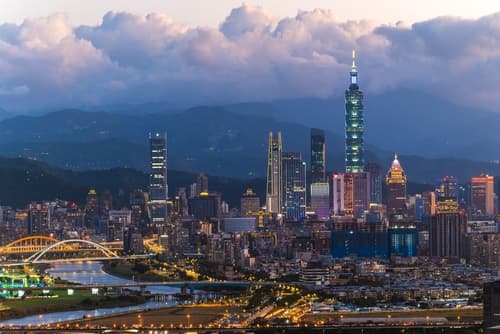
Taipei sits in a basin ringed by mountains, close enough to feel compressed at street level and expansive from any elevation above the city proper. The Yangmingshan National Park borders the northern edge of the urban area; hot springs run from volcanic activity beneath the hills; the city unfolds below in a grid that Japanese colonial administration laid out and that has been built vertically since without much pause.
For digital nomads, Taipei runs among the best value-for-infrastructure propositions in Asia. A one-bedroom apartment in Da'an, Xinyi, or the areas around Gongguan runs NT$20,000 to NT$35,000 a month (roughly €580 to €1,020). Coworking is dense: CLBC across multiple locations, Taiker Space, and a significant network of independent operators serve a large community of domestic and international remote workers. Fiber connectivity is excellent throughout the urban core; Taiwan has invested in internet infrastructure as a matter of economic and strategic policy.
The food culture is one of Asia's most concentrated. Night markets are not tourist infrastructure but functioning neighborhood food systems that have operated on the same logic for generations. The stinky tofu at Shilin is genuinely challenging for newcomers; the scallion pancakes at any hole-in-the-wall breakfast counter are not. Both are worth engaging.
Taiwan's Gold Card visa program offers a transparent and relatively accessible long-stay option for professionals meeting income and skill criteria. The program was redesigned in 2021 and has become one of the more discussed remote-work visa frameworks in Asia. Best months are October through April; June through September is typhoon season and very hot.
Cost of living
Cost-of-living calculator
See how your budget stretches in Taipei.
Estimates use approximate exchange rates and typical monthly costs. Your actual costs will vary.
- Coffee
- $3
- Cheap meal
- $4
- Coworking (day)
- $15
- Mid-range meal for 2
- $30
- Rent (1BR, center)
- $900
- Transit (monthly)
- $40
- Internet (monthly)
- $25
- Rent (1BR, outside)
- $650
EnRoute Jobs AI tool
Real Value Calculator
See what a salary actually leaves you in the country you want to live in.
Neighborhoods
Da'an District (大安區)
Remote workers, longer stays, international professionals
The center of Taipei's remote-work and expat community: dense café culture around Gongguan and Yongkang Street, excellent MRT connectivity, and a concentration of coworking spaces. Higher costs but the infrastructure is the most developed in the city.
Xinyi District (信義區)
Finance, corporate, higher-end residential
Taipei's planned commercial district with the best-maintained public spaces, the Taipei 101 complex, and a concentration of international companies. More corporate than Da'an but with excellent transit access and a cleaner urban environment.
Zhongshan District (中山區)
Creatives, mid-range residential
The area between the main station and the river, with a mix of Japanese-influenced residential streets, independent cafés along Chifeng Street, and the Zhongshan MRT corridor. Less dense than Da'an but calmer and well-connected.
Beitou (北投)
Longer-term residents, nature access
The northern hot spring district, accessible by MRT and significantly quieter than central Taipei. The hot spring culture is genuine and functional. A useful residential base for those who want urban access with immediate mountain and thermal water proximity.
Culture
Taipei is East Asia's most approachable global city: a dense, vertical metropolis of 2.6 million that manages to feel warm, chaotic, and extraordinarily safe simultaneously. Taiwanese culture blends Fujianese Chinese heritage, Japanese colonial influence (45 years of Japanese rule left a deep mark on architecture, food, and civic culture), and a proudly democratic identity that distinguishes it sharply from mainland China. The night market culture, the bubble tea obsession, and a social warmth that makes strangers stop to help you find your way are all genuine.
Climate & best time to visit
Subtropical: hot, humid summers (Jun–Sep: 29–35°C with typhoons) and mild but cool, damp winters (Dec–Feb: 12–18°C). Spring (March–May) warm and increasingly humid; autumn (October–November) is the best season; warm, lower humidity, clear skies.
Best months: October, November, March, April
Tips & safety
- •The EasyCard (悠遊卡) works on all MRT, buses, YouBike bicycle stations, and most convenience stores; load it at any MRT station
- •YouBike public bicycles cost NT$10 for the first 30 minutes and are the best way to navigate flat districts like Da'an and Xinyi
- •7-Eleven and FamilyMart stores provide ATM access, bill payment, parcel collection, and functional food at all hours; they are genuinely useful daily infrastructure
- •Night markets are local food infrastructure rather than tourist attractions; the Ningxia Night Market in Datong is less visited than Shilin and better for regular use
- •The Gold Card visa (金卡) application process is documented in English at goldcard.nat.gov.tw; processing takes 30-60 days and is worth researching for income-eligible applicants
- •Scallion pancakes (蔥抓餅) and egg crepes (蛋餅) at any breakfast counter cost NT$30-50 and are a reliable daily meal option
- •The MRT operates until midnight on weekdays; night buses cover the gaps
- •Taipei is among the safer cities in Asia for solo travelers; violent crime targeting visitors is rare and petty theft is comparatively low
- •Emergency: 110 (police), 119 (fire/ambulance); English services are available through the 0800-024-111 tourist line
- •Earthquake preparedness: Taiwan experiences regular seismic activity; note the structural quality of your building and learn the drop-cover-hold-on protocol
- •Typhoon season runs June through October; follow the Central Weather Bureau alerts and the city's school/business closure protocols when a sea warning is issued
Areas to avoid: Wan Hua District around Ximending at night is generally fine but the concentration of sex workers and some street drug use makes it a poor choice for routine late-evening movement, Motorbike blind spots at intersections; the volume of scooter traffic means crossing at non-signalized points requires active watching