.png)
About Taiwan
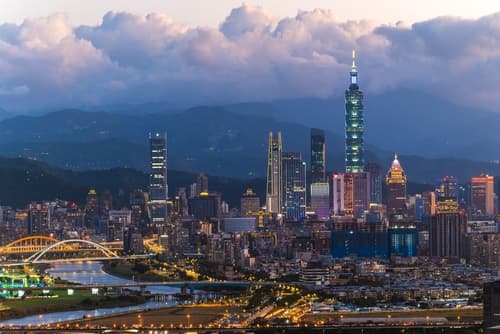
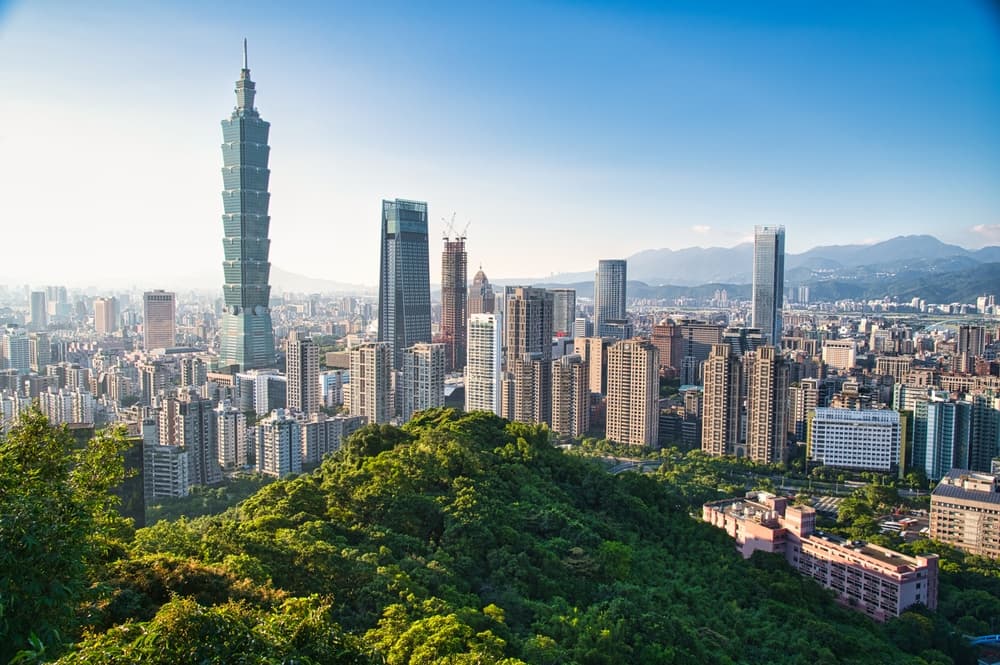
Taiwan is the destination most professionals encounter through the tech industry and then discover has more to offer than its hardware reputation suggests. Taipei is dense, functional and genuinely livable, one of Asia's most underrated capitals: a café culture that treats laptops as furniture, an MRT that embarrasses richer cities, convenience stores operating as civic infrastructure, and night markets that are not attractions but the actual national dining room. Beyond the capital: Taichung's creative sprawl, Tainan's temple-and-food old soul, Kaohsiung's harbor renewal, and an east coast, Hualien's gorge country and Taitung's slow Pacific towns, that the government is actively courting nomads toward.
The legal picture became two clean tiers in 2025. The Digital Nomad Visitor Visa, launched New Year's Day 2025 and stretched to a two-year maximum in January 2026, is the accessible entry: age-tiered income tests, a ten-thousand-dollar balance, days-fast processing, in-country extensions, and visitor-status limits it never hides, no family, no NHI, no path to residence. Above it the Employment Gold Card remains Taiwan's flagship, an open-work, family-carrying, NHI-included residency that reaches permanence in three years, and the National Development Council states the design out loud: come as a nomad, convert as talent. The fine print this page keeps visible is fiscal, Taiwan's services-situs rule that makes laptop work performed on the island technically Taiwan-source past 90 days, a doctrine gentler in practice than on paper but worth pricing before the second extension. Teaching English remains the classic sponsored lane, the buxibans arranging work permits as they have for decades, and working holiday agreements cover the under-31s of a dozen-plus partner countries.
Life here runs on trust and texture: the laptop left on the café table stays put, the lost wallet comes back, women walk at 2 a.m. without calculus, and the advisory tier says Japan. The genuine risks are tectonic and meteorological, earthquakes and the July-to-September typhoons, plus the scooter rivers that are the actual daily hazard. The cross-strait context is the tail risk every resident prices individually; the trackers log routine military signaling within historical parameters, the advisories hold at their calmest levels, and Taipei has never once needed the headlines' imagination. Cheap by developed-Asia standards, safe by any standards, and warmer than its efficiency suggests: Taiwan argues for itself the moment the first night market swallows an evening.
Widening the search? If you are looking to expand your job hunt across East Asia, take a look at Japan →, Philippines →, and Vietnam →.
Cost of living
Taiwan prices like a developed country that forgot to gouge. Taipei one-bedrooms run roughly 600 to 1,100 dollars in the convenient districts, Da'an and Zhongshan at the top, Xinbei commutes below, with older walk-up stock cheap and new towers Tokyo-lite; Taichung and Kaohsiung run a solid third less, and the east-coast towns the nomad program promotes, Hualien and Taitung, undercut everything. Utilities are modest outside aircon season and the fiber, among the world's fastest, costs a rounding error.
Food is the famous subsidy: night-market dinners at 3 to 6 dollars, the beef-noodle and bento economy at 4 to 8, convenience-store meals that are genuinely good, and even ambitious restaurants undercutting their Tokyo or Seoul peers; the 5 percent VAT hides inside prices. The MRT and buses move the cities for coins on an EasyCard that also pays the 7-Eleven, the high-speed rail puts the west coast in ninety minutes, and the YouBike share is the short-hop default. LINE Pay and the card economy cover the cities with cash for the markets, tipping does not exist, and the honest budget note is simply that Taipei's comfortable-single number, 1,800 to 2,400 dollars, buys a quality of urban life the same money cannot touch in the cities it gets compared to.
- One-bedroom rent: 600 to 1,100 dollars in Taipei's convenient districts with older stock cheaper, a third less in Taichung and Kaohsiung, and the promoted east coast cheaper still; the deposit norm is two months and agents are standard.
- Eat for 3 to 8 dollars endlessly: night markets, beef noodle, bento and convenience-store dinners make the food budget optional-feeling, and the fine-dining tier undercuts every peer capital.
- Ride the EasyCard everywhere: MRT and buses for coins, YouBike for the short hops, high-speed rail for the west coast, and the same card paying at every convenience store; no tipping anywhere, ever.
- Budget the aircon summer: June through September electricity is the one bill that jumps, and the sub-tropical humidity makes it non-negotiable; winter asks a dehumidifier instead.
Cost-of-living calculator
See how your budget stretches in Taiwan.
Estimates use approximate exchange rates and typical monthly costs. Your actual costs will vary.
Visas & Entry
Taiwan's stack starts with 90-day visa-free entry for the US, UK, EU, Canada, Australia and most developed-world passports, the scouting season and, notably, a legal platform for filing the nomad visa from inside the country.
The Digital Nomad Visitor Visa, annotation code DN, launched 1 January 2025 under the National Development Council and foreign ministry, and the 8 January 2026 reform rebuilt its ceiling: a six-month multiple-entry visa now extendable in-country through the National Immigration Agency in six-month increments to a maximum stay of two years, no exit required. Eligibility runs three doors for visa-exempt nationals aged 20 and up: proof of a digital nomad visa previously issued by any other country, which waives the interior-ministry review entirely and routes to direct issuance; or, for applicants 30 and older, an annual income of at least 40,000 US dollars in one of the last two years; or, for the 20-to-29 cohort, 20,000. Every applicant additionally shows bank deposits averaging at least 10,000 dollars across the last six months, health and full hospitalization insurance covering the planned stay, a résumé, a current work contract or freelance agreements, and the Description of Intended Activities form; income proofs accept W-2s, P60s and their global siblings or employer letters. The mechanics are refreshingly quick: complete the online form, print the barcode application, submit to an overseas mission or, if already in Taiwan visa-free, to the Bureau of Consular Affairs, with processing at five to ten business days and fees by nationality reciprocity, roughly NT$7,090 for Americans. The limits are stated, not hidden: no dependents may be sponsored, no work for Taiwanese employers or clients without a separate labor-ministry permit, no National Health Insurance access at any stay length, and no bridge to residency, because the DNV is a visitor visa by design. The residency answer is the Employment Gold Card one tier up: a four-in-one open work permit, resident visa, ARC and re-entry permit for one to three years across 13 professional fields, the economy field's salary test at NT$160,000 a month, roughly 5,000 dollars, in one of the last three years, with spouse and children sponsorable, NHI included, permanent residency at three years, and the January 2026 package adding spouse open work permits, a PR fast-track for high earners and a top-1,500-university qualification waiver. The NDC's design is explicit: the nomad visa is the audition, the Gold Card the contract.
- Use the reciprocal-visa door if you have it: any prior nomad visa from another country waives the ministry review and routes to direct issuance, making Taiwan the natural second stop of an Asian nomad circuit by design.
- File from inside Taiwan: land visa-free, apply at the consular bureau with the barcode form, and receive the DN visa without leaving; the five-to-ten-day processing makes the entire maneuver fit inside a single stay.
- Calendar the NIA extensions: the two-year maximum arrives in six-month blocks applied for before each expiry with a Taiwan address in hand, no exit required; the extensions are applications, not formalities, so the income and insurance files stay current.
- Price the insurance for the full arc: NHI never opens to DNV holders, so private health plus hospitalization cover spans the entire stay; the requirement is checked at filing and worth solving before documents.
- Treat the Gold Card as the second act: the 5,000-dollar-a-month economy bar, open work rights, family, NHI and the three-year permanence clock make conversion the obvious move for anyone Taiwan fits; goldcard.nat.gov.tw runs the online file in four to eight weeks.
- Mind the under-30 gift: the 20,000-dollar bar for ages 20 to 29 is among the lowest serious-country thresholds anywhere, and the two-year ceiling makes Taiwan arguably the best first nomad base a young remote career can pick.
| Visa or permit | What it covers |
|---|---|
| Visa-free entry | Ninety days for most developed-world passports, the scouting season, and a legal platform for filing the DNV from inside Taiwan; the classic pre-2025 pattern of visa-runs is now officially obsolete. |
| Digital Nomad Visitor Visa (DN) | Six months multiple-entry, extendable in-country via the NIA in six-month blocks to a two-year maximum since the January 2026 reform; for visa-exempt nationals working exclusively for foreign employers and clients, processed in five to ten business days. |
| The three eligibility doors | Any other country's nomad visa in hand, which waives the review step outright; or 40,000 dollars annual income in one of the last two years for the 30-plus; or 20,000 for ages 20 to 29, the region's friendliest under-30 bar; all plus the 10,000-dollar six-month average balance. |
| The paperwork set | Résumé, work contract or freelance agreements, the Intended Activities form, tax-form or employer income proof, bank statements, and health-plus-hospitalization insurance spanning the stay; the file is light and the barcode application is the entire ceremony. |
| The stated limits | No dependents, no local employment without a labor-ministry permit, no NHI at any stay length, and no residency bridge; the DNV is a visitor visa that never pretends otherwise, and the private insurance requirement is permanent. |
| Employment Gold Card | The flagship above: open work rights across any employer or self-employment, one to three years, family sponsorable with NHI for all, and permanent residency at three years; the economy field prices at NT$160,000 a month, about 5,000 dollars, with 13 fields and qualification routes beside the salary test. |
| The 2026 sweeteners | January 2026 added spouse open work permits, a permanent-residency fast-track for TWD 6-million-a-year earners and a top-1,500-university waiver to the Gold Card, while quadrupling the DNV ceiling; Taiwan is bidding openly in Asia's talent auction. |
Good to know: DNV (code DN) since Jan 1 2025, extended Jan 8 2026 to 2-year max (6-mo blocks via NIA, no exit); doors: other-country DNV (review waived) / $40k at 30+ / $20k at 20-29, + $10k avg balance; 5-10 day processing; no dependents, no NHI, no residency path; Gold Card (NT$160k/mo) is the residency tier with PR at 3 years.
EnRoute Jobs AI tool
Route Planner
Map visa routes, timelines, and relocation costs for your next destination.
Work & Legal
Taiwanese professional culture blends Japanese-adjacent courtesy with a directness all its own: punctuality is real, business cards exchange with two hands, the group meal is the relationship, and LINE is not an option but the national nervous system through which landlords, clients, clinics and friendships all run. The remote infrastructure is elite: median fixed broadband among the planet's fastest, cafés that architect for laptops, coworking depth in Taipei with the NDC now funding dedicated nomad hubs, and a regional push, Hualien, Taitung, Tainan, Pingtung, actively courting the community with community offices and events. The time zone reads GMT+8: European afternoons overlap Taiwanese evenings, US West Coast mornings meet the Taiwanese night, and the Asia-Pacific client day fits perfectly.
The legal lines are the visa's own: the DNV authorizes remote work for foreign employers and clients exclusively, any service to a Taiwanese employer or client requires a labor-ministry work permit that visitor status cannot host, and the Gold Card's open work rights exist precisely for those who want the local option, employment, freelancing for Taiwanese clients, or founding outright. The operational counsel is texture: the convenience store notarizes, prints, ships, banks and feeds; the trash truck sings Für Elise and the neighborhood assembles nightly to meet it; earthquakes and typhoon days are drills the country runs calmly and the newcomer learns fast; and the café that becomes your office will defend your unattended laptop with civic pride.
- Foreign clients only on the DNV: Taiwanese employers or clients require a labor-ministry permit the visitor visa cannot carry; the Gold Card's open work rights are the legal local option and the designed upgrade path.
- Install LINE before landing: the landlord, the dentist, the coworking desk and the friend group all live there; Taiwan without LINE is Taiwan on mute.
- Work the GMT+8 geometry: European clients meet your evening, US West Coast your late night or early morning, and Asia-Pacific your natural day; the schedule writes itself once chosen deliberately.
- Use the state's nomad hubs: the NDC funds coworking and community offices for the program's holders, Taipei's private coworking tier is deep, and the east-coast towns are courting remote workers with genuine intent.
Good to know: DNV = foreign-source work only (local anything needs MOL permit or Gold Card); LINE is the national OS; NDC funds dedicated nomad coworking; GMT+8 fits Europe-evening and APAC-day clients; elite internet.
Taxes
Taiwanese tax rewards the reader who learns one doctrine most nomad guides skip: services performed physically in Taiwan are Taiwan-source income even when the employer sits abroad, and the calendar, not the passport, decides what that means. Under 90 days a year the question stays theoretical; past it, the fine print begins.
| What applies | The rule in 2026 |
|---|---|
| The 90-day exemption | Foreign-employer compensation for work performed in Taiwan is exempt while presence stays under 90 days in a calendar year; the short season owes nothing and files nothing, and this is the line the one-semester visitor lives comfortably behind. |
| The services-situs doctrine | Past 90 days, remote work performed on Taiwanese soil is technically Taiwan-source income even for foreign employers, taxable at the 18 percent non-resident rate on the Taiwan-attributable portion; the cliff most guides gloss, gentler in practice than on paper for DNV holders, and the thing to price rather than discover. |
| The 183-day line | Half a year's presence makes tax residency: the progressive schedule, 5 to 40 percent, applies to Taiwan-source income including in-Taiwan services, with resident deductions and exemptions softening the middle; the two-year DNV stayer is a resident by design and should plan like one. |
| The quasi-territorial mercy | Genuinely foreign-source income, dividends, offshore business profits, income from services performed abroad, sits outside the regular income tax entirely for residents, touched only by the alternative minimum tax above roughly NT$7.5 million a year; Taiwan taxes what happens on Taiwan far more than what happens to Taiwanese residents elsewhere. |
| The Gold Card halver | Foreign special professionals earning over NT$3 million a year pay tax on only half the excess for their first three to five years under the talent act; the flagship perk that makes the Gold Card fiscal as well as legal infrastructure. |
| Daily-life taxes | VAT at 5 percent hides inside prices, securities gains through the local exchange are generally exempt for individuals, and the receipt-lottery turns every purchase into a bimonthly national game worth actually playing. |
| Americans specifically | No comprehensive US income tax treaty has historically covered Taiwan, with double-tax relief legislation moving through Congress in recent years worth checking at filing; the FEIE and foreign tax credits do the work meanwhile, and self-employment tax follows the self-employed as always. |
| The honest planning frame | Price the doctrine, not the forum anecdotes: the sub-90-day visitor owes nothing, the half-year-plus resident should budget Taiwanese tax on in-Taiwan work with an accountant's help, and the quasi-territorial treatment of true foreign-source income keeps the total picture competitive with anywhere in developed Asia. |
Verified 20 August 2026: the 90-day foreign-employer exemption, the services-situs doctrine and 18 percent non-resident rate, the 183-day residency line with the 5-to-40-percent schedule, quasi-territorial treatment of foreign-source income under the AMT threshold, the Gold Card halving provision, and VAT at 5 percent. General information, not tax advice.
Good to know: The doctrine to learn: in-Taiwan services are Taiwan-source even for foreign employers; exempt under 90 days/yr, 18% non-resident past it, resident 5-40% past 183; true foreign-source income quasi-territorial (AMT only above ~NT$7.5M); Gold Card halves income over NT$3M; VAT 5%; no historic US treaty.
Healthcare
Taiwanese medicine is world-class and famously cheap to access: the National Health Insurance system is the planet's most-cited single-payer success, and the hospital tier beneath it, National Taiwan University Hospital, the Chang Gung network, the Veterans General system, competes with anywhere in Asia. The nomad-relevant fine print: DNV holders are excluded from NHI at any stay length, private health and hospitalization insurance is a visa requirement for the full term, and the consolation is that cash-pay care here is astonishingly reasonable, clinic visits at 15 to 40 dollars, specialist consultations and diagnostics at fractions of Western prices, with English workable at the major hospitals' international centers. Gold Card holders join NHI, employed ones immediately and the self-employed after six months' residence, which is one more argument for the conversion.
The practical map: Taipei concentrates the flagships with international patient centers, every major city holds a serious medical center, pharmacies are professional and ubiquitous, and dentistry is excellent at gentle prices. The health risks are environmental rather than infectious: summer heat and dengue awareness in the south, air-quality days worth an app, earthquake and typhoon literacy as civic skills, and the scooter rivers as the actual injury risk the emergency rooms know best. Emergencies: 119 for ambulance and fire, 110 for police, with response times that match the country's general competence.
- DNV means private insurance, full stop: NHI never opens to nomad-visa holders regardless of stay length, the coverage requirement spans the entire term, and the visa file checks it; Gold Card conversion is the NHI route.
- Cash-pay is mercifully cheap anyway: clinic visits at 15 to 40 dollars, specialists and imaging at fractions of Western rates, and same-day access the norm; the uninsured gap here is an inconvenience, not a catastrophe.
- Use the international centers: the flagship hospitals run English-speaking patient services that make serious care navigable, and pharmacies handle the minor tier with professionalism everywhere.
- Learn the civic drills: earthquake apps and typhoon days are ordinary literacy, the scooter rivers are the real injury statistics, and 119 answers with the speed the country's competence promises.
| Hospital | What to know |
|---|---|
| National Taiwan University Hospital, Taipei | The national flagship and academic apex, the referral answer for complex anything, with an international center handling English-speaking patients. |
| Chang Gung Memorial Hospital, Linkou | One of the world's largest hospitals and the private-network benchmark, full-spectrum depth across its campuses. |
| Taipei Veterans General Hospital | The major public system's Taipei anchor, tertiary strength with the research tier's resources. |
| Mackay Memorial Hospital, Taipei | The mission-heritage institution long comfortable with the international community, central and practical. |
| Taipei Medical University Hospital | The university system's accessible city campus, modern and anglophone-workable for the routine-through-serious tier. |
| Cathay General Hospital, Taipei | The established private hospital rounding out the capital's choices, efficient for the everyday tier. |
Hospital list compiled 20 August 2026 and not yet confirmed against each facility directly. Treat as indicative and verify before relying on it.
Good to know: World-class system; DNV holders excluded from NHI at any length (private cover required full-term; Gold Card = NHI route); cash-pay cheap ($15-40 clinics); 119/110; real risks are scooters, quakes, typhoons.
Safety
Taiwan is one of the safest places on earth to live and work, and the advisories say so at their calmest registers: the US holds Level 1, Exercise Normal Precautions, the tier of Japan and Canada, with its current text flagging only natural hazards, earthquakes, typhoons, flooding, heat; Smartraveller sits at green, normal precautions; and the UK notes simply that crime levels are low. The lived texture matches: violent crime is rare, street crime minimal, the unattended-laptop test passes daily, solo women report 2 a.m. comfort as ordinary, and lost property has a habit of coming home. The actual hazards are physical: the island sits on the Ring of Fire and drills its earthquake literacy seriously, the July-through-September typhoons close cities for days at a time with practiced calm, summer heat is real, and the scooter rivers, not crime, are what the emergency rooms treat; pedestrian attention at crossings is the local survival skill worth adopting immediately.
The cross-strait context deserves adult treatment rather than either denial or drama. The possibility of conflict with the PRC is a genuine tail risk that every resident and visitor prices for themselves; the observable present is routine military signaling, ADIZ incursions and exercises tracked within historical parameters, alongside daily life that the tension does not touch, eight million tourists a year, markets open, flights normal. The honest posture: register with your government's traveler program, treat a dramatic advisory change as the actionable signal, and let the calmest advisory tier the US issues describe the day-to-day accurately, because it does. Emergency numbers: 110 police, 119 ambulance and fire, with English workable and competence the default.
- Trust the Level 1 and live accordingly: the day-to-day register is Japan-tier, the laptop-on-the-table culture is real, and imported hypervigilance is the only thing that will feel foreign here.
- Adopt earthquake and typhoon literacy fast: the phone alerts, the drill instincts, the typhoon-day rhythm of stocked snacks and closed offices; the island runs these hazards with practiced calm and the newcomer copies it.
- Respect the scooter rivers: the genuine daily hazard is traffic, crossings reward full attention, and anyone renting a scooter joins the statistics they should first study.
- Enroll and watch the one signal that matters: STEP through AIT for Americans and the equivalents for others; a dramatic change in the official advisories is the actionable cross-strait indicator, and everything below that threshold is headline weather.
- Let the trust culture recalibrate you, not fool you: ordinary sense still applies in nightlife districts and with drinks, scams target foreigners rarely but not never, and the island's safety is a norm to join rather than a spell to test.
- Know 110 and 119 and expect competence: police and ambulance respond with the country's general efficiency, English is workable in emergencies, and the foreigner hotline 0800-024-111 untangles everything bureaucratic in between.
Official travel advisories
| Government | Current position |
|---|---|
| United States | Level 1, Exercise Normal Precautions, reaffirmed November 2025 with no risk indicators; the current summary flags natural hazards, earthquakes, tsunamis, typhoons, flooding and extreme heat, and nothing else. Consular services run through the American Institute in Taiwan, Neihu, Taipei.travel.state.gov → |
| United Kingdom | No warnings against travel; notes low crime levels, standard natural-hazard guidance, and the cross-strait situation as context rather than caution.gov.uk → |
| Canada | Normal security precautions, the calmest tier, with typhoon-season and earthquake preparedness notes.travel.gc.ca → |
| Australia | Green, exercise normal safety precautions; the standard natural-hazard guidance and monitoring language on regional tensions.smartraveller.gov.au → |
| American Institute in Taiwan | The de facto consular presence; enroll in STEP for alerts. No. 100 Jinhu Road, Neihu District, Taipei; +886 2 2162 2000. |
Advisory positions verified 20 August 2026, including Smartraveller directly: US Level 1 with natural-hazard-only language, Smartraveller green, UK and Canada at their calmest tiers, and cross-strait activity tracked within historical parameters. The tail risk is real and personal to price; the daily reality is the advisory tier's.
Good to know: US Level 1 (Japan/Canada tier), Smartraveller green, UK "crime levels are low"; real hazards are quakes, typhoons and scooters; cross-strait is a personally-priced tail risk with daily life untouched; a dramatic advisory change is the actionable signal.
Climate
Taiwan's year runs subtropical with a marine attitude. Summer, June through September, is the hot-wet act: 29 to 35 degrees at 70-to-80-percent humidity, afternoon thunder, and the typhoon season peaking August-September with a few storms a year closing the island for a practiced day or two each. Autumn is the prize: October and November deliver 22 to 28 degrees, falling humidity and the year's clearest skies, the consensus best working season. Winter, December through February, turns Taipei grey, damp and 12-to-18-cool, the north's drizzle earning the dehumidifier while Kaohsiung and the south stay warmer and brighter, the classic escape. Spring runs pleasant March into April before May's plum rains rehearse the summer humidity. The strategy is the row's own: autumn in Taipei, winter in the south, and the typhoon days treated as the snow days of the subtropics.
| Season | What to expect |
|---|---|
| Autumn, October to November | The prize: 22 to 28, dry, clear, the entire island at its best and the working season the calendar is built around. |
| Summer and typhoons, June to September | Hot, humid, thunder-punctuated, with the typhoon peak in August-September closing cities for practiced days; aircon season and the east coast's dramatic act. |
| Winter, December to February | Taipei grey, damp and cool with persistent drizzle, the dehumidifier months; Kaohsiung and the south warmer, drier and the standing escape. |
| Spring and plum rains, March to May | Pleasant and blooming through April, then May's plum-rain front rehearses summer; the second-best window with the softest light. |
Good to know: Autumn is the consensus prize, winter splits north-grey from south-bright, and typhoon days are the subtropics' snow days: closed, calm and back to normal by Thursday.
Culture & Customs
Taiwanese culture layers Hokkien warmth, Japanese-era orderliness, Chinese literary depth and a defiantly modern civic identity into something the first night market explains faster than any essay: the queue is sacred, the food is the point, pointing at the menu works, and the vendor's pride is the island's. Daily life runs on textures newcomers fall for in order: the convenience store as 24-hour civic infrastructure, banking, shipping, coffee, dinner; the trash trucks singing Für Elise as neighborhoods assemble nightly in the small ritual that replaces dumpsters; temples folded between office towers with incense as ambient civics; and the MRT's library quiet, eating and loud calls simply not done.
The social codes are gentle and learnable. No tipping anywhere, ever, and attempts cause confusion; two hands for cards and gifts; shoes off at homes; the soft indirectness that prefers "maybe" to "no." Taiwan legalized same-sex marriage in 2019, first in Asia, and Taipei's openness is real. LINE runs all relationships, the receipt lottery makes every purchase a ticket, KTV is the national second living room, and tea culture, from gongfu tradition to the bubble tea the island invented, is identity as much as beverage. The night markets deserve their own rule set: queue where the line is longest, carry small bills, graze rather than commit, and understand that this is where the country actually eats. Mandarin is the operating language with Taiwanese Hokkien everywhere beneath it; English is workable in Taipei, thinner beyond, and every learned phrase is received as the compliment it is.
- Follow night-market law: the longest queue is the menu, small bills and patience are the currency, pointing works across any language gap, and grazing across five stalls beats committing to one.
- Never tip: service charges where they exist are stated, extra money confuses rather than pleases, and the excellence arrives without incentive; this is the entire rule.
- Join the trash-truck ritual: the Für Elise chime assembles the neighborhood nightly, bags sort by type, and the ceremony is the fastest way to meet the block you live on.
- Keep MRT silence: no eating, no loud calls, stand right and walk left; the metro's library calm is civic pride and violating it is the loudest thing a foreigner can do.
- Run life through LINE and the EasyCard: the app carries every relationship and the card every small payment; together they are the island's actual interface.
- Give and receive with two hands, shoes off at thresholds, the soft no heard in the polite maybe; the courtesies are light, consistent and the entire price of belonging.