.png)
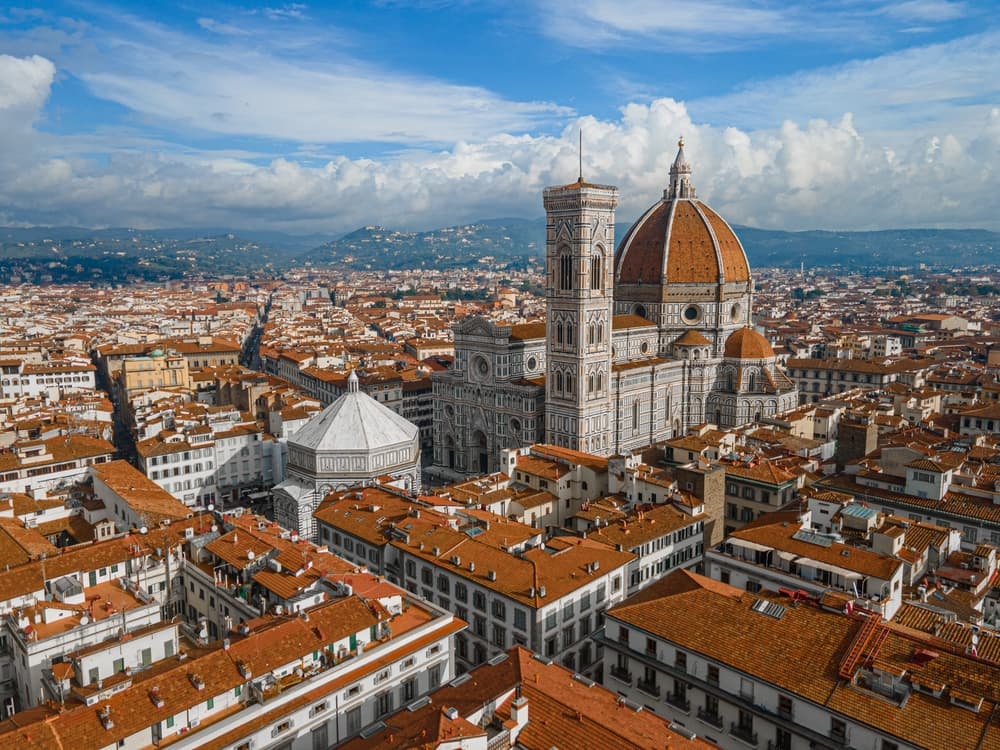
About Florence
Florence is the city that the Renaissance used as its workshop, and which has been living inside the weight of that fact ever since. The Uffizi Gallery, the Accademia, the Bargello, and a dozen other institutions hold the most concentrated collection of fifteenth and sixteenth-century painting and sculpture in the world, and they are all within walking distance of each other in a city small enough that the center can be traversed in twenty minutes on foot. This is either inspiring or paralyzing depending on your relationship with greatness, and Florentines have had five centuries to develop a pragmatic answer to both reactions.
For remote workers, Florence is a beautiful operational city with European infrastructure at costs below Milan or Rome. One-bedroom furnished apartments in the Oltrarno (the south side of the Arno, historically the artisan quarter and now the city''s most characterful residential neighborhood) or in the San Lorenzo area run 950 to 1,500 EUR per month. The coworking market (Impact Hub Firenze, Manifattura Tabacchi in the former tobacco factory, and independent spaces in the Oltrarno) serves a creative and tech professional community. The city''s university population keeps the café culture active.
The summer heat in the Arno valley is real: July and August can reach 35°C with high humidity in the city center, making the morning hours essential for outdoor productivity. September and October are when Florence is most comfortable and the tourist density drops enough to experience the city at a human pace.
Cost of living
Cost-of-living calculator
See how your budget stretches in Florence.
Estimates use approximate exchange rates and typical monthly costs. Your actual costs will vary.
- Coffee
- $2
- Cheap meal
- $12
- Coworking (day)
- $20
- Mid-range meal for 2
- $50
- Rent (1BR, center)
- $1,100
- Transit (monthly)
- $35
- Internet (monthly)
- $28
- Rent (1BR, outside)
- $800
EnRoute Jobs AI tool
Real Value Calculator
See what a salary actually leaves you in the country you want to live in.
Neighborhoods
Oltrarno
Remote workers, artisan culture, longer stays
The neighborhood south of the Arno: the artisan workshops on Via Maggio, the independent cafés on Piazza di Santo Spirito, and a residential community that has maintained its character through the tourism pressure. The best place to live in Florence.
San Frediano
Creatives, independent scene, budget
The westernmost section of Oltrarno with the best aperitivo bars, the lowest costs in the central area, and a local community that still outnumbers the tourist-facing infrastructure.
Campo di Marte
Longer stays, football culture, budget
The residential neighborhood northeast of the center near the Fiorentina stadium: lower costs than anywhere within the old city walls, good bus connections, and a genuine Florentine working residential character.
Culture
Florence is the Renaissance made permanent: a city where Michelangelo, Leonardo, Botticelli, and Brunelleschi left their work not in museums but in the fabric of the city itself. The Uffizi, the Duomo, the David: these are not exhibits but the living architectural DNA of a city that arguably invented the modern world's concept of beauty. Florentines carry this heritage with a certain dry pride. They have heard every superlative, they agree with most of them, and they would like you to now try the bistecca fiorentina.
Climate & best time to visit
Hot Mediterranean: summers are the hottest in Tuscany (July 28–34°C in the Arno valley). Winters mild but damp (5–10°C). April–May and September–October are ideal: post-winter warmth or post-summer cool, both with fewer crowds.
Best months: April, May, September, October
Tips & safety
- •The ATM bus network covers Florence; the center is compact enough to walk for most daily movement - ATAF monthly passes cost €35
- •The Mercato Centrale on Via dell'Ariento has the best daily fresh food market upstairs and a street food hall downstairs; avoid the Mercato San Lorenzo outdoor stalls which are tourist-priced leather goods
- •Monthly apartment costs in San Frediano, Campo di Marte, or Oltrarno run €900-1,400 furnished; anything within 500m of the Duomo is significantly higher
- •The Boboli Gardens (€10 entry) are the best green space in central Florence but the Bardini Garden (same ticket) next door has fewer visitors and equal quality
- •The Aperitivo tradition works as well here as in Milan: evening drinks at most Oltrarno bars include food
- •The Uffizi and Accademia (Michelangelo's David) both require advance booking; walk-in queues at peak season exceed two hours
- •Emergency: 112; 113 (police), 118 (ambulance)
- •Florence is generally safe; pickpocketing near the Uffizi, Piazza della Repubblica, and on crowded buses is the primary concern
- •Cycling in the historic center is possible but narrow streets require caution; the cycle path along the Arno is the safest continuous route
- •Tap water is safe throughout Florence
Areas to avoid: The Santa Croce bar strip late on weekend nights; concentrated tourist nightlife produces an environment that locals largely avoid, Mopeds on narrow pavements in the historic center; they are technically illegal on pedestrian streets but occasionally present and move fast in tight spaces