.png)
About Estonia
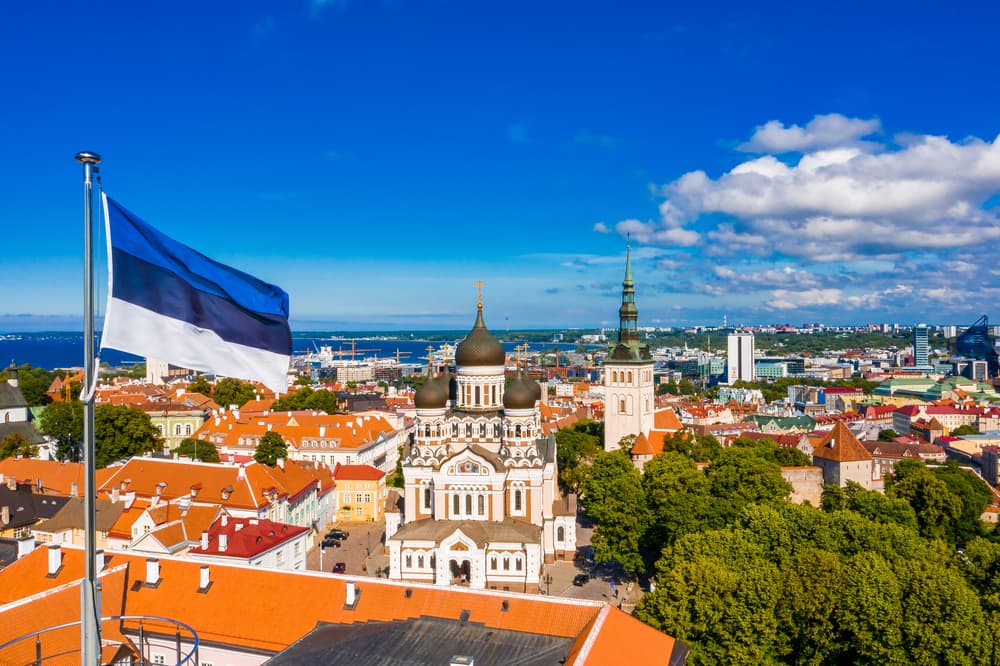
Estonia is the experiment that worked. A country of 1.3 million that left the Soviet Union in 1991 with almost nothing and decided its scarce resource was time, so it digitized the state: taxes filed in minutes, prescriptions and parking and voting handled by phone, a government that treats a queue as a bug. Tallinn's medieval Old Town, one of Europe's best preserved, sits fifteen minutes from a startup district that has produced more unicorns per capita than anywhere on the continent, and the entire city runs at a scale where nothing is more than twenty minutes from anything.
For the geo-flexible professional, Estonia offers the cleanest legal architecture in Europe. It built the world's first digital nomad visa and the e-Residency program that lets anyone run an EU company from anywhere, and the two together form a deliberate machine: a year of Baltic residence for the worker, a permanent EU corporate footprint for the founder, each usable without the other. English fluency is near-Nordic, connectivity is a civic religion, and the cost of a good Tallinn life undercuts every Western European capital while overdelivering on order, air and safety.
The honest trade-offs are climate and temperament, and they select for a certain kind of person. Winter is long, dark and genuinely serious, the December sun managing six hours of low gray light, and the summer's white nights are the payment for it. Estonians themselves are reserved to a degree that startles even other Northern Europeans; small talk is not a social lubricant here but a puzzling foreign custom, and friendship, once earned through patience and preferably a sauna, is granted for good. People who need warmth on the street will struggle. People who want quiet competence and to be left brilliantly alone tend to fall in love.
Widening the search? If you are looking to expand your job hunt across Northern Europe, take a look at Germany →, Croatia →, and Georgia →.
Cost of living
Tallinn is the affordable end of Northern Europe, which is a different claim than being cheap. A one-bedroom in the neighborhoods worth living in, wooden-housed Kalamaja, elegant Kadriorg, the city center itself, runs roughly 600 to 950 euros a month, with the Old Town's tourist premium above that and Tartu, the university city, meaningfully below. The line item newcomers underestimate is winter utilities: heating a Tallinn flat through the dark months adds 150 to 250 euros to the bad-month bills, and the annual budget should be built on the January number, not the July one.
Daily life prices sit below Helsinki, an hour's ferry north, by enough that Finns commute for their shopping. A flat white costs 3.50 to 4.50 euros in the specialty cafes that colonized the city early, lunch specials run 8 to 12 euros, and the supermarket basket is Western European standard. The city is functionally cashless down to the market stall, Bolt, Estonia's own export, makes car ownership pointless, and public transport is free for registered residents, a very Estonian flourish. VAT at 24 percent since mid-2025 is quietly inside every price; the compensation is that almost nothing else about living here carries a hidden fee.
- One-bedroom rent: roughly 600 to 950 euros in Tallinn's good neighborhoods, less in Tartu; winter heating adds 150 to 250 euros to cold-month bills, the budget line most newcomers miss.
- Coworking desk: 150 to 250 euros a month in a startup-dense market, Lift99 and its peers doubling as the actual social infrastructure of the foreign tech community.
- Eating and coffee: lunch specials 8 to 12 euros, specialty coffee under 5, and a serious dinner for two at 60 to 90; Helsinki prices minus a third.
- Getting around: Bolt rides across town for single-digit euros, and public transport free for registered residents; the country is small enough that the farthest domestic drive is four hours.
Cost-of-living calculator
See how your budget stretches in Estonia.
Estimates use approximate exchange rates and typical monthly costs. Your actual costs will vary.
Visas & Entry
Estonia is a full Schengen member, so the baseline is the standard 90 days in any 180 for visa-free Western passports, now logged biometrically under the EU entry-exit system, with the ETIAS pre-authorization expected to switch on for visa-free travelers late in 2026. Above the baseline sits the visa Estonia invented: the Digital Nomad Visa, launched August 2020 as the world's first, issued as a short Type C or, in the version that matters, a Type D long-stay visa of up to one year that runs outside your Schengen 90/180 allowance entirely.
The 2026 requirements are tighter than the program's reputation. Income must reach 4,500 euros gross a month, shown across the six months preceding the application with bank statements whose story matches the contracts and employer letters around them; the 3,504-euro figure still quoted across the internet is the old threshold, and applying against it fails. Work must be genuinely location-independent for an employer registered abroad, your own foreign company, or mostly-foreign clients. Applications go through an Estonian embassy or VFS center with a decision in roughly 30 days, insurance must cover 30,000 euros Schengen-wide, and the visa cannot be renewed from inside Estonia: at the year's end you convert to another permit or leave. Context worth knowing: Estonia caps 2026 work and business residence permits at a quota of 1,292 slots, and the nomad visa deliberately sits outside that cap, which is precisely why it processes predictably while the quota routes jam in January.
- The threshold is 4,500 euros gross, and the internet mostly says otherwise. The six preceding months must each support the story; stale guides quoting 3,504 euros are describing a threshold that no longer exists, per the programme's own pages.
- The file must tell one story. Contract, employer letter and bank statements pointing at the same arrangement approve; screenshots, mismatched deposits and generic HR letters are what rejections are made of.
- One year is the ceiling in-country. No renewal from inside Estonia; the continuation paths are the quota-bound residence permits or the startup route, planned months ahead of expiry.
- No residency clock runs on the nomad visa, so treat it as a chapter; permanent residence and citizenship arithmetic only starts under residence permits.
- Insurance must state 30,000 euros of Schengen-wide cover explicitly; generic travel policies are the routine paperwork failure.
- e-Residency solves a different problem. It is the company tool, not the entry ticket, and pairing it with the nomad visa, EU company plus Baltic year, is the intended combination rather than a workaround.
| Visa or permit | What it covers |
|---|---|
| Schengen visa-free entry | Ninety days in any 180 for US, UK, Canadian, Australian and most Western passports, biometrically tracked under EES; ETIAS pre-authorization is expected to become mandatory for visa-free travelers from late 2026. The scouting window. |
| Digital Nomad Visa, Type D | The flagship: up to one year for remote workers earning 4,500 euros gross monthly over the prior six months, for foreign employers, a foreign own-company or mostly-foreign clients. Sits outside the 90/180 clock and outside the immigration quota; not renewable in-country and builds no residency clock. |
| Digital Nomad Visa, Type C | The same eligibility issued as a short-stay visa up to 90 days, for those testing the water; effectively impossible to extend in-country, so anyone unsure should file the Type D from the start. |
| e-Residency (not a visa) | A government digital identity for running an Estonian EU company entirely online, held by well over 100,000 people worldwide. It grants no right to enter, stay or work in Estonia, a distinction this page repeats because the confusion is universal. |
| Temporary residence permit for work or business | The quota-bound routes, capped at 1,292 slots for 2026, for Estonian employment or business. The standard conversion path for a nomad who decides to stay, and the point where residency time finally starts accruing. |
| Startup visa | For founders admitted by Startup Estonia, with sector coverage expanded in 2025 to cleantech, defence tech and biotech and decisions in about 30 days, one of Europe's fastest founder routes and quota-exempt. |
| EU and EEA citizens | Freedom of movement applies: no visa, with registration of residence after three months. The nomad visa is machinery for everyone else. |
Verified 20 August 2026 against the official programme page and the Estonian Embassy in Washington, both stating the 4,500-euro gross threshold. The 2026 immigration quota of 1,292 does not apply to this visa.
Good to know: World's first nomad visa: €4,500/mo gross over 6 months (raised; €3,504 is stale), 1 year Type D outside Schengen 90/180 and outside the 1,292 quota, non-renewable in-country; e-Residency is not a visa.
EnRoute Jobs AI tool
Route Planner
Map visa routes, timelines, and relocation costs for your next destination.
Work & Legal
Estonian working culture is the Nordic model with the small talk surgically removed. Meetings start on time, run short and end when the agenda does; silence is comfortable rather than awkward; and words are treated as commitments, which means yes is rarer here and worth more. Hierarchy is flat, titles are lightly worn, and competence is the only currency that consistently buys respect. The one universal social institution is the sauna, where deals, friendships and half of national life are conducted; an invitation is an honor and attendance is, effectively, mandatory.
Legally, Estonia articulated remote work earlier and more clearly than anyone. The nomad visa explicitly authorizes work for foreign employers and clients and prohibits Estonian employment, for which the quota-bound permits exist. Freelancing infrastructure is a state product: company registration takes under an hour online, e-Residency extends the entire apparatus to non-residents, and the tax office is the rare one that answers email helpfully. The fine print that catches people is corporate rather than personal: an Estonian OÜ managed for years from a beach elsewhere can acquire tax problems in the country where its owner actually sits, which is a home-country issue no Estonian elegance can solve.
- The nomad visa makes foreign-source remote work explicitly legal, the arrangement Estonia designed first and others copied; Estonian employment and clients require the residence-permit routes instead.
- Company formation is a genuine one-hour online act for e-residents and residents alike, with the OÜ as Europe's lightest-weight limited company and the entire filing life digital.
- Banking splits by status: short-stay visitors struggle to open Estonian accounts and live happily on Wise and Revolut, while e-residents route business banking through LHV or Wise Business.
- Run the company from where you actually are, on advice: the 0-percent-retained-profits magic is Estonian corporate law, and your own tax residence can still pull the company's profits into another country's net if management effectively sits there.
Good to know: Nomad visa explicitly legalizes foreign-source remote work; Estonian employment needs quota permits; e-Residency company formation is a one-hour online act.
Taxes
Estonian tax is flat, digital and mercifully brief, and the 2026 story is a plot twist: the legislated rise to 24 percent was cancelled at the last minute, leaving the flat rate at 22 while the VAT increase stayed. Anyone reading a 2025-vintage guide is planning against a rate that never took effect.
| What applies | The rule in 2026 |
|---|---|
| The rate, and the rise that wasn't | Flat 22 percent on personal income. Parliament legislated 24 percent for 2026 as part of the defence package, then the Riigikogu cancelled the increase in December 2025; the temporary 2 percent defence taxes were likewise abolished before taking effect. The rate to plan on is 22, verified against the tax board's current tables. |
| Residency at 183 days | Presence of 183 days over twelve consecutive months, or an Estonian permanent home, makes you tax resident and taxable on worldwide income at the flat rate. A full nomad-visa year crosses the line; a sub-six-month stay does not, and foreign income then owes Estonia nothing. |
| The basic exemption, simplified | From 2026 the notorious tapering formula, the tax hump, is abolished: a flat 700 euros a month, 8,400 a year, is exempt for every resident regardless of income, one of the quieter quality-of-life reforms of the year. |
| Non-residents | Taxed only on Estonian-source income, which a foreign-client nomad has none of. The visa itself creates no tax liability; the calendar does. |
| The corporate model | Estonian companies pay nothing on retained and reinvested profits and 22/78 on distributions, the deferral engine that built the e-Residency economy. The company's tax life is separate from yours: dividends you take are income where you are resident. |
| VAT | 24 percent standard since July 2025 and now permanent, among the EU's higher rates, with 13 percent on accommodation and 9 percent on books, medicines and press; the defence budget's chosen instrument. |
| Americans specifically | The 1999 US-Estonia treaty is in force and there is no totalization agreement. At a flat 22 percent, the FEIE-versus-foreign-tax-credit choice is genuinely close and worth an hour of advice; self-employment tax survives either. |
| Filing, the national party trick | Tax residents file through e-MTA in famously few minutes, pre-filled and refundable within days. Estonia is the one country on this site where the annual return is routinely described as pleasant. |
Verified 20 August 2026 against the Estonian Tax and Customs Board's current rates: 22 percent income tax with the 2026 increase cancelled, 24 percent VAT, 8,400-euro flat exemption. General information, not tax advice.
Good to know: Flat 22% (legislated 24% rise cancelled Dec 2025); 183 days/12 months = residency on worldwide income; 0% on retained corporate profits, 22/78 on distributions; VAT 24%.
Healthcare
Estonian healthcare is competent, digital to a degree no other system matches, and concentrated. The e-health infrastructure means records, referrals and prescriptions live in one national system reachable from any pharmacy terminal, and the standard of care in Tallinn and Tartu stands comparison with Western Europe. EU visitors use EHIC on resident terms; everyone else, including nomad-visa holders whose permit requires insurance anyway, lives in the private tier, where a consultation at Confido or its peers runs 50 to 90 euros with English as the working language.
The honest geography is that capability thins fast outside the two main cities and Pärnu, a point the American country guidance makes explicitly, so anything elective belongs in Tallinn or Tartu. Specialist queues in the public system are the national complaint; the private tier solves them for money. Dental care is good and priced well below Nordic neighbors, which keeps Helsinki commuting south for it.
- Private consultation: 50 to 90 euros, typically same week, English routine; the queue-free layer most foreign professionals simply budget for.
- The nomad visa requires insurance regardless, 30,000 euros Schengen-wide; after 183 days as a tax resident, joining the national health insurance becomes possible.
- Emergency number: 112 for everything, with strong response in the cities; capability thins outside Tallinn, Tartu and Pärnu, so plan elective care for the centers.
- Prescriptions are fully digital nationwide: a doctor's e-prescription is collectable at any pharmacy with an ID code, the small daily proof of what the e-state actually means.
| Hospital | What to know |
|---|---|
| North Estonia Medical Centre (PERH), Tallinn | The country's largest hospital and its principal acute and trauma referral center, anchoring serious care for the capital and the north. |
| Tartu University Hospital | The academic flagship and the Baltic region's teaching heavyweight, where the most complex national cases concentrate; the reason Tartu residents are quietly smug about healthcare. |
| East Tallinn Central Hospital | Major central-Tallinn hospital with broad specialist coverage and a private wing the foreign community uses for direct-pay care. |
| West Tallinn Central Hospital | The capital's other large general hospital network, covering the western districts with full emergency service. |
| Confido Medical Centre, Tallinn | The leading private clinic group and the expat default for English-language GP, specialist and diagnostic care without queues, at 50 to 90 euros a consultation. |
| Medicum, Tallinn | Large private and family-medicine group rounding out the direct-pay tier, with same-week appointments across common specialties. |
Hospital list compiled 20 August 2026 and not yet confirmed against each facility directly. Treat as indicative and verify before relying on it.
Good to know: Digital-first system; strong care concentrated in Tallinn and Tartu; private tier at €50-90 solves queues; e-prescriptions nationwide.
Safety
Estonia is one of the safest countries on this site by every street-level measure: violent crime is rare, petty crime is modest even by Nordic standards, Tallinn's Old Town is walkable at any hour, and the honest list of daily hazards begins and ends with winter ice underfoot and the occasional stag party imported by ferry. Every Western government holds it at the lowest advisory tier.
The question people actually ask is the eastern one, and it deserves a straight answer. Estonia borders Russia, is a NATO and EU member of frontline conviction, and lives with the hybrid weather of the era: airspace probes and drone incidents across the Baltic region, cyber noise, and a border that is now hard infrastructure rather than a line on a map. None of it has touched daily civilian life, which proceeds with a calm that says more than any advisory; but the border itself has rules worth taking literally. Do not approach the boundary zone in the east, where straying is a criminal matter on the far side; crossings at Narva and the southeast can close at short notice and cut their hours, as they did again in mid-2026; vehicles on Russian plates are banned; and every government whose page this site tracks pairs its green rating for Estonia with a red one for the country next door. Treat the border as scenery, cross nothing, and Estonia is simply a very safe northern country with excellent lighting in the museums.
- Winter is the actual hazard: ice underfoot injures more residents than crime does, studded shoes or grips are normal equipment, and darkness plus black ice makes reflective tags on coats a legal requirement outside lit areas, not a quaint custom.
- Never approach the Russian border zone. The eastern boundary is marked, monitored and criminally serious on the far side; hikers in the southeast should track their maps, and the border towns are fine while the border line is not.
- Crossings close and shrink without much notice: Narva's hours were cut again in mid-2026, vehicle rules keep tightening, and anyone with a reason to cross should check the border authority the same day.
- Old Town nightlife is the pickpocketing venue, such as it is, peaking with summer ferries and stag parties; ordinary bag sense covers it entirely.
- Expect the era's background noise, not danger: occasional airspace and drone headlines from the wider Baltic, cyber-hygiene worth taking seriously as everywhere, and a population whose unbotheredness is well earned.
- Emergency number 112 covers police, fire and ambulance nationally, answered in English, with response times a small digital country can be proud of.
Official travel advisories
| Government | Current position |
|---|---|
| United States | Level 1, Exercise Normal Precautions, reissued 31 March 2026; the country guidance adds only standard crowd awareness and notes that medical capability thins outside the main cities.travel.state.gov → |
| United Kingdom | No advisory against travel, with standard guidance on petty crime, winter conditions and the Russian border area.gov.uk → |
| Canada | Take normal security precautions, with Schengen mechanics, the EU ban on Russian and Belarusian-plated vehicles, and border-crossing cautions noted.travel.gc.ca → |
| Australia | Exercise normal safety precautions, with specific advice not to approach the eastern border zone, warnings that crossings can close at short notice, and current EES entry notes; Russia next door remains at Do Not Travel.smartraveller.gov.au → |
| US Embassy Tallinn | Enroll in STEP for alerts. Kentmanni 20, Tallinn; switchboard +372 668 8100.ee.usembassy.gov → |
Advisory positions verified 20 August 2026, including Smartraveller directly. All four governments hold Estonia at their lowest tier; the border-zone cautions are specific, literal and easy to follow. Open the sources before travelling.
Good to know: Lowest advisory tier across all four governments; winter ice outranks crime as the daily hazard; hard rule: never approach the eastern border zone.
Climate
Estonia's climate is a contract with extremes of light more than of temperature. Winter runs November into March at minus ten to zero, snow-quiet and dark, the December sun managing barely six hours of low gray light; summer answers with the white nights, twenty-plus degrees, and a June solstice that never quite gets dark, when the entire country moves outdoors and refuses to sleep. The shoulder months, May to June and August to September, balance the ledger and are the sweet spots for arriving. Remote workers report the honest split: winter is superb for deep, undistracted work if the darkness is managed, with a light-therapy lamp as standard equipment rather than an eccentricity, and summer is a productivity hazard of the best kind.
| Season | What to expect |
|---|---|
| Winter, November to March | Minus ten to zero, snow, and profound darkness around the solstice; interiors are warm, saunas exist for a reason, and focused work thrives if the light deficit is actively managed. |
| Spring, April to May | Fast and dramatic: ice out, light flooding back at minutes per day, terraces opening the first warm week. May is the country exhaling. |
| Summer, June to August | Twenty to twenty-five degrees under white nights, with midsummer, Jaanipäev, as the national festival of not sleeping; islands, bogs and beaches at their brief, glorious peak. |
| Autumn, September to October | Crisp, golden and quick, with September often the year's most reliable working month before the light begins its long withdrawal. |
Good to know: Light, not temperature, is the variable to plan around; shoulder seasons are the arrival windows; a light-therapy lamp is standard winter equipment.
Culture & Customs
Estonian culture is Northern European reserve distilled: a people who survived occupation by singing, quite literally, the Singing Revolution of 1988 to 1991 having carried independence on massed choirs, and who guard a hard-won quietness that foreigners routinely misread as coldness. It is not. It is an economy of words in which silence is comfortable, small talk is a baffling foreign ritual, and what is said is meant. Trust is built slowly, through reliability and preferably through sauna, and once granted is remarkably durable. The national temperament pairs this reserve with deep attachments to nature, to the bogs and islands and forest, and to song, the festival grounds filling with tens of thousands of voices every few years in the tradition that kept the language alive.
Digital life is the other cultural fact: services from parking to prescriptions to voting run through the ID system, cash is a curiosity, and the state's frictionlessness sets expectations for everything else. Two social notes help. About a quarter of the population is Russian-speaking, concentrated in Tallinn's Lasnamäe and the eastern city of Narva, an ordinary fact of society best met without geopolitical commentary; and punctuality is close to a moral position, with lateness reading as a statement about how much you value someone's time.
- Skip the small talk and mean what you say; silence in conversation is comfort, not failure, and the fastest way to lose an Estonian is to fill every pause.
- Accept the sauna invitation. It is the social institution, the trust ceremony and the negotiation room at once; declining without cause closes a door that took months to open.
- Be on time to the minute, for meetings, dinners and casual coffees alike; punctuality here is respect made visible.
- Take your shoes off at the door of homes without waiting to be asked, and bring something small, flowers in odd numbers being the classic.
- Meet the Russian-speaking quarter of society as neighbors, not a topic: language mixes daily in Tallinn, and visitors' geopolitical takes are neither needed nor welcome.
- Tipping is genuinely optional, with rounding up or ten percent for good service appreciated and no one chasing you over its absence.
