.png)
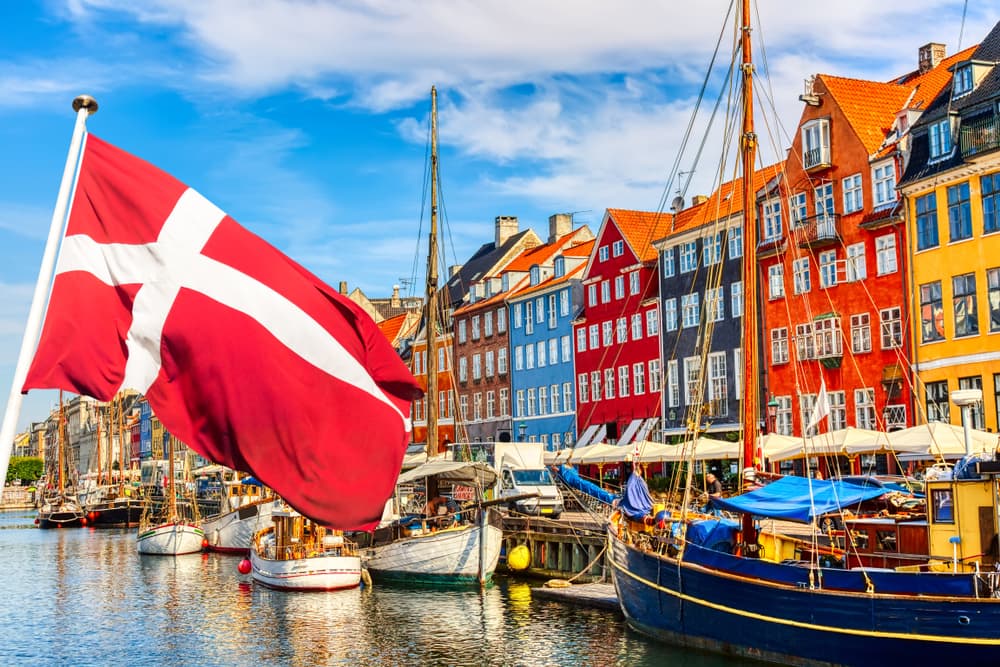
About Denmark
Denmark does not waste time on modesty: by the metrics Danes themselves cite, it is among the happiest, most sustainable, most equitably structured countries on earth, and the claim survives inspection. Copenhagen is the world's most complete bicycle city, a place where cycling is not an activity but the transport default, where the harbor is clean enough to swim in downtown, where unattended strollers wait outside cafés because the social trust is real infrastructure, and where the restaurant revolution Noma detonated turned a herring town into a global food capital. Aarhus runs the second-city counterpoint with student energy, and the entire country operates on hygge, not the export-candle aesthetic but the actual practice, the deliberate engineering of warmth, and on a work-life balance that is institutional rather than personal: meetings end on time, offices empty by five, and nobody apologizes for it.
The paperwork story is transparent and priced. There is no nomad visa. The Pay Limit Scheme is the signature door: a Danish job offer at 552,000 kroner annually for 2026, adjusted each January, buys a work permit with no field, degree or language requirements, the salary counted in cash and pension components only, paid into a Danish bank account with split payroll banned and a fourteen-day biometrics window that auto-rejects the late; the Supplementary tier runs at 446,000 where labor-market conditions allow, the twice-yearly Positive Lists cover shortage occupations, SIRI-certified employers use the Fast-Track's ten-business-day processing with immediate provisional job starts, and January 2026 added a certified-employer collective-agreement scheme opening a lower-salary lane for hires from an enumerated country list. Founders pitch Start-up Denmark, an expert panel judging innovation and scalability with ordinary self-employment, shops, restaurants, consultancies, explicitly outside scope, two extendable years for those who clear it. Working holiday agreements give the under-31s of Australia, New Zealand, Canada, Japan, South Korea, Chile and Argentina a year outside the salary machinery entirely.
The famous compensation is fiscal: the researcher scheme taxes the highly paid recruited from abroad at a flat 27 percent plus the labour-market contribution, roughly 33 effective, for up to seven years, against standard rates that reach the mid-fifties. And the long game is Europe's strictest: permanent residence at eight years standard, a four-year reduced track demanding the PD3 language test, unbroken full-time employment, financial self-sufficiency and active-citizenship points, with citizenship around nine years; the CPR number and MitID stack gate practical life from day one, and the Kingdom's geography adds a quirk worth knowing, the Faroes and Greenland sit outside Schengen entirely.
The honest context: a US Level 2 for terrorism above the domestic significant level, four of five, that Denmark has carried since the cartoon-crisis era, its security services disrupting steadily; the September 2025 drone nights, Copenhagen airport closed, then four airports including two air bases in a single coordinated evening, hybrid attack in official language, a professional actor suspected and never attributed, answered with shoot-down legislation rather than panic; Christiania's specific rules and Nørrebro's occasional gang flare-ups, both navigated with ordinary judgment; and a daily-life register whose most common property crime, by tens of thousands of reports a year, is bicycle theft. The melancholy of a Danish December is real and answered with candles; everything else is answered with competence.
Widening the search? If you are looking to expand your job hunt across Northern Europe, take a look at Sweden →, Germany →, and Norway →.
Cost of living
Denmark prices at the Nordic ceiling and delivers the machine the prices fund: Copenhagen one-bedrooms run roughly 10,000 to 15,000 kroner, 1,450 to 2,150 dollars, Vesterbro and Nørrebro the character districts, Amager the value play, with Aarhus a solid quarter cheaper, and the krone's euro peg keeping the arithmetic stable. Utilities are efficient, fiber is excellent, and the bicycle deletes the transport line that other capitals charge, the single biggest structural discount in Danish life.
Daily life runs on the smørrebrød-to-supermarket spectrum: the café lunch at 120 to 180 kroner, the bakery tier as the honest budget luxury, Netto and Aldi saving meaningfully against the premium chains, and the New Nordic restaurant scene pricing its revolution at destination rates. Alcohol is merely expensive rather than Scandinavian-rationed, Denmark keeping supermarket beer and wine legal in a regional anomaly the Swedes cross the bridge for. Cards and MobilePay run everything; cash is vestigial. Transport beyond the bicycle is excellent, the metro-and-S-tog network at commuter logic and DSB linking the country. The comfortable single Copenhagen life assembles at 3,300 to 4,300 dollars, the budget floor sits near 2,600 with Amager housing, Netto discipline and full bicycle commitment, and the honest seasonal line items are Danish: the winter candle-and-lamp budget the hygge economy formalized, and the quality bike lock, because twenty thousand bicycles a year say the trust society makes one exception.
- One-bedroom rent: 10,000 to 15,000 kroner in Copenhagen's living districts with Amager as the value play, a quarter less in Aarhus; the euro peg keeps the krone arithmetic stable.
- Let the bicycle delete the transport budget: the city is engineered for it, the metro covers the rest, and the one mandatory accessory is the quality lock, bicycle theft being the trust society's single exception.
- Shop the Netto-Aldi tier and eat the bakery luxury: groceries run Nordic-high with meaningful discount-chain savings, the 120-to-180-kroner café lunch is the working meal, and supermarket beer and wine are the regional anomaly the Swedes visit for.
- Budget the hygge season: the candle-and-lamp economy of the dark months is formalized culture rather than affectation, and the December melancholy is answered with interiors the budget should simply fund.
Cost-of-living calculator
See how your budget stretches in Denmark.
Estimates use approximate exchange rates and typical monthly costs. Your actual costs will vary.
Visas & Entry
Denmark runs the standard Schengen stack with a Kingdom quirk: visa-free nationals receive 90 days in any 180 across the zone, EES biometrics are live, ETIAS is expected in 2027, EU, EEA and Swiss citizens live and work freely with registration, everyone real meets the CPR number and MitID stack that gates Danish practical life, and the Faroes and Greenland sit outside Schengen entirely, with their own entry rules and their own country pages.
Beyond 90 days there is no nomad visa and a transparently priced menu. The Pay Limit Scheme is the signature: a Danish job offer at 552,000 kroner annually for 2026, adjusted every January, qualifies regardless of field, degree or language, with the mechanics stated plainly, only cash salary and pension components count, payment must land in a Danish bank account, split payroll is banned, terms must match Danish standards, the fee runs roughly 6,800 kroner, biometrics must be recorded within fourteen days of filing or the application auto-rejects, and processing runs one to three months with no work permitted until grant. The Supplementary Pay Limit tier sits at 446,000 kroner subject to labor-market conditions, the two Positive Lists, higher-education and skilled-work, update twice yearly for shortage occupations, and the Fast-Track Scheme lets SIRI-certified employers, most large Danish tech companies among them, process in about ten business days with the Quick Job Start option putting eligible hires to work immediately on provisional permission. January 2026 added a certified-employer collective-agreement scheme, a lower-salary lane around 300,000 kroner for hires from an enumerated list of countries through certified employers under collective terms. Start-up Denmark serves founders: an expert panel judges the business plan for innovation and scalability, ordinary self-employment, retail, restaurants, standard consultancies, is explicitly outside scope, and approval buys two extendable years. The long game is Europe's strictest: permanent residence at eight years standard or four on the reduced track, which demands the PD3 Danish test, unbroken full-time employment across the period, financial self-sufficiency and active-citizenship criteria all at once; citizenship follows around nine years with its own test stack. Family joins the work schemes at their own fee tier, and everything files through SIRI on the nyidanmark portal.
- Read the Pay Limit mechanics literally: the 552,000-kroner bar counts cash and pension only, the Danish-bank-account rule is enforced with split payroll banned, and the fourteen-day biometrics window auto-rejects the late; Danish administration is transparent and unforgiving in equal measure.
- Founders, pitch Start-up Denmark as designed: the expert panel wants innovation and scale, not a freelance practice with a business plan; ordinary self-employment is excluded by name, and the credible cases are product companies with growth stories.
- Use the Fast-Track geometry when the employer qualifies: certification covers most serious Danish tech employers, ten business days is real speed, and Quick Job Start means eligible hires work from week one on provisional permission.
- Sequence the CPR campaign on arrival: the number gates banking, healthcare, tax cards and MitID, the International Citizen Service offices exist precisely for this, and the stack unlocks all of Danish practical life at once.
- Plan the strict long game honestly: the four-year reduced permanence track demands language, unbroken full-time work, self-sufficiency and active citizenship simultaneously, the eight-year standard track is the realistic default for most, and the head start on Danish is the investment everyone defers and regrets.
- Count Schengen days like money until formalized: the 90-in-180 window spans the zone, EES logs it biometrically, and the Øresund bridge means a Copenhagen base spends the same allowance as a Malmö one.
| Visa or permit | What it covers |
|---|---|
| Schengen entry and the Kingdom quirk | Ninety days in any 180 for visa-free nationals with EES live and ETIAS expected 2027; the Faroes and Greenland sit outside Schengen with their own entry rules, so the Kingdom's edges need their own reading. |
| EU, EEA and Swiss citizens | Full freedom of movement with registration, then the same practical gate as everyone: the CPR number and MitID stack that unlock banking, healthcare, tax and digital Denmark. |
| Pay Limit Scheme | A Danish job offer at 552,000 kroner yearly for 2026 qualifies regardless of field or degree: cash-plus-pension components only, Danish bank account mandatory, split payroll banned, fourteen-day biometrics window, one-to-three-month processing, no work until grant. |
| Fast-Track and the Positive Lists | SIRI-certified employers process in about ten business days with Quick Job Start putting eligible hires to work immediately; the twice-yearly Positive Lists cover shortage occupations at their own thresholds; together the fastest skilled-worker machinery in the Nordics. |
| Supplementary and the 2026 certified-employer lane | The Supplementary Pay Limit tier at 446,000 kroner runs subject to labor-market conditions, and January 2026 added a certified-employer collective-agreement scheme, a roughly 300,000-kroner lane for hires from an enumerated country list. |
| Start-up Denmark | The founder door: an expert panel judges innovation and scalability, ordinary self-employment is explicitly outside scope, and approval buys two extendable years in one of Europe's best-organized small markets; the only entrepreneurial route, and honestly labelled. |
| Europe's strictest long game | Permanent residence at eight years standard, four on the reduced track demanding PD3 Danish, unbroken full-time work, self-sufficiency and active citizenship simultaneously; citizenship around nine years; the settlement bar is the system's deliberate design. |
Good to know: No DNV; Pay Limit 2026 = DKK 552,000 (Supplementary 446,000): cash+pension components only, Danish bank account, split payroll banned, 14-day biometrics auto-reject; Fast-Track ~10 business days with Quick Job Start; new 2026 certified-employer collective-agreement lane (~DKK 300k, enumerated countries); Start-up Denmark = expert panel, ordinary self-employment excluded; PR 8 yrs (4-yr track = PD3 + unbroken work + self-sufficiency + active citizenship; Europe's strictest); Faroes/Greenland outside Schengen.
EnRoute Jobs AI tool
Route Planner
Map visa routes, timelines, and relocation costs for your next destination.
Work & Legal
Danish professional culture is the world's reference implementation of work-life balance as structure rather than perk: the 37-hour week is real, offices empty between four and five without apology, meetings start and end on time, hierarchy is flat to the point of first-naming the CEO, and the flexicurity model, easy hiring and firing cushioned by generous A-kasse unemployment insurance and retraining, keeps the labor market fluid and the anxiety low. Janteloven's modesty undertow keeps self-promotion quiet, directness is politeness, and the trust environment extends to professional life, commitments made are simply kept. English is universal in professional Copenhagen, the startup scene is dense and design-literate, and the coworking tier is built with the wellbeing seriousness the culture applies to everything.
The legal lines: foreign-client remote work during Schengen stays sits in the standard unpoliced gray zone, Danish clients or employment require status, and the formalized resident registers an enkeltmandsvirksomhed with a CVR number, the clean sole-trader structure with mature invoicing-and-accounting infrastructure behind it. The operational notes: GMT+1 overlaps Europe wholly and reaches US East by mid-afternoon; the summer's long evenings stretch the working day as the winter compresses it toward the candle-lit interior; recreational drones are a genuinely bad idea in the current climate, temporary bans following the 2025 incidents; and the bicycle commute is not lifestyle content but the actual infrastructure, the fastest way across the city in most weather, which the culture proves by riding through all of it.
- Match the structural balance: the 37-hour week and five-o'clock exit are the system, not slacking, and performing overwork reads as poor planning; Danish productivity lives inside the boundaries, which is the entire lesson.
- Work the flat hierarchy directly: first names to the top, directness as politeness, consensus reached quickly and kept; the Janteloven undertow rewards competence displayed quietly.
- Formalize through the CVR when Denmark turns real: the enkeltmandsvirksomhed registers cleanly, the invoicing-and-accounting stack is mature, and the A-kasse unemployment insurance is the flexicurity membership worth understanding early.
- Ride the bicycle like infrastructure: it is the fastest commute in most weather, the culture rides through all of it, and the quality lock plus lights are the entire required kit; the drone, by contrast, stays in the bag this era.
Good to know: Work-life balance as structure: 37-hour week, 4-5pm exits, flat hierarchy, flexicurity + A-kasse; enkeltmandsvirksomhed/CVR for the formalized; gray zone standard for foreign-client stays; bicycle = infrastructure; drones inadvisable post-2025; GMT+1.
Taxes
Danish tax is the world's most cheerful heavy burden: the labour-market contribution takes 8 percent off the top, municipal and state layers stack toward the mid-fifties at high incomes, and the famous compensation for arrivals is the researcher scheme's flat 27 percent for up to seven years.
| What applies | The rule in 2026 |
|---|---|
| The residency tests | Tax residency attaches through a home in Denmark or stays past six months; the Schengen-season visitor stays clear, and the permit-holding resident is in the system by design with the CPR number as the tax identity. |
| Non-residents | Owe Danish tax on Danish-source income only; the visiting remote worker's foreign salary and clients sit outside the net for the standard season. |
| Residents and the stack | The 8 percent AM-bidrag comes off the top, then bottom-bracket state tax, municipal tax near 25 percent and top-bracket tax above roughly 570,000 kroner stack toward the mid-fifties, with the 2026 restructuring adding intermediate and top-top tiers at the extremes; the price of the machine, paid transparently. |
| The researcher scheme | The forskerordning taxes qualifying arrivals at a flat 27 percent plus AM-bidrag, roughly 33 effective, for up to seven years: recruited from abroad, no Danish tax residency in the prior decade, and a guaranteed monthly salary above a bar adjusted annually in the high tens of thousands of kroner; the single best instrument in Danish expat finance. |
| The self-employed layer | Enkeltmandsvirksomhed profits flow through the personal schedule with the CVR registration, VAT mechanics and deductible-expense architecture behind them; the sole trader's accounting is clean and the accountant is worth the fee at Danish complexity. |
| VAT at the famous flat 25 | Denmark runs the EU's purest VAT, 25 percent on essentially everything with no reduced rates, registration thresholds catching genuinely local businesses, and foreign B2B services largely reverse-charge; the daily-life version rides inside every receipt. |
| Americans specifically | A US-Denmark income tax treaty stands and a totalization agreement has run since 2008, sparing self-employed Americans double social contributions; the researcher scheme stacks with the FEIE-or-credits architecture into a genuinely favorable seven-year window for the highly paid. |
| The home-country half | Danish residency does not silence the jurisdiction left behind: exits, treaty tie-breakers and the home-availability question deserve professional hands before the move, and Danish administration is as thorough as its reputation promises. |
Verified 21 August 2026: the home-and-six-month tests, the AM-bidrag-plus-brackets stack reaching the mid-fifties with the 2026 restructuring at the extremes, the researcher scheme's 27-percent-plus-AM architecture for up to seven years with its recruited-from-abroad and prior-decade rules, the flat 25 percent VAT, and the standing US treaty plus 2008 totalization. General information, not tax advice.
Good to know: AM-bidrag 8% off the top + municipal ~25% + state brackets → mid-50s at high incomes (2026 restructuring at the extremes); forskerordningen = flat 27% + AM ≈ 33% ×7 yrs (recruited abroad, 10-year lookback, high monthly bar); VAT = the EU's purest flat 25%; US treaty AND 2008 totalization.
Healthcare
Danish healthcare delivers among the world's best outcomes through a tax-funded universal system with some of the OECD's shortest serious-condition waits: residents hold the yellow card through their CPR registration, EU visitors ride EHIC reciprocity, English is effectively universal across the entire system, and the non-EU visitor needs real insurance because private care prices at Danish rates, consultations running 400 to 700 kroner. Rigshospitalet anchors the national tertiary apex in Copenhagen, Aarhus University Hospital ranks among the world's best hospitals year over year, Odense carries the south, and the private tier, Aleris the national network, sells speed atop a public base that rarely needs rescuing.
The practical texture is Danish: pharmacies precise, tap water excellent, adult dental outside public coverage and priced accordingly, and the health risks environmental on the mild end of the Nordic syllabus, winter dark asking the hygge-and-lamp discipline, cycling injuries as the honest statistic of a bicycle nation answered by lights and helmets, winter ice on the paths, and the North Sea's cold-water respect. Emergencies answer at 112, the 1813 medical helpline triages Copenhagen's urgent-but-not-emergency tier, and the S!RENEN alert system reaches every phone when something genuinely national happens.
- Consultations run 400 to 700 kroner privately with English universal across the system; EHIC carries EU visitors, the yellow card carries residents, and real insurance is the non-EU visitor's only homework.
- Use 1813 before the emergency room in Copenhagen: the medical helpline triages the urgent-but-not-emergency tier and books you into the right door; 112 answers the genuine emergencies.
- Budget dental privately: adult dental sits outside public coverage at Danish prices, and the pre-trip cleaning at home remains the honest arbitrage.
- Ride like a local, which means lit and helmeted: cycling injuries are the bicycle nation's honest statistic, lights are legally required and enforced, and winter ice on the paths asks the same respect the roads get.
| Hospital | What to know |
|---|---|
| Rigshospitalet, Copenhagen | The national flagship and tertiary apex, the referral answer for complex anything in the Kingdom. |
| Aarhus University Hospital | Denmark's perennial entry on the world's-best-hospitals lists, the Jutland anchor with full academic depth. |
| Odense University Hospital | The southern university flagship carrying Funen and the border region at the national standard. |
| Herlev Hospital, Copenhagen | The capital region's major acute tower, carrying much of greater Copenhagen's emergency and specialty load. |
| Aleris private network | The national private tier: same-week access and elective speed atop the public base, the professional class's occasional supplement rather than necessity. |
| The access architecture | CPR registration yields the yellow card and a named GP, EHIC carries EU visitors, 1813 triages Copenhagen's urgent tier, and the uninsured non-EU visitor is the system's one exposed position. |
Hospital list compiled 21 August 2026 and not yet confirmed against each facility directly. Treat as indicative and verify before relying on it.
Good to know: World-class universal system with OECD-short serious waits; Rigshospitalet + Aarhus (world's-best-lists perennial) anchor; yellow card via CPR; 1813 triage line in Copenhagen; adult dental private; cycling injuries are the honest statistic; S!RENEN alerts; 112.
Safety
Denmark asks the visitor to hold a calm street picture and an elevated official one at once, and both are simply true. The street picture: violent crime is rare, solo travelers of every description report complete comfort at all hours, the social trust runs deep enough that strollers wait unattended outside cafés, and the property-crime register is dominated, by tens of thousands of reports a year, by bicycle theft, with pickpockets and professional hotel-lobby thieves working Copenhagen's tourist season and stations as the human tier. The official picture: the US advisory holds Level 2, Exercise Increased Caution, for terrorism, and Denmark's own intelligence service has kept the domestic threat at significant, four of five, since the cartoon-crisis era made the country a standing target, its services disrupting steadily while the 2022 Field's mall shooting, not terror-linked, remains the decade's worst violence. The era added its chapter in September 2025: drones closed Copenhagen airport, then swept four airports including two air bases in a single coordinated night, hybrid attack in the official language, a professional actor suspected and never attributed, NATO and the EU alerted, and the response running to shoot-down legislation and temporary civilian drone bans rather than panic; no member of the public was ever in danger, and the practical residue is the same flight-buffer doctrine the entire Baltic region now shares.
The local specifics are navigable with ordinary judgment. Christiania operates under its own rules, zero tolerance for photography, avoidance of any open drug trade, and the residents themselves dug up Pusher Street in 2024 to end it; Nørrebro and Nordvest see occasional gang flare-ups the police answer with marked search zones; and the standing advice for both is presence with awareness rather than avoidance. Demonstrations are frequent, civic and occasionally embassy-adjacent. Crime victims should report within 72 hours to preserve compensation eligibility through the state board, a distinctly Danish institution. The environmental syllabus does the rest: winter dark answered with the hygge economy, ice on the cycling paths, and the North Sea's currents taken seriously on the west coast. Emergencies answer at 112, S!RENEN reaches every phone for the genuinely national, and the honest summary is that Denmark's dangers are mostly to bicycles, mostly insured, and mostly survived with a better lock.
- Hold both pictures honestly: the Level 2 and the significant domestic level describe a standing target with excellent services, while the street you actually walk runs among the safest on earth; awareness in crowds and at events is the entire personal translation.
- Treat the drone era as flight-buffer doctrine: the September 2025 nights closed airports without endangering anyone, the response was legislation rather than panic, and the flexible ticket plus the airline app absorb the pattern the entire region now shares.
- Follow Christiania's actual rules: no photography under zero tolerance, no lingering near any open drug trade, and ordinary evening judgment in Nørrebro's flare-up geography; presence with awareness, not avoidance, is the standing advice.
- Run the station-and-lobby discipline: pickpocket teams work the tourist season and the professional thieves work hotel lobbies well-dressed; bags closed, documents split, and the classic habits answer the entire human register.
- Lock the bicycle like it matters, because it does: tens of thousands of thefts a year make the quality lock the one non-negotiable purchase, and the insurance-grade double-lock is what the deposit quietly assumes.
- Know 112, 1813 and the 72-hour rule: emergencies answer at 112, Copenhagen's urgent tier triages at 1813, S!RENEN reaches every phone for the national, and crime reports within 72 hours preserve compensation eligibility through the state board.
Official travel advisories
| Government | Current position |
|---|---|
| United States | Level 2, Exercise Increased Caution, for terrorism across the Kingdom, reissued with minor edits; the standard target-set language, with Copenhagen assessed medium for terrorism and crime at the official-interest tier and no civil-unrest indicator.travel.state.gov → |
| PET, Danish Security and Intelligence Service | The domestic layer: the terrorist threat to the Kingdom held at significant, four of five, in the 2026 assessment, with online youth radicalization and fragmented lone-actor patterns named; the disruption record is the reason the level reads as background rather than forecast. |
| Canada | High degree of caution for terrorism; carries the practical texture, hotel-lobby professional thieves, station pickpocket teams, the Christiania rules including the photography ban, and the Nørrebro-Nordvest gang-flare-up geography.travel.gc.ca → |
| Australia | Quotes the significant domestic level and the airport-and-station security posture; notes rising right-wing extremism alongside the ISIL-inspired strand, severe drug penalties including deportation, and the tourist-season pickpocket pattern.smartraveller.gov.au → |
| US Embassy Copenhagen | Enroll in STEP; the embassy feed carried the 2025 drone-disruption notices and remains the live channel. Dag Hammarskjölds Allé 24, Copenhagen; +45 3341 7100.dk.usembassy.gov → |
Advisory positions verified 21 August 2026: US Level 2 for terrorism, PET's significant level in the 2026 assessment, the September 2025 coordinated drone closures with their hybrid-attack framing and shoot-down-legislation response, the Christiania and Nørrebro texture, and the bicycle-theft-dominated property register. Open the sources before travelling.
Good to know: US L2 (terrorism) above PET's significant (4/5, held since the cartoon era); standing target, excellent services; Sept 2025 drone nights (Copenhagen + 4 airports, hybrid attack, unattributed) answered with shoot-down legislation = flight-buffer doctrine; Christiania rules (no photos, Pusher Street dug up by residents 2024); Nørrebro flare-ups with marked search zones; bike theft dominates the register; 112/1813/S!RENEN; 72-hour compensation rule.
Climate
Denmark runs the maritime Nordic year: winters at zero to five degrees, damp, grey and famously melancholic through the seven-hour days of December, the specific heaviness of the season being precisely what the hygge economy evolved to answer; summers mild to warm at 18 to 25 with the extraordinary long light that makes a Copenhagen June evening, bright enough to read outdoors at ten, something people remember for years. The wind is the constant the brochures omit, the flat country giving it nothing to break against, and the rain spreads democratically across the calendar in showers more than storms. The working year writes itself: May through August is the prize, harbor swimming from the downtown baths, the bicycle city at full joy, Sankt Hans bonfires at midsummer and the festival season from Distortion through Roskilde; April and September are the honest shoulders; and the November-through-February interior season is a genuine cultural product, candles at every table, the lamp on every desk, and the national refusal to treat darkness as an excuse. The two-wheeled commute runs year-round by cultural law, rain gear rather than season determining participation, and the single most useful preparation is the unglamorous Danish one: proper rain layers, owned before the first week teaches why.
| Season | What to expect |
|---|---|
| Summer, May to August | The prize: 18-to-25-degree days under extraordinary long light, downtown harbor swimming, Sankt Hans midsummer fires and the Distortion-to-Roskilde festival arc; the season the entire year points at. |
| Winter, November to February | Zero-to-five, damp, grey and short-lit: the famous December melancholy answered by the candle-and-hygge interior economy, and desk weather of genuine focus for those equipped with lamps and acceptance. |
| The shoulders, April and September | Mild, functional and uncrowded, with the light returning or retreating fast; the honest working months on either side of the prize. |
| The wind and rain constants | The flat country gives the wind nothing to break against and the rain spreads across the calendar in showers; proper layers and the all-weather cycling culture are the entire adaptation. |
Good to know: May-August is the long-light prize with harbor swimming and the festival arc; the December melancholy is real and answered by the hygge economy; wind and rain are the year-round constants the bicycle culture simply dresses for.
Culture & Customs
Danish culture is built around hygge, and the export version undersells it: not candles as aesthetic but the deliberate practice of engineering warmth, the conscious exclusion of stress from social time, pursued through lighting, food, and conversation with the seriousness other cultures reserve for ambition. Around it: a social trust deep enough to leave strollers outside cafés, an egalitarianism that first-names everyone and funds everything, Janteloven's modesty undertow keeping self-congratulation quiet, and a directness that is politeness rather than its absence. The bicycle is the constitution in motion, forty-plus percent of Copenhagen commutes on two wheels through every weather, and the harbor clean enough for downtown swimming is the civic achievement Danes mention with the closest thing Janteloven permits to pride.
The year's liturgy: Sankt Hans midsummer bonfires with witch effigies and community song, the Distortion street party and Roskilde festival carrying early summer, Christmas julefrokost lunches that demand stamina, and the candle-lit interior season as a genuine cultural product rather than coping. The table runs from smørrebrød's open-faced architecture through the frikadelle comfort canon to the New Nordic revolution Noma detonated, with the bakery tier, the snegl, the tebirkes, as the honest daily luxury. The codes are light: punctuality as respect, shoes off in homes, no tipping because fairness is priced in, cash vestigial, and the julefrokost or summerhouse invitation as the genuine sign of acceptance. English is universal and effortless, which makes even a tak land warmly, and the professional who rides the bicycle, honors the calendar and lets the directness be friendship is granted the durable Danish version of it.
- Practice hygge as the verb it is: the deliberate engineering of warmth, lighting and unhurried company is the culture's core technology, the invitation into it is the sign of acceptance, and treating it as mere aesthetic misses the entire point.
- Ride the bicycle as citizenship: the two-wheeled commute through every weather is the constitution in motion, the lane discipline is real law with real fines, and the hand signals are the dialect worth learning first.
- Read directness as politeness: Danes say what they mean as a courtesy, small talk is rationed, and the Janteloven undertow keeps self-promotion quiet; competence displayed plainly outperforms every imported volume setting.
- Join the calendar's big moments: Sankt Hans bonfires at midsummer, the festival arc from Distortion to Roskilde, and the julefrokost season that demands training; the liturgy is the fastest integration available.
- Eat the spectrum deliberately: smørrebrød's architecture at lunch, the bakery tier as daily luxury, the frikadelle comfort canon, and the New Nordic scene when the budget celebrates; the food culture rewards attention at every price.
- Keep the light codes: punctuality as respect, shoes off in homes, no tipping because fairness is priced in, and tak deployed often; the trust society runs on small reliabilities kept.
