.png)

About Vietnam
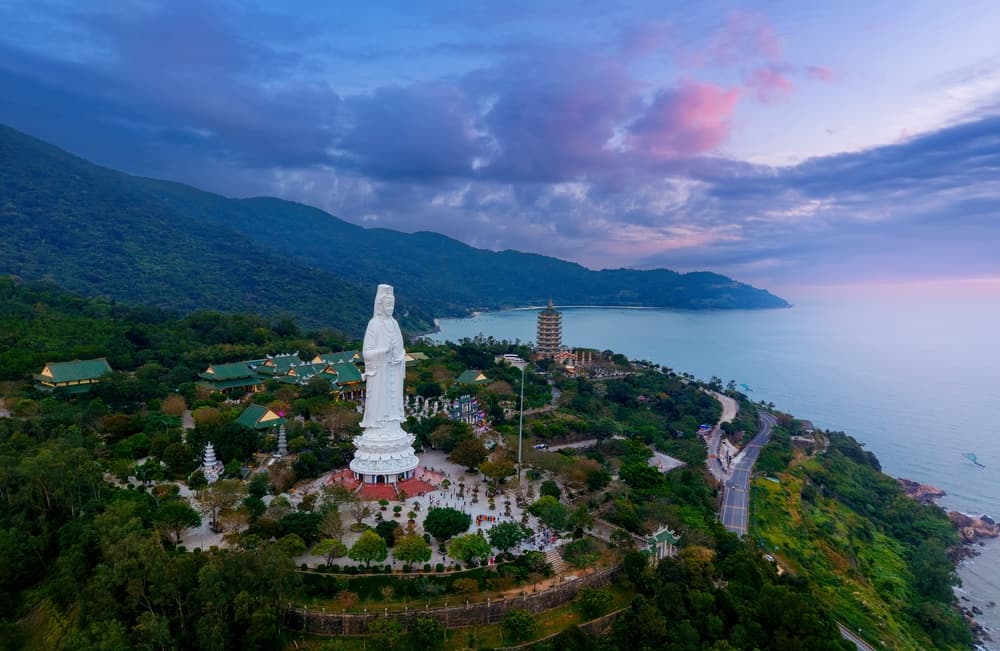
Vietnam's position in the geo-flexible world rests on a specific arithmetic: the lowest serious cost of living of any urban base in Asia, food that embarrasses countries spending ten times as much on it, and a street-level energy that makes ordinary errands feel like events. Hanoi is the atmospheric capital, a thousand years old and living at cafe-stool height under the banyans; Ho Chi Minh City is the commercial engine, younger, louder and openly ambitious; and Da Nang, between them, has quietly become the country's remote-work base of choice, a beach city with fiber, mountains at the end of the boulevard and none of the megacity tax on your patience.
What Vietnam does not offer is a legal category built for you. There is no nomad visa, and the new talent visas launching in 2026 are employer-sponsored rather than remote-worker routes, so the machinery is the 90-day e-visa, the border run, and a gray zone that the entire foreign remote community inhabits without incident. The trade is worth naming honestly: you get extraordinary daily life at a laptop-class income, and you accept that your presence renews in 90-day chapters and never builds toward residency.
The country asks two adjustments of everyone. The first is traffic, which is not lawless but runs on different physics, a river of motorbikes that parts around predictable movement and punishes hesitation; learning to cross a Hanoi street at a steady walk is a genuine rite of passage. The second is pace of trust: Vietnam is warm, funny and endlessly curious about visitors, and it is also a country that keeps face carefully, where the raised voice loses every argument and patience is the entire game. People who adapt to both tend to stay years longer than they planned.
Teaching is the exception, and it is a big one. Vietnam runs one of the largest English-teaching markets on earth, schools sponsor the work permit and the residence card the e-visa never becomes, and a certified teacher clears a wide margin over the local cost of living. Dive shops on Phu Quoc and adventure outfits in the north hire the same way, in smaller numbers.
Widening the search? If you are looking to expand your job hunt across Southeast Asia, take a look at Thailand →, Malaysia →, and Singapore →.
Cost of living
Vietnam is the value play of urban Asia, and not by a small margin. A comfortable single-person life in Da Nang runs 700 to 1,200 dollars a month all in; Ho Chi Minh City and Hanoi add a few hundred for the same standard, and doubling any of those budgets buys something close to luxury. A modern one-bedroom with a pool and gym in Da Nang rents for 300 to 500 dollars, city-center equivalents in Saigon's District 1 or Hanoi's Tay Ho for 450 to 800, and serviced apartments with cleaning included sit barely above bare leases, which is why most foreigners use them and skip furniture ownership entirely.
Daily life is where the country runs away with it. A bowl of pho costs a dollar and a half at the stall that has made only pho for thirty years, the com tam lunch plate two, and the famous ca phe sua da under a dollar with a chair you may hold all morning. The costs that push the other way are imported goods, wine and cheese above all, Western groceries generally, and international schools for anyone with children. Cash still matters outside the cities, ATMs cap withdrawals low with fees to match, and the smart setup is a Wise or Revolut card plus Grab's wallet, with dong in your pocket for everything under a dollar.
- Furnished one-bedroom: roughly 300 to 500 dollars in Da Nang, 450 to 800 in central Ho Chi Minh City or Hanoi's expat districts, serviced with cleaning for barely more.
- Coworking desk: 60 to 120 dollars a month, with strong communities in all three cities and beachside options in Da Nang.
- Street food: pho or banh mi for 1 to 2 dollars, a com tam plate for 2, and a proper restaurant dinner for two under 20.
- Grab rides: most crosstown trips 1 to 3 dollars by bike, 3 to 6 by car; a full month of daily rides costs less than one Western taxi to an airport.
Cost-of-living calculator
See how your budget stretches in Vietnam.
Estimates use approximate exchange rates and typical monthly costs. Your actual costs will vary.
Visas & Entry
Vietnam's entry system splits cleanly by passport. Citizens of roughly 39 countries enter visa-free, most of Western Europe, the UK, Japan and South Korea at 45 days under waivers extended through August 2028, ASEAN neighbors at 14 to 30, and Chile and Panama at an outlying 90. Americans, Canadians, Australians, New Zealanders and the Irish are not on the list at all and use the e-visa, which since August 2023 has been open to every nationality: 90 days, single entry for 25 dollars or multiple for 50, filed at the government portal and typically approved within a week. The multiple-entry version is the nomad workhorse, since it allows unlimited exits and returns inside its window.
Two mechanical truths govern everything else. First, there is no in-country e-visa extension: 90 days is a ceiling, not a renewable balance, and staying longer means leaving, filing a fresh application from outside, and re-entering once approved, the classic run to Bangkok or Phnom Penh that remains the actual long-stay mechanism. Second, 2026 is the year the paperwork tightened. A digital arrival card became mandatory for all foreign arrivals at Ho Chi Minh City's Tan Son Nhat airport from 15 April, filed free within 72 hours before landing, with expansion to other airports planned; a health declaration requirement arrived on 1 July for many travelers; and a new decree effective 1 April makes overstays of 16 days or more grounds for deportation and blacklisting, ending the era when a fine at the exit desk settled everything. Your e-visa details must match your passport exactly, and you must enter and exit on the same passport.
- Ninety days is a ceiling, not a balance. No in-country e-visa extension exists; the exit-and-reapply run is the mechanism, and the new e-visa must be approved before you fly back.
- Overstaying got expensive in 2026: sixteen days or more over is now deportable with blacklisting on the table, under the decree in force since 1 April. Calendar the exit date the day you land.
- Arriving via Ho Chi Minh City: the digital arrival card is mandatory since 15 April 2026, free, filed within 72 hours before landing, with airport kiosks as the slow backup. Hanoi and Da Nang arrivals are encouraged online too, ahead of a planned expansion.
- Apply only at evisa.gov.vn. Lookalike agency sites charge multiples of the 25-dollar fee for the same form, and a typo between visa and passport is a boarding denial, not a correction at the desk.
- Same passport in, same passport out, including for domestic flights; dual nationals pick one document for the entire trip.
- The 30-day gap between visa-free entries is gone, so exempt passports can run the border and return immediately, within the bounds of an immigration officer's patience for serial arrivals.
| Visa or permit | What it covers |
|---|---|
| E-visa (all nationalities) | Ninety days, single entry at 25 US dollars or multiple at 50, filed only at the official portal evisa.gov.vn and usable at 83 entry points. No extension in-country; exit and reapply to continue. Details must match your passport character for character. |
| Visa-free entry (listed countries) | Forty-five days for the UK, most of Western and Central Europe, Japan and South Korea under waivers running to August 2028; 14 to 30 days for ASEAN neighbors; 90 for Chile and Panama. The US, Canada, Australia, New Zealand and Ireland are not on the list. No wait is required between visa-free entries, though rapid back-to-back runs invite questions. |
| Phu Quoc exception | Thirty days visa-free for every nationality flying directly to Phu Quoc island and staying only there, the one corner of Vietnam where even e-visa nationalities need nothing. |
| Business visa (DN) | For activities with Vietnamese companies, requiring a local sponsor. What it is not is a work permit; actual employment layers the LD visa and permit on top. |
| Work visa and permit (LD) | Employer-sponsored, tied to a Vietnamese employer, and the only route to legal local employment. Not available for self-employment, which is the structural reason no freelance path exists. |
| Talent and investor routes | A five-year visa-exemption card for select investors and specialists arrived under a late-2025 decree, and new IT and technology talent visa categories launch from July 2026. All require Vietnamese sponsorship or investment; none is a nomad visa, whatever headlines suggest. |
| Temporary Residence Card (TRC) | One to five years for those with qualifying employment, investment or Vietnamese family, replacing visa runs entirely and unlocking ordinary banking. The long-stay prize, reached only through the sponsored routes. |
Verified 20 August 2026. The 2026 tightening, deportation for 16-day overstays, the HCMC arrival card and the July health declaration, postdates most guides. Confirm current rules at the official portal before travel.
Good to know: No nomad visa; universal 90-day e-visa ($25/$50) with no in-country extension; 45-day waivers for UK/EU/JP/KR to 2028; 2026 tightening: HCMC arrival card, 16-day overstay deportation.
EnRoute Jobs AI tool
Route Planner
Map visa routes, timelines, and relocation costs for your next destination.
Work & Legal
Vietnamese working culture prizes harmony, hierarchy and face, and the practical rule for a foreigner is that nothing worth having is obtained by escalation. Anger loses; patience, humor and the third polite attempt win. Relationships are built over long coffees and longer lunches, business cards are received with both hands and actually read, and the answer that avoids saying no directly still means no, which takes practice to hear.
Legally, remote work for foreign clients has no category of its own. The e-visa and the tourist waivers prohibit employment, which in enforcement practice means employment by Vietnamese entities; the foreigner quietly serving overseas clients from a Da Nang cafe is in a gray zone that authorities have shown no appetite for policing, and the community operating in it is large, visible and untroubled. The hard lines sit elsewhere: working for a Vietnamese company or client without an LD visa and work permit is genuinely prohibited and genuinely enforced, work permits require an employer sponsor and do not exist for the self-employed, and the 2026 data-sharing reforms mean the state sees more than it once did. The honest summary is that Vietnam tolerates the nomad and has simply declined, so far, to legislate for them.
- Foreign-client remote work is a tolerated gray zone, unpoliced in practice and authorized by nothing; there is no permit to apply for even if you wanted one.
- Vietnamese clients and employers are the enforced line. Local work requires the sponsored LD visa and work permit, and informal local work is what actually gets people deported.
- No self-employment route exists. Work permits attach to employers, so freelancers cannot regularize locally; the long-stay paths run through employment, investment or family.
- Banking runs on residence. Without a TRC, local accounts are difficult, so the working setup is foreign banking plus Wise or Revolut, Grab's wallet for daily life, and dong cash for the street.
Good to know: No legal category for foreign-client remote work: tolerated gray zone on tourist status; local work strictly requires sponsored LD visa and permit.
Taxes
Vietnamese tax is simple to stay outside of and expensive to fall into. The 183-day line does the work, but the residency test has a second trigger, the leased dwelling, that catches long-stayers who thought they were counting days correctly.
| What applies | The rule in 2026 |
|---|---|
| The 183-day rule | Presence of 183 days or more, in either the calendar year or the twelve months from first arrival, makes you a Vietnamese tax resident. The e-visa rhythm keeps most nomads safely under it; serial back-to-back runs do not, because the days still count. |
| The dwelling trigger | Residency also attaches through a regular residence, including leased housing with total lease terms of 183 days or more in the tax year, even below the day count, unless you can certify tax residency in another country. Signing a year's lease is a tax event here, not just a housing one. |
| What residency costs | Residents are taxed on worldwide income at progressive rates from 5 to 35 percent, with the top band arriving at a threshold modest by Western income standards. There is no nomad carve-out of any kind. |
| Non-residents | Taxed at a flat 20 percent on Vietnam-source income only, which a compliant foreign-client nomad has none of. Foreign income stays entirely outside the net. |
| Social insurance | Attaches to Vietnamese employment contracts, not to tourist-status presence; nomads on foreign contracts contribute nothing and receive nothing. |
| VAT | Ten percent standard, folded into prices, with reduced rates on essentials. The Vietnamese tax a visitor actually pays, bowl by bowl. |
| Americans specifically | With no Vietnamese tax collected on foreign income, there is no credit to claim; the Foreign Earned Income Exclusion does the work under its presence tests and does not cover self-employment tax. |
| Home-country obligations | Vietnam not taxing you settles nothing elsewhere. Home residency rules continue to apply and are usually the binding constraint, and Vietnam's treaty network, while wide, mostly matters to people with sponsored local income rather than nomads. |
Verified 20 August 2026. The leased-dwelling trigger is the commonly missed rule; a long lease can create residency below 183 days without a foreign tax-residency certificate. General information, not tax advice.
Good to know: Under 183 days and no long lease: foreign income untouched. Residency triggers on days OR leased dwelling ≥183 days; residents owe 5–35% on worldwide income.
Healthcare
Vietnamese healthcare divides sharply between an overloaded public system and a private tier in the big cities that serves the foreign community well for everyday and moderate needs. FV in Ho Chi Minh City and the French Hospital and Vinmec in Hanoi run to international standards with English-speaking staff, a private consultation costs 25 to 60 dollars, and dental work is good enough and cheap enough to schedule holidays around.
The honest ceiling is complexity. For advanced cardiac, oncology and major trauma care, the regional standard of care is evacuation to Bangkok or Singapore, and the insurance that matters here is the policy that pays for the flight. Payment is upfront everywhere, including at the good hospitals, so cover that reimburses fast, or better, guarantees directly, is worth the premium. Outside the three main cities capability falls away quickly, which argues for doing anything elective in town rather than trusting the provinces.
- Private consultation: 25 to 60 dollars at the international facilities, usually same or next day.
- Insurance must include evacuation. Bangkok and Singapore are the regional referral centers for the most complex cases, and the airlift, not the ward, is the cost that ruins the uninsured. Motorbike exclusions in cheap policies are the classic gap.
- Emergency numbers: 115 for ambulance, 113 police, 114 fire; response is variable, and the international clinics' own lines are often the faster route to an ambulance that speaks English.
- Pharmacies are everywhere and casual about prescriptions, which cuts both ways: convenient for the routine, and a reason to verify anything serious with a doctor first.
| Hospital | What to know |
|---|---|
| FV Hospital, Ho Chi Minh City | The French-founded, internationally accredited hospital in District 7, the southern expat community's default for anything serious and the strongest full-service private option in the country. |
| Vinmec Central Park, Ho Chi Minh City | Flagship southern hospital of the Vinmec private network, modern and English-capable, convenient to the central districts. |
| Hanoi French Hospital | The capital's long-established international hospital, serving the diplomatic and expatriate community with French and English-speaking staff. |
| Vinmec Times City, Hanoi | The network's flagship, among the most modern facilities in the country, with international patient services and broad specialist coverage. |
| Hoan My Da Nang | The central coast's principal private hospital, part of the large Hoan My group, covering Da Nang and Hoi An's growing foreign population for everyday and urgent care. |
| Family Medical Practice (clinics) | The multi-city international clinic group in Hanoi, Ho Chi Minh City and Da Nang, the standard first call for GP care, and the operator of evacuation coordination when cases outgrow the country. |
Hospital list compiled 20 August 2026 and not yet confirmed against each facility directly. Treat as indicative and verify before relying on it.
Good to know: Good private tier in the three main cities; evacuation cover to Bangkok/Singapore is the essential policy feature; payment upfront everywhere.
Safety
Vietnam is one of the safest countries in Asia by the measures that matter to a resident, and every Western government this site tracks sits at its lowest advisory tier for it. Violent crime against foreigners is genuinely rare, terrorism is a non-factor, and political stability is total in the way one-party states are stable. The risks that actually reach visitors are traffic first and petty theft second: motorbike bag-snatching in Ho Chi Minh City's District 1 and Hanoi's Old Quarter is the signature crime, executed at speed against phones held at the curb and bags dangling streetside, and it selects its targets by inattention.
Traffic deserves its own paragraph because it is the statistic. The motorbike river is survivable and even elegant once understood, but road deaths here are an order of magnitude beyond Western norms, most foreign casualties are on rented scooters, and the American advisory goes as far as recommending against renting them at all. Riding anyway means a real helmet, no night highways, and confirming the insurance policy does not exclude exactly this. The other standing items are seasonal, typhoons on the central and northern coasts roughly June through December with flooding behind them, and residual, unexploded ordnance in former battlefield ground, a risk that is functionally zero on any beaten path and real for those who dig, build or wander far off it.
- Traffic is the actual risk. Cross at a steady, predictable walk and let the river part; on two wheels, wear a real helmet, skip night highways, and check the insurance excludes nothing you are doing. Most serious foreign injuries here are scooter injuries.
- Bags inland, phones pocketed. Motorbike snatch teams work District 1 and the Old Quarter; wear bags across the body on the building side and film the street from a step back from the curb.
- Watch the drink and skip the balloons. Drugged drinks, laced snacks from strangers and nitrous balloons in nightlife districts are the specific, documented cautions, concentrated around holidays.
- Typhoon season, roughly June to December, hits the central and northern coasts with flooding behind it; in Da Nang and Hoi An, treat the forecast as binding and expect transport to pause for the big ones.
- Leave unknown metal in the ground. Unexploded ordnance persists in former conflict areas, a non-issue on any tourist route and a firm rule against digging, souvenir-hunting or wandering unmarked backcountry.
- Politics is not a spectator sport here. Demonstrations are rare and unwise to join, photographing military sites is prohibited, and the sensible posture on Vietnamese politics is polite silence.
Official travel advisories
| Government | Current position |
|---|---|
| United States | Level 1, Exercise Normal Precautions, reissued 24 June 2026. The country pages flag petty theft, drink and snack drugging in nightlife settings, scooter-rental risk, and the same-passport and pre-arrival declaration rules.travel.state.gov → |
| United Kingdom | No advisory against travel. Guidance highlights petty crime, harassment cases linked to unlicensed taxis, and storm-season disruption on the coasts.gov.uk → |
| Canada | Take normal security precautions, the lowest Canadian tier, with entry-mechanics notes including the pre-arrival information submission.travel.gc.ca → |
| Australia | Exercise normal safety precautions, Smartraveller's lowest rating, updated 1 July 2026 with the new health-declaration requirement and the digital pre-arrival form guidance.smartraveller.gov.au → |
| US Embassy Hanoi | Enroll in STEP for alerts; the consulate general in Ho Chi Minh City serves the south. From the US, the State Department line is +1 888 407 4747.vn.usembassy.gov → |
Advisory positions verified 20 August 2026, including Smartraveller directly. All four governments sit at their lowest tier; traffic, not crime, is the operative risk. Open the sources before travelling.
Good to know: Lowest advisory tier from all four tracked governments; traffic is the dominant real risk, motorbike bag-snatching the signature crime, typhoons seasonal on the coasts.
Climate
Vietnam runs sixteen hundred kilometers north to south and behaves like three countries. Hanoi has four real seasons, including a damp, gray winter that surprises people expecting the tropics and a summer that swelters; Ho Chi Minh City has two, wet and dry, and is hot at both; and the central coast around Da Nang and Hoi An runs its own monsoon calendar with a typhoon season in the autumn. The practical consequence is pleasant: somewhere in Vietnam the weather is good in every month, and the working sweet spots are the southern dry season from December to April and Hanoi's luminous October and November.
| Season | What to expect |
|---|---|
| Southern dry season, November to April | Ho Chi Minh City at its best: 28 to 33C, low humidity by its own standards, and months of unbroken sun. The operational peak for the south and the Mekong. |
| Southern wet season, May to October | Daily afternoon downpours that arrive on schedule, flood a few streets and leave; mornings stay workable and the city simply carries an umbrella. |
| Hanoi's four seasons | A hot, humid summer from May to September above 33C, a gray drizzly winter from December to February that wants a jacket, and two gorgeous shoulders; October and November are the capital's finest weeks. |
| Central coast and typhoons | Da Nang and Hoi An run dry and hot from roughly February to August, then wet from September to December with typhoon risk peaking September to November, when flooding in Hoi An's old town is almost annual. |
Good to know: Three distinct zones; south is driest Nov–Apr, Hanoi shines in Oct–Nov, central coast carries autumn typhoon risk.
Culture & Customs
Vietnamese social life runs on face, warmth and an unspoken agreement that public composure is everyone's shared property. Losing your temper does not escalate a dispute here, it ends it, with you on the losing side; the merchant, the landlord and the traffic officer all respond to the smiling third attempt and go deaf to the raised voice. Alongside the composure sits real warmth and open curiosity, an eagerness to feed visitors, tease them and ask their age within a minute of meeting, since age calibrates the entire architecture of Vietnamese politeness.
The war deserves a word because visitors carry more weight about it than their hosts do. Most of the population was born long after what is locally the American War, the country's posture toward foreign visitors including Americans is strikingly unresentful, and the museums say hard things without the streets repeating them. Take the history seriously when it is offered, skip the urge to editorialize, and notice that the Vietnamese relationship with the past is forward-facing in a way that explains much else about the place, including the speed of everything.
- Keep face, yours and theirs. No public anger, no cornering anyone into admitting fault, and disagreements handled with a smile move faster than any other kind.
- Give and receive with both hands, cards, cash, gifts and change alike; it reads as basic courtesy the way please does in English.
- Dress for the pagoda: shoulders and knees covered, shoes off where indicated, and step over temple thresholds rather than on them.
- Haggle at markets, cheerfully, and nowhere else. Street stalls and markets expect it as a social game; shops with printed prices and food vendors do not, and grinding a dollar out of either is poor form.
- Tipping is not traditional and never expected at street level; rounding up or ten percent in tourist restaurants and for guides is appreciated and spreading.
- Sit for the coffee. The ca phe sua da on a plastic stool is Vietnam's social institution, unhurried by design, and taking it to go misses the entire point.