.png)
About Argentina
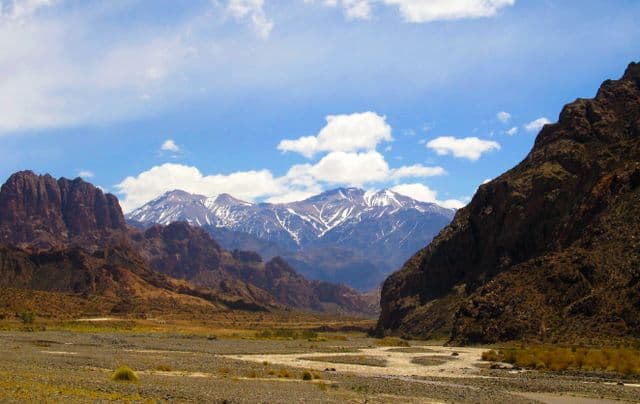
Buenos Aires arrives at you rather than the other way around. The city is enormous, operatic and insistent on being taken seriously: café culture that treats a single cortado as a lease on the table, more theaters and bookstores per capita than nearly anywhere, a psychoanalytic saturation that puts Lacan in taxi conversation, football as civil religion, and a social clock, lunch at two, dinner at ten, that disorients newcomers for a fortnight and then becomes the only defensible way to live. Around the capital: Mendoza's vineyards against the Andes, Córdoba's university energy, Bariloche's lake-district Patagonia, and a country so large its south touches the subantarctic.
The practical story changed more between 2024 and 2026 than in the previous decade, and this page reflects the new era rather than the legend. The cepo currency controls that split the peso into official, blue and MEP personalities were lifted for individuals in April 2025; the rates converged, the card surcharges died, and with them died both the arbitrage that made Argentina half-price for dollar earners and the ritual of the Florida Street cueva. Inflation, once past 200 percent, has cooled to the low thirties annually and falling, prices have found dollar-denominated gravity, and Buenos Aires now costs what a great mid-tier capital costs. The compensation is normalcy: cards simply work, transfers simply arrive, and financial life no longer requires a hobbyist's attention.
The immigration story is quietly excellent. The 2022 nomad visa remains among the world's most accessible, no income floor, 200 dollars, a year's maximum stay, atop a tourist regime whose 90 days extend easily, and beneath a Rentista route for those who stay. The seasonal calendar hires on its own terms besides: Bariloche staffs its ski winter every July, Mendoza takes on pickers for the vendimia each March, and the hostels of Buenos Aires have traded beds for English-speaking desk shifts forever. The honest cautions are urban and ordinary: phone-snatching motochorros, the named tourist hotspots, one carved-out city in Rosario, and demonstrations as the capital's recurring weather. Argentina remains what it has always been, a country that overdelivers on life per dollar even now that the dollars are counted honestly.
Widening the search? If you are looking to expand your job hunt across South America, take a look at Brazil →, Colombia →, and Ecuador →.
Cost of living
Retire every pre-2025 number you have read about Argentina; the blue-dollar discount is gone and the budget arithmetic is now honest. A comfortable single life in Buenos Aires runs roughly 1,500 to 2,200 dollars a month: one-bedrooms around 500 to 900 dollars in the value neighborhoods, Villa Crespo, Chacarita, San Telmo, and 800 to 1,300 in prime Palermo and Recoleta, with the temporary-rental market pricing in dollars and the peso market wanting the DNI the nomad visa does not grant. Mendoza, Córdoba and the provinces still run meaningfully cheaper than the capital.
Daily life has repriced toward the mid-tier: the specialty flat white at 4 to 5 dollars, a serious parrilla dinner at 25 to 40 a head, the menu del día holding 8 to 12, empanadas still merciful, and Malbec remaining the world's best wine value even at honest rates. Cards now work everywhere at market rate since the PAIS-tax era ended, the QR-and-alias payment economy is universal, and cash retains its uses for ferias, taxis and tips, changed in modest batches since thirty-percent inflation still erodes idle pesos. The strategy layer that once decided entire budgets, blue versus MEP versus Western Union, has shrunk to a one-or-two-percent rounding error, which is the quiet good news underneath the sticker shock.
- One-bedroom rent: 500 to 900 dollars in Villa Crespo, Chacarita and San Telmo, 800 to 1,300 in prime Palermo; the temporary market prices in dollars, and the peso long-term market wants the DNI the visa does not issue.
- The discount is dead, the value is not: cafés at 4 to 5 dollars and parrilla dinners at 25 to 40 price like Lisbon rather than the old half-price legend; the culture per dollar remains the hemisphere's best trade.
- Cards finally just work: post-cepo, foreign Visa and Mastercard charge at market rate with the surcharges gone; keep modest peso cash for ferias, taxis and tips, and change it in batches inflation cannot chew.
- Ignore every pre-2025 money guide: the blue-versus-official game is a museum piece with the gap under three percent, cuevas and Western Union offering rounding-error advantages at most.
Cost-of-living calculator
See how your budget stretches in Argentina.
Estimates use approximate exchange rates and typical monthly costs. Your actual costs will vary.
Visas & Entry
Argentina's entry stack is generous at every layer. Tourists from the US, UK, EU, Canada, Australia and most Western nations receive 90 days on arrival, extendable once for 90 more at the migration directorate for a small fee, and the border-run to Colonia across the river remains the informal classic. Above it sits the real thing: the Digital Nomad Visa, formally the Residencia Transitoria como Nómada Digital, created by Disposición DNM 758/2022 in May 2022 under Article 24(h) of the migration law.
The terms are among the world's lightest. Eligibility covers nationals of visa-exempt countries providing remote services to clients or employers domiciled abroad, with income exclusively foreign; there is no official minimum income figure in the regulation, applicants demonstrating regular remote earnings through contracts, invoices and statements, with practitioners suggesting two thousand dollars monthly as a comfortable showing. Fees total about 200 dollars, a 120-unit migration fee and an 80-unit consular fee, and two channels exist: the TIE 24H electronic pre-authorization filed from abroad, resolving in roughly ten to fifteen business days, or an in-person filing at the migration directorate after entering as a tourist. The initial grant runs 180 days with entry required within 90 days of approval; one extension of 180 days is available for those who spent at least half the first period, 90 days minimum, physically in Argentina, filed with income evidence and an Argentine criminal-record certificate, for a 360-day maximum. The category is transitory by design: no dependents route, no DNI national ID, which keeps local banking and peso leases at arm's length, and no credit toward permanent residency, with the Rentista passive-income visa as the standard long-term conversion. Arrivals even collect a small welcome package at Ezeiza, transfer discounts, a SIM and a SUBE transit card, a flourish very Argentina. One administrative caveat belongs on the record: 2025-26 brought framework churn, a contested omnibus migration decree and a ministry reorganization, none of which has removed the published 758/2022 route, and all of which argues for checking the current instructions the month you file.
- No income floor is the headline: the regulation sets no dollar minimum, only proof of regular foreign remote earnings; alongside Uruguay's permit it is the region's most accessible program, and the 200-dollar cost seals it.
- File TIE 24H from abroad for the clean sequence: the electronic pre-authorization resolves in about two weeks, entry follows within 90 days, and the in-country filing at the directorate remains the fallback for those already on the stamp.
- Plan the 50 percent presence early: the extension's 90-days-in-country requirement is checked against border records, and a first period spent mostly in Chile disqualifies the second period entirely.
- Expect the DNI gap: transitory status opens no national ID, so local banking, peso leases and some subscriptions stay awkward; the dollar-priced temporary rental market and fintech stack are the standard workarounds.
- The year is the ceiling: 360 days maximum with no rollover into residency; those staying convert to Rentista or another real category, a conversation worth opening with counsel by month eight.
- Verify against current instructions at filing: the 758/2022 route stands, the surrounding administrative furniture moved in 2025-26, and the directorate's live pages outrank every guide including this one.
| Visa or permit | What it covers |
|---|---|
| Tourist entry | Ninety days on arrival for most Western passports, extendable once for ninety more at the migration directorate, with the Uruguay day-trip reset as the informal tradition; the scouting layer the visa sits atop. |
| Digital Nomad Visa (Residencia Transitoria) | Disposición 758/2022: 180 days plus one 180-day extension for visa-exempt nationals working remotely for foreign clients or employers, no official income minimum, about 200 dollars in fees, and the TIE 24H online channel resolving in ten to fifteen business days. |
| The extension's presence rule | The second 180 days require at least 90 days of physical presence during the first period, plus an Argentine criminal-record certificate and income evidence for the services performed; a genuine-residence test in miniature. |
| What the transitory category withholds | No dependents route, no DNI, no residency clock: the design trades permanence for lightness, and the DNI gap is the practical one, keeping local bank accounts and peso leases at arm's length for the visa's duration. |
| Rentista and the long-term menu | The passive-income Rentista visa is the standard settlement route, with work and family categories beside it; a real temporary residence with DNI, renewable toward permanence, for those Argentina converts. |
| MERCOSUR and neighbors | Citizens of MERCOSUR states hold their own generous residence track entirely apart from this machinery, the regional layer that makes the continent porous for South Americans. |
| The 2025-26 caveat | A contested omnibus migration decree and a ministry reorganization shuffled the administrative frame without removing the published nomad route; current directorate instructions bind, and checking them at filing time is the cheap insurance. |
Good to know: Disposición 758/2022: 180+180 days (360 max), no official income minimum, ~$200 fees, TIE 24H online in ~2 weeks, 50%-presence rule for extension, no dependents/DNI/residency credit; Rentista is the settlement route; check current instructions after the 2025-26 admin churn.
EnRoute Jobs AI tool
Route Planner
Map visa routes, timelines, and relocation costs for your next destination.
Work & Legal
Argentine professional culture is warm, verbal and relationship-first: meetings open with real conversation, trust builds across shared meals, the asado invitation is the true signing ceremony, and the famous late clock governs commerce as much as dinner. The talent pool is deep and globally fluent, Buenos Aires having exported developers, designers and writers to the world's remote economy for a decade, which means the coworking scene, the meetup circuit and the freelance culture are genuinely mature rather than imported.
For the visa holder the lines are clean: the nomad category exists precisely for foreign-client remote work and prohibits the local labor market, with Argentine employment requiring a real work visa through a sponsoring employer. The gray-zone tourist-stamp tradition continues as it always has, now with a legal alternative that costs 200 dollars. Going local as a service provider means the monotributo, the simplified small-taxpayer regime that is the backbone of Argentine freelancing, reachable for those who convert to genuine residency and famous for its bureaucratic personality. The deeper truth about working here is rhythmic: August in the southern winter and the January beach exodus reshape availability, the demonstration calendar occasionally reroutes the commute, and the culture's improvisational genius, lo atamos con alambre, we tie it with wire, pairs with a professionalism the stereotype misses.
- The visa draws the clean line: foreign clients yes, Argentine employers no; local employment routes through sponsored work visas, and the nomad category's entire design is earn-abroad, spend-here.
- The remote-work scene is native, not imported: a decade of Argentine talent exporting services built real coworking depth, meetup density and freelance culture in Palermo and beyond; plugging in takes weeks, not months.
- Monotributo awaits the converted: the simplified regime for local freelancing arrives with real residency and a DNI, priced gently and administered with full Argentine personality; not a visa-holder's problem.
- Work the porteño clock: mornings start slow, lunches run long, evenings produce, and the 10pm dinner is the network; scheduling US-East mornings against Buenos Aires afternoons is the classic happy overlap.
Good to know: Nomad visa authorizes foreign-client work and bars the local market; sponsored work visas for Argentine employment; monotributo for converted residents; the mature remote scene is native to BA.
Taxes
Argentine tax runs on residency, and the nomad visa is engineered to stay outside it: transitory status under twelve months leaves foreign income untouched, which turns the entire subject into a single reassuring paragraph for visa holders and a serious one only for those who stay.
| What applies | The rule in 2026 |
|---|---|
| The twelve-month line | Argentine tax residency generally attaches to foreigners after twelve months of residence, with transitory-status stays expressly outside the trigger; the nomad visa's 360-day ceiling keeps holders in the non-resident lane for its entire duration by design. |
| Non-residents and foreign income | Non-residents owe Argentina nothing on foreign-source income: the remote salary and overseas clients pass the year untaxed locally, with only Argentine-source income, none of which the visa permits earning, in scope. |
| The resident regime, for the converted | Real residency brings worldwide taxation at progressive rates to 35 percent, the monotributo simplified regime for modest local freelancing, and a filing culture that employs half the accountants in Buenos Aires; the Rentista convert's briefing, not the nomad's. |
| Bienes Personales, the wealth tax | Argentina levies an annual personal-assets tax on residents above a threshold, at rates that recent reform has been trimming; another line that arrives only with genuine residency and deserves an adviser before the Rentista signature. |
| The 2025-26 reform current | The Milei government's tax agenda, simplification schemes, trimmed rates, the end of the PAIS tax on foreign-currency transactions, has been moving fast; residents plan against current law, and visitors mostly notice that cards stopped carrying surcharges. |
| VAT and daily prices | IVA at 21 percent lives inside the prices; a card-payment VAT-refund scheme for foreign tourists has operated on lodging and some spending, worth a glance at booking time, and cash forfeits it. |
| Americans specifically | No comprehensive US-Argentina income tax treaty and no totalization agreement exist, so the ordinary machinery carries everything: FEIE or foreign tax credits on the US side, with nothing Argentine to credit during the visa, and self-employment tax surviving for the self-employed. |
| The home-country half | Argentina's zero does not resolve the jurisdiction you left; residency-based systems keep their claims until exited properly, and the clean version of the Argentine year starts with the home-country conversation, not the Ezeiza landing. |
Verified 20 August 2026: the twelve-month residency line with transitory stays outside it, non-resident exemption on foreign income through the visa's full term, resident rates to 35 percent with the wealth tax for the converted, the post-cepo end of card surcharges, and the absence of US treaty and totalization agreements. General information, not tax advice.
Good to know: Visa's 360-day ceiling keeps holders non-resident: foreign income untaxed throughout; residency (12 months) brings worldwide taxation to 35% plus the Bienes Personales wealth tax; no US treaty or totalization; PAIS tax era over.
Healthcare
Buenos Aires hosts some of Latin America's finest hospitals, and the private tier is the remote worker's system: the great private hospitals, Italiano, Alemán, Británico, CEMIC, Favaloro, run university-grade medicine with international reputations, English available among specialists, and prices that remain gentle in dollars even after the repricing, consultations at 30 to 60 dollars and the prepaga private insurance plans, Swiss Medical, OSDE, Galeno, selling comprehensive coverage at rates far below US logic. Public hospitals treat anyone including foreigners, a point of national pride, at public-hospital pace.
Quality concentrates in the capital and the major cities, Mendoza and Córdoba holding solid private clusters, with Patagonia's distances arguing for evacuation-inclusive insurance on the adventure legs. Pharmacies are professional and everywhere, dental work remains excellent value, dengue season has reached Buenos Aires summers and repellent is now a real line item, and emergencies answer at 107 with the private systems' ambulances as the faster tier for members.
- Private consultations run 30 to 60 dollars with same-week specialists and English common at the flagships; the prepaga plans open the entire tier at monthly rates that embarrass US premiums.
- The public promise is real and paced: public hospitals treat foreigners without question, a genuine safety net best reserved for genuine emergencies rather than convenience.
- Summer is dengue season now: the mosquito line has reached Buenos Aires, repellent belongs on the December-to-March packing list, and screens matter more than they used to.
- Emergencies dial 107, with private-system ambulances as the members' fast tier; for Patagonia and the adventure map, evacuation-inclusive cover is the correct policy.
| Hospital | What to know |
|---|---|
| Hospital Italiano, Buenos Aires | The academic flagship of the private tier, transplant-to-oncology depth and a research reputation that leads the region; the default answer to the hardest cases. |
| Hospital Alemán, Buenos Aires | The German community's historic hospital, private, rigorous and central, with broad specialist strength. |
| Hospital Británico, Buenos Aires | The British-heritage institution serving the capital with full-service private medicine and an Anglophone comfort level. |
| CEMIC, Buenos Aires | University-affiliated private network strong in diagnostics and specialty medicine, a standard prepaga tier-one choice. |
| Fundación Favaloro, Buenos Aires | The cardiovascular institute of continental rank, the name that made Argentine cardiac surgery famous. |
| Sanatorio Allende, Córdoba | The interior's benchmark private hospital, anchoring care for the university city and the center of the country. |
Hospital list compiled 20 August 2026 and not yet confirmed against each facility directly. Treat as indicative and verify before relying on it.
Good to know: Capital's private tier is regionally elite (Italiano, Favaloro et al.) at gentle dollar prices; prepaga plans are the expat system; dengue now reaches BA summers; 107 for emergencies.
Safety
Argentina holds one of Latin America's only US Level 1 ratings, and the picture behind it is a safe-country-with-city-rules rather than a paradox. Violent crime against visitors is genuinely uncommon; the national risk portfolio is dominated by property crime with theatrical flair, the motochorro phone-snatch from a passing motorcycle, the mustard-squirt distraction team, the café-table phone that leaves before you do, concentrated exactly where the guides send people: La Boca, San Telmo's fair, the Obelisco, Florida Street, Retiro's station edges and Constitución after dark. The single carve-out is Rosario, elevated to Level 2 by Washington and flagged by every government for narcotrafficking violence that belongs to the drug economy rather than the tourist one; the city functions, and it simply asks for real awareness the rest of the country does not.
The texture beyond theft is civic. Demonstrations are the capital's recurring weather, frequent, mostly peaceful, occasionally paralyzing the Congreso-Plaza de Mayo axis, and correctly treated as spectacle to route around; the security services have run heightened protection at Jewish institutions since the Middle East escalations, a sober note in the city that suffered the AMIA bombing a generation ago; and the economic stabilization has, if anything, calmed the street relative to the crisis years the old guides describe. Nature adds dengue summers in the north and now Buenos Aires, serious Andean and Patagonian weather for the adventure map, and distances that make evacuation cover sensible. Emergency numbers: 911 in the capital and most provinces, 101 police and 107 ambulance nationally.
- Defend the phone above all: the motochorro snatch and the café-table lift are the national crime story; phones stay off tables, away from curb edges, and in front pockets on the subte, and ninety percent of visitor incidents vanish.
- Know the named hotspots and their hours: La Boca beyond the Caminito by day only, San Telmo's Sunday fair with zipped bags, Retiro and Constitución stations with purpose, and Florida Street's crowds with pocket discipline.
- Treat Rosario as the one asterisk: the Level 2 city's narcotrafficking violence rarely touches visitors, and rarely is not never; those with business there run bank-ATM, daylight, known-neighborhood rules.
- Route around the demonstrations: the Congreso-Plaza de Mayo axis hosts the republic's arguments on a near-weekly basis, transport bends around them, and the spectator's distance is the correct one.
- Use bank-lobby ATMs and registered rides: Cabify and Uber after dark, cash drawn indoors in daylight, and the no-resistance rule absolute in the rare worst case.
- Pack repellent for the summer months: dengue has reached Buenos Aires Decembers, the north runs the full mosquito calendar, and Patagonia's risks are meteorological rather than criminal. Emergencies: 911.
Official travel advisories
| Government | Current position |
|---|---|
| United States | Level 1, Exercise Normal Precautions, one of the region's few, with a single Level 2 carve-out for the city of Rosario over narcotrafficking crime and violence; embassy staff give advance notice before Rosario travel.travel.state.gov → |
| United Kingdom | No advisory against travel, with street-crime guidance for the capital's hotspots and standard demonstration awareness.gov.uk → |
| Canada | Normal precautions nationally with a high degree of caution for Greater Buenos Aires and Rosario, and unusually detailed scam taxonomy, the mustard trick and motochorros both named.travel.gc.ca → |
| Australia | Normal safety precautions overall with a high degree of caution for Rosario; names the capital's theft hotspots, La Boca, San Telmo, Palermo, the Obelisco, Plaza de Mayo, advises bank-lobby ATMs, and notes raised national security around Jewish institutions after Middle East events.smartraveller.gov.au → |
| US Embassy Buenos Aires | Enroll in STEP; demonstration alerts around the Congreso axis are the practical feed. Av. Colombia 4300, Palermo; +54 11 5777 4533.ar.usembassy.gov → |
Advisory positions verified 20 August 2026, including Smartraveller directly: Level 1 nationally from Washington with the Rosario Level 2 carve-out, green overall from Canberra with matching Rosario caution, and the Jewish-institution security note current. Open the sources before travelling.
Good to know: US Level 1 (regionally rare) with Rosario as the single L2 carve-out; motochorro phone theft and named BA hotspots are the real exposure; demonstrations are civic weather; dengue now reaches BA summers.
Climate
Buenos Aires runs humid subtropical on an inverted calendar: summers from December through February hit 30-plus with drama-grade humidity and thunderstorms, winters hold a mild 8-to-15-degree band with grey spells, and the two long shoulders, March-May and September-November, are the city at its working best, 18 to 25 degrees under jacaranda purple or plane-tree gold. The country behind the capital spans a continent's worth of climates: Mendoza's high-desert vineyard sun, the subtropical north, the lake-district alpine of Bariloche, and Patagonia running to the subantarctic, where summer is the only season that reliably cooperates. The remote-work year assembles itself accordingly: the capital's shoulders for the desk months, the Andes and south for the southern summer, and the northern escapes for July.
| Season | What to expect |
|---|---|
| Summer, December to February | Hot, humid, storm-punctuated 30-plus in the capital as the city decamps to the coast; Patagonia's brief perfect season and the trekking window, which is the trade the calendar offers. |
| Autumn, March to May | The first prize: 18 to 25 degrees, golden light, the vendimia wine harvest in Mendoza, and the capital's café life at full terrace strength. |
| Winter, June to August | Mild 8 to 15 in Buenos Aires with grey stretches, ski season at Bariloche and Las Leñas, and the north, Salta, Iguazú, at its comfortable best; the productive indoor months. |
| Spring, September to November | The second prize: jacarandas turning the capital purple, temperatures climbing back through the ideal band, and the entire country opening ahead of the summer exodus. |
Good to know: Inverted seasons: the March-May and September-November shoulders are the capital's working prize; Patagonia belongs to December-February; the north redeems July.
Culture & Customs
Argentine culture is Italian opera performed in Spanish with indigenous and gaucho bass notes: emotional, verbal, physically affectionate, one-cheek kisses among men and women alike, and organized around tables. The asado is the sacrament, hours of fire-managed beef with the asador's authority absolute and the guest's job appreciation; mate is the social circulatory system, one gourd, one bombilla, passed in strict rotation with the cebador serving and gracias meaning only I'm done; and dinner at ten precedes social life that starts when other capitals sleep. Fútbol is civil religion with Boca-River as its schism, the psychoanalytic saturation is real enough that therapy talk is dinner talk, and the bookstore-and-theater density backs the city's literary self-image with infrastructure.
The codes run warm and specific. Voseo replaces tú and charms locals from a visitor's mouth; greetings kiss, punctuality flexes thirty minutes social, and directness wraps in charm. Tipping runs ten percent cash even when cards pay the bill, the cubierto cover charge is legitimate, and the fernet-and-Coca is the national cocktail accepted as initiation. Politics and economics are discussed with intensity and expertise by everyone, the visitor's listening posture recommended through election seasons, and the one reliably sacred subjects are the national team and the superiority of Argentine beef, both of which the evidence supports.
- Honor the mate protocol: the cebador serves, the gourd circulates in order, you drain it and return it, and gracias ends your participation, not each turn; joining the round is the fastest acceptance ritual the culture offers.
- Surrender to the asado's hours: arrival brings picada and conversation, the beef arrives in waves on the asador's clock, and praising the point of the cut is the correct liturgy; bringing good wine is the guest's entire job.
- Learn the vos and the kiss: voseo verb forms and the single-cheek greeting for everyone mark the difference between visiting and arriving; the effort is repaid with interest.
- Tip ten percent in cash even on card bills, accept the cubierto as ordinary, and round taxis up; the service economy runs on the folded note.
- Run the porteño clock: 9pm is early for dinner, 2am is mid-evening for the boliche, and Sunday is family asado territory; fighting the schedule loses, always.
- Enter politics as an audience: everyone holds sophisticated economic opinions earned the hard way, the divisions are real, and the visitor who listens learns a century of history per dinner.
