.png)
About Romania
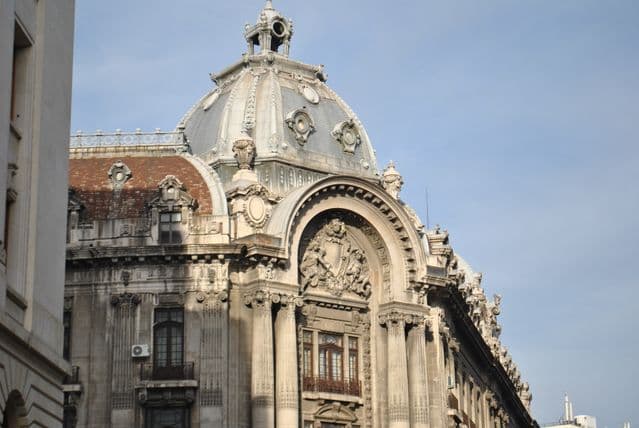
Romania is the value proposition Central Europe keeps failing to market. Bucharest is one of the cheapest EU capitals by a wide margin, wired with internet that has embarrassed Silicon Valley speed tests for a decade, and layered like nowhere else: Belle Époque villas behind communist boulevards, Orthodox chapels in office-tower courtyards, and a nightlife and restaurant scene that outruns its reputation by years. Cluj-Napoca, the Transylvanian tech hub, offers the university-city version; Brașov puts the Carpathians at the end of the street. The country in between holds Saxon fortress towns, painted monasteries and the Danube Delta, most of it still uncrowded because the brand lags the product.
The practical stack is stronger than almost anyone assumes. Full Schengen membership arrived in January 2025, ending the old border-count arithmetic and folding Romania into the 90/180 map. The nomad visa has run since early 2022 with a statutory tax exemption most countries never bothered to legislate. The flat tax is 10 percent, the internet is genuinely world-class, English is near-universal among professionals under forty-five, and the cost of a comfortable month sits at roughly half of Western European equivalents. The catch is a bureaucracy that runs on paper, patience and certified translations, and an income bar that Romanian wage growth has quietly pushed toward the top of the European table. Seasonally the coast at Mamaia staffs each summer and the Carpathian resorts each winter, mostly on EU passports, and the hostels of Brașov and Cluj have run on exchange for years.
Culturally, Romania rewards the curious and disarms the skeptical. This is a Latin island in a Slavic sea, expressive and hospitable in ways the gray-block stereotype never predicted; rural hospitality remains genuinely legendary, Orthodox rhythms shape the calendar, and the Dracula industry is a kitsch layer locals monetize with a wink. The honest counterweights: roads that carry the EU's worst fatality statistics, a political scene in loud perpetual negotiation with itself, and attitudes outside the big cities that run conservative. People who arrive with patience and a sense of humor tend to report, years later, that Romania was the best-kept secret of their geo-flexible lives.
Widening the search? If you are looking to expand your job hunt across Eastern Europe, take a look at Hungary →, Greece →, and Croatia →.
Cost of living
Bucharest is among the cheapest capitals in the EU for what it delivers. A one-bedroom in the neighborhoods foreigners choose, Dorobanți, Aviatorilor, Floreasca, the Old Town's quieter edges, runs roughly 2,300 to 3,500 lei a month, call it 450 to 700 euros, with Cluj-Napoca now matching or exceeding capital prices on the strength of its tech economy and Brașov below both. Utilities are modest outside the winter heating months, and the leu's stability makes budgeting boring in the best way.
Daily life is where the arithmetic shines: the meniul zilei lunch at 30 to 45 lei, serious specialty coffee at 15 to 20, a metro ride at pocket change and a monthly transit pass under 100 lei, dinner for two at a good restaurant under 250 lei outside the tourist core. The city runs increasingly cashless, though lei in pocket still matter at markets and in the countryside. The costs that surprise: imported goods and electronics at EU-plus prices, car ownership taxed and parked expensively, and the tourist-strip Old Town premium, which one street's walk retires. VAT at 21 percent since August 2025 hides inside every receipt.
- One-bedroom rent: roughly 2,300 to 3,500 lei in Bucharest's good districts, with Cluj now rivaling the capital and Brașov the value play; two months' deposit standard, and the lease registration matters for the residence permit.
- Meniul zilei: the set lunch at 30 to 45 lei remains one of Europe's best deals, and the restaurant scene above it stays half of Western prices.
- Coworking desk: 400 to 800 lei a month in a deep Bucharest and Cluj market, with the internet that made Romania famous included everywhere.
- Transit and Bolt: metro passes under 100 lei monthly, Bolt rides across town for 15 to 30 lei, and the airport train solving the old taxi-gauntlet problem.
Cost-of-living calculator
See how your budget stretches in Romania.
Estimates use approximate exchange rates and typical monthly costs. Your actual costs will vary.
Visas & Entry
Romania is a full Schengen member as of January 2025, so the baseline for visa-free Western passports is the standard 90 days in any 180 across the entire zone, under EES biometric logging with ETIAS expected late in 2026. The nomad route is the long-stay D visa for digital nomads created by Law 22/2022, in force since January 2022 and among Europe's earliest.
The design is orthodox; the number is not. Applicants must work remotely for an employer registered outside Romania or own a foreign company at least three years old, with income of three times Romania's average gross monthly salary, evidenced for each of the six months before applying and sustained throughout the stay. Because the statistics institute updates the average monthly and Romanian wages have grown at double-digit rates, that threshold has moved dramatically: against 2026 wage data it computes to roughly 27,000 to 29,600 lei, about 5,400 to 5,900 euros a month, which is nearly double the figure most guides still quote and places Romania among Europe's highest bars. The mechanics soften the blow. The D visa, filed at a consulate or through the e-visa portal with decisions typically inside two to three weeks, admits you to convert to a 12-month residence permit at the General Inspectorate for Immigration; renewal of that permit requires income of only one times the average gross salary, a fraction of the entry bar; and Law 69/2023 exempts foreign salary income from Romanian tax and social contributions entirely for stays under 183 days. Family members cannot be attached to the nomad visa itself and route through separate family reunification. Paperwork is the real boss fight: certified Romanian translations, apostilles, proof of accommodation, 30,000 euros of insurance and a clean criminal record, assembled in the order the consulate expects.
- The threshold is the correction: three times the average gross salary computes to roughly 5,400 to 5,900 euros a month against 2026 wage data, not the 3,700 euros the internet remembers; the statistics institute updates monthly and the consulate's current figure is the one that binds.
- Renewal costs a third of entry: the 12-month permit renews at one times the average salary, so the program's real design is a high gate and a cheap corridor, which rewards planning past year one.
- Company owners need three years of history: the foreign company route requires the entity to predate the application by three years, a wall for fresh LLC structures that employee applicants never hit.
- The 183-day line is written into tax law: Law 69/2023 exempts foreign salary from Romanian income tax and social contributions below it; past it, register with ANAF within 30 days and the flat 10 percent applies to worldwide income.
- Budget for the paper: certified Romanian translations, apostilles on foreign documents, accommodation proof and 30,000 euros of insurance are the file; fees have run about 120 euros for the visa plus permit costs, with reports of an increase toward 300 euros in April 2026 worth confirming at your consulate.
- Family does not ride along: the nomad visa is issued to the worker alone, and spouses and children route through family reunification with its own requirements and timeline.
| Visa or permit | What it covers |
|---|---|
| Schengen visa-free entry | Ninety days in any 180 across the full Schengen zone since January 2025, under EES; ETIAS expected late 2026. The pre-2025 trick of parking Schengen days in Romania is gone, retired by success. |
| Digital nomad visa (long-stay D) | For remote employees of foreign companies or owners of foreign companies at least three years old, at three times the average gross salary, roughly 27,000 to 29,600 lei monthly against 2026 data, shown for six months and sustained throughout. Entry document for the residence-permit stage; no family attachment; no Romanian clients or employment. |
| Nomad residence permit and renewal | The D visa converts at the General Inspectorate for Immigration into a 12-month permit; renewal requires income of only one times the average gross salary, making year two dramatically cheaper to qualify for than year one. |
| Work permit and employment visa | The sponsored route for jobs with Romanian companies, quota-managed annually and employer-driven; the only path to local employment and clients. |
| EU Blue Card | High-skill employment with Romanian employers at a multiple of the average salary, carrying the EU-wide mobility and family advantages. |
| Company and self-employment routes | The SRL, Romania's limited company, is cheap and fast to form and open to foreigners; the PFA freelancer registration suits residents with local clients. Both create Romanian tax presence by design and belong to the settling-in chapter, not the arrival one. |
| EU and EEA citizens | Freedom of movement: registration certificate after 90 days, no visa machinery, and none of the thresholds apply. |
Verified 20 August 2026. The three-times-average-salary formula against current statistics institute data yields roughly 27,000 to 29,600 lei monthly, far above the stale 3,700-euro figure in circulation; the Law 69/2023 tax exemption and the one-times renewal bar are confirmed in the legislation.
Good to know: Nomad visa since Jan 2022: 3x avg gross salary (~RON 27,000-29,600 / €5,400-5,900 in 2026, far above stale €3,700 quotes), foreign company 3+ yrs for owners, 12-month permit renewing at just 1x, Law 69/2023 tax exemption under 183 days; full Schengen since Jan 2025.
EnRoute Jobs AI tool
Route Planner
Map visa routes, timelines, and relocation costs for your next destination.
Work & Legal
Romanian professional culture is warmer and more personal than the region's stereotype: relationships matter, meetings open with real conversation, hospitality extends into business, and the formal domnul and doamna coexist with a Latin expressiveness that makes offices here louder and funnier than their Central European neighbors. English is near-universal in the professional class, competence is respected over title, and the national talent for improvisation, descurcăreală, solves problems the org chart cannot.
For remote workers the legal frame is clean at the top: the nomad visa explicitly authorizes remote work for foreign employers and clients and prohibits Romanian employment and Romanian clients, for which the work-permit system exists. Tourist-status remote work occupies the standard unpoliced European gray zone for shorter stays. The machinery for going local is genuinely accessible when the time comes, the SRL forms in days for token capital and the PFA covers resident freelancers, but both create Romanian tax presence by design, and the bureaucracy around registrations, county offices and stamped paper is the country's honest tax on everything; a local accountant at a modest monthly fee is the universally recommended cheat code.
- The nomad visa authorizes foreign-source remote work explicitly and walls off Romanian employment and clients; the gray zone belongs to tourist stays and ends where the local economy begins.
- Going local is cheap and papered: an SRL forms in days with token capital and the PFA covers resident freelancers, both pulling you into Romanian tax by design and both best driven by a local accountant from day one.
- Bureaucracy is the tax: registrations run on certified translations, apostilles and queue tickets, with county offices varying in mood; patience and a lawyer's hour at the start save weeks at the middle.
- The tech scene is real and hiring-adjacent: Bucharest and Cluj host serious engineering communities, meetups in English, and the network effects that make Romania a base rather than a stopover for technical professionals.
Good to know: Nomad visa explicitly legalizes foreign-source remote work; Romanian clients require work authorization; SRL/PFA routes exist for those going local, with bureaucracy as the real cost.
Taxes
Romania pairs one of Europe's lowest flat taxes with one of its only statutory nomad exemptions, and the combination is the country's quiet superpower: nothing at all under 183 days, and a flat 10 percent on worldwide income past it.
| What applies | The rule in 2026 |
|---|---|
| The Law 69/2023 exemption | Digital nomad visa holders are expressly exempt from Romanian income tax and social contributions on their foreign salary income while they remain under 183 days of presence in any 12 consecutive months. This is written law, not practice, one of only two such statutory exemptions in Europe alongside Croatia's. |
| Residency at 183 days | Past 183 days in a 12-month window you become Romanian tax resident, register with ANAF within 30 days, and owe Romanian tax on worldwide income. The exemption is a runway, not a shield; the calendar decides everything. |
| The flat 10 percent | Resident income tax is a flat 10 percent, among the EU's lowest headline rates and the honest reason tax-aware professionals stay past the exemption rather than despite its end. |
| Social contributions, the real second line | Residents can owe health contributions around 10 percent and pension contributions of 25 percent depending on income type and structure, with caps and thresholds that make structure matter more than rate; this, not the 10 percent, is what to model with an accountant before choosing residency. |
| Non-residents | Taxed on Romanian-source income only, which a compliant nomad has none of; short stays owe Romania nothing and file nothing. |
| 2026 changes worth knowing | The fiscal package raised standard VAT to 21 percent from August 2025 and lifted the dividend tax to 16 percent from 2026, the latter reshaping the arithmetic for owner-operators paying themselves in dividends through foreign or local companies. |
| Americans specifically | The US-Romania treaty applies and there is no totalization agreement, so US self-employment tax continues regardless of Romanian status; under the exemption there is no Romanian tax to credit, making the FEIE the workhorse, and past 183 days the 10 percent credits cleanly. |
| Filing, if resident | Romanian returns run through ANAF's online system with the unique declaration due in May; the system is digitizing fast by local standards and still worth an accountant's few hundred lei a year to navigate. |
Verified 20 August 2026. The Law 69/2023 exemption, the 183-day line, the flat 10 percent, VAT at 21 percent since August 2025 and the dividend rise to 16 percent from 2026 are confirmed; social-contribution exposure for residents depends on structure and deserves professional modeling. General information, not tax advice.
Good to know: Law 69/2023: statutory exemption from income tax and social contributions under 183 days; residents pay flat 10% on worldwide income plus contributions by structure; VAT 21% since Aug 2025, dividends 16% from 2026.
Healthcare
Romanian healthcare splits sharply between an under-resourced public system and a private tier that has become one of the region's success stories. Regina Maria, MedLife, Sanador and Medicover have built genuine hospital networks over the past decade, subscription plans cost less than a streaming bundle stack, an English-speaking private consultation runs 150 to 250 lei, and same-week specialists are the norm in Bucharest and Cluj. The public system retains islands of excellence, Floreasca for emergency and trauma, Fundeni for transplants and oncology, but queues, infrastructure and variable conditions are why the foreign community lives privately by default.
The honest caveats: capability concentrates hard in Bucharest, Cluj and Timișoara and thins fast in the countryside; emergency response is competent in cities and slower beyond; and for the most complex elective care some residents still fly to Vienna, a candor worth keeping. Dentistry is excellent value, pharmacies are everywhere and professional, and 112 answers emergencies nationally.
- Private consultation: 150 to 250 lei, typically same week, English routine at the big networks; subscription plans from the major operators cost 100 to 300 lei monthly and are how the professional class consumes healthcare.
- The visa requires 30,000 euros of insurance, and private cover or a network subscription is the correct real-world setup regardless; public hospitals expect residents' insurance status to be sorted, and conditions vary.
- Emergency number 112, with SMURD emergency response strong in the cities; for serious trauma in Bucharest, Floreasca is the name to know.
- Dentistry is excellent value, modern and priced well below Western Europe, and Bucharest and Cluj clinics are accustomed to international patients.
| Hospital | What to know |
|---|---|
| Floreasca Emergency Hospital, Bucharest | The capital's flagship public emergency and trauma center, the default destination for anything acute and serious in Bucharest. |
| Fundeni Clinical Institute, Bucharest | The national referral center for transplants, oncology and hepatology, the public system's deepest specialist bench. |
| Regina Maria network, Bucharest and nationwide | The leading private network, from subscription clinics to the Ponderas surgical hospital, and the expat community's standard first call. |
| MedLife network, Bucharest and nationwide | The country's largest private operator with hospitals and clinics across the major cities, deep insurer relationships and English-speaking staff. |
| Sanador Clinical Hospital, Bucharest | Large private hospital with broad surgical and specialist coverage, among the capital's most complete private facilities. |
| Medicover Hospital, Bucharest | The international group's Romanian hospital, rounding out the private tier with multi-specialty and maternity care. |
Hospital list compiled 20 August 2026 and not yet confirmed against each facility directly. Treat as indicative and verify before relying on it.
Good to know: Private networks (Regina Maria, MedLife, Sanador, Medicover) are the expat standard at 150-250 lei consultations; public islands of excellence at Floreasca and Fundeni; capability thins outside major cities.
Safety
Romania is safer than its lingering reputation and says so with every government's lowest advisory tier. Violent crime against foreigners is rare, central Bucharest walks comfortably at night, and the actual risk list is ordinary and mapped: pickpockets on the metro and around Gara de Nord, the airport-and-station taxi hustle that Bolt retired for anyone who installs it, drink-spiking and fake-police scams in nightlife districts, and stray dogs, fewer than the old stories but still worth not petting. The single largest genuine risk is the road: Romania carries among the EU's worst traffic fatality statistics, and defensive driving plus a bias against night intercity drives is real safety advice, not filler.
Two contextual notes belong here. Romania borders Ukraine, and Russian attacks on the Danube ports have repeatedly pushed drones and debris into Romanian airspace and territory near the Delta, with civilians injured in border-area incidents; every advisory pairs its green rating with awareness language for the border strip, daily life anywhere a nomad would base is untouched, and crossing into Ukraine is its own do-not category. And Bucharest sits on a serious seismic fault: the American advisory's one distinctive line is earthquake risk, the city's older blocks are the vulnerability, and knowing your building's era is a legitimate part of choosing an apartment here. Politics, meanwhile, is loud, protest-prone and, after the mid-2026 coalition collapse, in one of its periodic reorganizations; demonstrations are frequent, mostly peaceful and a spectator sport foreigners should watch from cafés.
- Install Bolt before you land: the airport and Gara de Nord taxi hustle is Romania's most reliable tourist tax, and the apps end it completely; if a driver approaches you, the answer is no.
- Pockets zipped on the M2 and at Gara de Nord: metro pickpocketing is professional and locational; residential Bucharest sees essentially none of it.
- Real police do not ask for your wallet: the fake-officer scam requesting documents and cash appears in the advisories; genuine officers carry photo ID, and the correct response to doubt is offering to walk to a station.
- The road is the risk that is actually statistical: EU-worst fatality rates, aggressive overtaking and unlit rural hazards argue for defensive driving, daytime intercity trips and the train or plane for long hauls.
- Know your building's decade in Bucharest: seismic risk is the advisory's distinctive line, the vulnerability concentrates in certain older blocks, and asking about a building's era and any red-dot seismic classification is normal renter diligence here.
- The border strip is context, not threat: drone and debris incidents cluster near the Danube Delta frontier with Ukraine; awareness there, zero implications for Bucharest, Cluj or Brașov, and crossing into Ukraine is its own do-not-travel question.
Official travel advisories
| Government | Current position |
|---|---|
| United States | Level 1, Exercise Normal Precautions, issued 14 October 2025 and reaffirmed since, with the distinctive note that Romania has moderate seismic activity and Bucharest faces the highest earthquake risk.travel.state.gov → |
| United Kingdom | No advisory against travel, with standard guidance on petty crime, nightlife scams and road conditions.gov.uk → |
| Canada | Take normal security precautions, with awareness language for the Ukraine border area, where conflict drones have crossed and debris has landed, and notes on transport pickpocketing.travel.gc.ca → |
| Australia | Exercise normal safety precautions, updated June 2026 with candid notes: attacks on Ukraine's Danube ports across the border, drones entering Romanian airspace, falling debris and injured civilians in border areas, plus drink-spiking and fake-police warnings.smartraveller.gov.au → |
| US Embassy Bucharest | Enroll in STEP for alerts. 4-6 Liviu Librescu Blvd, District 1, Bucharest; the embassy's entry pages track border-crossing and Schengen mechanics closely.ro.usembassy.gov → |
Advisory positions verified 20 August 2026, including Smartraveller directly. All four governments hold Romania at their lowest tier, with border-awareness and seismic notes rather than warnings. Open the sources before travelling.
Good to know: Lowest tier from all four governments; real risks are roads (EU-worst fatalities), station/metro pickpockets and nightlife scams; Ukraine-border drone debris is context for the Delta strip only; Bucharest seismic awareness.
Climate
Romania runs four emphatic seasons. Bucharest summers are genuinely hot, 24 to 32 with July heatwaves past 35 that make air conditioning a work requirement; winters drop below freezing with snow and long gray stretches; and the shoulders, April-May and September-October, are the working prize, terrace weather with the boulevards at their best. The country's geography is the escape hatch: the Carpathians put skiing and hiking two to three hours from the capital, Brașov runs cooler all summer, and the Black Sea coast at Constanța and Mamaia does its brief loud season from June through August. The pattern residents settle into writes itself, capital shoulders, mountain summers, and a winter that rewards anyone who likes their cities moody and cheap.
| Season | What to expect |
|---|---|
| Winter, December to February | Below freezing with snow and gray stretches in Bucharest, proper alpine winter in the Carpathians with skiing at Poiana Brașov and Sinaia; the city runs cheap, quiet and productive. |
| Spring, April to May | Fast and green: terraces open, the parks bloom, and May is the capital's best month, warm without the heat and crowds still elsewhere. |
| Summer, June to August | Hot in the capital with 35-plus spikes, glorious in the mountains, and beach season on the Black Sea; the smart base migrates to Brașov or the coast for the peak weeks. |
| Autumn, September to October | Golden, stable and long, with September rivaling May, harvest in the wine country, and the Carpathian forests doing their best work. |
Good to know: Shoulder seasons are the prize; July-August heat in Bucharest wants air conditioning; the Carpathians are the two-hour escape hatch in both directions.
Culture & Customs
Romania is a Latin country that geography filed under Eastern Europe, and the mismatch explains most first impressions: the language is Romance and half-readable to anyone with French or Italian, the temperament is expressive, hospitable and argumentative in the Mediterranean register, and the famous grayness turns out to be architecture, not people. Hospitality is the core value and rural hospitality is genuinely legendary, the kind where refusing the third serving requires diplomacy and the țuică appears before questions do. Orthodox Christianity shapes the calendar and the culture even for the secular, name days matter nearly as much as birthdays, and la mulți ani serves as the all-purpose blessing for every occasion.
Codes worth knowing run formal-then-warm. Greetings use domnul and doamna until invited otherwise, shoes come off in homes, flowers arrive in odd numbers, and elders are deferred to without irony. The Dracula industry is a kitsch economy locals run with a wink, safe to enjoy and unnecessary to believe. Conversation is a contact sport where politics, history and how-Romania-is-doing are debated with passion; visitors are welcome to listen generously and wise to editorialize rarely. Attitudes outside the big cities run conservative, including on LGBTQ+ matters, where legality and Bucharest's visible scene coexist with a traditionalist countryside. Tipping runs ten percent, street drinking is banned in most cities outside licensed terraces, and bringing CBD or cannabis across the border is a genuinely serious legal mistake.
- Accept the hospitality and pace yourself: the covered table is the culture's love language, refusals are negotiations, and the țuică toast opens events; sipping is permitted, emptying is optional, declining entirely takes charm.
- Formality first: domnul and doamna with surnames until invited to first names, greetings entering small shops, and deference to elders; the warmth underneath arrives fast once the form is observed.
- Shoes off at the door and flowers in odd numbers, with even numbers reserved for funerals, a rule shared with the region and enforced by grandmothers.
- Name days matter: half the country celebrates on the saint's day matching their name, la mulți ani covers every occasion, and knowing a colleague's onomastică earns disproportionate goodwill.
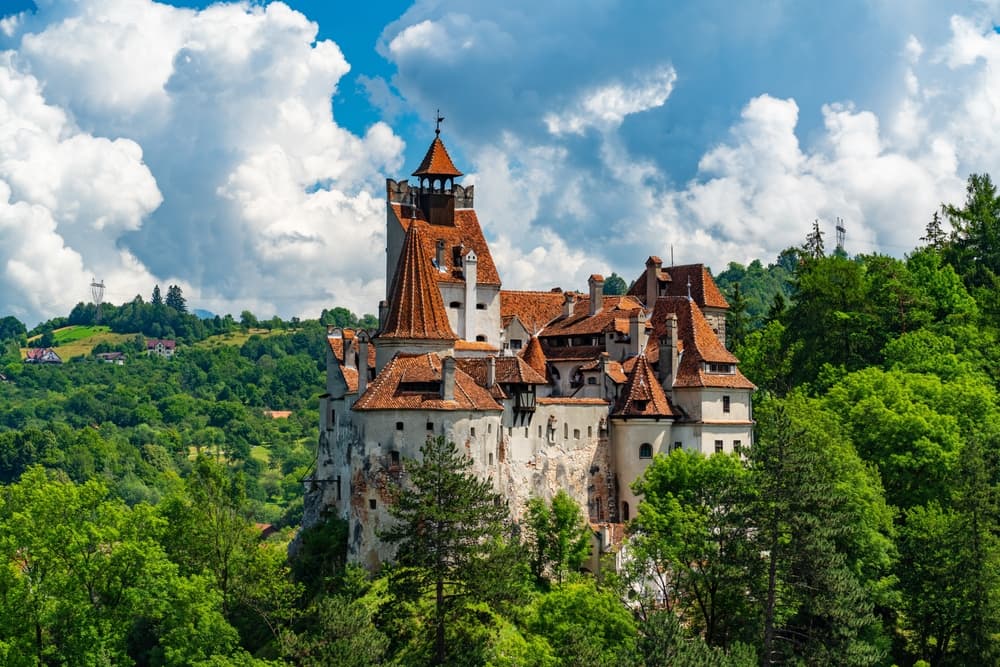
- Enjoy the Dracula kitsch without the belief: Bran Castle and the vampire economy are theater locals monetize cheerfully; the real Transylvania of Saxon towns and mountain villages is the better story.
- Mind the small laws: street drinking is banned in most cities outside licensed terraces, cannabis and CBD are illegal to bring in with real detention risk, and 10 percent is the standard restaurant tip.