.png)
About Andorra
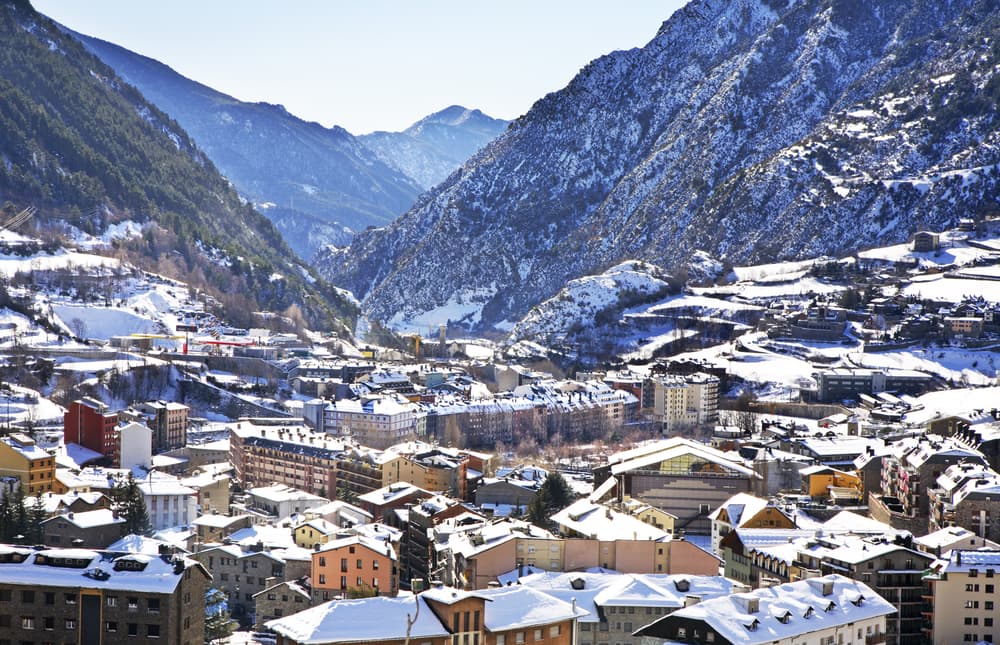
You cross into Andorra through a tunnel in the Pyrenees, or you do not cross at all. There is no airport. There is no train. The mountains decide when you arrive. Then the valley opens and you are in something that is neither France nor Spain: a principality of 80,000 people co-headed by a French president and a Catalan bishop, speaking Catalan officially, running duty-free commerce and Grandvalira's ski economy for eight million visitors a year, and quietly operating one of Europe's most deliberate low-tax residency systems from a capital that sits a thousand meters up.
The paperwork story changed materially in 2025 and 2026, and this page carries the new numbers. The headline is the digital nomad residence permit, real and operational under the Digital Economy Law: a favourable resolution from the Ministry of the Economy recognizing work that needs no fixed location, income around 300 percent of the Andorran minimum wage, in practice a little over 4,000 euros monthly, comprehensive private health insurance, owned or rented Andorran housing, and a principal-residence commitment of at least 90 days a year, with no Andorran company required and the 50,000-euro financial-authority deposit expressly waived; initial grants run two years with renewals stretching toward ten-year periods. The honest print: the quota is 50 nomad permits, extendable to a pooled 100 with the entrepreneurship program, which makes this one of the world's most exclusive nomad documents by arithmetic alone. The seasonal permit is the other Andorran document entirely: the principality issues thousands of temporada work authorizations every winter to staff Grandvalira and Vallnord, hired by the resorts and often lodged by them too, the volume lane beside the exclusive one. Beside it, the classic doors: passive residence, repriced by Law 5/2025 and Llei 2/2026 to 1,000,000 euros in Andorran assets, with property counting only at 800,000 euros or more per unit, a 400,000-euro alternative through the national Housing Fund, and a 50,000-euro state contribution that is now non-refundable, all at a 90-day annual presence; and active self-employed residence, an Andorran company with majority participation and real management, a 50,000-euro contribution, CASS social affiliation and 183 days of presence, the route working professionals actually take. Employees ride contracts inside a quota system that prioritizes residents.
What the machinery serves: a personal income tax that tops out at 10 percent, corporate tax at 10, the IGI sales tax at 4.5, no wealth, inheritance or gift taxation, and treaties with Spain, France, Portugal and a short list of others, though pointedly not the United States. The context is a near-zero-crime microstate whose genuine hazards are Alpine, whose winters are the business model, whose housing market is tight in the way small perfect places are, and whose distance from an airport, Toulouse or Barcelona at roughly three hours by road, is either the deal-breaker or the entire appeal.
Widening the search? If you are looking to expand your job hunt across Southern Europe, take a look at Spain →, France →, and Portugal →.
Cost of living
Andorra prices between its neighbors and its reputation: cheaper than Switzerland, dearer than Spain, with housing as the pinch point, Andorra la Vella and Escaldes one-bedrooms running 1,000 to 1,600 euros in a market that eight million annual visitors and a growing resident class keep tight, the ski parishes pricing seasonally, and the smaller parishes, Encamp, La Massana, Sant Julià, serving as the honest valves. Utilities run mountain-real in winter, and the deposit-and-agency stack is standard Iberian.
Daily life carries the duty-free dividend: groceries at Pyrénées, Carrefour-affiliates and Mercadona-run cheaper than France, fuel, alcohol and electronics are the famous arbitrage that fills the border roads, the lunch menú runs 14 to 18 euros in the Catalan pattern, and the tapas-and-mountain-restaurant tier stays honest outside the ski-resort perimeter. The ski season is the budget's personality: Grandvalira and Vallnord passes price world-class skiing at half-Alpine rates, and summer flips the same lifts into hiking infrastructure. The comfortable single life assembles at 2,800 to 3,500 dollars, the budget floor sits near 1,900 with parish housing and menú discipline, and the honest Andorran additions are the car, near-mandatory outside the central valley, the winter heating line, and the airport-run line item to Toulouse or Barcelona that replaces every flight's first leg.
- One-bedroom rent: 1,000 to 1,600 euros in Andorra la Vella and Escaldes against a genuinely tight market; Encamp, La Massana and Sant Julià run meaningfully less, and winter utilities are mountain-real.
- Bank the duty-free dividend: groceries undercut France, fuel and electronics are the famous arbitrage, and the 14-to-18-euro menú keeps the Catalan lunch institution honest.
- Price the mountain as infrastructure: Grandvalira passes deliver world-class skiing at half-Alpine rates, the same lifts run summer hiking, and the outdoors is the free tier the taxes quietly subsidize.
- Budget the road: the car is near-mandatory outside the central valley, and the three-hour Toulouse or Barcelona airport run replaces the first leg of every itinerary; the isolation is the price and the product.
Cost-of-living calculator
See how your budget stretches in Andorra.
Estimates use approximate exchange rates and typical monthly costs. Your actual costs will vary.
Visas & Entry
Andorra sits outside the EU and outside Schengen, reachable only by road through Spain or France, which makes the entry arithmetic pleasantly odd: there is no Andorran tourist visa, short stays of up to 90 days ride on lawful presence in the neighboring Schengen states, and time in Andorra does not formally pause the Schengen clock since entry and exit run through it. For residence, the principality operates its own system entirely, applications filed with the Servei d'Immigració in Andorra la Vella, and the 2025-2026 legal wave repriced the entire menu.
The digital nomad residence permit is the modern door: created by the Digital Economy, Entrepreneurship and Innovation Law for professionals whose work needs no fixed location and runs on technology for clients or employers outside Andorra, it requires a favourable resolution from the Ministry of the Economy, sufficient means around 300 percent of the Andorran minimum wage, in practice a little over 4,000 euros monthly, full private health coverage, owned or rented housing and a principal-residence commitment of at least 90 days a year, with no local company and the 50,000-euro AFA deposit expressly waived; grants run two years initially, renewing at two, then three, then ten-year periods, and the quota is the honest constraint, 50 permits, pooled to 100 with the ministry's entrepreneurship program. Passive residence, the no-work investor door, now demands 1,000,000 euros permanently invested in Andorran assets, real estate counting only at 800,000 euros or more per property, financial instruments and funds recognized for a maximum of 36 months before mandatory reallocation, or 400,000 euros directed to the national Housing Fund, plus a 50,000-euro state contribution, non-refundable under Llei 2/2026, 12,000 per dependent, income above 300 percent of the minimum wage, and 90 days of annual presence. Active self-employed residence takes the working entrepreneur: an Andorran company with majority participation, real activity and effective management, a 50,000-euro contribution for most applicants, CASS affiliation and 183 days of presence, on a one-year permit renewing 2-2-3 toward ten-year periods. Salaried residence rides an employment contract inside the national quota system. The long game runs slow by design: permanent-tier renewals arrive with years, but citizenship demands roughly 20 years and the renunciation of other nationalities, which is why almost nobody takes it.
- Move early on the nomad permit: fifty slots pooled to a hundred is the entire annual arithmetic, the Ministry of the Economy's resolution is the gating step, and a complete file, means, insurance, housing, the location-independence case, is what moves inside a small system that knows its applicants.
- Price the passive door at its 2026 numbers: one million in Andorran assets with the 800,000-per-property floor and the 36-month fund cap, or 400,000 through the Housing Fund, plus the 50,000 contribution that no longer comes back; the 600,000-euro figure still circulating online died with Law 5/2025.
- Take the active route if you will genuinely work: the company-plus-majority-participation structure with 183 days makes you an Andorran tax resident by design, which for most arrivals is precisely the point.
- Respect the presence floors as written: 90 days holds the nomad and passive permits, 183 holds the active one, and tax residence runs on its own 183-day and center-of-interests tests; a permit is not a tax residency certificate, and the distinction matters to every treaty partner.
- Plan the Schengen geometry: Andorran days do not pause the neighbors' clock for third-country visitors, so long scouting stays need the same 90-in-180 arithmetic as anywhere in the zone.
- Engage local hands: the immigration service works in Catalan, the files are document-heavy with apostilles and in-country medicals, and the gestoria-and-lawyer tier exists precisely to run this machinery; budget for it.
| Visa or permit | What it covers |
|---|---|
| Entry from Spain or France | No Andorran tourist visa exists: short stays up to 90 days ride lawful presence in the neighboring Schengen states, entry is by road or the Andorra-La Seu airfield's thin schedule, and Schengen days keep counting since the clock runs through the neighbors. |
| Digital Nomad Residence Permit | The Ministry of the Economy's favourable resolution for location-independent work serving foreign clients: means near 300 percent of minimum wage, private health cover, Andorran housing, 90 days' principal residence yearly, no company and no AFA deposit; two years initially, renewing toward ten-year periods, under a 50-permit quota pooled to 100. |
| Passive residence, repriced | One million euros permanently in Andorran assets, property counting only at 800,000-plus per unit and funds capped at 36 months before reallocation, or 400,000 via the Housing Fund; a now non-refundable 50,000-euro contribution plus 12,000 per dependent, means above 300 percent of minimum wage, and 90 days' presence, with local work prohibited. |
| Active residence, self-employed | An Andorran company with majority participation, real activity and effective management, a 50,000-euro contribution for most applicants, CASS social affiliation and 183 days' presence; one year renewing 2-2-3 toward ten-year periods, and the route working professionals actually take. |
| Salaried residence | An employment contract inside the national quota system, which obliges employers to prioritize nationals and existing residents; CASS shared contributions and the 183-day rhythm, with permit duration tracking the contract. |
| Special-interest residence | The scientific, cultural and sporting category keeps the older economics, a 47,500-euro AFA deposit with 9,500 per dependent, for internationally recognized profiles the principality wants. |
| The long game | Renewal ladders reach ten-year permits within a decade, but citizenship demands roughly twenty years and renouncing other nationalities; Andorra sells residence, not passports, and prices both deliberately. |
Good to know: DNV REAL (Digital Economy Law): Ministry of Economy resolution, ~300% min wage (~€4k+/mo), private insurance, housing, 90 days/yr, NO company, NO AFA deposit; but QUOTA = 50 (pooled 100 w/ entrepreneur program); 2 yrs initial → 2/3/10 renewals. Passive REPRICED (Law 5/2025 + Llei 2/2026): €1M Andorran assets (property ≥€800k/unit, funds 36-month cap) or €400k Housing Fund + €50k NON-refundable (+€12k/dep), 90 days. Active compte propi: majority participation + €50k + 183 days. Not Schengen/EU; entry via ES/FR, Schengen clock keeps running. Citizenship ~20 yrs + renunciation.
EnRoute Jobs AI tool
Route Planner
Map visa routes, timelines, and relocation costs for your next destination.
Work & Legal
Andorran professional life runs Catalan in law and administration, Spanish and French as fluent working companions, and enough English in the ski, banking and digital tiers that the international professional functions from day one, though the Catalan gesture buys warmth everywhere in a country protective of the language that defines it. The economy is a specialist's stack: tourism and the ski complex, duty-free retail, a banking sector reformed into international respectability, and the deliberate new layer, digital business, e-sports, content creators and the innovation programs the Digital Economy Law exists to attract, with the government's stated four-to-five-week target for foreign-investment authorizations as the administrative promise.
The legal lines are clean: tourists work for no one, the nomad permit covers foreign clients only and prohibits serving the Andorran market, the active permit's company structure is the door to local business, and CASS social affiliation follows real activity. The texture is microstate-practical: everyone knows everyone, reputation is the actual currency, the gestoria runs the paperwork, banking compliance is thorough in the post-reform style and worth starting early, and the working calendar bends around the ski season's December-to-April economy and the August Iberian pause. Connectivity is better than the isolation suggests, fibre is excellent and national, and the time zone holds all of Europe with the US East Coast arriving mid-afternoon.
- Keep the client map clean: the nomad permit serves foreign clients only, the Andorran market belongs to the active-permit tier, and in a country of 80,000 the distinction is visible; structure accordingly.
- Start banking early: the reformed sector runs thorough compliance, account opening is document-heavy in the post-cleanup style, and the local gestoria smooths what cold applications cannot.
- Work the language stack: Catalan is the state, Spanish and French carry daily business, English serves the digital and ski tiers, and the Bon dia in Catalan is the cheapest goodwill in the principality.
- Ride the two calendars: the ski economy owns December through April and the Iberian August owns summer; the quiet shoulders are when the administration moves fastest and the valley works best.
Good to know: Nomad permit = foreign clients ONLY (Andorran market needs active permit); CASS follows real activity; banking compliance thorough post-reform (start early, use gestoria); Catalan state language, ES/FR fluent companions, EN in digital/ski tiers; fibre excellent; ski season Dec-Apr owns the calendar.
Taxes
Andorra's tax system is the residency system's entire second half: a 10-percent ceiling on personal income, matching corporate rate, Europe's lowest sales tax and no wealth taxation, priced against a short treaty list that pointedly excludes the United States.
| What applies | The rule in 2026 |
|---|---|
| The residency tests | Tax residence runs on the 183-day count and the center-of-economic-and-personal-interests test; a residence permit is not a tax certificate, passive residents at 90 days often remain tax-resident elsewhere, and the distinction is the system's most misunderstood line. |
| Residents and the IRPF | Personal income tax runs 0 percent to 24,000 euros, 5 to 40,000 and 10 above: a ceiling, not a headline, and the arithmetic that makes the active-residence company structure the working professional's standard answer. |
| The corporate layer | Corporate tax at a nominal 10 percent with new-business reliefs, no dividend taxation to Andorran residents from Andorran companies, and the SL-plus-administrator structure as the active permit's chassis. |
| Savings and the missing taxes | No wealth tax, no inheritance or gift tax, and capital income folded into the 10-percent world; the estate-planning simplicity is half the principality's quiet appeal. |
| IGI and the daily arithmetic | The IGI sales tax at 4.5 percent is Europe's lowest general rate, the duty-free retail economy sits on top of it, and the everyday-price dividend is real against every neighbor. |
| The treaty map | Double-taxation treaties with Spain, France, Portugal, Luxembourg and a growing but short list; CRS information exchange applies, the secrecy era is over, and the system now sells low rates rather than silence. |
| Americans specifically | No US tax treaty and no totalization agreement: citizenship-based taxation follows Americans here undiluted, the foreign-earned-income exclusion and foreign tax credits do the work, and self-employment tax needs planning without a totalization shield; the 10-percent ceiling helps less than it reads. |
| The home-country half | The 90-day passive floor is an invitation to remain tax-resident somewhere else, exit taxes and tie-breakers decide more than the permit does, and the arrivals who win here planned the departure jurisdiction first. |
Verified 21 August 2026: the 183-day and center-of-interests tests, the 0-5-10 IRPF ladder, corporate 10 percent, the absent wealth-inheritance-gift taxes, IGI at 4.5 percent, the short treaty list with Spain, France, Portugal and Luxembourg, CRS participation, and the absence of any US treaty or totalization agreement. General information, not tax advice.
Good to know: IRPF 0/5/10 (10% ceiling); corporate 10%; no wealth/inheritance/gift tax; IGI 4.5% = Europe's lowest; treaties ES/FR/PT/LU only; NO US treaty/totalization (FEIE + credits do the work; SE tax unshielded); permit ≠ tax residence (183-day + center-of-interests tests); CRS yes, secrecy era over.
Healthcare
Andorran healthcare runs the CASS co-payment model on a Franco-Iberian chassis: the social-security system reimburses roughly three-quarters of outpatient and most hospital costs for affiliated residents, supplementary insurance closes the gap in the continental style, and the nomad and passive tiers carry the comprehensive private policies their permits require, cheap by any neighbor's standard. The national anchor is Hospital Nostra Senyora de Meritxell in Escaldes, capable across the everyday and stabilization tiers, and the system's honest design is the referral bridge: serious rarities ride organized transfers to Barcelona's and Toulouse's university hospitals, a microstate's correct answer rather than its failure.
The texture is mountain-practical: primary care is quick and multilingual, Catalan, Spanish and French with workable English, pharmacies run the Iberian professional standard, dental prices draw cross-border patients in the other direction, and the health file's real content is Alpine, ski-season orthopedics as the national specialty by volume, altitude acclimatization above 1,000 meters, mountain-road care in winter, and sun discipline at elevation. Emergencies answer at 112, mountain rescue is practiced and serious, and the visitor's summary is simple: insure comprehensively, ski within your grade, and know the Meritxell handles what the mountains send it.
- Hold the cover your permit names: CASS affiliation follows the active tier, comprehensive private policies carry the nomad and passive tiers, and the supplement closing CASS's co-payment gap is the resident's standard add-on.
- Trust the anchor, plan the bridge: the Meritxell handles the everyday and acute competently, and the Barcelona-Toulouse referral tier is organized and covered; ask your insurer how it routes before you need it.
- Treat the slopes as the statistic they are: ski orthopedics is the national specialty by volume, helmet-and-grade discipline is the real prevention, and slope insurance belongs in every season pass.
- Acclimatize and cover up: the country lives above 1,000 meters, altitude and elevation sun both ask their small disciplines, and the winter mountain roads ask for genuine tires.
| Hospital | What to know |
|---|---|
| Hospital Nostra Senyora de Meritxell, Escaldes | The national hospital and the system's anchor: capable across everyday and acute tiers, with the ski-season orthopedic trade as its practiced specialty. |
| The referral bridge | Serious rarities ride organized, covered transfers to Barcelona and Toulouse university hospitals; the microstate's designed answer, not its gap. |
| Primary care and clinics | Quick, multilingual and parish-distributed, with the private clinic tier serving the insured directly and CASS reimbursing the affiliated. |
| CASS, the co-payment chassis | The social system reimburses roughly 75 percent of outpatient and most hospital costs for working residents, with supplementary policies closing the gap in the continental style. |
| The private-insurance tier | Nomad and passive permits require comprehensive private cover, priced gently by European standards and serving as the non-working resident's entire system. |
| Mountain rescue | Practiced, serious and coordinated with the ski domains; 112 reaches everything, and the winter road-and-slope file is the country's genuine medical statistic. |
Hospital list compiled 21 August 2026 and not yet confirmed against each facility directly. Treat as indicative and verify before relying on it.
Good to know: CASS co-pay model (~75% outpatient reimbursement, supplement standard); Meritxell = national anchor; serious rarities → organized covered referrals to Barcelona/Toulouse; nomad/passive tiers = comprehensive private cover (cheap); ski orthopedics = the national specialty; altitude 1,000m+; 112.
Safety
Andorra's safety file is among the shortest on earth and the page keeps it honest rather than padded. The official half: the US advisory holds Level 1, Exercise Normal Precautions, the principality rotates through the world's lowest-crime rankings, and the security picture is what a wealthy microstate wedged between two Level-2 neighbors and reachable only by mountain road would suggest, quiet to the point of statistical invisibility. The street half: violent crime is rare enough to make the national news for weeks, the practical register is confined to peak-season petty theft, bags in the duty-free shopping crush of Avinguda Meritxell, unlocked cars at trailheads, ski gear walking off café racks, and solo travelers of every description report the kind of comfort that makes the question feel odd.
The genuine hazards are Alpine and seasonal, and they are real rather than rhetorical: winter mountain driving on the passes and the tunnel approaches demands chains-or-winter-tires discipline the police enforce, the ski domains produce the country's actual casualty statistics and grade-discipline is the real safety advice, avalanche awareness applies off-piste as it does anywhere serious, summer thunderstorms build fast over the high trails, and the altitude asks its small acclimatization tax. Border-road congestion on peak ski weekends is the closest thing to civil disorder the principality reliably produces. Emergencies answer at 112, mountain rescue is practiced and coordinated with the ski domains, and the honest summary is the one the numbers force: the safest full entry in this index's Europe, whose only serious risks are the ones the mountains charge admission for.
- Read the Level 1 as arithmetic: a microstate whose violent-crime file makes news for weeks sits at the floor of every ranking; the advisory exists mostly to confirm what the numbers already say.
- Guard the bag in the shopping crush: Avinguda Meritxell's duty-free crowds at peak season carry the country's entire pickpocket register, and the trailhead car and café ski rack cover the rest.
- Drive the winter like a local: chains-or-winter-tires discipline is enforced on the passes, the tunnel approaches ice early, and the mountain-road file is the principality's one genuine everyday risk.
- Ski and hike within grade: the domains produce the national casualty statistics, off-piste means avalanche awareness as it does anywhere serious, and summer storms build over the high trails fast.
- Respect the altitude quietly: the entire country lives above 1,000 meters and the high domains run well above 2,000; the first days ask the small acclimatization tax.
- Know 112 and the Madrid coverage: the universal number reaches practiced mountain rescue, the US file runs through Madrid with Barcelona as the working contact, and STEP takes five minutes for a country that will almost never call.
Official travel advisories
| Government | Current position |
|---|---|
| United States | Level 1, Exercise Normal Precautions: the floor tier, with peak-season petty-theft language as the entire practical content of the file.travel.state.gov → |
| Canada | Normal security precautions: pickpocketing in shopping and ski crowds at peak season, and the winter mountain-driving register carried honestly.travel.gc.ca → |
| United Kingdom | No overall advisory against travel; the winter-driving equipment rules and mountain-conditions notes are the practical substance.gov.uk → |
| Australia | Normal safety precautions with the Alpine syllabus, avalanche awareness, storm speed and altitude, as the genuine content.smartraveller.gov.au → |
| US Embassy Madrid | Andorra is covered from Madrid with Barcelona's consulate the practical contact; enroll in STEP for the rare notices. Consulate General Barcelona: Paseo Reina Elisenda 23; +34 93 280 22 27.es.usembassy.gov → |
Advisory positions verified 21 August 2026: the US Level 1 floor, the near-invisible crime register with its peak-season petty-theft content, and the Alpine hazard file, winter driving, slope statistics, storms and altitude, as the genuine syllabus. Open the sources before travelling.
Good to know: US L1 (floor); world's-lowest-crime rotation; register = peak-season pickpockets on Meritxell + trailhead cars, full stop; real risks = Alpine (winter driving w/ enforced equipment rules, ski casualties, avalanches off-piste, fast storms, altitude); US coverage via Madrid/Barcelona; 112.
Climate
Andorra runs a high-Pyrenean mountain climate that is the national business model: the entire country lives above a thousand meters, the capital at 1,023 and the ski domains topping 2,600, so winter is long, real and profitable, December through March delivering the snow that Grandvalira and Vallnord sell, cold and bright between storms, with the valley towns milder than the peaks but never pretending otherwise. Summer is the secret season: June through September runs warm, dry and brilliant at 20 to 26 in the valleys with crisp nights, the ski lifts flip to hiking service, the high lakes and the Coma Pedrosa trails open, and the light is Mediterranean-adjacent without the heat, which is why the smart arrivals base here in the months the tourists reserve for beaches. The shoulders are honest mountain shoulders, April-May melting unevenly with closures between seasons, October-November crisping toward the first snows, both quiet and cheap. The sun statistic surprises: Andorra runs far sunnier than northern Europe year-round, the altitude trading warmth for light, and the practical kit is Alpine, layers always, sun discipline at elevation, genuine winter tires in season, and the acceptance that weather arrives over a ridge with twenty minutes' notice. The working year plans itself: winter for the ski economy's energy, summer for the trail-and-terrace glory, and the shoulders for the principality at its most personal.
| Season | What to expect |
|---|---|
| Winter, December to March | The business model: real Pyrenean snow, cold-and-bright valley days, the ski domains at full run, and winter-driving discipline enforced on the passes. |
| Summer, June to September | The secret season: 20-to-26 valley warmth, crisp nights, lifts flipped to hiking service, high lakes open, and Mediterranean light without Mediterranean heat. |
| The shoulders, April-May and October-November | Uneven melt and first snows, between-season closures, quiet roads and the principality at its cheapest and most personal. |
| The altitude constant | Everything above 1,000 meters, domains above 2,000: strong sun year-round, fast ridge weather, and the small acclimatization tax the first days collect. |
Good to know: Winter is the business model, summer the secret season; everything above 1,000m; sun discipline and layers always; ridge weather arrives with 20 minutes' notice; shoulders = closures but the country at its most personal.
Culture & Customs
Andorran culture is Catalan mountain culture with a microstate's self-possession: the language is the identity, the co-principality, a French president and the Bishop of Urgell sharing the ceremonial crown since 1278, is the world's political curiosity worn casually, and the national temperament blends Pyrenean practicality with the confidence of a place that has watched empires pass below and outlasted them all. The parish, seven of them, is the real unit of belonging, the Romanesque chapels scattered up the valleys are the heritage the duty-free storefronts hide, and the Nostra Senyora de Meritxell devotion anchors a September national day the entire country keeps.
The codes are Iberian-alpine: greetings kept, the Catalan Bon dia as the door-opener, lunch honored at length, dinner late in the Spanish rhythm, tipping modest since service is included, and a small-country social physics in which reputation travels faster than cars and discretion is a professional skill. The calendar runs the ski season's cosmopolitan winter, the Festa Major circuit each parish keeps in summer, the escudella stew as the national dish in its winter liturgy, and the shops-and-slopes weekend tide of eight million visitors the residents navigate like weather. The table is Catalan-mountain, trinxat and grilled meats and Priorat-adjacent cellars, and the outdoors is the true national religion, every resident a skier, hiker or both. The professional who learns the Bon dia, respects the parish rhythm, skis or walks something honestly and treats the microstate's intimacy as the feature it is has understood Andorra: a country that chose smallness, priced it carefully, and made the mountains the argument.
- Lead with Bon dia: Catalan is the state and the identity, Spanish and French are fluent companions, and the Catalan greeting is the cheapest respect in the principality.
- Respect the parish physics: seven parishes are the real units of belonging, the Festa Major circuit is summer's social calendar, and in a country of 80,000 reputation is the actual currency.
- Keep the Iberian clock: long lunches, late dinners, greetings on entry and exit, and the ski-season weekend tide navigated like weather rather than fought.
- Join the national religion: everyone skis, hikes or both, the mountains are the shared subject across every language, and competence outdoors is social capital everywhere in the valleys.
- Find the Romanesque tier: the chapels up the side valleys, Sant Joan de Caselles, Santa Coloma, are the heritage the shopping boulevard hides, and knowing them marks the resident from the day-tripper.
- Practice microstate discretion: everyone knows everyone, business travels by word, and the quiet professional reputation is worth more here than anywhere its size would suggest.
