.png)
About Greenland
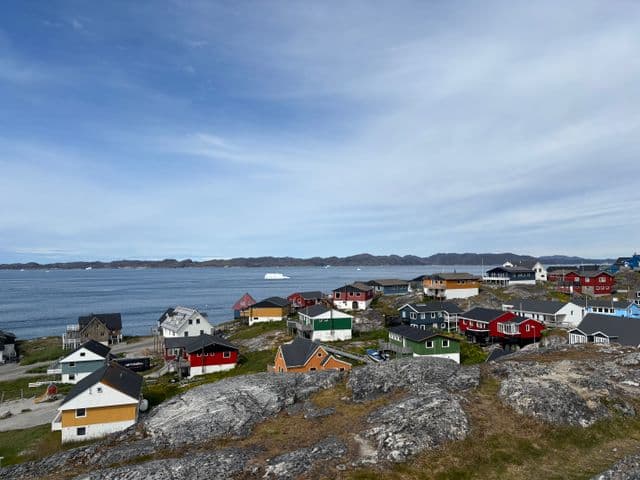
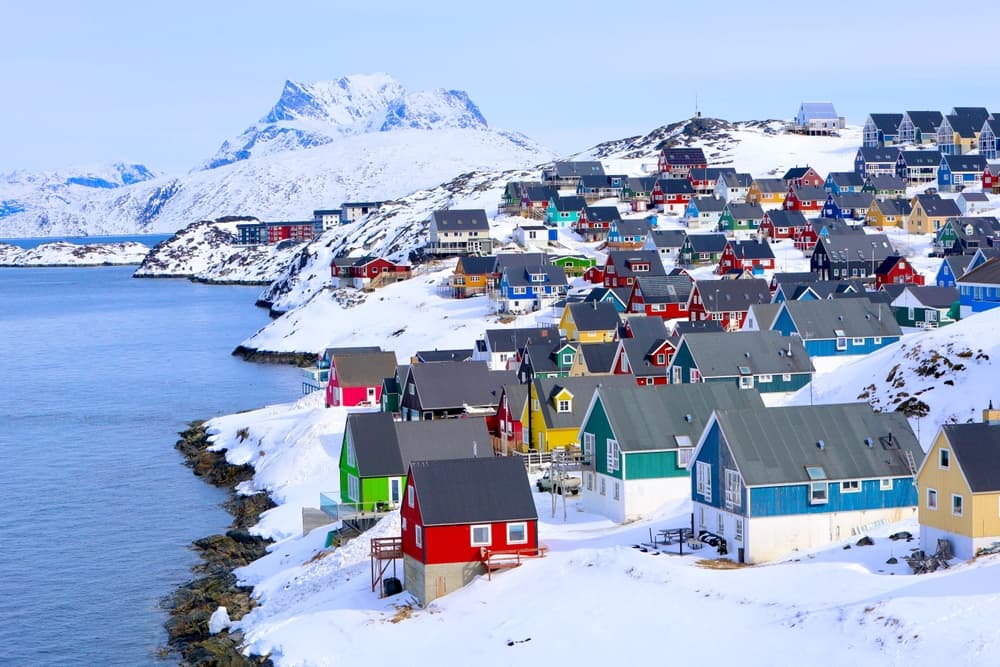
Greenland is not a remote work destination in any conventional sense; it is something more extreme and more honest: the world's largest island, four-fifths ice sheet, 56,000 people on the ice-free fringe of a landmass that would stretch from Denmark to the Sahara, no roads between towns, and a capital, Nuuk, that is simultaneously the world's smallest and one of its most quietly interesting, an Inuit-majority city of colorful blocks, serious museums, a genuine café-and-arts scene and a fjord at the end of every street. This page treats it as what it is for a geo-flexible professional: a season, an extraordinary one, newly reachable, and worth doing properly.
The paperwork is simpler than the geography. Greenland is a self-governing territory of the Kingdom of Denmark, outside the EU and outside Schengen, running its own entry rules under Danish statute: Nordic citizens enter, reside and work freely; visa-free nationals, Americans, Canadians, Britons, Europeans, Australians and the familiar list, enter without a visa for 90 days, and those days run on Greenland's own clock rather than the Schengen calculator, a genuine bonus season for anyone managing the 90-in-180 arithmetic, with the fine print on combining Danish and Greenlandic stays worth confirming for back-to-back itineraries; and the rule that surprises everyone, a Schengen visa is not valid for Greenland, visa-required nationals needing a separate permit explicitly endorsed for the territory through the Danish Immigration Service. Working locally requires Greenland-specific permits under labor-market rules the self-government guards; foreign-client laptop work during a visit sits in the unaddressed tolerance of a place with better things to police. The access story is the 2026 headline: Nuuk's new international airport opened in November 2024 and rewired everything, Air Greenland runs Copenhagen up to eight times weekly in season, Icelandair connects Keflavik year-round, a weekly Iqaluit link ties Canada in, United's seasonal Newark nonstop, four hours from New York, returns for summer 2026 with tickets on sale, despite circulating claims of suspended flights that are simply false, and the Ilulissat and Qaqortoq airports opening by the end of 2026 will put most of the country within ninety minutes of an international runway. The tourism season is the one hiring economy: expedition ships take crew and guides each summer, and the operators of Nuuk and Ilulissat staff up with the new flights.
The context deserves one calm paragraph: Greenland spent 2025 and 2026 in headlines it did not seek, annexation rhetoric from Washington, a vice-presidential visit to the Pituffik base, elections that strengthened the independence-minded, and Danish Arctic commitments in response. On the ground the effect is mostly pride and slightly more attentive border officers; a US consulate operates in Nuuk, the advisory tier runs at Denmark's Level 1 floor, tour operators report the attention filling boats, and visitors who arrive as guests of a self-governing nation, rather than scouts for anyone's real-estate ambitions, are received with the warmth and dry humor Greenlanders are famous for among those who actually come. The practical file is Arctic and non-negotiable: weather that changes plans without apology, evacuation-grade insurance as the actual health plan, town-grade connectivity that is genuinely good and wilderness-grade connectivity that is a satellite question, costs that reflect the supply chain, and a June-through-September season of midnight sun, iceberg fjords and whale-crossed commutes that justifies every logistics line above it.
Widening the search? If you are looking to expand your job hunt across North America, take a look at Canada →, Iceland →, and Denmark →.
Cost of living
Greenland prices as a supply-chain economy at the top of the world: Nuuk apartments run 7,000 to 11,000 kroner monthly in a market so tight that housing is the genuine scarcity, short-stay and guesthouse options price for the consultant-and-tourism tier, and the settlement towns run cheaper rents against thinner everything else. Utilities run Arctic-real with heating the honest line, and the krone keeps the arithmetic Danish.
Daily life splits by origin: Greenlandic fish and seafood, halibut, cod, shrimp and the kalaalimernit country-food tier, price honestly at the source and the Brættet market, while everything imported, which is most of the shelf at Brugseni and Pisiffik, carries its sea-freight surcharge, produce most of all; the café tier runs Copenhagen-plus, the kaffemik you may be invited to runs on generosity rather than money, and the restaurant scene in Nuuk, small and genuinely good, prices like the logistics behind it. The practical lines: there are no roads between towns, so the domestic budget is Air Greenland flights and Arctic Umiaq ferries priced accordingly, the connectivity line is town-honest and wilderness-satellite, and the gear, real Arctic layers bought properly, is a one-time line that matters. The comfortable working month assembles at 3,200 to 4,000 dollars in Nuuk, the guesthouse-and-groceries floor sits near 2,400, and the honest Greenland additions are the flights that are the geography, the evacuation-grade insurance that is the health plan, and the tour-and-boat line that is the entire point of being here.
- Housing is the scarcity: 7,000 to 11,000 kroner in Nuuk's genuinely tight market, guesthouses pricing for the consultant tier, and the search itself the first local skill.
- Eat by origin: source-priced halibut, shrimp and the country-food tier against sea-freighted everything else; the Brættet market is the value play and the café tier runs Copenhagen-plus.
- Budget movement as flights: no roads between towns means Air Greenland and the coastal ferry are the domestic transit system, priced like the Arctic aviation they are.
- Carry the polar lines: the proper gear bought once, the evacuation-grade insurance that is the health plan, and the boat-and-tour budget that is the entire reason to come.
Cost-of-living calculator
See how your budget stretches in Greenland.
Estimates use approximate exchange rates and typical monthly costs. Your actual costs will vary.
Visas & Entry
Greenland runs its own entry system and the first fact organizes everything: the territory is outside the EU and outside Schengen, so mainland Danish and Schengen rules do not simply extend here. The tiers: citizens of Denmark, Finland, Iceland, Norway and Sweden enter, reside and work freely under the Nordic arrangement; visa-free nationals, the US, UK, Canada, EU, Australia and the familiar list, enter without a visa for up to 90 days on a passport valid three months beyond departure, and those Greenland days run on the territory's own clock rather than the Schengen 90-in-180 calculator, a genuine bonus season for anyone managing the European arithmetic, with the fine print on combining Danish and Greenlandic stays worth confirming at nyidanmark for back-to-back itineraries; and the rule that catches the unprepared, a Schengen visa is not valid for Greenland, visa-required nationals needing a separate visa explicitly endorsed Valid for Greenland, applied through the Danish Immigration Service, boarding denied without it.
Longer stays run through the Danish Immigration Service with Greenland-specific rules: work and residence permits are separate from mainland Denmark's, the self-government's labor-market protections weigh local hiring first, and the realistic long-stay professional is the contracted one, the trades, health, education and administration lanes that Greenland actively recruits for, often with housing attached because housing is the constraint. Foreign-client remote work during a visitor stay sits in the unaddressed tolerance of a small system with better things to police, kept honest by keeping it visitor-shaped. The access geometry is the 2026 story: Nuuk International since November 2024 as the main gate, Copenhagen at five-to-eight weekly with Air Greenland, Keflavik year-round with Icelandair plus seasonal Ilulissat and South Greenland links, the weekly Nuuk-Iqaluit Canadian connection March through October, United's twice-weekly seasonal Newark nonstop returning June 2026, and the Ilulissat and Qaqortoq internationals opening by the end of 2026; cruise ships carry the summer's other half. Customs runs Arctic-strict on alcohol quotas and animal products, the US consulate in Nuuk covers the American file locally, and the honest summary is the page's: entry is easy for most of this audience, residence is a recruited privilege, and the season is the product.
- Use the separate clock deliberately: Greenland's 90 days sit outside the Schengen calculator, a genuine bonus season for anyone managing the European arithmetic, with the Danish-stay fine print confirmed for back-to-back plans.
- Never assume the Schengen visa carries: the Valid for Greenland endorsement is mandatory for visa-required nationals, applied in advance, and boarding is denied without it.
- Book the geometry first: the season's seats fill early on every route, the United nonstop sells months ahead, and the flight budget is the geography.
- Treat residence as a recruited privilege: the permit lanes serve contracted employment with housing attached because housing is the constraint; the visitor season is the realistic product for this audience.
- Keep the visit visitor-shaped: the laptop tolerance is real and unwritten, local clients or employment change the category, and the small system's trust is worth keeping.
- Arrive as a guest of a self-governing nation: the geopolitics are loud and the ground is calm; the pride is real, the humor is dry, and the reception matches the respect brought.
| Visa or permit | What it covers |
|---|---|
| The Nordic tier | Danish, Finnish, Icelandic, Norwegian and Swedish citizens enter, reside and work freely; the Kingdom's internal arrangement at full strength. |
| Visa-free entry, 90 days | The US, UK, Canada, EU, Australia and the familiar list enter without a visa for up to 90 days on Greenland's own clock, passports valid three months beyond departure, and the Schengen calculator left untouched. |
| The Schengen-visa trap | A Schengen visa is not valid for Greenland: visa-required nationals need a separate visa explicitly endorsed for the territory through the Danish Immigration Service, and airlines deny boarding without it. |
| Work and residence permits | Greenland-specific and separate from mainland Denmark's, weighed against the self-government's labor-market protections; the realistic lane is recruited employment in health, trades, education and administration, often with housing attached. |
| The remote-work reality | Foreign-client laptop work during a visitor stay sits in the unaddressed tolerance of a small system; kept honest by keeping the stay visitor-shaped, with the formal lanes for anything local. |
| The access geometry | Nuuk International as the gate since late 2024, Copenhagen five-to-eight weekly, Keflavik year-round, the seasonal Newark nonstop returning June 2026, the weekly Iqaluit link, and Ilulissat and Qaqortoq opening by end-2026. |
| The context, stated calmly | The annexation rhetoric and Arctic attention of 2025-26 changed headlines more than procedures: borders run slightly more attentive, the US consulate operates in Nuuk, and guests are received as guests. |
Good to know: No DNV; OUTSIDE EU + OUTSIDE SCHENGEN, own rules under Danish statute: Nordic citizens = enter/reside/work freely; visa-free nationals (US/UK/CA/EU/AU) = 90 days on GREENLAND'S OWN CLOCK (separate from Schengen 90/180; the bonus season; Danish-stay combination fine print → confirm at nyidanmark); SCHENGEN VISA NOT VALID; separate "Valid for Greenland" endorsement mandatory (boarding denied without); permits = Greenland-specific via Danish Immigration Service + self-government labor protections (realistic lane = recruited employment w/ housing attached); laptop tolerance = unaddressed; ACCESS TRANSFORMED: Nuuk Intl Nov 2024, CPH 5-8x/wk, KEF year-round, Nuuk-Iqaluit weekly Mar-Oct, UNITED NEWARK NONSTOP RETURNS JUN 2026 (suspension claims FALSE; twice weekly, tickets on sale), Ilulissat + Qaqortoq open by end-2026; US consulate in Nuuk; 2025-26 tension = headlines > procedures (borders slightly more attentive; arrive as guests).
EnRoute Jobs AI tool
Route Planner
Map visa routes, timelines, and relocation costs for your next destination.
Work & Legal
Greenlandic professional life runs at the scale of a nation of 56,000 doing everything a nation does: the self-government and municipalities anchor Nuuk's professional class, fisheries carry the economy with tourism rising fast behind the new airports, the mineral file draws the world's attention and the self-government's careful pacing, and the education-health-trades tier recruits internationally with housing attached because housing is the constraint. Kalaallisut is the national language and the heart, Danish carries administration and much of professional life, English works in tourism, tech and the younger professional tier, and the three-language reality is the workplace's daily texture.
The legal lines: visitor-stay work for foreign clients sits in the unaddressed tolerance; local employment needs the Greenland-specific permit behind labor-market protections; and the formal economy is small enough that reputation travels at kaffemik speed. The operational texture is the honest half: connectivity is genuinely good in the towns, the subsea cable and mobile networks serving Nuuk and the west coast at real broadband with satellite as the wilderness answer, power is reliable, and the constraint is never bandwidth but weather, flights delayed without apology, plans built with buffer days as standard practice, and the phrase immaqa aqagu, maybe tomorrow, functioning as both forecast and philosophy. The rhythm follows the light: the midnight-sun months run on energy the darkness months repay, summer is the season everything happens, and the time zone, three hours behind Copenhagen and one ahead of New York's clock for most of the year, holds both Atlantic worlds in the same working day, which is the quiet practical gift of the location.
- Build the buffer-day standard: weather owns the schedule, flights delay without apology, and immaqa aqagu, maybe tomorrow, is forecast and philosophy both; plans with slack survive.
- Work the three-language reality: Kalaallisut is the heart, Danish the administration, English the tourism-and-tech tier, and ten words of Greenlandic open more than fluent anything else.
- Use the Atlantic-bridge time zone: Copenhagen's afternoon and New York's morning share the Greenlandic working day, and the location quietly holds both worlds in-hours.
- Respect the small-nation physics: reputation travels at kaffemik speed, the professional community numbers hundreds rather than thousands, and steady competence builds fastest of all.
Good to know: Visitor laptop tolerance = unaddressed; local = Greenland-specific permits + labor protections; recruited lanes (health/trades/education) come w/ housing; connectivity genuinely good in towns (subsea cable + mobile; satellite = wilderness answer); constraint = weather not bandwidth (immaqa aqagu = forecast + philosophy); 3-language workplace; time zone bridges CPH afternoon + NYC morning.
Taxes
Greenland runs its own tax system entirely separate from Denmark's: flat-style combined rates in the low forties by municipality, no VAT at all, a thin treaty network, and nothing that touches the visiting professional whose income arises abroad.
| What applies | The rule in 2026 |
|---|---|
| The residency tests | Greenlandic tax residence follows residence and six-month presence in the territory's own law, separate from Danish tests; the visitor season raises no question, and the recruited employee joins the local schedule by design. |
| Residents and the flat-style schedule | Combined national and municipal rates run in the low-to-mid forties depending on municipality, withheld at source for employees, in a system administered at the territory's personal scale. |
| The visitor's position | Foreign-source income during a visitor stay sits outside the Greenlandic net entirely; the season the entry rules permit is tax-silent by design. |
| No VAT | Greenland levies no value-added tax, running import duties and excise instead; the shelf prices carry freight rather than tax, and the daily arithmetic needs no filing. |
| Companies and the resource file | Corporate taxation serves the local economy with the mineral-and-resource regimes as their own negotiated tier; a specialist file tied to the self-government's careful pacing of the extraction question. |
| The Danish separation | Greenland is not Danish tax territory: the systems are distinct, cross-Kingdom arrangements manage the overlap for movers within the Realm, and mainland assumptions simply do not carry. |
| Americans specifically | No US tax treaty and no totalization agreement reach Greenland: citizenship-based taxation continues untouched, the visitor season creates no local liability to credit, and the recruited American employee's file wants a cross-border preparer fluent in the territory's separateness. |
| The home-country half | A Greenlandic season changes nothing at home by itself: residence, filing and social obligations continue wherever they already live, and the territory's fiscal silence toward visitors keeps the home file the entire file. |
Verified 21 August 2026: the territory's separate tax system with low-forties combined municipal-national rates, the visitor's foreign-income silence, the absence of VAT with import-duty pricing, the negotiated resource regimes, the Danish separation, and the absence of any US treaty or totalization coverage. General information, not tax advice.
Good to know: Own system, separate from Denmark: combined national+municipal low-to-mid 40s by municipality, withheld at source; visitor foreign income = outside the net; NO VAT (import duties/excise instead; shelf carries freight not tax); resource regimes = negotiated specialist tier; no US treaty/totalization reaches Greenland; cross-Kingdom arrangements for Realm movers.
Healthcare
Greenlandic healthcare runs a public system honest about Arctic scale: Queen Ingrid's Hospital in Nuuk anchors the country with emergency, general, maternity and a real specialty base for 56,000, regional health centers serve the towns, settlement stations cover the coast, and the designed ceiling is the Copenhagen bridge, complex specialty care and serious cases transferring to Rigshospitalet under the Kingdom's standing arrangements, with Iceland as the nearer partner for some acute needs. Visitors sit outside the public coverage: emergency care treats first in the Arctic's own ethic, billing follows status, and comprehensive travel insurance with evacuation cover is not advice here but the actual tertiary tier of any plan, the medevac from a fjord or a settlement being exactly as serious as the map suggests.
The health syllabus is polar: cold injury and hypothermia are real files answered by the gear and the respect locals model, weather delays can strand the injured beyond towns which is why the buffer-and-communication discipline is medical policy, the sun on ice burns doubly, the darkness months carry a seasonal-light file the country manages openly, and the water is glacial in every sense. Pharmacies serve the towns at Danish standard with anything specialized carried in, dental runs thin outside Nuuk, English works in the medical tier alongside Danish and Kalaallisut, and emergencies answer through local numbers with the rescue coordination, helicopters, ships and the practiced Arctic SAR network, as the system's genuine pride. The summary is the polar-honest one: good for the everyday at national scale, bridged to Copenhagen for the serious, and insured to evacuation grade or not undertaken at all.
- Insure to evacuation grade or do not come: the Copenhagen bridge is the tertiary tier, the fjord medevac is exactly as serious as the map suggests, and the policy is the plan.
- Carry the polar kit as medicine: the proper layers, the communication device beyond towns, and the buffer days that keep weather delays from becoming medical events.
- Respect the cold files: hypothermia and cold injury are real, the sun on ice burns doubly, the water is glacial in every sense, and locals' respect for conditions is the syllabus.
- Stock the personal pharmacy: town pharmacies run Danish-standard basics, the specialized travels with you, and dental waits for Nuuk or the flight home.
| Hospital | What to know |
|---|---|
| Queen Ingrid's Hospital, Nuuk | The national anchor: emergency, general, maternity and a genuine specialty base for the country's scale, with the Copenhagen bridge as its designed ceiling. |
| The regional health centers | Town-serving facilities in Ilulissat, Sisimiut, Qaqortoq and the coast's hubs carrying the everyday and stabilization tiers. |
| The settlement stations | Health stations across the smaller communities under the national system, the primary tier that keeps care within the coast's reach. |
| The Copenhagen bridge | Complex specialty and serious cases transfer to Rigshospitalet under the Kingdom's standing arrangements, with Iceland the nearer partner for some acute needs. |
| The evacuation tier | Helicopter, ship and fixed-wing SAR across a roadless coast: the practiced Arctic rescue network that is the system's pride and the insurance policy's reason. |
| Emergency architecture | Local emergency numbers answer at national scale, the rescue coordination is genuinely practiced, and the insurer's assistance line belongs beside them in every phone. |
Hospital list compiled 21 August 2026 and not yet confirmed against each facility directly. Treat as indicative and verify before relying on it.
Good to know: Public system at Arctic scale; Queen Ingrid's Nuuk = anchor (real specialty base for 56k); regional centers + settlement stations; Copenhagen bridge (Rigshospitalet) = designed ceiling, Iceland nearer for some acute; visitors outside coverage → EVACUATION-GRADE insurance = the plan (fjord medevac serious); polar syllabus: cold injury, double sun on ice, glacial water, darkness-months light file; practiced SAR network = the pride; specialized meds travel with you.
Safety
Greenland's safety file is polar in the exact sense: the human register is among the calmest anywhere and the environment is the entire serious file. The official half: Greenland shelters under Denmark's Level 1 floor tier in the US system with Canada and the neighbors running normal-precautions equivalents, and the domestic register earns it, violent crime toward visitors essentially unrecorded, Nuuk safe at every hour, the small-community social fabric functioning as its own watch, and the honest domestic context, the social challenges around alcohol and the country's hard-won mental-health work, being a national file that visitors encounter mostly as the weekend's louder edges and should read with compassion rather than fear. The 2025-26 geopolitical attention changed headlines more than streets: border officers run slightly more attentive, the US consulate in Nuuk covers the American file locally, and the ground is calm.
The environment means everything it says. Weather leads: Arctic systems arrive fast, ground flights without apology and strand the unprepared, which makes the buffer-day and told-someone disciplines safety policy rather than travel style. The land is roadless between towns: hiking beyond settlements without gear, local guidance and communication equipment is how the rescue statistics are written, the SAR network is world-practiced because it has to be, and the guided option is the honest answer for most itineraries. The sea is glacial: fjord boat travel demands operator judgment and survival-suit respect, ice conditions govern by season, and the water forgives nothing. The seasonal files complete it: polar-night driving and walking on ice, avalanche terrain near some towns, sled dogs above the Arctic Circle being working animals rather than pets and approached never, and polar bears a real but geographically specific file, the east and far north's concern rather than Nuuk's, managed by local protocols where it applies. Emergencies answer through local numbers with the practiced rescue coordination behind them, and the honest summary is the score's: a place whose people ask nothing of your vigilance and whose nature means every word it publishes.
- Read the Level 1 as the streets deserve: violence toward visitors essentially unrecorded, Nuuk easy at every hour, and the small-community fabric as its own watch; the human file is the calmest in this index's northern tier.
- Treat weather as the governing authority: systems arrive fast, flights ground without apology, and the buffer-day plus told-someone disciplines are safety policy, not style.
- Never hike beyond settlements casually: roadless terrain, fast weather and rescue distance write the statistics; gear, local guidance and communication equipment or the guided option are the entire rule.
- Respect the glacial sea absolutely: fjord travel runs on operator judgment and survival-suit respect, ice governs by season, and the water forgives nothing.
- Know the specific animal files: sled dogs above the Arctic Circle are working animals approached never, and polar bears are the east and far north's managed concern rather than Nuuk's.
- Read the social context with compassion: the national work on alcohol and mental health is real and hard-won, visitors meet it mostly as weekend edges, and the humane read is the correct one.
Official travel advisories
| Government | Current position |
|---|---|
| United States | Greenland shelters under the Kingdom's Level 1 floor tier, Exercise Normal Precautions, with the file's substance being Arctic-environment preparation rather than any human register.travel.state.gov (Denmark) → |
| Canada | A dedicated Greenland page at normal precautions: the separate entry rules, three-month passport-validity note and Arctic-travel preparation carried as the practical substance.travel.gc.ca → |
| United Kingdom | Covered within the Denmark guidance; the remote-travel, weather and insurance notes are the substantive content for the territory.gov.uk → |
| Australia | Folded into the Denmark entry at normal precautions, with the Arctic-conditions and evacuation-insurance file as the genuine cautions.smartraveller.gov.au → |
| US Consulate Nuuk | The American file covered locally since the consulate's 2020 reopening; enroll in STEP through the Copenhagen mission, and the notices run to weather in a territory that rarely needs more. Aqqusinersuaq, Nuuk.dk.usembassy.gov (Nuuk) → |
Advisory positions verified 21 August 2026: the Denmark-umbrella Level 1 with Canada's dedicated normal-precautions page, the essentially unrecorded visitor-violence register, the calm-ground reading of the geopolitical attention with the Nuuk consulate noted, and the governing environmental file, weather authority, roadless terrain, glacial sea, and the seasonal and animal-specific tiers. Open the sources before travelling.
Good to know: Denmark-umbrella L1 (Canada has own Greenland page, normal precautions); human register = calmest northern tier (visitor violence ≈ unrecorded; small-community fabric = the watch; social context read with compassion); 2025-26 attention = headlines > streets (US consulate Nuuk since 2020); environment = THE file: weather governs (buffer days + told-someone = policy), roadless terrain (guided option honest), glacial sea (survival-suit respect), sled dogs = working animals (never approach), polar bears = east/far-north specific; practiced SAR; 85 held.
Climate
Greenland runs the Arctic year the latitude promises, moderated at the ice-free coastal fringe where everyone lives: Nuuk holds around minus-8 in the January depths and 5-to-10 through July with 20-degree bright spells the town treats as heat, the north runs colder and the sheltered south gentler, and the interior ice sheet runs a climate no one visits casually. The light is the true calendar: midnight sun from May into July by latitude, the sun never setting above the Arctic Circle and Nuuk's June nights merely glowing; polar-night darkness in the deep winter north with Nuuk keeping a few twilight hours; and between them the September-to-April aurora season, the northern lights being not an event here but a frequent condition of the sky. The working year is the honest one: June through September is the season, everything open, the fjords running, the whales in, the hiking and boat calendar at full function and the connectivity of daily flights; May and October are the shoulder gambles; and the November-through-April interior is the other Greenland, dog-sledding and aurora and the profound quiet, workable from Nuuk with the wardrobe and the light-management habits, and genuinely hard beyond it. The weather's character matters more than its averages: systems arrive fast off the ice and the sea, fog closes airports, wind rewrites boat days, and the buffer-day discipline is the itinerary's real foundation. The kit is polar-proper and bought once, the deepest climate fact is the light itself, the June nights that never end and the February auroras that repay the dark, and the practical summary is the one the entire page rests on: come June through September, build the slack in, and let the Arctic set the terms it was always going to set.
| Season | What to expect |
|---|---|
| The season, June to September | The entire practical answer: 5-to-10 with bright warm spells, the fjords and whale calendar at full function, midnight-sun light into July, and the flight network at its densest. |
| The shoulders, May and October | The gambles: opening ice and closing light, thinner schedules, honest rewards for flexible plans and the buffer-day discipline. |
| Winter, November to April | The other Greenland: polar cold, the aurora as a frequent condition of the sky, dog-sledding above the Circle, and a Nuuk that stays workable with the wardrobe and the light-management habits. |
| The constants | Weather that arrives fast off ice and sea, fog and wind as the schedule's true authors, the light as the real calendar, and the buffer day as the itinerary's foundation. |
Good to know: Jun-Sep = the season (the page rests on it); light = the true calendar (midnight sun May-Jul, polar night north, aurora Sep-Apr = frequent condition); weather arrives fast (fog/wind = schedule's authors; buffer days = foundation); winter Nuuk workable w/ wardrobe + light habits; polar kit bought once.
Culture & Customs
Greenlandic culture is Inuit civilization in its most complete modern form: Kalaallisut, the national language, carries a worldview built on four thousand years of Arctic mastery, the kayak and the anorak entered the world's languages from here, the drum dance and mask traditions revive in living practice, and the hunting culture, seal, whale, reindeer taken for sustenance under careful management, is the society's backbone and deserves the visitor's respect rather than imported judgment, the country-food table being identity on a plate. The Danish layer is real and negotiated: colonial history carried honestly, self-rule since 2009, an independence trajectory debated openly, and a national pride that the recent world attention has sharpened rather than shaken.
The social heart is the kaffemik: the open-house celebration, birthdays, confirmations, first days of school, where the door stands open, the table fills with cake and country food, guests flow through in shifts, and an invited visitor should absolutely go, bring nothing but greetings, stay a warm half hour and leave the seat for the next wave. The codes are quiet-northern: modesty and understatement, silence comfortable in conversation, boasting foreign, punctuality flexible where weather rules, and the sled dogs above the Arctic Circle admired from distance as the working animals they are. The calendar runs the National Day on June 21, the year's longest light, flags and kaffemiks everywhere; the return of the sun celebrated in the northern towns each January; Christmas as the dark season's warm heart with stars in every window; and the summer's festival-and-heritage circuit riding the endless light. The table is the Arctic's own: suaasat soup, dried fish and mattak, halibut and shrimp at world standard, musk ox and reindeer, and the honest advice to taste the country food offered, the offering being trust. The professional who learns qujanaq for thank you, attends one kaffemik properly, respects the hunt as sustenance, treats independence questions as the nation's own business and lets the quiet register set the pace has been granted the real Greenland: the Arctic's most complete culture, at home, and quietly glad you came the long way to see it.
- Accept the kaffemik as the heart it is: the open-house celebration runs on flowing guests and full tables; go, greet, stay a warm half hour, and leave the seat for the next wave.
- Respect the hunt as sustenance: seal, whale and reindeer feed families under careful management, the country-food table is identity, and imported judgment is the one guest that is never welcome.
- Learn the quiet register: modesty, comfortable silence and understatement carry the culture, boasting reads foreign, and qujanaq, thank you, opens more than fluency.
- Keep distance from the working dogs: the sled teams above the Arctic Circle are athletes and colleagues, not pets, and the admire-from-distance rule is absolute.
- Celebrate the light calendar: June 21's National Day fills the endless light with flags and kaffemiks, the January sun-return warms the northern towns, and joining the light's rituals is joining the country.
- Treat the independence question as the nation's own: the trajectory is debated openly and proudly, the world's attention has sharpened the pride, and the guest's role is interest without agenda.