.png)
About Macau
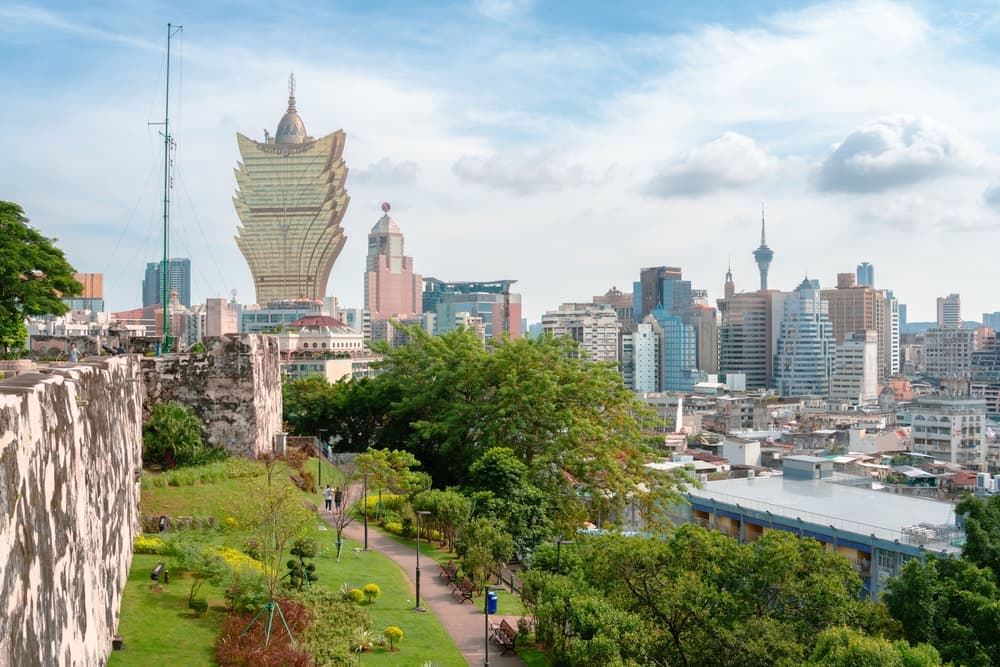
Macau is Las Vegas if Las Vegas had been run by Portugal for 400 years, handed to China in 1999, and then decided to keep both identities without apology: the ruins of St. Paul's and the Senado Square calçada sit fifteen minutes from the Cotai strip's casino gigantism, egg tarts and pastéis share streets with congee, Portuguese remains co-official on signage a dwindling few speak, and the entire arrangement, the world's densest territory, its highest gaming revenue, one country and two systems with a 2049 horizon, runs on 33 square kilometers an hour's ferry from Hong Kong.
The paperwork story has two layers and this page keeps them straight. Entry is the easy layer: visa-free stays run 30 days for Americans, 90 for most Europeans and six months for Britons, extensions exist, and the border with Zhuhai plus the HZMB bridge to Hong Kong make the SAR a node rather than an island. Work is the formal layer: any employment in Macau, even for the visa-exempt, requires the non-resident worker machinery, the employer requesting a quota from the Labour Affairs Bureau, the specialized tier serving degree-holders and the skilled one-to-one, the authorization-to-stay and Blue Card following from the Public Security Police, permits running up to 24 months at discretion; the system was built to staff the casino-and-hospitality economy and it shows. In practice hospitality is the sponsored lane: the integrated resorts recruit internationally and run the Blue Card paperwork as routine. Residence proper flows through two doors: the Talent Attraction regime of Law 7/2023, in force since July 2023 and administered by the Talent Development Committee, whose three programs, High-end Talents, Outstanding Talents, and Advanced Professionals, target the government's diversification sectors, big health, modern finance, high-tech, culture and sport, with the top two tiers notably not requiring local employment or habitual residence to maintain status; and the investor-management-skilled-worker route under Law 16/2021 through the Commerce and Investment Promotion Institute. Foreign-client remote work during visitor stays sits in the classic unaddressed gray zone, quieter than Singapore's bright line and thinner than Thailand's tolerance, and this page states it as exactly that.
What the machinery guards is one of Asia's gentlest tax regimes: professional tax topping at 12 percent above a generous allowance, profits tax capped at 12 with the first 600,000 patacas exempt, no capital gains tax, no VAT, territorial scope, and a treaty list that is short and, for Americans, empty. The honest counterweight is official: the US advisory holds the SAR at Reconsider Travel, driven not by the streets, which run among the world's safest, but by Washington's limited ability to provide emergency consular services in Macau and the PRC legal environment's arbitrary-enforcement file, and the page's safety section explains that split rather than averaging it away.
Widening the search? If you are looking to expand your job hunt across East Asia, take a look at Taiwan →, Japan →, and Vietnam →.
Cost of living
Macau prices between its two identities: the resident economy runs cheaper than Hong Kong across the board, one-bedrooms at 8,000 to 12,000 patacas in Taipa and the northern peninsula districts against Hong Kong's double-and-worse, while the casino-facing tier, Cotai hotel dining, resort services, event weekends, prices for the gaming tourist it serves. The pataca pegs to the Hong Kong dollar and both circulate, the arithmetic staying simple.
Daily life runs Cantonese-provincial with Portuguese seasoning: the cha chaan teng and noodle-shop tier feeds a real lunch for 40 to 60 patacas, the Macanese institutions, minchi, African chicken, the pastéis, hold mid-range honest, supermarkets at the local tier undercut the resort strip entirely, and the famous egg tart costs pocket change at the source. Transport is nearly free by design, the casino shuttles running an unofficial public network beside cheap buses, the entire territory crossable in forty minutes, and the ferry-and-bridge links to Hong Kong and Zhuhai pricing as commutes. The comfortable single life assembles at 2,600 to 3,300 dollars, the budget floor sits near 1,900 in the northern districts, and the honest Macau additions are the typhoon-season contingency, the Chinese-holiday surge weeks when eight-figure visitor waves reprice everything, and the Hong Kong day-trip line that professional life here quietly requires.
- One-bedroom rent: 8,000 to 12,000 patacas in Taipa and the northern peninsula, roughly half the Hong Kong equivalent; the casino-facing tier prices for tourists and should be left to them.
- Eat the two-register city: cha chaan teng lunches at 40 to 60 patacas, the Macanese institutions honest at mid-range, and the egg tart at the source for pocket change; the resort strip is a different economy on purpose.
- Ride the free network: casino shuttles run an unofficial transit system beside cheap buses, the territory crosses in forty minutes, and the car is pointless in the world's densest place.
- Budget the surges: Chinese public-holiday weeks reprice rooms and restaurants by multiples, typhoon season carries its contingency, and the Hong Kong ferry line is the professional's recurring item.
Cost-of-living calculator
See how your budget stretches in Macau.
Estimates use approximate exchange rates and typical monthly costs. Your actual costs will vary.
Visas & Entry
Macau runs its own immigration system entirely separate from mainland China and Hong Kong, and the entry tier is generous: visa-free stays of 30 days for Americans and Canadians, 90 for most EU nationals and around six months for Britons, with entry permits on arrival for others, extensions available at the Public Security Police's immigration department, and the practical geometry of a node, the Zhuhai border gate to the mainland, the HZMB bridge and hourly ferries to Hong Kong, and an airport with regional reach.
Working is formally gated regardless of entry privilege. Any employment in Macau requires the non-resident worker system under Law 21/2009: the employer obtains a contracting authorization, the quota, from the Labour Affairs Bureau, with the specialized tier for tertiary-educated and highly skilled hires assessed one-to-one and the non-specialized tier serving the service economy in bulk; the worker then receives the Authorization to Stay and the Non-resident Worker's Identification Card, the Blue Card, from the Public Security Police, permits running up to 24 months at government discretion, employer-tied and non-transferable, with employer fines and quota revocations enforcing the frame. Residence proper has two doors. The Talent Attraction regime, Law 7/2023 with Administrative Regulation 19/2023, in force since July 1, 2023 and administered by the Talent Development Committee, runs three programs aimed at the diversification sectors, big health, modern finance, high-tech, culture and sport: High-end Talents and Outstanding Talents, which notably do not require local employment or habitual residence in Macau to maintain status, and Advanced Professionals, which requires local employment, salary thresholds and habitual residence. The older investor-management-skilled-worker route continues under Law 16/2021 and Regulation 38/2021 through the Commerce and Investment Promotion Institute for management executives and skilled workers with Macau employment cases. Permanent residence arrives at seven years of ordinary residence in the SAR pattern, and foreign-client remote work during visitor stays sits in the unaddressed gray zone, unpoliced in practice and unblessed in law, which this page states as exactly that.
- Know your entry clock by passport: Americans get 30 days, Europeans mostly 90, Britons six months, and the Zhuhai-Hong Kong geometry makes border runs trivial without making them a residence strategy.
- Route employment through the quota honestly: the Blue Card is employer-obtained, employer-tied and non-transferable, the specialized tier wants the degree-or-skills file, and freelance local work has no door at all.
- Read the Talent programs as the diversification bid they are: big health, modern finance, high-tech, culture and sport are the listed sectors, the top two tiers keep status without local employment, and the Committee's published criteria reward matching the file to the sector story.
- Use CIPI for the business case: the management-and-skilled-worker route wants genuine Macau employment or enterprise, and the institute's published process is document-heavy in the Portuguese administrative tradition.
- Treat the gray zone as a visit, not a base: the laptop on a 30-day entry draws no attention, the pattern of living here on visitor stamps eventually does, and the formal doors exist for exactly that transition.
- Price the 2049 horizon: one country, two systems frames every long-term plan in the SAR, and the professionals who thrive here hold the base lightly and the optionality deliberately.
| Visa or permit | What it covers |
|---|---|
| Visa-free entry | Thirty days for Americans and Canadians, 90 for most EU passports, around six months for Britons, entry permits on arrival for others; extensions at the immigration department, and borders to Zhuhai, Hong Kong and the airport making the SAR a node. |
| The Blue Card system | Any Macau employment, even for the visa-exempt, runs through Law 21/2009: employer quota from the Labour Affairs Bureau, then the Authorization to Stay and Non-resident Worker's Card from the police, up to 24 months, employer-tied and non-transferable. |
| Specialized vs non-specialized | The specialized tier serves degree-holders and the highly skilled, assessed one-to-one where local hiring failed; the non-specialized tier staffs the service economy in bulk; the machinery was built for the casino-and-hospitality workforce and works accordingly. |
| Talent Attraction, Law 7/2023 | Three programs under the Talent Development Committee since July 2023, targeting big health, modern finance, high-tech, culture and sport: High-end and Outstanding Talents maintain status without local employment or habitual residence, Advanced Professionals requires both plus salary thresholds. |
| The CIPI route | The investor, management-executive and skilled-worker residence door under Law 16/2021 through the Commerce and Investment Promotion Institute, serving those with genuine Macau business and employment cases. |
| The gray zone, stated | Foreign-client remote work during visitor stays is unaddressed in law and unpoliced in practice: quieter than Singapore's bright line, thinner than Thailand's tolerance, and carried here as exactly what it is. |
| The long game | Permanent residence at seven years of ordinary residence in the SAR pattern, with the top talent tiers as the accelerated platform; the 2049 one-country-two-systems horizon is the frame every long plan should price. |
Good to know: No DNV; entry: US/CA 30 days, EU ~90, UK ~6 months; work = Blue Card machinery (Law 21/2009: employer quota via DSAL → stay + card via PSP; ≤24 months; employer-tied); residence: Talent Attraction Law 7/2023 (High-end/Outstanding Talents = NO local employment/habitual residence needed to maintain; Advanced Professionals = employment + salary + residence; sectors: big health/modern finance/high-tech/culture-sport) + CIPI route (Law 16/2021); PR at 7 yrs; gray zone unaddressed (quieter than SG's bright line); 2049 horizon framed.
EnRoute Jobs AI tool
Route Planner
Map visa routes, timelines, and relocation costs for your next destination.
Work & Legal
Macau's professional culture is Cantonese with a Portuguese administrative skeleton: business runs in Cantonese with Mandarin rising since the handover, English serves the casino-resort tier and international business, Portuguese survives in law, courts and street names, and the bureaucracy's document-heavy, notarized rhythm is the Lisbon inheritance every filing reveals. The economy is the world's most concentrated bet, gaming and hospitality generating most of government revenue, with the diversification push, big health, finance, tech, events, being precisely what the talent programs exist to staff, and the Hengqin cooperation zone across the border as the mainland-integration frontier.
The legal lines: visitor-stay work for foreign clients sits in the unaddressed gray zone; any Macau employment requires the Blue Card machinery with real employer penalties behind it; and local business formation runs through the Portuguese-tradition company registry with the profits-tax regime as the reward. The texture is small-territory practical: relationships and face carry weight in the Cantonese pattern, the resort giants dominate professional hiring, banking is straightforward at the local tier and compliance-heavy at the international one, and the calendar threads Chinese New Year's surge weeks, the Grand Prix's November street-circuit takeover, and typhoon signals that close the city on the observatory's word. Hong Kong's deeper professional ecosystem sits an hour away and functions as Macau's de facto service city; the time zone holds Asia's hours with Europe arriving mid-afternoon and the US after dinner.
- Keep the work-layer distinction: the visitor gray zone is a visit's tolerance, Macau employment is Blue Card territory with employer fines behind it, and the two never blur in the law's eyes.
- File in the Portuguese tradition: the administration wants documents notarized, translated and complete, the English versions are reference-only, and the local despachante-equivalent earns the fee.
- Aim at the diversification sectors: big health, finance, tech and events are where the talent programs, the hiring and the government's attention all point; the casino floor is staffed, the new economy is recruiting.
- Use Hong Kong as the service city: the deeper professional ecosystem, banking tier and flight network sit an hour away, and the ferry-commute pattern is the SAR professional's standing habit.
Good to know: Visitor gray zone = unaddressed (a visit's tolerance, not a base); Macau employment = Blue Card with employer penalties; Portuguese administrative tradition (notarize everything, EN = reference-only); diversification sectors = where hiring points; HK = de facto service city (1-hr ferry); typhoon signals close the city; Grand Prix November takeover.
Taxes
Macau tax is one of Asia's quietest regimes: a 12-percent ceiling on salaries above a generous allowance, the same cap on profits, nothing on capital gains, no VAT, territorial scope, and a treaty list that is short and, for Americans, empty.
| What applies | The rule in 2026 |
|---|---|
| The residency tests | Tax follows the territorial principle: Macau-source income is taxed, foreign-source largely is not, and the visitor working foreign clients owes nothing locally; formal residence brings the local schedule without importing worldwide income. |
| Professional tax | Salaries and self-employment income tax progressively to 12 percent above an allowance generous enough that modest incomes pay little, with the government's habitual rebates trimming the effective bill further in most years. |
| Profits tax | Business profits tax caps at 12 percent with the first 600,000 patacas exempt, making the SAR's corporate arithmetic among the region's gentlest for the small enterprise the talent programs court. |
| The missing taxes | No capital gains tax, no VAT or sales tax, no inheritance tax in the modern regime; stamp duties ride property transactions, and the daily-price texture reflects the absence. |
| Property and the surcharges | Property carries acquisition stamp duties with additional layers for non-residents in the Hong Kong pattern at gentler rates, and rental income falls under its own schedule; the casino economy's land scarcity does the real pricing. |
| The treaty map | A short network anchored on the mainland and Portugal with a handful of others; CRS participation applies, and the regime sells low rates in the open rather than silence. |
| Americans specifically | No US treaty and no totalization agreement: citizenship-based taxation applies undiluted, the low Macau rates generate correspondingly low foreign tax credits, self-employment tax runs unshielded, and the territorial gift helps the US file less than it reads. |
| The home-country half | Macau residence does not silence the departed jurisdiction: exits, tie-breakers where treaties exist, and the genuine-move evidence decide outcomes, and the mainland's own tax reach over PRC nationals is its own specialist file. |
Verified 21 August 2026: the territorial principle, professional tax to 12 percent with its allowance and habitual rebates, profits tax at 12 with the 600,000-pataca exemption, the absent capital-gains and VAT layers, property stamp-duty architecture, the short treaty network with CRS participation, and the absence of any US treaty or totalization agreement. General information, not tax advice.
Good to know: Territorial; professional tax → 12% ceiling above generous allowance + habitual rebates; profits tax 12% w/ first MOP 600k exempt; NO CGT/VAT; stamp duties on property (non-resident layers, gentler than HK); short treaty net (mainland/Portugal+), CRS yes; NO US treaty/totalization (low rates = low FTCs, SE tax unshielded).
Healthcare
Macau healthcare runs a two-pillar system at solid regional standard: the public Health Bureau network anchored by the Conde S. Januário government hospital provides subsidized care with residents' tiers, the venerable Kiang Wu Hospital carries the private-charitable flagship role, and the new Cotai medical complex built with Peking Union Medical College, the Macao Medical Centre, represents the diversification bet on big health made concrete. Routine and mid-acuity care is handled competently in-territory, English is workable at the private tier and the resort-adjacent clinics, and the honest design fact remains the Hong Kong bridge: complex specialty care and serious rarities route to Hong Kong's world-tier hospitals an hour away, which is why travel insurance with evacuation cover to Hong Kong is the standing advice for visitors and the private-cover norm for expatriate residents.
The texture is Cantonese-professional: pharmacies are everywhere and capable, traditional Chinese medicine runs as a parallel licensed tier, dental prices well below Hong Kong, and the health syllabus is subtropical, summer heat and hydration, dengue awareness in season, air quality on regional haze days, and the typhoon-signal system that closes the city and its clinics on schedule. Emergencies answer at 999, the public emergency tier treats first regardless of status, and the summary is the small-territory honest one: good for the everyday, building ambitiously in Cotai, and bridged to Hong Kong for the serious.
- Insure with the Hong Kong bridge in mind: the in-territory system handles the everyday well, the serious routes across the water, and evacuation-inclusive cover is the line that matters.
- Use the private tier's accessibility: English-workable clinics run 30-to-60-dollar consultations, Kiang Wu carries the hospital middle, and the new Cotai complex is adding depth yearly.
- Run the subtropical syllabus: hydration through the humid summer, dengue awareness in season, air-quality checks on regional haze days, and the typhoon signals obeyed as the scheduling system they are.
- Price the dental arbitrage: the territory undercuts Hong Kong meaningfully, the standard is solid, and the cross-border patient flow runs in Macau's favor.
| Hospital | What to know |
|---|---|
| Centro Hospitalar Conde de S. Januário | The government hospital and public anchor: the Health Bureau's acute, emergency and specialty core with residents' subsidized tiers. |
| Kiang Wu Hospital | The century-old private-charitable flagship carrying much of the territory's daily hospital load with a broad specialty base. |
| Macao Medical Centre, Cotai | The new complex built with Peking Union Medical College: the big-health diversification bet made concrete, adding modern specialty capacity in-territory. |
| The private clinic tier | English-workable clinics across the peninsula and Taipa serving the expatriate and resort communities at 30-to-60-dollar consultations. |
| The Hong Kong bridge | Complex specialty care and serious rarities route to Hong Kong's world-tier hospitals an hour away; evacuation-inclusive insurance is the standing visitor advice and expat norm. |
| Emergency architecture | 999 reaches the public emergency tier which treats first regardless of status, and the typhoon-signal system schedules the city's closures on the observatory's word. |
Hospital list compiled 21 August 2026 and not yet confirmed against each facility directly. Treat as indicative and verify before relying on it.
Good to know: Two-pillar: public Conde S. Januário + private-charitable Kiang Wu; NEW Macao Medical Centre (Cotai, w/ Peking Union) = big-health bet; routine/mid-acuity competent in-territory; serious → Hong Kong bridge (evac-inclusive insurance = the line); TCM parallel tier; dental undercuts HK; typhoon signals schedule closures; 999.
Safety
Macau's safety file requires the sharpest split in this index, and the page states both halves plainly. The official half is heavy: the US advisory holds the SAR at Reconsider Travel, its stated grounds being the US government's limited ability to provide emergency consular services in Macau, there is no US consulate in the territory and the Hong Kong consulate's access can be constrained, layered over an exercise-increased-caution note for the arbitrary enforcement of local laws in the PRC pattern, with the composite China advisory's exit-ban and dual-national warnings as context; Canada and Australia carry gentler but PRC-aware language. This is a consular-capacity and legal-environment position, and travelers who might be of interest to mainland authorities, dual nationals, journalists, those with sensitive professional histories, should weigh it at face value.
The street half is the opposite pole: Macau's violent-crime rates run among the world's lowest, the casino districts are saturated with cameras and security in the Monaco pattern, solo travelers of every description report complete comfort at all hours, and the practical register is thin, pickpockets working holiday-surge crowds on Senado and the ferry terminals, loan-shark and scam activity at the gaming economy's margins that never touches the ordinary visitor, and counterfeit-goods hustle near the border gate. The genuine physical file is meteorological: typhoon season, June through October, delivers signal-8-and-above storms that close the city, Hato in 2017 taught the territory hard lessons its upgraded systems now reflect, and the signal system is obeyed as law. Emergencies answer at 999, and the honest summary is the split itself: streets at the index's ceiling, an official file at Reconsider Travel for reasons that have nothing to do with those streets, and a score that prices both truths rather than averaging them blind.
- Read the Reconsider tier for what it measures: consular reach and the PRC legal environment, not street danger; the distinction decides who should weigh it heavily, and dual nationals, journalists and the professionally sensitive should.
- Enter and remain on your foreign passport: the advisory's dual-national warnings are the file's sharpest edge, and the passport you enter on is the protection you keep.
- Enjoy the street reality it earns: violent crime among the world's lowest, camera-saturated casino districts, complete solo comfort at all hours; the lived register is the index's ceiling tier.
- Run the thin practical file: pickpockets in holiday-surge crowds at Senado and the ferry terminals, the gaming economy's margins left alone, and the border-gate hustle ignored.
- Obey the typhoon signals as law: June through October delivers signal-8 closures on the observatory's word, the post-Hato systems are serious, and the shelter-in-place hours are not suggestions.
- Know 999 and the Hong Kong post: the local number answers fast, the covering consulate sits across the water with the advisory's own access caveat, and STEP enrollment carries more weight here than in most of this index.
Official travel advisories
| Government | Current position |
|---|---|
| United States | Reconsider Travel for the SAR: limited ability to provide emergency consular services, no US consulate in-territory and constrained access from Hong Kong, plus increased-caution language for arbitrary enforcement of local laws in the PRC pattern.travel.state.gov → |
| The PRC context | The composite advisory's exit-ban and dual-national warnings frame the SAR file: travelers of potential interest to mainland authorities should read the full China page, not just Macau's.travel.state.gov (China) → |
| Canada | A high-degree-of-caution register with PRC-aware legal-environment language beside the honest note that ordinary crime is low.travel.gc.ca → |
| Australia | Exercise-caution tier with the local-laws and typhoon-season files carried; the street register described as low-crime throughout.smartraveller.gov.au → |
| US Consulate General Hong Kong and Macau | The covering post across the water; enroll in STEP and note the advisory's own caveat that access to detained citizens can be limited. 26 Garden Road, Central, Hong Kong; +852 2523 9011.hk.usconsulate.gov → |
Advisory positions verified 21 August 2026: the US Reconsider Travel position on consular-capacity grounds with arbitrary-enforcement caution and the composite China advisory's context, the gentler Canadian and Australian registers, the world-floor street-crime reality, and the typhoon-signal file. Open the sources before travelling.
Good to know: SPLIT FILE: US = Reconsider Travel (limited consular services; no US consulate in SAR, constrained HK access + arbitrary-enforcement caution + composite China exit-ban/dual-national context) vs street reality = world-floor crime, camera-saturated, ceiling-tier lived safety; score 72 prices both (78→72); typhoon signals = law (post-Hato); 999; dual nationals/journalists weigh the official file at face value.
Climate
Macau runs the Pearl River Delta's subtropical monsoon year: hot, humid summers from June through September at 30 to 33 degrees with the wet-season downpours and the typhoon file, warm sticky springs where the March-April humidity fogs windows and spirits alike, and the payoff season, October through December, when the humidity breaks, the light clears, and the territory delivers its finest weeks at 20 to 26, followed by a mild, dry winter dipping to 14-to-18 with occasional genuinely cool snaps the unheated housing stock respects. The typhoon season is the calendar's serious entry: June through October, with the signal system, T1 standby through T8-and-above closures, functioning as civic law, the post-Hato upgrades visible in the flood barriers and drills, and the practical rule being that a signal-8 day is an indoor day by order. The working year plans itself: October through December is the prize, January-February the cool clear second, March through May the humid ramp, and the summer the aircon-and-signal season the city was engineered around. The kit is light with one real layer for the winter snaps, the umbrella is a resident, and the most useful local fact is the Grand Prix corollary: November's street-circuit weekend takes the best weather of the year and closes half the peninsula to enjoy it.
| Season | What to expect |
|---|---|
| Autumn, October to December | The prize: humidity broken, 20-to-26 clarity, the UNESCO streets at their best, and the Grand Prix taking November's finest weekend for the barriers. |
| Winter, January and February | Mild and dry at 14-to-18 with occasional genuinely cool snaps; the clear second season, uncrowded outside the New Year surge weeks. |
| Spring, March to May | The humid ramp: warm, sticky, window-fogging weeks as the monsoon builds; functional working weather with the dehumidifier as the honest appliance. |
| Summer and typhoon season, June to September | Thirty-to-33 with monsoon downpours and the typhoon file: the signal system runs the city, T8 closes it, and the aircon interior is the season's real address. |
Good to know: Oct-Dec = the prize (Grand Prix takes November's best weekend); Jan-Feb clear second; Mar-May = the humid ramp (dehumidifier season); Jun-Sep = typhoon file (signal system = civic law, post-Hato serious).
Culture & Customs
Macanese culture is the world's first fusion project running on its fifth century: Portuguese Catholicism and Cantonese tradition layered so long they produced a people, the Macanese, a creole cuisine, minchi, African chicken, the pastel de nata perfected into the Macau egg tart, and a streetscape where the A-Ma Temple that named the territory and the ruins of St. Paul's facade share a fifteen-minute walk. Cantonese dominates daily life with Mandarin rising since 1999, Portuguese survives in law, signage and a proud remnant community, English serves the resort economy, and the calçada pavement underfoot is Lisbon's signature laid by delta hands.
The codes are Cantonese-practical with Portuguese grace notes: face and relationships carry business in the southern Chinese pattern, greetings are kept, the yum cha table has its teapot-lid and finger-tap rituals, tipping is not customary with service charges standing in, and temple-and-church etiquette both ask the same quiet respect. The calendar layers both inheritances: Chinese New Year's surge weeks and the A-Ma festival, Easter and the Procession of the Passion through streets that close for it, the mid-autumn lanterns, the November Grand Prix's street-circuit takeover, and the Macao Light Festival playing the facades in December. The table is the deepest text: Cantonese seafood and dim sum at world standard, the Macanese institutions guarding the creole canon, the Portuguese restaurants pouring vinho verde a delta away from its source, and the egg tart at Lord Stow's or Margaret's as the daily sacrament. The professional who eats both traditions with genuine attention, learns the m'goi of Cantonese courtesy, walks the old parishes early before the tour waves, and treats the Macanese inheritance as the living culture it is has read the territory correctly: not Vegas with temples, but a five-century experiment that worked.
- Eat the fusion as the founding text: minchi, African chicken and the egg tart carry the world's first creole cuisine, the Cantonese table runs at world standard beside it, and genuine attention to both is the fastest respect available.
- Learn the Cantonese courtesies: m'goi and the yum cha rituals, the teapot lid and the finger tap, face kept in the southern pattern, and greetings that open every door the resorts cannot.
- Walk the parishes early: the UNESCO core belongs to residents before ten and tour waves after, the calçada streets reward the morning, and the A-Ma Temple and St. Paul's pair is the territory's entire story in one walk.
- Respect both altars: church and temple ask the same quiet, the Procession of the Passion still closes streets, and the layered calendar is the culture's living proof.
- Ride the event tides deliberately: New Year's surge weeks and the Grand Prix takeover reprice and rearrange everything; the resident's skill is knowing which weeks belong to the visitors.
- Skip the tip, keep the courtesy: service charges stand in, the Cantonese pattern does not expect more, and the thanks said properly outperforms the coin.
