.png)
About Germany
Germany is serious, and this is not a criticism. It is the most precise description of a country that built Europe's largest economy on the premise that things made well outlast things made cheaply, that punctuality is a form of respect, and that complexity can be managed if the systems are correctly designed. The payoff is a country where everything works: the trains mostly, the fiber genuinely, the courts, the contracts, the recycling. The cost is that the systems expect you to engage them properly, in order, with the right paperwork, and they do not improvise.
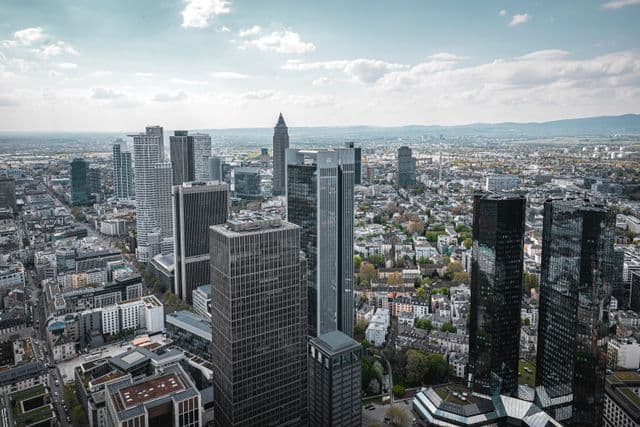
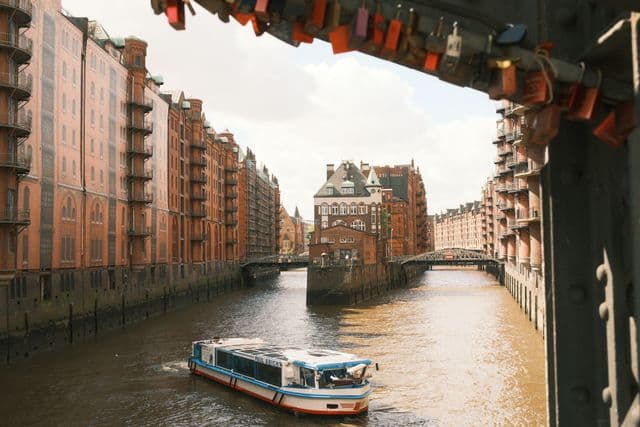
Berlin is the exception the rest of Germany uses to understand itself, and it remains the freelance capital of Europe. That status is not an accident of cheap rent, which is gone, or of the English-speaking tech scene, which persists. It is built on hard infrastructure: the Freiberufler permit has let independent professionals from anywhere establish real legal residence here for decades, three years at a stretch with permanent residency on the table, while most countries were still pretending freelancers did not exist. Munich offers the polished, expensive version of German life, Hamburg the handsome maritime one, and Frankfurt the international business one with the continent's largest airport attached.
The Freiberufler route is the famous one, and hardly alone. Germany signs working holiday agreements with more than a dozen countries for the under-31s, au pair placements remain a classic first year inside the language, and the wine villages of the Mosel and Rheingau take on harvest help every autumn. EU citizens skip the paperwork entirely and simply work.
What Germany asks of you is participation. The Anmeldung, the address registration, is the key that opens everything else, and until you hold it the country treats you as weather. Winter is long and grey in a way that surprises southerners, Sunday is genuinely closed, and friendship arrives slowly and then holds. People who need a place to charm them will struggle here. People who need a place to function will wonder how they ever lived anywhere else.
Widening the search? If you are looking to expand your job hunt across Central Europe, take a look at Austria →, Netherlands →, and Czech Republic →.
Cost of living
Germany prices like what it is, a rich Western European country, but the spread between cities is wider than visitors expect. Berlin's legendary cheapness is finished, with new-lease one-bedrooms in desirable districts commonly 1,100 to 1,600 euros cold, yet it still undercuts Munich by a comfortable margin, and Leipzig or the Ruhr cities run to half of Munich money. Day-to-day life is gentler than the rents suggest: groceries at Aldi and Lidl are among the cheapest in Western Europe, a bakery lunch is a few euros, and the flat-rate Deutschlandticket covers regional transit across the entire country for around sixty euros a month.
Two structural things catch newcomers. German rents quote cold, Kaltmiete, with heating, utilities and building costs stacked on top, so compare warm rents or budget an extra 20 to 30 percent. And unfurnished here means unfurnished: German flats frequently come without light fixtures or a kitchen, which is why furnished intermediary platforms thrive on newcomers, at a premium, until the first proper lease.
- Furnished one-bedroom: roughly 1,400 to 1,900 euros warm in central Berlin through the furnished-flat platforms, less on a standard lease if you can win one; Munich adds 20 to 30 percent, Leipzig subtracts 40.
- Coworking desk: 150 to 350 euros a month in Berlin or Munich, with day passes widely available.
- Groceries: a full week from Aldi, Lidl or Rewe for 40 to 70 euros for one person, the best food-price-to-wage ratio in Western Europe.
- Deutschlandticket: all regional trains, trams and buses nationwide, flat-rate, around 60 euros a month. Intercity ICE trains cost extra.
Cost-of-living calculator
See how your budget stretches in Germany.
Estimates use approximate exchange rates and typical monthly costs. Your actual costs will vary.
Visas & Entry
Germany is a full Schengen member, so most Western passports get 90 days in any rolling 180 across the entire zone, now counted electronically since the EES biometric entry system finished rolling out at Schengen borders in April 2026. First entry means fingerprints and a photo at the border, and the days are tallied by computer rather than by squinting at stamps, so the era of the casually overstayed weekend is over. The ETIAS travel authorization is slated to follow, phasing in from late 2026, a formality closer to an American ESTA than a visa.
Germany has never launched a digital nomad visa, and it does not need one, because it has run the real thing since long before the term existed. The Freiberufler permit under Section 21(5) of the Residence Act gives self-employed professionals in the liberal professions, software, design, writing, consulting, teaching, the arts, a genuine residence permit of one to three years, renewable, with permanent residency available after as little as three years of successful self-employment. Unlike the dressed-up tourist visas some countries market to nomads, it comes with substance requirements and, crucially, with a future. Citizens of the US, UK, Canada, Australia, New Zealand, Japan and South Korea may enter visa-free and file from inside Germany; everyone else applies at a German mission first, through the national digital visa portal in operation since February 2026.
- Berlin's income test is a formula, not a number: your net income must exceed your rent plus your health insurance plus 563 euros a month, with more required for dependents. In Munich the same logic lands above 2,000 euros net for a single applicant.
- The insurance requirement rejects nomad policies. Coverage must match German statutory insurance in scope, with no benefit caps and a deductible no higher than 300 euros a year. The travel and expat policies most nomads carry fail this test, and it is a routine reason for rejection.
- Over 45? Bring pension proof. The law requires adequate retirement provision for older first-time applicants, evidenced by pension entitlements or substantial assets.
- Berlin filings went online-only in March 2026 through the LEA portal, which issues an immediate confirmation preserving your status while you wait. Berlin remains the slowest office in the country; Munich, Hamburg and Frankfurt typically decide in one to two months, Leipzig in weeks.
- Beware the Freiberufler-versus-Gewerbe line. The Finanzamt, not the immigration office, decides which you are, and selling products, running a shop or co-founding a startup flips you to Gewerbe with different requirements. A written opinion from a Steuerberater before applying is cheap insurance.
| Visa or permit | What it covers |
|---|---|
| Visa-free entry (Schengen) | Ninety days in any 180 across the entire Schengen area for most Western passports, no work rights. EES biometric registration applies at the external border and the day count is now electronic. |
| Freiberufler residence permit | The freelance permit under Section 21(5) AufenthG for liberal professions. One to three years, renewable, permanent residency after roughly three years of successful practice. Requires a viable business, client letters, German-standard health insurance and income covering your costs. Foreign clients suffice; German clients are not required for Freiberufler. |
| Self-employment permit (Gewerbe) | The Section 21(1) route for founders and commercial traders. Demands a German economic interest, which in practice means German clients, hiring or investment, and a harder review involving the Chamber of Commerce. |
| EU Blue Card | For employed specialists with a German job offer above a salary threshold adjusted each year, with a lower bar for shortage occupations and IT professionals without degrees. The fastest road to permanent residency, in as little as 21 months with German. |
| Skilled Worker visa | The standard employment route for recognized qualifications with a German job offer, under the liberalized Skilled Immigration Act rules. |
| Opportunity Card (Chancenkarte) | A points-based job-seeker permit granting a year in Germany to look for work, with part-time work allowed while searching. Requires qualifications, some German or English, and proof of funds around 1,091 euros a month. |
| Working Holiday | One year with work rights for 18-to-30-year-olds from partner countries including Australia, New Zealand, Canada and Japan. Not available to Americans. |
| Student (Studium) | Residence for enrolled students with 140 full or 280 half days of work per year permitted. German public universities charge little or no tuition, which makes this an underrated long-stay route. |
Verified 20 August 2026. The EES electronic day count and Berlin's online-only filing are both recent changes most guides have not caught up with. Confirm requirements with your Ausländerbehörde before filing.
Good to know: No marketed nomad visa; the Freiberufler permit under §21(5) AufenthG is the real long-stay route: 1–3 years, renewable, PR path, substance requirements.
EnRoute Jobs AI tool
Route Planner
Map visa routes, timelines, and relocation costs for your next destination.
Work & Legal
German working culture runs on precision and the literal keeping of agreements. Being five minutes late is late, and it is noticed. Directness is the local courtesy rather than its absence: requests arrive unsoftened, disagreement is stated plainly, and the professional and the personal are kept firmly apart, which is why colleagues of ten years may never have seen each other's homes. The compensating gift is Feierabend, the hard edge of the working day, after which work does not follow you, and a culture that treats rest as something earned rather than stolen.
Legally, remote work for foreign clients from a Schengen tourist stay sits in the same unpoliced gray zone as everywhere else in the zone, tolerated in practice and authorized by nothing. The Freiberufler permit is what converts presence into legal residence and work, and it obliges you to engage the machinery properly: address registration, tax office registration, compliant insurance. The one trap worth naming early is Scheinselbständigkeit, fake self-employment. A freelancer with a single client who behaves like an employee can be reclassified as one, with back social contributions to match, and both the immigration office and the tax office look for it.
- On the Freiberufler permit, worldwide clients are legal. German clients are welcome too once you are registered with the Finanzamt and invoicing properly with a tax number.
- Working for German clients without registration is the compliance line. Tourist-status work for foreign clients goes unpoliced; invoicing German companies without a permit and tax number does not.
- One client is a red flag. Diversified income is effectively a requirement, because single-client arrangements read as disguised employment to both the LEA and the Finanzamt.
- Some freelance professions carry mandatory pension contributions, teachers and educators most famously. Discovering this two years in, with arrears, is a classic Berlin expat story; check your profession's status early.
Good to know: Freiberufler permit legalizes worldwide freelance work; German-client work requires registration; Scheinselbständigkeit rules penalize single-client dependence.
Taxes
German taxes are high, transparent and mostly worth what they buy, but the residency trigger is stricter than the 183-day rule of thumb, and freelancers who register in Germany are opting into the entire system, contributions and all.
| What applies | The rule in 2026 |
|---|---|
| Tax residency | Triggered by 183 days, or by simply having a dwelling at your disposal in Germany, whichever comes first. Keeping a flat here can make you tax resident on day one regardless of day count, which catches people who thought they were only visiting. |
| Income tax bands | Progressive from zero on roughly the first 12,300 euros to 42 percent from about 68,000, with the 45 percent top rate above 277,000. A 60,000-euro freelance income in Berlin nets out somewhere around 38,000 to 42,000 after tax and mandatory contributions. |
| Solidarity surcharge | The 5.5 percent surcharge on income tax now applies only to high earners, having been abolished for roughly ninety percent of taxpayers. Most freelancers never pay it. |
| Church tax | Eight to nine percent of your income tax, collected by the state for registered church members. Declaring a religious affiliation on your Anmeldung opts you in; formal deregistration is the only way out. |
| Trade tax exemption | Freiberufler pay no Gewerbesteuer, one of the concrete benefits of the liberal-professions classification and another reason the Freiberufler-versus-Gewerbe line matters. |
| VAT (Umsatzsteuer) | 19 percent standard, 7 percent reduced. Small operators under the Kleinunternehmer threshold, 25,000 euros of prior-year turnover, may invoice without VAT. B2B services to clients outside Germany largely fall outside German VAT via reverse charge. |
| Health insurance as quasi-tax | Mandatory from day one. Voluntary statutory cover costs freelancers roughly 20 percent of gross income, with a reduced rate near 14 percent if you waive sick pay; private cover prices on age and health instead, and switching back to statutory later is hard and impossible after 55. |
| Pension contributions | Most freelancers are exempt from the state pension, but certain professions, notably teachers, are compulsorily insured at around 18.6 percent of income, and the Rentenversicherung does audit. Artists and writers get the opposite deal: the Künstlersozialkasse pays the employer half of their contributions. |
| Home-country obligations | Germany's treaty network is the largest in Europe and generally prevents double taxation, but it does not remove home filing duties. Americans file regardless, and the FEIE does not cover self-employment tax without totalization relief. |
Verified 20 August 2026. The dwelling rule for residency is the most commonly missed trigger. General information, not tax advice; a Steuerberater pays for themselves here faster than in any other country on this site.
Good to know: Residency triggers on 183 days OR an available dwelling; progressive to 45% plus contributions; Freiberufler exempt from trade tax.
Healthcare
German healthcare is among the best-resourced systems on earth, built on statutory insurance that covers nearly everyone and a private tier that runs faster. What surprises newcomers is that there is no free public healthcare in the British sense: everyone is insured, insurance is compulsory, and the system is closed to those who have not paid in. EU visitors lean on the EHIC card at public facilities; everyone else needs real coverage, and for the Freiberufler permit that coverage must match statutory scope, which the usual nomad policies do not.
Quality is uniformly high and waiting is the complaint, not competence. Statutory patients can wait weeks for specialist appointments that private patients get in days, which is the two-tier reality in miniature. English-speaking doctors are easy to find in Berlin, Munich, Hamburg and Frankfurt and thinner elsewhere; the doctolib booking platform, filterable by language, has quietly become the practical front door to the entire outpatient system.
- Private consultation without German insurance: roughly 80 to 150 euros for a standard visit, billed by the official GOÄ fee schedule rather than at the doctor's whim.
- Emergency numbers: 112 for ambulance and fire, 110 for police. Emergency care is provided first and billed after.
- For the Freiberufler permit, the policy must be statutory-equivalent: no benefit caps, deductible of 300 euros a year or less. Budget 200 to 400 euros a month early on; voluntary statutory cover scales with income instead.
- Book through doctolib and filter by language; walk-in culture barely exists, and the Hausarzt referral model rewards establishing a regular GP early.
| Hospital | What to know |
|---|---|
| Charité, Berlin | Europe's largest university hospital, spread across four Berlin campuses, and the national reference point for complex medicine with an international patient office. |
| LMU Klinikum, Munich | Ludwig Maximilian University's hospital, one of the largest in Germany, with an international patient department across its Großhadern and city campuses. |
| Klinikum rechts der Isar, Munich | The Technical University of Munich's university hospital on the east bank of the Isar, strong across surgery and oncology with international patient services. |
| UKE, Hamburg | The University Medical Center Hamburg-Eppendorf, the major academic hospital of the north and among the most modern campuses in the country. |
| Universitätsklinikum Frankfurt | Goethe University's hospital in Niederrad, the principal academic center for the Rhine-Main region and its large international business community. |
| Universitätsklinikum Heidelberg | One of Europe's most reputed medical faculties, a frequent destination for international patients, particularly in oncology alongside its National Center for Tumor Diseases. |
Hospital list compiled 20 August 2026 and not yet confirmed against each facility directly. Treat as indicative and verify before relying on it.
Good to know: No free public tier: insurance is compulsory and permit-relevant; statutory-equivalent cover required for Freiberufler applicants.
Safety
Germany is a safe country whose advisories read worse than its streets. Violent crime is rare and falling, the practical daily risk is the pickpocket ecosystem of stations, trains and tourist squares, and solo travelers of any description move through German cities without incident as a matter of routine. What keeps Western governments' language cautious is terrorism: Germany has absorbed several attacks in recent years, including vehicle attacks on public gatherings, and crowded events, transport hubs and Christmas markets remain the stated concern of every advisory that raises one.
The four governments this site tracks genuinely disagree here, which is itself information. Washington holds Germany at Level 2 for terrorism, Ottawa advises a high degree of caution on the same grounds, London warns of a high threat while advising nothing against travel, and Canberra sits at its lowest tier, normal safety precautions. Read together: the background terrorism risk is real and Europe-wide, and the day-to-day country is as safe as developed countries come. One practical change worth knowing: Germany has run temporary checks at all its land borders, repeatedly extended and currently slated into September 2026, so carry your passport when crossing by train or car even inside Schengen.
- Pickpockets work the stations, the airport trains and the tourist squares, usually in teams with a distraction. Hauptbahnhof platforms and crowded U-Bahn cars at peak are the classic settings; violent robbery is genuinely uncommon.
- Crowded events are the advisory concern. Christmas markets, festivals and major matches carry visible police presence for a reason; stay aware rather than away.
- Border checks are back until at least September 2026. Spot checks at all German land frontiers mean your passport belongs in your pocket on any cross-border train, even from Austria or the Netherlands.
- Install the NINA app, the federal warning system that pushes real-time alerts for weather, hazards and incidents in your area, in English.
- Demonstrations are frequent, legal and almost always peaceful. They snarl transit more than they threaten anyone; walk around rather than through.
Official travel advisories
| Government | Current position |
|---|---|
| United States | Level 2, Exercise Increased Caution, terrorism indicator, issued 13 May 2025. Names crowded venues, transport hubs, markets and major events as the target set, the same rating applied to France, the UK and most of Western Europe.travel.state.gov → |
| Canada | Exercise a high degree of caution due to the threat of terrorism, with notes on pickpocketing rings and a marked rise in passports stolen on trains in holiday seasons.travel.gc.ca → |
| United Kingdom | No advisory against travel; flags a high terrorism threat and vigilance in public places, alongside EES entry mechanics and standard Schengen passport-validity rules.gov.uk → |
| Australia | Exercise normal safety precautions, the lowest Australian tier, while noting the ongoing terrorism threat and the temporary land border checks. The most relaxed of the four assessments.smartraveller.gov.au → |
| US Embassy Berlin | Enroll in STEP for alerts. Embassy switchboard +49 30 8305 0; from the US, the State Department consular line is +1 888 407 4747.de.usembassy.gov → |
Advisory positions verified 20 August 2026, including Smartraveller directly. The four governments disagree more about Germany than about almost any country on this site; open the sources and read them together.
Good to know: Safe in practice; US Level 2 and Canadian high-caution reflect Europe-wide terrorism concern while Australia sits at its lowest tier. Land border checks extended into September 2026.
Climate
Germany runs four honest seasons on a northern European light budget, and the light is the part nobody warns you about. June days stretch past ten at night in Berlin; December offers barely eight hours of usable grey. The weather itself is moderate, rarely dangerous and frequently overcast, with the south sunnier and snowier than the maritime north. For working quality of life the calendar is simple: May, June and September are the country at its best, and the Berlin summer evening, long, warm and lived entirely outdoors, is one of the great underrated pleasures of Europe.
| Season | What to expect |
|---|---|
| Spring, March to May | Slow to start and glorious by May, with the beer gardens and the entire outdoor life of the country reopening at the first sustained sunshine. April swings wildly; May is dependable and the single best month to arrive. |
| Summer, June to August | Warm rather than hot, Berlin and Munich typically 22 to 28C with brief dramatic thunderstorms, and heatwaves past 33C arriving most years into cities built without air conditioning. The long northern evenings are the season's real gift. |
| Autumn, September to November | September holds summer's warmth with thinner crowds and is prime working season, along with Oktoberfest, which prices Munich accordingly from late September. By November the grey has settled in and the Christmas markets become the argument for staying. |
| Winter, December to February | Cold, dark and grey more than snowy in the lowland cities, Berlin ranging minus 1 to 4C, with proper snow in Bavaria and the Alps an easy train ride from Munich. A vitamin D supplement is standard local advice, not a joke. |
Good to know: May–June and September are optimal; winters are more grey than harsh in the cities, with real snow in the south.
Culture & Customs
German social order rests on Ordnung, the belief that agreed rules are what make freedom workable, and daily life makes more sense once you stop reading the rules as bureaucratic and start reading them as considerate. Quiet hours exist so everyone can rest. Sunday closure exists so nobody has to work it. The red pedestrian light is obeyed by adults standing before an empty street because a child might be watching. Foreigners who treat this as charming theater tend to collide with it; those who adopt it find it restful.
Socially, Germans run formal-then-warm rather than warm-then-nothing. The formal Sie holds until someone offers the du, small talk is thin because it is considered slightly dishonest, and directness, including about your mistakes, is meant as respect for your time. Friendship is slow to form and then durable in a way that surprises people from friendlier-seeming places. Privacy is close to sacred: neighbors will not ask what you earn, and photographing strangers is genuinely resented.
- Punctuality is the culture's handshake. Arrive on time to the minute for anything professional, and treat a 7 pm dinner invitation as 7 pm.
- Respect Ruhezeit and Sundays. Quiet hours generally run from 10 pm and all day Sunday: no drilling, no lawnmowers, and shops legally closed, so provision on Saturday.
- Carry cash. Card acceptance has improved and still fails at bakeries, kiosks, doctors' offices and a surprising share of restaurants. Girocard-only terminals refuse foreign credit cards.
- Learn the Pfand system. Most bottles and cans carry a deposit of 8 to 25 cents redeemed at supermarket machines, and leaving bottles beside a bin for collectors is the polite convention.
- Use Sie until offered du, and last names with strangers of a certain age. Berlin startup culture ignores all this; the rest of the country does not.
- Tip modestly. Five to ten percent or rounding up, stated to the server when paying rather than left on the table.