.png)
About Norway
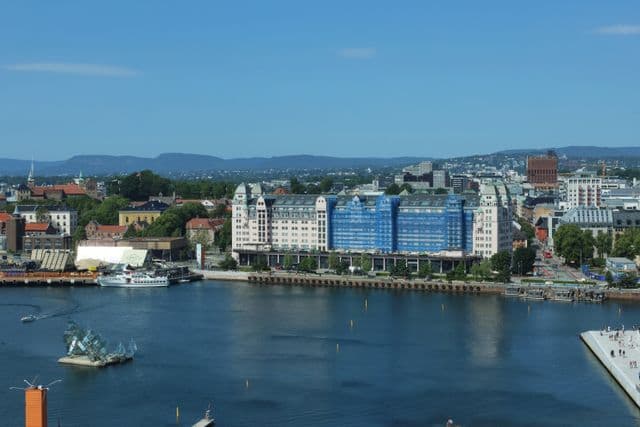
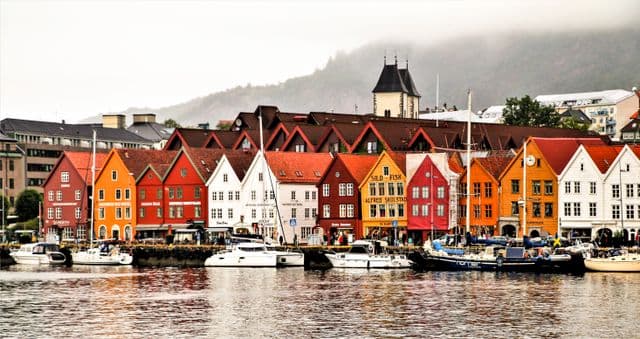
Norway has the fjords and the oil fund and the coastal ferries, and, in the cities, a social democracy so well-maintained that the public infrastructure makes the rest of the developed world look underachieving. Oslo runs clean, calm and outdoors-facing; Bergen does the rain-jacketed western version between seven mountains; Tromsø operates above the Arctic Circle on polar night, midnight sun and aurora; and connecting it all is a national relationship with nature, friluftsliv, the outdoor life as philosophy, codified in the allemannsretten right to roam and practiced in all weather by everyone from toddlers to the sovereign wealth fund's managers.
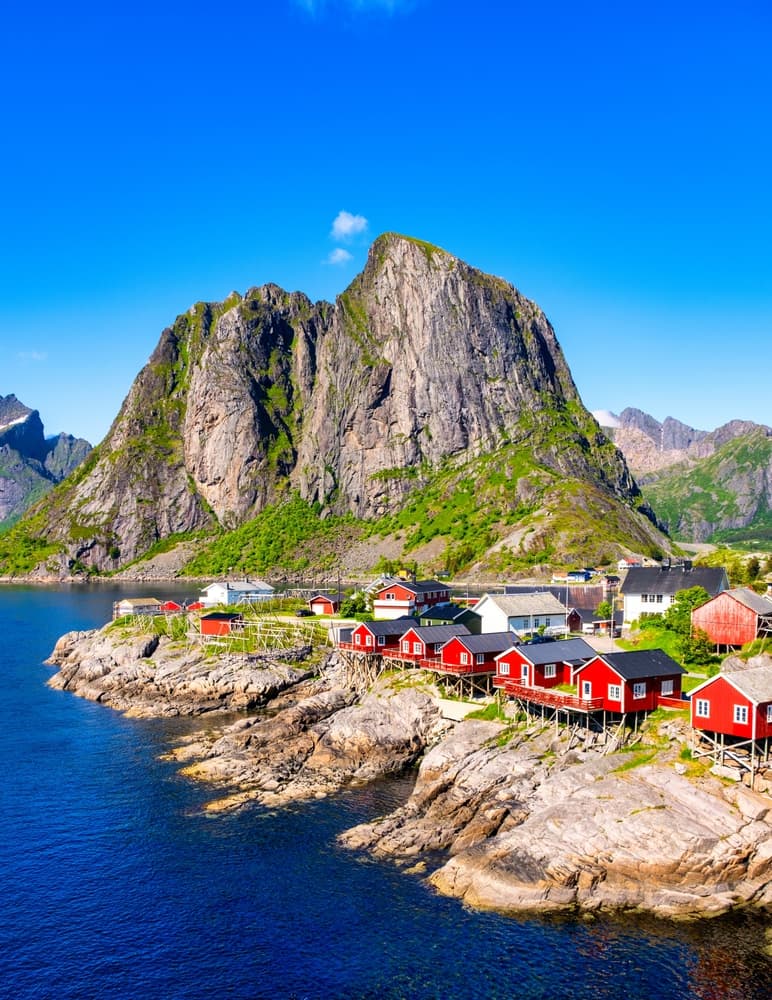
For the geo-flexible, Norway is a season rather than a status. There is no nomad visa; the self-employed permit exists to import entrepreneurs into the Norwegian market, not to host foreign remote work, and says so explicitly. What the Schengen 90 days buy instead is one of the planet's great working summers: Wi-Fi that never stumbles, cities where everything functions, June light that lasts until eleven, and a trail network with staffed mountain huts that turns weekends into expeditions. The costs are the honest tax on all of it, Oslo pricing with Zurich and beer as the famous unit of shock, and the krone's softness in recent years the quiet discount that keeps the arithmetic survivable. The other honest door is seasonal: Norway issues seasonal work permits of up to six months for harvests, fish processing, and the tourist industry, and Lofoten's summer economy hires on that paper every year.
The Svalbard exception deserves its precise billing. Under the 1920 treaty, citizens of every signatory and effectively every nationality may live and work in the archipelago without any visa, indefinitely, a legal artifact with no parallel; the practice is Longyearbyen, population 2,500, where housing is tied to jobs, self-support is mandatory because the welfare state does not follow you north, polar bears define the town limits, and the darkness runs from November to February. A handful of remote workers genuinely do it. For everyone else it is the world's best trivia answer and a reminder that Norway's one open door opens onto the high Arctic.
Widening the search? If you are looking to expand your job hunt across Nordics, take a look at Iceland →, Denmark →, and Sweden →.
Cost of living
Norway competes with Switzerland for Europe's cost crown, and the visitor budget should surrender early. An Oslo one-bedroom runs roughly 15,000 to 20,000 kroner, about 1,400 to 1,900 dollars, with Bergen and Trondheim modestly gentler and furnished short-term stock at a premium; the krone's soft years have quietly discounted everything for dollar and euro earners, which is the main mercy. Utilities are moderate and the tap water is Alpine.
Daily life is where the legend lives: restaurant mains at 250 to 400 kroner, the 130-kroner beer as the national unit of tourist shock, coffee at 45 to 60, and a grocery duopoly whose prices make cooking a moral victory. The survival playbook is settled: Kiwi and Rema 1000 for groceries, the matpakke packed-lunch tradition as ancient cost control, taco Friday as the national compromise, Vinmonopolet's state pricing accepted with Nordic calm, and the outdoors, the fjords, the trails, the allemannsretten right to camp almost anywhere, as the greatest free product any expensive country ever offered. Vipps handles payments, cards handle everything else, and cash is functionally extinct.
- One-bedroom rent: roughly 15,000 to 20,000 kroner in Oslo, gentler in Bergen and Trondheim; deposits run three months into escrow accounts and the furnished market prices its convenience.
- Eating and the famous beer: mains at 250 to 400 kroner, beer at 120 to 150, coffee at 50; the matpakke lunch and home cooking are how Norwegians afford Norway.
- Groceries have a system: Kiwi and Rema 1000 undercut the rest, First Price is the budget label, and the border-run to Sweden for meat and beer is a genuine national institution.
- The outdoors is the free luxury: allemannsretten grants the right to roam and wild-camp on uncultivated land, DNT huts open the mountains at member rates, and the country's best product costs boots.
Cost-of-living calculator
See how your budget stretches in Norway.
Estimates use approximate exchange rates and typical monthly costs. Your actual costs will vary.
Visas & Entry
Norway is a Schengen member outside the EU: 90 days in any 180 for visa-free Western passports under EES logging, with ETIAS expected late in 2026. There is no digital nomad visa, and the permit sometimes dressed as one deserves exact description, because its terms are the opposite of nomadism.
The residence permit for self-employed persons serves skilled workers establishing a business in the Norwegian market: the applicant needs qualifications, vocational training, a degree, or long documented experience, the business must normally be the applicant's own Norwegian sole proprietorship, participation must be full-time and in person, and the venture must be likely to yield at least 341,373 kroner a year in pre-tax profit from its Norwegian activity, a figure indexed upward as recently as September 2025. The directorate's conditions add the sentence that settles the nomad question: holders can only work in that business and cannot take other work, including remote work. A sibling route covers contractors with a business established abroad holding a contract with one specific Norwegian enterprise at Norwegian-standard remuneration. Both permits run a year at a time, open permanent residency after three, admit family, and cost roughly 6,300 kroner to file; both exist to bring skills into Norway's economy, not to host foreign ones near its fjords. Employment routes run through the skilled-worker permit with salary floors raised in September 2025 and, since February 2026, a mandatory digital employer confirmation before the worker applies. EU and EEA citizens live outside all of it under free movement, including a self-employed registration that, pointedly, does allow other work. And then there is Svalbard: under the 1920 treaty the archipelago is visa-free for effectively all nationalities, indefinitely, with self-support mandatory, no welfare access, housing tied to Longyearbyen's scarce jobs, and no credit toward any mainland status; getting there transits mainland Schengen, which for visa-required nationalities means the treaty's open door sits behind Schengen's ordinary one.
- Read the directorate's sentence and believe it: the self-employed permit's conditions state that holders cannot take other work, including remote work; every article selling it as Norway's nomad visa is describing a product that prohibits nomadism.
- The number is 341,373 kroner and rising: likely annual pre-tax profit from the Norwegian business, with thresholds indexed and last raised in September 2025; the figure to check at the source the month you plan.
- Svalbard's open door has three locks: self-support with no welfare backstop, Longyearbyen's job-tied housing scarcity, and mainland-Schengen transit that visa-required nationalities must solve first; the treaty is real and the practicalities are the application.
- The 90 days are the actual product: a Schengen summer in the world's best-functioning expensive country, worked remotely in the usual quiet gray zone, is what Norway offers the geo-flexible, and taken as that it is superb.
- Permanent residency runs through the permits: three years on the self-employed or skilled-worker routes opens it, with language requirements attached; the conventional path for those who genuinely want the mainland.
- Fees and filings are Nordic-transparent: roughly 6,300 kroner for work permits, checklists published, processing one to three months, and the answer you get is the answer the rules gave.
| Visa or permit | What it covers |
|---|---|
| Schengen visa-free entry | Ninety days in any 180 under EES for most Western passports; the honest nomad season, and the frame the rest of this table declines to replace. |
| Self-employed permit (the mislabeled one) | For skilled workers running their own Norwegian sole proprietorship at full-time participation and 341,373-plus kroner of likely annual profit from Norwegian activity; holders cannot take other work, including remote work, by the directorate's own conditions. One year at a time, permanent residency after three, family included, and nothing about it nomadic. |
| Independent contractor variant | For self-employed people with a business established abroad and a contract with one specific Norwegian enterprise at Norwegian-standard pay; the assignment route into the Norwegian market, requiring the client the nomad by definition lacks. |
| Skilled worker employment | The sponsored route with salary floors raised in September 2025 and a mandatory digital employer confirmation since February 2026; fast by Nordic standards once the offer exists, and the conversion path for anyone recruited locally. |
| EU and EEA citizens | Free movement: registration rather than permits, a self-employed track that permits other work besides, and permanent right of residence after five years; the treaty club the routes above exist to substitute for. |
| Svalbard (the treaty artifact) | Visa-free indefinite living and working for effectively all nationalities under the 1920 treaty, in a 2,500-person Arctic town where self-support is mandatory, welfare absent, housing job-tied and the years count toward nothing on the mainland; real, legal, and exactly as practical as it sounds. |
| What Norway is not | No nomad visa, no plans announced for one, and a self-employment system built to import skills rather than host foreign remote work; the country's immigration logic is conventional, transparent and unlikely to bend. |
Good to know: No nomad visa. Self-employed permit is its inversion (skilled quals, Norwegian sole proprietorship, NOK 341,373+ profit, and 'cannot take other work, including remote work' per UDI). Svalbard is treaty-visa-free with hard practicalities; the Schengen 90 days are the real product.
EnRoute Jobs AI tool
Route Planner
Map visa routes, timelines, and relocation costs for your next destination.
Work & Legal
Norwegian working culture is the world's most successfully balanced: flat hierarchies where first names reach the prime minister, consensus decisions that arrive slowly and stick, a 37.5-hour week treated as a ceiling rather than a floor, and the four o'clock Friday exodus toward cabins and trailheads as the society's true org chart. Janteloven, the cultural law against self-importance, keeps boasting fatal and competence quiet; dugnad, the communal work-duty tradition, keeps neighborhoods and clubs running on shared labor; and trust, in colleagues, institutions and strangers, is the operating capital everything else runs on.
For visiting remote workers the legal picture is the standard Schengen gray zone, unpoliced for foreign-client work across a 90-day season, with the infrastructure, ubiquitous fiber, functioning everything, cafés that tolerate laptops within koselig limits, making the practical experience frictionless. Going local means the conventional machinery: the self-employed permit's Norwegian-market requirements for non-EEA nationals, the Brønnøysund registration and ENK sole proprietorship for those with the right to it, and an employment market that pays superbly, protects comprehensively and hires deliberately. The EEA self-employed route's permission to take other work stands as the quiet contrast to the non-EEA permit's prohibition, the treaty line drawn in a single clause.
- The gray zone is the season: foreign-client remote work across a Schengen stay is the unpoliced European normal, and Norway's contribution is infrastructure that makes it effortless; going longer means the conventional permits and their Norwegian-market logic.
- Match the rhythm or fight the country: the 4pm Friday emptying, the sacred vacation weeks and the weekday ski hour are structural; scheduling against them is the classic imported error.
- Janteloven governs the room: understatement is credibility, self-promotion is suspect, and the quietest person at the table may own the company; calibrate accordingly.
- The ENK and the registers are transparent: for those entitled to register, the sole proprietorship files in days through Brønnøysund with the surname in the business name and the tax system waiting politely; the machinery is honest, merely selective about who may use it.
Good to know: Schengen-season remote work is the unpoliced normal; non-EEA self-employment requires the Norwegian-market permit that bars other/remote work; EEA nationals register freely; the culture's 4pm Friday is structural.
Taxes
Norwegian tax is high, transparent and buys the most functional state in this database. For visitors the story is clean, since short stays create nothing; for residents it is the full Nordic contract, including the wealth tax most countries abolished and an exit tax the parliament has been sharpening.
| What applies | The rule in 2026 |
|---|---|
| Residency: the dual day-count | Norwegian residency arrives at more than 183 days in any twelve-month period, or more than 270 days across any thirty-six-month period, the second test catching serial half-year visitors other countries miss; below both, foreign income owes Norway nothing. |
| The resident schedule | A 22 percent base rate plus the trinnskatt progressive surtax carries marginal rates to roughly 47 percent, with national insurance contributions of about 7.8 percent for employees and near 11 for the self-employed on top; the headline is honest and the services visibly exist. |
| The PAYE welcome scheme | Foreign workers new to Norway can elect a flat 25 percent withholding including national insurance for their first year within income limits, a genuinely simple on-ramp the tax administration runs by default for qualifying arrivals. |
| The wealth tax | Norway still levies roughly 1 percent, slightly more at the top, on net wealth above a threshold, municipal and state shares combined; rare in Europe, real in planning, and the line item that surprises arriving founders most. |
| The exit tax | Recent reforms tightened the taxation of unrealized gains on leaving, with long shadows for holders of appreciated shares; anyone arriving with a portfolio or building one should price the exit rules before establishing residency, not after. |
| VAT and daily life | Standard VAT at 25 percent sits inside the famous prices, with reduced bands for food and transport; the visitor pays it at the till and the resident stops noticing. |
| Svalbard's separate deal | The archipelago runs its own low flat regime at roughly half mainland levels, one of the treaty life's genuine compensations, applicable to those actually living and earning there and irrelevant to everyone else. |
| Americans specifically | The US treaty applies and, crucially, a totalization agreement has stood since 1984, so Americans in the Norwegian system escape US self-employment tax with a certificate of coverage; at Norwegian rates the foreign tax credit zeroes the US bill for most, and the FEIE handles the visitor season. |
Verified 20 August 2026. The dual 183/270-day residency tests, rates to roughly 47 percent plus contributions, the wealth and tightened exit taxes, the 25 percent PAYE scheme, VAT at 25 percent and the 1984 US totalization agreement are current. General information, not tax advice.
Good to know: Dual residency test (183/12mo or 270/36mo); ~47% marginal plus contributions; wealth tax ~1% and tightened exit tax; 25% first-year PAYE scheme; Svalbard runs its own low flat regime; US totalization since 1984.
Healthcare
Norwegian healthcare is the Nordic gold standard: universal, tax-funded, anchored by university hospitals of world rank and organized around the fastlege, the assigned GP every resident holds. Residents pay modest co-pays until the annual frikort ceiling, roughly 3,000-odd kroner, after which care runs free; quality and outcomes sit at the top of every table, and English is universal throughout the system. The geography is the system's one honest challenge, met with air ambulances and the world's northernmost university hospital in Tromsø.
Visitors run on EHIC terms if European and otherwise pay directly at rates that remain reasonable by any standard, a GP consultation at a few hundred kroner subsidized, with travel insurance covering the hospital tier. The legevakt urgent-care system handles after-hours medicine in every municipality, 113 answers medical emergencies, and the mountain and sea rescue services are as serious as the terrain that keeps them busy; evacuation-inclusive insurance is the correct purchase for anyone whose Norway includes the backcountry, which is to say anyone's Norway.
- Visitor consultations stay reasonable: a few hundred kroner at subsidized rates with English universal; the hospital tier is where travel insurance earns its premium.
- Know the two numbers: 113 for medical emergencies and 116 117 for the legevakt after-hours service, the pairing that covers every situation from anywhere in the country.
- Buy evacuation cover for the backcountry: the rescue services are superb and the terrain is serious; insurance including search, rescue and air evacuation is the correct policy for a country shaped like this one.
- Pharmacies (apotek) are professional and everywhere, prescriptions run through the same digital rails as everything else, and the system's calm competence extends to its smallest transactions.
| Hospital | What to know |
|---|---|
| Oslo University Hospital | The national flagship across Rikshospitalet, Ullevål and its other campuses, Scandinavia's largest hospital and the country's tertiary anchor. |
| Haukeland University Hospital, Bergen | The west's academic center, full tertiary depth serving the fjord coast with the national burns unit among its specialties. |
| St. Olavs Hospital, Trondheim | The integrated university hospital of the middle country, routinely cited among Europe's best-designed medical campuses. |
| University Hospital of North Norway, Tromsø | The world's northernmost university hospital, anchoring Arctic medicine with the air-ambulance network the latitude requires. |
| Stavanger University Hospital | The energy coast's major hospital, completing the university tier across the four health regions. |
| Legevakt urgent care network | The municipal after-hours system in every town, the front door for urgent-but-not-emergency medicine and the number visitors actually use: 116 117 nationwide. |
Hospital list compiled 20 August 2026 and not yet confirmed against each facility directly. Treat as indicative and verify before relying on it.
Good to know: Nordic gold standard; fastlege GP system with frikort co-pay ceiling for residents; visitors pay modest subsidized rates; 113 emergencies, 116 117 legevakt; evacuation cover for the backcountry.
Safety
Norway is one of the safest societies on earth, and 2026 tested the claim in an unusual way: in March a device attack struck the US Embassy in Oslo, days after the security service had widened its threat assessment, and the American advisory absorbed the event without leaving Level 1, static police patrols were posted, and authorities assessed no elevated threat to the American community. That calibration is the year's finding: the terror-threat background, which the security service attributes in even measure to extreme Islamist and right-wing actors, is real and professionally managed, and daily life registers none of it. Street crime remains near the statistical floor, with Oslo Central Station's pickpockets as the honest exception, and the state's 2026 advice that households keep a week of emergency supplies belongs to Nordic preparedness culture rather than any specific alarm.
The genuine risk list is the terrain's. Avalanches and landslides are common in steep country, the quick-clay ground of some settled areas can fail outright, mountain weather changes with Atlantic speed, crevassed glaciers and winter backcountry demand competence, and the road rules include seasonal tyre requirements the rentals take seriously. Svalbard adds polar bears, which define the town boundary of Longyearbyen and the rifle rules beyond it. The country's answer is its magnificent safety culture, staffed huts, marked routes, the fjellvettreglene mountain code, rescue services of world rank, and the visitor's job is to accept the culture's terms, which begin with turning back being no shame.
- Read the March event with Norwegian calm: the embassy attack drew patrols, assessments and no advisory change, and the professional consensus of no elevated threat to residents is the operative fact; the background threat level is managed seriously and visibly.
- Learn the fjellvettreglene before the mountains: the mountain code's first principles, plan, tell someone, respect weather, and there is no shame in turning back, are the national safety religion, and the rescue statistics are written by those who skipped them.
- Respect avalanche and quick-clay country: steep-terrain slides are common in season, varsom.no publishes the daily avalanche bulletins, and the clay-ground hazard is why some construction maps read like geology lessons.
- Drive to the season's rules: tyre requirements change with the calendar, mountain passes close and convoy in winter, and the moose on the night road is a genuine statistic; the road administration's conditions pages are the daily oracle.
- Oslo Central is the one pickpocket postcode: transit-hub bag sense covers essentially the entire national crime exposure, and the rest of the country barely locks its doors.
- On Svalbard, the bears are the law: movement beyond Longyearbyen requires polar-bear protection and the training to carry it, the town limits are marked for that reason, and the rule has no exceptions. Emergency numbers: 112 police, 113 medical.
Official travel advisories
| Government | Current position |
|---|---|
| United States | Level 1, Exercise Normal Precautions, updated 6 July 2026 with the summary refreshed and no level change, notable for its natural-hazard specificity: avalanches, landslides, quick-clay ground failure, and Oslo Central's pickpockets; the level held through the March embassy attack.travel.state.gov → |
| United Kingdom | No advisory against travel, with standard guidance on terrorism awareness, winter driving and the outdoors' seriousness.gov.uk → |
| Canada | Take normal security precautions, with EES mechanics and the standing note that vehicles on Russian plates are banned from entry under sanctions mirroring the EU's.travel.gc.ca → |
| Australia | Exercise normal safety precautions, green, with practical texture: seasonal tyre requirements, licensed-taxi guidance, thin rural ATM coverage and digital-licence caveats for drivers.smartraveller.gov.au → |
| US Embassy Oslo | Enroll in STEP; the embassy's 2026 alerts tracked the March attack and the regional caution that followed. Morgedalsvegen 36, Oslo; the advisory level's steadiness through the year is its own message.no.usembassy.gov → |
Advisory positions verified 20 August 2026, including Smartraveller directly. Every government holds Norway at its lowest tier, the level unmoved by the March embassy attack; the honest risk list is alpine, glacial and meteorological. Open the sources before travelling.
Good to know: Lowest tier everywhere, held through the March 2026 Oslo embassy attack; real risks are avalanches, quick clay, weather and winter roads; Oslo S pickpockets are the crime exposure; Svalbard adds polar-bear rules.
Climate
Norway runs three climates along seventeen degrees of latitude. The Gulf Stream keeps the western coast improbably mild, Bergen rarely freezing and reliably raining, its 240 wet days a year worn as civic identity; Oslo and the interior run continental, minus five to zero in January with proper snow, twenty to twenty-five in July with evenings that stretch toward eleven; and the north above the Arctic Circle runs the full polar theater, Tromsø's midnight sun from May to July and its polar night from November to January, aurora as the winter commute's ceiling. The working calendar writes itself: May through August for the entire country at maximum, September for gold and first frosts, and the winter for those who take the north's darkness as the price of its lights.
| Season | What to expect |
|---|---|
| Summer, June to August | Twenty to twenty-five in the south with near-endless light, the fjords and highlands fully open, and the country outdoors en masse; the season the Schengen 90 days were made for. |
| Autumn, September to October | Gold birch forests, first snows on the tops, thinning crowds and the year's most photogenic light; short, superb and underrated. |
| Winter, November to March | Proper snow inland and north, polar night above the Circle with aurora as compensation, world-class skiing from city tramlines, and a population that treats the cold as equipment-solvable. |
| The Bergen constant | Mild, wet and green in every month, the western coast's Gulf Stream deal: rarely cold, reliably raining, and the rain jacket as the region's true national dress. |
Good to know: Latitude is the real variable: endless southern summer light, Arctic polar night and aurora; Bergen rains through all of it, mildly.
Culture & Customs
Norwegian culture organizes itself around the outdoors and against self-importance. Friluftsliv, the open-air life, is philosophy rather than hobby: the Sunday tur is close to compulsory, toddlers nap outside in winter, offices empty toward trailheads on Friday afternoons, and the allemannsretten, the codified right to roam and camp on uncultivated land, is the constitution's outdoor annex. The hytte, the family cabin, is where the nation actually lives on weekends, ideally without plumbing, by choice. Against the landscape's drama runs the social law of janteloven, the deep norm against standing above others: wealth whispers, competence understates, and the word for the good life, koselig, means candlelit modest warmth rather than anything purchasable.
Codes are light and real. Norwegians are reserved with strangers and loyal past reason once thawed, small talk is rationed, silence on transit is respected, and the friendship that takes a season to start lasts decades. Shoes come off in homes, punctuality is absolute, dugnad communal work-days are attended, and the matpakke lunch of modest sandwiches is eaten without irony by millionaires. Tipping rounds up or adds ten percent for good service without obligation, Vipps moves all money, alcohol runs through Vinmonopolet's civilized scarcity, and the national costume, the bunad, emerges each 17 May for a constitution day celebrated by children's parades rather than missiles, which explains a great deal about the entire country.
- Go on the Sunday tur: the weekend walk is the social institution, invitations to it are real overtures, and matching the nation's outdoor rhythm is the fastest integration Norway offers.
- Practice janteloven: understate accomplishments, let work speak, and read the modesty of others as the norm rather than the absence of success; boasting is the one reliable social error.
- Use the allemannsretten with its duties: roam and camp freely on uncultivated land, 150 meters from dwellings, leave no trace, and treat the right as the trust exercise it is.
- Respect the quiet: transit silence, rationed small talk and unhurried friendship are the texture, not coldness; the thaw is slow and the result durable.
- Honor the practical rituals: shoes off indoors, absolute punctuality, dugnad attendance if invited, and the matpakke accepted as the great equalizer it is.
- Tip lightly and pay digitally: rounding up or ten percent for good service, Vipps for everything between people, and cash as a museum piece.