.png)
About Iceland
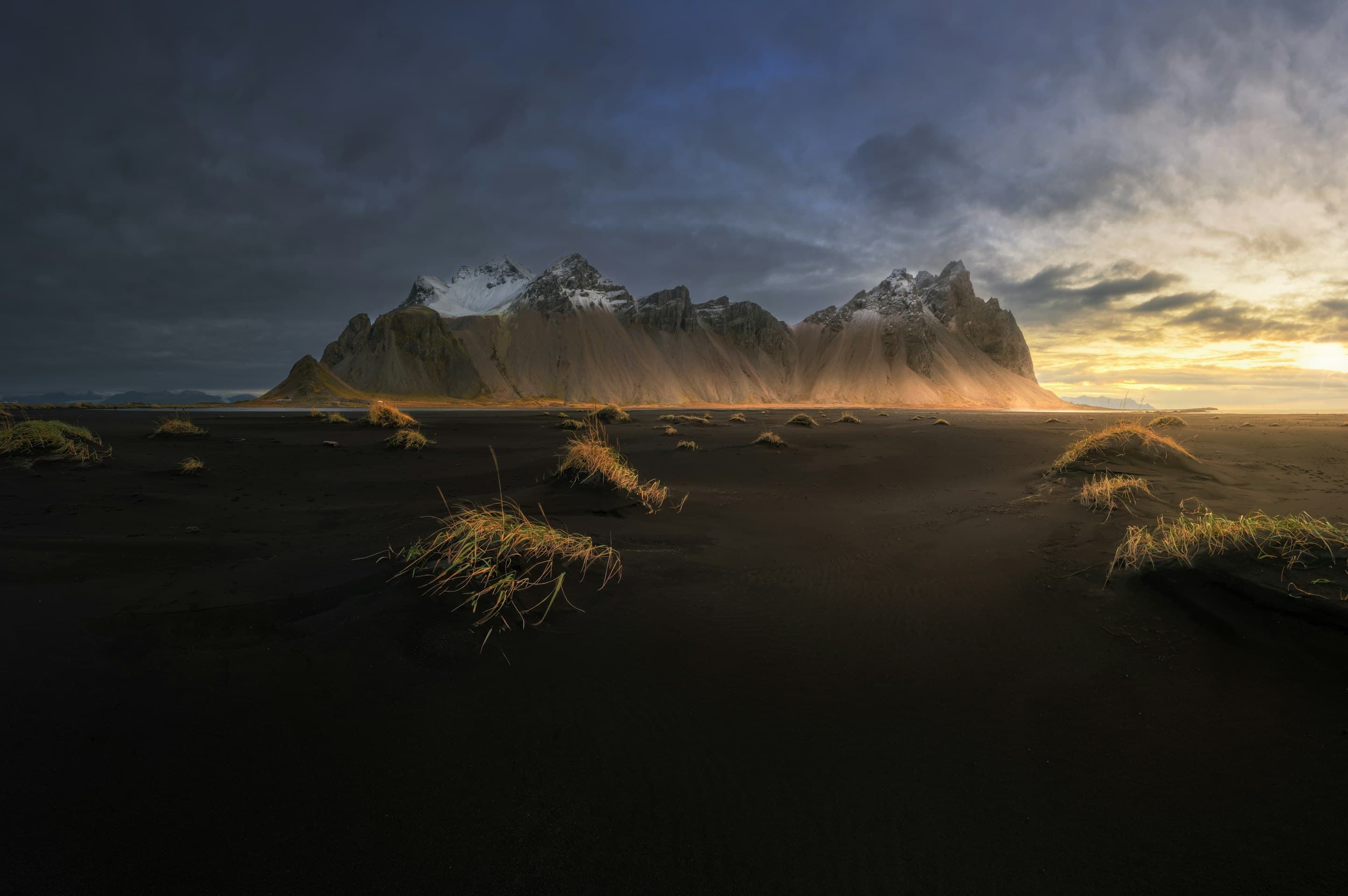
Iceland arrives as a geological fact before it presents itself as a country. The island is the Mid-Atlantic Ridge made visible, two tectonic plates pulling apart and filling the gap with lava, geothermal heat warming ninety percent of homes, summer light that barely sets and winter aurora that repays the darkness. Reykjavík, holding two-thirds of a 400,000-person nation, runs on fiber internet among the world's fastest, universal English, a café and pool culture engineered for long dark seasons, and a per-capita creative output, books, bands, design, with no proportional equivalent anywhere.
The remote-work visa matches the country's pricing philosophy: high bar, extraordinary product. A thousand thousand krónur a month buys entry to a six-month season, structured so that nothing about your tax life changes, no Icelandic ID, no local address registration, no residency clock, just the legal right to work your foreign job from a hot tub's edge under the midnight sun. The visa's one-shot design, no renewal and a year's wait between grants, makes it a sabbatical instrument rather than an immigration route, which is precisely what most people want Iceland for. For EEA citizens the doors are ordinary, and the summer season uses them: guides, drivers, and hotel staff hire across the island from May, and the fish factories have run on seasonal hands for generations.
The era's honest asterisk is volcanic and smaller than the headlines. Since 2021 the Reykjanes peninsula has entered a new eruptive cycle, twelve fissure eruptions and counting, one evacuated fishing town, periodic Blue Lagoon closures, and not a single cancelled flight, because fissure lava does not make ash clouds. Life in Reykjavík, forty kilometers away, has continued unbothered through all of it, monitored by the most-watched geology in Europe. The real risks here remain what they always were: weather that changes hourly, sneaker waves at black beaches, F-roads that eat rental cars, and the visitor confidence that keeps the rescue services in business. Respect the island and it is the safest place on earth that also glows in the dark.
Widening the search? If you are looking to expand your job hunt across Nordics, take a look at Norway →, Denmark →, and UK →.
Cost of living
Iceland is one of the most expensive places on this site, and the honest budget starts there. A Reykjavík one-bedroom runs roughly 250,000 to 350,000 krónur, about 1,800 to 2,500 dollars, with the visa's no-registration design pushing many holders toward furnished sublets and mid-term rentals priced above the local market; Akureyri and the towns run meaningfully cheaper for those who want the deeper version. Utilities are the one mercy, geothermal heat and hot water costing next to nothing, and the internet is superb everywhere.
Daily life prices like an airport: restaurant mains at 3,500 to 6,000 krónur, a beer at 1,400 to 1,800, coffee at 700, and the legendary petrol station hot dog holding its cultural office at pocket change. The survival playbook is universal: Bónus and Krónan for groceries, the tap water that outperforms every bottle, thermos culture, and the swimming pools, whose few-hundred-krónur entry buys the country's actual social life plus unlimited hot water. Cars are the freedom line, rentals from 400 to 700 dollars weekly and fuel European-priced; no tipping anywhere softens the arithmetic slightly, and the krona's swings argue for card-everything, which is anyway how Iceland works.
- One-bedroom rent: roughly 250,000 to 350,000 krónur in Reykjavík with furnished mid-term stock at a premium; the visa issues no ID number, so the sublet and aparthotel market is the practical tier.
- Groceries have a system: Bónus and Krónan halve the corner-store prices, the tap water is the world's best free product, and self-catering is the difference between a budget and a confession.
- The pool is the deal of the country: a few hundred krónur admits you to geothermal lagoons of the municipal kind, the national social institution and the cheapest luxury Iceland sells.
- The car is the freedom line: 400 to 700 dollars a week for rentals in season plus European fuel, and the gravel-and-insurance questions worth answering before the F-roads ask them.
Cost-of-living calculator
See how your budget stretches in Iceland.
Estimates use approximate exchange rates and typical monthly costs. Your actual costs will vary.
Visas & Entry
Iceland is a Schengen member outside the EU, so the baseline for visa-free Western passports is the standard 90 days in any 180 under EES logging. Above it sits the Long-Term Visa for Remote Workers, in place since October 2020 and, contrary to a surprising number of guides, very much a dedicated nomad product, just one designed like everything else Icelandic: expensive, exact and worth it.
The official terms: applicants must be from outside the EU, EEA and EFTA and hold a nationality that enters Schengen visa-free; the purpose must be remote work for a foreign employer or the applicant's own foreign business, with Icelandic employers and clients prohibited; monthly income must reach 1,000,000 krónur, roughly 7,000 to 8,000 dollars at 2026 rates and the highest threshold in Europe, or 1,300,000 with an accompanying spouse, partner or children; and the applicant must not intend long-term residence nor have held this visa in the previous twelve months. The mechanics are charmingly analog: fee of 12,200 krónur by bank transfer with your name and birthdate in the reference, a paper application mailed or hand-delivered to the Directorate of Immigration in Kópavogur, decisions in roughly two to four weeks, and entry required within three months of approval. The duration rule is the one that decides trips: apply from your home country before entering Schengen and the visa can run the full 180 days; enter Schengen first and the maximum falls to 90, with days already spent deducted. The visa is non-renewable, confers no residency clock, no kennitala and no registered address, family members file their own applications with marriage or one-year cohabitation proof, insurance of at least 2,000,000 krónur per person is required, and the entire design caps stays below the 183-day tax line on purpose. Anyone wanting more than a season needs Iceland's ordinary machinery: work permits tied to job offers, student permits, or EEA family routes, all of them a different book.
- The bar is 1,000,000 krónur and it is real: roughly 7,000 to 8,000 dollars monthly at current rates, evidenced by contracts and statements, with the exchange rate applied on decision day; Europe's highest threshold, matched to Europe's highest prices.
- Sequence the application before the flight: filing from home unlocks the full 180 days, while filing after entering Schengen caps you at 90 minus days spent; the entire value of the program turns on this one order of operations.
- Budget the paper ritual: bank-transfer fee with name and birthdate in the reference, receipt included, physical application to Kópavogur, two to four weeks, and entry within three months of the approval email.
- One season per year is the design: no extensions, a twelve-month wait between visas, and no credit toward anything; treat it as a structured sabbatical and it delivers exactly that.
- No kennitala is a feature and a friction: no Icelandic ID means no local tax life and also no local banking or address registration, which shapes housing toward the furnished mid-term market.
- Insurance is specified: at least 2,000,000 krónur of health coverage per person for the stay, and given rescue-and-evacuation realities, cover that includes search and rescue is the version worth buying.
| Visa or permit | What it covers |
|---|---|
| Schengen visa-free entry | Ninety days in any 180 for most Western passports under EES; the standard tourist window, and the one the remote-work visa is built on top of, since only visa-exempt nationalities qualify for it. |
| Long-Term Visa for Remote Workers | Up to 180 days for non-EEA remote workers at 1,000,000 krónur monthly, 1,300,000 with family, working for foreign employers or their own foreign business. Non-renewable, twelve-month cooldown, no residency clock, no Icelandic ID, and deliberately capped below the tax-residency line. |
| The 180-versus-90 mechanic | Apply from your country of residence before entering Schengen and receive up to 180 days; apply after entering the zone and the ceiling drops to 90, with Schengen days already spent deducted. The single most consequential planning fact in the program. |
| Family members | Spouses, cohabiting partners of a year or more, and children under 18 apply alongside with their own visa-exempt nationality, the raised 1,300,000-krónur threshold, and their own fees and insurance. |
| Work and residence permits | Iceland's ordinary immigration: employer-sponsored work permits, student permits and family routes, with reference income thresholds raised in May 2026; the different book for anyone whose Iceland plans outgrow a season. |
| EU and EEA citizens | Free movement applies: live and work without permits, registering after three months; none of the thresholds or ceilings above exist for them. |
| What the visa is not | Not a residence permit, not renewable, not a path to permanence, and not a tax status; it is a six-month legal season, complete in itself, which is exactly the product most people actually want from Iceland. |
Good to know: Remote-work visa since Oct 2020: ISK 1,000,000/mo (Europe's highest bar; 1.3M with family), up to 180 days ONLY if filed before entering Schengen (90 after), non-renewable with 12-month cooldown, no kennitala or residency path, capped below the 183-day tax line by design.
EnRoute Jobs AI tool
Route Planner
Map visa routes, timelines, and relocation costs for your next destination.
Work & Legal
Icelandic working culture is Nordic flatness at its most absolute: first names for everyone including the president, hierarchy so shallow it barely registers, directness without ceremony, and a national operating philosophy, þetta reddast, it will work out, that coexists mysteriously with everything actually working. The labor market itself is small, union-dense and protective, and none of it applies to a remote-visa holder, whose legal position is clean: the visa explicitly authorizes working a foreign job or foreign business from Icelandic soil and explicitly excludes Icelandic employers and clients, with the ordinary work-permit system as the door for anyone recruited locally.
The practical texture is superb. Internet is world-class everywhere including the countryside, the café culture doubles as distributed office space, coworking exists in Reykjavík at boutique scale, and the workday shape bends around the light, compressed and outdoor-facing in the endless summer days, deep and candlelit in the dark season. English is universal, the professional community is small enough that two introductions reach anyone, and the pool is where half the actual networking happens, phones banned by physics.
- The visa draws the line exactly: foreign employer or own foreign business yes, Icelandic employers and clients no; local opportunities route through the sponsored work-permit system, not improvisation.
- Work the light, not the clock: the midnight-sun months reward compressed deep-work mornings and outdoor afternoons, and the dark season rewards the opposite; fighting the photoperiod is the classic newcomer error.
- The pool is the network: the municipal sundlaug hot tubs are the country's social infrastructure and its informal boardroom, and showing up regularly to one is the fastest integration Iceland offers.
- Infrastructure never blinks: fiber to the village, cashless everything, and power and heat that cost almost nothing; the practical frictions of nomad life mostly do not exist here, having been replaced by the price level.
Good to know: Visa explicitly authorizes foreign-source remote work and excludes Icelandic employers/clients; local work routes through sponsored permits; infrastructure is flawless and the pool is the real network.
Taxes
The Icelandic tax story for visa holders is the rare one that fits in a sentence: the visa is capped below the 183-day residency line on purpose, so holders never enter the Icelandic system at all. Around that clean design sits one of Europe's heaviest resident regimes, relevant only to those who come back by another door.
| What applies | The rule in 2026 |
|---|---|
| The visa's tax design | Stays run to 180 days and Icelandic tax residency generally begins at 183, a gap that is not an accident: holders receive no kennitala, register no address, and remain tax residents of wherever they came from, with Iceland collecting nothing on their foreign income. |
| What you still owe, elsewhere | Home-country obligations continue untouched: the visa changes nothing about where salary is taxed, where social contributions accrue, or what the employer's payroll must do, and the six Icelandic months are fiscally invisible in both directions. |
| The resident regime, for context | Those who later immigrate properly meet progressive rates running roughly from the high thirties to about 46 percent including the municipal share, among Europe's heaviest, funding a state whose functioning is not in question. |
| Icelandic-source income | Working for Icelandic employers or clients is prohibited under the visa and would create Icelandic-source tax exposure besides; the clean position depends on keeping the income side entirely foreign. |
| VAT and the price level | Standard VAT at 24 percent with an 11 percent reduced band sits inside the famous prices; visitors pay it at the till and reclaim nothing, the island's real tax on everyone. |
| Treaties | Iceland holds a broad treaty network including the 2007 convention with the United States; with no Icelandic tax arising under the visa, the treaties are context rather than tools for holders. |
| Americans specifically | US filing continues as ever; with zero Icelandic tax there is nothing to credit, so the FEIE's physical-presence arithmetic or ordinary home filing carries the year, self-employment tax continues absent a totalization agreement, and the six-month season slots neatly into most Americans' existing arrangements. |
| If Iceland becomes home | Genuine immigration by work permit brings the full resident regime, worldwide taxation and the municipal share included; the arithmetic is the price of one of the world's most functional societies, and it deserves an adviser's hour before the decision rather than after. |
Verified 20 August 2026. The visa's sub-183-day design keeps holders outside Icelandic tax residency with no kennitala issued; resident rates of roughly 37 to 46 percent and VAT at 24 percent apply to those who immigrate by other routes. General information, not tax advice.
Good to know: Visa capped below the 183-day line by design: no kennitala, no Icelandic tax on foreign income, home obligations continue; resident regime (~37-46% plus 24% VAT) applies only to genuine immigrants.
Healthcare
Icelandic healthcare is the small-nation Nordic kind: universal, high-quality and anchored almost entirely by Landspítali, the National University Hospital in Reykjavík, with Akureyri's hospital serving the north and the heilsugæsla primary-care network covering the country. English is universal in medicine as everywhere, quality is excellent, and the system's honest shape is geographic: serious capability concentrates in the capital, distances are real, and the Coast Guard and the volunteer ICE-SAR rescue teams are a genuine, world-class part of the emergency system, which tells you something about the terrain.
Visa holders sit outside the public system, hence the insurance requirement, and pay as visitors: a GP consultation at 120 to 180 euros, hospital care at prices that make the insurance mandate self-explanatory. Pharmacies are professional, the after-hours Læknavaktin service covers the capital's evenings, 112 answers everything, and the one uniquely Icelandic prescription is the pool itself, geothermal soaking being the national therapy for most of what ails anyone.
- Visitor prices are Nordic: 120 to 180 euros for a GP visit and hospital care at rates that explain the visa's 2,000,000-krónur insurance floor; buy the policy with search-and-rescue cover if the highlands are in the plan.
- Emergency number 112 covers everything, medical, rescue and police alike, answered in English; for after-hours non-emergencies in the capital, Læknavaktin is the number locals use.
- File travel plans with Safetravel before remote trips: the app and site connect directly to the rescue system, and the beacon-registration habit is why Iceland's wilderness statistics stay survivable.
- Pharmacies and the pool handle the rest: professional apótek everywhere, and the geothermal soak as the national maintenance therapy, prescribed by culture and priced at pocket change.
| Hospital | What to know |
|---|---|
| Landspítali, Reykjavík | The National University Hospital across its Hringbraut and Fossvogur campuses, the country's tertiary anchor and the destination for everything serious. |
| Akureyri Hospital | The north's regional hospital and the second pillar of the acute system, covering the long distances of the countryside with Landspítali behind it. |
| Heilsugæsla primary care network | The public health centers across the capital area and the regions, the system's front door for residents and the walk-in layer visitors can also pay into. |
| Læknavaktin, capital area | The after-hours GP service covering evenings and weekends in greater Reykjavík, the practical answer between clinic hours and the emergency room. |
| Klíníkin, Reykjavík | The private clinic and surgical center, the direct-pay tier for imaging, specialists and elective procedures without public-system waits. |
| ICE-SAR and Coast Guard rescue | The volunteer search-and-rescue network and Coast Guard aviation that constitute the wilderness emergency system, world-class, busy, and funded partly by the lottery tickets every local buys on purpose. |
Hospital list compiled 20 August 2026 and not yet confirmed against each facility directly. Treat as indicative and verify before relying on it.
Good to know: Excellent small-nation system anchored by Landspítali; visa holders pay as visitors (hence the insurance floor); ICE-SAR and Coast Guard are the wilderness safety net; 112 for everything.
Safety
Iceland remains what the indices say: the most peaceful country on earth, where violent crime is a news event, children walk everywhere alone, and the only recent blemish is a modest rise in pickpocketing at the most-visited attractions, met with ordinary bag sense. Every government this site tracks keeps Iceland at its lowest advisory tier. Personal security is, functionally, solved.
What requires adult briefing is the island itself, in two chapters. The new chapter is volcanic: since 2021 the Reykjanes peninsula has entered an eruptive era, twelve fissure eruptions and counting, nine along the Sundhnúkur crater row since late 2023, with the most recent running three summer weeks in 2025 and magma re-accumulating beneath Svartsengi at record volumes since, making the next event a question of when. The record so far is the reassuring part: zero flight disruptions, because fissure lava produces no ash column; zero injuries from the eruptions themselves, thanks to monitoring that reads magma movement hours ahead; Reykjavík and the Ring Road untouched throughout; the Blue Lagoon operating normally between its precautionary closures; and Grindavík, the evacuated fishing town, largely bought out by the state and conditionally open, its hazard maps updated daily. The old chapter is the permanent one and statistically the real one: weather that changes hourly and kills the underdressed, sneaker waves at Reynisfjara that take tourists off the black sand with documented regularity, F-roads and river crossings that end rental contracts, and highlands whose beauty is a commitment. The entire apparatus of Icelandic safety culture, the Safetravel app, the road and aurora forecasts, the volunteer rescue teams, exists because respect is the admission price, and visitors who pay it inherit the safest country there is.
- Treat the volcano story as managed reality: eruptions announce themselves through the most-monitored geology in Europe, exclusion zones do the protecting, and the practical impacts to date total one spa's intermittent closures and one town's tragedy; check Safetravel, not headlines.
- Respect the sneaker waves absolutely: Reynisfjara and the south-coast black beaches take visitors with documented regularity, the waves arrive without pattern from a calm sea, and the marked lines exist because people crossed them.
- Dress for the weather that is coming, not the weather that is: hourly change is the climate's personality, hypothermia is the historic killer, and the no-bad-weather-only-bad-clothing proverb is load-bearing.
- Drive to Icelandic conditions: F-roads legally require 4x4s, river crossings void insurance and occasionally lives, winter closes roads on schedule and without, and road.is plus umferdin are the daily oracles.
- File the travel plan before the highlands: the Safetravel app's plan-and-beacon system connects directly to ICE-SAR, and the volunteer rescue teams' busiest clients are the confident and unregistered.
- Mind the small new city habit: the pickpocketing uptick at Hallgrímskirkja, the lagoons and the rental-car lots is Iceland's only crime trend, and zipped bags retire it completely. Emergency number 112 for everything.
Official travel advisories
| Government | Current position |
|---|---|
| United States | Level 1, Exercise Normal Precautions, with country guidance notable for its detail on natural hazards: live danger-zone maps around Grindavík, named warnings for Reynisfjara's sneaker waves and glacier sites, and candor about response times outside the capital.travel.state.gov → |
| United Kingdom | No advisory against travel, with volcanic-area guidance tracking the Reykjanes situation and standard weather-and-roads counsel.gov.uk → |
| Canada | Take normal security precautions, with seismic-zone awareness and the standard exclusion-area language for active volcanic sites.travel.gc.ca → |
| Australia | Exercise normal safety precautions, green, with unusually specific volcanic guidance: avoid eruption sites and steep Reykjanes slopes, monitor gas-cloud air quality with windows closed if affected, and check flights during ash events; earthquake and coastal-tsunami notes included.smartraveller.gov.au → |
| Safetravel Iceland (official) | The national safety portal run with the rescue association: live eruption status, road and weather alerts, travel-plan filing and beacon registration; the single most useful bookmark in the country. |
Advisory positions verified 20 August 2026, including Smartraveller directly. Every government holds Iceland at its lowest tier; the Reykjanes eruption cycle is active with the next event expected, and the operational record through twelve eruptions shows zero flight disruptions. Open the sources and Safetravel before travelling.
Good to know: Lowest tier everywhere; the world's most peaceful country in an active eruption era with a spotless flight record; real risks are weather, sneaker waves, F-roads and unfiled travel plans; Safetravel is the essential tool.
Climate
Iceland's climate is milder than its latitude and wilder than its averages. The Gulf Stream holds Reykjavík to roughly minus one to three degrees in January and eleven to thirteen in July, numbers that conceal the real weather, wind-driven, sideways-raining, and capable of four seasons before lunch in any month. The light is the true climate: midnight sun from late May through July producing a national energy surge and a visitor derangement of lost time, and December days of four hours' twilight redeemed by aurora, candles and the pool. The working calendar follows: June through August for the full island with the highlands open, September for golden light, first aurora and thinning crowds, and the deep winter for those who want the dark season's strange productivity with northern lights as the commute view.
| Season | What to expect |
|---|---|
| Summer, June to August | Eleven to thirteen degrees, midnight sun, highlands and F-roads open, and the country at maximum accessibility; the visa season most holders build around, with sleep masks as essential equipment. |
| September to October | Golden light, first auroras against still-mild air, crowds and prices easing, and the weather beginning its winter arguments; the connoisseur's shoulder. |
| Winter, November to March | Four-to-six-hour days around the solstice, aurora on clear nights, storms that close roads on schedule, and a capital engineered for cozy productivity; the season Iceland keeps for people who mean it. |
| April to May | Lengthening light, puffins returning, winter releasing the roads in stages, and the island exhaling before the season; quiet, cheap and underrated. |
Good to know: Light is the real climate: midnight sun in high summer, aurora in the dark; weather changes hourly in every month and dresses accordingly.
Culture & Customs
Icelandic culture is Nordic egalitarianism distilled through 400,000 people who all nearly know each other. There are no surnames in the ordinary sense, patronymics meaning everyone from the president down goes by first name and the phone book sorts accordingly; hierarchy barely exists, boasting is faintly ridiculous, and the national coping philosophy, þetta reddast, it will all work out somehow, doubles as weather policy and business plan. The creative output is preposterous for the scale: everyone is in a band, writing a book or both, and the December jólabókaflóð, the Christmas book flood of giving books and reading them that night, may be the most civilized tradition in this database.
The social institution is the pool. Every town's geothermal sundlaug with its graduated hot tubs is where Iceland actually talks, and it carries the culture's one non-negotiable rule: the full, soap, swimsuit-off shower before entering, enforced by signage, attendants and grandmothers, and treated as the citizenship test it is. Beyond the pool: shoes off in homes, weather as the eternal opening subject, the hidden-people folklore held with a smile that never quite confirms or denies, alcohol sold only at the state Vínbúðin stores with planning to match, and no tipping anywhere, wages having settled the matter. Trust runs so deep that babies nap in prams outside cafés, which tells a visitor everything about what they have walked into.
- Learn the pool protocol first: the naked pre-swim shower is the country's one strict rule, the sundlaug is the social heart, and the hot-tub conversation is where Iceland happens; go often and go properly.
- First names for everyone: patronymics make surnames unusable, the president answers to hers, and formality reads as foreign; flatness here is not a style but the structure.
- Plan around the Vínbúðin: state stores sell the alcohol, hours are civilized but finite, restaurant drinks are priced like souvenirs, and the duty-free arrival allowance is a national institution for a reason.
- Take þetta reddast seriously: the it-will-work-out ethos is real operational culture, plans flex with weather, and the visitor who brings rigid itineraries to a volcanic island in the North Atlantic has misread the assignment.
- Handle the folklore with the local smile: the hidden people and elf stones are held lightly and moved-roads seriously, and the correct posture is charmed respect rather than either belief or mockery.
- No tipping, anywhere: wages are real, service is unbought, and attempting it causes gentle confusion; the money you save funds approximately one beer.
.jpg&w=3840&q=75)