.png)
About Finland
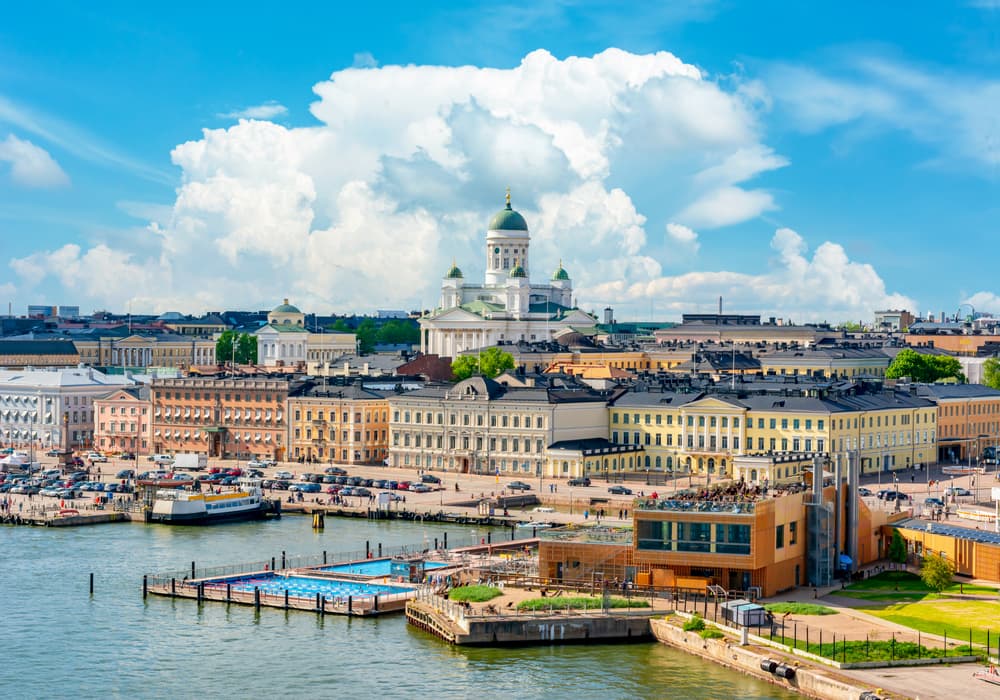
Finland takes the idea of quiet seriously, not as a preference but as a philosophy: sisu, the national concept of endurance and grit, rests on an understanding that silence and space are resources rather than deficits, and the country built around that understanding keeps winning the World Happiness Report, nine consecutive years now, while insisting with characteristic understatement that contentment is a better word. The working infrastructure is quietly spectacular: Oodi, Helsinki's central library, may be the world's best free coworking space, the coffee consumption is the planet's highest per capita, English is universal, Slush turns November's darkness into the startup world's densest gathering, and the everyman's rights, jokamiehenoikeudet, open every forest and lakeshore to anyone who walks in respectfully. Helsinki carries the capital's design-city calm, Tampere and Turku run the second tier, and Lapland turns winter into a product the rest of the world flies in for.
The paperwork story is honest and selective. Finland has no nomad visa and does not market a gray zone: tourist stays are for tourism, and the long-stay menu recruits deliberately. The Startup Permit is the distinctive door, Business Finland evaluating the innovation and growth case, a favorable eligibility statement no more than four months old feeding a Migri application, two renewable years with means of roughly 1,030 to 1,210 euros net monthly by municipality, electronic fast-track processing in about fourteen days at its best.
The entrepreneur permit serves the conventionally self-employed through a two-stage review, the Economic Development Centre judging viability before Migri decides, and its rules are refreshingly explicit: the permit requires genuinely working in the business in Finland, is not granted to light entrepreneurs working through invoicing services, and, for private traders, interacts with an EEA-domicile requirement that makes the first application from abroad the standard sequence. The specialist lane starts at 3,937 euros monthly for 2026 with an expedited long-stay D visa attached, EU citizens register through the DVV and simply live, and the long game hardened in January 2026: permanent residence now requires six years of continuous residence, Finnish or Swedish proficiency and work history, with a four-year accelerated track for high earners and shortage specialists at B1 language, while the 2024 citizenship reform stretched naturalization residence to eight years. Finland is not competing for laptops on tourist visas; it is competing for people who will stay, and it prices the difference clearly.
The seasonal door is small and real. Lapland's winter industry hires guides, drivers and resort staff every season for the Santa-and-snow economy, and seasonal work permits cover the farm and berry harvests of the short bright summer.
The honest context reads dramatic and lives calm. The entire 1,340-kilometer land border with Russia has been closed since December 2023 and was reaffirmed closed until further notice by government decision in June 2026, instrumentalized migration named as the reason, a 200-kilometer smart fence rising along the line, and NATO membership since 2023 anchoring the security architecture. None of it touches daily life in cities that sit hundreds of kilometers west of the frontier and rank among the safest on earth; the US advisory holds the Level 1 its larger European peers cannot, and the genuine hazards remain Finnish ones, winter ice, winter darkness answered with light therapy and outdoor discipline, and the reindeer on a Lapland road at dusk.
Widening the search? If you are looking to expand your job hunt across Northern Europe, take a look at Estonia →, Sweden →, and Norway →.
Cost of living
Finland prices at the Nordic table with the gentlest seat at it: Helsinki one-bedrooms run roughly 900 to 1,300 euros, Kallio's converted-warehouse energy below the design-district center, with Tampere and Turku a solid quarter cheaper and the euro deleting conversion arithmetic. Utilities carry the winter-heating weight softened by the world's best-insulated housing stock, and fiber is fast, cheap and everywhere, this being the country that invented much of the stack.
Daily life runs on institutions: the lounas lunch-buffet culture at 11 to 14 euros as the working meal, the S-Group and K-Group grocery duopoly keeping the cooking economy honest if never cheap, Alko's state monopoly rationing the wine budget by law, and the free tier being genuinely spectacular, Oodi's workspace, the library network, the everyman's-rights forests and lakes, the winter ice-swimming holes. Transport is excellent: HSL's zone system covers greater Helsinki at commuter-pass logic, VR trains link the cities, and the ferry to Tallinn turns Estonia into a two-hour errand. Cards and mobile payment run everything; cash is a curiosity. The comfortable single Helsinki life assembles at 3,000 to 3,900 dollars, the budget floor sits near 2,300 with Kallio housing and lounas discipline, and the honest seasonal line items are Finnish: the winter's light-therapy lamp and the summer mökki weekend, both of which the culture treats as infrastructure rather than luxury.
- One-bedroom rent: 900 to 1,300 euros in Helsinki, Kallio the value-with-character district, a quarter less in Tampere and Turku; the housing stock's insulation quality is the invisible utility discount.
- Eat the lounas institution: the 11-to-14-euro lunch buffet is the working meal the entire country runs on, the grocery duopoly keeps cooking honest, and Alko's monopoly hours ration the wine budget by statute.
- Use the spectacular free tier: Oodi's world-class workspace, the library network, every forest and lakeshore under everyman's rights; Finland's best amenities are deliberately unpriced.
- Budget the seasonal kit: the light-therapy lamp and winter layers are November's infrastructure, the mökki-and-sauna summer weekend is June's, and the Tallinn ferry at two hours is the standing cheap-escape valve.
Cost-of-living calculator
See how your budget stretches in Finland.
Estimates use approximate exchange rates and typical monthly costs. Your actual costs will vary.
Visas & Entry
Finland runs the standard Schengen stack without marketing a gray zone: visa-free nationals receive 90 days in any 180 across the zone, EES biometrics are live at the borders, ETIAS is expected in 2027, tourist stays are for tourism rather than an office with a view, and EU, EEA and Swiss citizens live and work freely, registering with the DVV once residence is real.
Beyond 90 days the menu recruits deliberately. The Startup Permit is the country's distinctive door: Business Finland evaluates the venture's innovation and international-growth case and issues an eligibility statement, valid four months, that feeds the Migri residence application, two renewable years with net means of roughly 1,030 to 1,210 euros monthly depending on municipality, fees of 450 euros online, and electronic processing that fast-tracks to roughly fourteen days when files are complete. The entrepreneur permit serves the conventionally self-employed with unusual honesty: a two-stage review in which the Economic Development Centre judges business viability before Migri decides the immigration half, an explicit requirement that you genuinely work in the business in Finland, an explicit exclusion of light entrepreneurs operating through invoicing services, and, for private traders, an EEA-domicile interaction that makes applying for the first permit from abroad the standard sequence; fees run 550 euros online and processing quotes range from weeks on complete files to many months on contested ones. The employment tier runs from the specialist permit at 3,937 euros gross monthly for 2026 with an expedited long-stay D visa attached, through the standard employed person's permit at its lower wage floor, to the EU Blue Card above. The long game hardened in January 2026: permanent residence now requires six years of continuous residence with Finnish or Swedish proficiency and two years of work history, a four-year accelerated track surviving for earners above roughly 60,000 euros yearly and shortage-list specialists at B1 language, and the 2024 reform stretched citizenship residence to eight years. Family joins the work-based permits, the Enter Finland portal runs the filings, and the honest summary is Nordic: Finland competes for people who will stay, prices the difference clearly, and offers everyone else 90 flawless days.
- Read Finland's honesty as the feature it is: no nomad visa, no marketed gray zone, and rules written in plain language on official pages; the country recruits founders and specialists deliberately, and the 90 Schengen days remain the genuine offer to everyone else.
- Founders, take the Startup Permit seriously: the Business Finland statement is a real evaluation, the fourteen-day electronic fast-track is real speed, and the two-year permit with family inclusion feeds the settlement clock; the innovation bar rewards preparation over improvisation.
- Respect the entrepreneur permit's two explicit exclusions: you must genuinely work in the Finnish business, and invoicing-service light entrepreneurship does not qualify; the viability review reads business plans with Nordic literal-mindedness.
- Sequence the private-trader application from abroad: the EEA-domicile interaction makes the first filing before arrival the standard path, and the Enter Finland portal plus a booked biometrics appointment complete the mechanics.
- Plan the hardened settlement clock: six years to permanence with language, four for high earners and shortage specialists at B1, eight to citizenship; the head start on Finnish everyone skips is the head start everyone regrets skipping.
- Count Schengen days like money until formalized: the 90-in-180 window spans the zone, EES logs it biometrically, and the Baltic circuit, Helsinki, Tallinn, Stockholm, spends from one shared allowance.
| Visa or permit | What it covers |
|---|---|
| Schengen entry | Ninety days in any 180 for visa-free nationals, EES live and ETIAS expected 2027, with Finland declining to market a gray zone: tourist stays are for tourism, and the long-stay menu is where working residence actually lives. |
| EU, EEA and Swiss citizens | Full freedom of movement: live and work without permits, registering residence with the DVV; the Nordic base as birthright, with the Tallinn ferry and Stockholm overnight boat as the standing regional circuit. |
| Startup Permit, the credible door | Business Finland's eligibility statement, four months' validity, trades an innovation-and-growth case for two renewable years: net means of roughly 1,030 to 1,210 euros monthly by municipality, 450-euro online fees, and electronic fast-tracking to roughly fourteen days; one of Europe's most efficient founder routes. |
| Entrepreneur permit, honestly ruled | Two-stage review, the Economic Development Centre on viability then Migri on immigration, with explicit rules: genuine work in the business in Finland required, light entrepreneurs via invoicing services excluded, and private traders sequencing the first application from abroad; 550 euros online, processing from weeks to months by file quality. |
| Specialist and employment lanes | The specialist permit at 3,937 euros gross monthly for 2026 with an expedited D visa for entry, the standard employed person's permit at its lower floor, and the Blue Card above; the salaried counterpart the tech sector actually uses. |
| The hardened long game | Permanent residence from January 2026 requires six years, Finnish or Swedish proficiency and work history, with a four-year track for roughly 60,000-euro-plus earners and shortage specialists at B1; citizenship residence stretched to eight years by the 2024 reform; the settlement clock is real and priced. |
| Family and the portal | Spouses and children join the work-based permits at their own fee tier, the Enter Finland e-service runs applications with biometrics at missions or Migri points, and the D visa shortens the wait between approval and arrival for the expedited categories. |
Good to know: No DNV and no marketed gray zone; Startup Permit is the credible door (Business Finland statement, 2 renewable yrs, ~14-day fast-track, means €1,030-1,210/mo net); entrepreneur permit runs a two-stage viability review with explicit rules (must work in the business in Finland; light entrepreneurs excluded); specialist lane €3,937/mo 2026 + expedited D visa; Jan 2026 reform: PR at 6 yrs (4-yr track for €60k+/shortage at B1); citizenship 8 yrs.
EnRoute Jobs AI tool
Route Planner
Map visa routes, timelines, and relocation costs for your next destination.
Work & Legal
Finnish professional culture is built on economy of expression: meetings start on time, address the agenda and end, silence is respect rather than absence, commitments made are commitments kept, and performative friendliness is neither offered nor missed. The adaptation repays itself quickly, social energy not spent on performance stays available for work, and the trust extended by default, unattended laptops in cafés, honesty as ambient assumption, is the productivity infrastructure no coworking membership can buy. The scene itself is deep: Helsinki's startup ecosystem peaks each November when Slush turns the darkness into the founder world's densest gathering, Maria 01 anchors the campus tier, Oodi offers the planet's best free workspace, English is universal, and the toiminimi sole-trader framework plus a mature invoicing-and-accounting stack serve the formalized freelance economy.
The legal lines are Nordic-clear: Finland does not market a tourist-stay work fiction, Finnish clients and employment require proper status, and the formalized resident meets YEL, the self-employed pension insurance whose declared-income base funds the safety net and deserves setting honestly rather than minimally. The operational notes: GMT+2 overlaps Europe wholly and reaches US East by afternoon; the summer's nightless nights stretch the working evening as June's Juhannus empties the cities to the mökki lakeside; the winter asks deliberate light discipline and repays it with the season's deep-focus calm; and the sauna, the actual boardroom of Finnish life, closes more deals and friendships than any office, with the only rule being that the invitation is accepted.
- Match the economy of expression: agendas honored, words rationed, commitments kept, silence respected; the Finnish meeting is a productivity technology, and adapting to it is the fastest integration available.
- Work the light calendar deliberately: summer's near-endless evenings carry the social-and-work peak, winter asks the lamp, the outdoor hour and the heated focus of the dark season, and the culture's seasonal tools, mökki, sauna, ice swim, are infrastructure rather than novelty.
- Formalize through toiminimi when Finland turns real: the sole-trader framework, mature accounting stack and YEL pension line convert freelancing into clean structure, with the declared-income base worth setting honestly for the safety net it funds.
- Accept the sauna, always: it is the culture's boardroom, peace pipe and living room at once, the invitation is a genuine honor, and declining is the one social misstep Finland will quietly remember.
Good to know: No marketed gray zone; toiminimi + YEL for the formalized; Slush each November, Maria 01, Oodi as the free-workspace crown; silence-as-respect meeting culture; GMT+2; the sauna invitation is always accepted.
Taxes
Finnish tax funds the world's happiest infrastructure and prices it accordingly: progressive state tax plus a municipal layer reaching combined rates near 52 percent at high incomes, Europe's near-highest VAT at 25.5 percent, and a residency line at 183 days or a fixed abode.
| What applies | The rule in 2026 |
|---|---|
| The residency tests | Tax residency attaches past 183 days or through a permanent home in Finland; the Schengen-season visitor stays clear, and the permit-holding resident is in the system by design with the Kela card as the membership token. |
| Non-residents | Owe Finnish tax on Finnish-source income only; the visiting remote worker's foreign salary and clients sit outside the net for the standard season. |
| Residents | Worldwide income enters the progressive machine, state brackets plus the municipal percentage combining toward roughly 45 to 52 percent at high incomes; the price of the machine, and the benefit-side arithmetic, healthcare, education, transit, is the half the sticker never shows. |
| The self-employed layer | Toiminimi profits flow through the schedule with YEL pension insurance alongside, its declared-income base funding pension, sickness and parental coverage; setting YEL honestly is the Finnish freelancer's standing advice against the temptation of the minimum. |
| VAT at the Nordic ceiling | The standard rate of 25.5 percent since late 2024 sits near Europe's top, registration thresholds catch genuinely local businesses, and foreign B2B services largely reverse-charge; the daily-life version rides inside every receipt. |
| The treaty network | Finland's double-taxation treaties run comprehensive, credits and exemptions allocating cleanly for the properly advised, and the cross-border Nordic commuter rules are a solved genre of their own. |
| Americans specifically | A US-Finland income tax treaty stands and a totalization agreement has been in force since 1992, sparing self-employed Americans double social-security contributions; with the FEIE or credits on the income side, the American's Finnish stack is heavy but cleanly ordered. |
| The home-country half | Finnish residency does not silence the jurisdiction left behind: exits, treaty tie-breakers and the fixed-abode question deserve professional hands before the move, and the clean version starts the conversation before the Enter Finland application. |
Verified 21 August 2026: the 183-day and fixed-abode tests, combined progressive rates near 52 percent at high incomes, YEL's declared-income mechanics, VAT at 25.5 percent, and the standing US treaty plus the 1992 totalization agreement. General information, not tax advice.
Good to know: 183-day + fixed-abode tests; combined state+municipal to ~52% at high incomes; VAT 25.5% (Europe's near-ceiling); YEL declared-income base worth setting honestly; US treaty AND 1992 totalization; the benefit side of the arithmetic is the half the sticker never shows.
Healthcare
Finnish healthcare delivers OECD-top outcomes through a public system funded by the taxes that make the happiness rankings honest: comprehensive for residents, EHIC-reciprocal for EU visitors, anchored by the university-hospital network with HUS Helsinki at the national apex, and supplemented by a private tier, Terveystalo and Mehiläinen the national networks, that sells same-week access at 80 to 140 euros per consultation with English standard throughout the entire system. The honest caveats are structural rather than qualitative: public non-urgent queues exist and the private tier is the professional class's answer, adult dental care sits largely outside public coverage and prices privately, and the non-EU visitor needs real insurance because the excellent machine bills genuinely without it.
The practical texture is Nordic: pharmacies precise, tap water among the world's best, the 112 Suomi app dispatching GPS-located help as the official emergency channel, and the health risks being environmental with a seasonal syllabus, winter ice as the injury statistic, the darkness asking vitamin D and light-lamp discipline of every newcomer, ticks in the summer archipelago and lake country where TBE vaccination is the local norm, and the Lapland road's reindeer at dusk as the driving hazard the rental agreement mentions for a reason. Residents enter the system through the Kela card; the sauna-and-ice-swim cycle, the culture insists with some evidence, handles the rest.
- Consultations run 80 to 140 euros at the private networks with same-week access and English standard; EHIC carries EU visitors publicly, residents run on the Kela card, and the uninsured non-EU visitor is the system's one exposed position.
- Budget dental privately: adult dental sits largely outside public coverage, the private tier prices at Nordic rates, and the pre-trip cleaning at home remains the honest arbitrage.
- Install 112 Suomi before anything else: the official emergency app dispatches with GPS location, works nationwide, and is the single best piece of safety infrastructure Finland hands every arrival for free.
- Run the seasonal health syllabus: winter ice is the injury statistic and boots-with-grip the answer, the darkness asks vitamin D and the light lamp, TBE vaccination is the archipelago-and-lake norm, and the dusk reindeer is the one Lapland driving hazard that is not a joke.
| Hospital | What to know |
|---|---|
| HUS Helsinki University Hospital | The national flagship network and tertiary apex, the referral answer for complex anything and among Europe's strongest academic medical centers. |
| Terveystalo | The country's largest private network: same-week English-standard access in every city, the professional class's default for the routine-through-specialist band. |
| Mehiläinen | The second national private network, clinic-to-hospital depth with occupational-health contracts covering much of working Finland. |
| Tampere University Hospital | The inland university anchor, full tertiary depth for the second city and its region. |
| Turku University Hospital | The southwestern university flagship serving the old capital and the archipelago coast. |
| Oulu University Hospital | The northern university anchor, the serious-care answer for Lapland and the entire upper half of the country. |
Hospital list compiled 21 August 2026 and not yet confirmed against each facility directly. Treat as indicative and verify before relying on it.
Good to know: OECD-top public system + private networks (Terveystalo, Mehiläinen) at €80-140 same-week; HUS the national apex; adult dental prices privately; 112 Suomi app = GPS-dispatched official channel; winter ice, darkness discipline, TBE in lake country, dusk reindeer in Lapland.
Safety
Finland holds a US Level 1, Exercise Normal Precautions, a rating that has not moved in decades and that its larger European peers, Germany, France, and Sweden at Level 2, cannot match, and daily life over-delivers on it: violent crime is rare, the social-trust environment leaves laptops unattended in cafés as ambient culture, solo travelers of every description report complete comfort at all hours, and the entire urban caution register compresses into standard awareness around Helsinki's central railway station and Kamppi after midnight. The era's dramatic-sounding fact lives at the eastern frontier and stays there: the entire 1,340-kilometer land border with Russia has been closed since December 2023 and was reaffirmed closed until further notice by government decision in June 2026, instrumentalized migration named as the standing risk, a 200-kilometer smart fence rising along the line, the Helsinki-St Petersburg train suspended, Russian-plated cars banned, and even bicycles prohibited at the eastern crossings; NATO membership since 2023 anchors the architecture, and daily life, hundreds of kilometers west, registers none of it beyond the map. The practical translation is a single sentence: there is no overland Russia option, and nothing else changes.
The genuine hazards are environmental and honestly seasonal. Winter ice injures more people than crime by orders of magnitude, and the boots-grips-and-shuffle doctrine is the entire answer; the deep-winter cold demands real clothing and respect for exposure times; headlights run always by law and winter tires by season; rural roads carry moose and, in Lapland, reindeer at dusk as the collision statistic rental agencies mention first. The darkness itself is a wellbeing hazard the culture answers with lamps, outdoor hours and the sauna-ice-swim cycle. Cannabis and CBD products are illegal to bring in, a rule the US country page states flatly. Demonstrations are rare and orderly, the political temperature is consensus-calm, the national terrorism assessment sits at elevated in line with the continental background rather than Finnish specifics, and the 112 Suomi app dispatches GPS-located help as the official emergency channel. The honest summary: the world's happiest country is also functionally its most trusting, the frontier drama is government-managed geography, and the things that will actually get you are ice, cold and a reindeer.
- Live the Level 1 as designed: the trust environment is real infrastructure, the urban caution register compresses to the station district after midnight, and the advisory that has not moved in decades is the accurate summary of daily life.
- Treat the eastern border as geography, not news: every land crossing is closed until further notice, the St Petersburg train is suspended, bicycles are banned at the line, and there is no overland Russia plan; daily life hundreds of kilometers west registers none of it.
- Respect winter as the actual hazard: ice injures more visitors than everything else combined, boots with grip and the Finnish shuffle are the doctrine, real clothing is survival equipment in the deep cold, and the darkness asks the lamp-and-outdoor-hour discipline of every newcomer.
- Drive to Finnish law: headlights always on, winter tires in season, and the moose-and-reindeer dusk hazard on rural roads taken as seriously as the rental agreement takes it; the train network is the elegant escape from all of it.
- Leave the cannabis at home: bringing marijuana, CBD or derivatives into Finland is illegal full stop, the border takes it seriously, and no continental normalization changes Finnish law.
- Install 112 Suomi and expect competence: the official app dispatches GPS-located help nationwide, English works everywhere, and STEP enrollment plus the embassy feed complete a kit the country will almost certainly never make you use.
Official travel advisories
| Government | Current position |
|---|---|
| United States | Level 1, Exercise Normal Precautions, unchanged in decades with summary-only updates; the country page carries the concrete rules, the fully closed Russia land border, the cannabis-and-CBD import ban, and the 112 Suomi app recommendation.travel.state.gov → |
| Finnish Government and Border Guard | The official layer: the June 2026 decision keeping every eastern crossing closed until further notice, entry restrictions on Russian nationals with enumerated exceptions, the leisure-boating closures in the eastern Gulf, and the standing rule that there is no overland Russia route. |
| United Kingdom | Standard guidance with the border-closure notes and the continental terrorism-possible framing; the practical texture is winter-driving law, headlights always on and seasonal tires.gov.uk → |
| Australia | Normal precautions; documents the indefinite border closure, suspended St Petersburg rail and public transport links, the maritime crossing closures, and consular coverage running through Stockholm.smartraveller.gov.au → |
| US Embassy Helsinki | Enroll in STEP; the embassy feed carries the rare security item and the border-status notes. Itäinen Puistotie 14 B, Helsinki; +358 9 616 250.fi.usembassy.gov → |
Advisory positions verified 21 August 2026: US Level 1 unchanged with summary-only updates, the June 2026 government decision keeping the eastern border closed until further notice with the smart-fence construction and suspended transport links, the Russian-national entry restrictions, the cannabis import ban, and the winter-and-wildlife hazard picture. Open the sources before travelling.
Good to know: US L1 unchanged in decades (Sweden/Germany/France sit at L2); the Nordic distinction; the 1,340km Russia border closed since Dec 2023, reaffirmed until further notice Jun 2026 (smart fence rising, train suspended, bikes banned) = managed geography, not lived risk; real hazards: ice, cold, darkness discipline, dusk reindeer; cannabis/CBD import illegal; 112 Suomi app.
Climate
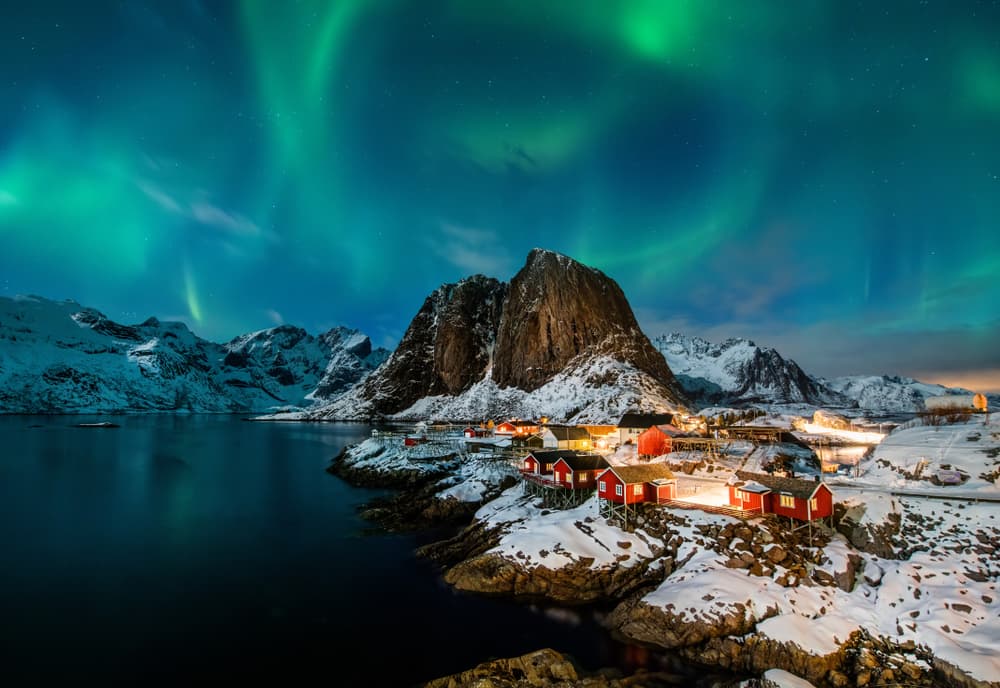
Finland runs the honest extremes: Helsinki Januaries at minus-4 to zero under six hours of grey-blue light, Julys at 20 to 25 under as many as eighteen, and the transitions fast in both directions, spring detonating through May, autumn's ruska burning gold through September and gone by October. The working calendar splits by temperament. Summer is the unconditional prize, June through August's nightless nights carrying the lake-and-mökki culture, Juhannus midsummer as the year's true holiday, terraces and archipelago ferries at full life, and a social warmth the long winter has visibly concentrated. Winter, November through March, is the acquired taste that residents come to defend: deep-focus desk weather behind triple glazing, the sauna-and-ice-swim cycle as the culture's answer to the cold, Lapland's snow-globe season with aurora hunting and genuine skiing, and the darkness handled with lamps, outdoor hours and the national refusal to cancel life for weather. The kaamos polar night owns the far north's December while Helsinki keeps its low grey sun; the light returns fast from February; and the single most useful preparation remains unglamorous, real winter clothing owned before November and a light-therapy lamp treated as furniture.
| Season | What to expect |
|---|---|
| Summer, June to August | The unconditional prize: 20-to-25-degree days under near-endless light, Juhannus midsummer, lake and mökki culture, archipelago ferries; the season the entire year points at. |
| Winter, November to March | Deep, dark and genuine: minus-4-to-zero Helsinki Januaries under six-hour days, Lapland's snow-globe product, the sauna-ice-swim answer, and desk weather of unusual focus for those equipped with light and layers. |
| The fast shoulders | Spring detonates through May after the long wait; autumn's ruska burns the forests gold through September and retreats by October; both reward spontaneity over planning. |
| The light calendar itself | From eighteen-hour summer days to the far north's kaamos polar night, light is Finland's real weather; the lamp, the outdoor hour and the February return are the syllabus every newcomer learns. |
Good to know: Summer's nightless nights are the prize, winter is the defended acquired taste, and light, not temperature, is the real Finnish weather.
Culture & Customs
Finnish culture is built on understatement, self-sufficiency and a specific honor attached to keeping commitments and not wasting words: silence is respect rather than absence, small talk is neither offered nor missed, and the trust extended by default, unattended property, unlocked assumptions, honesty as ambient air, is the social technology that makes the happiness rankings legible. Sisu, the national concept of endurance, explains the winter; the sauna explains everything else. It is the culture's boardroom, confessional and living room at once, an invitation is a genuine honor accepted immediately and unconditionally, and the cycle of heat, lake and repeat is the nearest thing Finland has to a constitution. The everyman's rights open every forest, shore and berry patch to anyone walking in respectfully, the mökki summer cottage is the national dream in log form, and the year swings between Juhannus midsummer, when the cities empty to the lakes, and the candle-lit interior season the darkness enforces.
Daily texture: the world's highest coffee consumption taken seriously and often, the lounas buffet as working ritual, rye bread as identity, no tipping because service is included in the culture's idea of itself, shoes off in homes always, punctuality as basic honesty, and Vappu's May Day student carnival as the one day the reserve visibly breaks. English is universal and Finnish is famously unrelated to anything, which makes even a kiitos land with disproportionate warmth. The professional who matches the economy of expression, accepts the sauna, learns ten words and lets the silence be comfortable is granted the durable Nordic friendship that effusive cultures promise and this one quietly delivers.
- Let the silence be comfortable: it is respect, not absence, and filling it reads as noise; the Finnish conversation values weight over volume, and matching it is the fastest integration available.
- Accept the sauna immediately and unconditionally: it is the culture's boardroom and peace pipe, the invitation is a genuine honor, and declining is the one social misstep the country will quietly remember.
- Use the everyman's rights like a citizen: every forest, lakeshore and berry patch opens to respectful presence, the mökki weekend is the national dream, and joining one is the true sign of arrival.
- Learn kiitos and the coffee liturgy: English is universal, the Finnish attempt lands with disproportionate warmth in a language related to nothing, and the world's highest coffee consumption is a standing invitation to sit down.
- Keep commitments with Finnish literalness: punctuality is honesty, a yes means yes, and the trust environment extends exactly as far as reliability earns it; the culture's generosity is real and bookkept.
- Ride the year's two poles deliberately: Juhannus empties the cities to the lakes and Vappu breaks the reserve for a day; the winter's candle-lit interior season is the acquired taste residents end up defending.