.png)
About Ireland
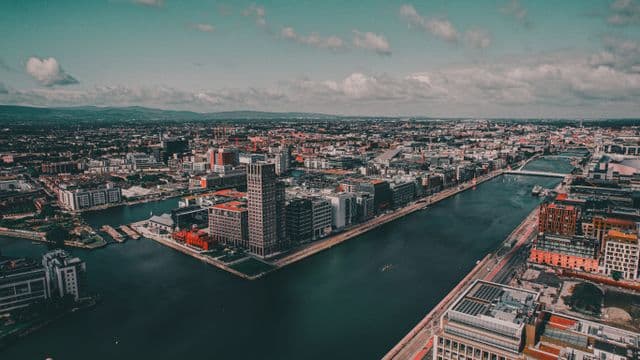
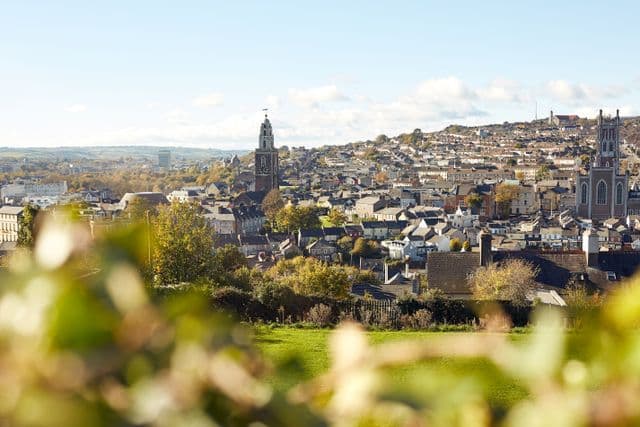
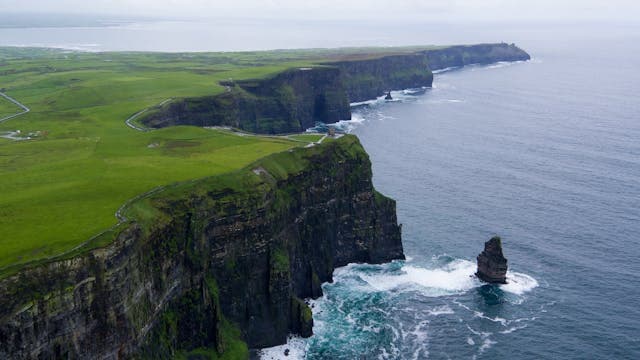
Ireland is small enough to drive corner-to-corner in a day and large enough, in its cultural density and its particular relationship with language and weather, to occupy a person for years: the light on the west coast, Connemara, the Cliffs of Moher, the Aran Islands, is the light Atlantic storms polish, and the country behind it has produced a share of world literature so disproportionate to five million people that the pub conversation still feels like the first draft of something. Dublin runs the professional engine, the EMEA headquarters of half of American tech stacked along the Silicon Docks, Cork plays the second city with real food-and-harbor charm, Galway holds the bohemian west, and the entire island operates in English with a warmth that makes integration less a project than a surrender.
The structural position is unique in Europe and this page states it plainly. Ireland sits outside Schengen with its own 90-day visitor clock, admission at the immigration officer's discretion and no EES machinery, which means Irish months never spend the continental 90-in-180 allowance, the quiet strategic fact for anyone running a European rotation. UK citizens enter and work without limit under the Common Travel Area, and American travelers clear US immigration before takeoff at Dublin and Shannon's preclearance halls, flying home as domestic arrivals. The honest caveat sits beside it: visitor status formally permits no work, including remote work for foreign employers, so the laptop-on-holiday operates in unauthorized territory Ireland does not formally bless.
The formal doors are well-made. The Critical Skills Employment Permit, 40,904 euros yearly from March 1, 2026 for listed occupations with a relevant degree, 68,911 without, is quietly Europe's best skilled-worker deal: no labour-market test, a two-year permit reaching Stamp 4 open residence at 21 months, after which any employer or self-employment is legal, with spouses working immediately on Stamp 1G. The General Employment Permit runs at 36,605 with a 28-day market test and a five-year clock, the STEP programme takes founders with 50,000 euros and an innovative, scalable case, and Stamp 0 serves the genuinely financially independent, means around 50,000 euros yearly plus reserves, with work prohibited absent written permission.
Working holiday agreements round out the doors: Canadians, Australians and New Zealanders can take a year of open Irish work rights, and, unusually, so can American students and recent graduates under a scheme almost nobody at home has heard of. The tourist towns of Kerry and the west hire hard for the summer season on the strength of it. Citizenship arrives at five years with dual nationality welcome, and the passport it yields is the EU's only anglophone one.
The context is the kindest in this index's European set: a US Level 1 advisory, one of the continent's few, refreshed in March 2026 with an expanded petty-crime section that is itself the news, and a top-three Global Peace Index seat, against Dublin-center pickpockets, Temple Bar's weekend rowdiness, and a 2025-2026 protest cycle around immigration policy with occasional violent edges, all of it navigated with ordinary city habits while Garda statistics actually improve. The honest structural problem is not safety but shelter: the housing crisis is real, Dublin rents are punishing, supply is the national political question, and every Irish plan should price it first. Everything else, the craic, the hundred shades of green, the best conversational culture in Europe, prices in your favor.
Widening the search? If you are looking to expand your job hunt across Northern Europe, take a look at United Kingdom →, France →, and Iceland →.
Cost of living
Ireland prices at the Atlantic premium with one line item that dominates all others: housing. Dublin one-bedrooms run 1,800 to 2,400 euros in a market defined by genuine scarcity, viewings queue, references matter, and the search deserves weeks of lead time and a plan B; Cork, Galway and Limerick run a meaningful third less with the same national warmth, and the remote-work dispersal into the towns, backed by the national broadband rollout and the Connected Hubs network, is the honest arbitrage the country itself promotes.
Daily life beneath the rent runs friendlier: the supermarket tier, Dunnes, Tesco, Aldi, Lidl, keeps cooking honest, the lunch deal and the carvery answer the working meal at 12 to 16 euros, the pint runs 6 to 7 in Dublin and less outside it as the social subscription it genuinely is, and the free tier is the country itself, coastal walks, national parks and the museums of a state that keeps its treasures unticketed. Transport runs Leap Card logic in Dublin, intercity rail and bus links every city, and the west rewards a car with rural-road nerve. The comfortable single Dublin life assembles at 3,400 to 4,100 dollars with housing luck, the budget floor sits near 2,400 only outside the capital or in shares, and the honest additions are Irish: the waterproof wardrobe bought once and properly, and the pub line item that is not drinking money but membership dues.
- Housing is the boss fight: 1,800 to 2,400 euros for Dublin one-bedrooms in a genuine scarcity market where viewings queue and references matter; budget weeks for the search, and price Cork, Galway or Limerick at a third less before defaulting to the capital.
- Run the provincial arbitrage the state itself promotes: the Connected Hubs network and national broadband make the towns workable, the second cities keep the warmth at friendlier rents, and the west trades commute for coastline.
- Eat the carvery and shop the German tier: the 12-to-16-euro lunch deal is the working meal, Aldi and Lidl keep the basket honest, and the pint at 6 to 7 in Dublin is membership dues for the best social infrastructure in Europe.
- Use the free country: coastal walks, national parks and unticketed national museums carry the weekends, the Leap Card runs Dublin transit at commuter logic, and the waterproof bought once and properly is the wardrobe's entire foundation.
Cost-of-living calculator
See how your budget stretches in Ireland.
Estimates use approximate exchange rates and typical monthly costs. Your actual costs will vary.
Visas & Entry
Ireland runs its own immigration system entirely outside Schengen, and the geometry is the strategic fact: visa-free nationals, Americans, Canadians, Australians and most Western passports, receive up to 90 days at the immigration officer's discretion, none of it counted against the continental 90-in-180 allowance and none of it logged by EES, making Ireland the anglophone reset button in any European rotation; UK citizens live and work without limit under the Common Travel Area, EU, EEA and Swiss citizens exercise free movement, and American departures clear US preclearance at Dublin and Shannon. The honest line comes first: visitor status formally permits no work, including remote work for foreign employers, and Ireland has not blessed the gray zone other countries tolerate.
Beyond visits there is no nomad visa and a well-made menu. The Critical Skills Employment Permit is the crown: 40,904 euros yearly from March 1, 2026 for occupations on the Critical Skills list with a relevant degree, 68,911 for other eligible roles without one, 36,848 for recent graduates, no labour-market test, a 1,000-euro fee mostly refundable on refusal, four-to-eight-week processing, and the payoff that makes it Europe's best skilled-worker deal, Stamp 4 open residence after just 21 months, unlocking any employer and self-employment, with spouses on Stamp 1G working immediately from arrival; the one structural rule is that no more than half an employer's staff may be non-EEA, waived for young Enterprise Ireland and IDA-backed startups. The General Employment Permit runs at 36,605 euros with a 28-day labour-market test and a five-year road to Stamp 4, sector thresholds lower, all figures rising on a published roadmap through 2030. The STEP programme takes founders with 50,000 euros in funding and an innovative, scalable business judged by an evaluation committee, explicitly not for ordinary trades. Stamp 0 serves the financially independent, means historically around 50,000 euros per person yearly plus access to reserves, with work prohibited unless expressly permitted in writing, the retiree-and-passive-income door rather than a nomad product. Everyone registers for an Irish Residence Permit after arrival, permanence logic runs through five years, and citizenship by naturalisation at five years yields the EU's only anglophone passport with dual nationality welcome.
- Bank the Schengen geometry: Irish months spend nothing from the continental 90-in-180 clock, making Ireland the reset valve in any European rotation and the one EU base where the American time-zone overlap runs anglophone.
- Respect the visitor-work line: Ireland formally permits no remote work on visits, the officer's discretion governs entry, and the durable answer is a real status; arriving with return tickets, accommodation and a clean story is the entire short-stay craft.
- Aim at the Critical Skills crown if the profile fits: 21 months to open residence is Europe's fastest serious settlement clock, the spouse works from day one, and the qualification-relevance check is strict, the degree must match the role.
- Build the STEP or Stamp 0 file honestly: the founder door wants funding and scalability rather than a freelance practice with a plan, and the independent-means door wants genuinely passive income with work off the table.
- Watch the roadmap: thresholds rise on a published schedule through 2030, the March figures apply to new and renewal files alike, and the occupations lists are reviewed periodically; verify at filing time, not offer time.
- Price the housing search into the plan: every Irish status lands in the same scarce rental market, references and lead time matter, and the second cities are the honest pressure valve the capital cannot currently be.
| Visa or permit | What it covers |
|---|---|
| Visitor entry, outside Schengen | Up to 90 days at the officer's discretion for visa-free nationals, spending nothing from the continental allowance and touching no EES record; formally no work of any kind, including remote work for foreign employers. |
| Common Travel Area and EU freedom | UK citizens live and work without limit under the CTA; EU, EEA and Swiss citizens exercise full free movement; and both meet only the practical machinery of PPS numbers and the housing market. |
| Critical Skills Employment Permit | 40,904 euros from March 2026 for listed occupations with a relevant degree, 68,911 without, graduates at 36,848: no labour-market test, four-to-eight-week processing, and Stamp 4 open residence at 21 months with spouses working immediately on Stamp 1G. |
| General Employment Permit | 36,605 euros for most occupations with a 28-day labour-market test, sector tiers lower, five years to Stamp 4; the broader, slower lane beneath the Critical Skills crown, on the same roadmap of rises through 2030. |
| STEP, the founder door | 50,000 euros in funding plus an innovative, scalable business case judged by an evaluation committee; explicitly not for ordinary trades, and the credible route for the funded startup with Enterprise Ireland's ecosystem behind it. |
| Stamp 0, independent means | The passive-income residence: means historically around 50,000 euros per person yearly plus reserves, private health insurance, and work prohibited absent express written permission; the retiree's door, honestly labelled. |
| The long game | IRP registration on arrival, five years to long-term residence and to citizenship by naturalisation, dual nationality welcome, and the payoff unique in the EU: an anglophone passport with the entire union behind it. |
Good to know: No DNV; NOT Schengen (own 90-day clock, no EES; preserves continental allowance); visitor status formally permits NO work incl. remote; CSEP Mar 2026 = €40,904/€68,911 → Stamp 4 at 21 months (any employer + self-employment) + spouse Stamp 1G immediate; GEP €36,605 + 28-day LMNT, 5 yrs; STEP €50k funded founders; Stamp 0 = independent means (~€50k/yr, no work); CTA unlimited for UK citizens; US preclearance Dublin/Shannon; citizenship 5 yrs, dual OK.
EnRoute Jobs AI tool
Route Planner
Map visa routes, timelines, and relocation costs for your next destination.
Work & Legal
Irish professional culture is relationship-first in a way that surprises arrivals from transactional markets: business develops through conversation, warmth is the operating system, the pub functions as genuine professional infrastructure where deals soften and networks form, and the national conversational gift means the meeting rarely starts on time or on topic and usually ends better for it. The tech gravity is real, the EMEA headquarters of American software stacked along Dublin's docks running a deep anglophone job market, the startup tier behind it backed by Enterprise Ireland's machinery, and the professional register runs modest: self-promotion lands poorly, wit lands always, and the word grand does more work than any adjective in Europe.
The legal lines are cleanly drawn: visitor status formally permits no work, including foreign-client remote work, which makes Ireland stricter on paper than most of this index even as short-stay laptops draw no practical attention; Irish clients or employment require status; and the formalized resident registers as a sole trader with Revenue in an afternoon, income tax plus USC and PRSI following, with the limited-company route worthwhile at scale. The structural gift is the clock: Ireland runs GMT, the best American overlap in the EU, mornings free for Europe and the entire US East Coast afternoon live until evening, in the union's only anglophone country. July and August soften with holidays, the GAA calendar and the weather-window culture shape the summer, and the operational note every arrival learns first is the housing one: the job market says yes faster than the rental market does.
- Work the relationship register: business develops through conversation and warmth, the pub is professional infrastructure, wit outperforms polish, and the meeting that wanders usually lands somewhere better; transactional efficiency reads as coldness.
- Formalize through Revenue when Ireland turns real: sole-trader registration takes an afternoon online, USC and PRSI ride the income schedule, and the limited company earns its accounting at scale; visitor status permits none of it.
- Weaponize the GMT clock: mornings catch all of Europe, the US East Coast runs live until Irish evening, and the union's only anglophone country makes the overlap frictionless; no EU base serves American clients better.
- Let the job market and housing market run in parallel: offers land faster than leases in the current scarcity, references and lead time decide the rental race, and the second cities answer what Dublin currently cannot.
Good to know: Relationship-first culture, pub as professional infrastructure; visitor status formally permits no work incl. remote; sole trader via Revenue in an afternoon (USC + PRSI); GMT = EU's best US overlap in its only anglophone country; EMEA tech gravity (Silicon Docks); housing market slower than job market.
Taxes
Irish tax pairs a steep earned-income schedule with one of Europe's quietest structural gifts for foreigners: the non-dom remittance basis, under which foreign income and gains are taxed only when brought into Ireland.
| What applies | The rule in 2026 |
|---|---|
| The residency tests | Residency attaches at 183 days in a year or 280 across two with at least 30 in each; ordinary residence, a distinct Irish concept, lingers for three years after leaving; the 90-day visitor stays comfortably clear. |
| The non-dom remittance basis | Foreign-domiciled residents, most arrivals, owe Irish tax on Irish income plus only the foreign income and gains actually remitted into Ireland; the quiet structural gift that makes Ireland far friendlier to foreign portfolios than the headline rates suggest, planned properly with clean account segregation. |
| Residents and the schedule | Income tax at 20 percent to a standard band around 44,000 euros and 40 above, plus USC stepping to 8 percent and PRSI around 4 percent; the combined marginal reality approaches the high forties, the price of the model stated plainly. |
| SARP and the assignee tier | The Special Assignee Relief Programme exempts 30 percent of employment income above 100,000 euros for qualifying arrivals relocated by their employers, running five years; the payroll-class instrument, applied for on schedule or lost. |
| The self-employed layer | Sole traders file through self-assessment with income tax, USC and PRSI on profits, preliminary tax in the national rhythm, and the limited-company route worthwhile at scale against Ireland's famous 12.5 percent corporate rate. |
| Capital gains and the exception | CGT runs a stiff 33 percent with a small annual exemption, and the remittance basis shelters foreign gains left offshore for the non-domiciled; the interplay between the two is where Irish planning actually happens. |
| Americans specifically | A US-Ireland treaty stands with a totalization agreement sparing double social contributions, the remittance basis stacks intelligently with the FEIE-or-credits architecture, and Dublin-Shannon preclearance keeps the compliance commute painless. |
| The home-country half | Irish residency and the three-year tail of ordinary residence complicate exits in both directions; the remittance-basis plan is built before arrival, with account structures set while still offshore, and the Irish accountant earns the fee. |
Verified 21 August 2026: the 183-and-280-day tests with the ordinary-residence tail, the non-dom remittance basis, the 20-and-40 schedule with USC to 8 percent, SARP's 30 percent relief above 100,000 euros, CGT at 33 percent, VAT at 23 percent, and the standing US treaty with totalization. General information, not tax advice.
Good to know: Non-dom remittance basis = the structural gift (foreign income/gains taxed only if remitted; segregate accounts BEFORE arrival); 20/40 schedule (~€44k band) + USC to 8% + PRSI; SARP 30% relief >€100k; CGT 33%; ordinary residence lingers 3 yrs after exit; CT 12.5% context; US treaty + totalization; VAT 23%.
Healthcare
Irish healthcare runs a mixed public-private system in the world's most reassuring language: the HSE public tier delivers universal emergency and hospital care with the honest caveat of long non-urgent waits, private GP visits run 50 to 80 euros with medical cards covering the entitled, EU visitors ride EHIC on resident terms, UK visitors carry GHIC reciprocity, and the private tier, thick in Dublin, sells the speed the public queues lack, which is why resident professionals typically carry private insurance from arrival. St James's and the Dublin academic hospitals anchor genuine tertiary depth, Cork University Hospital carries the south, and every consultation, form and phone call happens in English, the quiet luxury arrivals stop noticing within a week.
The practical texture: pharmacies professional and well-stocked, dental outside public coverage for most adults at private prices, tap water excellent, and the health risks environmental in the mildest register this index carries, the Atlantic weather as the actual hazard, storm systems disrupting travel, rain as permanent background, the rural roads asking real driving respect, and the winter light asking the lamp discipline. Emergencies answer at 999 and 112 with Gardaí, ambulance and coast guard behind them, and the deepest feature is cultural: a system, like the country, that treats you as a person first and a case number later.
- Carry private insurance as a resident: the public system delivers but queues for the non-urgent, the private tier sells speed, and the professional class's default from arrival is the honest local practice worth copying.
- GP visits run 50 to 80 euros privately in the world's most reassuring language; EHIC and GHIC carry EU and UK visitors, and travel insurance covers everyone else's hospital tail.
- Budget dental privately: adult dental sits outside public coverage at Irish prices, and the pre-trip cleaning at home remains the honest arbitrage.
- Respect the island's actual hazards: Atlantic storm systems disrupt travel on Met Éireann's warning calendar, the rural roads ask genuine driving care, and the winter light asks the lamp; 999 and 112 answer everything behind them.
| Hospital | What to know |
|---|---|
| St James's Hospital, Dublin | Ireland's largest teaching hospital and the national referral anchor, full tertiary depth on the capital's south side. |
| Mater Misericordiae University Hospital, Dublin | The northside academic flagship carrying national cardiothoracic and major-trauma roles. |
| St Vincent's University Hospital, Dublin | The southside university hospital with national specialty centres and the leafy-suburb calm. |
| Beaumont Hospital, Dublin | The national neurosurgery and renal-transplant centre anchoring the north city. |
| Cork University Hospital | The south's tertiary flagship and the largest hospital outside Dublin, carrying Munster with full academic depth. |
| The access architecture | HSE public care with honest non-urgent queues, private GPs at 50 to 80 euros, EHIC for EU visitors and GHIC for UK ones, and the Dublin private tier, Blackrock and its peers, selling the speed residents typically insure for. |
Hospital list compiled 21 August 2026 and not yet confirmed against each facility directly. Treat as indicative and verify before relying on it.
Good to know: Mixed HSE public + private system; honest non-urgent queues → residents carry private insurance; GP €50-80 private; EHIC/GHIC reciprocity; St James's + Dublin academic set + Cork anchor; dental private; Atlantic storms + rural roads = the real hazards; 999/112.
Safety
Ireland carries the kindest advisory file in this index's European set and the page states it with its texture intact. The headline: the US holds Level 1, Exercise Normal Precautions, one of the continent's few, refreshed March 20, 2026, and Ireland sits in the top three of the Global Peace Index; the news inside the refresh was itself mild, an expanded petty-crime section noting that theft has risen in recent years, that tourists are targeted in Dublin's center with rare cases involving assault, and that rental cars with their identifying stickers are a favorite mark. The street reality matches: violent crime against visitors is rare, solo travelers of every description report deep comfort, Garda statistics moved the right way through 2025 with thefts down by double digits, and the register that remains is opportunistic, phones from café tables, bags from pub chair-backs, pickpockets on Grafton Street, the Luas and O'Connell Street, and Temple Bar's weekend nights running rowdy enough that residents drink elsewhere, Camden Street, Stoneybatter, Portobello, where the pubs are better anyway.
The civic file is the era's: a protest cycle around immigration policy ran through 2025 and 2026, ten-thousand-strong marches, occasional violent edges, tractor blockades on the M50, all of it civic weather answered with distance and the transport app; the Northern border remains open, stable and unremarkable a generation after the Good Friday Agreement. The practical hazards are honestly environmental: Atlantic storms on Met Éireann's warning calendar, rural roads narrow enough to demand respect on the Wild Atlantic Way, and the sea's cold-water seriousness. Emergencies answer at 999 or 112, the Irish Tourist Assistance Service, a genuinely rare institution, supports visitor crime victims through reporting and recovery, and the honest summary is the one the numbers keep giving: Ireland threatens umbrellas, wing mirrors and unattended phones, in roughly that order.
- Read the Level 1 for what it is: one of Europe's few, atop a top-three Global Peace Index seat, with Garda theft statistics improving through 2025; the advisory's own news was an expanded pickpocket section, which is the mildest headline in this index.
- Run the Dublin-center habits: phones off café tables, bags off chair-backs, pickpocket awareness on Grafton Street, the Luas and O'Connell Street, and Temple Bar's weekend rowdiness traded for the better pubs of Camden Street and Stoneybatter.
- Strip the rental stickers and lock the car: rental vehicles are the named target, city-center parking belongs in secured garages, and the sticker-removal advice comes from the State Department itself.
- Treat the protest cycle as civic weather: the immigration-policy demonstrations of 2025-2026 ran large with occasional violent edges, distance and the transport app absorb all of it, and the northern border remains open and unremarkable.
- Respect the island's real hazards: Atlantic storms on Met Éireann's calendar, Wild Atlantic Way roads narrow enough to demand nerve, and cold-water sea swimming taken seriously; the weather outranks the crime file every year.
- Know 999, 112 and the ITAS: the emergency numbers answer everything, the Irish Tourist Assistance Service supports visitor crime victims through reporting and recovery, and STEP enrollment takes five minutes.
Official travel advisories
| Government | Current position |
|---|---|
| United States | Level 1, Exercise Normal Precautions, refreshed March 20, 2026 with an expanded petty-crime section: risen theft with tourists targeted, rare assault cases in Dublin's center, and rental-car targeting texture down to the advice about removing the stickers.travel.state.gov → |
| Canada | Normal security precautions: distraction-team pickpockets in tourist zones, car break-ins with rentals the target of choice, and the Irish Tourist Assistance Service flagged as the visitor-victim support channel.travel.gc.ca → |
| United Kingdom | No overall advisory against travel under the Common Travel Area's intimacy; the peer read for a neighbor whose citizens live and work in Ireland without limit.gov.uk → |
| Australia | Normal safety precautions with the standard petty-crime register and the weather-and-roads practical file that is Ireland's honest hazard set.smartraveller.gov.au → |
| US Embassy Dublin | Enroll in STEP; the embassy's occasional security reminders track the personal-awareness register. 42 Elgin Road, Ballsbridge, Dublin 4; +353 1 668 8777.ie.usembassy.gov → |
Advisory positions verified 21 August 2026: the US Level 1 with its March 20, 2026 expanded petty-crime refresh, the top-three Global Peace Index seat, improving Garda theft statistics, the 2025-2026 immigration-protest cycle, the rental-car targeting texture, and the ITAS support channel. Open the sources before travelling.
Good to know: US L1 (one of Europe's few; Mar 2026 refresh = expanded pickpocket section) + top-3 Global Peace Index; Garda thefts DOWN 22% 2025; register = opportunistic (Grafton/Luas/O'Connell, Temple Bar weekends); rental-car targeting named by State; 2025-26 immigration-protest cycle = civic weather; NI border open/stable; ITAS visitor-victim service; 999/112; weather outranks crime.
Climate
Ireland's climate is the Atlantic's mood made national: mild, wet and changeable year-round, winters at 5 to 10 degrees rather than cold, summers at 15 to 20 rather than warm, rain on 150 to 200 days spread democratically across every season, the west coast catching materially more of it than the east, and the famous four-seasons-in-a-day changeability that makes the forecast a conversation opener rather than a plan. The compensations are real and specific: June through August delivers genuinely pleasant long evenings, bright past ten at the solstice, the country's outdoor season when the coastal walks, festival calendar and beer gardens earn the year; the shoulder months run soft and green; and the winter, dark by half four in December, produces on its clear mornings a sharp, horizontal, silver light that photographers cross oceans for, alongside the pub-fire interior season the culture perfected centuries ago. The practical kit is singular: a proper waterproof, bought once and well, regardless of season or forecast, with layers beneath and the cultural adaptation that treats rain as background rather than event. Storm systems roll through on Met Éireann's named-storm calendar, mostly as travel disruption, and the strategist's version is simple: June to August for the outdoor prize, September for the soft landing, and the dark months for the indoor Ireland, which is half the country's genius anyway.
| Season | What to expect |
|---|---|
| Summer, June to August | The prize: 15-to-20-degree days, evenings bright past ten, the festival and coastal-walking season, and the only reliably outdoor stretch of the Irish year. |
| The shoulders, April-May and September-October | Soft, green and changeable: functional working months with the light going gold in September, and the crowds of the high season gone either side. |
| Winter, November-February | Five-to-ten and dark by late afternoon, rain as background and the occasional named storm as event; the pub-fire interior season, redeemed by the silver clarity of its clear mornings. |
| The Atlantic constants | Rain on 150-to-200 days spread across every season, the west materially wetter than the east, four seasons in a day as standard; the proper waterproof is the entire adaptation. |
Good to know: June-August is the outdoor prize; rain is background, not event; the waterproof is the adaptation; winter's silver clear-morning light is the secret compensation; Met Éireann's named storms are travel disruption more than danger.
Culture & Customs
Irish culture is built around conversation, and everything else, the pub, the literature, the hospitality, the wit, is infrastructure for it: a country of five million that produced Joyce, Beckett, Wilde, Heaney and four Nobel literature laureates treats talk as the national art form, and the visitor's greatest asset is the willingness to sit into it. The pub is the primary social institution and only incidentally a bar: conversation, trad sessions, sport on the big screen, the long story told in no particular hurry, and the rounds system whose etiquette, you buy your round when it falls to you, no ledger kept aloud but a perfect one kept silently, is the actual membership test. The craic, the untranslatable measure of fun-and-warmth-in-company, is the currency, self-deprecation is the accent, and slagging, affectionate mockery, is how Irish friendship says you belong.
The codes are gentle: greet everyone, thank the bus driver, take the tea when offered because refusing has a choreography of its own, and never mistake the modesty for lack of substance. The calendar runs from the GAA's parish-to-Croke-Park summer, hurling is the world's best field game and Dublin will not hear otherwise, through festival season, the trad weekends, Galway's July arts madness, to a Christmas the country takes genuinely seriously. The Gaeilge revival is real and warm, a few words land beautifully, and the professional who stands their round, learns the slagging register, follows a county through the championship and lets the conversation wander has been given the thing Ireland actually offers: not a destination but a membership.
- Sit into the conversation: talk is the national art form, the long story has right of way, and the visitor who listens well and wanders willingly is granted membership faster here than anywhere in Europe.
- Learn the rounds system as the test it is: you buy when it falls to you, no ledger is kept aloud and a perfect one silently, and standing your round is worth more than any other integration effort available.
- Read slagging as affection: mockery is how Irish friendship says you belong, self-deprecation is the accent, and taking yourself seriously is the one genuine faux pas.
- Follow the GAA summer: hurling and Gaelic football run parish-to-Croke-Park with a passion no import matches, adopting a county is free, and the championship is the fastest route into any conversation in the country.
- Keep the gentle codes: greet everyone, thank the bus driver, accept the tea, and let the trad session govern its own volume; the modesty is a style, never a measure of substance.
- Take the Gaeilge warmly: a sláinte and a go raibh maith agat land beautifully, the revival is real, and the language on the signage is a living thing rather than decoration.