.png)
About Brazil
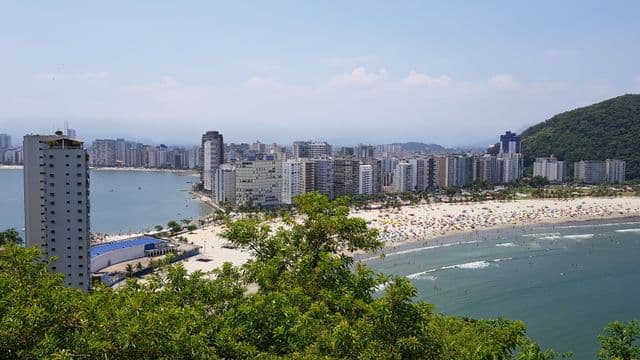
The noise of São Paulo arrives before you land. From the descent, the city sprawls without visible boundary, 22 million people in a density that makes Tokyo seem spacious, and then you are in it: the 3am traffic on Paulista, the helicopters stitching between rooftops, the best Japanese food outside Japan, a work ethic and a party ethic running the same hours. Rio is the counterargument an hour's flight away, beauty deployed as civic infrastructure, Ipanema to Leblon as the world's most persuasive argument for taking the laptop to the beach kiosk. And south of both, Florianópolis has quietly become the country's remote-work capital, an island of surf breaks, coworking brands and Lagoa sunsets where the nomad scene concentrated once the visa gave it paperwork.
Brazil rewards commitment like almost nowhere else. Portuguese is the unlock, Brazilians repaying any attempt with disproportionate warmth; the jeitinho, the national genius for finding the personal path through the formal problem, governs everything; and the social infrastructure, the churrasco that runs all Sunday, the cafezinho offered everywhere, the WhatsApp voice note as the true national language, absorbs the foreigner who leans in. The practical stack is stronger than the stereotype: PIX moved the entire economy to instant payment, fiber is cheap and fast in every serious city, and the US East Coast workday overlaps Brazilian hours almost perfectly. Off the laptop, Brazil practically invented the modern exchange scene, Worldpackers was born here, and the hostels of Rio and Floripa run on it; business-English teaching in São Paulo remains the classic paid lane.
The honest ledger is the one every serious page about Brazil owes its readers. The US advisory sits at Level 2 with a kidnapping indicator, and its do-not-travel lines, favelas at any hour, the deep border zones, Brasília's satellite cities at night, are real and mappable; phone robbery is the daily crime economy, Rio's numbers rising even as homicide falls; and the behavioral playbook, apps not street taxis, the decoy phone, nothing valuable visible, drinks watched, is the admission price locals pay too. Managed with local knowledge, the equation resolves the way it always has: nowhere delivers more life per dollar, and few places ask you to pay closer attention while collecting it.
Widening the search? If you are looking to expand your job hunt across South America, take a look at Argentina →, Colombia →, and Ecuador →.
Cost of living
Brazil prices below Miami and Lisbon while delivering more city than either, though the real's better years have trimmed the old extreme bargains. São Paulo one-bedrooms run roughly 500 to 900 dollars in the remote-work neighborhoods, Pinheiros, Vila Madalena, the Jardins fringe, with Rio's beach zones, Copacabana into Ipanema and Leblon, spanning 600 to 1,200 and Florianópolis's island market in between with seasonal swing. Furnished stock is deep, and the CRNM card the nomad visa issues is what opens the ordinary local lease and its better pricing.
Daily life is where Brazil overdelivers: the prato feito workers' lunch at 4 to 7 dollars, the kilo buffet as the national genius format, churrasco splurges at 20 to 35, the açaí and pão de queijo economy running on pocket change, and the beach kiosk beer at a dollar-something keeping Rio's office hours affordable. PIX instant payment runs the entire economy down to the coconut vendor, cards work everywhere PIX doesn't, and a CPF number, mandatory for e-commerce, pharmacy discounts and half of digital life, is the first errand of any serious stay. Utilities and fiber are cheap, 99 and Uber move the cities for small money, and the domestic flight network puts the continent-sized country on sale often enough to make the Nordeste weekend a habit.
- One-bedroom rent: 500 to 900 dollars in São Paulo's Pinheiros-Vila Madalena belt, 600 to 1,200 in Rio's beach zones, Florianópolis between with high-season swing; the CRNM unlocks the local-market lease that tourist status cannot sign.
- Eating is the great subsidy: prato feito lunches at 4 to 7 dollars, the pay-by-weight kilo buffet, and beach-kiosk prices that make Rio's outdoor office nearly free; the churrasco splurge stays under 35.
- Get the CPF immediately: the tax number is the key to e-commerce, pharmacy discounts, PIX from a local account and half of daily digital life, and the visa's CRNM makes obtaining it routine.
- PIX is the economy: instant, free, universal down to the street vendor; pair it with 99 and Uber for movement and the cash question nearly disappears from Brazilian life.
Cost-of-living calculator
See how your budget stretches in Brazil.
Estimates use approximate exchange rates and typical monthly costs. Your actual costs will vary.
Visas & Entry
Brazil's entry rules split by passport in a way the guides keep missing. Since 10 April 2025, US, Canadian and Australian citizens need an e-Visa even for tourism, about 81 dollars plus service fee through the official portal, now wired into airline check-in systems that refuse boarding without it; EU and UK passports remain visa-free at 90 days. Visitor stays run 90 days extendable to 180 in a twelve-month window, and the era of living on rolling extensions is closing, refusals rising and the authorities expecting people who actually live in Brazil to hold the visa that says so.
That visa is the VITEM XIV, created by Resolution CNIg/MJSP 45/2021 and effective January 2022: one year of residence for people working remotely for employers or clients outside Brazil, renewable once in-country at the Federal Police for a second year. The financial test offers two routes, foreign income of at least 1,500 dollars a month or bank funds of at least 18,000 dollars, among the lowest bars in any major economy, with the file built from the work contract or client agreements, a signed remote-work declaration, an apostilled criminal check, and, for consular filings, health insurance valid in Brazil. Two channels exist: the consulate abroad, fees varying by nationality with Americans paying about 290 dollars under reciprocity, or the in-country route through the MigranteWeb portal after entering as a visitor, a conversion now explicit and processing in roughly 15 to 30 days, with the caveat that not every Federal Police office plays and a refusal means leaving within 30 days. Spouses and dependent children can file alongside with per-person fees. Approval produces the thing tourist life never had: registration with the Federal Police inside 90 days yields the CRNM residence card, and with it the bank account, the CPF, the ordinary lease and even public-system access. The ceiling is two years; the category is not a direct permanence track, and the end-of-visa conversation, work, family, investment or study routes, belongs with counsel by the middle of year two.
- The bar is 1,500 dollars or 18,000 in the bank: either route works alone, analysts reconcile statements against the work proof on the income path, and the threshold has held stable since launch; almost every working nomad qualifies.
- Americans, Canadians, Australians: e-Visa first, always: the April 2025 requirement is wired into check-in systems and boarding fails without it; the 81-dollar errand belongs the week you book flights, and EU and UK readers can ignore this bullet.
- File in-country for speed: visitor entry plus MigranteWeb conversion runs 15 to 30 days without the insurance requirement, and the consulate route remains the clean path for those who want the visa in the passport before flying.
- Start the apostille clock early: the criminal-record check plus apostille plus sworn translation is the file's slow lane, two to six weeks in most countries, and the leading cause of rejected or stalled applications.
- Register within 90 days, then use the CRNM: the Federal Police appointment turns approval into the card, and the card into banking, CPF and leases; skipping the deadline is the classic self-inflicted wound.
- Mind the 184-day tax line while planning the stay: the visa permits a year, tax residency arrives at 184 days in any twelve months, and the difference between a five-month stay and a ten-month stay is a worldwide tax return; the tax table below is required reading.
| Visa or permit | What it covers |
|---|---|
| Visitor entry, split by passport | EU and UK visa-free at 90 days extendable to 180 per twelve months; US, Canadian and Australian citizens need the e-Visa since 10 April 2025, about 81 dollars online, now enforced at airline check-in; the scouting layer and the in-country filing platform. |
| Digital Nomad Visa (VITEM XIV) | Resolution 45/2021: one year for remote work serving foreign employers or clients, renewable once for a two-year maximum, on 1,500 dollars a month of foreign income or 18,000 dollars in funds; the lowest serious bar in the G20 and the front door Brazil built in 2022. |
| Two application channels | Consulate abroad, insurance required and fees by reciprocity, about 290 dollars for Americans, or in-country conversion through MigranteWeb after visitor entry, processing 15 to 30 days, no insurance requirement, and a 30-day exit if refused; the in-country route is now the practitioner default. |
| The CRNM card | Federal Police registration within 90 days of arrival produces the migrant ID that changes daily life: bank accounts, CPF issuance, ordinary leases and public-health access all open, which is the practical difference between visiting Brazil and living in it. |
| Family | Spouses and dependent children file as dependents on the same category with their own documents and fees; the rare low-threshold program that brings the household. |
| The two-year ceiling and after | One renewal at the Federal Police on re-proved income, then the category ends; work, family, investment and study routes carry those who stay, and the specialist consensus treats nomad years as outside the permanence clock, so the conversion plan belongs to year two, not the deadline week. |
| The extension crackdown | Rolling tourist-stay living is being refused more often, with the 180-day annual ceiling enforced and re-entries scrutinized; Brazil's message in 2026 is that people who live here should hold the visa that matches, and the VITEM XIV is priced to make that easy. |
Good to know: VITEM XIV since Jan 2022: $1,500/mo OR $18k savings, 1+1 years, in-country MigranteWeb conversion in 15-30 days, CRNM unlocks banking/CPF/leases; e-Visa required for US/CA/AU since Apr 10 2025 (EU/UK exempt); tourist-extension lifestyle being refused; 184-day tax trap is the planning line.
EnRoute Jobs AI tool
Route Planner
Map visa routes, timelines, and relocation costs for your next destination.
Work & Legal
Brazilian professional culture is relational to its core: meetings open with genuine conversation, the cafezinho is a ritual rather than a beverage, WhatsApp is the true office suite, and the jeitinho, the national art of finding the personal route through the formal maze, is how everything from leases to bureaucracy actually resolves. The remote-work scene is deep and native, São Paulo running Latin America's densest coworking and startup ecosystem, Florianópolis hosting the beach-and-surf nomad concentration, and Brazilian tech talent staffing half the hemisphere's remote teams, which means the meetup exists in every serious city and the time zones align almost perfectly with US East Coast hours.
The legal lines are the visa's entire point. Before VITEM XIV, remote work on a tourist stamp sat in the technically-illegal gray zone every Brazil lawyer warned about; the nomad visa replaced improvisation with explicit authorization for foreign-source work, while keeping the boundary absolute, no Brazilian employers, no Brazilian clients, with local employment requiring a genuine work visa under the famously protective CLT labor code. Residents who go local use the MEI micro-entrepreneur regime, the simplified backbone of Brazilian freelancing, which belongs to those with real residency rather than nomad status. The practical counsel is rhythm: the country runs hard between Carnival and December, the December-to-Carnival stretch is the national summer holiday in disguise, and scheduling against either is the imported error Brazilians forgive but never accommodate.
- The visa authorizes what tourists improvised: explicit legal cover for foreign-client remote work is VITEM XIV's core product, and the absolute trade is no Brazilian employers or clients; crossing that line requires a real work visa under the CLT.
- Plug into the native scene: São Paulo's coworking density, Florianópolis's nomad concentration and a tech workforce fluent in remote culture mean community is an evening's effort, with WhatsApp groups as the actual infrastructure.
- Work the calendar honestly: Carnival suspends the republic, December through February runs at beach capacity, and the productive core of the Brazilian year is March to November; plan launches accordingly.
- MEI belongs to residents: the micro-entrepreneur regime that powers local freelancing requires genuine residency; nomad-visa holders stay foreign-source by design and revisit the question only if they convert.
Good to know: VITEM XIV explicitly authorizes foreign-source remote work (the old tourist gray zone was technically illegal); Brazilian clients/employers absolutely off-limits; MEI for actual residents; US East Coast hours align.
Taxes
Brazilian tax is the nomad visa's one genuine trap, and this page states it plainly where others bury it: the visa grants a year, but tax residency can arrive at day 184, and the difference is a worldwide return. Planned around, Brazil is fiscally simple; stumbled into, it is a filing system with opinions.
| What applies | The rule in 2026 |
|---|---|
| The 184-day line | A temporary-visa holder who accumulates 184 days in Brazil within any twelve-month window becomes a tax resident from that point, worldwide income entering Brazil's net; the count is rolling, border stamps are the evidence, and the five-month stay versus the ten-month stay is the entire fiscal decision. |
| What residency costs | Residents pay progressive rates from 7.5 to 27.5 percent on worldwide income, with foreign earnings self-reported monthly through the carnê-leão system and an annual declaration in the spring; compliance is genuinely manageable with a local accountant and genuinely miserable without one. |
| Below the line | Under 184 days, non-residents owe Brazil nothing on foreign income, and a nomad year split deliberately around the threshold, or two five-month seasons, keeps the entire subject theoretical; the planning is that literal. |
| Leaving properly | Residents who depart file the Comunicação de Saída Definitiva, the formal exit declaration that stops the worldwide claim; skipping it leaves Brazilian tax residency running in the registry long after the flight home, a classic expat wound. |
| The CPF is not residency | Everyone gets the CPF tax number for daily life, and holding one creates no tax obligation by itself; the day count does the work, and conflating the two is the most common anxiety in the forums. |
| Recent reform current | Brazil's 2024-26 reform wave, offshore-structure taxation, dividend and high-income changes phasing toward 2026-27, mostly concerns residents with portfolios; arriving nomads need the day-count rule, and converts need an accountant with the current statute. |
| Americans specifically | No comprehensive US-Brazil income tax treaty and no totalization agreement exist; the US side runs on FEIE or foreign tax credits, reciprocal credit practice softens double taxation for residents, and self-employment tax survives regardless; under 184 days the American picture is just the ordinary expat filing. |
| VAT and daily taxes | Consumption taxes hide inside Brazilian prices and the landmark VAT reform phases in over the coming years without changing the visitor experience; property and vehicle taxes concern owners, and the visitor's fiscal life is the receipt's CPF field asking politely. |
Verified 20 August 2026: the 184-day temporary-visa residency rule, resident rates to 27.5 percent with carnê-leão mechanics, the exit-declaration requirement, and the absence of US treaty and totalization agreements. Specialist sources differ on edge cases and the reform wave is live; residents need current local counsel. General information, not tax advice.
Good to know: THE trap: 184 days in any 12 months on the temporary visa = tax residency = worldwide income at 7.5-27.5% with carnê-leão filings; under the line, foreign income owes nothing; formal exit declaration required on leaving; no US treaty or totalization.
Healthcare
São Paulo hosts Latin America's finest hospitals, full stop: Hospital Israelita Albert Einstein tops the continental rankings year after year, Sírio-Libanês sits beside it in the global conversation, and the private tier around them runs world-class medicine at prices that keep consultations in the 30-to-80-dollar band and specialist care within insured reach. Rio's private cluster, the D'Or network and Samaritano among them, covers the second city comprehensively, and every serious state capital holds a credible private anchor. English is common at the flagships and thins quickly beyond them, which is one more argument for the Portuguese.
The SUS public system is a constitutional universal-care promise that treats anyone including foreigners, a genuine safety net running at public scale and pace, and the nomad's CRNM card even formalizes access; the practical expat route remains private insurance or a local plano de saúde, both priced well below US logic. Pharmacies are everywhere and pharmacist-forward, dental care is famously excellent value, the mosquito calendar, dengue above all, makes repellent a year-round line item with summer seriousness, and yellow-fever vaccination is recommended for the Amazon and much of the interior. Emergencies answer at 192 for SAMU ambulances, and the private hospitals' own emergency rooms are the insured default in the big cities.
- Private consultations run 30 to 80 dollars with the flagships taking international insurance and local plano de saúde plans pricing far below US premiums; the CRNM makes enrolling in a local plan possible.
- São Paulo is the continental referral answer: for anything genuinely hard, Einstein and Sírio-Libanês are where Latin America already goes, and living an hour from them is a quiet perk of the Paulista base.
- Respect the mosquito calendar: dengue surges in the December-to-May wet seasons, repellent is a daily habit rather than a trip accessory, and the yellow-fever shot belongs in the file before Amazon or interior travel.
- Emergencies dial 192 for SAMU, private ERs are the insured default in the big cities, and pharmacy chains handle the minor tier with pharmacist competence on every corner.
| Hospital | What to know |
|---|---|
| Hospital Israelita Albert Einstein, São Paulo | Latin America's perennial number one, the continental benchmark for complex medicine and the default answer to the hardest cases. |
| Hospital Sírio-Libanês, São Paulo | The second global-tier flagship, oncology-to-cardiology depth, sharing the summit with Einstein and the referral flow of half the continent. |
| Hospital Alemão Oswaldo Cruz, São Paulo | The German-heritage institution completing the Paulista private summit with broad specialist strength. |
| Copa Star / Rede D'Or, Rio de Janeiro | The D'Or network's Copacabana flagship anchoring Rio's modern private tier, with sister hospitals across the city. |
| Hospital Samaritano, Rio de Janeiro | The established Botafogo private hospital, long the international community's Rio standby. |
| SUS public network | The constitutional universal system treating anyone at no charge, foreigners included; a real promise at public pace, formalized for visa holders by the CRNM, and best held as the safety net beneath private cover. |
Hospital list compiled 20 August 2026 and not yet confirmed against each facility directly. Treat as indicative and verify before relying on it.
Good to know: Einstein and Sírio-Libanês are Latin America's summit; Rio's D'Or network covers the second city; SUS treats everyone with CRNM formalizing access; dengue seasonality is real; 192 for SAMU.
Safety
Brazil's safety story is neighborhood-resolution or it is fiction, and the advisories now draw it that way. The US holds Level 2, Exercise Increased Caution, reissued 8 August 2026 with a kidnapping risk indicator added in 2025, and its do-not-travel lines are specific: informal housing developments, the favelas, vilas and comunidades, at any time; anywhere within 160 kilometers of the land borders with Bolivia, Colombia, Peru, Venezuela, the Guianas, Paraguay and Suriname, with Foz do Iguaçu and the Pantanal parks explicitly excepted; and Brasília's satellite cities after dark. Canada joined the increased-caution tier in January 2026 and Australia holds a high degree of caution, a rare multi-government consensus that preparation is expected rather than optional.
The daily reality for a remote worker is the phone economy: Rio logged over 21,000 cell-phone robberies in 2024, up 38 percent even as homicide nationally fell by a fifth since 2020, and the visitor playbook is behavioral rather than geographic once the map is respected. The working neighborhoods hold: Pinheiros, Vila Madalena, Itaim and the Jardins in São Paulo by day and evening; Ipanema, Leblon and Copacabana-with-judgment in Rio, beaches abandoned after dark; Florianópolis running gentler than either. The named threats are learnable: the arrastão group-sweep on crowded beaches, dating-app and bar drugging scams that the Rio consulate logs by the dozen, express robberies answered with instant compliance, and municipal buses that US government staff are told not to ride. The tools are equally concrete: 99 and Uber always, the cheap decoy phone for evenings, ATMs inside bank branches, nothing shiny anywhere, and the local friend's neighborhood verdict outranking every published map. Police answer at 190, SAMU at 192, and the tourist police in Rio and São Paulo handle visitors with practiced English.
- Respect the three red lines absolutely: favelas at any hour including the marketed tours, the deep border zones except the two great parks, and Brasília's satellite cities at night; the do-not-travel map is short, specific and non-negotiable.
- Run the phone doctrine: front pocket on the street, never on tables, the cheap decoy handset for nights out, and instant surrender if demanded; the 21,000-robbery statistic is the argument, and compliance is the universal survival rule.
- Learn the named scams before they meet you: the arrastão beach sweep, the dating-app drink that ends in an emptied account, the bar sedative; drinks stay watched, first dates stay public and hotel-lobby, and the consulate's bulletins read like course material.
- Move by app, always: 99 and Uber replace street taxis and municipal buses entirely, day and night; the advisory tells US government staff the same thing, and the fare difference is trivial.
- Keep beaches for daylight and valuables at home during them; the evening orla is for walking the promenade, not sitting the sand, and Copacabana's judgment hours are real.
- Anchor to the working neighborhoods: Pinheiros through Jardins, Ipanema through Leblon, and Florianópolis broadly are the livable map this page assumes; emergency numbers 190 police, 192 SAMU, with tourist police units in both great cities.
Official travel advisories
| Government | Current position |
|---|---|
| United States | Level 2, Exercise Increased Caution for crime and kidnapping, reissued 8 August 2026; Level 4 Do Not Travel for informal housing developments at any time, the 160-kilometer land-border zones except the Iguaçu and Pantanal parks, and Brasília's satellite cities at night; notes dating-app drugging scams and advises against municipal buses.travel.state.gov → |
| United Kingdom | Heightened-awareness guidance without advising against travel, detailing the same scam set, drink-spiking, phone snatching, favela caution, and Carnival-season crowd sense.gov.uk → |
| Canada | Joined the increased-caution tier on 26 January 2026 for crime, with favela avoidance, border-zone cautions and city-specific guidance mirroring Washington's map.travel.gc.ca → |
| Australia | Exercise a high degree of caution nationally, with violent-crime, robbery and drink-spiking warnings, favela advice, and the standing counsel that valuables and beaches after dark do not mix.smartraveller.gov.au → |
| US Embassy and Consulates | Enroll in STEP; the Rio consulate's dating-app scam bulletins and event-season alerts are the practical feed. Consulates in São Paulo, Rio de Janeiro, Recife and Porto Alegre beneath the Brasília embassy.br.usembassy.gov → |
Advisory positions verified 20 August 2026: the US Level 2 with kidnapping indicator reissued 8 August, the three Level 4 zones, Canada's January 2026 elevation and Australia's high-caution stance. The behavioral playbook is the price of a country that overpays those who learn it. Open the sources before travelling.
Good to know: US L2 + kidnapping indicator (reissued Aug 8 2026); L4: favelas anytime, 160km border zones (parks excepted), Brasília satellites at night; phone robbery is the daily economy (Rio +38%); apps not buses/taxis; decoy phone; named scams learnable.
Climate
Brazil spans the equator to the subtropics, so the climate question is really a city question. São Paulo sits on a subtropical plateau: warm storm-punctuated summers from December through February, mild dry winters from June through August that occasionally want a jacket, and afternoon thunderstorm drama as the summer signature. Rio runs full tropical, hot and humid November through March with the city at maximum voltage, then a dry, clear, 25-degree winter from May through September that is the best-kept secret in South American scheduling, beach mornings and focused afternoons without the sweat tax. Florianópolis adds a genuine four-season subtropical rhythm with surfable summers and cool bright winters, the Nordeste runs warm year-round with its own rain calendars, and the Amazon is equatorial always. The remote-work consensus lands on the May-to-September southern winter as the productivity prize, with the December-to-Carnival stretch accepted as the season when Brazil happens to you rather than for you.
| Season | What to expect |
|---|---|
| Summer, December to February | Hot, humid and thunderstorm-punctuated in the southeast, Rio at carnival-season maximum and the country on collective holiday; peak life, minimum focus, and the season to price accommodation early. |
| Autumn, March to May | The heat breaks, the crowds thin after Carnival, and the southeast settles into clear warm weeks; the year's working rhythm begins in earnest. |
| Winter, June to August | The prize: Rio dry and 25 with perfect beach mornings, São Paulo crisp and productive, Florianópolis cool and bright; the southern winter is the remote-work high season for good reason. |
| Spring, September to November | Warming weeks, jacaranda color in the south, the Nordeste at its beach best, and the last long focus stretch before the summer surrender. |
Good to know: The southern winter (May-Sep) is the productivity prize: Rio dry at 25, São Paulo crisp; summer belongs to Carnival and the beach; the country is too big for one climate.
Culture & Customs
Brazilian culture runs on warmth as an operating system. Physical greeting is standard, one or two cheek kisses by region, the hug arriving early in any friendship; conversation is touch-punctuated and volume-forward; and the social default is inclusion, the newcomer folded into the churrasco, the birthday, the WhatsApp group, faster than any culture in this database. Time is relational, thirty minutes of social flex normal, yet the same people ship world-class work at 2am; the jeitinho finds the human path through every formal wall; and saudade, the untranslatable ache for what's absent, explains half the national songbook. Football is the civic religion with the Maracanã as its cathedral, Carnival is the constitutional suspension of ordinary life each February or March, and the June festas juninas turn the country's interior into a second festival season.
The codes reward the willing. Portuguese attempts unlock disproportionate warmth, and Spanish is not Portuguese, a confusion Brazilians forgive once; the cafezinho is accepted always; beach culture has genuine etiquette, the canga not the towel, the kiosk economy, football at the water's edge; and the churrasco guest brings drinks and appetite while the grill's owner rules. Tipping is gentle, the 10 percent serviço usually included and rounding covering the rest; dress runs casual-sharp with flip-flops as legitimate infrastructure; and conversation embraces everything with two live wires, politics polarized enough to read the room first, and football loyalties that are tribal but joyful. The WhatsApp voice note is the true national medium; resisting it is resisting Brazil.
- Attempt Portuguese from day one: every mangled sentence is repaid with warmth and correction, English thins fast outside the bubbles, and the difference between visiting and living here is measured in verb conjugations.
- Accept the inclusion: the churrasco invitation, the birthday, the group chat are genuine; Brazilians fold newcomers in fast, and the correct response is showing up with drinks and staying late.
- Learn beach etiquette: the canga wrap not the hotel towel, the kiosk's chair-and-umbrella economy, valuables at home and the evening sand abandoned; the beach is a civic institution with rules.
- Respect Carnival's sovereignty: the country suspends for it, blocos own the streets for weeks around it, and the choice is joining fully or booking the mountain cabin; there is no working through it.
- Tip lightly, PIX everything: the 10 percent serviço is usually on the bill, rounding handles the rest, and the instant-payment rail runs every transaction down to the coconut.
- Read the room on politics, never on football: the political divide is real and hot, while the football question, Fla or Flu, Corinthians or Palmeiras, is tribal theater everyone enjoys; pick a team and defend it badly.

