.png)
About Montenegro
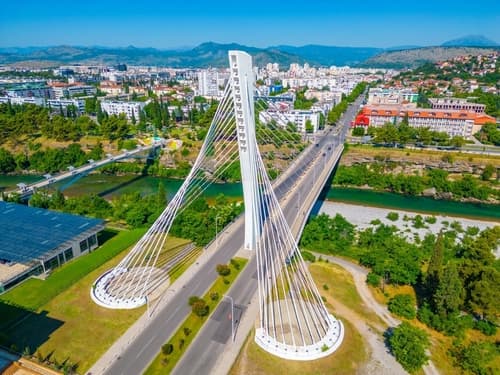
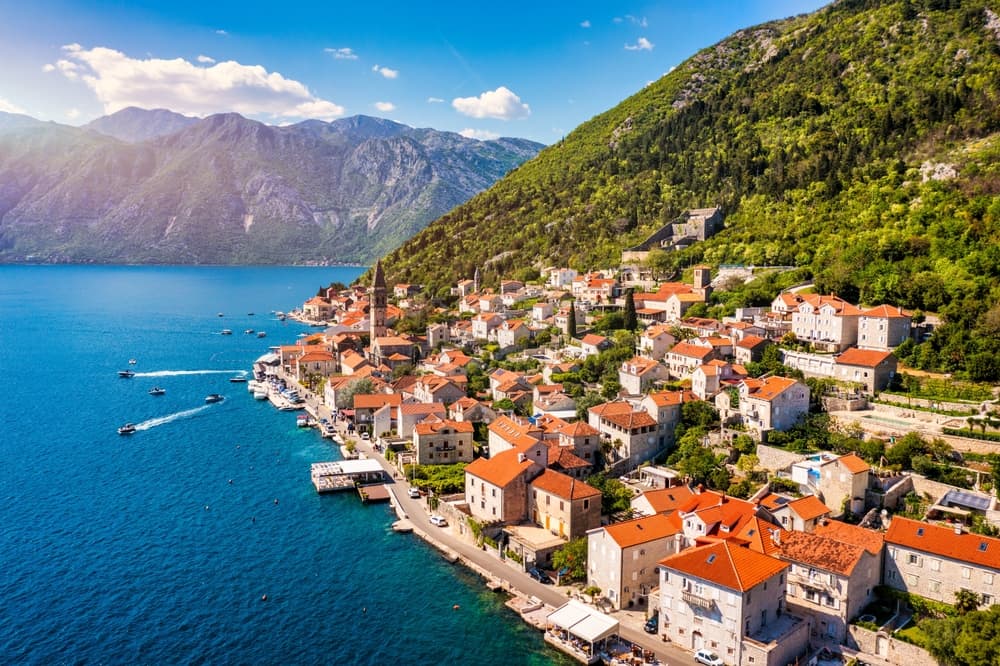
Montenegro compresses more landscape per kilometer than almost any country on earth: within fifty kilometers you can move from Venetian walled towns under sea cliffs, through olive groves, into 2,500-meter ranges holding Europe's deepest canyon, and the effect on a remote worker's quality of life is hard to overstate. The Bay of Kotor is the headline, a fjord-like gulf UNESCO listed and cruise ships adore; Budva and Tivat run the beach-and-marina economy; Podgorica, the modest capital, does the year-round practical living; and the black mountains behind them all hold the rafting, skiing and silence.
The practical case has three legs most guides undercount. Montenegro uses the euro despite sitting outside the EU, which removes currency arithmetic from daily life. It sits outside Schengen, which means Montenegrin months do not touch your 90/180 allowance, making it the classic parking orbit for Europe-rotation nomads. And it runs an actual nomad residence permit with a statutory tax exemption on foreign income, a combination wealthier countries never quite manage. The coast hires every summer besides, Porto Montenegro's superyacht marina crews up each season, and Kolašin runs a small ski winter. Against this: infrastructure that thins outside the coast and capital, a summer coast that doubles in price and quadruples in crowds, and the small-country reality that serious medical care may mean a drive to Belgrade or a flight to Italy.
Culturally, Montenegro is South Slavic hospitality at Mediterranean pace. The coffee ritual, one small cup stretched across two unhurried hours, is the social infrastructure everything else runs on; pride in the country's history of never-quite-conquered independence runs deep; and the pace, polako, slowly, is a philosophy rather than a deficiency. Foreigners who match the rhythm find warmth that outlasts their visa. Those who arrive optimizing tend to leave frustrated and slightly bewildered that everyone else stayed.
Widening the search? If you are looking to expand your job hunt across Balkans, take a look at Croatia →, Albania →, and Greece →.
Cost of living
Montenegro's cost of living runs on a seasonal switch. Off-season, the coast is a bargain: a one-bedroom in Budva, Kotor or Herceg Novi at 400 to 700 euros a month, long-winter rentals negotiable below that, and the towns pleasantly emptied. From mid-June through August the same apartment doubles or worse as the tourist economy takes over, which is why the resident community either locks annual leases in autumn or migrates to Podgorica, where 400 to 600 euros holds year-round and nothing ever doubles. Tivat, gilded by the Porto Montenegro marina, runs a premium in every month.
Daily life is gently priced: a proper meal at 8 to 14 euros, the ritual coffee at 1.50 to 2.50, markets full of produce that tastes like the sun it grew in, and local wine at prices that make cellars pointless. The euro removes exchange friction, cards work in cities and thin out in villages, and the honest extra line items are a car, near-essential for the country's best parts at 250 to 400 euros monthly all-in, and summer itself, which taxes everything from parking to grilled fish.
- One-bedroom rent: 400 to 700 euros on the coast off-season and in Podgorica year-round, doubling on the coast in July and August; annual leases signed in autumn are the resident's cheat code.
- Eating and coffee: meals at 8 to 14 euros, the two-hour coffee at 2, konoba seafood dinners under 25 a head; the markets and bakeries keep self-catering almost decorative.
- A car is the real utility: 250 to 400 euros a month covers a used runabout or long-term rental plus fuel, and it unlocks the mountains, the north and every cove the buses skip.
- Coworking: 100 to 200 euros monthly in Podgorica, Budva and Tivat's small but genuine scene, with cafés serving as the distributed overflow campus.
Cost-of-living calculator
See how your budget stretches in Montenegro.
Estimates use approximate exchange rates and typical monthly costs. Your actual costs will vary.
Visas & Entry
Montenegro grants 90 days visa-free to US, UK, EU, Canadian, Australian and most Western passports, and sits outside Schengen, so time here never touches the 90/180 clock, the quiet strategic feature that made the country a nomad waypoint before it had a program. Every arrival must be registered with the tourist office or police within 24 hours, a rule accommodations usually handle and private stays inherit, and carrying ID is legally required at all times.
The program itself is a temporary residence permit for digital nomads under the Law on Foreigners, administered by the Ministry of Interior with its own government portal. The mechanics are pleasantly analog: you enter visa-free, then apply in person at the MUP office for your place of residence before the 90 days lapse, biometrics and bilingual forms at the counter, with decisions in roughly 40 days and the right to remain while the application processes. Current requirements center on proof of remote work for a foreign employer or your own foreign-registered business, income of at least 1,800 euros a month evidenced across the preceding twelve months, 21,600 euros in total, a raise from the launch-era 1,350 that most guides have not caught, health insurance covering the permit period, accommodation, and a criminal-record certificate under six months old. The permit runs up to two years and renews once for two more, filed at least 30 days before expiry, with a six-month absence required before any fresh application after the four-year ceiling. Family reunification is available for spouses and minor children, contrary to the solo-only claim that circulates. The frame around all of it: the government's nomad program is currently legislated through the end of 2026 with its extension unconfirmed, so the prudent play is filing by early autumn and holding a permit whose term outlives whatever the program decides to become.
- The income bar is 1,800 euros now, not 1,350: a year of statements at or above the line is the file's core, and the raise from the launch figure is the detail stale guides miss.
- Apply from inside the country, in person: enter visa-free, file at the MUP office for your municipality before day 90, give biometrics at the counter, and stay legally while the roughly 40-day decision runs.
- The program's clock is the real deadline: the framework runs through end-2026 with extension unconfirmed, approved permits keep their full term regardless, and filing by October beats discovering the answer.
- Four years is the ceiling and none of it counts: two plus two, then six months out, with no credit toward permanent residency; anyone planning permanence pivots to the DOO company route before the ceiling arrives.
- Register within 24 hours and carry ID always: the two small rules visitors actually get fined over, with hotels handling the first invisibly and private stays inheriting it.
- Family rides along via reunification, spouse and minor children at about 300 euros each, applied after the principal permit lands.
| Visa or permit | What it covers |
|---|---|
| Visa-free entry | Ninety days for most Western passports, outside Schengen so none of it counts against the EU clock; 24-hour registration on arrival and carry-your-ID rules apply, with fines for neither being theoretical. |
| Digital nomad residence permit | Two years plus a two-year renewal under the Law on Foreigners, for remote work serving foreign employers or your own foreign company, at 1,800 euros a month shown across twelve months. Applied for in person in-country; no Montenegrin work or clients; no residency clock; six months out after the four-year ceiling. |
| Family reunification | Spouses and minor children of permit holders qualify through the family route at roughly 300 euros per member, the official correction to the persistent solo-only myth. |
| Company formation (DOO) residence | The classic Montenegrin route: form a local company, employ yourself, and hold a work-and-residence permit that does build toward the five-year permanent residency clock, the structural answer for anyone whose plans outlast the nomad ceiling. |
| Property-based residence | Ownership of qualifying property grounds a renewable temporary residence without work rights, popular with settlers; rules and costs shifted upward in early 2026, so current terms deserve a lawyer's hour. |
| Employment permit | Sponsored work-and-residence for jobs with Montenegrin employers, the only route to the local labor market the nomad permit walls off. |
| EU accession horizon | Montenegro targets EU membership toward the end of the decade, which will eventually rewrite every rule on this page; for now the country's non-EU, non-Schengen status is precisely what makes it useful. |
Good to know: DN permit under Law on Foreigners: €1,800/mo over 12 months (raised from €1,350), 2+2 years, in-person MUP filing during visa-free 90 days, family reunification available, no PR clock; program framework runs to end-2026.
EnRoute Jobs AI tool
Route Planner
Map visa routes, timelines, and relocation costs for your next destination.
Work & Legal
Montenegrin working culture runs Mediterranean-Balkan: relationships before transactions, the coffee before the contract, and a genuine allergy to artificial urgency. Polako, slowly, is how everything true gets done here, offices empty for the August that matters, and the professional who pushes tempo learns that the country simply absorbs the push and continues at its own speed. English is good in the coastal economy and among the young, hospitality extends into business, and a foreigner who accepts the third coffee is halfway to a network.
Legally the nomad permit draws the lines cleanly: remote work for foreign employers and your own foreign company is explicitly what the status authorizes, and Montenegrin employers and clients are explicitly what it prohibits, with the employment permit and the DOO company as the doors to the local economy. Tourist-stay remote work remains the unpoliced regional default for shorter visits. The DOO deserves its own sentence, because it is the country's true multitool: a local company employing its founder grounds a residence permit that does accrue toward permanence, invoices locally and internationally, and is how most long-haul foreigners eventually structure themselves once the nomad ceiling approaches.
- The permit authorizes foreign-source remote work explicitly and prohibits Montenegrin employment and clients; the boundary is the same one the tax exemption depends on, so keeping it clean serves both files.
- The DOO is the endgame structure: a local company employing its founder builds the residency clock the nomad permit never starts, and converting before the four-year ceiling is the standard long-haul play.
- Banking opens with the permit: the temporary residence card unlocks local accounts, leases and the ordinary machinery, one of the program's underrated practical wins in a region where tourists struggle at bank counters.
- August is structural, not lazy: the coast works its season and the institutions thin out; plan bureaucracy for autumn through spring and treat summer as the country intends it.
Good to know: Nomad permit explicitly legalizes foreign-source remote work and bars local clients; DOO company route is the path to residency-building status and the local market.
Taxes
Montenegro wrote its nomads a genuine statutory tax exemption, confirmed in the tax law and the professional summaries alike: foreign-source income earned by permit-holding digital nomads is exempt from Montenegrin personal income tax and social contributions. Around that carve-out sits one of Europe's lightest general regimes anyway.
| What applies | The rule in 2026 |
|---|---|
| The nomad exemption | Income from employment or self-employment earned by a digital nomad from an employer or business not registered in Montenegro is exempt from Montenegrin income tax, with social contributions likewise inapplicable. This is statute, not practice, and it attaches to the permit status itself. |
| What the exemption does not cover | Montenegrin-source income of any kind, local rental income above all, is taxed normally; and consumption is untouched, with 21 percent VAT inside every price. The exemption is an income-tax carve-out, not an invisibility cloak. |
| The general rates, for context | For everyone outside the carve-out, roughly the first 700 euros a month is tax-free, income to about 1,000 monthly is taxed at 9 percent and above it at 15, among the lightest schedules in Europe and the reason the DOO conversion at the permit's end is not a tax cliff. |
| Residency at 183 days | The standard rule makes 183-plus-day residents taxable on worldwide income, and the nomad exemption is what suspends that outcome for permit holders' foreign earnings; losing the status ends the suspension, which is worth remembering at renewal time. |
| Capital income | Dividends, interest and capital gains run at flat 15 percent for those within the net; nomads' foreign investment income sits outside Montenegrin taxation with their other foreign income. |
| Treaties | Montenegro holds roughly forty-three double-tax treaties; with no Montenegrin tax collected on nomad income there is usually nothing to relieve, and the treaties matter mainly to those converting to ordinary residence. |
| Americans specifically | US filing continues regardless, and with zero Montenegrin tax paid there is no credit to claim, so the Foreign Earned Income Exclusion does the work under its presence tests; self-employment tax survives, since no totalization agreement applies, and the US treaty position with Montenegro is unsettled enough that credits-and-FEIE, not treaty claims, should carry the plan. |
| Home-country exit rules | As everywhere with a zero, the binding constraint is the system you left: departure taxes, center-of-vital-interests tests and home residency rules decide whether Montenegro's exemption is a saving or merely a scenic detour. |
Verified 20 August 2026, including against professional tax summaries confirming the statutory nomad exemption. The exemption covers foreign-source income for permit holders; Montenegrin-source income and VAT apply normally. General information, not tax advice.
Good to know: Statutory exemption: permit-holding nomads pay no Montenegrin income tax or social contributions on foreign-source income; general regime is €700/mo exempt then 9%/15%; VAT 21%; 183-day rule governs everyone else.
Healthcare
Montenegrin healthcare is honest about its scale: a country of 630,000 runs one true tertiary center, the Clinical Center in Podgorica, a string of coastal general hospitals, and a private clinic tier that handles routine and moderate care well at prices that feel misprinted, 20 to 50 euros for a consultation with English workable at the private facilities. Nomad permit holders sit outside the public insurance system, so the private tier plus the insurance the permit requires is not merely advice but the actual arrangement.
The planning truth is regional: for complex cardiac, oncological or major elective care, the standard of care is travel, to Belgrade most commonly, or Zagreb, or across the Adriatic to Italy, and the insurance worth buying is the policy that covers the trip. Within its lane the system serves residents well, pharmacies are professional and ubiquitous, dentistry is good value in the regional tradition, and 112 answers emergencies with coastal response solid in season.
- Private consultation: 20 to 50 euros, usually within days, English workable at the private facilities; the private tier is where permit holders live by design, since the permit excludes public coverage.
- Buy insurance that travels: Belgrade, Zagreb or Italy is the referral answer for the most complex care, and cover that includes regional treatment and transport is the policy that matters.
- Emergency number 112, with response solid in Podgorica and the coastal season and slower in the mountains; for anything orthopedic in the hills, patience and a driver beat waiting.
- Pharmacies and dentistry punch above weight: professional, everywhere, and priced in the Balkan tradition that makes routine care almost an afterthought.
| Hospital | What to know |
|---|---|
| Clinical Center of Montenegro, Podgorica | The national tertiary hospital and the country's serious-care anchor, where complex public-system medicine concentrates. |
| Codra Hospital, Podgorica | The capital's leading private hospital, surgical and multi-specialty, and the private tier's most complete facility. |
| Meljine General Hospital, Herceg Novi | The privately operated general hospital on the western coast, serving the Bay of Kotor region with surgical and inpatient care. |
| General Hospital Bar | The public general hospital anchoring the southern coast, the acute-care answer between Budva and the Albanian border. |
| General Hospital Kotor | The bay's public hospital covering Kotor, Tivat and the inner coast, with the region's emergency load in season. |
| Private clinics, Podgorica, Budva and Tivat | A growing tier of private polyclinics and diagnostics serving the foreign community for everyday medicine, English-capable and same-week by default. |
Hospital list compiled 20 August 2026 and not yet confirmed against each facility directly. Treat as indicative and verify before relying on it.
Good to know: One tertiary center (Podgorica) plus coastal generals and a good-value private tier; nomads sit outside public coverage; complex care travels to Belgrade, Zagreb or Italy.
Safety
Montenegro is a safe country by every measure that reaches a visitor, ranked 34th on the Global Peace Index ahead of several Western European states, and held at the lowest advisory tier by Washington, London, Ottawa and Canberra alike. Street crime is modest and seasonal: pickpocketing where the summer crowds are, Budva's beach lockers and Kotor's cruise-day alleys, and essentially nothing the rest of the year. The organized-crime violence that occasionally makes headlines is internal, clan-on-clan and uninterested in foreigners, a background fact of the region rather than a visitor risk.
The genuine hazards are physical, not criminal. Mountain roads are narrow, dramatic and shared with drivers of great confidence; defensive driving and daylight bias are real advice, and the old Kotor-Cetinje serpentine is an experience to take slowly in both senses. Nature runs hot and cold: summer wildfires are common from April to October with occasional water shortages in dry years, winter and spring rains flood, tremors are frequent though serious earthquakes are rare, and the hiking trails of the north are less marked and more serious than their photographs suggest. Two administrative rules round out the list: register within 24 hours of arrival, and carry ID always, both actually enforced with small fines and neither worth testing.
- Drive the mountains like they deserve: narrow lanes, confident locals, sheer drops and winter ice make defensive daylight driving the country's single most useful safety habit, and the serpentines are scenery to respect.
- Summer coast, summer rules: beach-bag awareness in Budva and cruise-day Kotor covers the entire seasonal crime picture; off-season the coast returns to leaving doors unlocked.
- Fire season is April to October: wildfires are common in hot dry stretches, smoke can close roads, and campfire discipline in the hills is law and ethics at once.
- Hike the north prepared: trails mark poorly, weather turns fast even in summer, and Durmitor and Prokletije are genuine mountains; tell someone your route and carry layers.
- Register in 24 hours and carry ID: the two rules visitors are actually fined over, the first handled by hotels and inherited by apartment stays, the second satisfied by a passport or license in the daypack.
- Read the mafia headlines correctly: the occasional organized-crime incident is internal score-settling that has never targeted visitors; it colors the newspapers, not the streets.
Official travel advisories
| Government | Current position |
|---|---|
| United States | Level 1, Exercise Normal Precautions, reissued 21 July 2026 after periodic review without changes; the country pages carry only standard petty-crime and demonstration awareness.travel.state.gov → |
| United Kingdom | No advisory against travel, with guidance on summer wildfires, mountain-road driving and seasonal petty theft on the coast.gov.uk → |
| Canada | Take normal security precautions, with standard notes on tourist-area theft and road conditions.travel.gc.ca → |
| Australia | Exercise normal safety precautions, green, with specifics worth reading: mandatory ID carriage with fines, frequent tremors though large earthquakes are rare, winter-spring flooding, April-to-October fire seasons, and unmarked mountain trails.smartraveller.gov.au → |
| US Embassy Podgorica | Enroll in STEP for alerts, which run practical and occasional. Embassy switchboard +382 20 410 500.me.usembassy.gov → |
Advisory positions verified 20 August 2026, including Smartraveller directly. All four governments hold Montenegro at their lowest tier; the real hazards are roads, fire season and mountains rather than crime. Open the sources before travelling.
Good to know: Lowest tier from all four governments; roads, wildfire season and under-marked mountain trails outrank crime; 24-hour registration and ID-carriage rules actually enforced.
Climate
Montenegro runs two climates a half-hour apart. The Adriatic coast does the full Mediterranean contract, hot dry summers at 30 to 35 degrees from June through September and mild wet winters at 8 to 15, while the mountain interior behind it holds serious alpine winters with heavy snow from November to March and cool green summers that make Durmitor a refuge when the coast bakes. For a remote worker the calendar writes itself: the shoulder months of May-June and September-October are the prize, warm, swimmable and uncrowded; July and August belong to the tourist economy and its prices; and the quiet coastal winter is the deep-work bargain, provided the reduced ferry, restaurant and service hours are treated as a feature.
| Season | What to expect |
|---|---|
| Coastal summer, June to September | Hot, dry and brilliant at 30 to 35 degrees, the sea at its warmest and the towns at their fullest; peak season peaks hard in July and August, when prices double and the bay traffic crawls. |
| Shoulder seasons, May-June and September-October | The working sweet spot: mid-20s warmth, swimmable water, open everything and room to think; the months the resident community plans its year around. |
| Coastal winter, November to April | Mild at 8 to 15 degrees and wet in pulses, with Kotor's rainfall among Europe's highest; quiet, cheap and atmospheric, with service hours shrunk to local scale. |
| Mountain winter and summer | Heavy snow November to March with skiing at Kolašin and Žabljak, and cool bright summers that turn Durmitor and the Tara canyon into the coast's escape hatch; the second country an hour uphill from the first. |
Good to know: Two climates a half-hour apart; shoulders are the prize, July-August the price spike, and the mountains the summer escape.
Culture & Customs
Montenegrin culture pairs Mediterranean pace with highland pride. The coast carries centuries of Venetian polish, the mountains a warrior-pastoral tradition that kept the country never-quite-conquered through empires, and both meet in a national identity that is small, fierce and lightly worn. The social operating system is the coffee: one small domestic cup, two hours, and conversation as the actual point, an institution that facilitates the kind of talk that reveals a country rather than merely describing it. Hospitality is sincere and escalates with familiarity; the offered rakija is a welcome, the second is friendship, and refusing both takes more charm than accepting one.
The codes are relaxed and worth knowing anyway. Polako governs tempo and correcting it is futile; family and slava celebrations outrank business; the promaja, the dreaded cross-draft, is a health hazard taken with complete seriousness and windows will be closed on you accordingly; smoking remains common indoors at the cafés of older habit; and regional history, Yugoslav, Serbian, independence-era, is conversational deep water locals navigate with nuance and visitors should enter as listeners. Tipping rounds toward ten percent, dress is Mediterranean casual with modesty at monasteries, and the language answers happily to any attempted hvala.
- Sit for the coffee and let it take two hours: the small-cup ritual is the social infrastructure, business happens after it, and hurrying it reads as not understanding where you are.
- Accept the rakija, at least the first: the pour is hospitality itself, sipping is honorable, and declining outright wants a medical excuse delivered with a smile.
- Respect the promaja: the cross-draft is a sincere folk-health concern, windows get closed on sweltering buses because of it, and arguing meteorology wins nothing.
- Monasteries ask modesty: shoulders and knees covered at Ostrog and the Orthodox sites, wraps provided at the big ones, and the pilgrimage crowds treated as the devotion they are.
- Enter history as a listener: independence, Serbia, Yugoslavia and the church are debated with real feeling among locals and are not improved by visitor verdicts.
- Tip toward ten percent in restaurants and round up for cafés and taxis; appreciated, expected in tourist season, never chased.