.png)

About Slovakia
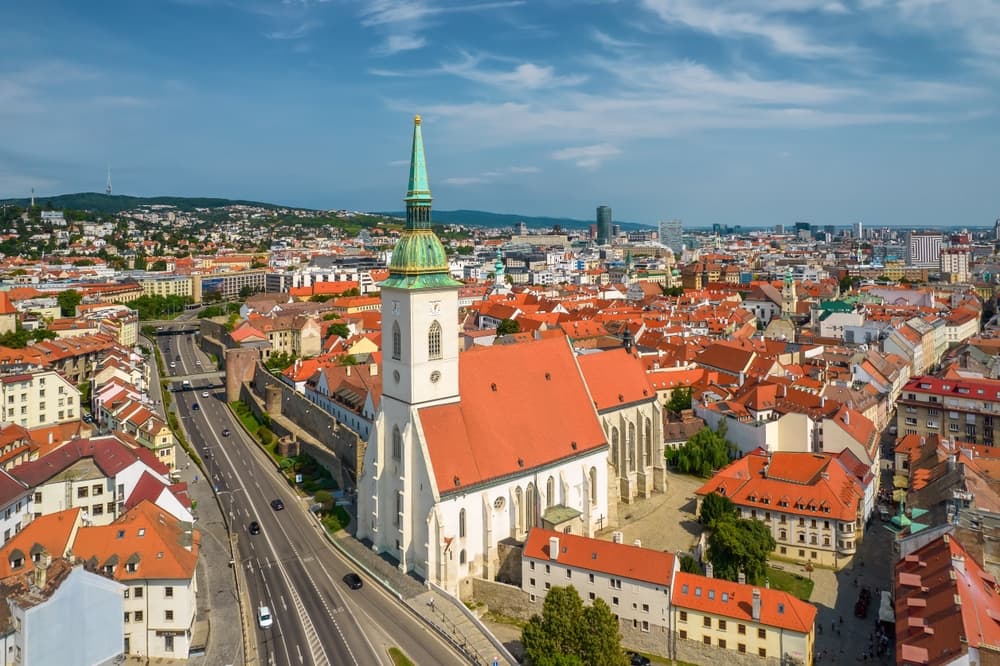
Slovakia is the EU member most professionals discover through Bratislava and then reconsider entirely: the capital sits sixty kilometers from Vienna, close enough that the twin-city life, Slovak costs with Austrian access, is a genuine strategy rather than a brochure line, and the country behind it over-delivers, the High Tatras' alpine drama two hours east, one of Europe's densest castle landscapes, the Small Carpathian wine route starting at the city's edge, and Košice anchoring the east with its own IT cluster and a cost base that makes Bratislava look expensive. The texture is Central European at its calmest: trams and tidy squares, a professional class whose English works, a reserve that opens into durable warmth, and streets the advisories place in Europe's low-drama bracket.
The paperwork story rewards precision because 2025-26 changed it. There is no nomad visa, and the business-residence route that serves founders and freelancers tightened: since July 2025, first-time applications must file at Slovak embassies abroad rather than in-country, an annual quota of 700 now caps the entries, and since mid-2026 the national visas connected to residence issue for a maximum of 120 days, making Slovakia's founder door genuinely narrower than Czechia's Zivno next door. The parts that remain attractive are real: the živnostenský list trade license issues in roughly three days for single-digit fees, Slovak law extends EU-style registration treatment to OECD nationals, Americans included, EU citizens hold the entire menu by right, and the permits that do issue run one to three years, renewable, with permanence on the standard five-year clock. For the tax-resident freelancer the arithmetic stays friendly beneath the reform headlines: a 15 percent rate for entrepreneurs under 100,000 euros of revenue, the 60 percent lump-sum expense deduction, a first-year social-insurance holiday that makes year one the cheapest in the region, and the small s.r.o. at an effective 16 percent, offset by the consolidation era's additions, progressive personal brackets to 35 percent, VAT at 23, and the strange little 0.4 percent tax on business bank transactions.
The honest context barely needs a paragraph: US Level 1, violent crime rare, the crime register running to distraction-theft crews at the Christmas markets and Old Town bars, the political temperature loud but civic with sixty-thousand-strong demonstrations passing without violence and regional elections due in late 2026, and the genuine hazards being Slovak ones, black ice on the D1, Tatras weather that kills the unprepared, and a zero-tolerance drink-driving limit enforced to the decimal. For the professional who wants Schengen, the euro, Vienna's airport and half its prices, Slovakia is the quiet answer the loud lists keep missing. The Tatras hire for the ski winter at Jasná and the resort towns, mostly on EU passports.
Widening the search? If you are looking to expand your job hunt across Central Europe, take a look at Czech Republic →, Austria →, and Hungary →.
Cost of living
Slovakia prices at the eurozone's accessible edge: Bratislava one-bedrooms run roughly 600 to 850 euros in the districts worth living in, Old Town and Ružinov at the top, with Košice a solid third cheaper and the smaller cities below that, and the euro deleting every conversion from the arithmetic. Utilities carry the Central European winter-heating weight, fiber is fast and cheap, and the Vienna comparison is the market's quiet pitch: half the rent, sixty kilometers, one hourly train.
Daily life runs gentle: the denné menu lunch specials at 7 to 10 euros, bryndzové halušky and kapustnica as comfort policy, Kaufland-Lidl-Billa groceries keeping the cooking economy trivial, and the Small Carpathian wine cellars pricing tastings like a rounding error. Transport is nearly free by Western logic, Bratislava's trams and buses at commuter-pass coins with validation enforced to the letter, Bolt covering the night, and the rail network putting Vienna at an hour, the Tatras at four by direct train, and Košice at five. Cards and contactless run everything. The comfortable single Bratislava life assembles at 1,800 to 2,400 dollars, the budget floor sits near 1,300, and the honest additions are Slovak: the Tatras fund, because living here without the mountains is the one waste, the ski-season weekends, and the Vienna line item for the opera-and-airport tier of life the twin-city strategy exists to capture.
- One-bedroom rent: 600 to 850 euros in Bratislava's good districts, a third less in Košice; the Vienna-at-half-price arithmetic is the market's entire pitch and the hourly train makes it real.
- Eat the denné menu economy: 7-to-10-euro lunch specials, halušky and kapustnica as policy, and wine-cellar tastings at rounding-error prices; the food budget resists effort.
- Validate the ticket, always: trams and buses cost coins but inspectors fine without exceptions for foreigners; the validation stamp is the one transit rule that bites.
- Budget the Tatras and the Vienna line: the mountain weekends are the point of the geography, the ski season prices fairly, and the twin-city strategy earns its train fare in airport access alone.
Cost-of-living calculator
See how your budget stretches in Slovakia.
Estimates use approximate exchange rates and typical monthly costs. Your actual costs will vary.
Visas & Entry
Slovakia runs the standard Schengen stack with 2026's machinery: visa-free nationals receive 90 days in any 180 across the zone, EES biometric registration is live at the borders, ETIAS is expected in 2027, and EU, EEA and Swiss citizens live and work freely, with an old Central European technicality worth knowing, registration with police within days of arrival, handled automatically by hotels and worth a form when renting privately.
Beyond 90 days there is no nomad visa, and the honest 2026 map shows a business route that works and has narrowed. The foundation is the živnostenský list, the trade license: issued in roughly three days for fees of 5 to 15 euros per activity, no capital required, and available under Slovak law not only to EU citizens but, in a distinctive quirk, to OECD nationals on EU-style terms, which puts Americans inside the registration framework even before residence is settled. The residence layer is where the tightening landed: the temporary residence permit for business purposes, built on the trade license plus a business plan, financial means and accommodation, issues for one to three years renewable with roughly 90-day processing, but since 1 July 2025 first-time applications must be filed at Slovak embassies abroad rather than in-country, an annual quota of 700 business-residence entries now applies, and since 15 July 2026 the national visas connected to residence issue for a maximum of 120 days, with filing rules tightened alongside; the practical consequence is that Slovakia's founder door is real, cheap and genuinely competitive on taxes, and also slower, quota-bound and consulate-first in a way its Czech neighbor is not. Around it: the EU Blue Card for salaried skilled work at its wage threshold, employment and study permits through the standard menu, family reunification, and the long-term tier, EU long-term residence and permanence on the five-year clock with language requirements recently clarified. The Migration Information Centre, IOM-run and official, is the free first stop the entire system recommends.
- Read the 2025-26 tightening before planning: first-time business residence files at embassies abroad, the 700-entry annual quota is real, and the 120-day national-visa ceiling reshapes timelines; the route works and rewards early, complete filings over improvisation.
- Americans, note the OECD quirk: Slovak trade-licensing extends EU-style registration treatment to OECD nationals, putting the živnosť itself within reach; residence remains the separate, quota-bound question, and the two-step order matters.
- Use the Migration Information Centre first: the IOM-run official service is free, current and multilingual, and beats every paid intermediary for the quota-and-procedure questions this system now turns on.
- Price Slovakia against Czechia honestly: the Zivno next door files easier while Slovak taxes run friendlier at freelance incomes; the founder choosing between Bratislava and Brno is choosing between entry friction and annual arithmetic.
- Keep the registration technicalities tidy: police registration on arrival, carried ID at all times, and validated transit tickets are the small rules Slovakia actually enforces; the tidy file is the cheap habit.
- Count Schengen days like money until formalized: the 90-in-180 window spans the zone, EES logs it biometrically, and the Vienna hour means the allowance spends across two capitals from one base.
| Visa or permit | What it covers |
|---|---|
| Schengen entry | Ninety days in any 180 for visa-free nationals, EES biometrics live, ETIAS expected 2027; the standard season, with the local technicality of police registration within days, hotel-automatic and form-simple otherwise. |
| EU, EEA and Swiss citizens | Full freedom of movement: live, work and register the živnosť without permits, recording residence after three months; the Central European base as birthright, an hour from Vienna. |
| The živnosť trade license | Issued in roughly three days for 5-to-15-euro fees with no capital requirement, and extended on EU-style terms to OECD nationals including Americans; the cheap, fast foundation the business-residence route builds on. |
| Business residence, tightened | One to three years renewable on the trade license plus plan, means and accommodation, roughly 90-day processing, but consulate-first since July 2025, capped at 700 entries yearly, and fed by national visas now limited to 120 days; real, and narrower than the Czech equivalent. |
| EU Blue Card and employment | The salaried skilled route at its wage threshold alongside the standard employment-permit menu; the employer-sponsored counterpart for those who prefer the payroll lane. |
| The Vienna-twin strategy | Not a visa but a fact of geography: Bratislava sits sixty kilometers from Vienna, and the Slovak-cost, Austrian-access life, airport, opera, clients, is the arrangement the region's professionals quietly run; Austrian-client work follows Austrian rules. |
| Permanence | EU long-term residence and permanent status on the five-year clock, language requirements recently clarified, dual nationality recognized in practice for most acquisition routes; the settlement tier behind the business years. |
Good to know: No DNV; the business route tightened: consulate-first filings since Jul 2025, annual quota of 700, national visas ≤120 days since Jul 2026; narrower than Czechia's Zivno; živnosť itself issues in ~3 days for €5-15 and extends to OECD nationals (Americans included); permits 1-3 yrs renewable; PR at 5 yrs; EES live, ETIAS 2027.
EnRoute Jobs AI tool
Route Planner
Map visa routes, timelines, and relocation costs for your next destination.
Work & Legal
Slovak professional culture runs on the region's quiet register: initial reserve that reads as formality and opens into durable trust, punctuality respected, small talk rationed, English carrying the professional class in Bratislava and the tech firms while thinning fast in administration, where a Slovak-speaking helper or the Migration Information Centre earns its keep. The scene is modest and real: Bratislava's coworking tier serves a growing international community, the ESET-anchored security cluster gives the capital genuine tech pedigree, Košice's IT Valley runs the eastern second hub at gentler costs, and the Vienna hour puts a global city's events, clients and airport inside commuting range, with the standing rule that Austrian-client work follows Austrian authorization rules, not Slovak tolerance.
The legal lines are EU-standard: foreign-client remote work during Schengen stays sits in the unpoliced gray zone, Slovak clients or employment require proper status, and the živnosť converts freelancing into clean structure for those whose nationality or residence allows registration, with the SZČO framework, invoicing norms and accountant ecosystem all built for the contractor economy. The operational notes: GMT+1 overlaps Europe wholly and reaches US East by mid-afternoon; the transaction tax makes business banking structure worth an hour of advice, payment batching and account choice softening its bite; winter argues for the heated desk and repays with the Tatras' ski season two hours east; and the summer's lake-and-hiking culture is the productivity valve the locals actually use.
- Foreign clients ride the gray zone, local work formalizes: remote work for overseas employers is unpoliced on legal stays, Slovak clients or employment need proper status, and the živnosť plus SZČO framework turns freelancing into clean structure the moment registration rights allow.
- Run the twin-city geometry deliberately: Vienna's airport, clients and events sit an hour away at Bratislava prices, and the one hard rule is jurisdictional, Austrian-client work follows Austrian rules; the strategy works because the border is real.
- Structure the banking around the transaction tax: the 0.4 percent levy on business debits, capped per transaction, rewards payment batching and account design; an hour with a Slovak accountant prices it into irrelevance for most laptop businesses.
- Work the GMT+1 day and the mountain valve: Europe overlaps wholly, US East arrives mid-afternoon, and the Tatras two hours east are the burnout answer the locals institutionalized; the ski-Friday is a legitimate Slovak business custom.
Good to know: Gray zone standard for foreign-client work; živnosť/SZČO framework clean for those with registration rights; Vienna-hour twin-city strategy (Austrian-client work = Austrian rules); ESET-anchored Bratislava + Košice IT Valley; transaction tax rewards banking structure; GMT+1.
Taxes
Slovak tax turns on the 183-day line, and the 2026 consolidation package rewrote the schedule above it: progressive brackets now climb to 35 percent, while the freelancer's corner of the code keeps the bargains, a 15 percent rate under 100,000 euros of revenue, the 60 percent lump-sum deduction, and a first year the region cannot beat.
| What applies | The rule in 2026 |
|---|---|
| The residency tests | Tax residency attaches past 183 days or through a permanent home in Slovakia; the Schengen-season visitor stays clear, and the business-residence holder is in the system by design. |
| Non-residents | Owe Slovak tax on Slovak-source income only; the visiting remote worker's foreign salary and clients sit outside the net for the standard season. |
| The 2026 progressive schedule | The consolidation package replaced the old two-band design with brackets running 19, 25, 30 and 35 percent up the income scale, with the personal allowance beneath; the employee's and high-earner's reality, softened for entrepreneurs by the regimes below. |
| The entrepreneur's 15 percent | Self-employed taxpayers with revenues at or under 100,000 euros pay a flat 15 percent, and the 60 percent lump-sum expense deduction, capped, shrinks the base before the rate applies; the pairing keeps Slovak freelance taxation among Central Europe's gentlest. |
| The contributions architecture | Health insurance runs from roughly 107 euros monthly at the minimum, social insurance around 237 monthly applies only from the second year, and the first-year holiday makes the new SZČO's opening twelve months the cheapest structure in the region at typical freelance incomes. |
| The s.r.o. alternative | The small limited company pays 10 percent corporate tax under 100,000 euros of income with dividends at 7, an effective 16-percent-range structure before the owner's fixed health minimum; the conversation with the accountant is SZČO-versus-s.r.o. and the crossover points are known. |
| VAT and the transaction tax | The standard VAT rose to 23 percent with registration thresholds around 50,000 euros, and the consolidation era added the financial transaction tax, 0.4 percent on business debits capped at 40 euros per transaction with cash withdrawals higher; an oddity priced into structure rather than a dealbreaker. |
| Americans specifically | A US-Slovakia income tax treaty stands while no totalization agreement covers self-employment contributions; the FEIE or credits carry the US side, and the euro-denominated books keep the arithmetic clean. |
Verified 21 August 2026: the 183-day test, the consolidation package's 19-to-35 progressive schedule, the 15 percent entrepreneur rate at the 100,000-euro threshold with the lump-sum deduction, the first-year social-insurance holiday and contribution minimums, the small-company 10-plus-7 structure, VAT at 23 percent, the transaction tax's rates and caps, and the standing US treaty without totalization. General information, not tax advice.
Good to know: 2026 consolidation rewrote the schedule: progressive 19/25/30/35; the freelancer corner survives: 15% under €100k revenue + 60% lump-sum expenses + year-one social holiday (region's cheapest first year); s.r.o. at ~16% effective; VAT 23%; 0.4% transaction tax on business debits (capped €40); US treaty yes, totalization no.
Healthcare
Slovak healthcare pairs a functional public system, EHIC-reciprocal and anchored by the university hospitals, with a private tier that modernized dramatically this decade: Bratislava's new-generation private hospital raised the capital's ceiling with contemporary facilities, the ProCare and Svet zdravia networks run clinics and regional hospitals across the country, and consultations cash-pay at 30 to 60 euros with English workable at the private tier and inconsistent beyond it. The public flagships, University Hospital Bratislava across its campuses and Košice's university hospital in the east, carry the tertiary depth, and the honest caveats are the Canadian advisory's own: capability thins outside the major cities, some facilities expect immediate payment, and evacuation-inclusive insurance remains the sensible baseline for anyone outside the EHIC umbrella.
The practical texture is Central European: pharmacies professional and everywhere, dental care at value levels the Austrians quietly cross the border for, tap water excellent, and the genuine health risks seasonal and terrain-shaped, winter ice underfoot and black ice on the D1, the zero-tolerance drink-driving limit enforced to the decimal, tick-borne encephalitis vaccination as the sensible norm for anyone joining the hiking-and-forest culture, and the Tatras deserving their own respect, alpine weather that turns fast, marked-trail discipline, and the Mountain Rescue Service at 18 300 as the number every hiker saves before the first cable car. Emergencies answer at 112 with urban response prompt.
- Consultations run 30 to 60 euros at the private tier with English workable, the ProCare-Svet zdravia networks offering the same-week access, and EHIC covering EU visitors publicly; capability thins outside the major cities by the advisories' own note.
- Save 18 300 before the mountains: the Mountain Rescue Service is the Tatras' own emergency line, alpine weather turns fast, marked-trail discipline is the culture's law, and rescue insurance is the cheap addition every hiker should hold.
- Vaccinate for the forest life: tick-borne encephalitis vaccination is the sensible norm for the hiking, mushroom and lake culture, and repellent-plus-checks is summer doctrine.
- Respect the road rules as health rules: the drink-driving limit is zero and enforced to the decimal, winter tyres are mandatory in conditions, black ice owns the D1 in cold snaps, and 112 answers everything else.
| Hospital | What to know |
|---|---|
| University Hospital Bratislava | The capital's multi-campus public flagship, the tertiary anchor and referral answer for complex cases in the west. |
| Nemocnica Bory, Bratislava | The new-generation private hospital that raised the capital's ceiling: contemporary facilities, broad specialty depth, and the private tier's serious end. |
| L. Pasteur University Hospital, Košice | The eastern university anchor, carrying the second city and the Tatras hinterland with full hospital depth. |
| National Institute of Cardiovascular Diseases, Bratislava | The cardiac specialty flagship, the national referral center for the heart tier. |
| ProCare and Svet zdravia networks | The national private clinic-and-hospital networks: same-week access, packages the professional class uses, and the practical first stop in most cities. |
| The EHIC and insurance layer | EU visitors carry public-system reciprocity by card; everyone else runs private cover with the evacuation rider, and some facilities expect immediate payment outside it. |
Hospital list compiled 21 August 2026 and not yet confirmed against each facility directly. Treat as indicative and verify before relying on it.
Good to know: Public flagships + modern private tier (Bory raised the ceiling; ProCare/Svet zdravia networks) at €30-60; EHIC reciprocal; dental value draws Austrians; TBE vaccination the forest norm; Tatras = Mountain Rescue 18 300 + marked-trail law; zero-tolerance drink-driving; 112.
Safety
Slovakia sits in Europe's low-drama bracket and the advisories agree unanimously: US Level 1, Exercise Normal Precautions, reissued February 2026 with a summary touch-up only, and normal-precautions guidance from the UK, Canada, Australia and Ireland alike. The crime register is the classic Central European set and nothing more: distraction-theft crews, sometimes including children, working Bratislava's Old Town, the summer crowds and the Christmas-market season, phones and bags lifted in tourist bars and on transit, car theft favoring rentals and the D1 rest stops, all answered by ordinary habits, bags closed, phones pocketed, taxis called by app or phone rather than hailed, valuables out of parked cars. The civic temperature runs loud but orderly: the political era has produced large demonstrations, some exceeding sixty thousand around Bratislava's SNP and Freedom Squares, passing without violence under a permit system and practiced policing, with regional elections due October 2026 and the standing advice being the universal one, treat gatherings as weather and walk around them.
The rules that actually bite are small and specific. Street drinking is illegal in Bratislava's Old Town and most city centers outside licensed terraces, with on-the-spot fines. Cannabis and CBD products are seriously illegal, bringing them across the border risks detention measured in years, and no European normalization elsewhere changes Slovak law. Identity checks are lawful at any time, so the carried passport is the habit, and the technical registration-with-police rule for stays beyond days is handled by hotels and worth a form when renting privately. Driving runs zero-tolerance on alcohol to the decimal, fines collect on the spot, winter equipment is mandatory in season, and black ice on the D1 is the country's genuine recurring hazard alongside Tatras weather, where the Mountain Rescue Service at 18 300, marked trails and honest self-assessment are the safety system. Emergencies answer at 112; solo travelers of every description report ordinary comfort; and the honest summary is that Slovakia's risks are Slovak winters and Slovak mountains, not Slovak streets.
- Run the ordinary habits against the distraction crews: bags closed in the Old Town and at the Christmas markets, phones pocketed in tourist bars, taxis by app or phone, nothing visible in parked cars; the petty-theft register is the entire urban risk.
- Respect the small rules that bite: no street drinking outside licensed terraces, no cannabis or CBD across the border under penalty of detention, the passport carried against lawful ID checks, and transit tickets validated without exception.
- Treat demonstrations as civic weather: the era's large gatherings pass peacefully under permits and practiced policing, SNP and Freedom Squares host them, October 2026's regional elections will add calendar, and distance remains the entire strategy.
- Drive to Slovak standards: zero alcohol to the decimal, on-the-spot fines, mandatory winter equipment, and the D1's black ice as the recurring hazard; the train is the elegant escape from all of it.
- Give the Tatras alpine respect: weather turns fast above the treeline, marked trails are the culture's law, 18 300 reaches Mountain Rescue, and rescue insurance is the cheap addition; the mountains are the country's one genuinely serious environment.
- Know 112 and expect competence: the single number answers everything with English available in the cities, STEP enrollment takes five minutes, and the embassy feed completes the kit.
Official travel advisories
| Government | Current position |
|---|---|
| United States | Level 1, Exercise Normal Precautions, February 2026 reissue: generally safe, with texture on distraction-theft in the Old Town, tourist bars and transit, demonstration-avoidance basics, EES registration noted at entry, and the sharp warnings on public drinking bans and cannabis-CBD illegality.travel.state.gov → |
| United Kingdom | Normal precautions with low assessed terrorism risk; the standard petty-crime and driving-rules guidance for Central Europe.gov.uk → |
| Canada | Normal security precautions; details the distraction-crew tactics including children and teens, transit and train-station focus, rental-car theft, and the healthcare caveats, thinner capability outside major cities and possible immediate-payment expectations.travel.gc.ca → |
| Australia | Normal safety precautions; carries the practical rule set, Old Town street-drinking ban, on-the-spot driving fines, carry-your-passport identity checks, and the police-registration technicality for longer stays.smartraveller.gov.au → |
| US Embassy Bratislava | Enroll in STEP; the embassy feed carries the seasonal notices and the rare security item. Hviezdoslavovo námestie 4, Bratislava; +421 2 5922 3000.sk.usembassy.gov → |
Advisory positions verified 21 August 2026: US Level 1 (February 2026) and normal-precautions consensus across allied advisories, the distraction-theft texture, the street-drinking and cannabis rules, the ID-check and registration technicalities, the peaceful large-demonstration pattern with October 2026 regional elections ahead, and the Tatras-and-winter hazard picture. Open the sources before travelling.
Good to know: US L1 (Feb 2026) + normal-precautions consensus; Europe's low-drama bracket; register: distraction-theft crews in Old Town/markets/transit; small rules bite: street-drinking ban, cannabis/CBD absolutism, carry-passport ID checks; 60k+ demonstrations pass peacefully (regional elections Oct 2026); real hazards are D1 black ice and Tatras weather (Mountain Rescue 18 300); 112.
Climate
Slovakia runs the honest Central European year with an alpine exclamation mark. Bratislava summers hold 20 to 27 degrees from June through August with heat-wave spikes and long terrace evenings; winters run minus-4 to 2 from December through February with snow, grey stretches and the Danube fog; and the shoulders are the working prize, April-May's fast green spring and September-October's golden autumn, mild, uncrowded and fully functional. The Tatras write their own calendar: heavy snow and a genuine ski season December through March at Jasná and the High Tatras resorts, a hiking season from June through September when the marked-trail network opens fully, and shoulder months when altitude weather demands respect regardless of valley sunshine. The strategic year is easy: anchor May-June and September-October in the capital, take the summer's lake-and-festival season as it comes, and answer the winter with either the ski weekends two hours east or the heated-desk-and-thermal-spa doctrine, Slovakia's aquapark-and-sauna culture being the season's underrated answer. The Vienna comparison holds: near-identical weather, sixty kilometers apart, at half the price.
| Season | What to expect |
|---|---|
| The shoulder prizes, April-May and September-October | Fast green spring and golden autumn: mild days, uncrowded cities, full function; the months the working calendar aims at. |
| Summer, June to August | Warm 20-to-27 with heat-wave spikes, terrace evenings, lake culture and the festival season; the Tatras' hiking window runs in parallel. |
| Winter, December to February | Minus-4 to 2 with snow and grey stretches in the capital, heavy snow and real skiing in the Tatras; heated-desk weather answered by Jasná weekends and the thermal-spa culture. |
| The Tatras calendar | Ski season December through March, hiking June through September on the marked network, and altitude weather demanding respect in every month; the alpine exclamation mark two hours from the capital. |
Good to know: Shoulder seasons are the working prize, summer belongs to terraces and Tatras trails, and the winter splits between the ski weekends and the thermal-spa answer.
Culture & Customs
Slovak culture runs on the region's quiet depth: privacy valued, formality as the opening register, emotional display rationed, and the trust that builds behind it durable in a way effusive cultures rarely match. The identity is mountain-and-village at its core even in the capital, the hiking culture functioning as national religion with the Tatras as its cathedral, the folk tradition alive in festivals like Východná rather than preserved behind glass, and one of Europe's densest castle landscapes, Spiš, Devín, Bratislava's own, treated as ordinary weekend furniture. Ice hockey shares the sacred tier with hiking, national-team games functioning as holy days, and the wine culture of the Small Carpathians, cellars opening off village streets an hour from the capital, remains the region's best-kept ordinary secret.
Daily texture: bryndzové halušky and kapustnica as the comfort canon, the denné menu lunch as working ritual, slivovica offered as ceremony and declined with diplomacy, kofola holding its cult-soda corner, and coffee culture running deep in Bratislava's café generation. The codes are light and real: shoes off in homes always, punctuality respected, name days celebrated alongside birthdays, tipping at 10 to 15 percent where service pleases, quiet hours after ten enforced socially and sometimes legally, and the formal-informal language boundary crossed only by invitation. History is discussed with its earned seriousness, the state's 1993 velvet birth, the communist decades, the wartime complexities, and the visitor's role is curiosity over commentary. The professional who learns dobrý deň and ďakujem, joins one hike, watches one hockey game and accepts one cellar invitation is adopted at Slovak speed, slower than the south, and worth the wait.
- Read the reserve as calibration: formality opens the relationship and trust builds behind it; the friendship that arrives after patience is the durable Central European kind, and imported effusiveness only resets the clock.
- Join the hiking religion: the marked-trail network is the national infrastructure, the Tatras its cathedral, and the invitation to a hike is the genuine sign of acceptance; proper boots are cultural literacy.
- Learn dobrý deň and ďakujem: English carries Bratislava's professional class and thins beyond it, and the Slovak attempt lands as noticed courtesy everywhere.
- Respect hockey's sacred tier: national-team games are holy days, the pub watching them is the fastest sociology in the country, and the sport is identity rather than pastime.
- Take the cellar invitation: the Small Carpathian wine route is the capital's best ordinary secret, the tastings price like rounding errors, and the slivovica ceremony, accepted once, seals more than any contract.
- Keep the home codes: shoes off always, quiet after ten, name days remembered, flowers in odd numbers; the small courtesies are the culture's actual currency.