.png)
About Cape Verde
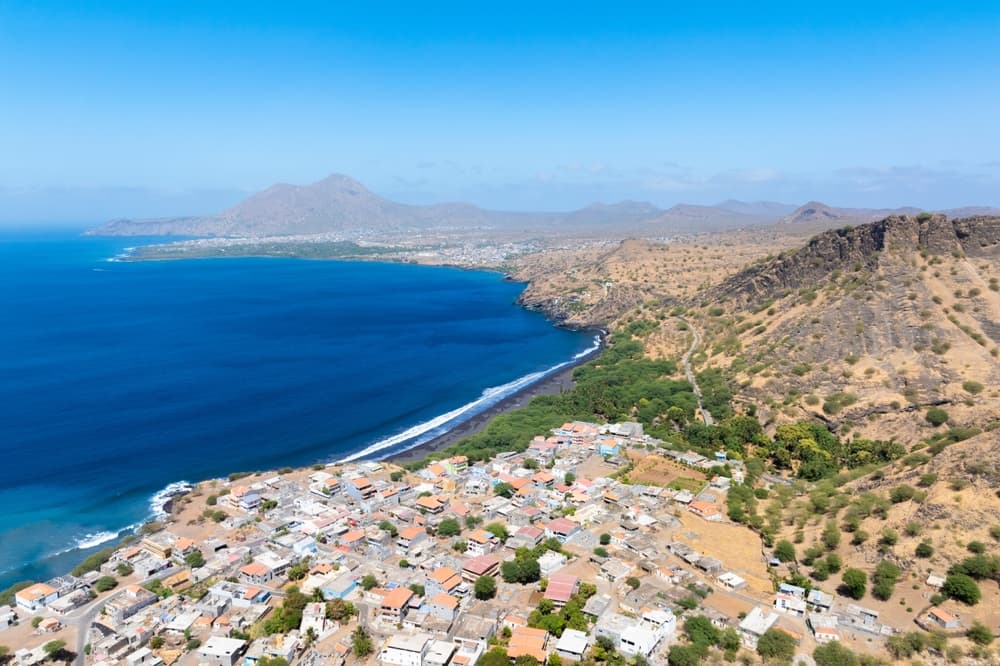
The Atlantic does something specific to light near the equator. In Cape Verde, ten volcanic islands scattered 600 kilometers off the Senegalese coast, the ocean is not merely present but dominant: the trade winds define the temperature, the horizon defines the views, and the sea defines the culture, which grew from Portuguese colonial history, West African tradition and centuries of emigration into something the morna carries better than any essay, mournful and joyful at once, morabeza, the untranslatable Creole warmth, extended to anyone who arrives curious. Mindelo on São Vicente is the cultural capital and the natural nomad base, a harbor town of music bars, café terraces and Carnival; Praia on Santiago runs the administrative capital's busier register; Sal and Boa Vista host the resort economy; Santo Antão holds the hiking drama; and Fogo smolders under its vineyard-ringed volcano.
The paperwork story deserves the correction this page makes: Cape Verde was not discussing a nomad framework, it shipped one in December 2020, among the first anywhere. Remote Working Cabo Verde offers a six-month temporary stay renewable to twelve for remote workers and their families from Europe, North America, the CPLP and ECOWAS, and the financial test is the program's quiet genius, no salary threshold at all, just a 1,500-euro average balance across the last six months, 2,700 for a family group, shown by statements or three salary receipts, plus insurance and a 20-euro fee, processed in about two weeks. Entry modernized in parallel: EU citizens travel visa-free for 30 days, the old visa-on-arrival is gone, and everyone pre-registers through the EASE platform with the airport security tax settled before or at arrival. The state wrapped the program in genuine strategy, the EllaLink cable landing European latency on the islands, Starlink covering the outer islands since 2024, and TechPark hubs in Praia and Mindelo anchoring a digital-economy plan the visa fronts. Sal's kite and surf schools hire instructors every windy season, and the resort economy staffs internationally besides.
The honest ledger keeps three entries. The ocean is the real hazard, Atlantic currents drowning visitors on unflagged beaches yearly while crime stays at the petty tier outside Praia's street-smart districts; the health system is competent for the routine and ends at the evacuation flight to Lisbon or Dakar, which the mandatory insurance exists to fund; and island life runs on island logistics, ferries and small planes, cash on the outer islands, and a pace, no stress, the national phrase, that either converts you or doesn't. For the remote worker whose clients live in European or American time zones, the UTC-1 position is close to perfect, and the archipelago's bet is simple: nowhere else offers this particular mixture of safety, sun, music and sea at this price, in either sense of the word.
Widening the search? If you are looking to expand your job hunt across Africa, take a look at Morocco →, Seychelles →, and South Africa →.
Cost of living
Cape Verde prices like the mid-Atlantic crossroads it is: cheaper than Europe, dearer than the African mainland, with the escudo's permanent peg to the euro, about 110 to 1, deleting exchange drama from budgeting. Furnished one-bedrooms run roughly 350 to 700 euros, Mindelo's café district and Santa Maria on Sal at the top of that band, local-market Praia below it, and the outer islands cheaper still where stock exists; ask every host for a speed test before committing, because fiber and legacy lines coexist in the same buildings.
Daily life runs gentle: the prato do dia at local restaurants for 5 to 10 euros, cachupa as the national comfort food at pocket change, fresh tuna and wahoo at fisherman prices, grogue and Strela beer at bar prices Europe forgot, and the 15 percent IVA hiding inside everything. Movement is the honest line item: aluguer shared vans run the islands for coins, taxis meter cheaply, but inter-island logistics, ferries where they run, small planes where they don't, deserve a real monthly buffer, and the 34-euro airport security tax bookends each international arrival. Coworking runs 100 to 200 euros where it exists, CVMóvel and Unitel T+ SIMs are cheap with solid 4G in the towns, and the comfortable single Mindelo life assembles at 1,400 to 1,800 dollars with the ferry fund included. Cash still matters beyond the main towns; cards live in hotels, supermarkets and the resort economy.
- One-bedroom rent: 350 to 700 euros furnished, Mindelo and Santa Maria at the top, local Praia below; fiber and legacy ADSL share the same streets, so the speed-test screenshot is part of every apartment viewing.
- Eat at island prices: the 5-to-10-euro prato do dia, cachupa for coins, fisherman-fresh tuna, and a bar economy where the sunset beer costs what it should; the escudo's euro peg keeps every number legible.
- Budget movement like a line item: aluguer vans and taxis are cheap, but ferries and inter-island flights are the real cost of archipelago life, and the 34-euro airport tax bookends each arrival.
- Carry cash beyond the towns: cards cover hotels, supermarkets and resorts while markets and outer islands run on escudos; the ATM stop is part of every island hop.
Cost-of-living calculator
See how your budget stretches in Cape Verde.
Estimates use approximate exchange rates and typical monthly costs. Your actual costs will vary.
Visas & Entry
Entry modernized quietly: EU citizens travel visa-free for 30 days, several other Western nationalities follow suit or use advance visas, the old visa-on-arrival has been retired, and every traveler pre-registers online through the EASE platform before departure, with the roughly 31-to-34-euro airport security tax paid in advance or on arrival, increasingly bundled into airline tickets.
The main event is Remote Working Cabo Verde, launched December 2020 as one of the planet's first nomad programs and still running in 2026. The shape: a six-month temporary visa, renewable once in-country for twelve months total, for remote workers, freelancers and business owners whose employers, clients and income sit entirely outside Cabo Verde, with family groups, spouse or partner plus dependents, welcome on a single application. Eligibility runs by region rather than income: citizens of Europe, North America, the Community of Portuguese Language Countries and ECOWAS qualify, and the financial test is the program's signature generosity, no salary threshold, just proof of a 1,500-euro average bank balance across the last six months for individuals or 2,700 for families, shown by statements or the last three salary receipts. The rest of the file: passport valid six months, health and travel insurance covering the stay including evacuation and repatriation, a brief description of the remote work, and the 20-euro fee. Applications file online through the official Remote Working portal with roughly two-week turnarounds, the approval arrives by email with entry instructions, and the border stamps the visa on arrival documents. The restrictions are the standard ones, no Cabo Verdean employment or clients, and the fiscal wrapper is friendly: program participants' foreign earnings sit outside local income tax. Beyond the twelve months, the classic routes take over: temporary residence permits through the borders directorate for those who convert, work visas for local employment, and residence timelines that reach permanence on ordinary schedules.
- Mind the balance, not the payslip: the 1,500-euro six-month average is the entire financial test, so the account that dips below needs six clean months before filing; no salary figure is asked and none should be volunteered awkwardly.
- Buy insurance with evacuation cover first: the requirement names evacuation and repatriation explicitly, ordinary travel policies often exclude them, and the same coverage is the health system's honest ceiling anyway; solve it before documents.
- File three-plus weeks ahead: two-week processing is the norm, the approval email carries the instructions the border wants, and printing the packet beats explaining a phone screen at Sal immigration.
- Register EASE and settle the airport tax early: the pre-registration is mandatory for everyone, the 34-euro tax surprises the unprepared, and airlines increasingly bundle it; five minutes online deletes the entire category of arrival friction.
- Bring the family on one file: the 2,700-euro family balance covers spouse, partner and dependents together, and the program's family-group design makes Cape Verde one of the easiest genuine family nomad plays anywhere.
- Plan the renewal in month four: the second six months files in-country before the first expires, and the twelve-month ceiling is real; converts talk to the borders directorate about residence permits before the calendar forces improvisation.
| Visa or permit | What it covers |
|---|---|
| Tourist entry and EASE | Thirty days visa-free for EU citizens and several other nationalities, advance visas for the rest, visa-on-arrival retired; everyone pre-registers on the EASE platform before departure, with the 31-to-34-euro airport security tax paid ahead or at the desk, often bundled into tickets now. |
| Remote Working Cabo Verde | The December 2020 pioneer, still running: six months renewable to twelve for remote workers with foreign employers, clients and income, filed online with two-week turnarounds, a 20-euro fee, and the visa collected at entry; no Cabo Verdean work permitted. |
| The balance test | No income threshold exists: individuals show a 1,500-euro average bank balance over the last six months, family groups 2,700, via statements or three salary receipts; among serious programs, the lowest financial bar in this index. |
| Who qualifies | Citizens of Europe, North America, the Portuguese-speaking community and ECOWAS; the regional gate covers this page's readership entirely, and the family-group application brings spouses, partners and dependents on one file. |
| The paperwork set | Passport with six months' validity, health and travel insurance spanning the stay including evacuation and repatriation cover, the work description, proof of accommodation plans, and the statements; the file is light and the email approval carries the entry instructions. |
| The fiscal wrapper | Foreign earnings under the program sit outside Cabo Verdean income tax, the escudo's euro peg keeps money legible, and the only universal levies are the IVA inside prices and the airport tax at the door. |
| Beyond twelve months | Temporary residence permits through the borders directorate for converts, work visas for local employment, and ordinary residence timelines toward permanence; the program is a long visit by design, and the settlement routes are the classic ones beside it. |
Good to know: Pioneer program (Dec 2020) still running: 6+6 months, €1,500 average-balance test (€2,700 family; the index's lowest bar), €20 + €34 airport tax, ~2 weeks, Europe/N.America/CPLP/ECOWAS only; evacuation-inclusive insurance mandatory; EASE pre-registration replaced visa-on-arrival; foreign earnings untaxed.
EnRoute Jobs AI tool
Route Planner
Map visa routes, timelines, and relocation costs for your next destination.
Work & Legal
Cape Verdean work culture runs on morabeza and the clock runs on no stress: relationships open with genuine greetings, meetings start when people arrive, and the professional register stays warm-formal in Portuguese while daily life flows in Kriolu. The remote infrastructure is the archipelago's quiet achievement: the EllaLink submarine cable lands European latency directly, fiber reaches genuine speeds in Praia, Mindelo and Santa Maria, Starlink has covered the outer islands since late 2024, and the TechPark hubs in Praia and Mindelo anchor a state strategy that treats remote workers as economic policy rather than tolerated guests. The time zone is the underrated asset: UTC-1 sits one to two hours behind Western Europe and three to four ahead of the US East Coast, the rare position that serves both continents inside a civilized workday.
The legal lines are the program's: Remote Working Cabo Verde authorizes foreign-source work explicitly and prohibits Cabo Verdean employment and clients, with local work routing through ordinary work visas and employer sponsorship. The operational doctrine is island-shaped: fiber apartments verified by speed test before booking, a charged SIM from CVMóvel or Unitel T+ as the automatic backup, power banks against the occasional outage, and the acceptance that ferry schedules, festival calendars and the harmattan's dusty weeks are planning inputs, not obstacles. Mindelo's café-and-music economy hosts the natural community; Santa Maria on Sal runs the kitesurf-coworking register; and the entire archipelago rewards the worker who matches its pace instead of importing another one.
- The program draws the standard line: foreign employers and clients only, with Cabo Verdean work routing through ordinary sponsored visas; the visa's explicit authorization is the entire point, so keeping the income offshore keeps everything simple.
- Verify the fiber, carry the SIM: EllaLink latency is real where fiber reaches and legacy lines lurk in the same buildings, so the host's speed test is part of booking and the CVMóvel or Unitel T+ backup is part of the kit; Starlink covers the outer-island edge cases.
- Work the UTC-1 sweet spot: London is one hour ahead, Lisbon the same, New York three behind, and the archipelago's workday overlaps both continents without nocturnal sacrifice; few bases on earth split the Atlantic this cleanly.
- Plan by island rhythm: ferry schedules, Carnival and festival weeks, and the harmattan's dusty stretches are calendar inputs; the no-stress pace converts deadlines into planning rather than friction, and fighting it is the one imported error.
Good to know: Program explicitly authorizes foreign-source work; local work needs sponsored visas; EllaLink cable + Starlink (since 2024) + TechPark hubs = real state-backed infrastructure; UTC-1 splits Europe and US East inside one workday; verify fiber by speed test.
Taxes
Cape Verdean tax treats the program's participants the way the program intends: foreign earnings sit outside the local net, the twelve-month ceiling keeps most stays below residency's practical reach, and the escudo's euro peg keeps the money side of island life legible to the cent.
| What applies | The rule in 2026 |
|---|---|
| The program's fiscal wrapper | Remote Working Cabo Verde participants' foreign-source earnings are not taxed locally, the design intent stated plainly across official and specialist guidance; the visa was built to import spending, not to tax salaries. |
| The 183-day theory | Tax residency formally attaches through habitual residence or presence past 183 days, and the program's split six-plus-six architecture keeps the question largely theoretical; converts to genuine residence permits are the ones who meet it in practice. |
| Resident rates, for context | Cabo Verdean residents pay progressive income tax topping out around 27.5 percent, relevant to those who convert to residence and localize their lives, and to no compliant program participant. |
| IVA and daily taxes | The 15 percent IVA rides inside prices, the airport security tax bookends international arrivals, and the visitor's fiscal footprint is otherwise the receipt. |
| The euro peg | The escudo is pegged permanently at roughly 110 to the euro, deleting exchange risk for euro earners and making the islands one of the few African bases where a European budget converts without hedging arithmetic. |
| Treaty coverage | Cape Verde's double-taxation network is thin, anchored on Portugal and a handful of partners; no comprehensive US treaty or totalization agreement exists, and the program's exemption makes the gap mostly academic for participants. |
| Americans specifically | The FEIE or foreign tax credits carry the US side as always, self-employment tax follows the self-employed regardless of geography, and with Cabo Verdean tax at zero on program earnings, the American's entire calculation lives at home. |
| The home-country half | The islands' generosity does not silence the jurisdiction left behind: residency-based systems keep their claims until properly exited, and the clean version of the Cape Verde year starts with the home-country conversation, not the Sal landing. |
Verified 20 August 2026: the program's foreign-earnings exemption, the 183-day and habitual-residence tests, resident rates around 27.5 percent, IVA at 15 percent, the escudo-euro peg, and the thin treaty network without US coverage. General information, not tax advice.
Good to know: Program earnings exempt from local tax by design; 183-day residency stays theoretical inside the 6+6 architecture; residents to ~27.5%; IVA 15%; escudo pegged ~110/EUR (no exchange risk for euro earners); thin treaty network, no US treaty or totalization.
Healthcare
Cape Verdean healthcare is honest about its size: competent for the routine, structured around two central hospitals, Dr. Agostinho Neto in Praia and Dr. Baptista de Sousa in Mindelo, with regional hospitals and health centers carrying the smaller islands, private clinics in the two cities offering quicker access at 20-to-40-dollar consultations, and evacuation to Lisbon or Dakar as the explicit answer for anything complex, which is precisely why the visa requires insurance with evacuation and repatriation cover rather than suggesting it. English-speaking physicians exist at the private tier without being guaranteed; Portuguese or Kriolu carries the system.
The 2026 health notes are specific and worth carrying: the UK's health agency issued a February 2026 warning after gastroenteritis outbreaks, shigella and salmonella among them, hit resort tourists, making bottled water doctrine and buffet judgment genuinely current advice rather than boilerplate; dengue seasons recur with the late-summer rains and repellent is a habit; the Atlantic itself is the islands' real killer, drownings on unflagged beaches outnumbering every exotic risk, and flagged-beach discipline is the health advice that matters most; and the harmattan's dusty weeks from November to March bother sensitive airways. Emergencies answer at 131 medical, 132 police, 130 fire, and the sensible resident knows the evacuation policy's activation number as well as any of them.
- The insurance is the health system's top tier: evacuation to Lisbon or Dakar answers everything complex, the visa mandates the coverage, and the activation number belongs next to 131 in your phone.
- Run the 2026 hygiene doctrine: the February resort gastro outbreaks made bottled water and buffet judgment current advice, not boilerplate; the local prato do dia has a better record than the all-inclusive steam tray.
- Respect the ocean as the actual hazard: Atlantic currents drown visitors on unflagged beaches every year while crime stays petty; swim where the flags are and treat the surf schools' local knowledge as safety equipment.
- Keep the seasonal kit: repellent for the dengue-adjacent rainy months, airway sense for the harmattan's dusty weeks, reef-safe sun discipline year-round, and 131, 132, 130 as the emergency trio.
| Hospital | What to know |
|---|---|
| Hospital Dr. Agostinho Neto, Praia | The national reference hospital on Santiago, the public system's apex and the referral answer within the archipelago before evacuation takes over. |
| Hospital Dr. Baptista de Sousa, Mindelo | The second central hospital serving São Vicente and the northern islands, the Mindelo base's serious-care anchor. |
| The regional tier | Regional hospitals and health centers on Sal, Boa Vista, Fogo and the smaller islands handle the routine and stabilize the serious; capability drops with island size by design. |
| Private clinics, Praia and Mindelo | Quicker access, 20-to-40-dollar consultations, and the tier where English-speaking physicians are most likely; the practical first stop for the visiting professional. |
| Pharmacies | Professional and present in every town, pharmacist-forward for the minor tier, with stock deepest in the two cities and thinner on the outer islands; the travel kit covers the gap. |
| The evacuation row | Lisbon and Dakar are the complex-care answers, four hours and one respectively, and the visa's mandatory evacuation-and-repatriation insurance exists for exactly this line; know the policy's activation number like an emergency contact. |
Hospital list compiled 20 August 2026 and not yet confirmed against each facility directly. Treat as indicative and verify before relying on it.
Good to know: Two central hospitals (Praia, Mindelo) + regional tier; private clinics $20-40; evacuation to Lisbon/Dakar is the top tier and the visa's mandatory insurance funds it; 2026 resort gastro outbreaks make hygiene doctrine current; the ocean is the real hazard; 131/132/130.
Safety
Cape Verde holds the strongest advisory position of any African country in this index: US Level 1, Exercise Normal Precautions, reaffirmed December 2025, the tier shared with Japan and Portugal, with the honest carve-out this page keeps visible, an internal Level 2 for Praia, where pickpocketing, bag-snatching and occasional muggings concentrate in markets, on the hillside staircases linking neighborhoods, and after dark. Canada holds a high-caution line for the same petty-crime texture, naming Mindelo's festival crowds alongside Praia, and the UK deems the country safe for tourism while flagging city muggings and, more usefully, the risk the statistics actually support: Atlantic drownings on unflagged beaches. The structural picture underneath is enviable, a stable democracy since independence with five decades of peaceful transfers, professional police, negligible political violence, no terrorism indicator, and a 2026 election calendar, parliamentary in May, presidential in November, that proceeds as civic routine rather than risk.
The practical geography: Sal, Boa Vista and Santo Antão run resort-and-village safe, Mindelo runs small-city relaxed with Carnival-week pickpocket sense, and Praia asks genuine street-smarts, valuables invisible, taxis after dark, the staircase shortcuts skipped, the Sucupira market worked with bag discipline. The non-criminal hazards deserve equal billing: the ocean's currents are the islands' real killer and flagged-beach discipline the real safety rule; Fogo is an active volcano climbed with licensed guides; the July-to-October rains occasionally flood roads; and the harmattan cuts visibility in dusty spells. Emergency numbers 132 police, 130 fire, 131 medical, and the US Embassy in Praia carries the alert feed. For solo travelers including women, the islands rank among the most comfortable on the continent, with morabeza doing more security work than any patrol.
- Read the island split honestly: Sal, Boa Vista and Santo Antão run resort-safe, Mindelo runs relaxed with festival-week bag sense, and Praia asks real street-smarts; the Level 1 country contains one Level 2 city and the distinction is the entire skill.
- Run Praia's specific rules: valuables invisible, the hillside staircase shortcuts skipped, Sucupira market worked with bag discipline, taxis after dark at their honest 5-to-10-euro price, and no physical resistance if the rare robbery happens.
- Treat the ocean as the top-line risk: Atlantic currents drown more visitors than crime touches, unflagged beaches are the danger, and the flag system plus surf-school local knowledge are the safety equipment that matters most.
- Respect the physical island hazards: Fogo climbs with licensed guides only, the July-to-October rains flood roads occasionally, and the harmattan's dusty spells cut visibility for drivers and airways alike.
- Let the election year be civic background: five decades of peaceful transfers, professional police and negligible political violence make the 2026 parliamentary and presidential calendar routine; ordinary crowd sense around rallies covers it.
- Know 132, 130, 131 and the evacuation number: police, fire and medical answer in that order, response scales with island size, and the insurance policy's activation line belongs in the same contact group.
Official travel advisories
| Government | Current position |
|---|---|
| United States | Level 1, Exercise Normal Precautions, reaffirmed December 2025 with a crime indicator: generally safe, with an internal Level 2 for Praia covering pickpocketing through occasional armed robbery, and standard night-caution, ATM-vigilance and no-resistance guidance.travel.state.gov → |
| United Kingdom | Safe for tourism with caution on city muggings, and the warning the statistics support most: strong Atlantic currents and drownings on unflagged beaches; swim where the flags are.gov.uk → |
| Canada | High degree of caution for petty crime: theft flagged at festivals, street fairs, beaches, markets and the hillside staircases of Praia and Mindelo; the texture map for the two cities.travel.gc.ca → |
| Australia | Maintains destination advice for Cabo Verde with standard precautions and consular support through the region; check the current page before travel.smartraveller.gov.au → |
| US Embassy Praia | Enroll in STEP; the embassy's alerts are the operational feed for weather, election-season notices and the rare security item. Rua Abílio Macedo 6, Praia; +238 260 8900.cv.usembassy.gov → |
Advisory positions verified 20 August 2026: US Level 1 (December 2025 reissue) with the Praia Level 2 carve-out, Canada's petty-crime caution naming both cities' textures, the UK's beach-current warning, and the stable-democracy picture with the 2026 election calendar as routine. Open the sources before travelling.
Good to know: Africa's strongest advisory position: US L1 (Dec 2025) with Praia L2 carve-out; Sal/Boa Vista/Santo Antão resort-safe, Mindelo relaxed, Praia asks street-smarts; the ocean (unflagged-beach drownings) outkills crime; stable democracy, 2026 elections as civic routine; 132/130/131.
Climate
Cape Verde's climate is the trade winds' work: temperatures barely move, 23 to 27 degrees in the cooler December-to-June season, 27 to 32 in the warmer July-to-November stretch, and the ocean moderates everything. Rain is scarce and concentrated, the flat eastern islands, Sal and Boa Vista, staying near-desert dry while the mountainous west, Santo Antão and São Vicente, catches the August-to-October wet season's green weeks. The two seasonal characters worth planning around: the harmattan, the Saharan dust wind that hazes skies and coats surfaces in spells from November to March, an air-quality and equipment note more than a hardship, and the late-summer rains that briefly flood roads and feed the dengue-adjacent mosquito weeks. The working prize is November through April, warm, dry, low-humidity and wind-cooled, kitesurf season on Sal running in parallel, and the archipelago's pitch at its most literal: European winter, exchanged.
| Season | What to expect |
|---|---|
| Prime season, November to April | The prize: 23-to-27-degree days, dry air, cooling trades, kitesurf season on Sal, and the working climate at its best while Europe shivers; harmattan haze visits in spells. |
| Warm season, July to November | Hotter and stickier, 27 to 32, with the year's rain arriving August through October, heaviest on the mountainous western islands; brief floods and mosquito weeks are the notes. |
| The island split | Sal and Boa Vista run near-desert dry year-round while Santo Antão and São Vicente catch the green; the hiking west and the beach east are different climates an hour's hop apart. |
| The harmattan | Saharan dust hazes the sky and coats the laptop in spells from November to March; an air-quality note for sensitive airways and a lens-cloth note for everyone, rarely more. |
Good to know: Trade winds hold the year steady: November-April is the dry, wind-cooled prize opposite the European winter, the west catches the late-summer green, and the harmattan is a haze note, not a hardship.
Culture & Customs
Cape Verdean culture is one of the Atlantic's most distinctive syntheses: Portuguese colonial history, West African tradition, and the specific consciousness of a nation that survived centuries of drought and emigration by keeping an almost mythological attachment to home. The morna is the emotional key, the national music Cesária Évora carried to the world, mournful, accepting and warm at once, and Mindelo's live-music bars are its living church; funaná and coladeira supply the joy, Carnival in Mindelo supplies the spectacle, and the Baía das Gatas festival supplies the August pilgrimage. Morabeza, the Creole word for the islands' particular hospitality, is the social operating system, and no stress is not a slogan but a genuine tempo.
Kriolu is the everyday language with Portuguese official; English works in the resort economy and thins fast beyond it, and every learned Kriolu phrase lands as a gift. The table runs on cachupa, the slow-simmered national stew eaten by everyone, fresh tuna and wahoo, grogue, the sugarcane spirit, and the pastel-and-coffee morning ritual. Codes stay light: greetings genuinely exchanged, tipping appreciated at 5-to-10 percent without being institutional, dress casual with churches asking modesty, and the aluguer shared-van etiquette, wait, squeeze, greet, pay the coins, as the everyday integration test. The diaspora is the invisible institution, more Cape Verdeans abroad than on the islands, remittances and returnees threading Boston, Lisbon and Rotterdam through every family, which is why the visitor who asks about relatives overseas is asking the right question. The culture rewards curiosity over consumption: learn a morna's meaning, dance badly at a festival, and the islands adopt you.
- Meet the music where it lives: Mindelo's morna bars, Carnival's weeks, Baía das Gatas in August; the music is the culture's front door and showing up curious is the entrance fee.
- Learn ten Kriolu words: morabeza received deserves morabeza returned, and a txeu obrigadu lands warmer than any Portuguese textbook phrase; English thins fast beyond the resorts.
- Eat the cachupa: the national stew is the daily register, the fisherman's tuna the celebration, and the grogue toast the friendship seal; the prato do dia beats the buffet in both price and record.
- Ride the aluguer properly: wait where the vans gather, squeeze without ceremony, greet the vehicle, pay the coins; the shared van is the everyday integration test and the cheapest sociology on the islands.
- Tip lightly, greet always: 5 to 10 percent where service shines, rounding elsewhere, and the genuine hello before any request; the islands run on acknowledgment, not urgency.
- Ask about the diaspora: more Cape Verdeans live abroad than home, every family threads through Boston, Lisbon or Rotterdam, and the question about relatives overseas opens the islands' real story.