.png)
About Ecuador
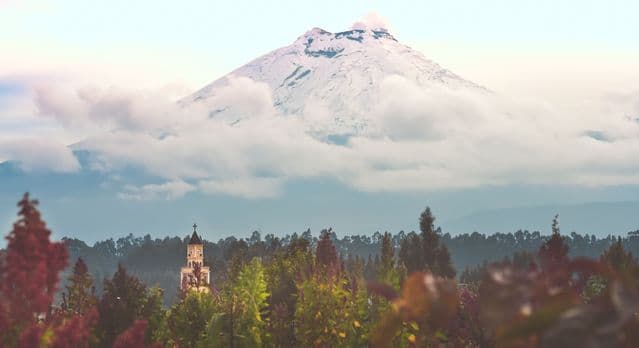
Cuenca arrived at its reputation as South America's premier expat haven by accident and kept it by execution: a UNESCO-listed colonial center at 2,500 meters where four rivers converge, spring in every month, an almuerzo culture that serves three courses for four dollars, and two decades of North American retirees building the English-speaking infrastructure that remote workers now inherit. Quito runs the capital version at 2,850 meters, a preserved historic center of continental rank under a ring of volcanoes, with the café-and-coworking economy of La Floresta and La Carolina carrying the laptop class. Around the two: Otavalo's indigenous market, Baños' adventure valley, the Quilotoa loop, and the Galápagos as the once-in-a-stay pilgrimage.
The country's pitch to the geo-flexible is structural. The economy runs on the US dollar outright, deleting exchange risk; the cost floor is among the hemisphere's lowest, with comfortable highland lives assembling under 1,500 dollars; and since 2022 the legal wrapper has been exceptional, a two-year visa at a 1,446-dollar bar, open to nearly all nationalities, that converts to permanent residency after 21 months, a settlement path most famous nomad programs simply do not offer. The almuerzo, the altitude light, the Andean weekend map: the lifestyle case writes itself. The exchange scene threads the same highlands, hostels in Baños and Quito and the fincas of the Andean valleys trading room and board year-round.
The security chapter is the one this page refuses to soft-pedal. Ecuador's narco conflict, formally an internal armed conflict since 2024, concentrates on the coast: Guayaquil's southern districts, the port corridors and the Colombian border zones carry do-not-travel designations, the entire coastal region sits under the UK's essential-travel-only line, and states of emergency roll in 60-day cycles. The highlands live a different statistic, Cuenca's province posting falling homicides against the national surge, the advisory naming neither Cuenca nor its province, and the Galápagos rated for normal precautions. The workable Ecuador is the vertical one, and this page maps it honestly: highlands and islands yes, coastal basing no, and the current advisory read before every itinerary.
Widening the search? If you are looking to expand your job hunt across South America, take a look at Colombia →, Peru →, and Brazil →.
Cost of living
Ecuador holds one of the hemisphere's lowest cost floors, and the dollar economy means the numbers arrive without conversion asterisks. Cuenca one-bedrooms run roughly 350 to 600 dollars furnished, with genuinely nice stock under 800; Quito's La Floresta, La Carolina and González Suárez districts run 400 to 750; and utilities, fiber included, rarely trouble a hundred-dollar note. The comfortable single highland life assembles at 1,200 to 1,600 dollars with room for the Galápagos fund.
Daily life is where the country overdelivers: the almuerzo, soup, main, juice and often dessert, at 3 to 5 dollars remains South America's best standing lunch deal, the mercado produce economy runs on single digits, mid-range dinners hold 8 to 15, and the specialty-coffee scene in both cities prices espresso under 3. The 15 percent IVA since the 2024 reform hides inside prices, buses cost cents and cross-country coaches single dollars, taxis meter cheaply with inDrive as the app layer, and domestic flights put the Galápagos and the coast an hour away. The one banking footnote worth knowing early: Ecuador's ISD currency-exit tax skims outbound international transfers, trimmed by recent reform but real, which argues for keeping the earning account abroad and moving money inward, not out.
- One-bedroom rent: 350 to 600 dollars furnished in Cuenca, 400 to 750 in Quito's good districts, with utilities and fast fiber adding well under 100; the cédula the visa yields opens the local-market leases below the expat listings.
- The almuerzo is the national subsidy: three courses at 3 to 5 dollars anywhere, mercado produce in single digits, and a food budget that resists effort; the 8-to-15-dollar dinner is the splurge tier.
- Dollars end-to-end: the US dollar is the currency, budgeting needs no conversion, and dollar earners import zero exchange risk; mind the ISD exit tax and keep savings offshore, spending inward.
- Movement costs cents: city buses at pocket change, cross-country coaches in single dollars, metered taxis and inDrive cheap, and the domestic air network putting the Galápagos a short hop away.
Cost-of-living calculator
See how your budget stretches in Ecuador.
Estimates use approximate exchange rates and typical monthly costs. Your actual costs will vary.
Visas & Entry
Ecuador's entry stack starts generously: 90 days visa-free for most of the world, extendable once for 90 more at the migration offices, 180 days on tourist status per year. Above it sits one of the sleeper-great nomad programs, the Visa Nómada, formally the Visa de Residencia Temporal Rentista para Trabajo Remoto, launched June 2022 under the human-mobility law and run fully online through the e-VISAS platform.
The terms stack remarkably. Duration: two years, renewable once, four total. Eligibility: essentially every nationality, 180-plus countries, a breadth almost no other program matches, for anyone working remotely for employers or clients outside Ecuador or owning a foreign-registered business, local work prohibited. Income: three times the unified basic salary, which the 2026 SBU of 482 dollars sets at 1,446 a month or 17,352 a year, proven by three months of statements or, faster, an apostilled ongoing contract; dependents add 250 dollars a month each for adults, with spouses and children joining on their own files. The paperwork: apostilled criminal check valid 180 days, health insurance covering the full visa period, which quietly disqualifies fixed 12-month policies, and a passport with six months' validity. The money: a 50-dollar application fee paid same-day, an issuance fee recent filings put between 270 and 400 dollars, and the 15-dollar cédula, the national ID that opens banks, leases and ordinary life; call it 500 all-in and be pleasantly surprised. Filing works from abroad or from inside Ecuador on tourist status, with two-to-four-month timelines the realistic planning number. And the feature that reframes everything: after 21 months of temporary residency with no more than 90 days total outside the country, permanent residency opens, the income requirement disappears, and the nomad visa reveals itself as what it quietly is, the cheapest serious immigration path in the Americas. Renewals may be tested against the current year's SBU rather than the original, applied unevenly by office, one more reason the permanence conversion at month 21 is the sophisticated play.
- The bar is 1,446 dollars and the door is open to nearly everyone: three times the 482-dollar SBU, reset each January, proven by statements or an apostilled contract, with no nationality list to fail; among major programs only Ecuador manages that breadth.
- Play for month 21 from day one: the permanence conversion needs 21 months of residency with under 90 days total abroad, so the travel calendar is the application; permanent status ends income proof forever and outlasts every renewal question.
- Solve insurance before documents: the full-visa-period requirement disqualifies fixed one-year policies, and the fix, open-ended cover or a local insurer, costs nothing extra when chosen first.
- Apostille early, file online, breathe: the criminal check's 180-day validity window, the Spanish translations and the e-VISAS upload queue set the tempo; two to four months end-to-end is the honest plan, filed from home or from a Cuenca café alike.
- Budget 500 dollars and expect less: the 50-dollar application, an issuance fee running 270 to 400 by filing, and the 15-dollar cédula land under any other serious program's entry price; the 65-plus discount halves it again.
- Expect renewal at the current SBU: offices increasingly test renewals against the present year's threshold rather than the original, unevenly applied; one more argument for converting to permanence instead of renewing.
| Visa or permit | What it covers |
|---|---|
| Tourist entry | Ninety days visa-free for most nationalities, extendable once for ninety more, 180 per year; the scouting season, and a legal platform for filing the nomad visa from inside the country. |
| Visa Nómada (Rentista for Remote Work) | Two years renewable to four, for remote workers and foreign-business owners at 1,446 dollars a month, three times the 2026 basic salary; open to essentially every nationality, filed fully online, roughly 320 to 500 dollars all-in, and local work prohibited. |
| The 21-month permanence door | Temporary residency converts to permanent after 21 months with no more than 90 cumulative days abroad; the income requirement then vanishes, and the program becomes the hemisphere's most accessible settlement route wearing a nomad visa's clothes. |
| The cédula | Approval plus a Registro Civil appointment yields the national ID card that opens bank accounts, leases, and Ecuadorian daily life; the difference between visiting and residing, for fifteen dollars. |
| Family | Spouses and children join as dependents, adult dependents adding 250 dollars a month to the income bar and minors typically none; the apostilled marriage and birth certificates do the heavy lifting. |
| The insurance trap | Coverage must span the full visa period, up to two years at filing, which fixed 12-month policies cannot; the leading silent rejection cause, solved by open-ended international policies or Ecuadorian insurers. |
| The alternatives | Degree holders qualify for the Professional visa at just one SBU, 482 dollars a month, after SENESCYT registration; pensioners and rentistas file at the same three-SBU bar; and the investor route prices at 100 SBU, 48,200 dollars, for those who prefer capital to paperwork. |
Good to know: Since June 2022: 2+2 years at $1,446/mo (3x SBU $482), ~$320-500 all-in, nearly all nationalities, fully online, cédula included; permanent residency after 21 months with <90 days abroad (income requirement then ends); full-period insurance trap; renewals tested at current SBU.
EnRoute Jobs AI tool
Route Planner
Map visa routes, timelines, and relocation costs for your next destination.
Work & Legal
Highland Ecuadorian professional culture runs formal-warm: usted until invited otherwise, titles honored, greetings unhurried, and the hora ecuatoriana flexing social time while business Quito keeps its appointments. Cuenca's two decades of expat settlement built real infrastructure, English-speaking accountants, visa facilitators, landlord networks, and a remote-work community that predates the visa by a decade, while Quito adds the capital's coworking depth and the startup scene's meetups. Connectivity is better than the mountains suggest, cheap fiber standard in both cities, and the 2024 drought-blackout season, when a hydropower crisis cut national power for hours daily, taught the community backup habits the recovered grid has made mostly ceremonial; the UPS under the desk survives as heritage.
The legal lines mirror the region's: the visa authorizes foreign-source work and prohibits Ecuadorian employers and clients, local employment routing through work visas and the labor code. Residents who go local register the RUC taxpayer number and enter the invoicing system, a straightforward errand with an accountant; visa holders stay foreign-source by design. The deeper counsel is rhythmic: the highlands run on early light, the almuerzo hours hold the middle of the day sacred, US time zones overlap perfectly, and the community that gathers in Cuenca's cafés has usually already solved whatever problem the newcomer is about to post in the forum.
- The visa draws the standard line: foreign employers and clients yes, Ecuadorian ones no; crossing over means a work visa and the labor code, and the RUC-registered local freelance life belongs to actual residents.
- Inherit Cuenca's infrastructure: twenty years of expat settlement built the English-speaking accountant, the visa facilitator and the landlord who has seen this before; the learning curve arrives pre-flattened.
- Trust the fiber, keep the UPS: cheap fast internet is standard in both cities and the 2024 blackout season is over, but the habit it taught, backup power and an LTE fallback, remains the highland professional's cheap insurance.
- Work the altitude clock: early Andean light, sacred almuerzo hours and full US-timezone overlap make the highland workday a natural fit for American clients; the first three days belong to acclimatization, not deadlines.
Good to know: Visa authorizes foreign-source work, bars local clients; RUC registration for residents going local; Cuenca's expat infrastructure flattens the curve; grid recovered post-2024 but backup habits persist.
Taxes
Ecuadorian tax is a two-act story for nomads: under 183 days the subject barely exists, and past it the two-year visa's realistic default arrives, worldwide residency in a system that runs to 37 percent. Nobody planning the 21-month permanence play should learn this in month twenty.
| What applies | The rule in 2026 |
|---|---|
| The 183-day line | More than 183 days in Ecuador within a twelve-month period makes you a tax resident, worldwide income entering the net; on a two-year visa aimed at the 21-month permanence door, residency is not a risk but the plan, and the planning difference is between a split-calendar stay and an accepted filing life. |
| Resident rates | Progressive brackets run to 37 percent at the top, with deductions and family credits softening the middle; the practical highland freelancer's effective rate lands well below the headline, and the annual return is an accountant errand rather than an ordeal. |
| Below the line | Non-residents owe Ecuador nothing on foreign income, and a deliberate sub-183-day season, or two of them across the visa's four possible years, keeps the entire subject theoretical for those who want the highlands without the filing. |
| The IVA at 15 | The 2024 security-financing reform raised VAT from 12 to 15 percent, where it sits inside every price; the visitor's main tax is paid at the till and noticed nowhere else. |
| The ISD exit tax | Ecuador taxes money leaving the country, the Impuesto a la Salida de Divisas, trimmed by recent reform but alive; the standard nomad architecture keeps earnings and savings in foreign accounts and moves money inward only, which sidesteps the toll entirely. |
| RUC and local invoicing | Residents earning locally register the taxpayer number and invoice through the SRI's systems, with simplified regimes for small operators; foreign-source visa holders never touch it unless they convert and localize. |
| Americans specifically | No comprehensive US-Ecuador income tax treaty and no totalization agreement exist; the FEIE or foreign tax credits carry the US side, Ecuadorian tax paid by residents credits against the US bill, and self-employment tax survives for the self-employed regardless of geography. |
| The permanence tax truth | The 21-month settlement play means accepting Ecuadorian tax residency as the price of the hemisphere's cheapest permanent status; the honest comparison is the 37-percent-ceiling progressive system against the home country left behind, run once with an accountant who knows both, before month one rather than month twenty. |
Verified 20 August 2026: the 183-day residency test, progressive rates to 37 percent, IVA at 15 percent since the 2024 reform, the ISD exit tax's continued existence, and the absence of US treaty and totalization agreements. General information, not tax advice.
Good to know: 183 days = residency on worldwide income to 37%; the realistic default on a 2-year visa and the price of the 21-month permanence play; IVA 15% since 2024; ISD exit tax argues for keeping savings offshore; no US treaty or totalization.
Healthcare
Highland Ecuador's private healthcare is one of the country's quiet strengths: Quito's Hospital Metropolitano and Hospital de los Valles anchor a capital tier that handles genuinely complex medicine, Cuenca's private cluster serves the expat colony with English-comfortable specialists, and prices stay in the range that made the region famous, consultations at 30 to 60 dollars, specialist care insured or affordably cash-paid, and dentistry excellent at a fraction of northern rates. The IESS public system covers affiliates including residents who opt in cheaply, at public pace; the private tier is the practical expat route.
Geography writes the caveats. Complex referral cases historically routed toward Guayaquil's big private hospitals, a route the coastal security picture now complicates, which raises Quito's referral weight and puts medical-evacuation cover on the sensible list for anyone whose Ecuador includes the Amazon, the islands or the remote Andes. Altitude is the arrival health event, 2,500 to 2,850 meters asking two or three gentle days of everyone; the mosquito calendar belongs to the coast and Oriente rather than the highlands; and emergencies answer at the excellent ECU 911 national system.
- Consultations run 30 to 60 dollars with same-week access, English common where expats cluster, and local insurance plans priced far below northern logic; IESS affiliation is the resident's cheap public backstop.
- Respect the altitude arrival: 2,500-plus meters asks two or three easy days, hydration and light alcohol of everyone; the acclimatization is real and the coca tea is tradition rather than treatment.
- Plan referrals northward: with the coastal route complicated, Quito carries the complex-case weight, and evacuation-inclusive insurance is the correct rider for Amazon, island and remote-Andes itineraries.
- Dial 911 nationally: the ECU 911 system is genuinely good, pharmacies are professional and everywhere, and Cuenca's dental economy remains the continent's famous bargain.
| Hospital | What to know |
|---|---|
| Hospital Metropolitano, Quito | The capital's private flagship and the country's reputational leader, the default answer for complex highland cases. |
| Hospital de los Valles, Quito | The Cumbayá-valley private hospital serving the capital's eastern districts with modern full-service care. |
| Hospital Vozandes, Quito | The mission-heritage institution long trusted by the international community, broad services with an Anglophone comfort level. |
| Hospital Monte Sinaí, Cuenca | The expat colony's standard private anchor, comprehensive care with the English-adjacent specialist network two decades of settlement built. |
| Hospital del Río, Cuenca | The modern private hospital on the city's edge, completing Cuenca's serious tier with contemporary facilities. |
| Hospital Santa Inés, Cuenca | The established central private hospital rounding out the southern highlands' coverage. |
Hospital list compiled 20 August 2026 and not yet confirmed against each facility directly. Treat as indicative and verify before relying on it.
Good to know: Quito and Cuenca private tiers are the expat system at $30-60 consultations; altitude asks 2-3 arrival days; coastal referral route complicated, raising Quito's weight; ECU 911 is good.
Safety
Ecuador in 2026 is two security realities sharing a border, and honest advice refuses to average them. The coast carries the war: the narco conflict the state formally declared in 2024 concentrates roughly 88 percent of national homicides in five coastal provinces, the US advisory, Level 2 overall with all four risk indicators including terrorism added in March 2026, draws do-not-travel lines through southern Guayaquil, Durán, the El Oro and Los Ríos trafficking towns and everything north of Esmeraldas City to the Colombian border, and reconsider-travel across most of the rest of the coast; the UK goes further, advising against all but essential travel to the entire coastal region; states of emergency roll in 60-day cycles with curfews appearing and lifting by province; and March 2026 brought announced joint US-Ecuadorian operations against designated criminal organizations. None of that is nomad geography, and this page treats coastal basing as off the table.
The highlands and islands live the other statistic. Cuenca's Azuay province recorded a homicide decline of more than half while the national rate surged, neither the city nor the province appears in the advisory's elevated zones, Quito asks ordinary capital-city rules, express-kidnapping awareness, registered taxis and apps, valuables managed, the historic center enjoyed with daytime confidence and evening judgment, and the Galápagos hold a normal-precautions green rating. The highland-specific risk is civic rather than criminal: indigenous-movement protest seasons blockade roads for days or weeks, curfews have touched highland provinces during them, and the correct posture is the Argentine one, treat demonstrations as weather, never cross a blockade, and keep flexible days around cross-country travel. The 20-kilometer Colombian border strip stays off-limits except the Tulcán crossing corridor. Emergencies answer at the genuinely excellent ECU 911.
- Base in the vertical country: Cuenca, Quito and the highland towns are the workable Ecuador, the Galápagos the green exception, and coastal basing, Guayaquil included, is off this page's table; the surf towns are advisory-reading judgment calls best made with current local knowledge.
- Read the advisory before every itinerary, not once: the red map moves by decree, states of emergency renew in 60-day cycles, and curfews appear by province; the embassy alert feed and the FCDO page are the living documents.
- Treat blockade seasons as weather: indigenous-movement protests close highland roads for days or weeks, crossing a blockade is never the move, and flexible scheduling plus domestic flights are the workaround the community already uses.
- Run capital rules in Quito: registered taxis or apps especially at night, express-kidnapping awareness at ATMs, valuables invisible on transit, the historic center by day freely and by night judiciously; ordinary Latin-capital discipline covers it.
- Respect the border geometry absolutely: the 20-kilometer Colombian strip outside the Tulcán corridor and the deep Amazon border zones are professional territory, and the Peruvian border's minefield cantons reward staying on marked routes.
- Know ECU 911 and use it: the national emergency system is genuinely capable, tourist police work the visitor zones, and the state's security presence in the highlands is heavy, visible and, for the visitor, functional.
Official travel advisories
| Government | Current position |
|---|---|
| United States | Level 2 overall with crime, unrest, kidnapping and, since March 2026, terrorism indicators; do-not-travel for southern Guayaquil, Durán, Huaquillas and Arenillas, the Los Ríos trafficking towns and Esmeraldas City northward; reconsider-travel across most remaining coastal provinces. Cuenca and its province appear nowhere in the elevated zones.travel.state.gov → |
| United Kingdom | Advises against all but essential travel to the entire coastal region, seven provinces with Guayaquil airport transit excepted, and the 20-kilometer Colombian border strip outside the Tulcán corridor; tracks the rolling states of emergency province by province.gov.uk → |
| Canada | High degree of caution nationally with avoid-travel guidance for the border zones and the flagged coastal areas, mirroring the allied map.travel.gc.ca → |
| Australia | High degree of caution overall; reconsider travel to Sucumbíos, Esmeraldas and Guayaquil City; do-not-travel within 20 kilometers of the Colombian border except Tulcán; and, notably, normal precautions for the Galápagos.smartraveller.gov.au → |
| US Embassy Quito | Enroll in STEP; the embassy's curfew and state-of-emergency alerts are the operational feed for a country where the map changes by decree. Avigiras E12-170 y Eloy Alfaro, Quito; consulate general in Guayaquil.ec.usembassy.gov → |
Advisory positions verified 20 August 2026, including Smartraveller directly: US Level 2 with four indicators and the coastal red map, the UK's coastal-region line, the Galápagos green, and the rolling emergency decrees. The two-Ecuadors framing is the honest one; read the sources before every leg.
Good to know: Two Ecuadors: coastal narco conflict carries the L3-L4 map (88% of homicides in 5 coastal provinces, UK against the entire coast) while Cuenca's province posted -54% homicides, the advisory names it nowhere, and Galápagos is green; highland risk is protest blockades, not gangs; ECU 911 works.
Climate
Ecuador sits on the equator, so latitude surrenders and altitude governs. Cuenca at 2,500 meters and Quito at 2,850 hold perpetual spring, 12 to 22 degrees in every month of every year, mornings bright, afternoons variable, evenings cool enough for the wool the markets sell; the rhythm splits into a drier, brighter June-through-September and a greener October-through-May when afternoon showers punctuate rather than cancel. The coast runs hot and tropical with its own wet season, the Oriente runs equatorial rainforest always, and the Galápagos keep two seasons of their own, the garúa-cool half and the warm-sea half, both excellent. The equatorial light is the highland signature, twelve hours year-round, sunrise and sunset at six forever, and a working climate that never demands heating, cooling or seasonal wardrobe changes: the remote worker's year simply repeats its best month twelve times.
| Season | What to expect |
|---|---|
| Highland dry season, June to September | The brightest stretch: clear mornings, minimal afternoon rain, trekking and volcano season at its best, and the working sweet spot both cities agree on. |
| Highland green season, October to May | Spring continues with afternoon showers on a schedule, the valleys at maximum green, February-March the wettest; umbrellas live by doors and nothing stops. |
| Coast and Oriente | Tropical heat year-round, the coastal wet season December through May and the rainforest wet always; the climates the highlands look down on, literally, from eternal spring. |
| The Galápagos two-season | Warm season December through May, sunnier with calmer warmer seas, and the cool garúa season June through November with richer marine life; both are the trip of the stay, differently. |
Good to know: Altitude is the entire story: eternal highland spring with a brighter Jun-Sep, twelve-hour equatorial light forever, and neither heating nor cooling on any bill.
Culture & Customs
Highland Ecuadorian culture layers five centuries without erasure: indigenous Kichwa traditions alive in language, market and dress, Spanish colonial formality in the architecture and the manners, and a mestizo mainstream negotiating both. Cuenca wears the formal register proudly, courteous, conservative, unhurried, a city where strangers greet in elevators and the pace resists imported urgency; Quito runs the capital's faster version with the same courtesies underneath. The almuerzo anchors every day, the mercado anchors every week, Otavalo's Saturday market anchors the visitor calendar, and the fiesta cycle, Inti Raymi's solstice, Cuenca's independence days, Christmas's Pase del Niño processions, anchors the year.
The codes are formal-warm. Usted opens every relationship with elders and strangers, titles and buenos días matter, greetings precede all business, and the hora ecuatoriana flexes social time generously while formal appointments hold. Indigenous communities and their markets deserve the visitor's best manners: photography by permission, bargaining gentle and bought-from rather than performed, and the autonomy of comunidades respected as governance rather than color. Tipping runs modest, ten percent in nicer restaurants often included, rounding elsewhere; dress runs a notch neater than the trail suggests, especially in Cuenca; and the mote, hornado, llapingachos and locro of the highland table are eaten with more ceremony than their prices imply. Spanish is the country's operating language and the highlands speak a clear, courteous version of it that rewards every learner.
- Lead with the greeting, always: buenos días before any request, usted until invited otherwise, and the elevator hello returned; highland courtesy is the social currency and its absence is noticed.
- Eat the almuerzo daily: the 3-to-5-dollar three-course lunch is the country's great institution, the menu changes daily, and the fastest integration available is becoming a regular somewhere.
- Honor the market codes: photograph people only by permission, bargain gently and buy, and treat Otavalo and the mercados as living economies rather than sets; the vendors remember both kinds of visitor.
- Move at altitude pace: the first days go slowly by physiology and the culture agrees by preference; urgency reads as rudeness in Cuenca, and the deliberate rhythm is the point, not the obstacle.
- Dress the city register: Cuenca and Quito run neater than the gringo trail, shorts read as beachwear at altitude, and the wool the markets sell is both souvenir and correct evening kit.
- Tip modestly, round generously: ten percent where service warrants in nicer rooms, rounding for taxis and counters, and the dollar economy keeping every calculation mercifully simple.

