.png)
About Austria
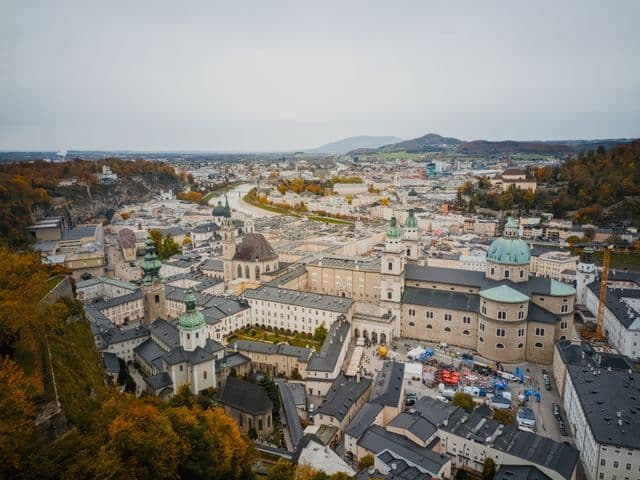
Vienna has been taking culture seriously since before most countries existed, and the city wears it without strain: the Ringstrasse's imperial confidence, coffee houses where a single Melange buys the afternoon and the newspaper rack, an opera standing-room ticket cheaper than a cinema seat, and the practical miracles underneath, the 365-euro annual transit pass, drinking water piped from alpine springs, and the perennial first place on the world's livability rankings that Viennese acknowledge the way aristocrats acknowledge good posture. Graz runs the student-city counterpoint with UNESCO baroque at gentler prices, Salzburg trades on beauty it never needed to advertise, Innsbruck puts a glacier above the old town, and the entire country operates on a competence so uniform it stops being remarkable by the second week.
The paperwork story is the index's most honestly restrictive. Austria has no nomad visa and, distinctively, no gray zone either: the official position, confirmed publicly through the embassy network, is that Schengen tourist stays do not authorize remote work, full stop, whatever laptops the Kaffeehaus tables actually hold. The legal doors are for settlers, not passers-through. The Red-White-Red Card's categories serve employment at 2026 thresholds, 3,465 euros monthly for Other Key Workers, 55,678 yearly for the Blue Card, and vetted self-employment through the Self-Employed Key Worker route, which asks for macroeconomic benefit, minimum 100,000 euros of transferred investment capital, jobs created or secured, know-how or technology introduced, or regional significance, a bar framed for businesses, not freelancers with foreign clients.
The Startup Founder card wants 50,000 euros of capital at half equity and an innovation case. And the settlement permit excepted from gainful employment, the passive-income route relocation forums pitch as the back door, forbids work in Austria including remote work and rations itself through a worldwide annual quota of roughly 400 places, pre-registration in November, submission in January, slots gone in minutes. Behind any successful entry: 24-month cards maturing into settlement permits, long-term EU status at five years, German-language requirements stacking with each tier, and a citizenship that still generally demands renouncing your old one.
The one lane the restrictiveness spares is seasonal. Austria runs an annual Saisonnier quota for tourism and agriculture, the ski villages hire on it every winter, and EU citizens need none of it to take the same jobs.
For the EU citizen none of the rest applies either, and Bratislava sits an hour east for everyone else running the twin-city arbitrage in reverse. The honest calculus: Austria at tourist rhythm is 90 flawless Schengen days of coffee-house mornings and alpine weekends; Austria as a base is a commitment the state prices deliberately high and rewards with one of the finest daily lives on earth. The advisories agree from both directions, a US Level 1 held without changes above the country's own high domestic terror-alert level, because the services keep foiling what the headlines would otherwise carry, and the genuine hazards remain the ones the Alps have always charged: avalanche levels, marked pistes, and weather that outranks every human threat.
Widening the search? If you are looking to expand your job hunt across Central Europe, take a look at Germany →, Slovakia →, and Italy →.
Cost of living
Austria prices at the eurozone's serious middle and delivers above it: Vienna one-bedrooms run roughly 900 to 1,400 euros in the districts worth living in, the inner Bezirke at the top and the trans-Danube value belt below, with Graz about a quarter cheaper, Salzburg tourist-taxed toward Vienna levels, and the famous old-rent and cooperative housing stock explaining why locals pay less than newcomers ever will. Utilities are efficient, fiber is fast, and the alpine tap water is the free luxury the city never mentions.
Daily life runs on civilized institutions: the Mittagsmenü lunch at 12 to 16 euros, the Würstelstand and Naschmarkt tiers on either side of it, Hofer-Lidl-Billa groceries keeping the cooking economy reasonable, and the Kaffeehaus economy where the Melange rents the table for the afternoon at four euros, legally and culturally protected. Transport is the world benchmark: Vienna's annual pass at 365 euros, one euro a day for one of earth's best networks, with ÖBB rail linking every city and the Klimaticket extending flat-rate logic nationwide. Cards work everywhere now though small cash still greases the Würstelstand tier. The comfortable single Vienna life assembles at 2,700 to 3,600 dollars, the budget floor sits near 2,100 with cooperative-district housing and the Mittagsmenü discipline, and the honest additions are Austrian: the ski-season fund, the opera-and-concert line the city makes irresistibly cheap at standing-room prices, and the Sunday-closure logistics that make Saturday the grocery day by law and custom.
- One-bedroom rent: 900 to 1,400 euros in Vienna's living districts, a quarter less in Graz, Salzburg near Vienna levels; the old-rent and cooperative stock explains the local-versus-newcomer gap and rewards patient searching.
- Ride the 365-euro year: Vienna's annual pass costs one euro a day for a world-benchmark network, the Klimaticket extends flat-rate logic nationwide, and the car is an affectation the city politely discourages.
- Work the Kaffeehaus economy: the four-euro Melange legally rents the table for the afternoon, the Mittagsmenü runs 12 to 16 euros, and the standing-room opera ticket costs less than the cinema; Vienna's luxuries are engineered to be affordable.
- Plan the Sunday and the seasons: commerce closes Sundays by law with restaurants excepted, Saturday is logistics day, and the honest budget lines are the ski fund and the cultural calendar the city prices for citizens rather than tourists.
Cost-of-living calculator
See how your budget stretches in Austria.
Estimates use approximate exchange rates and typical monthly costs. Your actual costs will vary.
Visas & Entry
Austria runs the standard Schengen stack with an unusually honest official line: visa-free nationals receive 90 days in any 180 across the zone, EES biometrics are live, ETIAS is expected in 2027, EU, EEA and Swiss citizens live and work freely with registration after three months, and everyone, resident or visitor, meets the Meldezettel, the address registration filed within days of moving in that unlocks everything else. What Austria does not run is a gray zone: the official position, publicly confirmed through the embassy network, is that tourist stays do not authorize remote work, including for foreign employers, which makes Austria the Schengen state that says the quiet part aloud even as the Kaffeehaus tables fill with laptops.
Beyond 90 days the doors are real, narrow and settler-shaped. The Red-White-Red Card system anchors it: 24-month combined residence-and-work permits across seven categories, the salaried lanes at 2026 thresholds of 3,465 euros monthly for Other Key Workers under a points system and labor-market check, the Blue Card at 55,678 euros yearly, super-key roles at 8,316 monthly, and two entrepreneurial lanes, the Self-Employed Key Worker card, which requires macroeconomic benefit beyond your own operations, minimum 100,000 euros of transferred investment capital, jobs created or secured, know-how or new technology introduced, or regional significance, with no points system but a full AMS review, and the Startup Founder card at 50,000 euros minimum capital with at least half equity, an innovation case and 50 points. Both mature into settlement permits after two years and long-term EU status at five. The temporary residence permit for self-employed workers serves those with Austrian contractual obligations exceeding six months, a niche the genuinely contracted can use. And the settlement permit excepted from gainful employment, the passive-income route, grants residence while explicitly excluding work in Austria, including remote work, and rations itself through a worldwide annual quota of roughly 400 places: pre-registration windows in November, appointment booking in December, paper submission in January, means at the ASVG equalisation-supplement rate, roughly 1,274 euros monthly for a single person in 2026, and slots historically gone within minutes of opening. German-language requirements stack with the long-term tiers, and Austrian citizenship still generally requires renouncing your existing one. The honest summary: Austria offers permanent-resident seriousness to the qualified and the clean Schengen 90 to everyone else, with nothing marketed in between.
- Respect the no-gray-zone honesty: Austria states officially what most of Schengen leaves ambiguous, tourist stays do not authorize remote work; plan the 90 days as genuine leave-with-laptop discretion at your own judgment, or plan a real route, and let no consultancy sell you a third option that does not exist.
- Read the Self-Employed Key Worker bar as written: macroeconomic benefit means capital, jobs or technology transferred to Austria, not a foreign client list; the route rewards genuine business establishment and refuses the freelancer framing by design.
- Treat the quota-400 permit as a lottery with homework: November pre-registration, December booking, January submission, means at the ASVG rate, and no work rights including remote; for the genuinely passive-income retiree it is real, for the working nomad it is a trap honestly labelled.
- Founders, price the startup card seriously: 50,000 euros at half equity plus an innovation case buys a 24-month runway in a wealthy, small, superbly run market with the settlement track behind it; the Vienna-based company also inherits the city's talent and livability pitch.
- File the Meldezettel like a local: the address registration within days of moving in unlocks banking, contracts and every subsequent process; it is the small Austrian ritual that everything else assumes.
- Count Schengen days like money: the 90-in-180 window spans the zone, EES logs it biometrically, and the Vienna-Bratislava hour means the allowance can anchor two capitals; the clean tourist season remains Austria's genuine offer to the unqualified.
| Visa or permit | What it covers |
|---|---|
| Schengen entry | Ninety days in any 180 for visa-free nationals, EES live and ETIAS expected 2027, with Austria's distinctive honesty attached: the official position is that tourist stays do not authorize remote work, including for foreign employers; the Meldezettel address registration applies to any real stay. |
| EU, EEA and Swiss citizens | Full freedom of movement: live and work without permits, registering after three months; the Central European crown-jewel base as birthright, with Bratislava's costs an hour east for the arbitrage-minded. |
| Red-White-Red Card, salaried lanes | 24-month employer-tied permits under the points system: Other Key Workers at 3,465 euros monthly for 2026, the Blue Card at 55,678 yearly, super-key roles at 8,316 monthly, shortage-occupation lists smoothing the vetted trades; the RWR-plus with free market access follows at 21 months of qualifying work. |
| Self-Employed Key Worker | The vetted entrepreneurial lane: macroeconomic benefit required beyond your own operations, 100,000 euros minimum transferred capital, jobs created or secured, know-how or technology introduced, or regional significance, with AMS review and no points; 24 months maturing into settlement permits, framed for businesses rather than freelancers with foreign clients. |
| Startup Founder card | 50,000 euros minimum capital at half equity, an innovation case, controlling influence and 50 points; the credible founder door into a wealthy, small, well-run market, maturing on the same settlement track. |
| Settlement permit, gainful employment excepted | Residence for the financially independent at the ASVG means rate, roughly 1,274 euros monthly single for 2026, explicitly excluding all work in Austria including remote work, and rationed by a worldwide quota of roughly 400 places: November pre-registration, January submission, slots gone in minutes; the famous back door, honestly labelled. |
| Permanence and citizenship | Settlement permits mature at two years, long-term EU status at five, German-language modules stacking with each tier, and citizenship generally requiring renunciation of your existing nationality; Austria prices belonging deliberately and delivers accordingly. |
Good to know: No DNV and no gray zone: Austria officially confirms tourist stays don't authorize remote work; real doors are settler-shaped: Self-Employed Key Worker (€100k macroeconomic-benefit bar), Startup Founder (€50k + innovation case), salaried RWR lanes (€3,465/mo 2026), and the quota-~400 settlement permit (no work incl. remote; November-January window, gone in minutes); German stacks with tiers; citizenship generally requires renunciation.
EnRoute Jobs AI tool
Route Planner
Map visa routes, timelines, and relocation costs for your next destination.
Work & Legal
Austrian professional culture runs on formality that means it: titles used and appreciated, Herr Doktor addressed as such, punctuality practiced as respect, meetings prepared and concluded, and a warmth underneath that opens reliably once the forms are honored. English carries Vienna's international layer and the tech scene while German remains the operating system of administration and belonging, and the long-term routes make that explicit with stacking language requirements. The working infrastructure is superb without advertising it: the Kaffeehaus as the original coworking space, table tenure legally and culturally protected, a dense modern coworking tier behind it, fiber and transit that simply work, and a startup scene, Vienna's growing, Graz's technical, that benefits from the livability pitch no competitor can match.
The legal lines are stated rather than implied: Austria officially rejects the tourist-stay remote-work fiction, employment and self-employment require the proper permits, and the formalized resident registers as Einzelunternehmer with SVS social insurance from establishment. The operational notes: GMT+1 overlaps Europe wholly and reaches US East by mid-afternoon; the Sunday closure shapes the week; the alpine calendar shapes the year, ski Fridays institutional in the west; and the Meldezettel-then-banking sequence is the arrival ritual everything else assumes. For the EU citizen it is all birthright; for everyone else Austria offers its 90 honest days and a set of doors it refuses to pretend are wider than they are.
- Honor the forms and receive the warmth: titles, punctuality and preparation are the entry fee, and the professional relationships behind them run durable and generous; casualness imported from looser markets reads as carelessness here.
- Work the Kaffeehaus as designed: the Melange rents the table for the afternoon by protected custom, the great houses tolerate laptops with varying grace, and the modern coworking tier handles the video-call layer the marble halls were not built for.
- Sequence the arrival ritual: Meldezettel within days, then banking, then SVS registration if formalizing; the Austrian machine runs beautifully for those who feed it documents in order and coldly for those who improvise.
- Use the geography as infrastructure: GMT+1 serves both Atlantic directions, ÖBB puts every city within hours, the alpine weekend is a legitimate institution, and Bratislava's hour-away costs make the twin-city arbitrage available in both directions.
Good to know: No gray zone: Austria officially states tourist stays don't authorize remote work; formalized residents register as Einzelunternehmer with SVS from establishment; Kaffeehaus culture + modern coworking; German is the operating system of administration; Meldezettel-first arrival sequence; GMT+1.
Taxes
Austrian tax is the deliberate price of the world's most livable infrastructure: progressive rates that reach 50 percent at high incomes and 55 at the top, softened by indexed brackets, and a residency net that can catch a kept dwelling before the 183rd day.
| What applies | The rule in 2026 |
|---|---|
| The residency tests | Tax residency attaches through domicile or habitual abode, and Austrian practice treats a dwelling kept at your disposal as capable of creating unlimited liability before 183 days, with only narrow secondary-residence relief; the serious planner treats the apartment question, not just the calendar, as the trigger. |
| Non-residents | Owe Austrian tax on Austrian-source income only; the genuine visitor's foreign salary and clients sit outside the net for the tourist season. |
| The progressive schedule | Rates step from zero on the indexed initial band through 20, 30, 40 and 48 percent, reaching 50 at high incomes and 55 percent on income above one million euros; the price of the machine, paid on worldwide income once resident. |
| The self-employed layer | Einzelunternehmer profits flow through the schedule with SVS social insurance around 27 percent alongside, and the basic-allowance and expense mechanics softening the base; the accountant conversation is mandatory rather than optional at Austrian complexity. |
| VAT and the small-business line | Standard VAT at 20 percent with the Kleinunternehmer exemption covering domestic revenues up to 55,000 euros, foreign B2B services largely reverse-charge, and the threshold making the small formalized freelancer's administration genuinely light. |
| The treaty network | Austria's double-taxation network is among Europe's deepest, credits and exemptions allocating cleanly for the properly advised; the cross-border employee and the posted contractor both have well-worn paths. |
| Americans specifically | A US-Austria income tax treaty stands and, valuably, a totalization agreement has been in force since 1991, sparing self-employed Americans double social-security contributions; with the FEIE or credits on the income side, the formalized American's stack is heavier than Poland's but cleanly ordered. |
| The home-country half | Austrian residency does not silence the jurisdiction left behind: exits, treaty tie-breakers and the kept-dwelling question deserve professional hands before the move, because Austria's net is precise and its administration remembers. |
Verified 21 August 2026: the domicile and habitual-abode tests with the kept-dwelling trap, the progressive schedule reaching 50 and 55 percent, SVS contributions near 27 percent for the self-employed, the 55,000-euro Kleinunternehmer threshold, VAT at 20 percent, and the standing US treaty plus the 1991 totalization agreement. General information, not tax advice.
Good to know: Domicile/habitual-abode tests; a kept dwelling can create liability before 183 days; progressive to 50%/55% top; SVS ~27% for self-employed; Kleinunternehmer VAT exemption to €55k; deep treaty network; US treaty AND 1991 totalization; the price of the world's most livable machine.
Healthcare
Austrian healthcare is among the finest systems on earth and behaves like it: the social-insurance public tier produces OECD-top outcomes, EU visitors ride EHIC reciprocity at public facilities, and the private layer, Vienna's storied private clinics and the Wahlarzt choice-doctor economy, sells speed and hotel comfort atop a base that never needed rescuing. Vienna General Hospital anchors Europe's serious end as one of the continent's largest university medical centers, the provincial university hospitals in Graz and Salzburg carry their regions at the same standard, and the private houses serve the international patient economy in fluent English. Consultations run 80 to 150 euros in the private sector, private cover or travel insurance is essential for the non-EU visitor because uninsured hospital care prices at genuine Austrian rates, and formalized residents enter the social system through their SVS or ÖGK enrollment as a matter of course.
The practical texture is Austrian: pharmacies precise and everywhere, dental care excellent at prices that still undercut Switzerland and Germany, tap water from alpine springs, and the health risks being the ones the landscape charges rather than the streets, avalanche levels in the winter Alps that the embassy alerts track seriously, marked-piste discipline as the culture's law, altitude and weather turning fast above the lifts, and the tick-borne encephalitis of the summer forests, where TBE vaccination is so standard that Austria runs annual national campaigns. Emergencies answer at 112 and 144 with alpine rescue reaching anywhere a helicopter can hover, and rescue insurance, often bundled with alpine-club membership, is the cheap addition every skier and hiker should hold.
- Consultations run 80 to 150 euros privately with English fluent at the international tier; EHIC carries EU visitors, and the uninsured non-EU visitor is the one genuinely exposed position in the system.
- Vaccinate for the forests like a local: TBE vaccination is a national campaign here, the ticks are real from spring through autumn, and the alpine meadows are exactly where they live.
- Buy the alpine-rescue layer: avalanche levels are tracked and alerted seriously, marked pistes are the culture's law, helicopter rescue reaches everywhere and bills accordingly, and the alpine-club membership bundling rescue insurance is the cheap answer.
- Know 112 and 144: the European number and the dedicated ambulance line both answer with Austrian efficiency, and the pharmacy tier handles the minor layer with precision; the system's only weakness is the price of ignoring it uninsured.
| Hospital | What to know |
|---|---|
| Vienna General Hospital (AKH) | One of Europe's largest university medical centers, the national tertiary apex and the referral answer for complex anything. |
| Wiener Privatklinik | The storied private house serving the international patient economy: English-fluent, specialist-dense, and the speed-and-comfort tier at its Viennese best. |
| Rudolfinerhaus, Vienna | The classic private clinic alternative, surgical and specialist depth with the private tier's service standard. |
| University Hospital Graz | The southern university anchor, full tertiary depth for Styria at the national standard. |
| University Hospital Salzburg | The western university flagship, carrying the alpine tourist economy's serious cases alongside its region. |
| The insurance layer | EHIC covers EU visitors publicly, non-EU visitors need real cover because uninsured care prices at Austrian rates, and formalized residents enroll through SVS or ÖGK as a matter of course; alpine-rescue insurance completes the kit. |
Hospital list compiled 21 August 2026 and not yet confirmed against each facility directly. Treat as indicative and verify before relying on it.
Good to know: OECD-top system: AKH among Europe's largest university centers; private tier (Wiener Privatklinik, Rudolfinerhaus) serves the international economy; EHIC for EU visitors, real cover essential otherwise; TBE vaccination is a national campaign; avalanche/alpine-rescue doctrine; 112/144.
Safety
Austria holds a US Level 1, Exercise Normal Precautions, reissued after periodic review without changes, and daily life earns it as thoroughly as anywhere on earth: Vienna tops livability rankings with violent crime vanishingly rare, solo travelers of every description report ordinary comfort, and the visitor's register runs to pickpockets and distraction teams working Stephansplatz, the Hauptbahnhof and Westbahnhof, the Naschmarkt crowds and the international trains toward Budapest and Prague, answered entirely by ordinary habits. The honest second layer is the one the calm rating sits above: Austria's own Interior Ministry holds its public terrorism alert at level 4, high, on a five-step scale, unchanged since 2023, and the recent record explains both numbers at once, the 2020 Vienna attack, the foiled 2024 plot against the Taylor Swift concerts that cancelled three sold-out shows, the February 2025 Villach stabbing that killed a fourteen-year-old, a railway-station plot arrest days later, and, running through all of it, a security service with one of Europe's strongest disruption records, which is precisely why the American level never moved. The practical translation is the standard European one, awareness in crowds and at events, distance from anything that draws police tape, and the Auslandsservice-style trip registration the various embassies recommend.
The genuine hazards are the ones the landscape has always charged. Avalanche danger in the winter Alps is tracked, graded and alerted with institutional seriousness, the embassy itself flagging level-4 danger across Tyrol and Vorarlberg in heavy-snow stretches, and the entire safety architecture, marked pistes, avalanche beacons, guides for anything ambitious, alpine-club rescue insurance, exists because the mountains collect from those who ignore it. Flash floods and mudslides visit the alpine valleys, summer heat spikes touch the cities, and winter driving demands the equipment the law requires. Demonstrations in Vienna are frequent, civic and occasionally transit-disrupting; temporary checks at some land borders run in extension cycles, making the carried passport sensible; and 112 answers everything with a competence so uniform it stops being remarkable. The honest summary: one of the safest daily environments humans have built, wearing a high domestic alert level the way a well-run institution wears its fire drills.
- Hold both numbers honestly: the US Level 1 and Austria's domestic level-4 alert describe the same country from different directions, streets among the safest on earth above a security service that keeps disrupting what others absorb; awareness at events and crowds is the entire personal translation.
- Run the station discipline: pickpockets and distraction teams work Stephansplatz, the Hauptbahnhof, Westbahnhof, the Naschmarkt and the international trains; bags closed, documents split from wallets, and the photocopy-plus-license habit while sightseeing answer the entire register.
- Give the Alps institutional respect: avalanche levels are graded and alerted seriously, level-4 stretches close the backcountry to everyone without beacons, guides and judgment, marked pistes are the law of the culture, and alpine-club rescue insurance is the cheap addition every skier should hold.
- Treat demonstrations as transit weather: Vienna's civic calendar is frequent and peaceful, the Ring closes for it occasionally, and distance plus the transit app's rerouting absorb the entire effect.
- Carry the passport for the border cycles: temporary checks at some land frontiers run in extension cycles, the document habit costs nothing on the ÖBB corridors, and the Meldezettel copy smooths any administrative encounter.
- Know 112 and the seasonal kit: the single number answers everything, 144 reaches ambulances directly, winter driving demands the legally required equipment, and the tick vaccination plus forest checks complete the Austrian health-safety set.
Official travel advisories
| Government | Current position |
|---|---|
| United States | Level 1, Exercise Normal Precautions, reissued after periodic review without changes; the embassy's alerts carry the practical layer, avalanche warnings for Tyrol and Vorarlberg in heavy-snow stretches, demonstration notices, and the bag-security basics for the station-and-train theft register.travel.state.gov → |
| Austrian Interior Ministry | The domestic layer: the public terrorism alert holds at level 4, high, on a five-step scale, unchanged since 2023, with heightened security postures in the cities; the disruption record, foiled concert and station plots among them, is the reason the foreign advisories stay calm above it. |
| United Kingdom | Standard guidance with the terrorism-likely framing common to Western Europe, the petty-crime texture at Vienna's stations and tourist core, and the alpine-safety layer for the winter season.gov.uk → |
| Australia | Normal precautions with the ongoing-terrorism-threat note and the domestic level-4 assessment quoted; carries the avalanche, flash-flood and mudslide texture for alpine areas, marked-trail discipline, and the tick-encephalitis warning for spring-through-autumn forests.smartraveller.gov.au → |
| US Embassy Vienna | Enroll in STEP; the embassy feed carries the avalanche and demonstration alerts and remains the live channel. Parkring 12A, 1010 Vienna; +43 1 31339 0.at.usembassy.gov → |
Advisory positions verified 21 August 2026: US Level 1 reissued without changes, Austria's domestic level-4 terrorism alert unchanged since 2023 with the disruption record behind it, the 2024 concert-plot and 2025 Villach context, the avalanche-alert practice including the February 2026 Tyrol-Vorarlberg warnings, and the station-and-train theft register. Open the sources before travelling.
Good to know: US L1 (reissued unchanged) above Austria's own level-4 domestic alert; the disruption record (foiled 2024 Swift-concert plot, 2025 station plot) explains both numbers; register: station/train pickpocket teams; real hazards are alpine: graded avalanche levels (embassy-alerted), marked-piste law, rescue insurance; demonstrations = transit weather; 112/144.
Climate
Austria runs two climates stitched by rail: the Danube east, Vienna and Graz, with warm 20-to-30-degree summers spiking past 30 in heat waves, grey cold winters flirting with freezing, and shoulder seasons of genuine perfection; and the alpine west, where winter is the product, reliable snow from December through March feeding one of earth's great ski economies, and summer opens the high trails from June through September. The working calendar writes itself: April-May and September-October are the productivity prizes, mild, uncrowded, the light on Vienna's stone extraordinary; June through August runs the terrace-and-Danube-beach social season with outdoor cinema and festival density; and the winter splits by temperament, grey desk weather in the capital answered by the Kaffeehaus and concert calendar, or the ski season answered by trains that put world-class pistes two to four hours from any desk. The alpine hazards carry their own calendar, avalanche season graded and alerted through the snow months, flash-flood and mudslide risk in the summer valleys, and the TBE ticks of the spring-through-autumn forests; the culture's answer, marked routes, proper equipment, institutional respect, is the entire doctrine.
| Season | What to expect |
|---|---|
| The shoulder prizes, April-May and September-October | Mild, uncrowded, fully functional, with the light at its Viennese best; the months the working calendar aims at in the cities. |
| Summer, June to August | Warm to hot with heat-wave spikes, the terrace-Danube-festival season in the east and the high-trail season in the alpine west; valley storm-and-flood risk is the season's honest asterisk. |
| Winter, December to March | Grey and cold in the capital, answered by the Kaffeehaus-and-concert interior life; reliable snow and a world-benchmark ski economy in the west, with avalanche grading as the season's law. |
| The alpine calendar | Ski season December through March, high trails June through September, avalanche and weather respect in every month; the west's drama two to four hours by rail from any eastern desk. |
Good to know: Shoulder seasons are the city prizes, summer splits terraces from high trails, and winter is either Kaffeehaus weather or the ski product, two to four rail hours apart.
Culture & Customs
Austrian culture keeps a formal backbone that surprises those expecting Central European casualness: punctuality practiced as respect, academic and professional titles used seriously, a Herr Doktor addressed as such and appreciating it, dress a notch above the nomad baseline, and Sie held until Du is offered. Behind the forms runs a deep, dry warmth and the institution that best expresses it, the Kaffeehaus, where a single Melange rents a marble table for the afternoon by protected custom, the newspapers hang on wooden racks, and the tradition of unhurried public thinking has UNESCO recognition and legal-cultural teeth. The cultural machine is the daily texture, not the special occasion: standing-room opera at pocket change, the Musikverein and Konzerthaus calendars, museums dense enough to ration, and a civic pride in infrastructure, the 365-euro transit year, the alpine tap water, that Viennese express through complaint, the local dialect of love.
The codes are learnable and repay learning: Grüß Gott as the greeting outside the capital's international core, handshakes with eye contact, shoes off in homes, flowers in odd numbers, tipping by rounding generously or ten percent, Sunday's legal quiet planned around, and the Würstelstand at midnight as the democratic counterweight to all the marble. The year runs on institutions, the ball season's January-February formality open to anyone who rents the tails, the Heuriger wine-garden evenings from spring, the summer Danube beach life, the alpine ski Fridays, and an Advent whose Christmas markets the entire continent imitates. The visitor who honors the forms, learns ten German words and takes the culture at its own serious, ironic valuation is granted a daily life of a quality almost nowhere else attempts.
- Honor the forms first: punctuality, titles, Sie-until-invited and a notch of dress buy the entry the culture actually sells; the warmth behind the formality is real and patient.
- Learn the Kaffeehaus liturgy: the Melange rents the table for the afternoon, the waiter's aloofness is a professional register rather than rudeness, and the marble-table afternoon is the city's original knowledge work.
- Take the cultural machine at citizen prices: standing-room opera for pocket change, the concert calendars, the museum density; Vienna prices its treasures for residents and the visitor is invited to behave like one.
- Join the seasonal institutions: the ball season rents its tails to anyone, the Heuriger evenings open with spring, the Danube beaches carry summer, and the Advent markets close the year; the calendar is the culture's syllabus.
- Keep the small codes: Grüß Gott beyond the international core, shoes off in homes, odd-numbered flowers, rounding-up tips, and Sunday's quiet planned for; Austria notices manners the way other countries notice money.
- Read complaint as affection: the Viennese express civic pride through eloquent grumbling, the Raunzen is a dialect of love, and joining it gently, about the weather, the construction, never the fundamentals, is the fastest integration available.
Sponsored
Learn the language before you land
Babbel makes it easy to pick up the basics before you move to Austria.
Sponsored
Insurance built for life on the move
SafetyWing covers your health and travel wherever work takes you next.