.png)
About Belgium
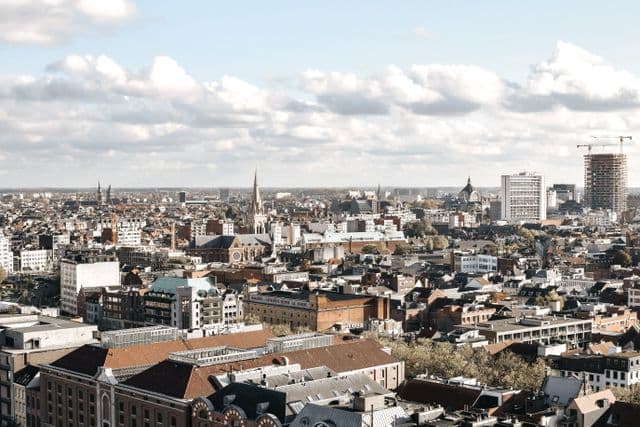
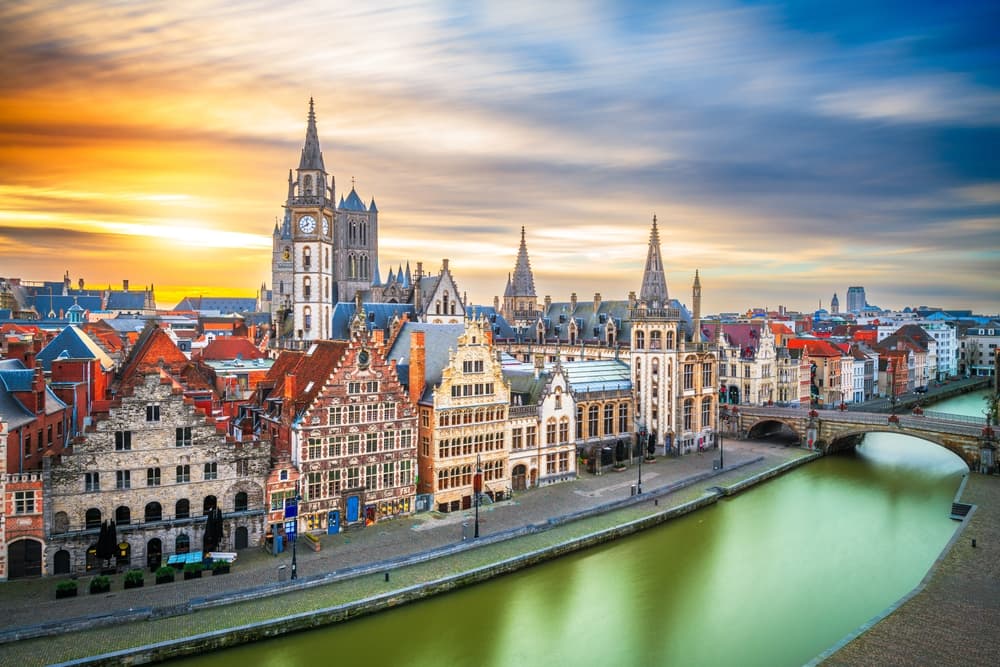
Belgium is the only place in Europe where you can eat the world's best fries, drink beer brewed by Trappist monks, and walk to a meeting at a European Commission building, and the fact that it treats this as unremarkable is the national character in miniature: a small country that has absorbed centuries of conquest, division and administrative baroque into a shrug of competence. Brussels is the most international city per capita on earth, the EU and NATO capital running a parallel anglophone economy atop the French-Dutch linguistic fault line; Antwerp plays the stylish counterweight, diamonds, fashion and the port's rough energy; Ghent and Bruges supply the medieval postcard with a university city's pulse behind the first; and the SNCB rail net makes the entire kingdom an hourly-departure commuter shed. The orchards of Haspengouw hire pickers every autumn, mostly on EU passports, and Brussels' anglophone service economy hires year-round around the institutions.
The paperwork story is federalism applied. There is no nomad visa. The self-employed door is the professional card, granted by the region where the activity will live: Flanders through VLAIO, which now runs a fast-track branded the Innovation and Startup Permit for founders mentored by Flemish incubators and knowledge institutions, Brussels through its Economy and Employment agency, Wallonia through its economic directorate, each weighing viability, market need, professional background and financial capacity, with the type D visa, the card and the residence permit issued as a stack and renewal expecting taxable income around the 15,000-euro self-employed social minimum. Employees ride the single permit at regionally divergent thresholds, roughly 47,000 euros yearly for the highly skilled in Flanders, 53,220 in Wallonia after the March 2026 indexation, Brussels holding 3,703 euros monthly under the 13.92-salary convention, with the EU Blue Card above at 60,998 federally and higher regionally, and a distinctly 2026 trap beneath: immigration renewals now cross-reference actual payments against the tax database, where a few euros of missed indexation can read as a residency violation. The commune registration that completes every route has a deserved reputation for thoroughness, and the long game runs standard: five years to permanence, five to citizenship with integration conditions.
The fiscal picture made history this January: the Arizona coalition's 10 percent capital gains tax on financial assets, above a 10,000-euro annual exemption and with values stepped up to end-2025 baselines, ended Belgium's decades-long run as Europe's zero-capital-gains haven, while earned income keeps its old arithmetic, 50 percent from roughly 51,000 euros, Europe's lowest top-bracket threshold, plus communal surcharges, softened for arrivals by an impatriate regime whose 35 percent tax-free allowance lost its cap in 2025. The honest context runs textured: a US Level 2 expanded in July 2026 to name crime, terrorism and unrest together, the domestic OCAD level at serious, three of four, since October 2023, a genuine drug-violence file, 89 Brussels shootings in 2024 concentrated in specific communes, the Antwerp port's bombing-punctuated trafficking wars, that stays remarkably clear of the lived map, and a strike calendar that closes airports entirely on national action days. Belgium in 2026 remains what it has quietly always been: the best-run complicated country in Europe, and one of the easiest places on the continent to live well while pretending otherwise.
Widening the search? If you are looking to expand your job hunt across Western Europe, take a look at Netherlands →, Germany →, and France →.
Cost of living
Belgium prices below its neighbors and above its reputation for value: Brussels one-bedrooms run 1,100 to 1,700 euros with the commune determining everything, Ixelles and Saint-Gilles the international favorites, while Antwerp runs slightly less with more style per euro, Ghent undercuts both with university energy, and the smaller cities open genuine affordability an hourly train from the capital. The EU-institution economy inflates a specific Brussels tier, the Schuman-adjacent rental market, and leaves the rest of the country pleasantly untouched.
Daily life rewards the local playbook: the Delhaize-Colruyt-Carrefour supermarket tier runs excellent prepared food cheaper than restaurant lunches, the frituur and the dagschotel keep eating honest, Belgian beer delivers the world's best price-to-profundity ratio at café prices, and the chocolate and pastry tier operates as affordable daily luxury rather than tourist tax. Transport is the structural gift: SNCB links every city hourly at commuter fares, the weekend-return discount is real, and Brussels' STIB runs the capital at standard European transit logic. The comfortable single Brussels life assembles at 2,700 to 3,400 dollars, Antwerp and Ghent at 2,300 to 2,900, the budget floor sits near 2,000 with commune discipline and supermarket lunches, and the honest Belgian additions are cultural: the café line item that is the social infrastructure, and the rail pass that turns one base into six cities.
- One-bedroom rent: 1,100 to 1,700 euros in Brussels by commune with Ixelles and Saint-Gilles the international picks, slightly less in Antwerp, less again in Ghent; the EU economy inflates only its own Schuman-adjacent tier.
- Eat the supermarket-and-frituur tier: Delhaize and Colruyt prepared food undercuts restaurant lunches, the dagschotel is the working meal, and the frites are a national institution priced like one.
- Drink the beer as the value anomaly it is: the world's deepest beer culture at café prices, Trappist profundity for a few euros, and the terrace hour as social infrastructure worth budgeting honestly.
- Ride SNCB like a resident: hourly trains link every city at commuter fares with real weekend discounts, turning one base into Brussels, Antwerp, Ghent, Bruges, Leuven and Liège on a single pass logic.
Cost-of-living calculator
See how your budget stretches in Belgium.
Estimates use approximate exchange rates and typical monthly costs. Your actual costs will vary.
Visas & Entry
Belgium runs the standard Schengen stack with federalism underneath: visa-free nationals receive 90 days in any 180 across the zone, EES biometrics are live, ETIAS is expected in 2027, Belgium itself now runs enhanced immigration checks at borders and on international transport, and EU, EEA and Swiss citizens live and work freely, meeting only the commune-registration machinery whose thoroughness is a national institution.
Beyond 90 days there is no nomad visa, and the doors are regional. The professional card is the self-employed route, granted by the region hosting the activity: Flanders through VLAIO, whose Innovation and Startup Permit branding fast-tracks founders with a signed mentorship letter from a Flemish incubator, innovator or knowledge institution; Brussels through its Economy and Employment agency; Wallonia through its economic directorate; each judging economic viability, market need, the applicant's professional background and financial capacity, applications filed abroad through the consulate as a package with the type D visa, an interview possible, and renewals expecting taxable income at least around the 15,000-euro self-employed social-security minimum, with persistent losses triggering refusal. Employees ride the single permit at regionally divergent thresholds: roughly 47,000 euros yearly for the highly skilled in Flanders, 53,220 in Wallonia after March 2026 with executives at 88,790, Brussels holding 3,703.44 euros monthly for the highly skilled and 6,647.20 for executives under the 13.92-salary convention, all indexed annually and all subject to the 2026 enforcement novelty, renewals cross-checked against the national tax database where small indexation shortfalls read as violations. The EU Blue Card runs 60,998 euros at the federal tier with Wallonia at 68,815, labour-market-test exempt with degree requirements. The stack completes locally: commune registration against a stable address, the residence card, and the long game at five years to permanence and five to citizenship with integration conditions; the Brussels expat infrastructure is Europe's deepest, and the consular file rewards Belgian-grade documentation.
- Choose the region before the business plan: the professional card is judged by Flanders, Brussels or Wallonia on their own terms, moving regions means notifying within 30 days, and the Flemish fast-track's mentorship letter is the strongest single document a founder can carry.
- Build the card file like a Belgian: viability with contracts and clients rather than intentions, financial capacity documented, professional background matched to the activity, and the renewal reality planned for, taxable income around the 15,000-euro social minimum with persistent losses fatal.
- Respect the indexation trap: 2026 renewals cross-check payslips against the tax database, a few euros of missed indexation can read as a residency violation, and the annual-gross line on the payslip is the number that keeps the status.
- Budget the commune registration honestly: several weeks, a stable address, possible police address checks, and Belgian-grade documentation; the machinery is thorough rather than hostile, and a local contact halves the friction.
- Use the 13.92 convention when reading offers: Belgian salaries pay holiday and year-end premiums as extra months, immigration thresholds read the annual total, and the contract number that clears the bar is what the file needs.
- Count Schengen days like money until formalized: the 90-in-180 window spans the zone, EES logs it biometrically, and Belgium's own enhanced checks make the passport-and-status file worth keeping clean in transit too.
| Visa or permit | What it covers |
|---|---|
| Schengen entry | Ninety days in any 180 for visa-free nationals, EES live and ETIAS expected 2027, with Belgium running enhanced immigration checks at borders and on international transport; the scouting season for choosing a region and a door. |
| EU, EEA and Swiss citizens | Full freedom of movement including self-employment, then the same practical gate as everyone: commune registration against a stable address, whose thoroughness deserves the several weeks it takes. |
| Professional card, by region | The self-employed door judged by the hosting region, Flanders via VLAIO, Brussels via its Economy agency, Wallonia via its directorate, on viability, market need, background and capacity; filed abroad with the type D visa, renewed against real taxable income around the 15,000-euro social minimum. |
| The Flemish fast-track | VLAIO's Innovation and Startup Permit branding accelerates founders carrying a signed mentorship letter from a Flemish incubator, innovator or knowledge institution; the credible startup lane in the region that hosts most of Belgian tech. |
| Single permit, by region | Employee thresholds diverge: roughly 47,000 euros for Flanders' highly skilled, 53,220 in Wallonia with executives at 88,790, Brussels at 3,703.44 monthly under the 13.92-salary convention; indexed annually, with renewals now cross-checked against the tax database. |
| EU Blue Card | 60,998 euros at the federal tier and 68,815 in Wallonia, degree-backed and labour-market-test exempt; the mobile senior lane above the single-permit architecture. |
| The stack and the long game | Commune registration completes every route and its reputation for thoroughness is earned; permanence at five years, citizenship at five with integration conditions, and the Brussels expat infrastructure as Europe's deepest support layer. |
Good to know: No DNV; professional card granted by REGION (VLAIO Flanders w/ Innovation & Startup Permit fast-track, BEE Brussels, Wallonia DGO6): viability + means, D-visa stack, renewal ~€15k taxable income; single permit thresholds diverge (Flanders ~€47k, Wallonia €53,220, Brussels €3,703.44/mo, 13.92 convention) with tax-database renewal cross-checks; Blue Card €60,998 federal; commune registration thorough; PR 5 yrs.
EnRoute Jobs AI tool
Route Planner
Map visa routes, timelines, and relocation costs for your next destination.
Work & Legal
Belgian professional culture makes complexity look easy: three linguistic communities, a federal system of baroque intricacy and the permanent EU-NATO presence, all managed with pragmatism, multilingual fluency and an irony that undersells the competence underneath. The language map is professional infrastructure, Dutch in Flanders, French in Wallonia, both plus institutional English in Brussels, and using the right one in the right place is noticed in both directions; the EU economy runs a parallel anglophone market of genuine depth, policy, consulting, communications, associations, that makes Brussels one of Europe's easiest capitals to work in English. Lunch is treated seriously, an hour minimum with quality non-negotiable, meetings run punctual and prepared, and the coworking tier trends purposeful rather than social.
The legal lines: foreign-client remote work during Schengen stays sits in the standard unpoliced gray zone, Belgian clients or employment require status, and the formalized resident registers as zelfstandige or indépendant with the Crossroads Bank for Enterprises, joins a social-insurance fund at contributions near 20.5 percent of net income with first-three-year reductions, and inherits an invoicing-and-accounting culture of Belgian thoroughness. The operational notes: GMT+1 overlaps Europe wholly and reaches US East mid-afternoon; the strike calendar is genuine logistics, national action days closing airports entirely with advance notice; and the rail net is the professional weapon, Brussels to Antwerp, Ghent, Leuven or Liège inside an hour, Paris, Amsterdam and Cologne inside two by Eurostar and ICE.
- Read the language map as professional infrastructure: Dutch in Flanders, French in Wallonia, both plus English in Brussels, with the wrong choice noticed in both directions; the EU economy's anglophone depth makes the capital the easy mode.
- Formalize through the Crossroads Bank when Belgium turns real: zelfstandige-indépendant registration, a social-insurance fund at roughly 20.5 percent of net with first-three-year reductions, and accounting run with Belgian thoroughness or a Belgian accountant.
- Treat the strike calendar as logistics: national action days close airports entirely and slow the rails, notice is always advance, and the flexible booking plus the SNCB app absorb the pattern.
- Weaponize the geography: every Belgian city inside an hour, Paris, Amsterdam and Cologne inside two, and GMT+1 catching all of Europe with US East by mid-afternoon; few bases in Europe multiply a working week like Brussels.
Good to know: Language map = professional infrastructure (NL Flanders / FR Wallonia / both+EN Brussels); EU anglophone economy; zelfstandige/indépendant via Crossroads Bank, social fund ~20.5% net (first-3-yr reductions); strike days close airports with notice; lunch serious; GMT+1; Eurostar geometry.
Taxes
Belgian tax pairs Europe's heaviest earned-income arithmetic with a January 2026 landmark: the end of the zero-capital-gains era, softened by an uncapped impatriate allowance and a benefits culture engineered around the brackets.
| What applies | The rule in 2026 |
|---|---|
| The residency tests | Registration in the population register presumes Belgian tax residency, with permanent home and center of economic interests behind it; the Schengen-season visitor stays clear, and the commune registration that grants status also starts the fiscal clock. |
| Non-residents | Owe Belgian tax on Belgian-source income only, and sit outside the new capital-gains net as a general rule; the visiting remote worker's foreign clients stay beyond the reach of the schedule for the standard season. |
| Residents and the schedule | Brackets of 25, 40, 45 and 50 percent with the top rate from roughly 51,000 euros, Europe's lowest such threshold, plus communal surcharges of 6 to 9 percent of the tax; the famous arithmetic that built the company-car, meal-voucher and group-insurance culture as its pressure valve. |
| The January 2026 capital gains tax | The Arizona coalition's 10 percent tax on gains from shares, crypto and other financial assets, above a 10,000-euro annual exemption, with values stepped up to end-2025 baselines and speculative gains still at 33 percent; the end of the zero-capital-gains era that defined Belgian wealth planning for decades. |
| The impatriate regime | Inbound taxpayers above a salary bar around 70,000 euros can receive 35 percent of remuneration as an uncapped tax-free allowance since 2025, applied for within three months of starting or lost permanently, running five years plus a three-year extension; researchers qualify without the salary bar. |
| The self-employed layer | Zelfstandige-indépendant net income meets the personal schedule plus social contributions near 20.5 percent, capped around 100,000 euros and reduced in the first three years, with the deductible-expense architecture and its tapering car deductions behind; the accountant is Belgian infrastructure. |
| Americans specifically | A US-Belgium income tax treaty stands and a totalization agreement has run since the 1980s, sparing self-employed Americans double social contributions; Belgian effective rates typically generate excess foreign tax credits, and the impatriate allowance needs US-side planning since the IRS taxes what Belgium exempts. |
| The home-country half | Belgian residency does not silence the jurisdiction left behind: exits, tie-breakers and the population-register presumption deserve professional hands before the move, and the new capital-gains regime makes pre-arrival portfolio planning worth real money. |
Verified 21 August 2026: the population-register residency presumption, the 25-to-50 schedule with its 51,000-euro top threshold and communal surcharges, the January 2026 10 percent capital gains tax with its 10,000-euro exemption and end-2025 step-up, the 35 percent uncapped impatriate allowance with its three-month deadline, self-employed contributions near 20.5 percent, VAT at 21 percent, and the standing US treaty with totalization. General information, not tax advice.
Good to know: 50% from ~€51k (Europe's lowest top threshold) + communal 6-9%; NEW Jan 2026: 10% CGT (€10k exemption, end-2025 step-up, 33% speculative, non-residents out); zero-CGT era over; impatriate 35% uncapped (≈€70k bar, 3-month deadline, 5+3 yrs); self-employed ~20.5% capped ~€100k; company-car/meal-voucher culture as pressure valve; US treaty + totalization; VAT 21%.
Healthcare
Belgian healthcare ranks with Europe's best and runs on the mutualité: residents join a health-insurance fund that reimburses most of everything, specialist waits run among the continent's shortest, and the conventionné GP consultation prices around 30 euros before the reimbursement that returns most of it. EU visitors ride EHIC on Belgian-resident terms, English-speaking medicine is easy in Brussels and Antwerp and thinner in Wallonia, and the non-EU visitor needs travel insurance mostly for hospital-scale events. The university hospitals anchor world-class depth, Leuven the national reference, Brussels running Saint-Luc and Erasme as its academic pair, Antwerp and Ghent carrying Flanders, and the pharmacy network operates with continental professionalism under the green cross.
The practical texture: dental runs good-quality European pricing through the mutualité layer with supplements common, over-the-counter policy is conservative in the continental style, tap water is excellent, and the health risks are lifestyle-mild, the grey-season light asking the lamp discipline, cycling in Flemish traffic asking its lane awareness, and the summer's occasional heat spikes meeting a housing stock built for neither. Emergencies answer at 112, the mutualité's on-call networks handle the after-hours tier, and Be-Alert reaches registered phones when something genuinely national happens.
- Join a mutualité on arrival when resident: the fund membership is the system's front door, reimbursement runs automatic once enrolled, and the hospitalization supplement policy is the one worthwhile add-on conversation.
- Consultations run about 30 euros conventionné with most of it reimbursed for the enrolled; EHIC carries EU visitors, English is easy in Brussels and Antwerp, and the non-EU visitor's insurance is for the hospital tail.
- Use the green cross as the first tier: Belgian pharmacies run continental-professional advice under conservative over-the-counter policy, and the on-call rotation posted on every door answers the after-hours minor register.
- Run the mild syllabus: the lamp against the grey season, lane awareness for Flemish cycling traffic, and heat respect in the un-air-conditioned housing stock's occasional summer spikes; 112 answers everything and Be-Alert reaches registered phones.
| Hospital | What to know |
|---|---|
| UZ Leuven | The national academic reference and Belgium's perennial top-ranked hospital, full tertiary depth a short train from Brussels. |
| Cliniques universitaires Saint-Luc, Brussels | The UCLouvain academic flagship on the capital's east side, tertiary depth with the francophone network behind it. |
| Hôpital Erasme, Brussels | The ULB academic hospital anchoring the capital's south-west, the other half of Brussels' university-medicine pair. |
| UZ Antwerpen | The Antwerp university hospital carrying the port city and its region with full academic depth. |
| UZ Gent | The Ghent university flagship, East Flanders' tertiary anchor in one of Europe's most livable small cities. |
| The access architecture | Residents join a mutualité that reimburses most costs with the conventionné GP around 30 euros before reimbursement, EHIC carries EU visitors on resident terms, and travel insurance covers the non-EU visitor's hospital-scale tail. |
Hospital list compiled 21 August 2026 and not yet confirmed against each facility directly. Treat as indicative and verify before relying on it.
Good to know: Mutualité system with Europe-short specialist waits; conventionné GP ~€30 mostly reimbursed; UZ Leuven = national reference; Brussels' Saint-Luc/Erasme academic pair; EHIC on resident terms; green-cross pharmacies + on-call rotations; Be-Alert; 112.
Safety
Belgium asks for the July 2026 advisory expansion to be read with its context attached. The advisory: the US holds Level 2, Exercise Increased Caution, expanded on July 23, 2026 to name crime, terrorism and unrest together, with the texture stated plainly, team pickpockets working distraction patterns in the Brussels metro at night and all stations, bag theft rising on the Brussels-Amsterdam trains, smash-and-grab from cars, and the frequent demonstration calendar; beneath it, Belgium's own OCAD threat unit has held the national level at serious, three of four, since the October 2023 Brussels attack, with the EU-NATO capital's symbolic weight part of the standing arithmetic. The context: violent crime against visitors remains rare, the street a visitor or professional actually walks runs standard-Europe calm, and the genuinely dramatic file, the drug-trafficking violence, stays remarkably clear of the lived map: Brussels-Capital registered 89 shootings in 2024 and 57 by September 2025, concentrated in Anderlecht, Molenbeek and a handful of communes with metro-station flare-ups at the worst moments, while the Antwerp and Ostend ports, Europe's cocaine gateways, run bombing-and-shooting rivalries in specific suburbs; the advisories' own framing is wrong-place-wrong-time rather than ambient danger, and bystanders are not targets.
The practical translation runs short: station-and-metro discipline for the bags, distance from demonstrations, ordinary evening judgment in the named Brussels communes, and the strike calendar treated as logistics, national action days close Brussels and Charleroi airports entirely with advance notice, a pattern the transport apps track. The era's hybrid file touched Belgium too, drone sightings closing Brussels and Liège airports in late 2025 as part of the regional wave, answered with detection investment rather than panic. Be-Alert reaches registered phones, 112 answers everything with 101 for non-urgent police, and the honest summary is that Belgium's dangers are concentrated, mapped and mostly aimed at other criminals, while its inconveniences, the strikes, the pickpockets, the paperwork, are democratic and survivable.
- Run the station-and-metro discipline: team pickpockets work distraction patterns in the metro at night, at Midi and on the Amsterdam trains where overhead bags are the target; bags on the lap or at the feet, documents split, and the crowd habits answer the entire register.
- Read the drug-violence file by its geography: the shootings and port bombings concentrate in Anderlecht, Molenbeek and the Antwerp-Ostend gang map, aimed at rivals rather than bystanders; ordinary evening judgment in the named communes is the entire personal translation.
- Treat strikes as scheduled weather: national action days close the airports entirely with advance notice, the rails slow with them, and the flexible booking plus the SNCB and airport apps absorb a pattern that is constitutional rather than chaotic.
- Keep distance from demonstrations: the Brussels calendar is Europe's densest around the institutions, most pass peacefully, some turn confrontational, and the embassy's venue-specific alerts plus simple distance answer all of it.
- Note the drone-era file without drama: late-2025 sightings closed Brussels and Liège airports as part of the regional wave, answered with detection investment; the flight buffer and the airline app are the practical residue.
- Know the number architecture: 112 for everything urgent, 101 for non-urgent police, Be-Alert registration for the genuinely national, and STEP enrollment in five minutes; the machinery behind the EU's capital is commensurate with the role.
Official travel advisories
| Government | Current position |
|---|---|
| United States | Level 2, Exercise Increased Caution, expanded July 23, 2026 to name crime, terrorism and unrest: metro-at-night and all-stations pickpocket texture, Brussels-Amsterdam bag thefts, smash-and-grab patterns, and the frequent demonstration calendar with its disruption warnings.travel.state.gov → |
| OCAD, Coordination Unit for Threat Analysis | The domestic layer: the national threat level at serious, three of four, since the October 2023 Brussels attack, with the EU-NATO capital's symbolic weight in the standing assessment and the Crisis Centre running Be-Alert. |
| Canada | High degree of caution for terrorism, with the sharpest crime texture: the Brussels-region shooting surge acknowledged, the port-gang geography named through Antwerp and Ostend with bombings in the record, and the wrong-place-wrong-time framing that is the honest visitor-relevant risk.travel.gc.ca → |
| Australia | Carries the OCAD serious level and the disrupted-plot record, the sensitive-site geography of EU and NATO institutions, train-theft patterns including international routes, and the Be-Alert registration advice.smartraveller.gov.au → |
| US Embassy Brussels | Enroll in STEP; the embassy's security and demonstration alerts name venues, routes and schedules through the year. 27 Boulevard du Régent, Brussels; +32 2 811 4000.be.usembassy.gov → |
Advisory positions verified 21 August 2026: the July 23, 2026 US Level 2 expansion naming crime, terrorism and unrest, OCAD's serious level held since October 2023, the Brussels shooting statistics and their commune concentration, the Antwerp-Ostend port-violence file, the strike-day airport-closure pattern, and the late-2025 drone closures. Open the sources before travelling.
Good to know: US L2 EXPANDED Jul 23 2026 (crime + terrorism + unrest named) above OCAD serious (3/4 since Oct 2023); drug-violence file precise: 89 Brussels shootings 2024, 57 by Sept 2025, concentrated Anderlecht/Molenbeek; Antwerp/Ostend port bombing rivalries; wrong-place-wrong-time framing, bystanders not targets; strike days close airports entirely; late-2025 drone closures (Brussels/Liège) = regional wave; Be-Alert; 112/101.
Climate
Belgium runs the North Sea's temperate grey: moderate year-round, 20 to 25 in summer with occasional 30-degree spikes, 2 to 7 in a damp lowland winter that rarely holds snow, rain distributed democratically across the calendar, and the famously flat, moody light that the Flemish painters made immortal and the vitamin-D-dependent learn to manage. The working year: May, June and September are the honest prize, pleasant temperatures, long evenings and the terrace culture at full function; July and August bring the best weather alongside the institutional exodus, Brussels' EU population vanishing and the city exhaling; and the November-through-February grey season is the lamp-and-café-interior stretch, mild by Nordic standards but relentless in its cloud, the season Belgium answers with beer cafés, chocolate and the best interior culture in the lowlands. The rain is showers more than storms, the umbrella is a resident rather than a visitor, and the practical kit is the Flemish one: waterproof layers, a bike light, and the acceptance that the grey is the canvas the golden evenings are painted on.
| Season | What to expect |
|---|---|
| The prize months, May-June and September | Pleasant 18-to-24 days, long evenings, terraces at full function and the festival calendar warming up; the honest working seasons the year is planned around. |
| High summer, July-August | The best weather, occasional 30-degree spikes, and the institutional exodus emptying Brussels; the city exhales, the coast fills, and the un-air-conditioned housing stock respects the heat spikes. |
| The grey season, November-February | Two-to-seven damp and cloud-locked with rare lowland snow: the lamp-and-interior stretch the beer-café culture was built for, mild in temperature and relentless in light. |
| The constants | Democratic rain in showers, the flat painterly light, and wind off the North Sea; waterproof layers and the resident umbrella are the entire adaptation. |
Good to know: May-June and September are the prize; July-August pairs best weather with the institutional exodus; the grey season is mild but relentless and answered with the lowlands' best interior culture.
Culture & Customs
Belgian culture is a deliberate exercise in making complexity look easy: three linguistic communities, a federal system of baroque intricacy, and the EU-NATO presence, all carried with pragmatism, multilingual reflexes and an irony that treats national self-congratulation as faintly ridiculous. The surrealism is native rather than imported, Magritte was being documentary, and the national genius is for quality without announcement: the world's best fries served in paper cones, beer culture of genuine theological depth, Trappist ales brewed by actual monks, chocolate as a craft guild rather than a souvenir, and a food seriousness that treats the lunch hour as non-negotiable across all three regions.
The codes are light and real: use the right language in the right region, French in Ghent is noticed, Dutch in Liège equally, with English the safe neutral in Brussels; greet shopkeepers, keep punctuality, tip by rounding since service is included; and let the irony be the friendship, Belgians bond through understatement and self-deprecation rather than enthusiasm. The calendar runs from Gentse Feesten's ten-day July madness through Tomorrowland's global pilgrimage, the Ommegang and carnival traditions, Binche's UNESCO Gilles, to the Christmas markets that make the grey season glow. The professional who rides SNCB's hourly net, drinks the Trappist canon in order, learns which language opens which door, and accepts that the national talent for quality hides behind the national refusal to boast has understood Belgium: the best-run complicated country in Europe, and the easiest place on the continent to live well while pretending otherwise.
- Use the right language in the right region: Dutch in Flanders, French in Wallonia, either plus English in Brussels, with the wrong choice noticed in both directions; the safe Brussels neutral is English, and ten words of the local one anywhere buys warmth.
- Take the food seriousness seriously: the frituur cone, the lunch hour, the chocolate guild and the moules season are institutions rather than tourism, and treating them as such is the fastest cultural fluency available.
- Drink the beer canon with respect: every beer has its glass and its temperature, the Trappist tier rewards order, and the café is the social infrastructure where Belgium actually happens; the terrace hour is membership.
- Bond through irony: understatement and self-deprecation are the national handshake, enthusiasm is dialed down, boasting is faintly ridiculous, and the friendship arrives through dry humor kept dry.
- Ride the calendar: Gentse Feesten in July, Tomorrowland's pilgrimage, Binche's UNESCO carnival and the Christmas markets that redeem the grey season; the festival tier is Belgium at its least understated.
- Keep the light codes: greet shopkeepers, run punctual, round up rather than tip formally, and respect the lunch hour everywhere; the complexity is the state's problem, the courtesy is yours.