.png)
About New Zealand
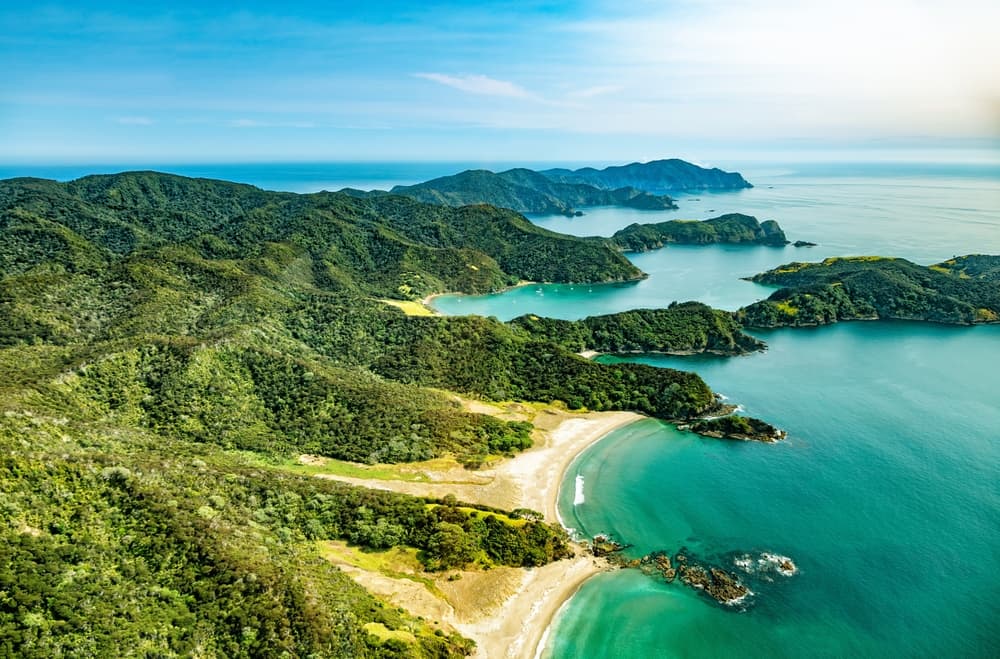
New Zealand is the end of the world in the direction that produces extraordinary views: the last habitable landmass humans ever settled, two islands holding alpine ranges, fjords, subtropical beaches and Hobbiton within day-trip distances, five million people, thirty million sheep, and a national talent for quiet competence that extends, as of 2025, to writing the most sensible remote-work rules on earth.
The story deserves its dates because they rewrote this page. On January 27, 2025, New Zealand changed its visitor conditions rather than inventing a visa: every visitor visa and NZeTA applied for from that date explicitly permits remote work for overseas employers and clients, with no limit on the amount, no minimum income requirement and no separate application. Immigration New Zealand's own page lists emails, coding, reports, online meetings and even influencer content as permitted, provided nothing is done for a New Zealand employer, no goods or services are provided to New Zealand people or businesses, and no work requires physical presence here. Visitor visas run to nine months, six plus a three-month extension, visa-waiver nationals enter on the NZeTA for three months, six for Britons, and the fees stay modest.
Then the second act. Recognizing that the old tax rules undercut the new welcome, the Taxation Act's Non-Resident Visitor category took effect April 1, 2026, and it is quietly the most generous instrument in this index. It deems qualifying visitors non-resident for up to 275 days in any rolling 18-month period, roughly nine months, switching off the 183-day test, exempting their offshore remote income from New Zealand tax entirely, and sparing their foreign employers the FBT, ESCT and KiwiSaver machinery. The conditions keep the design honest: a clean slate with no prior New Zealand tax residency, lawful presence, continued tax residence in a jurisdiction levying a substantially similar income tax, the income actually taxed at home, and the permanent-place-of-abode test still watching anyone who settles in too thoroughly.
Beyond the visitor tier, the machinery is orthodox and well-run. The Working Holiday visas serve 18-to-30s, 35 for several nationalities, with a year of full work rights, and they power a seasonal circuit that never stops: Queenstown's ski fields in winter, the vineyards of Marlborough and Central Otago at harvest, the orchard towns hiring pickers through summer, and the hostels trading beds for shifts everywhere in between. The Accredited Employer Work Visa carries sponsored employment at market rates since the 2025 reforms, the Green List runs straight-to-residence for shortage professions, and the points-tested Skilled Migrant category and the revamped investor routes complete the ladder. New migrants who commit receive the transitional-resident exemption, four years of foreign income free of New Zealand tax, one of the developed world's most underrated landing gifts.
The frame is the country the paperwork serves: a US Level 1 advisory whose genuine cautions are earthquakes, alpine weather and rural roads, ACC covering injury treatment for every person on the islands regardless of status, the world's first sunrise, and a national culture that treats the visitor's laptop with the same understatement it treats everything else.
Widening the search? If you are looking to expand your job hunt across Oceania, take a look at Australia →, Indonesia →, and Japan →.
Cost of living
New Zealand prices as a small, remote, high-quality economy. Auckland one-bedrooms run 2,200 to 2,900 New Zealand dollars in the desirable inner suburbs, Wellington undercuts it modestly with wind included free, Christchurch and the regional cities form the honest value tier, and Queenstown prices as the alpine resort it is, the one market where the scenery bills monthly. The rental culture runs weekly pricing, references and the flat-share as the young professional's standard, and heating the older housing stock through winter is the line item the marketing photos omit.
Daily life is quality-priced in the Australian pattern with the remoteness premium visible at the supermarket. The flat white, contested national invention, runs 5 to 6 dollars and is superb everywhere, brunch is the weekend institution, groceries at the Countdown-Pak'nSave tier price above northern-hemisphere equivalents, and the farmers-market and fish-and-chips tiers keep the budget honest.
The car is near-essential outside the two big cities and the campervan economy prices the famous roads. Domestic flights bridge the islands affordably, and the outdoors, the entire point, is famously free: the tramping network, the beaches, the thermal districts and the star-heavy skies bill nothing.
The comfortable single professional life assembles at 3,000 to 3,700 US dollars in Auckland, and the budget floor sits near 2,200 with flat-share discipline. The honest New Zealand additions are the winter heating season, the car-or-campervan line, and the IVL-and-flights arithmetic of the world's most distant address.
- One-bedroom rent: 2,200 to 2,900 New Zealand dollars in Auckland's inner suburbs, Wellington modestly less, the regions the value tier, and Queenstown pricing the scenery; the market runs weekly figures and flat-shares.
- Budget the winter honestly: the older housing stock heats expensively, the heat-pump question is the viewing question, and the season the photos omit is the one the power bill remembers.
- Price the wheels into the plan: the car is near-essential beyond Auckland and Wellington, the campervan economy prices the famous roads, and the inter-island ferry-and-flight line bridges the geography.
- Use the free tier as the point: the tramping network, beaches, thermal districts and dark skies bill nothing, and the flat-white-and-brunch economy is the paid luxury that matters.
Cost-of-living calculator
See how your budget stretches in New Zealand.
Estimates use approximate exchange rates and typical monthly costs. Your actual costs will vary.
Visas & Entry
New Zealand's visitor tier is the world's clearest formal yes, and the page leads with its dates. Since January 27, 2025, every visitor visa and NZeTA applied for from that date carries explicit remote-work permission: work for overseas employers and clients is allowed without limit on amount, without any minimum income, and without a separate application, Immigration New Zealand's own guidance listing emails, calls, coding, reports, online meetings and influencer content among permitted activities, with three bright exclusions, no work for a New Zealand employer, no goods or services to New Zealand people or businesses, and no work requiring physical presence in New Zealand. Visa-waiver nationals, the US, UK, Canada, EU and 50-odd others, enter on the NZeTA, nominal fee plus the 100-dollar International Visitor Levy, for stays of three months, six for Britons; the Visitor Visa proper, a few hundred dollars, grants six months extendable toward nine; Australians hold unlimited right of abode.
The tax half completes the design. Arrivals before April 1, 2026 ride the classic exemptions, offshore employment income free of New Zealand tax for stays under 92 days, extended to 183 for residents of the forty-plus treaty countries; arrivals from April 1, 2026 can qualify as Non-Resident Visitors, deemed non-tax-resident for up to 275 days in any rolling 18-month period with the 183-day test switched off, offshore remote income exempt from New Zealand tax and the employer machinery, FBT, ESCT, KiwiSaver, disapplied, on conditions that keep it honest: no prior New Zealand tax or transitional residency, lawful presence, continued foreign tax residence in a substantially-similar-tax jurisdiction, the income taxed at home, and the permanent-place-of-abode test still applying to anyone who builds too much of a life here. Beyond the visitor tier: Working Holiday visas for 18-to-30s, 35 for several nationalities including Britons, with full work rights for a year or more; the Accredited Employer Work Visa at market-rate terms since the 2025 reforms; the Green List's straight-to-residence professions; the six-point Skilled Migrant category; the revamped Active Investor Plus; and for actual migrants, the transitional-resident gift, four years of foreign income exempt. Citizenship runs five years; the design's genius is that most readers of this page will never need anything past the visitor tier it perfected.
- Date your application knowingly: the remote-work conditions attach to visitor visas and NZeTAs applied for from January 27, 2025, and the NRV tax category serves arrivals from April 1, 2026; both dates decide which rules you ride.
- Keep the three exclusions bright: no New Zealand employer, no goods or services to New Zealand customers, no work requiring presence here; the permission is generous precisely because its edges are clean.
- Count the 275 days like the law does: a rolling 18-month window with arrival and departure days counted in full, the clean-slate and taxed-at-home conditions as the qualifying gates, and the permanent-place-of-abode test as the trap for those who settle in too thoroughly.
- Pre-April-2026 arrivals, use the old arithmetic: 92 days free of New Zealand tax for everyone, 183 for the forty-plus treaty countries, and the runway resets under the new category only for qualifying new arrivals.
- Under 36, weigh the Working Holiday: full work rights including local employment beat the visitor permission when New Zealand clients or jobs enter the plan, and several nationalities qualify to 35.
- Moving for real, claim the transitional exemption: four years of foreign income free of New Zealand tax is the landing gift most migrants never hear about until too late; plan the portfolio around it.
| Visa or permit | What it covers |
|---|---|
| The remote-work permission | Since January 27, 2025, all visitor visas and NZeTAs allow unlimited remote work for overseas employers and clients, no minimum income, no separate application; the exclusions are bright: no NZ employer, no goods or services to NZ customers, no physically-required work. |
| NZeTA entry | Visa-waiver nationals enter on the nominal-fee electronic authority plus the 100-dollar IVL for three months, six for Britons, with the remote-work conditions attached automatically; Australians hold right of abode. |
| Visitor Visa to nine months | The longer runway: six months extendable toward nine for a few hundred dollars, the same remote-work permission attached, and the genuine-visitor test as the only real gate. |
| The NRV tax category | From April 1, 2026: qualifying arrivals stay deemed non-resident for up to 275 days in any 18-month period, offshore remote income exempt, employer machinery disapplied, conditioned on a clean slate, foreign tax residence and the income being taxed at home; the permanent-place-of-abode test still watches. |
| Working Holiday | Ages 18 to 30, 35 for several nationalities: a year or more of full work rights, the under-36 alternative when local employment or longer runway matters. |
| The migration machine | The Accredited Employer Work Visa at market-rate terms, the Green List's straight-to-residence professions, the six-point Skilled Migrant test and the investor routes; orthodox, published and well-run. |
| The migrant's landing gift | Transitional residency exempts a new migrant's foreign income from New Zealand tax for four years, one of the developed world's most underrated arrival instruments, with citizenship at five. |
Good to know: No dedicated DNV; deliberately: Jan 27 2025 = ALL visitor visas + NZeTAs allow UNLIMITED remote work for overseas employers/clients (no min income, no separate application; INZ lists emails/coding/meetings/influencer content); exclusions bright: no NZ employer, no goods/services to NZ customers, no physical-presence work. NZeTA 3 months (UK 6) + IVL NZ$100; Visitor Visa → 9 months (6+3, ~NZ$341). NRV TAX CATEGORY live Apr 1 2026 (arrivals on/after): ≤275 days/rolling 18 months deemed non-resident, 183-day test OFF, offshore remote income EXEMPT + employer FBT/ESCT/KiwiSaver disapplied; conditions: clean slate, lawful presence, foreign tax residence w/ substantially-similar tax, income taxed at home, no family scheme; PPOA test SURVIVES (the trap). Pre-Apr-2026: 92-day / 183-day DTA exemptions. WHV 18-30/35; AEWV market-rate (2025 reforms); Green List straight-to-residence; transitional resident = 4-yr foreign-income exemption (underrated). FLAG NOTE: strongest formal yes in the index without being a visa; if the UI flag means "can you legally nomad here," NZ deserves custom treatment.
EnRoute Jobs AI tool
Route Planner
Map visa routes, timelines, and relocation costs for your next destination.
Work & Legal
New Zealand professional culture is competence with the volume turned down: the egalitarian register runs even flatter than Australia's, titles barely exist, the tall-poppy instinct prunes self-promotion gently, and the understatement is so complete that "not bad" is high praise and "quite good" is a standing ovation. Underneath runs a modern, well-regulated economy, agritech and dairy science, the Wellington film-and-effects cluster, Xero-adjacent SaaS, gaming, and a public sector that pays fairly, with a professional norm long comfortable with remote and flexible work.
The legal lines are now the cleanest in this index: visitor-status remote work for overseas clients is explicitly permitted without limit, the three exclusions, no NZ employer, no NZ customers, no physically-required work, drawing the boundary; Working Holiday and work-visa holders work locally under their terms; and the New Zealand-client freelancer formalizes easily, the IRD number and sole-trader registration taking minutes, GST at 60,000 dollars turnover. The texture rewards the genuine: meetings are punctual and unpretentious, the coffee run is institutional, the outdoors structures the calendar with summer's long evenings and the ski season's long weekends, and the time zone is the planet's edge, first to tomorrow, holding Australia and Asia comfortably, catching US afternoons at dawn, and demanding of Europe the async discipline that the lifestyle repays. The professionals who thrive here design the workday around the light and let the understatement do the networking.
- Work the explicit permission cleanly: overseas clients unlimited, the three exclusions bright, and the moment New Zealand customers or employers enter the plan, the visa question changes with them.
- Formalize locally in minutes when needed: the IRD number and sole-trader registration are the rails, GST waits until 60,000 dollars turnover, and the accountant tier is small-country personal.
- Learn the understatement dialect: "not bad" is praise, self-promotion prunes itself, and quiet delivery builds faster here than any pitch deck.
- Design around the planet's edge: first time zone to tomorrow, Australia and Asia in-hours, the US at dawn, Europe by async, and the long summer evenings as the schedule's true north.
Good to know: Visitor remote work = explicitly permitted, unlimited (the cleanest lines in the index); NZ clients/employers → different visa + IRD/sole-trader rails (GST at NZ$60k); understatement dialect ("not bad" = praise); first time zone to tomorrow: AU/Asia in-hours, US at dawn, Europe async; WFH-normal professional culture.
Taxes
New Zealand tax pairs a clean schedule, 39 percent top, no general capital gains tax, no social security levies, with the 2026 instrument this page exists to explain: the Non-Resident Visitor category that keeps qualifying remote workers out of the net for up to 275 days.
| What applies | The rule in 2026 |
|---|---|
| The residency tests | The 183-day count and the permanent-place-of-abode test define residence, with the PPOA capable of catching the settled regardless of days; the NRV category rewires the first test for qualifying visitors and leaves the second watching. |
| The NRV exemption | From April 1, 2026: qualifying arrivals stay non-resident for up to 275 days in any rolling 18-month period, their offshore remote income exempt from New Zealand tax, their foreign employers spared FBT, ESCT and KiwiSaver, conditioned on the clean slate, foreign tax residence and the income being taxed at home. Arrivals before April 2026 and non-qualifiers ride the classic arithmetic instead: offshore income exempt under 92 days for everyone, under 183 for treaty-country residents. |
| Residents and the schedule | Progressive rates to 39 percent above 180,000 dollars, no separate social security or payroll levies, PAYE doing the work for employees, and the online filing genuinely light. |
| The missing taxes | No general capital gains tax, no inheritance or estate tax, no stamp duties on shares, with the bright-line property rules and specific regimes as the exceptions; the portfolio texture most arrivals do not expect. |
| The transitional-resident gift | New migrants who become resident receive four years of foreign-source income exempt from New Zealand tax, the developed world's most underrated landing instrument, worth structuring the move around. |
| GST and the daily layer | The 15 percent goods and services tax rides consumption priced-in, registration for the locally-trading at 60,000 dollars turnover, and the daily arithmetic otherwise fileless. |
| Americans specifically | A US treaty stands but no totalization agreement: self-employment tax runs unshielded, the treaty and credits manage income allocation, the NRV exemption pairs interestingly with US taxation since the income stays taxed at home by design, and the KiwiSaver-and-PFIC texture wants a cross-border preparer for actual migrants. |
| The home-country half | The NRV category's taxed-at-home condition makes the home jurisdiction's claim part of the design rather than a conflict: the exemption serves those genuinely anchored elsewhere, and the professionals who keep that anchor documented are the ones it protects. |
Verified 21 August 2026: the 183-day and permanent-place-of-abode tests, the April 2026 NRV category's 275-day, clean-slate and taxed-at-home architecture with employer disapplications, the pre-2026 92-and-183-day exemptions, the 39-percent schedule with no general CGT and no social levies, the four-year transitional-resident exemption, GST at 15 percent, and the US treaty without totalization. General information, not tax advice.
Good to know: 183-day + PPOA tests (PPOA survives NRV; the trap); NRV Apr 1 2026: ≤275 days/18 months, offshore remote income EXEMPT, employer FBT/ESCT/KiwiSaver off, conditions = clean slate + foreign tax residence + taxed at home; pre-NRV: 92-day / 183-day DTA; schedule → 39% >NZ$180k, no social levies; NO general CGT/inheritance/stamp (bright-line property exception); transitional resident = 4-yr foreign-income exemption; GST 15%; US treaty ✓ totalization ✗ (SE tax unshielded; NRV pairs cleanly with US taxation by design).
Healthcare
New Zealand healthcare runs a solid public system with one provision found nowhere else in this index: ACC, the Accident Compensation Corporation, covers injury treatment for every person in New Zealand regardless of visa or residency status, the tramper's broken ankle, the cyclist's collision and the visitor's ski injury all treated under the national no-fault scheme, which is why the country's adventure economy and its insurance arithmetic coexist so calmly. Everything non-accident follows status: residents and eligible visa holders ride the public system, Health New Zealand's hospitals competent throughout with the waiting-list texture of every public service, while visitors pay privately for illness care, GP visits at 50 to 90 New Zealand dollars, and travel insurance remains the standing advice for everything ACC does not touch.
The texture is small-country personal: GPs run the gatekeeping tier with same-week access in most places, pharmacies are capable and subsidized for the eligible, dental is private and priced accordingly, and English serves throughout with te reo greetings woven in. The health syllabus is outdoor and honest: the southern sun burns at Australian intensity and the SPF discipline applies in full, alpine weather changes with the speed the tramping deaths keep proving, the rivers and surf carry real cold and current, earthquake preparedness is a national habit visitors should borrow, and the winding rural roads write more statistics than anything with teeth, of which the islands famously have nothing. Emergencies answer at 111, the rescue-helicopter network is world-practiced for good reason, and the summary is the honest one: good care everywhere, ACC's unique blanket for the injured, and insurance for the rest.
- Understand ACC before you assume: injuries are covered for everyone including visitors, illness is not, and the travel policy's job is everything the accident scheme leaves out.
- Use the GP tier as designed: the gatekeeping works, same-week access is normal, and the after-hours clinics bridge the gaps the small system occasionally shows.
- Respect the outdoor syllabus: the southern sun burns at Australian intensity, alpine weather turns with lethal speed, the rivers run cold and strong, and the tramping intentions habit is the safety system.
- Borrow the earthquake habits: drop-cover-hold, the getaway kit and the app alerts are national customs worth adopting in week one.
| Hospital | What to know |
|---|---|
| Auckland City Hospital | The country's largest and the tertiary anchor: full-depth acute, trauma and specialty medicine for the upper North Island. |
| Wellington Regional Hospital | The capital's acute center carrying the lower North Island with the university tier behind it. |
| Christchurch Hospital | The South Island's anchor, trauma-practiced and quake-tested, with the alpine rescue network feeding it. |
| ACC, the unique layer | No-fault injury cover for every person in the country regardless of status: treatment for accidents, the visitor's ski crash included, under the national scheme that replaces the right to sue. |
| The GP and private tier | Gatekeeping primary care at 50-to-90-dollar visits, private specialists and surgical centers running short waits for the insured, and the small-country access that makes booking easy. |
| Emergency architecture | 111 answers nationally, the rescue-helicopter network is world-practiced across the alpine and coastal terrain, and the after-hours clinic tier bridges the GP gap in every city. |
Hospital list compiled 21 August 2026 and not yet confirmed against each facility directly. Treat as indicative and verify before relying on it.
Good to know: ACC = unique: no-fault injury cover for EVERYONE regardless of status (visitor ski crash included; replaces right to sue); illness = status-based (visitors pay privately, GP NZ$50-90; travel insurance covers what ACC doesn't); Health NZ public tier competent w/ waiting-list texture; southern sun = Australian intensity; alpine weather speed + tramping intentions habit; quake habits worth borrowing; rural roads write the statistics; 111 + world-practiced rescue helicopters.
Safety
New Zealand's safety file is among the world's calmest, and its genuine content is geological and alpine rather than human. The official half: the US advisory holds Level 1, Exercise Normal Precautions, and the domestic register justifies it, violent crime rare by any global comparison, the cities running easy at all hours, petty theft concentrated where tourists cluster, Queenstown's bar district, Auckland's CBD, unattended campervans at trailheads as the one genuinely national pattern, and solo travelers of every description, women very much included, reporting the country as the easy mode of world travel.
The genuine file is the landscape's. The seismic tier leads it: the islands ride the Pacific Ring of Fire, earthquakes are a national habit rather than a surprise, Christchurch and Kaikōura taught the modern protocols, the Taupō volcanic zone is monitored constantly, and the drop-cover-hold and tsunami-evacuation customs are borrowed by every sensible visitor in week one. The alpine tier is the killer statistics actually name: mountain weather changes with a speed the tramping fatalities keep proving, the intentions system, telling someone the route and the return, is the safety net, river crossings and cold water claim the underprepared, and the avalanche season runs real. The road tier completes it: winding rural two-lanes, gravel edges, one-lane bridges and underestimated distances write more visitor statistics than everything else combined, and the keep-left discipline deserves the first-day concentration. There is nothing else: no snakes, no dangerous mammals, nothing venomous that matters, a fact the country enjoys mentioning. Emergencies answer at 111, the rescue-helicopter network is world-practiced, and the honest summary is the score's: a country whose people ask nothing of your vigilance and whose landscape asks exactly the respect it publishes.
- Read the Level 1 as the streets deserve: rare violent crime, easy cities at all hours, and the campervan-at-the-trailhead as the one national theft pattern worth planning around.
- Borrow the seismic customs in week one: drop-cover-hold, the coastal tsunami rule, long-or-strong-get-gone, and the getaway kit are national habits, not paranoia.
- Treat the alpine weather as the killer it statistically is: conditions turn in minutes, the intentions system is the safety net, and the tramping deaths are almost always the underprepared.
- Drive the roads with first-day concentration: keep-left discipline, gravel edges, one-lane bridges and honest distance arithmetic write more visitor statistics than everything else combined.
- Respect the water's cold and current: rivers claim crossers, the surf runs strong, and the local rule, if in doubt, stay out, is the entire syllabus.
- Know 111 and the intentions habit: the national number answers, the rescue helicopters are world-practiced, and telling someone the route and return time is the cheapest insurance in the country.
Official travel advisories
| Government | Current position |
|---|---|
| United States | Level 1, Exercise Normal Precautions: the floor tier, with the file's practical content being seismic and alpine awareness rather than any human-threat register.travel.state.gov → |
| Canada | Normal security precautions with the earthquake, volcanic and severe-weather files carried as the genuine cautions.travel.gc.ca → |
| United Kingdom | No overall advisory against travel; the adventure-tourism, alpine-weather and road-condition notes are the substantive content.gov.uk → |
| Australia | The neighbor's normal-precautions register with the seismic and tramping syllabus as the practical substance.smartraveller.gov.au → |
| US Consulate General Auckland | Enroll in STEP; the embassy sits in Wellington with the consulate in Auckland, and the notices run to weather and seismic events in a country that rarely needs more. 23 Customs Street East, Auckland; +64 9 303 2724.nz.usembassy.gov → |
Advisory positions verified 21 August 2026: the US Level 1 with its seismic-and-alpine substance, the rare-violent-crime domestic register, and the genuine file, earthquakes and the volcanic zone, alpine weather speed, cold-water risk and the rural-road statistics. Open the sources before travelling.
Good to know: US L1; human file ≈ empty (campervan-at-trailhead = the one national pattern; solo women = easy mode); real file = geological + alpine: Ring of Fire habits (drop-cover-hold, tsunami rule), alpine weather speed + intentions system, cold rivers, rural-road statistics (keep-left, gravel, one-lane bridges); nothing venomous that matters (the country enjoys saying so); 111 + rescue helicopters; 85→88 (LU/FI/IoM/Bhutan tier).
Climate
New Zealand runs a temperate maritime year stretched across twelve degrees of latitude and one serious mountain range: the far north is winterless-subtropical, Auckland runs mild and humid, 12 to 24 degrees, with a wet winter and a warm bright summer, Wellington runs the same numbers inside the wind the city has made a personality, Christchurch and the east run drier and more continental, Queenstown and the alpine south run four honest seasons with a July-to-September ski winter, and the West Coast runs the rainfall that built the fjords. The inverted calendar makes November through March the national summer prize: long evenings, the tramping season fully open, the beaches at temperature and the country operating at the outdoor full function that is its entire point, with December-January as the domestic holiday crush worth booking around. The shoulders are the connoisseur's: February-March holds the settled warmth after the crowds thin, and October-November greens the spring with the lambs the marketing promised. Winter, June through August, splits by island: the north stays mild, wet and workable, the south turns alpine with the ski economy as the compensation and the light staying photogenic year-round. The famous instability is real, four seasons in a day is a national saying because it is a national weather pattern, the maritime westerlies deliver change on schedule, and the kit answer is the layered one every local models. The deepest climate fact is the light itself: clear-air southern-hemisphere sun that burns fast and photographs like nowhere else, the reason the film industry stays and the SPF rule applies in full.
| Season | What to expect |
|---|---|
| Summer, November to March | The national prize: long evenings, the tramping network fully open, beaches at temperature and the outdoor economy at full function, with the December-January domestic crush worth booking around. |
| The shoulders, October-November and February-March | The connoisseur's pick: spring's green-and-lambs opening act and late summer's settled warmth after the crowds thin; the working weather at its best. |
| Winter, June to August | Split by island: the north mild, wet and workable, the alpine south in ski season with Queenstown's July-to-September economy as the compensation. |
| The maritime constant | Four seasons in a day as a genuine weather pattern: the westerlies deliver change on schedule, the layers answer it, and the clear southern light burns fast and photographs like nowhere else. |
Good to know: Inverted calendar; Nov-Mar = the prize (Dec-Jan domestic crush); shoulders = the connoisseur's pick; winter splits by island (north workable, south = ski season); four-seasons-a-day is real (layers answer it); the clear southern light burns fast and built the film industry.
Culture & Customs
New Zealand culture runs on the bicultural foundation the country keeps working at seriously: Māori and Pākehā traditions under the Treaty of Waitangi's living framework, te reo Māori woven into daily speech, kia ora as the universal greeting, place names pronounced properly as a baseline courtesy, and the haka encountered at games and gatherings as the living practice it is rather than performance, with Auckland's Pacific and Asian communities making it the southern hemisphere's most diverse city. The register is understatement as the national art: achievements are downplayed, the tall poppy prunes itself, "yeah, nah" and "sweet as" carry entire conversations, and the correct response to praise is visible discomfort.
The codes are easy and genuine: shoes off at the door in most homes, bring something to the barbecue, hold your round at the pub, thank the bus driver, and tip nothing, wages are fair and the culture reads tipping as confusion rather than generosity. The outdoors is identity rather than recreation: the tramping network, the surf, the rugby followed with theological seriousness, and the bach, the family holiday shack, as the cultural institution summer orbits. The calendar runs Waitangi Day's national reflection in February, Anzac Day's dawn services in April shared with Australia, Matariki, the Māori new year, as the winter public holiday the country added in 2022, and the summer shutdown from mid-December when the nation moves to the beach as one. The table is honest and improving fast: the flat white contested with Australia and defended with certainty, the pie and the sausage roll as the national snacks, hāngī earth-oven feasts as the Māori tradition worth accepting any invitation to, green-lipped mussels, whitebait fritters and a wine industry, Marlborough sauvignon, Central Otago pinot, that long stopped being a secret. The professional who learns the pronunciation, takes the understatement seriously, respects the Treaty's living weight and structures the calendar around the outdoors has read the country correctly: Aotearoa is quiet about almost everything, and what it is quiet about includes being one of the best places on earth to live.
- Learn the te reo baseline: kia ora as the greeting, place names pronounced properly, and Matariki's meaning; the bicultural foundation is lived rather than ceremonial, and the courtesy is noticed.
- Master the understatement register: "yeah, nah" and "sweet as" carry conversations, praise causes visible discomfort, and quiet delivery outperforms every pitch.
- Keep the easy codes: shoes off at the door, something in hand for the barbecue, your round held at the pub, the driver thanked, and no tipping anywhere.
- Treat the haka and the marae with weight: living practice, not performance; invitations onto a marae follow protocols worth learning, and the respect is the entrance fee.
- Orbit the outdoor institutions: the tramping network, the rugby religion, the bach summer and the beach shutdown from mid-December; the calendar is the culture.
- Accept every hāngī invitation: the earth-oven feast is the Māori table's heart, the whitebait fritter and green-lipped mussels the coastal canon, and the wine industry the worst-kept secret in the hemisphere.
