.png)
About Malta
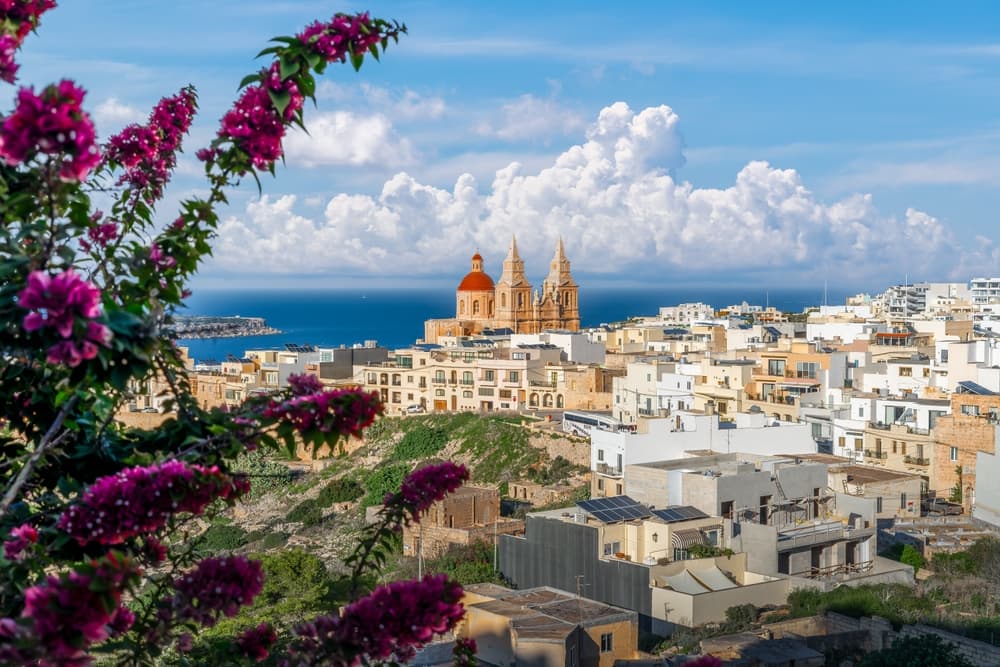
Malta is a stone island in the middle of the Mediterranean, all of it stone, the honey-gold limestone that every building has been made from for millennia, absorbing the sun by day and releasing it into the evening air. The Megalithic Temples are older than Stonehenge and the Pyramids, the Knights of St John built Valletta as a fortress-city masterpiece, the British left the language, the legal system and driving on the left, and the result is the EU's most Anglophone member: English is official, universal and the working language of business, which removes at a stroke the integration friction every other European base carries.
The Nomad Residence Permit, launched in 2021 and run by the Residency Malta Agency, is the program in its mature form: over a thousand applications a year, published criteria, an online portal, and since 2024 a tax regime competitive with anything in Europe, a first year at zero on authorised remote income and a flat 10 percent after. Around it sits full EU and Schengen membership, meaning the permit doubles as a European travel base, and an economy, iGaming, fintech, maritime, that has made international professionals a normal feature of Sliema café life rather than a novelty. The island hires on its own calendar besides: the English-language schools that teach half of Europe's teenagers staff up with teachers and activity leaders every summer, the dive centers of Gozo take on instructors for the season, and the iGaming firms sponsor year-round.
The island's honest trade-offs are physical. It is small, 27 kilometers end to end, and the density is real: traffic is the national complaint, construction cranes are the national bird, and summer brings heat, crowds and the Paceville decibel economy. The compensations are a 300-day sun contract, the Gozo ferry as a permanent escape hatch, a safety level that makes the evening walk home a non-thought, and a Mediterranean village warmth underneath the international surface, festa fireworks, band clubs and all. People who need forests and distance struggle here. People who want sun, English, EU papers and a fiscal architecture that respects their remote income tend to find the island fits like a well-worn deck shoe.
Widening the search? If you are looking to expand your job hunt across Southern Europe, take a look at Italy →, Greece →, and Spain →.
Cost of living
Malta is no longer the Mediterranean bargain of memory; it is a mid-priced EU base whose costs cluster around housing. A one-bedroom in the Sliema-St Julian's expat corridor runs roughly 900 to 1,300 euros a month, Valletta's restored townhouse charm prices above its size, and the value plays are the towns one ring out, Msida, Gżira's edges, Birkirkara, or the genuine reset of Gozo, where 600 to 850 euros rents what the main island doubles. Summer electricity, which is to say air conditioning, is the utility line that surprises.
Daily life is moderate: excellent coffee under 3 euros, a pastizzi breakfast for pocket change, lunch at 10 to 15, seafood dinners for two at 60 to 90 in the good middle, and the ftira and village-bar tier keeping frugality delicious. The bus network is cheap and honest about its traffic, the Gozo ferry runs constantly at a token fare, and the car question is genuinely optional in the corridor and genuinely useful beyond it, with the left-side driving and the parking famine as the costs beyond the rental. VAT and island logistics put a small premium on goods; the sun, the sea and the safety are the subsidies that balance the ledger.
- One-bedroom rent: roughly 900 to 1,300 euros in the Sliema-St Julian's corridor, 600 to 850 on Gozo; the lease must cover the permit duration, so the housing hunt is part of the application, not after it.
- Eating well: pastizzi at a euro, lunch at 10 to 15, serious seafood for two under 90; the village bar and the Marsaxlokk market keep the budget tier genuinely pleasurable.
- Coworking desk: 150 to 300 euros monthly across a deep scene built by the iGaming and startup economy, with sea-view options taxing accordingly.
- Getting around: the Tallinja bus card and ferries cover the carless life in the corridor; a car adds 300-plus euros monthly and the privilege of Maltese parking, and the Gozo ferry at a few euros is the best-value escape in the Mediterranean.
Cost-of-living calculator
See how your budget stretches in Malta.
Estimates use approximate exchange rates and typical monthly costs. Your actual costs will vary.
Visas & Entry
Malta is a full EU and Schengen member, a correction worth stating plainly because the opposite claim circulates: 90 days in any 180 for visa-free Western passports under EES biometric logging, counted against the same Schengen clock as France or Spain, with ETIAS expected late in 2026. The Nomad Residence Permit, launched June 2021 and administered by the Residency Malta Agency, is the long-stay machinery above it, and its residence card carries the standard Schengen mobility of 90-in-180 across the rest of the zone.
The current criteria per the agency's published guidance: third-country nationals only, non-EU, non-EEA, non-Swiss, working remotely by telecommunications in one of three shapes, employee of a foreign-registered company under contract, partner or shareholder performing activities for a foreign company, or freelancer serving clients established abroad under written contracts. Income must reach 42,000 euros gross a year, roughly 3,500 a month, the threshold raised in April 2024 with earlier applicants grandfathered at 32,400; dependents add roughly a fifth of the Maltese median wage each. The file wants three months of bank statements matching the contracts, health insurance of at least 100,000 euros covering the EU and UK, prepaid for a full year, with travel policies explicitly rejected, accommodation covering the permit, a clean record and standard due diligence. Applications run through the online portal at 300 euros per person, payable again at each renewal, with decisions typically in one to two months. The permit runs one year and renews at the agency's discretion to a maximum of four consecutive years, expects roughly five months of physical presence in Malta per year, admits spouses and dependent children, and leads nowhere further by design: no permanent residence, no citizenship clock, with Malta's investment-grade routes existing separately for those ambitions.
- The number is 42,000 euros gross now: the April 2024 raise made the old 32,400 figure history for new applicants, though pre-raise permit holders renew at their original threshold; half the internet has not caught up.
- Malta is in Schengen, full stop: the permit adds 90-in-180 mobility across the zone, and any strategy built on Maltese days not counting against Schengen was wrong the day it was written.
- Insurance is the fussy requirement: 100,000 euros of EU-and-UK cover, prepaid for the full year, receipts producible, travel policies rejected by name; it is the file's most common failure and the easiest to preempt.
- Five months a year is the presence expectation, which conveniently sits below the 183-day tax line: the permit can be renewed without ever becoming a Maltese tax resident, the design's quietly elegant feature.
- Accommodation is part of the application: a lease or purchase covering the permit, with a 15-to-30-day temporary booking bridging the approval stage; the housing hunt precedes the paperwork.
- Budget 300 euros per person per year, application and every renewal alike, plus card fees; still the cheapest entry ticket among Malta's residence products by an order of magnitude.
| Visa or permit | What it covers |
|---|---|
| Schengen visa-free entry | Ninety days in any 180 under the common Schengen clock, biometrically logged under EES; Malta has been a Schengen member since 2007, and Maltese days count like anyone else's. The scouting window. |
| Nomad Residence Permit | One year, renewable at agency discretion to four years total, for third-country remote workers at 42,000 euros gross annually across the three authorised shapes: foreign employee, foreign-company shareholder, or freelancer with foreign clients. Five months' annual presence expected; Schengen mobility included; no settlement path. |
| Family dependents | Spouses and dependent children join under the main applicant with additional income of roughly 20 percent of the median wage each and their own 300-euro fees; family members receive residence without Maltese work rights. |
| Key Employee Initiative and work permits | Malta's fast-track for high-salary specialists with local employers, decided in days by EU standards; the conversion route for nomads recruited by the island's iGaming and tech economy. |
| Malta Permanent Residence Programme | The investment-based permanent residence route, property plus contributions, solving the permanence the nomad permit deliberately does not; a different product for a different chapter. |
| Ordinary residence (EU citizens) | EU and EEA nationals register after 90 days under freedom of movement and can access the island's famous non-dom remittance tax basis as ordinary residents; none of the nomad machinery applies. |
| Global Residence Programme | The tax-status route for third-country nationals taking Maltese property and a 15 percent remittance-based regime; relevant to nomads only as the comparison their advisers will eventually run. |
Good to know: NRP: €42,000/yr gross (raised Apr 2024; €32,400 grandfathered), 1+3 years to 4 max, 3 authorised work shapes, €100k prepaid insurance (travel policies rejected), ~5 months presence/yr, full Schengen member; no PR path.
EnRoute Jobs AI tool
Route Planner
Map visa routes, timelines, and relocation costs for your next destination.
Work & Legal
Maltese professional culture is British procedure at Mediterranean temperature: contracts, courtesy and punctuality from the legal system the Empire left, warmth, relationships and a certain elasticity of schedule from the sea it sits in. Business runs entirely in English, credentials matter less than referrals on an island where everyone is two introductions from everyone, and the professional communities of the iGaming, fintech and maritime sectors have made international hires ordinary. The festa calendar and August are respected as structural facts.
For permit holders the lines are the program's own: the three authorised work shapes, foreign employment, foreign-company shareholding, foreign-client freelancing, are exactly what the permit allows, and Maltese employment or clients are exactly what it does not, with the Key Employee Initiative as the front door when a local employer comes calling. The January 2026 tax guidance tightened the frame rather than the rules: permit holders are registered with the tax administration on issuance, authorised-work income is reported under its own regime, and changes of employer or income shape are notified rather than assumed. Malta polices its programs politely and audits them properly, which is precisely why the permit's paper holds up at other borders.
- Work the three shapes and only the three shapes: foreign employer, foreign company you hold, foreign clients under contract; Maltese-source work sits behind the Key Employee Initiative and ordinary permits, and mixing the streams is how permits end.
- Expect real compliance: automatic tax registration with the permit, notification duties when employment or income changes, and anti-avoidance provisions with teeth; the regime is generous because it is enforced.
- The island runs on referrals: two coworking memberships and a month of showing up put you inside the professional community, and the iGaming-fintech economy treats competent newcomers as supply rather than threat.
- August and the festa are load-bearing: the calendar bends around village feasts and the summer slowdown, and scheduling against them is a rookie season everyone has exactly once.
Good to know: Permit authorizes the three foreign-source work shapes only; Maltese employment routes through the Key Employee Initiative; automatic tax registration and real compliance since the 2026 guidance.
Taxes
Malta wrote its nomads a dedicated tax statute and then, in January 2026, published the manual: the Nomad Residence Permits (Income Tax) Rules give authorised remote-work income a first year at zero and a flat 10 percent after, inside a system whose non-dom remittance basis shelters unremitted foreign income besides. The design rewards reading, because every benefit has a condition attached.
| What applies | The rule in 2026 |
|---|---|
| The 183-day fork | The permit expects about five months' presence and residency starts at 183 days, so the program's quiet elegance is the choice it leaves you: renew for years without ever becoming a Maltese tax resident, foreign income untouched by Malta, or cross the line deliberately into the special regime below. |
| Year one at zero | Authorised-work income is exempt from Maltese tax for the first twelve months from permit issuance or the rules' commencement, unless the holder declares their residence more than casual; the free year is the program's handshake. |
| The flat 10 thereafter | From year two, income from authorised work, the three permitted shapes of foreign remote work, is taxed at a flat 10 percent instead of Malta's progressive rates to 35, formally confirmed in the January 2026 tax administration guidelines, with double-tax relief available on top. |
| Authorised work only | The 10 percent attaches to the permitted remote income and nothing else; other Maltese-chargeable income falls under the ordinary system, and arrangements engineered to stretch the definition meet the anti-avoidance provisions the 2026 guidance underlined. |
| The non-dom remittance basis | Resident non-domiciled individuals are taxed on foreign income only to the extent remitted to Malta, the island's famous architecture; for a resident nomad, investment income kept offshore stays outside Maltese tax, with domicile a question for an adviser rather than a form. |
| Registration and compliance | Since the 2026 guidance, tax registration follows permit issuance automatically, authorised-work income is reported under its regime, and changes in employment or income are notified; the paperwork is light and the expectation of it is not. |
| VAT and daily life | Standard VAT at 18 percent, among the EU's lowest, sits inside prices; the permit itself brings no VAT registration, and the freelancer's obligations remain wherever the business actually is. |
| Americans specifically | US filing continues regardless: a zero or 10 percent Maltese rate leaves little to credit, so the FEIE does the ordinary work, self-employment tax survives absent a totalization agreement, and Malta-US structures fancy enough to involve the treaty deserve professional hands, the IRS having taken pointed interest in aggressive Maltese arrangements. |
Verified 20 August 2026 against the tax administration's January 2026 guidelines and the agency's published rules: twelve-month exemption, 10 percent on authorised work, 183-day residency mechanics and the five-month presence design. General information, not tax advice.
Good to know: Nomad tax statute: year one exempt, then flat 10% on authorised work (Jan 2026 guidelines); 5-month presence vs 183-day line lets holders renew without residency; non-dom remittance basis shelters unremitted foreign income; VAT 18%.
Healthcare
Maltese healthcare runs entirely in English, which makes it the EU's most navigable system for Anglophones, and its public tier is anchored by Mater Dei, one of Europe's largest hospital buildings and a genuinely capable acute center. Permit holders are excluded from free public care by design, hence the 100,000-euro insurance requirement, and live in the private tier in practice: a consultation at the private hospitals and clinics runs 50 to 100 euros, specialists follow within days, and the private hospital groups handle most planned care to a good standard, with London the traditional referral for the rarest complexity.
Two practical notes travel well. Australians are covered in public facilities for up to six months under the reciprocal agreement with Malta, a quiet perk few know; and EU visitors carry EHIC rights. Pharmacies are professional and everywhere, dental care is good value without being the regional bargain, summer demands sun-and-hydration respect, and 112 answers emergencies with the island's scale working in response times' favor.
- Private consultation: 50 to 100 euros, English-native, same or next week; the permit's insurance is mandatory and the private tier is where holders actually live.
- The insurance spec is exact: 100,000 euros covering the EU and UK, prepaid one full year, table of benefits submitted; travel policies are rejected by name and permit holders get no free public care.
- Australians carry a quiet perk: the reciprocal healthcare agreement covers public treatment for stays up to six months, insurance still required for the permit but the safety net real.
- Emergency number 112, with Mater Dei the acute destination and the island's size keeping response tight; summer's real medicine is sun sense and the lifeguard flags, riptides having claimed tourists who ignored both.
| Hospital | What to know |
|---|---|
| Mater Dei Hospital, Msida | The national hospital and one of Europe's largest single hospital buildings, the acute and emergency center for the islands and the destination for anything serious. |
| Gozo General Hospital, Victoria | The sister island's hospital, covering Gozo's emergency and general needs with Mater Dei behind it for complexity. |
| Saint James Hospital Group | The leading private hospital group across multiple sites, surgical and multi-specialty, and the standard private-tier first call. |
| DaVinci Health, Birkirkara | Private hospital and clinic group with surgical, diagnostic and specialist services, rounding out the planned-care tier. |
| Public health centres network | The primary-care ċentri tas-saħħa across the localities, walk-in capable and the public system's front door for those entitled to it. |
| Private clinics, Sliema and St Julian's | The direct-pay GP and specialist layer serving the expat corridor, same-week by default and English-native by definition. |
Hospital list compiled 20 August 2026 and not yet confirmed against each facility directly. Treat as indicative and verify before relying on it.
Good to know: English-native system anchored by Mater Dei; permit holders excluded from free public care (hence the €100k insurance spec); Australian reciprocal agreement covers public care to 6 months.
Safety
Malta is one of Europe's safest countries, held at the lowest advisory tier by every government this site tracks, with violent crime rare and the evening walk home a non-decision in every residential town. The crime that exists is light-fingered and mapped: bag-snatching and pickpocketing at ATMs, on crowded buses and in the tourist honeypots, and the rowdier end of Paceville's nightlife economy, where drink awareness and avoiding confrontations covers the visitor's entire share.
The genuine hazards are physical and specific. The sea is the serious one: riptides at popular beaches have drowned tourists, the American advisory's one distinctive warning, and the flags and lifeguards are instructions rather than decoration. The roads are the daily one: traffic runs on the left, lanes are narrow, congestion is the national condition and driving styles are assertive, which makes pedestrian look-right instincts and defensive scooter choices actual safety decisions. Summer heat is the seasonal one, managed with the local rhythm of shade, water and air conditioning. Drug penalties are severe, the general-election season of May 2026 passed with nothing worse than traffic alerts, and the island's political life is loud in the papers and invisible on the street.
- Obey the beach flags: riptides at the popular bays have drowned confident swimmers, the lifeguards' instructions are the advisory's one emphatic line, and the calm-looking cove is the one that earns respect.
- Look right, then left: traffic runs on the left on narrow congested roads driven assertively; the pedestrian instinct-flip and the defensive two-wheeler decision are Malta's actual daily safety choices.
- Watch bags at the obvious points: ATMs, crowded Tallinja buses and the Valletta-Mdina honeypots host the islands' light-fingered economy; ordinary zip discipline retires it.
- Paceville is the one rowdy postcode: drink awareness, printed prices and walking away from confrontations cover the nightlife district's entire risk profile; the rest of the island sleeps early and safely.
- Treat drugs as the serious matter Maltese law does: penalties are severe, enforcement is real, and the party island's tolerance ends precisely there.
- Summer is a heat protocol: shade hours, water and air conditioning are the July-August rhythm, and the festa fireworks are best enjoyed from the distance the band clubs themselves keep. Emergency number 112.
Official travel advisories
| Government | Current position |
|---|---|
| United States | Level 1, Exercise Normal Precautions, reissued 9 July 2026 with no changes to level or indicators; the distinctive line warns that riptides have caused drowning deaths and beach flags deserve obedience.travel.state.gov → |
| United Kingdom | No advisory against travel, with standard guidance on petty theft in tourist areas, nightlife precautions and road conditions.gov.uk → |
| Canada | Take normal security precautions, with Schengen entry mechanics and tourist-area theft notes.travel.gc.ca → |
| Australia | Exercise normal safety precautions, green, noting bag-snatching and ATM-and-bus pickpocketing, rowdy nightclub districts, EES registration on arrival, and the reciprocal healthcare agreement covering Australians in public facilities up to six months.smartraveller.gov.au → |
| US Embassy Valletta | Enroll in STEP for alerts, which run sparse and practical. Ta' Qali National Park Street, Attard; switchboard +356 2561 4000.mt.usembassy.gov → |
Advisory positions verified 20 August 2026, including Smartraveller directly. All four governments hold Malta at their lowest tier; the honest risks are riptides, roads and heat rather than crime. Open the sources before travelling.
Good to know: Lowest tier from all four governments; riptides, left-side roads and summer heat outrank crime; Paceville nightlife is the one rowdy postcode.
Climate
Malta holds one of the Mediterranean's finest climate contracts: some 300 days of sunshine, hot dry summers at 30 to 35 degrees, mild bright winters at 12 to 18, and shoulder seasons that rank among Europe's best weather anywhere. Rain concentrates in the November-to-January window and arrives in bursts; the sirocco occasionally imports Saharan dust and heat spikes; and the real seasonal variable is the sea itself, swimmable from May into November and warmest when the crowds have gone. For a remote worker the calendar is generous at both ends: October-November and April-May pair warm days with empty beaches and sane prices, summer trades heat and crowds for the full island at maximum voltage, and even January's worst is a light jacket and a sea view.
| Season | What to expect |
|---|---|
| Summer, June to September | Hot, dry and brilliant at 30 to 35 with sirocco spikes; air conditioning is the office requirement, the sea is the answer, and the festa fireworks own the night sky. |
| Autumn, October to November | The connoisseur's season: mid-20s air, the year's warmest sea, thinning crowds and the light that makes the limestone glow; arguably the best working weather in Europe. |
| Winter, December to February | Mild at 12 to 18 and bright between rain bursts, with wind the honest complaint; the island at its quietest, cheapest and most local. |
| Spring, March to May | Green, wildflowered and warming fast, the countryside's brief lush season before the summer bake; April-May rivals autumn for the shoulder crown. |
Good to know: Shoulders are the prize and the sea peaks in autumn; summer wants air conditioning; winter is mild, bright and windy.
Culture & Customs
Maltese culture is the result of Phoenician, Arab, Norman, Spanish, French and British layers deposited on a limestone island over millennia, producing a language, Maltese, the only Semitic tongue written in Latin script, and a society genuinely unlike anywhere else in Europe. Catholic tradition runs deep and visible: the summer festa season brings entire villages into the streets for fireworks, brass bands and statue processions, each parish loyal to its saint and its band club with a fervor that is half faith and half football. The British layer lives in the courts, the schools, the plugs, the driving side and above all the English that makes a newcomer functional on day one; the Mediterranean layer lives in everything else, family centrality, the evening passeggiata, the negotiable clock.
The social texture is small-island warm: everyone knows everyone, reputations travel faster than buses, and the foreigner who is polite, patient and present becomes a regular with startling speed. The iGaming and tech decades have made international residents ordinary in the Sliema corridor while the village cores keep their own rhythm one street back. Codes are light: modest dress in churches, sincerely meant greetings, tipping around 10 percent welcomed rather than assumed, and a national conversation, construction, traffic, politics, conducted at full volume in two languages and best joined by listening first.
- Go to the festa: your village's feast week is the social calendar's summit, the band clubs are the living rooms of Maltese life, and showing up for the fireworks and the processions is how a street starts knowing your name.
- Dress for the churches you will constantly enter: shoulders and knees covered in the parish churches and the Co-Cathedral, wraps often provided, the rule sincere rather than theatrical.
- Respect the two-language dance: English is official and universal, Maltese is the intimacy layer, and a grazzi or bonġu deployed correctly buys warmth no fluency is needed for.
- Accept the clock's elasticity: appointments flex, August dissolves, and the festa season reorders everything; the island rewards patience and punishes urgency imported from larger places.
- Tip around 10 percent in restaurants where service is not included; welcomed, not demanded, and rounding up covers cafés and cabs.
- Mind the small-island physics: reputations are portable, feuds are durable, and discretion about neighbors, landlords and politics is the newcomer's best social insurance.
