.png)
About Switzerland
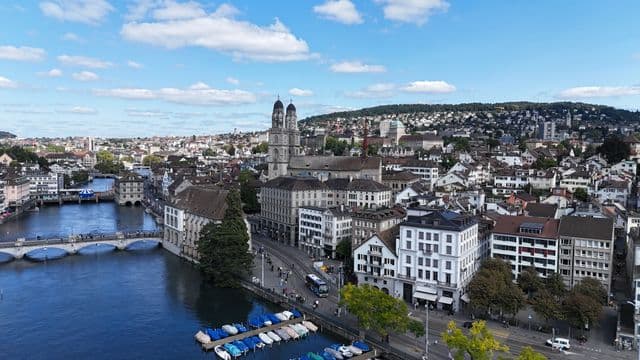
Switzerland is the country geo-flex professionals consider when the priority is functional perfection rather than affordability, and the perfection is real: trains that run to the minute across four language regions, cities that top every livability index, an Alpine backdrop that makes the commute a postcard, and a political culture whose 26-canton federalism produces consensus the way other countries produce controversy. Zurich runs the banking-and-tech engine with Crypto Valley in Zug beside it, Geneva hosts the international-organization world and CERN, Basel carries pharma, Lausanne and Bern round out a small-city constellation where small means complete, and the entire country operates on a premise the prices enforce: quality is not negotiable.
The paperwork story is Europe's most explicitly gated, and honestly told it has two truths. The formal one: Switzerland is Schengen but not EU, EU and EFTA citizens enjoy free movement including self-employment while third-country nationals face an annual quota, held for 2026 at 8,500 permits, 4,500 B residence and 4,000 L short-term, plus a 3,500-permit British carve-out, all employer-driven, no job-seeker or independent application existing, each case clearing a cantonal labour-market test proving no Swiss or EU candidate was available, then federal approval, with managers, specialists and the highly qualified the stated targets. The quiet one: the quotas historically go unused, roughly half remained available entering autumn 2025 and the British allocation ran at a sixth, so the binding constraint is not the ceiling but the sponsorship machinery itself, and the professional with a serious Swiss offer in IT, pharma, engineering or finance clears it routinely. The ski economy hires all the same: EU and EFTA passports staff the winter villages freely, and the short-term L permits inside the quota are how a third-country season happens when an employer wants you badly enough.
Beside the employment lane run the wealth doors: the lump-sum forfait admits third-country nationals by cantonal fiscal interest, taxation on expenditure rather than income, no gainful activity in Switzerland permitted, with practical effective-tax expectations of 750,000 to a million francs in the marquee cantons and the regime abolished in several including Zurich; the over-55 financially independent route asks genuine Swiss ties and substantial means at cantonal discretion; and no golden visa exists because Switzerland does not sell what it can select. The long game: C settlement at ten years generally, five for Americans, Canadians and pre-2004 EU nationals by treaty, with an early track for the well-integrated at B1.
The context is the index's ceiling: a US Level 1 advisory, the world's-safest-country rotation, violent crime at statistical-noise levels, and a lived texture whose honest warnings are the prices, the three-month rental deposit, the paid garbage bags, the Sunday quiet laws, and an integration curve famously polite and famously slow. Switzerland does not court the remote worker; it admits the qualified, the sponsored and the wealthy, and rewards all three with the most reliably excellent daily life this index measures.
Widening the search? If you are looking to expand your job hunt across Western Europe, take a look at Germany →, France →, and Italy →.
Cost of living
Switzerland is Europe's price ceiling and makes no apology: Zurich and Geneva one-bedrooms run 2,200 to 3,500 francs with the three-month deposit locked in a Mietkautionskonto, the rental market interviews you as much as you it, and Basel, Bern and Lausanne soften the numbers only slightly; the true relief valve is the smaller-town tier a reliable train from everything. Salaries match the prices for those inside the system, which is the entire Swiss bargain.
Daily life prices with Swiss discipline: the supermarket duopoly of Migros and Coop against the Aldi-Lidl discount tier, the lunch menu at 20 to 28 francs as the working meal, the 5-to-7-franc coffee as the daily toll, and the paid official garbage bags as the recycling state's enforcement mechanism. The compensations are structural: the Half-Fare card and GA travelcard turn the world's best transit into a rational subscription, the lakes and mountains run free at a standard no resort matches, tap water beats bottled anywhere, and quality means things last. Health insurance is the mandatory line item arrivals forget, 300 to 500 francs monthly for the compulsory tier. The comfortable single Zurich life assembles at 4,500 to 5,500 dollars, the budget floor sits near 3,200 with discount-tier discipline and shared housing, and the honest Swiss addition is the deposit shock: the move-in month costs a quarter's budget, returned years later with interest and inspection.
- One-bedroom rent: 2,200 to 3,500 francs in Zurich and Geneva with the three-month deposit in a blocked account and a rental market that interviews applicants; Basel, Bern and the train-linked towns are the honest relief.
- Insure first, always: the mandatory KVG-LAMal health premium runs 300 to 500 francs monthly, must be arranged within three months of arrival, and is the line item every Swiss budget starts with.
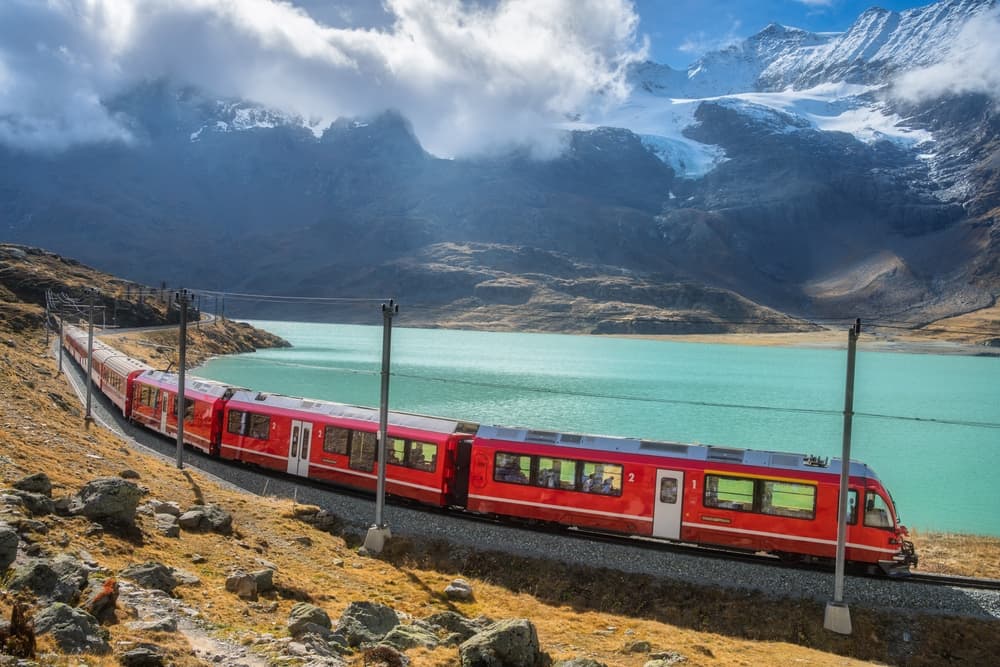
- Ride the subscription logic: the Half-Fare card pays for itself in weeks, the GA travelcard turns the world's best network into a flat rate, and the transit system replaces the car entirely.
- Shop the two-tier grocery reality: Migros and Coop for the Swiss standard, Aldi and Lidl for the budget floor, the 20-to-28-franc lunch menu as the working meal, and the free tier, lakes, trails, tap water, at a quality no price could improve.
Cost-of-living calculator
See how your budget stretches in Switzerland.
Estimates use approximate exchange rates and typical monthly costs. Your actual costs will vary.
Visas & Entry
Switzerland is Schengen but not EU, and the split defines everything: visa-free nationals receive the standard 90 days in any 180 across the zone with EES live and ETIAS expected in 2027, EU and EFTA citizens exercise free movement under the bilateral agreements, employment and self-employment alike, registering within 14 days of arrival with sub-three-month work handled by mere notification, while third-country nationals, Americans, British, everyone else, meet Europe's most explicitly gated system.
The employment lane is quota-capped and employer-driven. For 2026 the Federal Council held the ceilings unchanged: 8,500 third-country permits, 4,500 B residence and 4,000 L short-term, allocated across the 26 cantons, plus a British carve-out of 3,500, 2,100 B and 1,400 L, and 3,500 for EU-based service providers on long assignments. No job-seeker visa or independent application exists; the Swiss employer files, the cantonal labour authority tests that no Swiss or EU candidate was available with documented recruitment, salary and conditions must match regional custom, federal approval follows, and the stated targets are managers, specialists and the highly qualified. The honest nuance: utilization ran about half by autumn 2025 and the British quota at a sixth, so the ceiling rarely binds; the sponsorship machinery is the real gate, and serious offers in IT, pharma, engineering and finance clear it routinely in eight to sixteen weeks end to end. Third-country self-employment exists only as a cantonal economic-interest case, a credible business with demonstrable Swiss benefit, granted rarely. The wealth doors run separately: the lump-sum forfait admits by cantonal fiscal interest on a B permit, taxation on expenditure with no Swiss gainful activity permitted, practical effective-tax expectations of 750,000 to a million francs in the marquee cantons and the regime abolished in several including Zurich; the over-55 financially independent route asks special Swiss ties and substantial means at cantonal discretion. Settlement: the C permit at ten years generally, five for Americans, Canadians and pre-2004 EU and EFTA nationals by treaty, an early five-year track for the well-integrated with oral B1, and citizenship a famously long communal-federal ladder beyond it.
- Read the quota honestly: the ceilings held for 2026 and historically go unused, so the real gate is a Swiss employer willing to run the labour test; the professional with a serious offer in the sponsored sectors clears the system routinely.
- Know the American treaty perk: the C settlement permit arrives at five years for US and Canadian nationals rather than ten, the single most valuable clause in the Swiss file for North Americans.
- File early in the calendar year regardless: cantonal allocations are managed locally, the L pool has tightened by autumn in busy years, and the eight-week recruitment-documentation lead time belongs in every employer's plan.
- Approach the wealth doors with real numbers: the forfait's marquee cantons now expect effective tax in the 750,000-to-million-franc range, Zurich and several others abolished the regime entirely, and the over-55 route wants ties, not just means.
- Register everything on time: the 14-day commune registration, the three-month health-insurance deadline and the deposit account are the arrival stack, and Swiss administration is precise in both directions.
- Count Schengen days like money until sponsored: the 90-in-180 window spans the zone, EES logs it biometrically, and Switzerland's gray zone for visiting laptops is the standard European one, tolerated short and formalized never.
| Visa or permit | What it covers |
|---|---|
| Schengen entry | Ninety days in any 180 for visa-free nationals with EES live and ETIAS expected 2027; the scouting season, in a country whose long-stay doors are the continent's most explicitly gated. |
| EU and EFTA citizens | Free movement under the bilateral agreements: employment and self-employment without quotas or tests, registration within 14 days, and sub-three-month work by simple notification eight days ahead. |
| The third-country quota, 2026 | 8,500 permits held unchanged, 4,500 B and 4,000 L, cantonally allocated with a 3,500 British carve-out; employer-driven only, and historically under-used, the ceiling rarely the binding constraint. |
| The approval machinery | The cantonal labour-market test demands documented proof no Swiss or EU candidate was available, salary at regional custom, then federal SEM approval; eight to sixteen weeks end to end for the serious file, with managers and specialists the stated targets. |
| Third-country self-employment | No standard route: a cantonal economic-interest case only, a credible business with demonstrable Swiss benefit, granted rarely; EU and EFTA citizens self-employ freely, and the asymmetry is the system's sharpest edge. |
| The wealth doors | The lump-sum forfait admits by cantonal fiscal interest, expenditure-based taxation with Swiss work prohibited, at practical effective-tax expectations of 750,000 to a million francs in marquee cantons; the over-55 route asks genuine ties and means; no golden visa exists. |
| Settlement | The C permit at ten years generally, five for Americans, Canadians and pre-2004 EU-EFTA nationals by treaty, with a B1 early track; full labour mobility, ordinary cantonal taxation and the end of employer dependency. |
Good to know: No DNV; Schengen not EU; third-country quota 2026 held: 8,500 (4,500 B + 4,000 L) + UK carve-out 3,500; historically UNDER-USED (real gate = employer-driven labour test, no independent application); EU/EFTA free movement incl. self-employment; third-country self-employment = rare cantonal economic-interest case; forfait ~CHF 750k-1M effective practice (abolished in Zurich etc., no Swiss work); over-55 route; C permit 10 yrs (5 for US/CA by treaty).
EnRoute Jobs AI tool
Route Planner
Map visa routes, timelines, and relocation costs for your next destination.
Work & Legal
Swiss professional culture is precision as courtesy: meetings start to the minute, preparation is assumed, commitments made are commitments kept, and the handshake carries contract weight. The language map is professional infrastructure, German-speaking Zurich-Basel-Bern running on Swiss German socially and High German formally, French Geneva-Lausanne on its own register, Ticino in Italian, and English serving as the neutral professional layer across the international economy, banking, pharma, tech, the Geneva institutions. Hierarchy is flatter than Germany's, consensus is the decision religion, and the famous reserve is a pace rather than a wall: Swiss professional relationships build slowly and then hold for decades.
The legal lines are the gated system's: foreign-client remote work during Schengen stays sits in the standard unpoliced gray zone, any Swiss work requires the permit machinery, and the formalized resident's options split by passport, EU-EFTA citizens registering self-employment freely while third-country residents need the rare cantonal case or the C permit's full mobility. The operational texture rewards the organized: GMT+1 catches all of Europe and US East by afternoon, the transit system makes the entire plateau one labor market, the Sunday quiet laws genuinely prohibit the noisy, no laundry, no drilling, lowered voices, and the August 1 national day, the February sport weeks and the Christmas close are the calendar's fixed furniture. Salaries are the world's highest for those inside the system, the 13th-month convention is standard, and the pension pillars, mandatory second, voluntary third, are the benefits conversation worth having in week one.
- Treat punctuality as the language it is: to-the-minute arrival is baseline courtesy, preparation is assumed, and the kept commitment is the entire Swiss professional reputation system.
- Work the language map deliberately: High German for formal Zurich business, French in the Romandie, English as the international economy's neutral layer, and ten words of the local register anywhere as the respect signal.
- Know your formalization lane by passport: EU-EFTA residents self-employ freely, third-country residents need the rare cantonal case or the C permit, and the visiting laptop stays in the standard tolerated-short gray zone.
- Live the calendar's quiet laws: Sundays genuinely prohibit noise, the evening quiet hours are enforced by neighbors before authorities, and the culture reads compliance as citizenship; the pension-pillar conversation belongs in week one.
Good to know: Precision-as-courtesy culture; language map = infrastructure (High German/French/Italian + English neutral layer); EU-EFTA self-employ freely, third-country = rare cantonal case or C permit; Sunday quiet laws real; 13th month standard; pension pillars conversation week one; GMT+1.
Taxes
Swiss tax is federalism priced: modest federal rates atop cantonal and communal layers that vary enough to make the address the biggest tax decision in the country, with a wealth tax on the balance sheet, no capital gains tax on private portfolios, and the forfait as the wealth door's bespoke arithmetic.
| What applies | The rule in 2026 |
|---|---|
| The residency tests | Residency attaches through settling with intent, 30 days with gainful activity, or 90 without; the Schengen-season visitor stays clear, and the permit-holding resident is in the cantonal system by design. |
| The three-layer schedule | Federal tax tops at 11.5 percent, then cantonal and communal layers decide the real bill: Zug, Schwyz and Nidwalden land high earners in the low-to-mid twenties combined, Geneva and Vaud reach the high thirties and forties, Zurich runs the middle; the address is the biggest tax decision in Switzerland. |
| Tax at source and the ordinary return | B-permit employees are taxed at source through payroll, with the ordinary-assessment switch mandatory above roughly 120,000 francs and available below it; the C permit and homeownership flip everyone to the ordinary return. |
| The wealth tax and the missing CGT | Cantonal wealth tax runs tenths of a percent on net assets annually, and the famous compensation stands: no capital gains tax on private securities portfolios, the feature that has anchored Swiss private banking for a century, professional-trader status the caveat. |
| The forfait, lump-sum taxation | Expenditure-based taxation for foreign nationals without Swiss gainful activity: negotiated cantonally with statutory minimum bases and practical effective expectations of 750,000 to a million francs in marquee cantons, abolished in Zurich and several others, and available only on B permits. |
| The self-employed and pillar layer | Registered independents ride the cantonal schedule with AHV social contributions near ten percent, the mandatory second pillar shapes employment packages, and the third-pillar 3a deduction is the standard resident's annual move. |
| Americans specifically | A US-Switzerland treaty stands with a totalization agreement sparing double social contributions; the missing Swiss CGT does not silence US capital-gains taxation, the wealth tax needs foreign-tax-credit care, and Swiss banks' FATCA caution makes account opening the arrival's real chore. |
| The home-country half | Swiss residency does not end the prior jurisdiction's claims: exits, treaty tie-breakers and the canton choice all reward planning before arrival, and the canton-shopping decision is worth professional hands because it is worth actual percentage points. |
Verified 21 August 2026: the settling-30-90-day residency doors, the federal 11.5 percent ceiling with cantonal variation from Zug's low twenties to Geneva's forties, tax-at-source mechanics with the 120,000-franc switch, the cantonal wealth tax beside the absent private-portfolio CGT, the forfait's practical thresholds and cantonal abolitions, VAT at 8.1 percent, and the standing US treaty with totalization. General information, not tax advice.
Good to know: Federal ≤11.5% + cantonal/communal decide (Zug low-20s vs Geneva ~40s; the address IS the tax plan); wealth tax cantonal; NO CGT on private portfolios (the anchor feature); B-permit tax-at-source with CHF 120k ordinary switch; forfait CHF 750k-1M practice; AHV ~10% self-employed; pillar 3a annual move; US treaty + totalization; VAT 8.1%.
Healthcare
Swiss healthcare pairs world-class delivery with the world's most explicit funding model: insurance is mandatory and private, every resident must hold KVG-LAMal basic coverage within three months of arrival, premiums run 300 to 500 francs monthly by canton and deductible choice, and the system that money buys is superb, no meaningful queues, direct specialist access under most models, five university hospitals at global rank and English workable throughout the medical economy. Visitors carry travel insurance because Swiss care bills at Swiss prices, a GP consultation running 130 to 200 francs.
The practical texture: pharmacies are professional and everywhere, dental sits outside basic insurance at prices that make the border-town dentist a genuine Swiss tradition, and the health risks are Alpine and self-selected, mountain sport as the actual national injury statistic, avalanche awareness in season, altitude respect, and the Hochnebel grey of the plateau winter asking the lamp-or-mountain answer, the sun sitting above the fog line all along. Emergencies answer at 144 for ambulance with 112 universal, the Rega air-rescue patronage is the mountain country's famous subscription, and the deepest feature is the system's honesty: everyone pays, visibly, and everyone gets the same excellent machine.
- Arrange KVG-LAMal within the three-month window: enrollment is mandatory and retroactive-billed if late, the deductible choice is the premium lever, and the comparison portals make the annual switch a Swiss household ritual.
- Visitors, insure for Swiss prices: the 130-to-200-franc GP consultation and hospital tariffs to match make travel insurance non-negotiable; the care behind the bill is world-class.
- Budget dental across the border or privately: basic insurance excludes it, Swiss dental prices are the continent's highest, and the border-town appointment is a genuine national tradition.
- Respect the Alpine syllabus: mountain sport is the actual injury statistic, avalanche bulletins and guide culture are the answer in season, and the Rega patronage is the famous 40-franc subscription every resident quietly holds.
| Hospital | What to know |
|---|---|
| Universitätsspital Zürich (USZ) | The flagship university hospital of the largest city, global-rank tertiary depth across the specialties. |
| Inselspital, Bern | The capital's university hospital and national referral anchor, carrying the plateau's serious medicine. |
| Hôpitaux Universitaires de Genève (HUG) | The Romandie's flagship serving the international-organization city, French-language academic depth at world rank. |
| CHUV, Lausanne | The Vaud university hospital, the Léman arc's second academic anchor with full tertiary range. |
| Universitätsspital Basel | The pharma capital's university hospital, research-dense and carrying the tri-border region. |
| The access architecture | Mandatory KVG-LAMal basic insurance within three months of residence at 300 to 500 francs monthly, deductible tiers as the premium lever, travel insurance for visitors at Swiss billing, and Rega patronage as the Alpine subscription. |
Hospital list compiled 21 August 2026 and not yet confirmed against each facility directly. Treat as indicative and verify before relying on it.
Good to know: Mandatory private KVG-LAMal within 3 months (CHF 300-500/mo, deductible = lever); no meaningful queues, direct specialist access; 5 university hospitals world-rank; GP CHF 130-200; dental excluded (border-dentist tradition); Alpine sport = the injury statistic; Rega patronage; 144/112.
Safety
Switzerland sits at this index's ceiling and the file is short by nature. The official half: the US advisory holds Level 1, Exercise Normal Precautions, through its recent refreshes, Switzerland rotates near the top of every global safety ranking, and the domestic services describe the terrorist threat as heightened in the European pattern of the era, lone actors the named concern, managed by a security apparatus that communicates rarely because it needs to rarely. The street half: violent crime runs at statistical-noise levels, solo travelers of every description report complete comfort at all hours in every city, transit is safe around the clock, and the visitor's entire practical register is petty, pickpockets working the Geneva and Zurich stations and the tourist funiculars in season, luggage lifted from trains, and the occasional scam at the luxury margins. Zurich's Langstrasse quarter carries visible street life and the city's pragmatic harm-reduction legacy without being a danger zone; Geneva's station perimeter asks ordinary evening judgment; and that is genuinely the list.
The real Swiss hazards are Alpine and self-selected: mountain sport is the national injury statistic, avalanche season demands the bulletin-and-guide discipline, hiking trails are graded honestly and the gradings mean it, weather turns fast above the treeline, and the lakes' cold-water depths deserve the respect locals give them. Demonstrations are rare, small and orderly; strikes are nearly mythical; natural-hazard management, rockfall, flood, snow, is a civil-engineering religion. Emergencies answer at 112 universally, 117 police, 144 ambulance, 1414 for Rega air rescue, and the honest summary is the one the score states: the most reliably safe country in this index, whose only real dangers are the ones you climb toward voluntarily.
- Read the Level 1 as the ceiling it is: the world's-safest rotation, violent crime at statistical noise, and a domestic threat posture managed so quietly that the advisory file's entire practical content is pickpockets.
- Run the station discipline: Geneva's and Zurich's station perimeters and the tourist funiculars carry the pickpocket register in season, luggage stays watched on trains, and that is the entire urban syllabus.
- Take the Alpine hazards as the real file: mountain sport is the national injury statistic, the avalanche bulletin and guide culture are the answer in season, trail gradings mean what they say, and the weather above the treeline turns in minutes.
- Respect the cold water: the lakes' beauty hides depth-cold that locals treat seriously, the river-swimming culture of Bern and Basel has rules worth learning, and the buoy-bag is not decoration.
- Note Langstrasse for what it is: visible street life and the harm-reduction legacy in a mixed, lively quarter rather than a danger zone; ordinary evening judgment covers it and every equivalent.
- Know the number architecture: 112 universal, 117 police, 144 ambulance, 1414 Rega air rescue with its famous patronage, and STEP enrollment in five minutes for a country that will almost certainly never need to call you.
Official travel advisories
| Government | Current position |
|---|---|
| United States | Level 1, Exercise Normal Precautions, through its recent refreshes: the lowest tier, with the standard petty-theft notes for stations and tourist corridors as the entire practical content.travel.state.gov → |
| Fedpol and the domestic layer | The federal police describe the terrorist threat as heightened in the era's European pattern, lone actors the named concern; the apparatus communicates rarely and disrupts quietly, and the posture has held for years. |
| Canada | Normal security precautions: pickpocketing in the station-and-tourist corridors, luggage theft on trains, and the Alpine-conditions register as the practical file.travel.gc.ca → |
| Australia | Normal safety precautions with the mountain-hazard syllabus carried honestly: avalanche season, fast-turning weather, and the graded-trail discipline that Swiss rescue statistics reward.smartraveller.gov.au → |
| US Embassy Bern | Enroll in STEP; the embassy's rare notices track the demonstration-and-event register. Sulgeneckstrasse 19, Bern; +41 31 357 70 11.ch.usembassy.gov → |
Advisory positions verified 21 August 2026: the US Level 1 through its recent refreshes, the heightened-but-quiet domestic threat posture, the station-corridor petty-crime register, and the Alpine-hazard file as the genuine practical syllabus. Open the sources before travelling.
Good to know: US L1 (the ceiling); fedpol heightened-but-quiet posture (lone actors, era pattern); street register = station pickpockets, full stop; real hazards = Alpine and self-selected (avalanche bulletins, graded trails, cold water); Langstrasse = lively not dangerous; 112/117/144/1414 Rega.
Climate
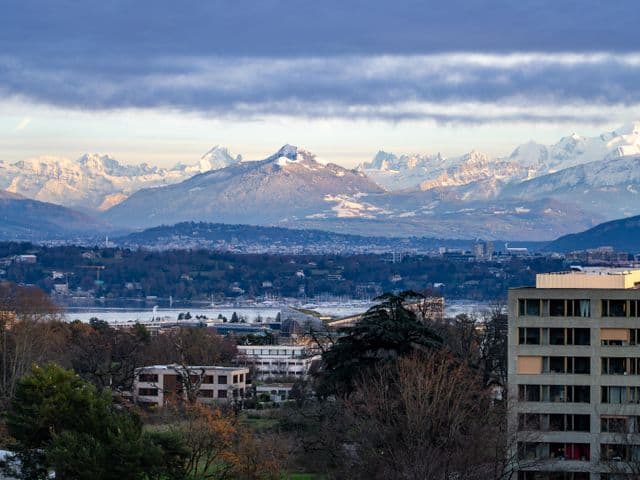
Switzerland runs two climates stacked vertically: the Mittelland plateau where the cities live, warm sunny summers at 18 to 25 with lake swimming as civic culture, and winters whose defining feature is the Hochnebel, the high-fog inversion that socks Zurich, Bern and Basel under weeks of grey from November through February while the Alps above the cloud line sit in brilliant sun, a fact that turns the winter train uphill into a mood prescription; and the Alpine tier itself, running its own calendar of December-to-March ski season, June-to-September hiking glory, and shoulder-week closures between them. Geneva softens under lake effect, Ticino runs a genuine southern warmth with palm-lined Lugano as the national sun porch, and the föhn wind rewrites any forecast it touches. The working year: May through September is the prize, long clear days, the lakes open, the trails graded and glorious; April and October are honest shoulders with mountain-resort closures; and the plateau winter is the productivity season answered by the lamp, the sauna habit, or the twenty-franc train ride above the fog. The kit is layered and quality-bought once, the weather apps are a national pastime because the mountains make forecasting local, and the single most Swiss climate fact remains the best one: whatever the sky is doing where you are, somewhere a reachable train ride away it is doing the opposite.
| Season | What to expect |
|---|---|
| Summer, June to September | The prize: 18-to-25 plateau days, lake swimming as civic culture, the Alpine hiking season at full glory, and evenings long enough to earn the terrace economy. |
| Winter, December to March | The stacked season: Hochnebel grey on the plateau for weeks while the Alps above the fog line run brilliant ski weather; the uphill train is the mood prescription, and the sport season is the national calendar. |
| The shoulders, April-May and October-November | Clear working weather between the seasons with mountain-resort closure weeks; the plateau at its quiet best, and the föhn rewriting forecasts on its own schedule. |
| The vertical map | Geneva lake-softened, Ticino the palm-lined southern sun porch, and every altitude its own climate; the national weather fact is that somewhere reachable, it is always different. |
Good to know: May-September is the prize; the Hochnebel plateau grey has an Alpine escape hatch one train uphill; Ticino is the sun porch; the vertical map means the weather is always different somewhere reachable.
Culture & Customs
Swiss culture is precision practiced as ethics: punctuality as respect, rules kept because keeping them is the social contract, quality assumed because anything less would be impolite, and a four-language federalism that manages diversity through subsidiarity rather than slogans, each canton its own small republic, each commune deciding what Bern never touches, and direct democracy voting four times a year on everything from tram lines to treaties. The reserve is real and misread: Swiss social life runs on slow-building, decades-holding friendships, the neighbor greeting is mandatory while the neighbor intimacy takes years, and the integration curve is famously polite and famously long, shortened only by the clubs, the Verein culture of hiking, music, sport and volunteer fire brigades where Swiss belonging actually happens.
The codes are practical: greet with Grüezi, Bonjour or Buongiorno by region, shake hands, keep the quiet hours and the Sunday stillness, sort the recycling with the seriousness the paid bags enforce, and never mistake modesty for lack of pride, the country simply considers boasting a design flaw. The calendar runs from Fasnacht's carnival anarchy through the August 1 national day's hilltop fires, the autumn Alpabzug cow descents in flowered crowns, and a Christmas market season the cold makes cozy. The table is fondue and raclette in their winter liturgy, the apéro as the social instrument, and a chocolate-and-cheese standard treated as national infrastructure. The professional who arrives on time, joins one Verein, learns the regional greeting and lets the friendship clock run at Swiss speed is granted the durable version: a belonging that took years and then never leaves.
- Practice punctuality as ethics: to-the-minute is the social contract, the train timetable is the national metaphor, and lateness reads as disrespect rather than style.
- Join a Verein to actually arrive: the club culture, hiking, music, sport, fire brigade, is where Swiss belonging happens, and one membership outperforms years of polite adjacency.
- Keep the quiet codes: Sunday stillness and evening hours are real, the recycling is sorted with paid-bag seriousness, and the neighbor greeting is mandatory even when the intimacy takes years.
- Greet by region: Grüezi, Bonjour, Buongiorno as the map dictates, High German for formal business in the east, and ten local words anywhere as the respect signal the reserve rewards.
- Let the friendship clock run at Swiss speed: relationships build slowly and hold for decades, the apéro invitation is the genuine milestone, and patience is the entire integration strategy.
- Ride the calendar: Fasnacht's anarchy, the August 1 hilltop fires, the flowered Alpabzug descents and the fondue winter liturgy; the traditions are participatory, and joining them is welcome.