.png)
About Geneva
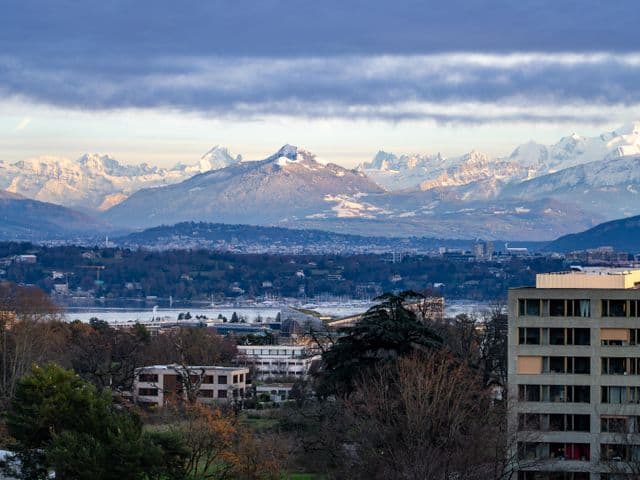
Geneva is the city where the world goes to agree on things. The United Nations, the International Committee of the Red Cross, the World Trade Organization, the World Health Organization, and over 400 other international organizations have their headquarters here, producing a professional culture that is uniquely international, multilateral, and institutionally serious. The city itself is small (200,000 people in the city proper), expensive (one of the world''s most expensive cities by most measures), and surrounded by the Alps and the Jura mountains in a lake setting that makes the institutional character less oppressive than it might otherwise feel.
For remote workers, Geneva''s appeal is specific: those whose work intersects with international institutions, NGO networks, or the humanitarian and diplomatic sectors will find professional density here that exists nowhere else. One-bedroom furnished apartments in the Plainpalais or Carouge neighborhoods run 2,000 to 3,200 CHF per month (approximately 2,200 to 3,500 USD in 2026), placing it firmly in the premium tier. The Swiss franc has been one of the world''s strongest currencies for decades; costs are not expected to recede.
The Old Town (Vieille Ville), the cathedral where Calvin preached, and the Jet d''Eau, the 140-meter water jet in the lake that the city adopted as its primary visual symbol, are the heritage elements. The restaurants around the Rive and Carouge neighborhoods are where the city''s genuine food culture operates.
Cost of living
Cost-of-living calculator
See how your budget stretches in Geneva.
Estimates use approximate exchange rates and typical monthly costs. Your actual costs will vary.
- Coffee
- $6
- Cheap meal
- $22
- Coworking (day)
- $45
- Mid-range meal for 2
- $95
- Rent (1BR, center)
- $2,400
- Transit (monthly)
- $80
- Internet (monthly)
- $60
- Rent (1BR, outside)
- $1,800
EnRoute Jobs AI tool
Real Value Calculator
See what a salary actually leaves you in the country you want to live in.
Neighborhoods
Old Town (Vieille Ville)
Culture, history, tourism
The hilltop historic centre; the St Pierre Cathedral (where Calvin preached), cobblestone squares, and the highest concentration of Geneva's heritage buildings.
Eaux-Vives & Champel
Diplomats, wealthy expats, professionals
The elegant residential right bank neighbourhoods popular with international professionals and diplomats.
Carouge
Creatives, younger professionals, café culture
The former Sardinian town within Geneva; an independent character, bohemian market, and Genevan equivalent of a Latin Quarter.
Nations & International Organisations District
International civil servants, diplomats
The Palais des Nations area north of the centre; where most UN staff and international civil servants live and work.
Culture
Geneva is the world's most international city by one measure: the ratio of international organisations per capita is unmatched (UN, WHO, ICRC, WTO, WIPO all headquartered here). This gives it a uniquely cosmopolitan, multilingual, and diplomatic character that differs completely from the Swiss-German world of Zurich. French is the dominant language, the approach is more southern European in pace and style, and the combination of lake, mountains, watchmaking heritage, and humanitarian diplomacy gives it an identity that is genuinely unlike anywhere else.
Climate & best time to visit
Temperate continental with lake moderation: warm summers (July 20–26°C, with occasional heatwaves) and cold winters (January −2 to 4°C). The Lac Léman provides a micro-climate advantage. Spring (April–May) and early autumn (September) are Geneva at its most pleasant.
Best months: April, May, September, October
Tips & safety
- •A Geneva transport card (passepartout) is included with most hotel stays and covers all public transport; it is not always mentioned at check-in and can be specifically requested
- •Grocery costs in Geneva are among the highest in Europe; the French border is 10 minutes by car and French supermarkets in St. Julien and Ferney-Voltaire run significantly cheaper
- •Publibike shared cycling is affordable and the flat lakeside paths make cycling practical between the city's main areas and neighborhoods
- •Banking, UN, and international organization offices mean Geneva has an unusually high density of international professionals; the network here is genuinely multinational
- •Food costs at restaurants are among the highest in Europe; the difference between lunch menus (plats du jour) and a la carte pricing is substantial, typically halving the bill
- •Pickpocketing targets tourist areas; keep bags secure around the Jet d'Eau waterfront and at Cornavin station
- •Medical consultation costs in Switzerland are high even with insurance; ensure travel coverage is in place before any stay
- •Tipping at restaurants is round-up-if-you-want rather than expected; service is included in bills and percentage tips are not the norm here
- •Tap water in Geneva is clean and excellent quality; bottled water is unnecessary
- •Emergency numbers: 117 police, 144 ambulance, 118 fire
Areas to avoid: Geneva has no genuinely dangerous neighborhoods and is consistently ranked among the safest cities in Europe, The Paquis area near Gare Cornavin has a red-light district and some low-level drug activity; not dangerous but warrants normal night awareness, The Jonction neighborhood has occasional petty crime incidents by Swiss standards, which remain safer than most European capitals