.png)
About Seychelles
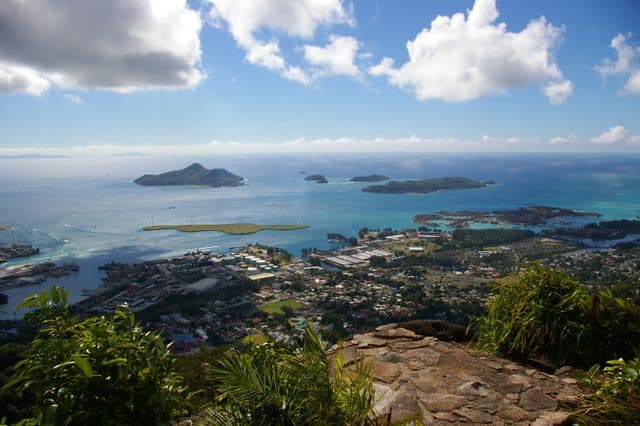
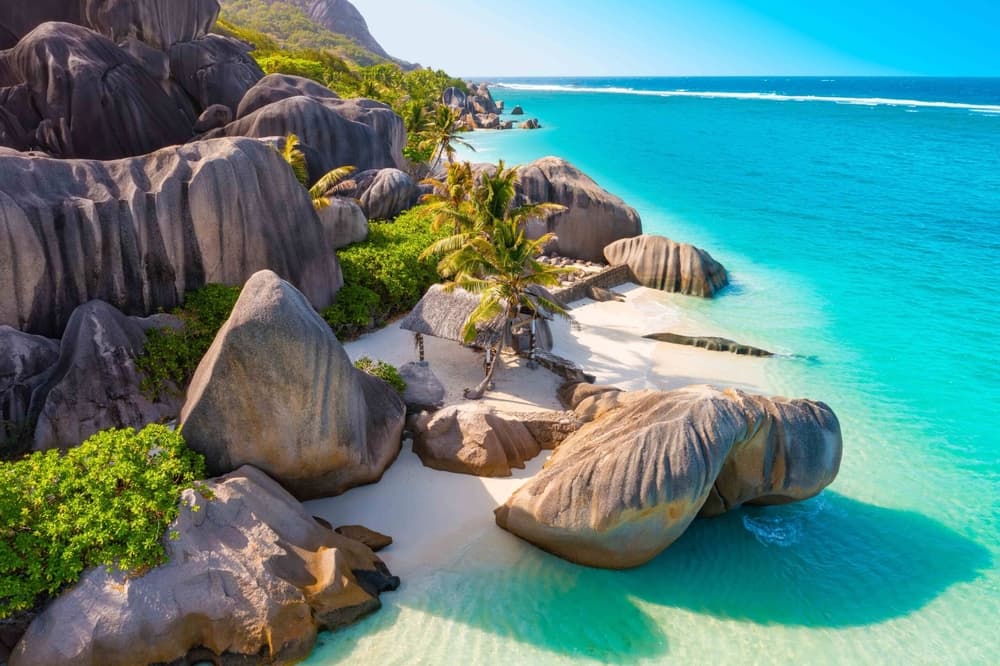
Seychelles occupies a specific tier in the geo-flexible landscape: among the world's most beautiful countries by any objective measure, priced to match, and quietly equipped with one of the most accessible legal frameworks anywhere. The archipelago's working geography is three islands. Mahé holds the capital Victoria, the airport, the hospital, Beau Vallon's long beach and most of the practical economy; Praslin adds the Vallée de Mai's prehistoric palm forest and Anse Lazio's postcard; La Digue runs car-free on bicycle sand tracks past Anse Source d'Argent, the most photographed beach on earth, and hosts the slow-living end of the remote community. The dive centers hire instructors each season and the charter fleet takes crew, the two working lanes that come with the scenery. Granite boulders, giant tortoises, water in impossible blues: the scenery is the product and it never underdelivers.
The legal wrapper is friendlier than almost anyone knows. Entry is visa-free for every nationality on the planet, a visitor's permit stamped on arrival behind a simple digital travel authorisation. Above it, the Workcation Retreat Program has run since April 2021 through the official electronic border system: up to twelve months for employed remote workers, business owners and freelancers, a single 45-euro fee covering both the workcation permit and the health authorisation, no published income threshold, spouses and dependents able to join, and processing that has run as fast as a single day. The fiscal architecture completes it, a genuinely territorial system where foreign-source income stays untaxed regardless of day counts, program participants add customs-free entry for their work equipment, and the full package makes Seychelles one of the cleanest legal bases in this index for anyone whose income lives abroad.
The honest ledger has three entries this page refuses to bury. Cost: the islands import nearly everything, and comfortable single months start around 2,700 dollars with rent the dominant line. Medicine: the US advisory's internal Level 2 for Praslin, La Digue and the outer islands is entirely about hospitals, the smaller islands cannot treat common traumas and Mahé is the archipelago's single serious facility before evacuation to Mauritius, Réunion or South Africa takes over, which makes evacuation-inclusive insurance the non-negotiable line item. And the ocean: currents, undertows and unswimmable southern coasts claim more visitors than crime ever has in a country where violent crime against foreigners is genuinely rare. Add the early-2026 chikungunya season and the picture is complete: the closest thing to paradise in this catalog, for those who arrive solvent, insured and ocean-literate.
Widening the search? If you are looking to expand your job hunt across Africa, take a look at Kenya →, South Africa →, and Morocco →.
Cost of living
Seychelles is the premium entry in this index's Africa section and makes no apology for it: the islands import nearly everything, the tourism economy sets the price floor, and the budget arithmetic starts from rent. One-bedrooms run roughly 650 to 950 euros outside Victoria's center and above it within, Mahé's Beau Vallon and the east-coast corridors carrying the practical stock, Praslin and La Digue pricing their scarcity, and the Workcation program's partner accommodations offering negotiated long-stay rates that beat the listings; the monthly negotiation directly with guesthouse owners is the island housing market's real mechanism.
Daily life splits by sourcing: the fish-and-produce economy, the Victoria market, takeaway creole plates at 5 to 8 dollars, the fisherman's catch, costs honestly, while anything imported, cheese, wine, electronics, gym memberships, prices at island-logistics rates, and restaurant dinners run 25 to 50 dollars in the tourist tier. Buses cover Mahé and Praslin for coins on the SPTC network, car rental runs 35 to 50 dollars daily where needed, La Digue runs on bicycles by design, and the inter-island layer, Cat Cocos ferries, the fifteen-minute Praslin hop, is a real monthly line for two-island lives. Cards work across the tourist economy with rupees for markets and buses, USD and EUR accepted widely, and the comfortable single month lands at 2,400 to 3,000 dollars with the budget-conscious floor near 1,600 for those who live local, cook fish and ride the bus.
- One-bedroom rent: 650 to 950 euros on Mahé outside the center and up from there, Praslin and La Digue pricing scarcity; the direct monthly negotiation with guesthouse owners and the program's partner rates beat every listing site.
- Eat local or pay island rates: creole takeaway at 5 to 8 dollars and the Victoria fish market against 25-to-50-dollar tourist-tier dinners; the sourcing split is the entire food budget.
- Ride the SPTC bus and the bicycle: Mahé and Praslin buses cost coins, La Digue runs car-free by design, and the ferry line between islands is the honest recurring transport cost.
- Budget 2,400 to 3,000 dollars for comfort: the islands import their price floor, rent dominates, and the 1,600-dollar local-living floor exists for those who cook fish, ride buses and negotiate monthly.
Cost-of-living calculator
See how your budget stretches in Seychelles.
Estimates use approximate exchange rates and typical monthly costs. Your actual costs will vary.
Visas & Entry
Seychelles operates the world's most open border: citizens of every nation arrive visa-free, receiving a visitor's permit on arrival, initially up to three months where onward tickets, accommodation and funds are shown, extendable in-country, behind the simple digital Travel Authorization every traveler completes online before departure for a 10-euro standard or 30-euro premium fee.
The Workcation Retreat Program, launched April 2021 and run through the official Seychelles Electronic Border System, converts that openness into a working year. The shape: up to twelve months of authorized remote work for foreign employers, own foreign businesses or foreign clients, open to all nationalities, with extensions negotiable in-country beyond the first year. The financial test is the program's signature: no income threshold is published anywhere, and the file instead shows proof of the work itself, an employer letter with remote-work authorization for employees, registration documents and statements for business owners, contracts or certificates of good standing for freelancers, alongside bank statements demonstrating sufficient funds, confirmed accommodation, an onward ticket, medical and travel insurance, and a passport valid six months. The money: a one-time 45-euro fee covering both the Visitors Workcation Permit and the Health Travel Authorization. The mechanics: apply online through the official portal, ideally 60 days before travel though the system has accommodated filings as late as shortly after arrival, receive the amber-coded THA document carrying the program logo, and present it at the border; approvals have run as fast as one day. The restrictions are the standard pair, no Seychellois employment and no local clients, with the Gainful Occupation Permit existing for genuine local work. The program's wrapper includes negotiated long-stay accommodation rates with partner properties and customs-duty exemption on work equipment, and beyond it the settlement menu is classic: GOP for employment, residence permits on five-plus years, and the permanent routes for those who convert an island year into an island life.
- File through the official portal only: the Seychelles Electronic Border System runs both the travel authorisation and the Workcation program, the 45-euro fee is the entire government cost, and third-party sites charging multiples add nothing but margin.
- Prove the work, not a salary: no income floor exists, so the file's strength is documentary coherence, the employer letter naming remote authorization, the business registration matching the statements, the freelance contracts current; over-documenting is free.
- Solve insurance before documents: medical and travel cover spanning the stay is required, evacuation-inclusive cover is what the archipelago's hospital geography actually demands, and the same policy satisfies both.
- Confirm current status at filing: island programs move faster than European ones in both directions, the official portal's live page outranks every guide including this one, and a two-minute check before booking beats any surprise.
- Bring the family on the same file: spouses and dependents join the application, the partner-accommodation rates scale to families, and the twelve-month term makes Seychelles a genuine family-year play for those who can price it.
- Use the visitor's permit as the scout: every nationality lands visa-free for up to three months, the Workcation can follow from knowledge rather than brochures, and the system has accommodated in-country conversions; the archipelago rewards the deliberate.
| Visa or permit | What it covers |
|---|---|
| Visa-free entry, every nationality | The world's most open border: all passports arrive visa-free with a visitor's permit up to three months where funds, accommodation and onward travel are shown, extendable in-country; the digital Travel Authorization files online before departure at 10 euros standard, 30 premium. |
| Workcation Retreat Program | Since April 2021 on the official electronic border system: up to twelve months of authorized remote work for foreign employers, businesses or clients, all nationalities, extensions negotiable; the amber THA document with the program logo is the credential the border stamps. |
| No income floor | No threshold is published anywhere: the file proves the work, employer letter with remote authorization, business registration, or freelance contracts, plus statements showing sufficient funds; among global programs only a handful match this openness, and none in a setting like this. |
| The 45-euro all-in fee | One payment covers both the Visitors Workcation Permit and the Health Travel Authorization, making this the cheapest twelve-month program in this index; approvals have landed in as little as a day. |
| The paperwork set | Passport valid six months with blank pages, the employment or business proof, statements, confirmed accommodation, onward ticket, and medical-plus-travel insurance; filing 60 days ahead is the official rhythm and the system has forgiven shorter runways. |
| Family and the perks | Spouses and dependent children can join the application, partner properties offer negotiated long-stay rates, and work equipment enters customs-free under the program; the package was designed by a tourism board that understood its customer. |
| Beyond the year | Extensions negotiable in-country, the Gainful Occupation Permit for genuine local employment, and residence routes on five-plus years of legal stay; the Workcation is a long visit by design with the classic menu behind it. |
Good to know: Live since April 2021 on the official e-border system: up to 12 months, ALL nationalities (world's only fully visa-free border), NO income floor, €45 covers permit + health authorisation, approvals as fast as a day; no local work; family joins; equipment duty-free; one aggregator's closure claim rejected against the live official page.
EnRoute Jobs AI tool
Route Planner
Map visa routes, timelines, and relocation costs for your next destination.
Work & Legal
Seychellois work culture runs on island courtesy and Kreol warmth: greetings genuinely exchanged, business conducted at a pace the ocean sets, English and French both official alongside Kreol Seselwa, and the professional register small-country personal, the person you email today is the cousin of the person who rents you the flat. The remote infrastructure is honest-good rather than elite: fiber reaches the Mahé and Praslin population centers with a second submarine cable landed in recent years improving redundancy, 4G covers the inhabited islands, dedicated coworking remains thin with the community gathering instead at laptop-friendly hotels and coliving hubs, La Digue's meetup-hosting properties among them, and the power grid asks the standard island respect of a charged laptop and a data fallback.
The legal lines are the program's: the Workcation authorizes foreign-source work explicitly and prohibits Seychellois employment and clients, with the Gainful Occupation Permit as the sponsored route for genuine local work. The time zone, UTC+4, is the honest trade: Europe sits two to three hours behind, a comfortable overlap that makes the archipelago a genuine EU-client base, while the US East Coast runs eight to nine behind, pushing American-client work into evenings; the Asia-Pacific morning fits neatly. The operational counsel is island-shaped: the ferry schedule is a planning input, Festival Kreol in October is the cultural anchor worth building around, the environmental law is strict and sincerely enforced, and the professional who matches the pace rather than importing one integrates at the speed of a second greeting.
- The program draws the clean line: foreign employers, businesses and clients only, with the Gainful Occupation Permit as the route for genuine Seychellois work; the Workcation's explicit authorization is its entire value, kept by keeping income offshore.
- Trust the fiber, keep the fallback: Mahé and Praslin centers carry real broadband with cable redundancy improved in recent years, coworking is thin and the hotel-hub culture fills it, and the charged-laptop-plus-4G doctrine covers the island edge cases.
- Work the UTC+4 geometry honestly: Europe's two-to-three-hour gap makes EU clients comfortable, Asia-Pacific mornings fit, and US East Coast work runs into the evening; the archipelago is a Europe-and-Asia base wearing a postcard.
- Respect the environmental law as law: marine parks charge and enforce, coco de mer and turtles are protected absolutely, drones over 200 grams register, and the strictness is the product; the professional who treats it as such is welcome everywhere.
Good to know: Workcation authorizes foreign-source work; GOP for local employment; fiber good on Mahé/Praslin centers with thin coworking (hotel-hub culture instead); UTC+4 = EU-comfortable, US-East-evening; environmental law strict and enforced.
Taxes
Seychelles runs a genuinely territorial system, and the distinction matters: foreign-source income goes untaxed not because of a visa perk but because of the code's architecture, so the day count that flips worldwide taxation elsewhere never does here, and the Workcation adds exemptions on top.
| What applies | The rule in 2026 |
|---|---|
| The territorial principle | Seychelles taxes Seychelles-source income only: foreign salaries, foreign-client payments, dividends and remote earnings sit outside the net for everyone, resident or not, which places the archipelago in the small club, with Panama and the Philippines' alien rule, where the residency clock never widens the tax base. |
| What 183 days actually does | Presence past 183 days makes formal tax residency, which changes the treatment of Seychelles-source income and nothing else; the Workcation year, spent entirely on foreign income, passes the line with no fiscal consequence, the fact most guides state backwards. |
| The program's additions | Workcation participants take the territorial baseline plus explicit exemption from local income and business tax on their foreign earnings and customs-duty exemption on imported work equipment; the laptop, the cameras and the monitors land free. |
| Local rates, for context | Seychelles-source employment income runs progressive bands from zero through 15 and 20 to 30 percent at the top, relevant to anyone who converts to genuine local work through the GOP, and to no compliant program participant. |
| Business and VAT | Business tax applies to Seychellois-source company income at rates to 25 percent, and the 15 percent VAT rides inside the prices that already carry the import premium; the visitor's fiscal footprint is the till receipt. |
| No wealth, gains or inheritance taxes | The absence is complete: no capital gains tax, no inheritance tax, no wealth tax; the offshore-finance heritage built a code that leaves personal capital alone. |
| Americans specifically | No comprehensive US-Seychelles income tax treaty and no totalization agreement exist; the FEIE or foreign tax credits carry the US side, self-employment tax follows the self-employed, and with Seychellois tax at zero on foreign income the American calculation lives entirely at home. |
| The home-country half | Territorial generosity here does not silence the jurisdiction left behind: residency-based systems keep their claims until properly exited, and the clean version of the island year starts with the home-country conversation before the first ferry. |
Verified 20 August 2026: the territorial architecture with foreign-source income untaxed regardless of residency, the program's income and customs exemptions, local progressive rates to 30 percent on Seychelles-source income, business tax to 25 percent, VAT at 15 percent, the absence of gains, wealth and inheritance taxes, and no US treaty or totalization. General information, not tax advice.
Good to know: Genuinely territorial: foreign-source income untaxed for everyone regardless of day count (the 183-day line only touches local-source income); Workcation adds income exemption + duty-free equipment; local rates to 30% on Seychelles-source only; no gains/wealth/inheritance taxes; VAT 15%; no US treaty.
Healthcare
Seychellois healthcare is the advisory's honest headline: the US Level 1 country carries an internal Level 2 for Praslin, La Digue and the outer islands precisely because their clinics cannot treat common traumas or serious illness, and every real case travels to Mahé by boat or plane. Seychelles Hospital in Victoria is the archipelago's single serious facility, competent for the routine and the stabilizable, with private clinics in Victoria offering quicker access at 40-to-80-dollar consultations, Praslin's small hospital and La Digue's Logan Hospital handling the minor tier, and evacuation to Mauritius, Réunion or South Africa as the explicit answer for anything complex. The insurance architecture follows directly: evacuation-inclusive cover is not a recommendation here but the system's actual top tier, and the policy's activation number belongs beside 999 in every resident's phone.
The 2026 health notes are current and specific: a chikungunya outbreak drew a CDC Level 2 travel health notice in February, making repellent, screens and covered evenings genuine advice through the rainy months, with dengue in the same mosquito family of risks; the ocean is the islands' real killer, southern-coast beaches never safe for swimming by the advisory's own words, rip currents on famous beaches, venomous stonefish in the shallows, and almost no lifeguard presence, so flagged areas, local advice and the never-alone rule are the actual health equipment; roads add their share, unbarriered, unlit and narrow, with night driving on remote stretches the advisory's named hazard. Emergencies answer at 999 across services, 151 for medical, 133 for the police hotline.
- Read the Level 2 as a hospital map: the advisory's carve-out for Praslin, La Digue and the outer islands is about medical infrastructure, not danger; living there means accepting Mahé as your hospital and pricing the boat into every scenario.
- Buy evacuation cover as the non-negotiable: Mauritius, Réunion or South Africa answer everything complex, the policy is the archipelago's real top tier of care, and its activation number belongs beside 999, 151 and 133.
- Run the 2026 mosquito doctrine: the February chikungunya outbreak drew a CDC notice, repellent and screened evenings are current advice through the rainy months, and dengue rides the same seasons.
- Treat the ocean as the leading hazard: southern-coast beaches are never swimmable by the advisory's own words, rip currents work the famous ones, stonefish stings are genuinely dangerous, lifeguards are rare, and local advice plus the never-alone rule are the real equipment.
| Hospital | What to know |
|---|---|
| Seychelles Hospital, Victoria | The archipelago's single serious facility: the referral answer for every island, competent for routine-through-stabilizable care, and the front door to any evacuation decision. |
| Victoria private clinics | Quicker access at 40-to-80-dollar consultations with English throughout; the practical first stop for the visiting professional on Mahé. |
| Baie Ste Anne Hospital, Praslin | The second island's small hospital, minor-tier care and stabilization; the advisory's Level 2 exists because this is the ceiling before the Mahé boat. |
| Logan Hospital, La Digue | The car-free island's clinic-scale facility, the everyday tier only; La Digue residents accept Mahé as their real hospital by design. |
| The health-center network | District health centers dot Mahé and the inhabited islands for the routine and the pharmaceutical; pharmacies concentrate in Victoria and thin quickly beyond. |
| The evacuation row | Mauritius, Réunion and South Africa are the complex-care answers, and the evacuation-inclusive insurance policy is the system's actual top tier; know its activation number like an emergency contact. |
Hospital list compiled 20 August 2026 and not yet confirmed against each facility directly. Treat as indicative and verify before relying on it.
Good to know: One serious facility (Seychelles Hospital, Victoria); the advisory's inner-island L2 is a hospital map, not a danger map; evacuation cover (Mauritius/Réunion/SA) is the real top tier; Feb 2026 chikungunya CDC notice current; the ocean is the leading hazard; 999/151/133.
Safety
Seychelles holds one of the calmest security profiles in this catalog: US Level 1, Exercise Normal Precautions, with the December 2025 reissue's only internal elevation being a health-infrastructure note for the smaller islands; Smartraveller at normal precautions, verified directly; Ireland's foreign ministry rating the security environment comparable to its own; and a consensus across ten-plus government advisories that none rates the country above the lowest tiers. The lived texture matches: violent crime against foreigners is rare, the islands' small scale and community society keep the baseline low, political stability has held through peaceful transfers of power, and the daily register for visitors is petty and opportunistic, unattended beach bags, car break-ins at trailheads, occasional theft from guesthouses, met by ordinary tourist-environment awareness, valuables secured, isolated beaches skipped after dark, ATM alertness in Victoria.
What actually threatens visitors here is physical, and this page gives it the top billing the statistics support. The ocean claims more foreigners than crime by every measure: the southern coast's beaches are never safe for swimming in the advisory's own words, rip currents and undertows work even the famous beaches seasonally, swimming areas shift with the monsoon and the time of day, lifeguards are largely absent, stonefish carry genuinely dangerous venom in the shallows, and the correct posture is local advice sought, flags obeyed, and the never-swim-alone rule kept absolutely. The roads add the second tier, narrow, unbarriered and unlit, with remote-stretch night driving the advisory's named hazard and an international permit required. The mosquito season earned its 2026 CDC notice, adventure-activity oversight is thin so operators are chosen on reputation, and drones over 200 grams register with the authorities. Emergencies answer at 999, with 151 medical and 133 police hotlines beside it; response is small-country personal and Victoria-centered, and the STEP enrollment plus the evacuation policy's number complete the kit.
- Give the ocean the respect the advisories do: southern-coast beaches never, rip currents seasonally on the famous ones, flags and local advice as law, stonefish shuffle in the shallows, and the never-swim-alone rule absolute; the water is the islands' entire risk profile compressed.
- Run tourist-tier awareness and nothing heavier: beach bags attended, trailhead cars emptied, guesthouse valuables secured, Victoria ATMs used with ordinary alertness, isolated beaches skipped after dark; the crime register is petty and the countermeasures are habits.
- Drive the islands like they're unlit, because they are: narrow roads without barriers, sudden downpours, remote stretches avoided at night, and the international driving permit carried; the roads outrank the streets as the practical hazard.
- Keep the mosquito kit current: the 2026 chikungunya season drew a CDC notice, repellent and screened evenings are the doctrine through the rains, and the same kit covers dengue.
- Choose adventure operators on reputation: safety inspections are rare and marked hazards rarer, so the dive shop, the boat charter and the guide are chosen on record; injuries on outer islands wait for the Mahé transfer.
- Know 999, 151, 133 and the evacuation number: the national trio answers small-country fast around Victoria and slower beyond, STEP enrollment takes five minutes, and the insurance activation line completes the contact group.
Official travel advisories
| Government | Current position |
|---|---|
| United States | Level 1, Exercise Normal Precautions, December 2025 reissue: generally safe, with the internal Level 2 for Praslin, La Digue and the outer islands framed entirely around missing medical infrastructure; the country page's hazard list leads with ocean currents, unswimmable southern coasts, stonefish and unlit roads.travel.state.gov → |
| United Kingdom | Standard guidance without travel warnings: petty-theft awareness, beach-safety emphasis on currents and unflagged swimming, and the usual small-island practicalities.gov.uk → |
| Australia | Normal safety precautions, verified directly: petty and opportunistic crime in tourist areas, isolated beaches avoided after dark, ATM alertness, and the current Ebola-screening health checks for arrivals from affected countries.smartraveller.gov.au → |
| Ireland | The lowest rating, a security environment compared to Ireland's own; notes the southern-tip beaches unsuitable for swimming at any time and the digital travel authorisation all visitors complete.ireland.ie → |
| US Embassy Victoria | Enroll in STEP; the embassy's alerts carried the February 2026 chikungunya notice and are the live feed for the rare security item. Oliaji Trade Centre, Victoria.sc.usembassy.gov → |
Advisory positions verified 20 August 2026, including Smartraveller directly and the December 2025 US reissue: Level 1 with the health-infrastructure Level 2 for the smaller islands, normal-precautions consensus across allied advisories, the ocean-first hazard picture, and the February 2026 chikungunya notice. Open the sources before travelling.
Good to know: US L1 (Dec 2025) with the inner-island L2 being a hospital map; Smartraveller green verified; crime petty and rare against foreigners; the ocean is the real risk profile (southern coast never swimmable, rip currents, stonefish, no lifeguards); roads unlit and unbarriered; 999/151/133.
Climate
Seychelles runs equatorial-steady with two monsoon personalities. The northwest monsoon, November through March, brings the warmer, wetter, stiller months, rain in generous bursts, seas rougher on west-facing beaches, and the mosquito season that earned 2026's health notice. The southeast trades, May through September, deliver the prize: relatively cooler at a still-tropical 25 to 29 degrees, drier, breezier, with the calmest water on east-facing beaches and the year's best working light. April and October are the glassy transitions, diving's favorite windows, when the ocean stills between systems. Humidity holds 70 to 85 percent year-round, the inner islands sit outside the cyclone belt's serious business, and the swimming map rotates with the wind: east coasts in trade season, west coasts in monsoon season, southern coasts never. The strategic calendar writes itself, June through September as the working anchor, the transitions for the water, and the northwest months accepted as the lush, humid, repellent-carrying half of island life.
| Season | What to expect |
|---|---|
| Southeast trade season, May to September | The prize: cooler, drier, breezy, east-coast seas calm, the working light at its best; the anchor months for the remote year. |
| Northwest monsoon, November to March | Warmer, wetter, stiller: generous rain bursts, west-facing beaches rougher, the mosquito months with the repellent doctrine current; lush and quieter-priced. |
| The transitions, April and October | The glassy windows between systems, diving and snorkeling at their clearest, and Festival Kreol landing in late October as the cultural anchor. |
| The swimming rotation | East coasts in trade season, west coasts in monsoon season, southern coasts never; the beach map is seasonal and the local advice is the compass. |
Good to know: Two monsoons split the year: the May-September trades are the working prize, the transitions own the water, and the beach map rotates with the wind while the southern coast stays closed.
Culture & Customs
Seychellois culture is Kreol at its core: a three-language society, Kreol Seselwa in every home, English and French official beside it, built from African, European and Asian threads into something the moutya drum carries best, the traditional dance UNESCO listed as living heritage, danced at beach gatherings and Festival Kreol's October week. The register is small-island warm and unhurried, greetings exchanged genuinely, the pace set by the ocean, hospitality personal rather than performed, and the society compact enough that reputations travel faster than the ferry. Sega and moutya soundtrack the celebrations, the Catholic calendar structures the year, and the fish-and-coconut table, grilled catch, octopus curry, breadfruit, ladob for dessert, is the daily register at prices that reward eating local.
The codes are light and specific. Tipping runs 10 percent where service charges have not appeared, appreciated rather than demanded. Dress is beach-casual with modesty beyond the sand and in Victoria's churches. Driving keeps left. Same-sex activity has been legal since 2016 and the tourist economy is welcoming, with island discretion the ambient register. The environmental law is the culture's serious edge: the coco de mer is protected absolutely, its nuts bought only with permits from licensed sellers, turtles and their nests untouchable, marine parks fee-charging and patrolled, and the reef treated as the national inheritance it is; nothing marks a visitor faster than treating the rules as suggestions. Kreol phrases land as gifts, bonzour and mersi opening every door, and the visitor who dances badly at a beach moutya, eats the octopus curry with enthusiasm and learns the ferry schedule is adopted at island speed.
- Learn the Kreol openers: bonzour, mersi, silvouple; English and French work everywhere and the Kreol attempt still lands as the compliment it is in a three-language society.
- Honor the environmental law absolutely: coco de mer only from licensed sellers with permits, turtles and nests untouchable, marine-park fees paid without argument; the strictness is the national inheritance and the fastest visitor-marker is ignoring it.
- Eat the Kreol table: grilled catch, octopus curry, breadfruit and ladob at local prices; the takeaway plate and the market fish are both the budget's friend and the culture's front door.
- Time the year to Festival Kreol: the late-October week is the cultural anchor, moutya on the beaches, and the best route past the resort bubble into the actual society.
- Tip ten percent where earned, dress modestly beyond the sand, drive left with island patience, and let the unhurried register set your own; urgency is the one import that never lands.
- Respect the small-society physics: the archipelago is compact, reputations travel faster than ferries, and the visitor who greets, reciprocates and remembers names banks the only currency that matters here.