.png)
About Victoria
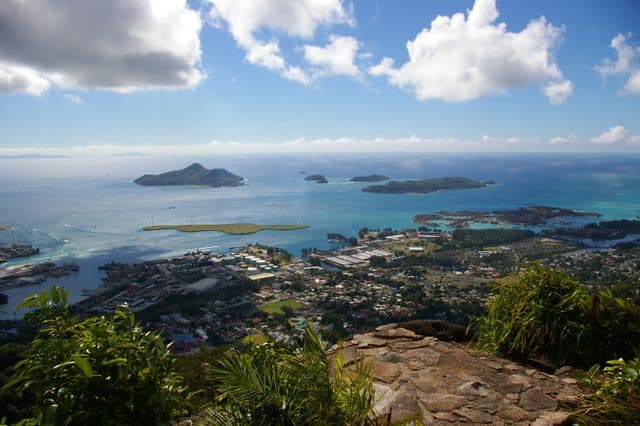
Victoria is the capital of the Seychelles and the smallest capital city in Africa, set on the island of Mahé in the western Indian Ocean. It is a city of roughly 28,000 people that functions as the administrative, commercial, and cultural hub for an archipelago of 115 islands spread across 1.4 million square kilometers of ocean. The scale requires some recalibration: this is a city where you can see from one side to the other in a short drive, where the market, the cathedral, the clock tower, and the harbor occupy the same compact radius.
For digital nomads, Victoria is a destination rather than a conventional base: the infrastructure gaps are real. A one-bedroom apartment runs €700 to €1,200 a month; the cost of living for imported goods is high by regional comparison, and connectivity, while improving via the SEAS undersea cable installed a few years back, is more variable than the pricing suggests. Coworking infrastructure is minimal.
What Victoria and the Seychelles genuinely offer: the clearest water in the world, a granite island geology that produces landscapes of absurd beauty (La Digue's Anse Source d'Argent beach appears in approximately 40% of all desktop background photographs), a French and Creole cultural heritage that makes the place feel genuinely distinct from other Indian Ocean destinations, and a legal environment that permits 3-month entry without a visa for most nationalities with renewable extensions.
For those whose work can function on satellite-grade internet and who have a strong reason to be specifically in the western Indian Ocean, Victoria is a legitimate base. For most, it earns its place as the most beautiful destination on this list. Best months are May through November.
Cost of living
Cost-of-living calculator
See how your budget stretches in Victoria.
Estimates use approximate exchange rates and typical monthly costs. Your actual costs will vary.
- Coffee
- $2
- Cheap meal
- $10
- Coworking (day)
- $15
- Mid-range meal for 2
- $45
- Rent (1BR, center)
- $1,000
- Transit (monthly)
- —
- Internet (monthly)
- $50
- Rent (1BR, outside)
- $750
EnRoute Jobs AI tool
Real Value Calculator
See what a salary actually leaves you in the country you want to live in.
Neighborhoods
Victoria Town Centre
Daily life, markets, commerce
The compact capital with the colourful Creole market, Victoria Clock Tower, botanical gardens, and government buildings.
Beau Vallon
Tourism, expats, beach life
The main tourist beach strip north of Victoria; the most developed tourist area in the Seychelles with hotels, restaurants, and water sports.
Mont Fleuri & Anse Etoile
Long-term residents, families
Quieter residential areas to the east and north of the centre, popular with long-term expats and local professionals.
Culture
Seychellois Creole culture is a rich fusion of African, French, British, and South Asian influences, a heritage reflected in the food, the music (sega and moutya rhythms), the language, and the effortlessly warm nature of the people. Victoria moves at a relaxed island pace. Religion plays an important role; Catholic churches dot the island and Sunday is observed. The Creole Festival in October is a highlight of the cultural calendar, celebrating music, food, and traditional arts.
Climate & best time to visit
Equatorial Indian Ocean: warm and humid year-round (26–30°C). Two monsoon seasons; southeast trades (May–September, drier and windier) and northwest monsoon (November–March, wetter). Best working months are June–September for calmer conditions and lower humidity.
Best months: June, July, August, September
Tips & safety
- •Victoria is the smallest capital city in Africa and can be walked from end to end in 15 minutes; the market and administrative area are concentrated in the center
- •The Sir Selwyn Selwyn-Clarke Market is the practical center of daily life; the fresh fish section in the early morning is the most relevant part for understanding local food culture
- •Inter-island connections from Victoria use Seychelles archipelago ferries and Air Seychelles; the Praslin and La Digue islands (30-40 minutes) are worth visiting if the budget allows
- •The Seychelles rupee is the local currency; major hotels and businesses accept cards, but cash is needed for markets and small vendors
- •Seychelles has some of the highest accommodation costs in the world for what is offered; self-catering accommodation or guesthouses produce a significantly more sustainable budget
- •Tropical sun at the Seychelles latitude is intense; reef-reflected UV adds to the exposure and SPF 50 reapplication throughout the day is necessary
- •Ocean currents around Mahe are strong in certain seasons (particularly the southeast trade wind period from May through October); check conditions before swimming from any non-lagoon beach
- •Medical facilities on Mahe are functional for basic care; the Seychelles Hospital handles most situations but serious conditions require evacuation
- •Emergency number: 999
Areas to avoid: Victoria is generally safe; the main concerns are petty theft in the market area and opportunistic crime in less-populated areas after dark, Isolated beach areas late at night have had occasional incidents; return from remote beaches before dark