.png)
About Sweden
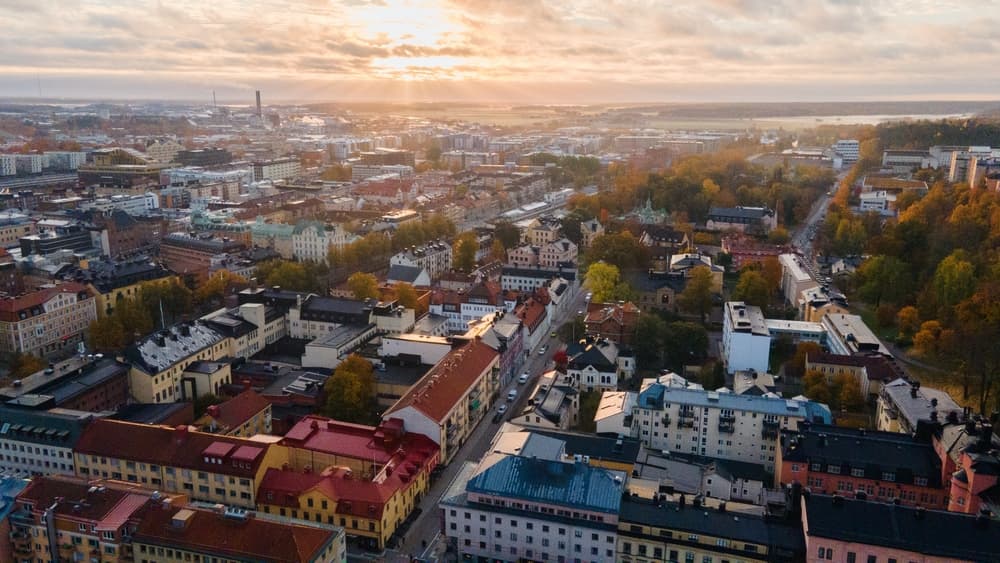
Sweden makes the strongest Scandinavian argument for being a serious long-term base rather than a scenic detour: Stockholm is a genuinely world-class city, compact, walkable, architecturally coherent across its fourteen islands, and running on a startup economy that mints more unicorns per capita than anywhere outside Silicon Valley, Spotify and Klarna the famous exports of an ecosystem that treats founding companies as a normal career. Gothenburg runs the west-coast counterpoint with industrial-design depth, Malmö bridges to Copenhagen, and the entire country operates on infrastructure so cashless that Swish and BankID are effectively citizenship documents, which is also the newcomer's first honest lesson: the personnummer, Sweden's personal identity number, gates banking, contracts, healthcare queues and half of digital life, and the coordination-number limbo before it arrives is the universal expat initiation story.
The paperwork story tightened in 2026 and rewards reading. There is no nomad visa. The employment lane hardened on June 1: work-permit salaries must now reach 90 percent of the Swedish median, 33,390 kronor monthly at current statistics, replacing the old 80-percent rule, with a 75-percent tier for exempted shortage occupations, comprehensive health insurance required for stays under a year, employer-history grounds for refusal, two new criminal offenses aimed at permit trafficking, and a transitional window for extensions running only to December; the Blue Card holds separately at 53,625 kronor. The freelancer's honest door remains the self-employment permit, its famous requirement unchanged: demonstrate you can support yourself and any family for the first two years from your own funds, alongside a viable business case, industry experience and client evidence, applied for before arrival and processed in months. Working holiday agreements hand the under-31s of Australia, New Zealand, Canada, Japan, South Korea and a handful of others a year that skips every threshold above, and Åre's ski winter hires every year like any alpine resort town.
What Sweden offers in exchange is the expert tax relief, 25 percent of employment income exempt from tax and employer contributions for up to seven years for qualifying key employees or anyone above the 88,201-kronor monthly bar, with a three-month application deadline that is absolute and annually loses fortunes to good intentions; the ISK investment account's notional-yield taxation behind it; and a settlement track that runs through permanent residence toward citizenship under reform pressure the legislative pipeline keeps supplying.
The honest context is the one Sweden states about itself. The US advisory sits at Level 2 for terrorism, the domestic SÄPO level at elevated, three of five, lowered from high in June 2025 with the official framing that Sweden had gone from priority target back to legitimate target; and the gang violence that dominates foreign headlines is real, bomb-punctuated and statistically dramatic while remaining concentrated in specific suburbs and rivalries geographically removed from the central neighborhoods visitors and professionals inhabit, the advisories' own texture running to wrong-place-wrong-time caution rather than ambient danger, plus rising pickpockets in Gamla Stan. Daily life in Södermalm, Vasastan or central Gothenburg remains among the safest and most pleasant urban existence available anywhere; September 2026's national elections will supply the season's civic noise; and the deepest risks in most Swedish years remain the darkness, managed with lamps and candles, and the ice underfoot.
Widening the search? If you are looking to expand your job hunt across Northern Europe, take a look at Norway →, Denmark →, and Finland →.
Cost of living
Sweden prices at the Nordic table with a rental-market asterisk all its own: Stockholm one-bedrooms run roughly 12,000 to 18,000 kronor, 1,150 to 1,700 dollars, but the first-hand rental queue runs years, so newcomers live in the second-hand andrahand market at a premium and with churn, the honest structural fact every arrival guide undersells. Gothenburg runs a quarter cheaper, Malmö below that with Copenhagen a bridge away, and the krona's exchange softness has quietly made Sweden better value in dollar terms than its reputation.
Daily life is cashless to the point of theater: Swish and cards run everything including flea markets, the dagens lunch at 120 to 150 kronor is the working meal, Systembolaget's state monopoly rations the wine budget by law and closing hours, and the grocery tier, ICA, Coop, Lidl, keeps cooking honest. The free tier is Nordic-spectacular: allemansrätten opens every forest and shore, the archipelago ferries cost commuter fares, and the city libraries and museums carry the winter. Transport is excellent, SL's Stockholm zones at commuter-pass logic and the X2000 trains linking the triangle. The comfortable single Stockholm life assembles at 2,900 to 3,800 dollars, the budget floor sits near 2,300 with andrahand luck and lunch discipline, and the honest additions are Swedish: the winter light-and-candle budget, the Midsommar and kräftskiva season, and the fika line item that is not optional because fika is not optional.
- One-bedroom rent: 12,000 to 18,000 kronor in Stockholm via the andrahand second-hand market newcomers actually use, the first-hand queue running years; a quarter less in Gothenburg, and the soft krona flatters every dollar budget.
- Live cashless from day one: Swish and cards run everything, the personnummer-and-BankID stack gates the full economy, and the coordination-number limbo before it is the universal initiation to plan around.
- Eat the dagens and respect the monopoly: the 120-to-150-kronor lunch special is the working meal, Systembolaget's hours ration the wine budget by statute, and the grocery tier keeps the cooking economy honest.
- Use the spectacular free tier: allemansrätten opens every forest and shoreline, archipelago ferries price like commuter transit, and the library-and-museum layer carries the candle-lit winter.
Cost-of-living calculator
See how your budget stretches in Sweden.
Estimates use approximate exchange rates and typical monthly costs. Your actual costs will vary.
Visas & Entry
Sweden runs the standard Schengen stack with a hardened 2026 employment lane: visa-free nationals receive 90 days in any 180 across the zone, EES biometrics are live, ETIAS is expected in 2027, and EU, EEA and Swiss citizens live and work freely while still meeting the personnummer machinery that gates Swedish practical life.
Beyond 90 days there is no nomad visa and two honest doors. The self-employment permit is the freelancer's: applied for before arrival through Migrationsverket, it asks for a viable business case read with literal-mindedness, industry experience, client evidence, and the famous bar, proof from your own funds that you can support yourself and any accompanying family for the first two years, with permits issued up to two years and processing historically running months; the egenanställning umbrella-employment platforms serve invoicing convenience but cannot sponsor a permit, a distinction that traps the unwary. The employment lane reformed on June 1, 2026: work-permit salaries must now reach 90 percent of the Swedish median, 33,390 kronor monthly at current statistics and adjusted annually, replacing the 80-percent rule, with exempted shortage occupations qualifying at 75 percent, comprehensive health insurance required for stays up to a year, employer-history grounds for refusal, new criminal offenses for labor exploitation and permit trafficking, berry-picker permits abolished outright, and a transitional window letting pre-reform permit holders extend under old rules only until December 1, 2026; decisions on or after June 1 apply the new bar even to earlier filings. The EU Blue Card holds separately at 53,625 kronor monthly, the job-seeker permit serves the highly qualified for on-the-ground searches, and the researcher-and-student tier gained in-country switching flexibility. Permanence typically arrives after four years on qualifying permits, citizenship sits at five under reform pressure the legislative pipeline keeps supplying, and the entire system files digitally with the employer and applicant halves submitted in sequence.
- Read the June 2026 reform as the new baseline: 33,390 kronor is the number, decisions after June 1 apply it even to earlier filings, the extension grace runs only to December 1, and the annual median-wage adjustment means the bar moves again; verify at decision time, not offer time.
- Bring the two-year bank statement to the self-employment file: the self-support bar is the permit's spine, the business case is read literally, and the strongest files show clients, contracts and industry history rather than intentions.
- Never mistake egenanställning for a visa: the umbrella platforms serve invoicing, not immigration, and no permit flows from them; the distinction is the most commonly sold confusion in the Swedish freelance market.
- Plan the personnummer campaign like logistics: the identity number gates banking, BankID, healthcare queues and half of digital life, the coordination-number limbo is real, and the arrival sequence, registration, number, bank, BankID, is the actual first month.
- File the expert tax relief in week one: the three-month deadline is absolute with no appeal for lateness, the 25 percent exemption runs to seven years, and the annual cohort of people who meant to file is the most expensive club in Sweden.
- Count Schengen days like money until formalized: the 90-in-180 window spans the zone, EES logs it biometrically, and the Öresund bridge means the allowance spends across two capitals from a Malmö base.
| Visa or permit | What it covers |
|---|---|
| Schengen entry | Ninety days in any 180 for visa-free nationals, EES live and ETIAS expected 2027; the standard season, with the personnummer machinery waiting past it for anything that becomes real life. |
| EU, EEA and Swiss citizens | Full freedom of movement: live and work without permits, then meet the same practical gate as everyone, the personnummer and BankID stack that unlocks banking, contracts and digital Sweden. |
| Self-employment permit | The freelancer's honest door: business viability, industry experience, client evidence, and self-support for yourself and family for the first two years from your own funds; filed before arrival, issued up to two years, processed in months, and read with Nordic literal-mindedness. |
| The June 2026 work-permit reform | Salaries at 90 percent of the median, 33,390 kronor monthly and annually adjusted, a 75-percent tier for exempted shortage occupations, health insurance for stays under a year, employer-history refusals, new trafficking offenses, and extensions under old rules only to December 1, 2026. |
| Blue Card and job-seeker lanes | The EU Blue Card holds separately at 53,625 kronor monthly, and the job-seeker permit lets the highly qualified search from inside Sweden; the salaried architecture around the reformed core. |
| The umbrella-employment trap | Egenanställning platforms invoice clients and run payroll for the independent, but cannot sponsor a work permit; convenient for EU citizens and residents, a dead end for anyone needing status, and worth knowing before a consultancy sells it as a visa. |
| Permanence and the pipeline | Permanent residence typically at four years on qualifying permits, citizenship at five with tightening reforms in the legislative pipeline; the settlement clock runs cleanly for those who keep the salary and insurance lines tidy. |
Good to know: No DNV; Jun 1 2026 reform: work-permit salary now 90% of median (SEK 33,390/mo, 75% tier for exempted occupations, insurance ≤1yr, extension grace to Dec 1); self-employment permit keeps the two-year self-support funds bar; egenanställning umbrellas cannot sponsor permits; expert tax 25% exemption ×7 yrs (SEK 88,201/mo bar, absolute 3-month deadline); personnummer/BankID gate practical life.
EnRoute Jobs AI tool
Route Planner
Map visa routes, timelines, and relocation costs for your next destination.
Work & Legal
Swedish professional culture runs on consensus, flat hierarchies and the institutional coffee break: fika is not a pause from work but a load-bearing part of it, twice daily in most offices, where the actual alignment happens, and declining it habitually reads as opting out of the team. Meetings seek consensus with a patience that surprises the deadline-driven, titles matter little, first names are universal up to the CEO, lagom, the just-right amount, governs everything from ambition displays to cinnamon buns, and the jantelagen undertow keeps self-promotion quieter than American instincts suggest. The ecosystem is elite: Stockholm's unicorn factory runs on deep talent, Epicenter-to-Norrsken coworking, English as the tech sector's working language, and a kollektivavtal collective-agreement culture that shapes employment terms even where no union card exists.
The legal lines are standard-Schengen with Swedish machinery attached: foreign-client remote work during tourist stays sits in the usual unpoliced gray zone, Swedish clients or employment require status, and the formalized freelancer runs F-skatt tax registration with egenavgifter contributions near 29 percent, or the egenanställning umbrella for invoicing without a company, remembering it sponsors nothing. The operational notes: GMT+1 overlaps Europe wholly and reaches US East mid-afternoon; July is a national institution when Sweden collectively vanishes to the stuga and nothing signed matters until August; the summer's light stretches the working evening as the winter compresses it; and the personnummer-BankID stack is the professional infrastructure everything else assumes.
- Attend the fika: it is load-bearing social infrastructure where alignment actually happens, twice daily in most teams, and habitual absence reads as opting out; the cinnamon bun is a professional instrument.
- Calibrate to lagom and consensus: flat hierarchies, first names to the top, patient alignment before decisions, and self-promotion dialed below American settings; the culture rewards competence displayed quietly.
- Formalize through F-skatt when Sweden turns real: the tax registration plus egenavgifter near 29 percent converts freelancing into clean structure, the egenanställning umbrella handles invoicing without a company, and neither substitutes for immigration status.
- Respect July as a national institution: Sweden vanishes to the stuga, decisions freeze until August, and the summer-planning habit of booking around it is the difference between fighting the culture and riding it.
Good to know: Fika is load-bearing; consensus/lagom culture; F-skatt + egenavgifter ~29% for the formalized; egenanställning umbrellas invoice but never sponsor; July freezes decisions nationally; personnummer/BankID stack is the professional substrate; GMT+1.
Taxes
Swedish tax funds the model everyone cites and prices it plainly: municipal rates near 32 percent plus state tax above the threshold reaching a combined 52 percent, softened for arrivals by one of Europe's best expat instruments, the expert tax relief, and organized for investors by the ISK's notional-yield logic.
| What applies | The rule in 2026 |
|---|---|
| The residency tests | Tax residency attaches past 183 days or through permanent home and essential ties; the Schengen-season visitor stays clear, and the permit-holding resident is in the system by design with the personnummer as the tax identity. |
| Non-residents | Owe Swedish tax on Swedish-source income only, with the SINK regime taxing non-resident employment income at a flat 25 percent without deductions; the visiting remote worker's foreign clients sit outside the net for the standard season. |
| Residents | Worldwide income meets municipal tax near 32 percent plus 20 percent state tax above the threshold, combining toward 52 percent at high incomes; the price of the model, with the benefit side, healthcare, education, parental architecture, running as advertised. |
| The expert tax relief | For qualifying experts, researchers and key employees, or anyone above 88,201 kronor monthly in 2026, 25 percent of employment income is exempt from tax and employer contributions for up to seven years; the application to the Research Workers Board is due within three months of starting, absolutely, and filing in week one is the standing professional advice. |
| The self-employed layer | F-skatt registration plus egenavgifter social contributions near 29 percent alongside the income schedule; the enskild firma and aktiebolag choice is the annual accountant conversation, with the AB's salary-dividend mechanics rewarding scale. |
| The ISK instrument | The investment savings account taxes a small notional yield instead of actual gains, with a tax-free allowance on the first tranche since 2025; over normal horizons it beats the 30 percent capital-gains alternative decisively and is the default vehicle residents should simply hold. |
| Americans specifically | A US-Sweden income tax treaty stands and a totalization agreement has run since 1987, sparing self-employed Americans double social contributions; the expert relief stacks with the FEIE-or-credits architecture into one of Europe's cleaner high-tax-country outcomes. |
| The home-country half | Swedish residency does not silence the jurisdiction left behind: exits, tie-breakers and the essential-ties doctrine deserve professional hands before the move, and Sweden's administration is as thorough as its reputation. |
Verified 21 August 2026: the residency and essential-ties tests, municipal-plus-state rates combining near 52 percent, SINK at 25 percent, the expert relief's 25 percent exemption for up to seven years at the 88,201-kronor bar with its three-month absolute deadline, egenavgifter near 29 percent, the ISK mechanics, VAT at 25 percent, and the standing US treaty plus 1987 totalization. General information, not tax advice.
Good to know: Municipal ~32% + state 20% → ~52% combined; SINK 25% for non-residents; expert relief = 25% exempt ×7 yrs (SEK 88,201/mo bar, absolute 3-month deadline; file week one); F-skatt + egenavgifter ~29%; ISK notional-yield vehicle is the resident default; VAT 25%; US treaty AND 1987 totalization.
Healthcare
Swedish healthcare delivers world-class outcomes through a decentralized public system that residents access via the personnummer and the 1177 portal, the national health line and digital front door that triages everything; EU visitors ride EHIC reciprocity, reciprocal agreements cover several other nationalities for emergencies, and everyone else needs real insurance because the excellent machine bills genuinely without it. Karolinska anchors the global-elite tier, the university hospitals in Gothenburg, Malmö-Lund and Uppsala carry their regions at the same standard, and Sweden pioneered the digital-first layer the world copied, Kry and its siblings putting video consultations a tap away. The structural honesty: non-urgent public queues are real, patient fees are nominal with an annual high-cost ceiling, and the private tier is thin by European standards precisely because the public one carries the load.
The practical texture: pharmacies professional, tap water excellent, adult dental largely outside public coverage and priced accordingly, and the health risks environmental on the Nordic syllabus, winter ice as the injury statistic, the darkness asking light-and-activity discipline, TBE ticks in the archipelago and lake country where vaccination is the local norm, and moose on rural roads at dusk. Emergencies answer at 112, the 1177 line handles everything short of them, and the system's deepest feature is the one the taxes buy: nobody checks your wallet at the emergency-room door.
- Enter through 1177: the national line and portal triage everything short of emergencies, the digital-consult layer Sweden invented handles the routine tier, and 112 answers the rest; the front door is a phone number.
- Know the fee architecture: patient fees are nominal with an annual high-cost ceiling, EHIC carries EU visitors, reciprocal agreements cover several nationalities for emergencies, and the uninsured non-EU visitor is the one exposed position.
- Budget dental privately: adult dental sits largely outside public coverage and prices at Nordic rates; the pre-trip cleaning at home remains the honest arbitrage.
- Run the Nordic health syllabus: ice-grip boots for the winter injury statistic, the lamp and outdoor hour against the darkness, TBE vaccination for the archipelago-and-lake summer, and dusk respect for moose on rural roads.
| Hospital | What to know |
|---|---|
| Karolinska University Hospital, Stockholm | The global-elite anchor and Nobel-adjacent research flagship, the national referral answer for complex anything. |
| Sahlgrenska University Hospital, Gothenburg | Northern Europe's largest hospital campus, carrying the west coast with full tertiary depth. |
| Skåne University Hospital, Malmö-Lund | The southern university flagship across two campuses, the Öresund region's serious-care anchor. |
| Uppsala University Hospital | The historic academic center north of Stockholm, tertiary depth with one of Europe's oldest medical faculties. |
| Danderyd Hospital, Stockholm | The capital's major acute hospital beyond Karolinska, carrying much of Stockholm's emergency and specialty load. |
| The 1177 and digital layer | The national health line and portal triages everything, and the Kry-generation video-consult apps Sweden pioneered put a clinician a tap away; the front door of the entire system. |
Hospital list compiled 21 August 2026 and not yet confirmed against each facility directly. Treat as indicative and verify before relying on it.
Good to know: World-class decentralized public system entered via 1177 + the Kry-generation digital layer Sweden pioneered; Karolinska/Sahlgrenska/Skåne/Uppsala/Danderyd anchor; nominal fees with high-cost ceiling; adult dental private; TBE the archipelago norm; winter ice + dusk moose; 112.
Safety
Sweden asks for both halves of the picture held at once, and this page holds them. The daily-life half: central Stockholm, Gothenburg and Malmö rank among the world's most pleasant urban environments, solo travelers of every description report ordinary comfort, transit runs safe at all hours, and the visitor's register is pickpocketing, rising in Gamla Stan and the crowded hubs, with distraction teams working the classic patterns. The headline half: the US advisory sits at Level 2, Exercise Increased Caution, for terrorism, reissued through 2026 with the level unchanged, notably carrying no crime indicator; Sweden's own SÄPO lowered the national terrorist threat from high back to elevated, three of five, in June 2025, with the official framing that Sweden had gone from a priority target of violent extremism back to a legitimate one, and the 2026 national assessment names lone actors, Islamist and right-wing, as the principal threat, one attack thwarted in 2025. The gang violence that dominates foreign coverage is real and deserves stating precisely: gun homicides and bombings tied to network rivalries run at levels unmatched in Western Europe, hand grenades and improvised devices have punctuated the conflicts, teenagers are recruited as contractors, and roughly thirty explosions marked January 2025 in the Stockholm region alone; and it is concentrated, in specific suburbs and specific rivalries, geographically removed from the neighborhoods visitors and professionals inhabit, with the advisories' own texture running to wrong-place-wrong-time caution in nightlife rather than ambient street danger, and Gothenburg and Malmö centers at night named as the zones deserving most awareness.
The practical translation is short: run city habits in the crowds, keep late nights in the big three cities to well-peopled areas, treat any police cordon as a detour rather than a spectacle, and let the September 2026 national elections supply civic noise without itinerary weight. The environmental syllabus does the rest, winter ice as the true injury statistic, darkness asking deliberate light discipline, severe-weather transport delays in the deep season, and 112 answering everything with Nordic competence. Sweden in 2026 is a country whose statistics contain two different stories; the one a visitor or professional actually lives, in the places they actually live it, remains among the best urban safety propositions on earth.
- Hold both halves honestly: the Level 2 is for terrorism with no crime indicator, the domestic level came down to elevated in 2025, and the neighborhoods a visitor or professional actually inhabits run among the world's safest; the statistics contain two stories and you live only one of them.
- State the gang picture precisely and act on its geography: the violence is real, bomb-punctuated and concentrated in specific suburbs and rivalries; the practical translation is well-peopled late nights in the big three cities, extra awareness in Gothenburg and Malmö centers after dark, and police cordons treated as detours.
- Run the crowd habits: pickpocketing is rising in Gamla Stan and the transit hubs with distraction teams on the classic patterns; bags closed, phones pocketed, and the tourist-core awareness that answers the entire register.
- Treat events and elections as civic weather: demonstrations cluster near embassies and squares, September 2026's national elections add calendar, and distance plus the transit app absorb the entire effect.
- Respect the Nordic winter as the true hazard: ice injures more people than everything in the headlines combined, severe weather delays transport in the deep season, and the boots-lamp-and-buffer kit is the entire answer.
- Know 112 and the ordinary competence: the single number answers everything in English, STEP enrollment takes five minutes, and the system behind both is as functional as the country's reputation promises.
Official travel advisories
| Government | Current position |
|---|---|
| United States | Level 2, Exercise Increased Caution, for terrorism, reissued through 2026 with the level unchanged and no crime indicator attached; the summary carries the standard target-set language and the embassy's alerts add demonstration notices near the mission.travel.state.gov → |
| Säkerhetspolisen (SÄPO) | The domestic layer: the national terrorist threat lowered from high to elevated, three of five, in June 2025 as Sweden moved from priority target back to legitimate target; the 2026 assessment names lone actors as the principal threat with one attack thwarted in 2025. |
| Canada | High degree of caution for terrorism; states the gang picture plainly, gun violence and homicides tied to rivalries in Stockholm County, bombs and grenades used, incidents in public venues, and the wrong-place-wrong-time framing that is the honest tourist-relevant risk.travel.gc.ca → |
| Australia | Exercise a high degree of caution; carries the elevated domestic threat level, the gang-violence concentration in the three largest cities with Gothenburg and Malmö centers at night named, rising Gamla Stan pickpocketing, and the reciprocal emergency-healthcare note for Australians.smartraveller.gov.au → |
| US Embassy Stockholm | Enroll in STEP; the embassy feed carries demonstration and security notices and remains the live channel. Dag Hammarskjölds Väg 31, Stockholm; +46 8 783 5300.se.usembassy.gov → |
Advisory positions verified 21 August 2026: US Level 2 for terrorism with no crime indicator, SÄPO's June 2025 lowering to elevated with the priority-to-legitimate-target framing and the 2026 lone-actor assessment, the Canadian and Australian gang-violence texture with its concentration and named night zones, rising Gamla Stan pickpocketing, and the September 2026 election calendar. Open the sources before travelling.
Good to know: US L2 (terrorism, no crime indicator) above SÄPO's elevated (lowered from high Jun 2025: "priority → legitimate target"); gang violence stated precisely: real, bomb-punctuated, concentrated in suburbs/rivalries away from the lived map; wrong-place-wrong-time is the honest framing, Gothenburg/Malmö centers at night the named zones; Gamla Stan pickpockets rising; Sept 2026 elections; winter ice is the true statistic; 112.
Climate
Sweden runs the Nordic light calendar with a north-south stretch that spans climates: Stockholm summers hold 18 to 23 degrees under up to eighteen hours of daylight, the particular Scandinavian summer light that photographers chase, while December-January runs minus-3 to 2 under roughly six hours, the darkness a genuine wellbeing factor answered with lamps, candles and the national refusal to stop moving. Gothenburg and the west coast run milder and wetter under Atlantic influence, Skåne is nearly Danish, and Lapland writes its own subarctic story, midnight sun in June, polar night and aurora in the deep winter, and a snow season the tourism economy productizes. The working calendar: May through September is the prize, the long-light months when the archipelago opens, terraces fill and the country's famous summer joy runs at full voltage; July belongs to the stuga and should be planned around rather than through; and the winter divides temperaments, candle-lit hygge-adjacent interior season for some, the escape-flight season for others, with the February sportlov ski week as the culture's midwinter answer. Midsommar in late June is the year's true national holiday and the kräftskiva crayfish parties close the summer in August; both are worth arranging to attend.
| Season | What to expect |
|---|---|
| Summer, June to August | The prize: 18-to-23-degree days under up to eighteen hours of that particular Scandinavian light, the archipelago open, Midsommar as the year's true holiday, and July's national stuga migration to plan around. |
| Winter, December to February | Cold, dark and candle-answered: minus-3-to-2 Stockholm days under six hours of light, severe-weather transport delays possible, the sportlov ski week as the midwinter valve, and Lapland's polar-night-and-aurora product running in parallel. |
| The shoulders, April-May and September-October | Fast, luminous transitions: spring detonating through May, autumn burning briefly gold; uncrowded, functional, and rewarding spontaneity over planning. |
| The north-south stretch | Skåne nearly Danish, the west coast Atlantic-softened, Lapland subarctic with midnight sun and polar night; one country, several climates, linked by trains that treat the distance seriously. |
Good to know: May-September is the long-light prize with July's stuga freeze to plan around; winter is candle-lit and lamp-managed; light, not temperature, is the real Swedish weather.
Culture & Customs
Swedish culture runs on lagom, the just-right amount, and the social technologies built around it: fika, the twice-daily coffee-and-bun institution that is load-bearing in offices and friendships alike; consensus as the decision-making religion; queues managed by the nummerlapp ticket machine in every pharmacy and bakery, a small machine that explains the entire society; personal space honored on every bus bench; and a self-presentation kept modest by the jantelagen undertow even as the country quietly runs one of earth's most innovative economies. The trust environment is real infrastructure, cashlessness its daily expression, and the reserve opens, Finnish-adjacent, into durable warmth for those patient enough to let it.
The year's liturgy is seasonal: Midsommar's flower-crowned late-June pole dancing is the true national holiday, the kräftskiva crayfish parties close August under paper lanterns, Lucia's candlelit processions answer December's darkness, Valborg burns bonfires into spring, and allemansrätten, the every-person's right to roam every forest and shore, is the constitutional soul of it all. Daily codes: shoes off in homes always, punctuality as respect, Systembolaget's hours planned around, tipping by rounding rather than percentage, and the summer stuga invitation as the genuine sign of acceptance. English is effortless nationwide, which makes even a tack land warmly, and the professional who attends the fika, respects the queue ticket, learns ten words and accepts one Midsommar invitation is granted the durable Nordic friendship the reserve was guarding.
- Treat fika as load-bearing: the twice-daily coffee institution is where friendships and teams actually form, the cinnamon bun is social infrastructure, and habitual absence reads as opting out.
- Take a queue ticket everywhere: the nummerlapp machine governs pharmacies, bakeries and bureaucracy alike, explains the society in one object, and skipping it is the fastest way to learn Swedish disapproval, which is silent.
- Calibrate to lagom: the just-right amount governs ambition displays, dinner portions and small talk; competence shown quietly outperforms every imported volume setting.
- Join the seasonal liturgy: Midsommar is the true national holiday and worth arranging a summer around, the kräftskiva closes August, Lucia answers December, and the stuga invitation is the genuine sign of arrival.
- Use allemansrätten like the birthright it locally is: every forest, lake and shore opens to respectful presence, the archipelago is a commuter fare away, and the outdoor habit is how Sweden survives its own winter.
- Keep the quiet codes: shoes off always, punctuality as respect, personal space honored, Systembolaget hours planned for, and tack deployed often; the culture notices manners in inverse proportion to how loudly it mentions them.
