.png)
About San Marino
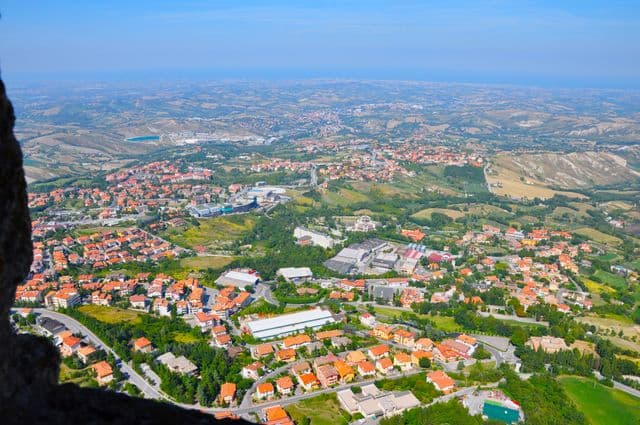
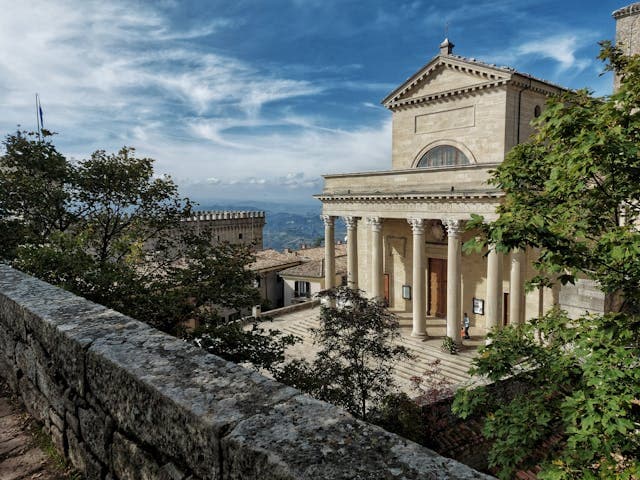
San Marino is a curiosity on any geo-flex list until you read the tax law: the world's oldest republic, founded by a stonemason fleeing Diocletian in 301, sixty-one square kilometers of Monte Titano ridge entirely surrounded by Italy, governed by two Captains Regent who swap in every six months as they have since 1243, and quietly operating one of Europe's most interesting foreign-income tax residences from a UNESCO-listed mountaintop twenty minutes from Rimini's beaches.
The residence menu is real and specific. The headline for working professionals is the atypical residence with facilitated tax regime: open to foreigners who have never been Sammarinese tax residents and whose income is generated abroad, it applies a flat 7 percent substitute tax to that foreign income, minimum 10,000 euros a year and capped at 100,000, paid each June in one installment, running fifteen years, with the practical arithmetic meaning the program suits incomes from roughly 145,000 euros up; the first decade carries honest restrictions, no public-sector work, no public benefits, private health insurance required, and the residence consolidates into ordinary registered status at year ten. The Congress of State decides within sixty days, and a six-month temporary permit bridges the wait. Beside it: elective residence for the self-sufficient, earned by purchasing a completed dwelling for at least 500,000 euros, renovation spend countable within limits, or by parking 600,000 euros in ten-year interest-free instruments, with a 10,000-euro fee and no local employment permitted until consolidation; the atypical pensioner tier, tightened in April 2025 to demand 120,000 euros of annual income plus 300,000 euros of liquid assets held in a Sammarinese bank throughout, taxing pensions at 6 percent; and economic residence for entrepreneurs holding majority stakes in companies that hire local staff, against a 150,000-euro deposit stageable as 75,000 up front and the rest within two years, with 270 days of annual presence expected. Ordinary employment runs employer-tied permits inside a quota system, while eight thousand Italian frontalieri commute in daily without any of it. Citizenship is the counterweight: decades away, fifteen to thirty years by category, renunciation historically required, and beside the point.
The frame: a tax system with no VAT, foreign dividends at 3 percent and foreign interest and gains at 10 for ordinary residents, corporate rates in the high teens with new-business reductions and a startup ladder that begins at zero; euro currency by agreement without EU membership; entry governed entirely by Italy's Schengen rules across an open border; and a daily life of near-zero crime, tower-top views to the Adriatic, and a centro storico that eight summer coach-loads a day borrow and every evening returns.
Widening the search? If you are looking to expand your job hunt across Southern Europe, take a look at Italy →, Croatia →, and Malta →.
Cost of living
San Marino prices like the nicer Emilia-Romagna hill towns it overlooks: one-bedrooms run 600 to 950 euros in Borgo Maggiore, Serravalle and the residential castelli, the centro storico's small stock prices for its views, and the purchase market's 500,000-euro elective-residence floor says more about the law than the ordinary listings, where solid apartments run a fraction of that. Utilities are Italian-normal with mountain winters adding their heating line.
Daily life is Romagna with a duty-adjacent discount: groceries at the Conad-and-Titancoop tier price like the Italian province, fuel and some goods run famously cheaper than across the border, the pranzo di lavoro holds at 12 to 16 euros, the piadina is the honest national lunch, and Rimini's full city economy sits twenty minutes downhill for everything the mountain lacks. The compensations are Italian-provincial: Sangiovese-adjacent cellars, the Adriatic's beach season in commuting range, and a tourism economy that keeps the restaurants better than 34,000 residents alone would. The comfortable single life assembles at 2,400 to 3,000 dollars, the budget floor sits near 1,800 with castelli housing, and the honest additions are the car, near-essential on the mountain, and the atypical regime's 10,000-euro tax floor, which is the real minimum budget line for the residents the law courts.
- One-bedroom rent: 600 to 950 euros in the residential castelli with the centro storico pricing its views; ordinary purchases run far below the 500,000-euro elective floor, which is a legal threshold rather than a market price.
- Eat like Romagna: the 12-to-16-euro working lunch, the piadina as the national sandwich, Conad-tier groceries at Italian-province prices, and fuel famously cheaper than across the invisible border.
- Use Rimini as the service city: the full coastal economy sits twenty minutes downhill, the beach season commutes, and the mountain keeps the views while the coast keeps the infrastructure.
- Budget the two San Marino constants: the car the ridge makes near-essential, and for atypical-regime residents the 10,000-euro annual tax floor that is the program's true minimum line.
Cost-of-living calculator
See how your budget stretches in San Marino.
Estimates use approximate exchange rates and typical monthly costs. Your actual costs will vary.
Visas & Entry
San Marino issues no entry visas of its own: access runs entirely on Italy's Schengen rules across an open border, visa-free nationals take the standard 90 days in any 180 counted by the surrounding zone, and anyone intending to stay past thirty days must regularize with the republic itself, the framework running on Law 95 of 1997 through the Passport Office in Borgo Maggiore and the Secretariat of State for Foreign Affairs.
The long-stay menu is the interesting part. The atypical residence with facilitated tax regime serves foreigners never previously Sammarinese tax residents whose income arises abroad: a flat 7 percent substitute tax on that foreign income, floored at 10,000 euros and capped at 100,000 annually, paid in one June installment, the regime running fifteen years, with the first decade excluding public-sector work and public benefits and requiring private health insurance, and the residence consolidating into ordinary registered status at year ten; the Congress of State decides within sixty days and a six-month temporary permit covers the wait. Elective residence serves the self-sufficient non-worker: purchase of a completed dwelling for at least 500,000 euros, with renovation spend countable up to 150,000 within the calculation, or 600,000 euros held ten years in interest-free instruments, plus a 10,000-euro non-refundable fee on the deposit variant; family joins, and consolidation at ten years lifts the restrictions. The atypical pensioner tier, EU, Swiss and decree-listed nationalities, was tightened from April 28, 2025: annual income of at least 120,000 euros and liquid assets of at least 300,000 euros held in a Sammarinese bank throughout, with pension income taxed at 6 percent. Economic residence serves entrepreneurs: majority ownership of a Sammarinese company, local hires, a 150,000-euro guarantee deposit stageable as 75,000 at filing and the balance within two years, and roughly 270 days of annual presence. Ordinary employment runs employer-tied work permits inside an annual quota, EU nationals exempt from the permit but registering, and the eight thousand Italian frontalieri who staff much of the economy need none of it. Citizenship sits decades away, fifteen to thirty years by category with renunciation historically required, and permanent registered residence at ten years is the realistic long game.
- Run the atypical arithmetic first: the 10,000-euro tax floor means the 7 percent regime prices fairly from roughly 145,000 euros of foreign income upward; below that line the flat tax is effectively higher, and the ordinary schedule may serve better.
- Read the elective thresholds as written: the 500,000-euro property must be a completed dwelling with the renovation allowance inside the calculation, the 600,000-euro instrument route runs ten years interest-free, and the 10,000-euro fee does not return.
- Pensioners, use the post-2025 numbers: the 120,000-income-plus-300,000-banked standard replaced the older, gentler tests in April 2025, and the liquid assets must stay in the Sammarinese system throughout.
- Build the economic file like the business it is: majority stake, real local hires and the staged deposit are the three legs, presence expectations run near three-quarters of the year, and the Congress reads plans literally.
- Mind the first-decade restrictions: atypical and elective holders live outside the public-benefit system, insure privately, and cannot take public-sector work until consolidation; the deal is residence and rates, not the welfare state.
- Count Schengen honestly: San Marino days are Italian days for the zone's arithmetic, the border being open, so third-country visitors budget the 90-in-180 window exactly as they would in Rimini.
| Visa or permit | What it covers |
|---|---|
| Entry via Italy | No Sammarinese visas exist: Schengen rules govern through the surrounding republic, the border is open and unmarked, and the 90-in-180 window counts against the zone; stays past thirty days regularize with the Passport Office. |
| Atypical residence, facilitated tax regime | For foreigners never tax-resident here whose income arises abroad: 7 percent flat on foreign income, 10,000-euro floor and 100,000 ceiling, fifteen years, private insurance and no public benefits for the first decade, consolidation at ten years; decided by the Congress of State within sixty days. |
| Elective residence | The self-sufficient non-worker's door: a completed dwelling at 500,000 euros or more with renovation spend countable, or 600,000 euros in ten-year interest-free instruments, plus the 10,000-euro fee; no local employment until the ten-year consolidation. |
| Atypical residence for pensioners | EU, Swiss and decree-listed retirees, tightened April 2025: 120,000 euros of annual income plus 300,000 in liquid assets banked locally throughout, with pensions taxed at 6 percent. |
| Economic residence | Majority ownership of a Sammarinese company with local hires, a 150,000-euro deposit staged 75,000 up front and the rest inside two years, and roughly 270 days of presence; the door for those building here rather than parking here. |
| Work permits and the frontalieri | Employer-tied permits inside an annual quota for third-country hires, EU nationals registering without permits, and eight thousand Italian commuters staffing the economy daily with neither. |
| The long game | Consolidated registered residence at ten years lifts the atypical and elective restrictions; citizenship runs fifteen to thirty years by category with renunciation historically required, and is beside the practical point. |
Good to know: No DNV, but atypical facilitated regime = the de facto remote-worker door: never tax-resident before + foreign income → 7% flat (min €10k / max €100k), 15 yrs, first decade = no public benefits + private insurance, consolidation at 10 yrs, Congress decides in 60 days (prices fairly from ~€145k income). Elective: €500k completed dwelling (reno countable to €150k) OR €600k 10-yr interest-free instruments + €10k fee. Pensioners TIGHTENED Apr 28 2025: €120k income + €300k banked locally, 6%. Economic: majority stake + local hires + €150k staged (75+75), ~270 days. Entry = Italy's Schengen (open border, days count). Citizenship 15-30 yrs + renunciation.
EnRoute Jobs AI tool
Route Planner
Map visa routes, timelines, and relocation costs for your next destination.
Work & Legal
Sammarinese professional life is Italian in language and rhythm with a microstate's own institutions layered on: Italian carries everything, the working culture keeps Romagna's warmth inside a republic small enough that the relevant official answers his own phone, and the economy runs deeper than the souvenir arcades suggest, precision manufacturing and ceramics, a reformed banking and financial sector, the tourism engine, and a deliberate new tier of startup and high-tech programs, the innovative-enterprise ladder taxing new ventures at zero for four years, four percent for the next four and eight thereafter, that the republic uses to court exactly the founders its atypical regime houses.
The legal lines: visitors work for no one locally and the foreign-client laptop sits in the standard gray zone; atypical and elective residents earn abroad by design, local employment excluded until consolidation; economic residents run their companies with local hires; and third-country employment needs the quota-bound, employer-tied permit while EU staff register and the frontalieri commute. The texture is small-republic practical: the commercialista is the essential professional, company formation runs weeks rather than months with SRL capital from 25,500 euros, banking compliance is thorough in the post-reform style, and the calendar keeps Italian rhythms, the August pause, the September 3 founding feast when the republic celebrates itself with crossbows, and a working year in which Rimini's station, twenty minutes downhill, is the connection to everywhere.
- Keep the income map clean: atypical and elective residence are foreign-income arrangements by law, local work is excluded until the ten-year consolidation, and in a republic of 34,000 the distinction is visible from the tax office window.
- Use the startup ladder if building: the innovative-enterprise regime runs zero, four then eight percent across a decade, SRL formation takes weeks from 25,500 euros, and the economic-residence route pairs with it deliberately.
- Hire the commercialista first: the accountant-fixer is the essential Sammarinese professional, the June substitute-tax installment and the deposit staging both reward orderly hands, and the banking file opens faster with local introduction.
- Work the Italian rhythm: the language, the August pause and the Romagna warmth all carry over, Rimini is the service-and-station city twenty minutes down, and the September 3 crossbow feast is the republic's own fixed point.
Good to know: Atypical/elective = foreign-income by design (local work excluded until consolidation); startup ladder 0/4/8% across a decade; SRL from €25,500 in weeks; commercialista essential; quota-bound employer-tied permits for third-country local hires; ~8,000 frontalieri; Italian language/rhythm throughout; Rimini = the station.
Taxes
San Marino runs its own full tax system inside the Italian ring: a progressive ordinary schedule topping in the mid-thirties, preferential flat regimes doing the actual recruiting, gentle capital rates, no VAT at all, and a treaty map anchored on Italy with the United States pointedly absent.
| What applies | The rule in 2026 |
|---|---|
| The residency tests | Tax residence follows registered residence and the center-of-life facts; the atypical grant is designed to create it, the open border makes day-counting an honor system the treaty partners do not treat as one, and the Italian tie-breaker is the conversation that matters most. |
| The ordinary schedule | Progressive IGR rates climbing to the mid-thirties at height, modest against the Italian schedule next door, with the deductions-and-allowances texture of a small system administered personally. |
| The 7 percent atypical regime | Foreign income under the facilitated grant taxed at a flat 7 percent, 10,000-euro minimum and 100,000 cap, one June installment, fifteen years; the recruiting instrument, priced fairly from roughly 145,000 euros of income upward. |
| Capital and the pensioner rate | For ordinary residents, foreign dividends at 3 percent, foreign interest and gains at 10, property gains exempt after five years' holding; atypical pensioners pay 6 percent on pensions; a gentle capital ecosystem by any European measure. |
| No VAT | San Marino levies no value-added tax, running a single-stage import duty instead; the daily-price texture is Italian with the arbitrage at the pump and the register that the border towns know well. |
| Corporate and the startup ladder | Ordinary corporate rates in the high teens with five-year reductions for new businesses, and the certified innovative-enterprise ladder at zero for four years, 4 percent for four and 8 for five; the republic's deliberate founder bait. |
| Americans specifically | No US income-tax treaty and no totalization agreement: citizenship-based taxation applies undiluted, the 7 percent regime does not offset US rates dollar-for-dollar the way high-tax residences do, and self-employment tax runs unshielded; the arithmetic wants professional modeling before the move. |
| The home-country half | The Italian treaty anchors the network and Italy polices paper residencies across an open border with particular energy: exits, the center-of-life file and genuine presence decide whether the 7 percent holds, and the professionals who structure the departure first are the ones it actually reaches. |
Verified 21 August 2026: the registered-residence and center-of-life tests, the mid-thirties ordinary schedule, the 7 percent facilitated regime with its floor, cap and fifteen-year term, the 3-and-10 capital rates with the five-year property exemption and 6 percent pensioner rate, the no-VAT single-stage system, the high-teens corporate rates with the 0-4-8 startup ladder, the Italian treaty anchor, and the absence of any US treaty or totalization agreement. General information, not tax advice.
Good to know: Ordinary IGR → mid-30s top; 7% flat regime (€10k-100k, 15 yrs) = the recruiter; ordinary residents: foreign dividends 3%, interest/CG 10%, property CG exempt >5 yrs; pensioners 6%; NO VAT (monofase import duty); corporate high-teens w/ new-biz reductions + startup 0/4/8 ladder; Italy treaty anchors network; NO US treaty/totalization; Italy polices paper residencies hard across the open border.
Healthcare
Sammarinese healthcare runs the ISS public system, the Istituto per la Sicurezza Sociale, at microstate scale and Italian standard: the State Hospital in Cailungo carries the everyday, emergency and maternity tiers competently, primary care is quick and personal in the way of a system that knows its patients by name, and the serious-specialty answer is the designed one, organized referrals into Romagna's excellent hospital network, Rimini's Infermi twenty minutes downhill and Bologna's university medicine an hour beyond, with reciprocal arrangements smoothing the traffic. Registered residents access the ISS; atypical and elective residents insure privately by law for their first decade, policies priced gently by the standards of the incomes the regimes court; EU visitors use their cards in the Italian pattern; and everyone else carries travel insurance against modest Italian-tier billing.
The texture is Romagna-professional: pharmacies run the Italian standard, dental prices like the Italian province and draws no cross-border pilgrimages in either direction, English is workable in the professional tier and better in the private one, and the health file's real content is gentle, the ridge's staircases in summer heat, winter ice on the access roads the gritters manage, and the ordinary sun-and-hydration syllabus of an Italian hilltop. Emergencies answer at 112 in the Italian integration, the Rimini transfer runs practiced, and the summary is the honest microstate one: excellent for the everyday, designed for the referral, and insured according to your permit.
- Insure by your permit: the ISS carries registered residents, the atypical and elective decades run on mandatory private cover, and the policy is a permit condition rather than an option.
- Trust the bridge as the design: Cailungo handles the everyday, Rimini and Bologna carry the serious through organized arrangements, and the routing question belongs in the arrival file.
- Visitors, carry ordinary cover: billing runs Italian-modest, EU cards work in the pattern, and the care behind both is Romagna-standard.
- Live the gentle syllabus: the staircases in August heat, the gritted winter access roads, and the hilltop sun; 112 answers everything and nothing is far.
| Hospital | What to know |
|---|---|
| Ospedale di Stato, Cailungo | The republic's hospital: everyday, emergency and maternity care at Italian standard, with the referral bridge as its designed second half. |
| Ospedale Infermi, Rimini | The Romagna acute partner twenty minutes downhill, carrying the serious tier through practiced reciprocal arrangements. |
| Bologna university medicine | The tertiary ladder an hour beyond: Sant'Orsola and the Emilian academic network for the rarities. |
| Primary care and the ISS | Quick, personal, name-knowing medicine for registered residents through the social-security institute, with the small system's short queues. |
| The private-insurance tier | Atypical and elective residents insure privately by law for the first decade; the policies are the permit's standing condition and the private clinics serve them directly. |
| Emergency architecture | 112 in the Italian integration, the practiced Rimini transfer for the serious, and response scaled to a republic where nothing is more than minutes away. |
Hospital list compiled 21 August 2026 and not yet confirmed against each facility directly. Treat as indicative and verify before relying on it.
Good to know: ISS public system (registered residents); Cailungo State Hospital = anchor; designed referral bridge → Rimini Infermi (20 min) + Bologna tertiary; atypical/elective first decade = MANDATORY private insurance (permit condition); EU cards Italian pattern; billing Italian-modest; 112 integrated.
Safety
San Marino's safety file is microstate-short and the page keeps it honest. The official half: the US advisory holds the republic at Level 1, Exercise Normal Precautions, in the European floor club, its file thinner than the Italy that surrounds it, and the domestic picture is what a wealthy, high-trust republic of 34,000 with a professional Gendarmerie suggests: negligible crime, decades of political stability, and a neutrality older than most countries. The street half: the only realistic register is petty theft in the centro storico's summer crush, when coach tourism compresses eight million annual visitors into a fortified hilltop built for foot traffic of another century, bags in the funivia queue and the tower staircases the classic marks; the residential castelli below run village-quiet at all hours, and solo travelers of every description report complete comfort everywhere.
The genuine hazards are the mountain's mild set: winter fog and ice on the access roads climbing Monte Titano, managed by gritters but real on the hairpins; summer heat on the ridge staircases; the tower parapets' honest drops, respected by the railings for good reason; and the thunderstorms that build over the Apennine edge with hill-country speed. Emergencies answer at 112 in the Italian integration with the Gendarmerie's own numbers beside it, the Rimini medical transfer runs practiced, and the honest summary matches the score: one of the safest addresses in this index, whose advisory file exists mainly to note where the tour buses park.
- Read the Level 1 for what it is: a high-trust republic whose crime statistics round to zero, whose advisory file runs thinner than Italy's around it, and whose one register is where the coaches park.
- Run the centro-storico crowd discipline: the summer crush on the funivia, Via Basilicus and the tower staircases carries the entire pickpocket file; bags forward, and the evening old town returns to its residents.
- Drive the mountain honestly in winter: fog and ice visit the access hairpins, the gritters manage but do not abolish them, and the Rimini valley is always twenty gentler minutes away.
- Respect the ridge's edges: the tower parapets and cliff paths drop honestly, the railings mean it, and the Apennine storms build with hill-country speed over the exposed crest.
- Treat summer heat as the staircase tax: the vertical old town in August asks water and pacing, and the morning-and-evening rhythm is the local answer.
- Know 112 and the Florence coverage: the integrated number answers everything, the medical transfer to Rimini runs practiced, and STEP through the Italy mission takes five minutes for a republic that will almost never call.
Official travel advisories
| Government | Current position |
|---|---|
| United States | Level 1, Exercise Normal Precautions: the floor tier, with a file thinner than surrounding Italy's and summer-crowd petty theft as its entire practical content.travel.state.gov → |
| Canada | Normal security precautions: pickpocketing in the tourist crush and the winter mountain-road register carried honestly.travel.gc.ca → |
| United Kingdom | No overall advisory against travel; the centro-storico crowd note and access-road conditions are the practical substance.gov.uk → |
| Australia | Normal safety precautions with the hill-weather syllabus, ice, fog and storm speed, as the genuine content.smartraveller.gov.au → |
| US Embassy Rome / Consulate Florence | San Marino is covered through the Italy mission with Florence the practical consulate; enroll in STEP for the rare notices. Lungarno Vespucci 38, Florence; +39 055 266 951.it.usembassy.gov → |
Advisory positions verified 21 August 2026: the US Level 1 with Italy-mission consular coverage, the summer-crowd petty-theft register as the file's entire practical content, and the mountain's mild hazard set, winter access-road ice, ridge edges, storm speed and staircase heat. Open the sources before travelling.
Good to know: US L1 (file thinner than surrounding Italy's; coverage via Rome/Florence); register = centro-storico summer-crush pickpockets, full stop; real hazards = winter fog/ice on the hairpins, ridge edges, Apennine storm speed, staircase heat; Gendarmerie + 112 integrated; 90 matches Andorra tier.
Climate
San Marino runs the Adriatic hill climate from its 750-meter ridge: Mediterranean-warm summers at 25 to 30 with the sea haze below and afternoon thunderstorms building over the Apennine edge, mild bright autumns that are the connoisseur's season, cool winters at 4 to 10 with occasional snow dusting the three towers into postcard duty and fog-and-ice mornings on the access roads, and springs that green the slopes by April. The ridge adds its own drama: the old town sits above the valley haze in genuine clear-air light, the Adriatic glitters to the horizon on the good days, cloud sometimes sits below the walls entirely, and the wind on the crest is a year-round resident the towers were built to shrug at. The working year: May-June and September-October are the prize, warm, clear and progressively decrowded, the evening centro storico returned to its residents; July-August delivers full summer with the coach-tour crush by day and the terrace glory by night; and the November-through-March quiet is the republic at its most personal, productive, cheap, and occasionally socked in silver fog that makes the towers float. The kit is Italian-hill practical, layers for the ridge wind, real shoes for the staircases, and the single most useful fact is vertical: Rimini's beach summer runs twenty minutes and 700 meters below, so the address holds two climates on one commute.
| Season | What to expect |
|---|---|
| Late spring and early autumn, May-June and September-October | The prize: 20-to-27 clarity, the crowds building or releasing, the Adriatic visible to the horizon, and the old town returned to its residents each evening. |
| Summer, July and August | 25-to-30 with sea haze below and afternoon storm-builds over the crest; the coach crush owns the daytime centro and the terraces own the night. |
| Winter, November to March | Four-to-ten, quiet and personal, with snow dusting the towers occasionally, fog floating them dramatically, and ice asking respect on the access hairpins. |
| The ridge constant | Crest wind year-round, clear-air light above the valley haze, cloud sometimes below the walls, and Rimini's beach climate twenty minutes and 700 vertical meters away. |
Good to know: May-June and September-October are the prize; summer = coach crush by day, terraces by night; winter = the republic at its most personal (fog floats the towers); two climates on one 20-minute commute to Rimini.
Culture & Customs
Sammarinese culture is Romagna warmth wrapped around seventeen centuries of deliberate independence: the republic traces itself to the stonemason Marinus in 301, has elected two Captains Regent every six months since 1243, kept its liberty by hosting Garibaldi and refusing Napoleon's expansion offer with thanks, and carries the entire improbable story with a lightness that makes the crossbow corps and the ceremonial uniforms feel like family heirlooms rather than theater. Identity is real: 34,000 citizens guard a distinct civic pride, the September 3 founding feast is the year's heart, the Palio-adjacent crossbow tournaments are genuinely contested, and the phrase on the gate, welcome to the ancient land of liberty, is meant.
The codes are Italian-provincial: greetings kept, the passeggiata observed, lunch honored, dinner late-ish in the Romagna rhythm, tipping modest since service is included, and the small-republic physics in which everyone knows everyone and reputation is the working currency. The calendar runs the Medieval Days of late July when the old town costumes itself sincerely, the September 3 feast with its crossbows and processions, the Christmas-market winter on the ridge, and the Mille Miglia's roar through in spring. The table is Romagna's: piadina as the daily bread, strozzapreti and passatelli from the shared kitchen, the local Sangiovese and Biancale from slopes the republic bottles itself, and torta tre monti, the wafer-and-chocolate tribute to the three towers, as the national sweet. The professional who learns the founding story, eats the piadina standing up, climbs all three towers once and treats the oldest republic as a republic rather than a theme park has been granted the real version: a small country that chose liberty early, defended it politely, and is quietly delighted you noticed.
- Learn the founding story: Marinus the stonemason, 301 AD, and the Captains Regent swapping every six months since 1243; the history is the identity, and knowing it is the fastest respect available.
- Keep the Romagna codes: greetings on entry, the passeggiata at dusk, lunch honored properly, and the warm-but-observed small-town physics of a republic where everyone knows everyone.
- Attend September 3: the founding feast with its crossbow tournament and processions is the year's heart, and the Medieval Days of late July are costumed sincerely rather than cynically.
- Eat the shared kitchen with the local labels: piadina daily, strozzapreti and passatelli, the republic's own Sangiovese and Biancale, and torta tre monti as the obligatory sweet.
- Climb all three towers once: Guaita, Cesta and Montale along the ridge path are the national image and the best office view in this index; the evening walk after the coaches leave is the town's true face.
- Respect the republic as one: seventeen centuries of deliberate liberty, UN membership and its own euro coins; the theme-park reading is the one mistake the Sammarinese quietly grade.