.png)
About Slovenia
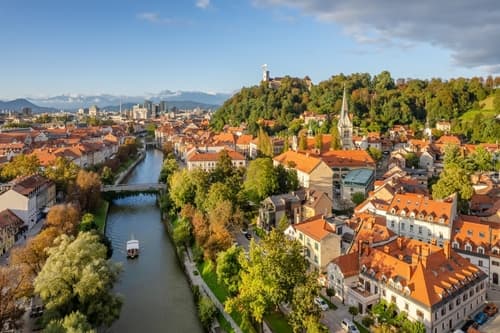
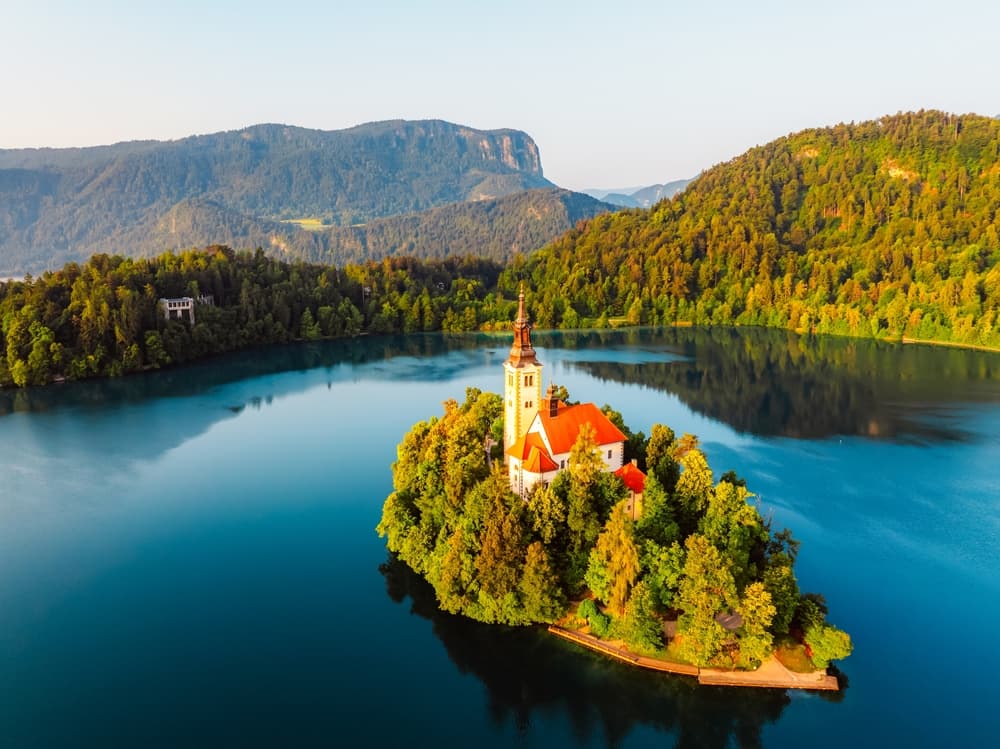
Slovenia is the smallest country of the former Yugoslavia and, by most livability measures, the most accomplished. Ljubljana is a capital of 300,000 that functions with the infrastructure of a Scandinavian city at prices well below Western Europe: a car-free center along a willow-lined river, café terraces that operate as the city's real offices, fiber everywhere, and a civic tidiness that makes visitors suspect an urban-planning conspiracy. Within ninety minutes of the capital sit the Julian Alps, Lake Bled and Bohinj, the emerald Soča valley, the Karst caves and a short, perfect stretch of Venetian Adriatic at Piran; the country's genius is that all of it is a day trip and none of it requires choosing. The seasonal economy hires around the calendar's edges too: Kranjska Gora's ski winter and Bled's summer both staff up, and the tourist farms of the Julian foothills trade room and board.
The November 2025 nomad permit finally gave non-EU remote workers a front door. The terms are honest about what Slovenia wants: established professionals at twice the average net salary, a single mobile year rather than a settlement track, and a clean wall between nomad income and the local labor market. The escape hatch is equally official, since holders can switch to another permit type mid-year, and the immediate family reunification is one of the friendlier clauses in any European program. Around the permit sits an EU and Schengen member with the euro, average internet among Europe's fastest, and a location that puts Venice, Vienna, Zagreb and Budapest all within a morning's drive.
The temperament rewards a particular kind of resident. Slovenes are reserved, modest to the point of allergy about boasting, environmentally serious and outdoors-obsessed; the national calendar runs on hiking seasons, and the highest local compliment is that someone is uncomplicated. It is not a networking capital, and the professional isolation of a two-million-person market is the honest trade for the quality of everything else. People who want stimulation import it on the train from four neighboring countries. People who want to work deeply in a beautiful, functioning place tend to discover they have stopped comparing.
Widening the search? If you are looking to expand your job hunt across Central Europe, take a look at Croatia →, Italy →, and Austria →.
Cost of living
Slovenia prices between Central Europe and the West, and delivers Western function for the difference. A one-bedroom in Ljubljana runs roughly 700 to 1,100 euros a month, with the medieval center at a premium, Maribor a solid quarter cheaper, and the coast seasonal in the Adriatic way; supply in the small capital is tight, and the autumn student surge is the wrong season to arrive without a lease. Utilities are moderate with real winter heating months, and the euro keeps the arithmetic honest.
Daily life runs gently upscale: the malica, the subsidized-feeling set lunch, at 8 to 12 euros remains one of Europe's best working-day deals, specialty coffee under 3, excellent wine from the country's three regions at prices that embarrass its Italian neighbors, and a farmers' market culture, Ljubljana's central market above all, that makes self-catering a pleasure rather than an economy. Transport is nearly a rounding error, the capital being walkable and bikeable end to end with the BicikeLJ share system at token cost, though the honest budget adds a car or rentals for the mountains, since the country's best 60 percent is trailhead-shaped.
- One-bedroom rent: roughly 700 to 1,100 euros in Ljubljana with the center at a premium and supply tight; Maribor 25 percent less, and autumn arrivals should secure leases before the student wave.
- The malica: set lunches at 8 to 12 euros across every town, the daily institution that keeps working-life food costs Central European while quality runs Alpine-Italian.
- Coworking desk: 120 to 220 euros a month in Ljubljana's compact but genuine scene, with Maribor and Celje smaller and cheaper, and café-working universally tolerated.
- Getting around: the capital walks and bikes end to end with BicikeLJ at token cost; the mountains want a car, at 250 to 400 euros a month owned or rented, and it is the budget line that unlocks the country.
Cost-of-living calculator
See how your budget stretches in Slovenia.
Estimates use approximate exchange rates and typical monthly costs. Your actual costs will vary.
Visas & Entry
Slovenia is a full EU and Schengen member: 90 days in any 180 for visa-free Western passports under EES biometric logging, with ETIAS expected late in 2026, and temporary internal border checks with Croatia and Hungary a current fact of the Schengen map. On 21 November 2025 the country added the piece it had always lacked, a temporary residence permit for digital nomads under the amended Aliens Act, making Slovenia the seventeenth European country with a dedicated route.
The official design, per the government's own guidance: the permit serves non-EU, non-EEA nationals who are employed by, or work under civil-law contract for, a business entity based outside Slovenia, or are self-employed abroad, with all work performed remotely by information and communication technology; holders are explicitly outside the Slovenian labour market and need no employment-service approval. Income must reach at least twice the average monthly net salary in Slovenia, calculated from the most recently published gross figures, in practice roughly 3,100 to 3,300 euros a month through 2026 and recalculated as wage data moves, evidenced by contracts, payslips and bank statements telling one story. Applications file at any Slovenian diplomatic or consular post abroad, or, for those already legally in Slovenia including visa-free visitors, at any administrative unit, the upravna enota, in-country, with biometrics, insurance, a clean criminal record, accommodation proof, address registration within eight days of arrival, fees of roughly 50 to 160 euros depending on route, and decisions typically in 30 to 60 days. The permit runs up to one year and cannot be extended; reapplication opens six months after expiry; and the official bridge for stayers is written into the scheme itself, since a holder may apply at any time during validity for a different permit type, employment, study, business, on which longer plans can be built. Family reunification is immediate, with no minimum residence period, and family members share the same wall against Slovenian employment.
- The threshold is a formula, not a number: twice the average net salary, recalculated from the latest published wage data, roughly 3,100 to 3,300 euros through 2026; read the current figure from official sources the week you file and treat every article's figure, including this one, as a snapshot.
- File abroad or file inside: any consulate takes the application, and so does any administrative unit for those already legally in Slovenia, which makes the visa-free window a legitimate filing base for Western passports.
- One year means one year: no extension exists, reapplication waits six months after expiry, and the plan for month thirteen belongs in the plan for month one.
- The switch clause is the real long-game door: applying for a different permit purpose mid-validity is expressly allowed, so a Slovenian job offer, a business registration or a study place converts the nomad year without leaving.
- Family comes now, not later: reunification carries no waiting period, needs combined means above the base threshold, and inherits the same wall against Slovenian employment.
- Do the small compliance early: address registration within eight days, biometrics at filing, apostilled criminal record and insurance in order; the program is new enough that clean files move and creative ones teach the officials with your case.
| Visa or permit | What it covers |
|---|---|
| Schengen visa-free entry | Ninety days in any 180 for most Western passports under EES, with ETIAS expected late 2026; temporary checks at the Croatian and Hungarian borders currently apply. The scouting window, and a legal launchpad for filing in-country. |
| Digital nomad permit | Up to one year for non-EU remote workers serving foreign employers, foreign contract principals or their own foreign self-employment, at twice the average net salary, roughly 3,100 to 3,300 euros monthly through 2026. Non-renewable, six months out before reapplying, no Slovenian clients or employment, and no residency clock. |
| The switch clause | During the permit's validity a holder may apply for any other residence purpose, employment, business, study, the official answer to the no-renewal rule and the route by which a nomad year becomes a Slovenian life. |
| Family reunification | Immediate, with no waiting period, for spouses and children, who receive their own permits against the principal's income and share the ban on Slovenian work; among the friendlier family clauses in Europe's nomad catalogue. |
| Single permit (employment) | The standard work-and-residence route for jobs with Slovenian employers, and the natural switch target for nomads recruited locally; it starts the residency clock the nomad permit does not. |
| Business routes (s.p. and d.o.o.) | The sole-trader registration and the limited company ground residence for founders who localize, opening the flat-expense normirani regime and the local market; the settling-in chapter rather than the arrival one. |
| EU and EEA citizens | Freedom of movement: registration after 90 days, no permit machinery, and none of the thresholds apply. |
Good to know: Launched 21 Nov 2025 (17th in Europe): 1 year non-renewable (reapply after 6 months out), 2x avg net salary (~€3,100-3,300 through 2026), file at consulates or any upravna enota in-country, mid-validity switch to other permits allowed, immediate family reunification.
EnRoute Jobs AI tool
Route Planner
Map visa routes, timelines, and relocation costs for your next destination.
Work & Legal
Slovene professional culture is modest, precise and quietly efficient. Boasting is close to disqualifying, punctuality is assumed, meetings run shorter than the coffee afterward, and trust builds through delivered work rather than declared ambition; the business culture guides all note the same thing, that Slovenes admire humility in associates and are allergic to self-promotion. English is excellent across the professional class, German and Italian useful at the edges, and the working rhythm bends unapologetically around the outdoors, with summer Fridays pointing at trailheads.
For nomad-permit holders the legal lines are drawn in the scheme itself: remote work for foreign employers, foreign principals or one's own foreign self-employment is precisely what the permit authorizes, and Slovenian employment or clients are precisely what it excludes, with the switch clause as the lawful route when a local opportunity appears. Tourist-stay remote work remains the usual quiet European gray zone. For those who localize, the s.p. sole-trader registration and the d.o.o. company are accessible with residence authorization, the normirani flat-expense regime keeps small-revenue freelancing simple, and the small market's compensation is a tech and startup scene, Ljubljana's outsized in quality if not quantity, that treats newcomers as additions rather than competition.
- The permit authorizes foreign-source remote work explicitly and excludes the Slovenian labour market entirely; local offers route through the switch clause into an employment permit, not through improvisation.
- Modesty is the operating system: understate, deliver, and let the work talk; the fastest way to lose a Slovene counterpart is to sell hard, and the fastest way to win one is to be early, brief and precise.
- Localizing has real machinery: the s.p. registration with the normirani flat-expense option suits freelancers who take up residence, and the d.o.o. suits scale; both belong to the after-the-switch chapter with an accountant retained first.
- Expect the outdoor calendar: the country empties uphill on fine weekends and August is genuinely quiet; planning bureaucracy and dealmaking around the mountain seasons is not a joke but a scheduling principle.
Good to know: Nomad permit explicitly authorizes foreign-source remote work and excludes the Slovenian labour market; the mid-validity switch clause is the lawful route to local employment or business.
Taxes
Slovenian tax is honest Central-European progressive: five brackets from 16 to 50 percent, real social contributions, and no special nomad regime. The permit itself creates no tax residency; the calendar and your center of life do, and under 183 days with ties elsewhere, Slovenia generally leaves foreign income alone.
| What applies | The rule in 2026 |
|---|---|
| The permit is not a tax status | Holding the nomad permit does not make you a Slovenian tax resident; residency follows the general tests, and short-stay holders anchored elsewhere typically remain outside the Slovenian net on foreign income. |
| Residency: 183 days or center of life | Presence of 183 days in a year, a permanent home, or a center of personal and economic interests in Slovenia makes you resident and taxable on worldwide income; a full permit year spent mostly in-country crosses the line, and planning around it is the program's central tax question. |
| The progressive schedule | Five brackets run 16, 26, 33, 39 and 50 percent, the top rate arriving above roughly the low seventy thousands of euros; general reliefs trim the base, and the schedule is the honest price of the country's functioning. |
| Social contributions | Slovenian contributions attach to Slovenian employment and local self-employment rather than to foreign remote arrangements; residents on foreign contracts should confirm their home-system coverage continues, and localizers via the s.p. should budget the full self-employed contribution load before choosing it. |
| The normirani option, for localizers | The flat-expense sole-trader regime deems most revenue to be costs within thresholds that were being recalibrated through 2026, keeping small freelance operations simple and lightly taxed; a later-chapter tool, chosen with an adviser, not an arrival assumption. |
| Capital income and VAT | Dividends, interest and capital gains run at a flat rate around 25 percent for residents, with holding-period relief on gains, and VAT stands at 22 percent inside every price. |
| Americans specifically | The US-Slovenia treaty applies, and a totalization agreement has been in force since 2019, so self-employed Americans who do join the Slovenian system can escape US self-employment tax with a certificate of coverage; under 183 days with no Slovenian tax paid, the FEIE does the ordinary work. |
| Filing, if resident | Residents file through the eDavki system with substantial pre-filling; the first year's return after establishing residency is the one to buy a davčni svetovalec's hour for, and thereafter the machine mostly runs itself. |
Verified 20 August 2026. The permit confers no tax status; 183-day and center-of-life tests govern; brackets 16 to 50 percent; US treaty and 2019 totalization agreement in force. The normirani thresholds were being recalibrated through 2026 and deserve current advice. General information, not tax advice.
Good to know: No nomad tax regime: 183-day/center-of-life residency, progressive 16-50%, contributions attach to local work; US treaty plus totalization agreement (2019); normirani s.p. is the localizer's later tool.
Healthcare
Slovenian healthcare is the quiet European good kind: a universal public system of genuine quality anchored by the university medical centers in Ljubljana and Maribor, EHIC access for EU visitors, and outcomes that stand comparison with far richer neighbors. The known weakness is queues for non-urgent public specialists, which the compact private tier exists to solve: a private consultation runs 40 to 80 euros with English near-universal among clinicians, and the diagnostic clinics turn scans and second opinions around in days.
Nomad-permit holders live on the private side by design, since the permit requires insurance and confers no public enrollment; the setup that works is comprehensive cover plus direct-pay private care for the routine. Pharmacies are excellent, dentistry is good value without being the regional bargain, emergency response is strong nationwide on 112, and the one genuinely local health note is outdoors-shaped: tick-borne encephalitis is endemic in Slovenian forests, and residents who hike, which is to say residents, routinely vaccinate.
- Private consultation: 40 to 80 euros, English near-universal, and same-week access that neatly bypasses the public queues; the permit's insurance requirement is also simply the correct arrangement.
- Emergency number 112, with strong response nationwide and mountain rescue, the GRZS, world-class and busy; Alpine insurance riders for hiking and skiing are worth their small cost.
- Vaccinate for ticks if you will use the forests: tick-borne encephalitis is endemic and the TBE course is routine local practice for anyone whose weekends point at trails.
- EHIC covers EU visitors on local terms; everyone else runs private, and the university centers remain the destination for anything genuinely complex.
| Hospital | What to know |
|---|---|
| University Medical Centre Ljubljana | The national flagship and Central Europe's serious tertiary campus, where complex national care concentrates across every specialty. |
| University Medical Centre Maribor | The second university hospital, anchoring the east with full tertiary coverage and the country's other academic bench. |
| General Hospital Celje | The largest of the regional general hospitals, covering the central-eastern corridor with broad acute care. |
| Izola General Hospital | The coastal general hospital serving Koper, Piran and the Adriatic strip, with the summer season's emergency load. |
| Medicor, Ljubljana | The capital's established private hospital, cardiology-strong and surgical, the direct-pay tier's most complete facility. |
| Diagnostic Centre Bled | The well-known private diagnostic and outpatient clinic, a fixture for fast imaging, gastroenterology and second opinions at Alpine convenience. |
Hospital list compiled 20 August 2026 and not yet confirmed against each facility directly. Treat as indicative and verify before relying on it.
Good to know: High-quality universal system with public queues solved by a €40-80 private tier; permit holders live private by design; TBE vaccination is routine for forest users.
Safety
Slovenia is one of the safest countries on this site and one of the safest on earth, a fixture of the Global Peace Index's top ten, with violent crime rare enough to be news and Ljubljana routinely rated among the continent's safest capitals. The pickpocketing that exists clusters where the tour groups do, the old town's bridges and the station in season, and standard bag sense retires it. Every government this site tracks holds Slovenia at its lowest tier.
What replaces crime on the honest risk list is the outdoors, taken at the country's own scale. The Julian Alps are real mountains that collect casual hikers annually, and the American advisory's one specific instruction, never hike alone, check weather closely, follow local guidance, is the correct one; mountain weather turns fast even in August, and the via ferrata routes and winter tours belong to the properly equipped. Western Slovenia sits on a fault line that delivers occasional tremors, bears and wolves inhabit the forests and are occasionally met, tick-borne encephalitis makes the vaccination a local norm, and the Soča's white water and the winter avalanche terrain each carry their sport's ordinary seriousness. None of this is danger in the civic sense; all of it is nature at full scale an hour from a capital that has forgotten what street crime looks like.
- Treat the Alps as Alps: never hike alone, check mountain weather the morning of, carry layers past every forecast, and let the GRZS mountain-rescue statistics, filled annually by casual walkers, argue for humility the views will not.
- Vaccinate for TBE and check for ticks after forest days; encephalitis is endemic, the course is routine local practice, and repellent plus the evening check is the actual habit.
- Respect the wildlife arithmetic: bears and wolves live in the forests and encounters happen; noise on the trail, food discipline at camps and distance at sightings cover the entire protocol.
- Old-town pickpocketing is seasonal and tiny: the Triple Bridge crowds and station in summer are the entire map, and ordinary bag sense ends the topic.
- Drive to the winter rules: winter tires are legally required in season, mountain passes close, and the vignette-and-radar highway culture takes its speed limits literally.
- Expect the occasional tremor in the west without alarm; the fault is real, serious quakes are rare, and buildings are engineered to the fact. Emergency number 112, answered in English.
Official travel advisories
| Government | Current position |
|---|---|
| United States | Level 1, Exercise Normal Precautions, updated 15 May 2026 with no change to level or indicators; the country guidance adds tourist-area petty-crime notes and specific Julian Alps advice: follow local guidance, watch weather, never hike alone.travel.state.gov → |
| United Kingdom | No advisory against travel, with standard guidance on petty crime, mountain conditions and winter driving equipment rules.gov.uk → |
| Canada | Take normal security precautions, with Schengen mechanics and standard tourist-area awareness notes.travel.gc.ca → |
| Australia | Exercise normal safety precautions, green, with the local specifics worth reading: western Slovenia's earthquake fault and occasional tremors, and bears and wolves occasionally encountered in mountain areas.smartraveller.gov.au → |
| US Embassy Ljubljana | Enroll in STEP for alerts, which run sparse in the best way. Prešernova 31, Ljubljana; switchboard +386 1 200 5500.si.usembassy.gov → |
Advisory positions verified 20 August 2026, including Smartraveller directly. All four governments hold Slovenia at their lowest tier; the honest risk list is mountains, ticks and wildlife rather than crime. Open the sources before travelling.
Good to know: Lowest tier from all four governments; among the safest countries on earth; the risk list is Alpine (never hike alone), TBE ticks and wildlife, not crime.
Climate
Slovenia fits three climates into a country crossable in three hours. The Julian Alps in the northwest run true Alpine, heavy snow December through March and cool bright summers; Ljubljana and the center run continental, minus two to three in January with fog and snow, 22 to 27 in July with thunderstorm evenings; and the forty-six kilometers of Adriatic coast run Mediterranean, mild winters, hot dry summers and Piran evenings that feel imported from Italy. For a remote worker the shoulder months, May-June and September-October, unlock all three zones at once, and the practical genius of the geography is that the choice is never permanent: the capital worker skis before lunch in January and swims after work in July, both within ninety minutes of the desk.
| Season | What to expect |
|---|---|
| Alpine northwest | Serious snow December to March with skiing at Kranjska Gora and Vogel, and cool luminous summers built for the trail; mountain weather turns fast in every month. |
| Continental center, winter | Ljubljana around minus two to three in January with fog, snow episodes and café interiors doing their best work; cheap, quiet and productive. |
| Continental center, summer | Twenty-two to twenty-seven with afternoon thunderstorms, the river cooling the old town and the entire city living outdoors until the storm arrives. |
| Mediterranean coast | Mild winters and hot dry summers on the short Adriatic strip, Piran at its best in the shoulders when the day-trip crowds thin and the seafood does not. |
Good to know: Shoulders unlock all three climate zones at once; the ski-morning, swim-evening day is genuinely possible from the capital.
Culture & Customs
Slovene culture is Alpine-Slavic with a Mediterranean seam: reserved, modest, environmentally devout and organized around the outdoors to a degree that reads as national religion. The mountains are identity, Triglav on the flag and the summit treated as a citizenship rite; weekend plans default uphill, and the person who has climbed nothing has, in a quiet way, not yet arrived. Modesty is the social law, boasting is close to disqualifying, and understatement is how competence signals itself; visitors from louder cultures recalibrate or bounce. Beneath the reserve runs real warmth on a slow release, best accessed at the mountain hut, the vineyard cottage and the market stall, and once granted it is durable.
Daily codes are light and sincere. Greetings are exchanged on trails and entering small shops, punctuality is respect, shoes come off in homes, recycling is a moral act performed with four bins and total seriousness, and the country's wine, from three regions and often superb, is discussed with the modesty applied to everything else and none of the volume it deserves. Tipping rounds to ten percent in restaurants, the LGBTQ+ picture is among the region's most settled with same-sex marriage legal since 2022, and the conversational safe harbors are mountains, food and where to swim, which conveniently are also the national obsessions.
- Go up a mountain early in your stay: the hike is the social handshake, the hut culture is the country's living room, and Triglav, guided and prepared, is the citizenship rite worth training toward.
- Understate everything: modesty is the professional and social law, self-promotion lands as vulgarity, and the compliment culture runs dry, precise and rare enough to mean something.
- Take the recycling seriously: the four-bin discipline is a moral act here, littering anywhere near nature is genuinely scandalous, and environmental carelessness marks a visitor faster than any language gap.
- Greet on trails and in shops: the dober dan entering a bakery and the hello passing on a path are small mandatory courtesies whose absence is noticed.
- Drink the wine and ask about it: three regions, superb quality, zero marketing; showing informed interest in Slovenian wine is a reliable key to the reserve.
- Tip around ten percent in restaurants, round up in cafés; appreciated, unchased, and service is never theatrical about it.