.png)
About Italy
Italy is not one country and has never really pretended to be. It unified in 1861, which is recent enough that people still identify with their city before their nation, and the gap between Milan and Palermo is wider than the gap between many separate European states. Where you choose to sit changes the cost, the pace, the food and the bureaucracy you will face.
For remote workers the appeal needs no explanation and the drawbacks get less airtime. Italian administration is genuinely difficult, slower and more paper-bound than anywhere else in Western Europe, and the queue at the Questura for a residence permit is measured in weeks rather than hours. English support thins out fast outside Milan and Rome. Anyone planning to settle in the south should treat learning Italian as a requirement rather than a courtesy.
Set against that is a country where the ordinary daily texture is better than almost anywhere. Fast trains connect the major cities, the north sits within reach of the Alps and the whole of central Europe, and the cost of living outside Milan is meaningfully below France or Germany. The visa itself is now well established rather than experimental, with operational guidelines finalised in March 2026 and no quota cap.
Widening the search? If you are looking to expand your job hunt across Southern Europe, take a look at Spain →, Greece →, and Portugal →.
Cost of living
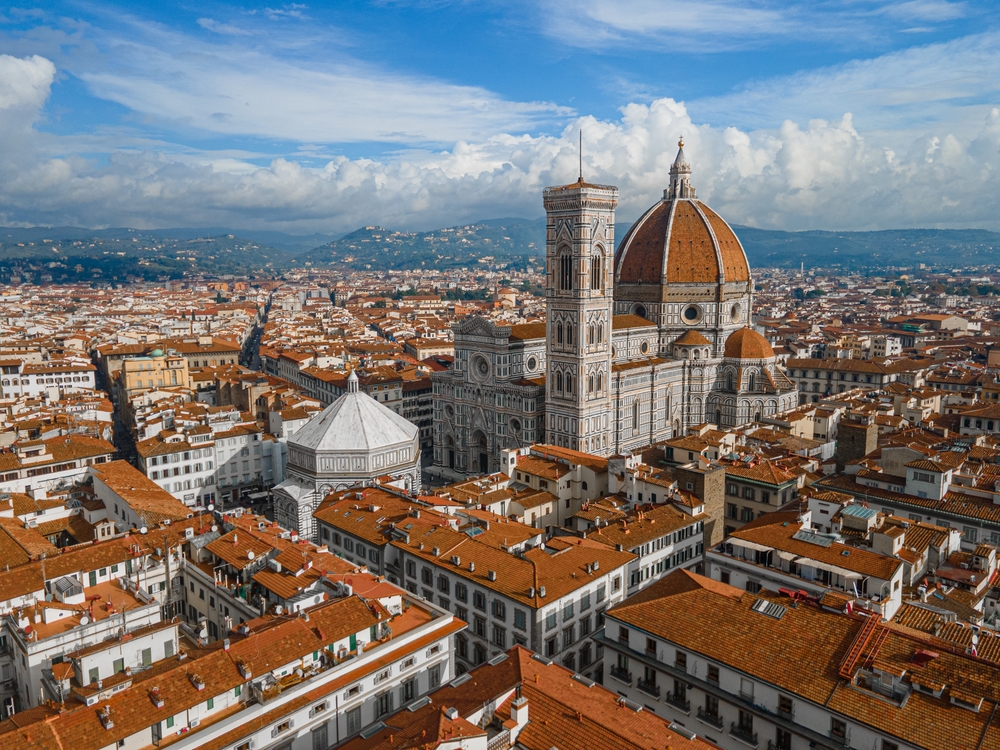
Italy's north-south spread is the widest of any country in Western Europe. Milan prices like a major financial capital; Naples and Palermo cost roughly half. Rome and Florence sit between, with Florence's tourist economy pushing rents well above what the city's size would suggest.
Two things catch people out. Housing paperwork is demanding, and a registered lease is required for both the visa and the residence permit, so the informal arrangements common elsewhere will not work here. And older buildings across the north are poorly heated and expensive to warm; winter utility bills in Milan or Turin surprise people who expected Mediterranean weather.
- Furnished one-bedroom: roughly EUR 1,100 to 1,600 a month in Milan, EUR 900 to 1,300 in Rome or Florence, and EUR 500 to 800 in Naples, Bologna's outskirts or the south.
- Coworking desk: EUR 150 to 300 a month, highest in Milan.
- Pranzo di lavoro: a set working lunch at EUR 12 to 18, still standard in most cities.
- Espresso at the bar: EUR 1 to 1.50 standing. Sitting at a table can triple it, and that is a posted price rather than a scam.
Cost-of-living calculator
See how your budget stretches in Italy.
Estimates use approximate exchange rates and typical monthly costs. Your actual costs will vary.
Visas & Entry
Italy is a full Schengen member, so most Western passports get 90 days within any 180-day period, shared across all 29 Schengen states. Working remotely on that tourist entry is not authorised, whatever common practice suggests, and the digital nomad visa exists precisely to close that gap.
The visa sits under Article 27-quater of the immigration code, created by the decree of 29 February 2024 and operational since 5 April 2024, with implementing guidelines finalised in March 2026. It sits outside the decreto flussi quota system, and no numerical cap has been imposed. It must be applied for at an Italian consulate in your country of residence; you cannot file from inside Italy.
- The "highly specialised" test is the real gate. You need a three-year university degree in your field, or five years of documented professional experience, reduced to three for ICT and technical roles. This rejects more applicants than the income requirement.
- Six months of prior remote work in the same field, evidenced by contracts or an employer letter.
- Only active income counts. Pensions, rental income, dividends and capital gains are explicitly excluded from the threshold calculation.
- Accommodation must be real. A registered lease or property deed is required, and short-term booking confirmations are generally refused under the housing suitability rules.
- Eight days to file the permesso di soggiorno after arrival, at the local Questura. Expect the appointment queue itself to take weeks.
| Visa or permit | What it covers |
|---|---|
| Schengen short stay | Ninety days within any 180-day period for US, UK, Canadian, Australian and most Western passports, shared across all 29 Schengen states. Does not authorise work of any kind. |
| Digital Nomad Visa | A Type D national visa under Article 27-quater for highly specialised remote workers and freelancers serving clients outside Italy. Twelve months, renewable, and outside the decreto flussi quota. Income threshold around EUR 28,000, though consulates cite figures from EUR 24,789 upward. |
| Elective Residence Visa | For those living on passive income who will not work at all. No minimum stated in law but consulates expect substantial and stable unearned income. Explicitly forbids any employment, including remote. |
| Self-employment visa | Subject to the decreto flussi annual quota, which makes it far harder to obtain than the nomad route despite covering similar work. |
| Family reunification | Spouses and dependent children can join under ricongiungimento familiare, with additional income required per family member. |
| Permanent residence and citizenship | Permanent residency after five years of continuous legal residence; citizenship generally after ten. Both require the residence permit to have been maintained without gaps. |
Verified 20 August 2026 against the March 2026 implementing guidance. Income thresholds vary between consulates because the statutory formula is indexed to a healthcare benchmark rather than fixed. Confirm with your post before filing.
Good to know: €28,000/year (~€2,333/month) income threshold; consulate application required — processing has varied by location.
Work & Legal
Italian professional life is formal in ways that surprise people who expect Mediterranean informality. Titles are used and matter, dottore applies to anyone with a degree rather than only physicians, and the shift to first names is earned rather than assumed. Relationships precede business and August empties the country almost completely. Decisions travel up hierarchies slowly, and following up by phone rather than email is usually what unsticks them.
- Remote work for foreign employers and clients: what the nomad visa authorises, and the reason it exists.
- Working remotely on a Schengen tourist entry is not authorised, despite being extremely common. The visa closed that gap deliberately.
- Italian clients push you outside the nomad visa's scope and into self-employment territory, which is quota-limited under the decreto flussi.
- Get a codice fiscale first. The tax code gates a bank account, a phone contract, a lease and the residence permit, and nothing else can start without it.
- Freelancers need a partita IVA and an accountant. Italian invoicing runs through mandatory electronic submission and is not something to improvise.
Good to know: Digital Nomad Visa provides explicit authorization; tourist-entry remote work for overseas clients is practiced without enforcement.
Taxes
Italy has three overlapping tax regimes that could apply to a remote worker, and choosing wrong costs more than any other decision on this page. The widely repeated claim that digital nomads get a 7% flat tax is simply false: that regime is for foreign pensioners relocating to small southern towns.
| What applies | The rule in 2026 |
|---|---|
| Tax residency | Triggered by 183 days in a calendar year, or by habitual abode or domicile in Italy. Residents are taxed on worldwide income. Registering with the Anagrafe is itself strong evidence of residency. |
| Standard rates (IRPEF) | Progressive at 23%, 33% and 43%, plus regional and municipal surcharges that add several points. The 2026 Budget Law cut the middle band, covering EUR 28,000 to 50,000, from 35% to 33%. |
| Regime forfettario | The default choice for most nomad visa holders. A 5% flat rate for the first five years, then 15%, on freelance income up to EUR 85,000, with simplified accounting. Requires an Italian VAT number. |
| Impatriati regime | Exempts 50% of qualifying income for five years, 60% with a dependent child under 18, capped at EUR 600,000. The former 70% and 90% rates were abolished and the ten-year extension removed. |
| The impatriati catch | It may not apply to you at all. The regime covers income produced in Italy, while the nomad visa is specifically for work performed for foreign employers and clients. Italian advisers take a cautious view on whether nomad income qualifies, and it turns on facts. Do not plan around it without written advice. |
| Impatriati conditions | You must not have been Italian tax resident for the three prior years, six or seven if returning to the same employer group, and must commit to at least four years of Italian tax residency. Leaving early triggers clawback. |
| Social security (INPS) | Self-employed workers outside the forfettario fall into Gestione Separata at around 26%, which is what makes the flat regime so much more attractive for freelancers under the threshold. |
| The 7% southern flat tax | Frequently misreported as a nomad benefit. It applies to foreign pension income for retirees relocating to qualifying towns under 20,000 people in the south. Remote workers do not qualify. |
| VAT (IVA) | 22% standard, with reduced 10%, 5% and 4% bands. |
| Treaty position | Italy holds an extensive treaty network including with the United States, so relief routes are generally available. |
Verified 20 August 2026. Under roughly EUR 85,000 as a freelancer the forfettario usually wins; above it, or as an employee, the impatriati question needs a commercialista. General information, not tax advice.
Good to know: Res Non Dom flat-tax scheme (€100,000/year on foreign income) available for new residents; attractive for very high earners.
Healthcare
Italy's national health service, the Servizio Sanitario Nazionale, is among the better systems in Europe and consistently produces life expectancy above the US at a fraction of the spending. Nomad visa holders are not automatically enrolled: private insurance covering at least EUR 30,000 is required for the visa itself, and once resident you can register with the SSN voluntarily by paying an annual contribution.
Quality varies noticeably by region, and the north-south gradient is real. Lombardy, Emilia-Romagna and Veneto run hospitals comparable to anywhere in Europe; parts of the south have longer waits and older facilities, and internal medical tourism from south to north is common among Italians themselves.
- Private specialist consultation: EUR 80 to 150 without insurance, typically within days rather than weeks.
- Voluntary SSN registration: an annual contribution scaled to income, which is often cheaper than private insurance for anyone staying long term.
- The visa requires private cover of at least EUR 30,000 including hospitalisation and repatriation. Travel insurance is not accepted.
- Emergency number: 112, the Europe-wide line.
| Hospital | What to know |
|---|---|
| Ospedale San Raffaele, Milan | Private research hospital attached to Vita-Salute San Raffaele University, consistently ranked among Italy's best and strong across most specialties. |
| Istituto Clinico Humanitas, Milan | Private teaching hospital with an international reputation in oncology and immunology, and an established international patient service. |
| Policlinico Gemelli, Rome | Major university teaching hospital and the largest in the capital, functioning as a national referral centre. |
| Policlinico Sant'Orsola, Bologna | One of the largest public teaching hospitals in the country, with broad specialist and transplant capability. |
| Azienda Ospedaliera Careggi, Florence | The principal teaching hospital for Tuscany and the regional referral centre. |
| Ospedale Cardarelli, Naples | The largest hospital in southern Italy and the main emergency and trauma centre for the Campania region. |
Hospital list compiled 20 August 2026 and not yet confirmed against each facility directly. Treat as indicative and verify before relying on it.
Good to know: EU EHIC covers public facilities; quality varies by region — northern Italy has world-class hospitals, the south is more variable.
Safety
Italy is a safe country by any reasonable measure, and violent crime against visitors is rare. What it does have, in volume, is opportunistic theft aimed squarely at tourists, executed with more skill than almost anywhere else in Europe. Rome, Milan, Naples and Florence all sustain professional pickpocketing operations around the sites and on public transport.
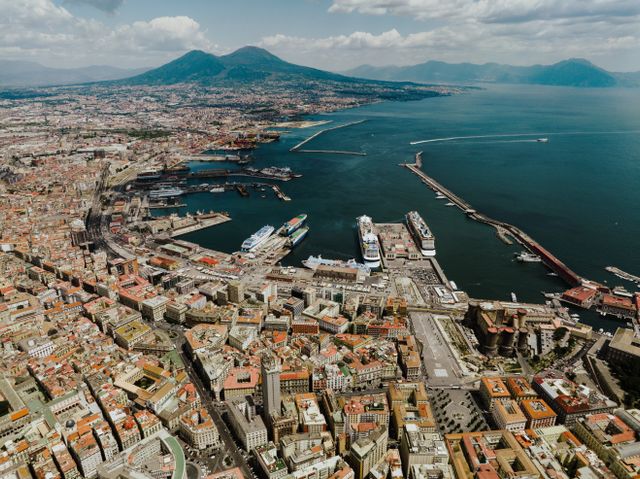
The other realistic risks are environmental. Italy is seismically active along the Apennines, sits under two active volcanoes near Naples, and now runs summer heat that is genuinely dangerous inland rather than merely uncomfortable.
- Pickpocketing is the defining risk. Rome's Termini station and the 64 bus toward the Vatican, Milan's Duomo and central metro, Naples around the station, and the crowds outside the Uffizi are the recognised hotspots.
- Distraction techniques are practised. Petition signers, spilled substances, crowded boarding at metro doors. The theft happens while you deal with the interruption.
- Unofficial taxis and inflated fares at airports and stations. Use the official rank or an app, and know the fixed airport fares, which are posted.
- Summer heat is a genuine hazard. Inland cities including Florence, Rome and the Po valley regularly pass 40C, and heat-related deaths are now a recurring feature of Italian summers.
- Seismic activity along the Apennine spine, plus the Campi Flegrei caldera near Naples, which has seen elevated activity and periodic evacuations of specific neighbourhoods.
- ZTL zones will fine you by post. Restricted traffic areas in historic centres are camera-enforced, and rental drivers routinely collect several fines before discovering them months later.
Official travel advisories
| Government | Current position |
|---|---|
| United States | Exercise increased caution due to terrorism, in line with the level applied across most of large-nation Western Europe. No region-specific restrictions.travel.state.gov → |
| United Kingdom | No advisory against travel. Guidance covers petty crime, Schengen entry limits, and seismic and volcanic activity around Naples.gov.uk → |
| Canada | Advises normal security precautions, its lowest tier, with petty crime the main flagged concern.travel.gc.ca → |
| Australia | Advises a high degree of caution, citing terrorism risk in Europe generally rather than anything Italy-specific.smartraveller.gov.au → |
| US Embassy Rome | Register with STEP for alerts, which is worth doing given how quickly Campi Flegrei guidance can change.it.usembassy.gov → |
Advisory positions verified 20 August 2026. Governments differ on Italy more than the country's actual risk profile would suggest, so read the one that applies to you rather than the average.
Good to know: Petty theft is the primary concern in tourist-saturated areas; Naples and Rome require more active urban awareness than smaller cities.
Climate
Italy runs nearly 1,200 kilometres north to south and the climate changes completely across that span. The Alpine north has cold snowy winters and short warm summers. The Po valley around Milan and Bologna is continental, foggy and cold in winter and oppressively humid in summer, which surprises people expecting Mediterranean weather. Central Italy is temperate, and the south and islands are properly Mediterranean, mild in winter and severe in summer. Altitude matters too: much of the peninsula is mountainous.
| Season | What to expect |
|---|---|
| Spring, March to May | The best season nearly everywhere. Highs from 15C to 24C, countryside at its greenest, and the cities workable before the summer crowds. May is close to ideal in Rome and Florence. |
| Summer, June to August | Hot and increasingly extreme inland, with Florence, Rome and the Po valley passing 40C in heatwaves. Coastal areas are more bearable. August empties the cities as Italians leave, and many businesses simply close. |
| Autumn, September to November | The other excellent stretch. September holds summer warmth with the crowds gone, October settles around 20C, and November brings serious rain to the north. Harvest season and the best food of the year. |
| Winter, December to February | Genuinely cold and foggy in Milan and the Po valley, often near freezing. Mild in Sicily and the south at 12C to 16C. Alpine ski season runs December to March. Older buildings heat poorly and expensively. |
Good to know: May and October are optimal across most of Italy; July-August is very hot and maximally tourist-saturated.
Culture & Customs
Italian social life is warm, loud and considerably more formal underneath than it appears. Greetings are not skipped, appearance is read as a signal of self-respect rather than vanity, and the concept of bella figura, presenting yourself well, governs more behaviour than any visitor expects. Volume and gesture are not aggression. Interruption is participation.
Regional identity outranks national identity almost everywhere. People are Milanese, Neapolitan or Sicilian first, and the north-south divide carries real historical grievance in both directions. Treating Italy as culturally uniform, or repeating northern jokes about the south, closes doors quickly.
- Dress better than you think you need to. Sportswear outside a gym reads as carelessness, and it affects how you are treated in shops and offices.
- Learn the coffee rules. Cappuccino is a morning drink, an espresso is drunk standing at the bar, and ordering a latte gets you a glass of milk.
- Do not ask for changes to a dish, or for parmesan on seafood pasta. Recipes are regional and treated as settled.
- Lunch closes things. Many shops and offices shut from roughly 1pm to 4pm, particularly in the centre and south, and this is not negotiable.
- Tipping is not expected. Coperto is a cover charge, not a tip, and rounding up is plenty.
- Be patient with bureaucracy in person. Frustration expressed at a counter will slow things down, and the person opposite has no power to bend the rule anyway.