.png)
About Barbados
Barbados is where the digital nomad visa was invented, and six years on the original is still the best-designed one in its hemisphere: the Welcome Stamp, launched July 2020 when the island decided remote workers were an industry worth building, remains the Caribbean's benchmark in 2026, renewed by Cabinet through the end of the year and copied by a dozen islands that each missed at least one of its details.
The paperwork, in full: 2,000 dollars for an individual, 3,000 for a family covering spouse and dependents with the income bar applying to the principal only, against 50,000 dollars of documented annual income from employers or clients outside Barbados, an employment letter, bank statements or tax returns all serving, plus health insurance valid on the island and a background check. The application runs entirely online at barbadoswelcomestamp.bb with decisions in roughly seven business days, among the fastest sovereign paperwork in this index, granting twelve months renewable indefinitely with a 25 percent discount on renewal fees, no minimum-stay requirement, and a permanent-residence conversation available after years of continuous presence for those who stay. The detail that does the heavy lifting: Welcome Stamp holders are classified as non-residents for Barbados tax purposes, which means foreign income owes the island exactly nothing for the visa's duration, no filing, no remittance games, no fine print, the cleanest tax treatment any nomad visa offers, with the standing caveat that your home country's rules continue to apply and the stamp changes nothing there.
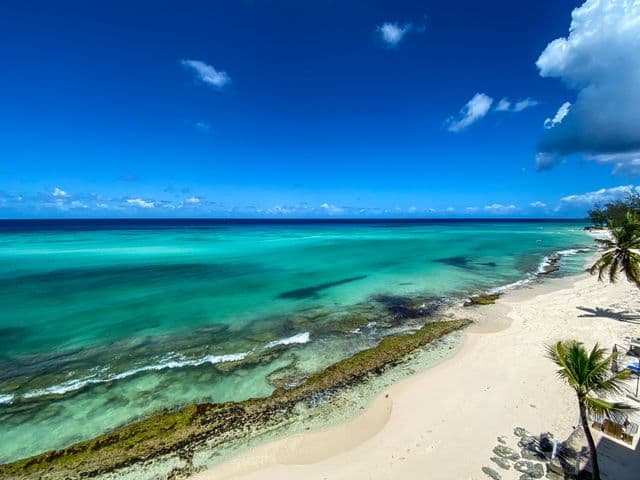
The island earns the benchmark status. English is the official language and the accent is the music, the legal system is common law, fiber runs past 100 megabits along the populated coasts, direct flights connect Bridgetown to New York, Miami, Toronto and London year-round, and the Barbadian dollar's 2-to-1 US peg makes every budget arithmetic. The west coast runs the platinum-water postcard, the south coast at St. Lawrence Gap runs the liveable middle where most stamp holders actually settle, the wild east coast at Bathsheba belongs to surfers and photographers, and Bridgetown's UNESCO garrison anchors a small capital that works. The winter charter season takes crew in the marinas and the surf and dive schools hire instructors, the two working lanes past the laptop. The honest frame: a Level 1-tier advisory register that is the Caribbean's calmest, prices that run resort-adjacent rather than backpacker, June-to-November hurricane season that the island's southerly position softens but does not erase, sargassum seasons that visit the east and south shores on their own calendar, and a cost of comfortable living, 2,800-to-3,200 dollars, that buys the region's best-run island rather than its cheapest.
Widening the search? If you are looking to expand your job hunt across Caribbean, take a look at Panama →, Costa Rica →, and Mexico →.
Cost of living
Barbados prices as the Caribbean's well-run middle-premium and the 2-to-1 peg keeps the arithmetic honest: one-bedrooms run 1,600 to 2,800 Barbadian dollars monthly (800 to 1,400 US) on the south coast where most Welcome Stamp holders settle, the west coast's platinum stretch pricing its postcard upward from there, and inland parish housing running lighter for those who trade the walk-to-beach for the budget. The long-stay market moves through local agents and the stamp community's own churn, and the winter high season tightens everything December through April.
Daily life runs island-honest: the supermarket bill stings on imports as every island's does, the fish markets, Oistins above all, price the catch fairly, the roti-and-cutter counter feeds well at 15-to-25 Barbadian dollars, Friday's Oistins Fish Fry is the national institution that doubles as the cheapest great night out, and rum, the island's gift to the world, prices at origin. The practical lines: the blue Transport Board buses and the ZR vans run the coasts at 3.50 flat, a small car rental at 1,200-to-1,800 monthly is the mid-term norm since the island rewards mobility, fiber runs 100-to-180, and the mandatory insurance line joins the budget. The comfortable single professional life assembles at 2,800 to 3,200 US, the budget floor sits near 2,000 with south-coast-apartment-and-bus discipline, and the honest Barbadian additions are the high-season housing squeeze, the car line most stays eventually adopt, and the flight economics that make the island a base rather than a hop.
- Settle the south coast for the value: St. Lawrence Gap through Worthing is where the stamp community actually lives, at 800-to-1,400 US for one-bedrooms the west coast doubles.
- Eat the island's own economy: Oistins' fish market and Friday fry, the roti-and-cutter counters and rum at origin prices are the honest tier under the resort-priced one.
- Ride the buses before renting the car: 3.50 flat on the Transport Board and ZR vans covers the coasts; the car line joins most budgets eventually, but the first month decides it.
- Book the winter housing early: December-through-April tightens the long-stay market hard, and the shoulder-season arrival with time to hunt is the classic stamp-holder move.
Cost-of-living calculator
See how your budget stretches in Barbados.
Estimates use approximate exchange rates and typical monthly costs. Your actual costs will vary.
Visas & Entry
Barbados runs the simplest serious paperwork in this index: an easy visitor tier and the visa that started the entire category. Entry first: US, UK, EU, Canadian and Australian passports enter visa-free, standard grants running to 90 days with extensions available through Immigration, onward tickets expected, and the ordinary tourist tier covering the scouting trip the Welcome Stamp deserves.
The Welcome Stamp itself, the July 2020 original: open to remote employees, freelancers, consultants and business owners whose work and clients sit outside Barbados, against 50,000 US dollars of documented annual income, employment letters, bank statements or tax returns all serving, health insurance valid on the island, and a background check. The fee runs 2,000 dollars for individuals and 3,000 for families, covering spouse and dependent children with the income bar applying to the principal applicant only, and the application runs entirely online at barbadoswelcomestamp.bb with decisions in roughly seven business days, sovereign paperwork at startup speed. The grant is twelve months, renewable indefinitely on re-application with a 25 percent fee discount, no minimum-stay requirement attached, and Cabinet has renewed the program through December 31, 2026, a commitment signal the copycat islands have not all matched. The design's masterstroke is fiscal: stamp holders are classified as non-residents for tax purposes, so foreign income owes Barbados nothing, no filing, no remittance tests, for the visa's full duration and its renewals, with the bright line being local work, a Barbadian employer or Barbadian clients forfeit the status and move the file to ordinary work-permit machinery. The longer ladders exist for those who stay: the Special Entry and Residence Permit serves the wealth-and-retiree tier, immigrant status and permanent residence follow years of continuous lawful presence, and the stamp itself is the on-ramp the island designed it to be.
- Apply online and expect an answer in a week: the portal at barbadoswelcomestamp.bb runs the entire file, seven business days is the working norm, and the speed is the program's quiet flex.
- Document the 50,000 flexibly: employment letters, bank statements or tax returns all serve, the bar applies to the principal only, and the family rides the single 3,000-dollar fee.
- Bank the non-resident tax status consciously: zero Barbados tax on foreign income with no filing is the cleanest treatment in the category; your home country's rules continue exactly as before.
- Keep the work offshore absolutely: a Barbadian employer or client forfeits the status and moves the file to work-permit machinery; the line is bright and worth respecting.
- Renew at the discount if the island fits: indefinite renewals at 25 percent off, no minimum stay, and the permanent-residence conversation after years of continuous presence.
- Scout on the visitor tier first: the 90-day entry covers the reconnaissance, the housing hunt rewards feet on the ground, and the stamp application files just as happily from a south-coast café.
| Visa or permit | What it covers |
|---|---|
| Visitor entry | Visa-free for the US, UK, EU, Canada and Australia with standard grants to 90 days, extensions through Immigration, and onward tickets expected; the scouting tier before the stamp. |
| The Welcome Stamp | The July 2020 original: twelve months for remote workers with employers and clients outside Barbados, at 2,000 dollars individual or 3,000 family, decided online in roughly seven business days. |
| The requirements | 50,000 US dollars of documented annual income for the principal applicant, employment letters, bank statements or tax returns serving, plus island-valid health insurance and a background check. |
| Family coverage | Spouse and dependent children ride the 3,000-dollar family application with no separate income bars; the three-generation family file has been accommodated in practice. |
| Renewal and commitment | Renewable indefinitely on re-application at a 25 percent fee discount, no minimum-stay requirement, and Cabinet renewal of the program through December 31, 2026 as the standing commitment signal. |
| The tax masterstroke | Stamp holders are non-residents for Barbados tax purposes: foreign income owes the island nothing, with no filing or remittance tests, for the visa's duration; home-country obligations continue untouched. |
| The bright line and the ladders | Barbadian employers or clients forfeit the status and require work permits; the SERP serves the wealth-and-retiree tier, and immigrant status follows years of continuous presence for those who stay. |
Good to know: THE ORIGINAL (Jul 2020, the visa every other island copied): $2,000 individual / $3,000 family (BBD 4,000/6,000 at the 2:1 peg; fee to Chief Immigration Officer); $50k/yr documented income (PRINCIPAL ONLY; family rides one fee: spouse + dependents, 3-generation files accommodated); insurance + background check; ONLINE at barbadoswelcomestamp.bb, ~7 BUSINESS DAYS decision; 12 months, renewable INDEFINITELY at 25% DISCOUNT; NO minimum stay; Cabinet renewed program through DEC 31 2026. TAX MASTERSTROKE: holders = NON-RESIDENTS for tax → ZERO Barbados tax on foreign income, no filing, no remittance tests (cleanest in category; home-country obligations untouched). Bright line: Barbadian employer/clients = forfeit status → work-permit machinery. SERP = wealth/retiree lane; immigrant status/PR after years continuous presence (sources cite ~5-7; confirm at Immigration). Entry: visa-free 90 days US/UK/EU/CA/AU, extensions via Immigration, onward tickets expected.
EnRoute Jobs AI tool
Route Planner
Map visa routes, timelines, and relocation costs for your next destination.
Work & Legal
Barbadian professional culture runs Caribbean warmth over British-inherited structure: the island's common-law system, its literacy rate among the world's highest and a civil-service formality that takes correctness seriously sit under a social register where the greeting comes first, always, the good-morning before the question is not optional courtesy but the actual protocol, and business built on relationships rewards the patience the pace requests. The economy's remote-relevant frame: international business services have been the island's white-collar spine for decades, which is why the professional infrastructure, banking, law, accounting, connectivity, runs deeper than the island's size suggests, and why the Welcome Stamp slotted into an economy that already understood the offshore professional.
The legal lines are the visa section's: stamp holders work only for the world outside Barbados, local employers or clients require work permits, and the non-resident tax status depends on the line holding. The operational texture is honest and good: fiber past 100 megabits along the populated coasts with the resort-and-café tier reliable, a small but real coworking scene around the south coast and Bridgetown, hurricane-season contingency habits that the island's southerly luck has rarely tested but everyone keeps, and the UTC-4 position that holds the entire US East Coast in perfect overlap year-round with London reachable across the morning. The rhythms to respect: the Friday Oistins institution empties offices into the fish fry, Crop Over's July-August festival season is the national calendar's crescendo with Kadooment Day as its costumed climax, cricket stops the island when the West Indies play at Kensington Oval, and the sea bath before work is the local habit most worth stealing. The professional who greets before asking, works the New York day from a south-coast café, and closes Fridays at Oistins has read the island correctly.
- Greet before everything: the good-morning-first protocol is the island's actual operating system, skipping it reads genuinely rude, and observing it opens every subsequent door.
- Keep the stamp's line offshore: foreign employers and clients only, with local work moving the file to permits and forfeiting the tax status; the brightness of the line is the program's integrity.
- Work the UTC-4 sweet spot: the entire US East Coast in perfect year-round overlap, London across the morning, and the sea bath before the first call as the commute the mainland cannot match.
- Close Fridays at Oistins: the fish-fry institution is where the island actually networks, the flying-fish plate is the ticket, and the habit marks the resident over the tourist.
Good to know: Caribbean warmth over British-inherited structure: common law, world-top literacy, civil-service formality; GREETING-FIRST protocol = the operating system (good-morning before the question, not optional); relationships + patience. Intl business services = decades-old white-collar spine → banking/law/accounting/connectivity deeper than island size (Welcome Stamp slotted into an economy that already understood offshore professionals). Stamp = offshore work only. Fiber 100+ Mbps populated coasts; small-real coworking south coast/Bridgetown; hurricane contingency habits kept though rarely tested; UTC-4 = ENTIRE US East Coast perfect year-round overlap + London mornings. Friday Oistins empties offices; Crop Over Jul-Aug (Kadooment climax); cricket stops the island (Kensington Oval); pre-work sea bath = the habit to steal.
Taxes
Barbadian tax is a story of two statuses, and the Welcome Stamp deliberately puts its holders in the better one: non-residents whose foreign income the island never touches.
| What applies | The rule in 2026 |
|---|---|
| The Welcome Stamp's classification | Stamp holders are non-residents for Barbados tax purposes by design: foreign income owes the island nothing, with no filing and no remittance tests, for the visa's duration and renewals; the cleanest treatment in the nomad-visa category. |
| The home-country constant | The stamp changes nothing at home: US, UK, Canadian and other obligations continue exactly as before, and the non-residence in Barbados does not manufacture non-residence anywhere else. |
| Ordinary residents and the schedule | Those who become tax residents through the day-count or the longer permits face the progressive schedule, 12.5 percent on the first band of taxable income and 28.5 above it, with Barbados-source income the anchor. |
| The no-capital-gains line | Barbados levies no capital-gains tax at all, a standing feature rather than a concession, which shapes the wealth-and-retiree tier's arithmetic alongside the SERP. |
| The local-work trigger | A Barbadian employer or Barbadian clients forfeit the stamp's status and pull the earner into the ordinary system from the first dollar; the bright line is fiscal as well as immigration law. |
| Contributions and VAT | The National Insurance Scheme takes employee contributions on a capped base for those in the local system, and VAT runs 17.5 percent on the island's prices, the consumption tax every resident pays at the till. |
| Americans specifically | A US-Barbados tax treaty stands, among the Caribbean's oldest, but no totalization agreement exists; the stamp's zero-Barbados-tax design means the US file simply continues as if at home, FEIE and credits per the ordinary rules. |
| The genuine-relocation path | Those who want Barbados as their actual tax residence need the longer permits, substantive presence and a documented severing at home: the stamp is deliberately not that tool, and the SERP-and-advisor conversation is where that project starts. |
Verified 21 August 2026: the stamp's non-resident classification with zero Barbados tax on foreign income and no filing, the 12.5-and-28.5 resident schedule, the absence of capital-gains tax, the local-work forfeiture line, NIS contributions on the capped base, VAT at 17.5, and the standing US treaty without a totalization agreement. General information, not tax advice.
Good to know: Two-status story: STAMP HOLDERS = NON-RESIDENTS by design → zero Barbados tax on foreign income, no filing, no remittance tests, for duration + renewals (cleanest in category); home-country obligations continue untouched (stamp ≠ non-residence anywhere else); ordinary residents: 12.5% first band (BBD 50k) / 28.5% above, Barbados-source anchor; NO capital-gains tax (standing feature); local work = forfeits status, ordinary system from first dollar; NIS 11.1% capped (local system); VAT 17.5%; US treaty ✓ (1984, Caribbean's oldest) totalization ✗; genuine-relocation path = SERP + substantive presence + documented severing (stamp deliberately not that tool). territorial_tax=true reflects stamp-holder reality.
Healthcare
Barbadian healthcare runs the eastern Caribbean's most capable island system with the honest ceiling every island shares: the Queen Elizabeth Hospital in Bridgetown anchors the public tier with genuine acute and emergency capability, the private tier, Bayview Hospital, the Sandy Crest and FMH urgent-care clinics, serves the visiting professional's everyday at 100-to-250 Barbadian dollars a consultation with short waits and familiar standards, and the island's medical workforce, trained through the University of the West Indies' Cave Hill campus, runs deep for a population this size. The ceiling is the honest line: complex cardiac, major trauma and rare-specialty files point to Miami or further, which is why medical-evacuation coverage is the standing rule of Caribbean living and the stamp's insurance requirement should be read as including it.
The everyday tier works well: pharmacies are capable and everywhere, the polyclinic network serves the public everyday, telehealth is ordinary, and the tap water, drawn from the island's coral-filtered aquifer, is famously safe and locals will tell you proudly. The health syllabus is tropical-honest: the sun at 13 degrees north burns on a schedule visitors underestimate, dengue makes its seasonal visits with the repellent discipline as the answer, the manchineel trees on some beaches are marked and genuinely not for shelter, sea urchins and the occasional rough-water day carry the coast's ordinary file, and hurricane-season awareness, June through November with the island's southerly position as real but incomplete protection, is the calendar's background habit. Emergencies answer at 511 for ambulance and 211 for police, response is solid across a small island, and the summary is the regional best case: capable care for nearly everything, Miami-grade evacuation cover for the rest, and a health culture that takes its sea baths seriously.
- Read the insurance line as evacuation-inclusive: the stamp requires island-valid coverage and the sensible policy adds Miami-grade medevac; the ceiling is the one line every island shares.
- Use the urgent-care tier as the first door: Sandy Crest and FMH handle the everyday at 100-to-250 Barbadian dollars with labs on-site, and the QEH holds the serious file.
- Run the tropical sun-and-dengue discipline: 13-degrees-north sun burns on schedule, the seasonal repellent habit answers the mosquito file, and the marked manchineels are genuinely not shelter.
- Keep the hurricane-season habit lightly: June through November asks the water-and-plan awareness the island's southerly luck has rarely tested; the habit costs nothing and the one year it pays, it pays entirely.
| Hospital | What to know |
|---|---|
| Queen Elizabeth Hospital, Bridgetown | The island's public anchor: genuine acute, surgical and emergency capability, the UWI teaching relationship, and the eastern Caribbean's most capable single institution. |
| Bayview Hospital | The private surgical-and-inpatient tier: shorter waits, familiar standards and the middle option between clinic care and the evacuation file. |
| Sandy Crest and FMH urgent care | The walk-in private clinics serving the visitor-and-stamp tier's everyday: consultations at 100-to-250 Barbadian dollars, imaging and labs on-site, and the practical first door. |
| The polyclinic network | The public everyday tier across the parishes: functional, free at point of use for residents, and the system's broad base under the QEH apex. |
| The evacuation reality | Complex cardiac, major trauma and rare specialties point to Miami or further: medical-evacuation coverage is the standing rule of island living and the insurance line to read carefully. |
| Emergency architecture | 511 for ambulance and 211 for police with solid small-island response; the hurricane-season contingency file runs June through November as the calendar's background habit. |
Hospital list compiled 21 August 2026 and not yet confirmed against each facility directly. Treat as indicative and verify before relying on it.
Good to know: Eastern Caribbean's most capable island system w/ honest island ceiling: QEH Bridgetown = public anchor (acute/surgical/emergency, UWI Cave Hill teaching); Bayview = private surgical/inpatient; Sandy Crest + FMH urgent care = visitor first door (BBD 100-250 consults, on-site labs); polyclinic public base; CEILING: complex cardiac/major trauma/rare specialty → MIAMI; medevac coverage = standing rule (read stamp insurance as evacuation-inclusive); coral-filtered aquifer tap water famously safe; 13°N sun schedule; seasonal dengue discipline; manchineel trees marked = not shelter; urchins/rough-water file; hurricane season Jun-Nov (southerly position = real-but-incomplete protection); 511 ambulance / 211 police.
Safety
Barbados' safety file is the Caribbean's calmest and the advisory registers agree: the lowest tiers across the board, an island whose tourism economy has spent decades making visitor safety a national competence, and a lived register where the practical file is petty opportunism, beach-bag awareness, car-park sense, the occasional overcharge, rather than anything graver. Violent crime exists as it does everywhere and concentrates away from the visitor economy; the south and west coasts run easy at all reasonable hours, solo travelers including women report the region's most comfortable register, and the island's small scale means nowhere is far from help.
The honest footnotes: beach valuables are the classic file, the unattended bag during the sea bath solved by the waterproof pouch or the buddy system; the ZR vans drive with island verve worth a seatbelt's respect; late-night walks on unlit beach stretches follow the universal rule; the drug-offer register around some nightlife exists and is declined casually; and the water file is the real one, rip currents on the east and south-east coasts claim the unprepared, the west coast's calm is genuine but the Atlantic side is a surfer's coast rather than a swimmer's, and the flagged-beach discipline plus the lifeguard's read is the entire technique. The environmental tier: hurricane season June through November with the island's southerly position softening but not erasing the file and the national alert system mature, the sargassum seasons that visit the east and south shores on their own calendar, and the manchineel-and-urchin coastal syllabus. Emergencies answer at 211 for police and 511 for ambulance, response is small-island solid, and the summary is the score's: the region's most navigable file, carried with beach-bag sense and Atlantic respect.
- Solve the beach-bag file simply: the waterproof pouch, the buddy system or the minimal-carry sea bath ends the island's most common loss; the register is opportunism, not targeting.
- Respect the Atlantic side absolutely: the east and south-east rips claim the unprepared, Bathsheba belongs to surfers who know it, and the flagged-beach-and-lifeguard discipline is the entire swimming technique.
- Run the ordinary night sense: lit routes over unlit beach stretches, taxis after the late nights, and the casual decline for the nightlife-edge offers; the universal rules cover the entire file.
- Keep the hurricane-season awareness lightly: June through November asks the alert-app-and-plan habit the southerly luck has rarely tested, and the mature national system does the heavy lifting.
- Plan around the sargassum calendar: the east and south shores take the seasonal seaweed on their own schedule, the west coast typically escapes it, and the current-conditions check beats the assumption.
- Know the split numbers: 211 for police and 511 for ambulance, small-island response solid, and nowhere on 34-by-23 kilometers far from help.
Official travel advisories
| Government | Current position |
|---|---|
| United States | The lowest advisory tier: the practical content runs petty theft and the ordinary tourist-economy register, the Caribbean's calmest file.travel.state.gov → |
| United Kingdom | No advisory against travel; the beach-valuables, water-safety and hurricane-season notes carry the substance for the island's largest visitor nationality.gov.uk → |
| Canada | Normal precautions with the petty-crime and rip-current notes, and the hurricane-season file stated in the practical register.travel.gc.ca → |
| Australia | Normal safety precautions: the water-safety and seasonal notes in the standard style for a low-register destination.smartraveller.gov.au → |
| US Embassy Bridgetown | Enroll in STEP; the mission serves the eastern Caribbean with notices running to weather events above all. Wildey Business Park, St. Michael; +1 246 227 4000.bb.usembassy.gov → |
Advisory positions verified 21 August 2026 against their standing pattern: the lowest tiers across the US, UK, Canada and Australia, the petty-opportunism register with the region's most comfortable solo file, the east-coast rip currents as the genuine hazard, the June-November hurricane season softened by the southerly position, and the sargassum calendar. Open the sources before travelling.
Good to know: Caribbean's calmest: lowest tiers across US/UK/CA/AU; decades of tourism economy = visitor safety as national competence; practical file = petty opportunism (beach-bag classic → waterproof pouch/buddy system, car-park sense, occasional overcharge); violent crime concentrates away from visitor economy; solo-female = region's most comfortable register; small scale = nowhere far from help. FOOTNOTES: ZR van verve; unlit-beach night rule; nightlife-edge drug offers declined casually; WATER = the real file (east/SE rips claim unprepared; west calm genuine; Bathsheba = surfers'; flagged-beach + lifeguard discipline); hurricane Jun-Nov (southerly softens-not-erases, mature alert system); sargassum east/south seasonal calendar; manchineel/urchin syllabus; 211 police / 511 ambulance; 82.
Climate
Barbados runs the tropical-maritime two-season year the trade winds keep civilized: the dry season December through May is the prize, 24-to-30 degrees under steady breeze, low humidity by tropical standards, the platinum west-coast water at its clearest and the social calendar at full hum; the wet season June through November runs warmer and more humid at 26-to-31 with short heavy showers that pass rather than settle, greener hills, lower prices, and the hurricane-season awareness the island's position at the region's southern edge softens but does not erase, direct hits historically rare and the mature alert system carrying the file. The constants are the island's luck: the trade winds blow nearly year-round making the east coast a windsurf-and-surf economy and the heat honest rather than oppressive, the sea holds 26-to-29 degrees every month so the swimming never closes, and the sunlight runs equatorial-generous with the sunscreen discipline as its price. The working calendar: December-to-April is peak everything, weather, prices, housing pressure, with the shoulder months of May and November as the value prizes holding dry-season weather at wet-season rates; Crop Over crowns July-August with the festival calendar; and the sargassum and shower calendars are checked rather than assumed. The kit is permanent summer plus one restaurant layer and real rain shell for the wet-season bursts, and the deepest climate fact is the trade wind itself: the breeze is the island's air conditioning, the reason verandas face east, and the difference between tropical and merely hot.
| Season | What to expect |
|---|---|
| The dry-season prize, December to May | 24-to-30 under steady trades, the clearest west-coast water, low tropical humidity and the peak calendar; the housing market tightens to match the weather. |
| The wet season, June to November | Warmer, greener and cheaper at 26-to-31 with short passing downpours; the hurricane-season awareness runs as background habit with the southerly position as real-but-incomplete shelter. |
| The shoulder value, May and November | Dry-season weather at wet-season prices: the arrival months the stamp community's veterans recommend, with the housing hunt at its easiest. |
| The constants | Trade winds as the island's air conditioning, sea at 26-to-29 every month, equatorial sun asking its discipline, and the Crop Over crescendo crowning July-August. |
Good to know: Tropical-maritime two-season: DRY Dec-May = prize (24-30, steady trades, low tropical humidity, clearest west water, peak calendar + housing squeeze); WET Jun-Nov (26-31, short passing downpours, greener, cheaper) + hurricane awareness (southern-edge position softens-not-erases, direct hits historically rare, mature alerts); shoulders May + Nov = dry weather at wet rates (veterans' arrival months); constants: trade winds = the island's A/C (verandas face east), sea 26-29 every month, equatorial sun discipline; Crop Over Jul-Aug crescendo.
Culture & Customs
Barbadian culture, Bajan to everyone who lives it, runs Caribbean warmth through British-inherited frames and comes out entirely its own: the greeting-first courtesy that structures every interaction, a churchgoing respectability that shares the calendar with rum-shop philosophy, cricket as the national theology with Kensington Oval its cathedral, and a pride, in the island's stability, its literacy, its independence and its global exports from rum to Rihanna, that visitors are warmly invited to share rather than merely observe. The rum shop deserves its own sentence: the island's 1,500-odd shops are the true parliament, dominoes slammed with authority, cricket argued with scholarship, and the visitor who sits, sips and listens is being extended the realest hospitality the island offers.
The codes worth carrying: greet first, always, the good-morning before any question; dress carries respectability, beachwear stays at the beach and church-adjacent occasions mean it; camouflage clothing is illegal for civilians, the region-wide law that catches visitors annually; the sea bath is a daily institution rather than a holiday activity; and Crop Over, the July-August festival descended from the sugar harvest, is the calendar's crescendo, fetes building to Grand Kadooment's costumed road march, which residents join rather than watch. The table is the island's pride: flying fish and cou-cou as the national dish, Oistins' Friday fry as the weekly institution, cutters (salt-bread sandwiches) and pudding-and-souse Saturdays, macaroni pie beside everything, and the rum, Mount Gay claiming the world's oldest distillery, drunk with coconut water, argued over by parish, and offered as the island's handshake. The professional who greets first, sits in the rum shop long enough to be taught dominoes, takes the daily sea bath and plays mas at one Kadooment has read the island correctly: Barbados runs on respectability and warmth in equal measure, and extends both to anyone who returns them.
- Greet first, every time: the good-morning-before-the-question protocol is the culture's spine, observed from bus stops to boardrooms, and the single habit that marks belonging.
- Sit in the rum shop properly: the island's true parliament runs on dominoes, cricket scholarship and unhurried rounds; being taught the domino slam is the acceptance ceremony.
- Leave the camouflage at home: civilian camo clothing is illegal region-wide and enforced; the law catches visitors every year and the fix costs nothing.
- Take the sea bath daily: the morning swim is a resident institution rather than a holiday activity, the west and south coasts hold it year-round, and the habit is the island's best gift.
- Play mas at Crop Over: the July-August festival builds to Grand Kadooment's road march, residents join rather than watch, and one costumed morning explains the island better than any guide.
- Eat the Friday institution: Oistins' fish fry, flying fish and cou-cou, cutters and Saturday pudding-and-souse are the honest national table, priced for residents and open to everyone.
Sponsored
Insurance built for life on the move
SafetyWing covers your health and travel wherever work takes you next.
