.png)
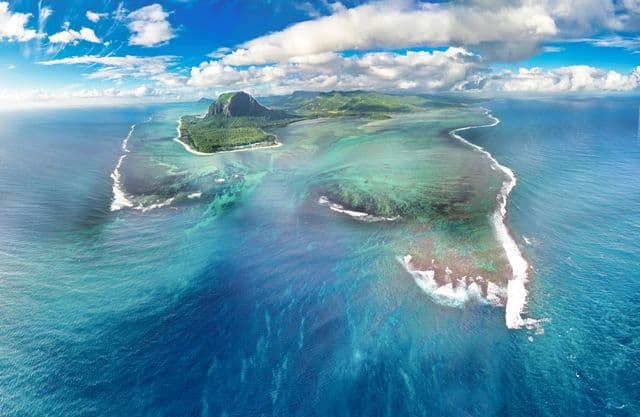
About Mauritius
Mauritius is the island that runs like a country and looks like a screensaver: the Indian Ocean's most stable democracy, an English-law, English-administration state over a French-Creole daily culture, a services economy that made it Africa's per-capita success story, and, since October 2020, one of the world's most accessible remote-work routes. The Premium Visa asks less than almost any competitor and the tax code asks, for most nomads, nothing at all.
The visa, precisely: officially the Premium Visa though everyone calls it the digital nomad visa, it grants twelve months renewable to foreign nationals whose income arises outside Mauritius, tourists with laptops, remote employees, freelancers and retirees alike. The bar is famously low: 1,500 dollars monthly of income or equivalent savings, roughly 500 more per dependent by common guidance, international health insurance, accommodation proof and a passport, with no investment requirement, no education requirement and no language test. Applications run through the online NELS platform, historically free of charge, though some 2026 guides report a statutory permit fee of roughly 1,000 dollars for the main applicant, a conflict this page resolves the honest way: confirm the current fee at the EDB's portal at filing. Approvals run from a week to several weeks, entry follows within 90 days of approval-in-principle, and the practical mechanics include an initial transfer of 1,500 dollars at issuance with monthly or annual equivalents to a local account thereafter. The bright line is standard: local employment requires switching to an Occupation Permit, and the island's longer ladders, the self-employed and investor Occupation Permits, the retired-non-citizen route, the property schemes and the newly announced Golden Visa program, serve those who stay. The kite and dive schools of Le Morne and the west coast hire instructors each season, the one sponsored lane that comes with a sea view.
The tax design is the quiet masterstroke. Under 183 days, the visitor owes Mauritius nothing on foreign income. Past 183 days, tax residence arrives, but on a remittance basis: only foreign income actually brought into a Mauritian bank account is taxable, funds kept offshore stay untouched, spending through foreign cards sits outside the net by common guidance, and the progressive schedule that applies to what is remitted tops out around 20 percent, with no capital-gains, wealth or inheritance tax anywhere in the code, the trio of absences that built the island's financial-center career. The frame around the paperwork: a Level-1-tier advisory register that is the region's calmest, fiber-wired coasts, the Grand Baie north and Flic-en-Flac-to-Tamarin west as the expat-and-nomad geography, Black River Gorges' hiking interior, a cyclone season November through April that the island's warning systems handle maturely, and costs, a comfortable month at 1,800-to-2,100 dollars, that undercut every comparable island in this index.
Widening the search? If you are looking to expand your job hunt across Indian Ocean, take a look at Seychelles →, South Africa →, and Kenya →.
Cost of living
Mauritius prices as the Indian Ocean's honest middle, resort headlines over liveable numbers: one-bedrooms run 18,000 to 35,000 rupees monthly (roughly 400 to 780 dollars) in the nomad geography, Grand Baie and Pereybere in the north, Flic en Flac and Tamarin on the west, with furnished stock the norm, the long-stay market moving through local agents and Facebook groups, and the winter months of the southern calendar discounting against the December-January peak. The interior and east run lighter for those who trade the expat strip for the local town.
Daily life splits into two economies and the savings live in choosing consciously: the local tier, dholl puri at 15-to-25 rupees being the world's best street lunch by value, the Port Louis central market's produce, Chinese-Creole gargotes and the supermarché's local lines, feeds a month for very little, while the expat tier, imported cheese, west-coast beach clubs, the wine list, prices at European levels. The practical lines: a small car at 12,000-to-18,000 rupees monthly is the near-universal choice since the bus network is cheap but slow and the island rewards mobility, fuel and insurance join it, fiber runs 1,200-to-2,000 rupees, and the required living-cost transfers to a local account are the visa's own budget line. The comfortable single professional life assembles at 1,800 to 2,100 dollars, the budget floor sits near 1,300 with local-economy discipline and a scooter, luxury villa life starts around 4,000, and the honest Mauritian additions are the car line almost every stay adopts, the cyclone-season pantry habit, and the domestic flight or ferry to Rodrigues that the calendar eventually justifies.
- Choose the economy consciously: the dholl-puri-and-market tier feeds a month for very little while the beach-club tier prices at European levels; the split is the entire budget lever.
- Base the nomad geography smartly: Grand Baie north for the scene, Tamarin-Flic en Flac west for the sunset coast, at 400-to-780 dollars for furnished one-bedrooms the resorts obscure.
- Budget the car early: the bus network is cheap but slow, the island rewards mobility, and the 12,000-to-18,000-rupee monthly car line joins nearly every stay within the first month.
- Price the visa's own mechanics: the initial 1,500-dollar transfer and the monthly living-cost remittances are the program's built-in budget lines, and the remitted amounts are the ones the tax section discusses.
Cost-of-living calculator
See how your budget stretches in Mauritius.
Estimates use approximate exchange rates and typical monthly costs. Your actual costs will vary.
Visas & Entry
Mauritius runs an easy visitor tier and one of the world's most accessible nomad routes above it. Entry first: US, UK, EU, Canadian and Australian passports enter visa-free, standard grants running to 90 days on arrival with tourist extensions available, onward tickets and accommodation proof expected, and the ordinary tier covering the scouting trip.
The Premium Visa, launched October 2020 and officially named exactly that though the world calls it the digital nomad visa: twelve months renewable for foreign nationals whose income and professional activity arise outside Mauritius, remote employees, freelancers, business owners and retirees all qualifying, with tourists intending a long stay explicitly welcome. The requirements are the category's floor: documented income of 1,500 dollars monthly or equivalent savings, common guidance adding roughly 500 per dependent, international health insurance covering the stay, accommodation evidence, and a valid passport, with no investment threshold, no education requirement and no language test. Applications run through the online NELS platform, free historically, though some 2026 guides report a statutory permit fee of roughly 1,000 dollars for the main applicant and 400 per dependent, a genuine source conflict this page carries openly: confirm the current fee schedule at the EDB portal at filing. Approvals run from as little as a week to several weeks, entry must follow within 90 days of the approval-in-principle, and issuance mechanics include an initial 1,500-dollar transfer to a local account with monthly or annual equivalents thereafter, the program's way of ensuring the living costs it was designed to attract. The bright lines: no local employment or Mauritian-source work without switching to an Occupation Permit, and school-age dependents attending in person need their own study visas. The longer ladders serve the committed: the self-employed and investor Occupation Permits at their thresholds, the retired-non-citizen route at 50-plus, the property-acquisition schemes, and the Golden Visa program the EDB announced in 2026, with the Premium Visa as the low-commitment front door the island deliberately built it to be.
- File on NELS with the stack complete: bank statements or contracts documenting the 1,500 monthly, insurance, accommodation and passport scans; the one-to-several-week approvals reward clean files.
- Confirm the fee question at the portal: free historically, with some 2026 guides reporting a statutory permit fee; the EDB's current schedule at filing is the only answer that counts.
- Respect the 90-day entry window: approval-in-principle expires if unused, the flight books after the approval rather than before, and the mechanics are forgiving to planners.
- Understand the transfers before committing: the initial 1,500 and the ongoing living-cost remittances are program mechanics, and they are also precisely the amounts the remittance-basis tax discussion concerns.
- Keep the work offshore absolutely: Mauritian employers or clients require the Occupation Permit switch, the line is bright, and the island's small professional world notices.
- Map the ladder if the island fits: Occupation Permits, the retiree route, the property schemes and the new Golden Visa give the year a conversion path the front-door visa was designed to feed.
| Visa or permit | What it covers |
|---|---|
| Visitor entry | Visa-free for the US, UK, EU, Canada and Australia to 90 days on arrival, extensions available, onward tickets and accommodation expected; the scouting tier before the Premium file. |
| The Premium Visa | The October 2020 original of the Indian Ocean: twelve months renewable for income arising outside Mauritius, open to remote workers, freelancers, retirees and long-stay visitors alike. |
| The category-floor requirements | 1,500 dollars monthly income or equivalent savings, roughly 500 more per dependent by common guidance, international insurance, accommodation proof and a passport; no investment, education or language bars. |
| The application mechanics | Online through the NELS platform, historically free though some 2026 guides report a ~1,000-dollar statutory fee worth confirming at the EDB portal; approvals in one-to-several weeks, entry within 90 days of approval-in-principle. |
| The issuance transfers | An initial 1,500-dollar transfer to a local account at issuance, with monthly or annual equivalents thereafter: the program's built-in living-cost mechanism and the tax section's remittance subject. |
| The bright lines | No Mauritian employment or local-source work without switching to an Occupation Permit, and in-person schooling for dependents requires their own study visas. |
| The longer ladders | Self-employed and investor Occupation Permits, the retired-non-citizen route at 50-plus, the property schemes, and the EDB's newly announced Golden Visa program for those who convert the year into a life. |
Good to know: DNV = TRUE: PREMIUM VISA (official name; launched OCT 2020; "digital nomad visa" colloquially): 12 months RENEWABLE (indefinitely per several sources); $1,500/mo income OR equivalent savings (+~$500/dependent under 24 per common guidance); intl insurance, accommodation proof, passport; NO investment/education/language bars (category floor); NELS platform online; FEE CONFLICT carried openly: historically FREE (globevisa/countrytaxcalc 2026 still say free) BUT visafreenomads Apr 2026 reports ~$1,000 statutory fee main applicant + $400/dependent → CONFIRM AT EDB AT FILING; approvals 7 days–6 weeks; enter within 90 DAYS of approval-in-principle; issuance mechanics: initial $1,500 transfer to local account + $1,500/mo or $18k/yr thereafter (= the remitted amounts the tax section concerns); NO local employment → Occupation Permit switch; dependents' in-person schooling = study visas. Ladders: Occupation Permits (self-employed/investor ~$50k), Retired Non-Citizen 50+, property schemes (IRS/RES ~$375k), EDB GOLDEN VISA announced Apr 2026. Entry: visa-free 90 days US/UK/EU/CA/AU.
EnRoute Jobs AI tool
Route Planner
Map visa routes, timelines, and relocation costs for your next destination.
Work & Legal
Mauritian professional culture runs the island's famous layering: English as the language of law, administration and contracts, French as the language of business conversation and media, Kreol Morisien as the language of actual life, and a professional register that blends French formality, British process and Indian-Ocean warmth into meetings that open with genuine pleasantries and close with genuine follow-through. The economy is the continent's per-capita success story and it shows in the professional depth: a financial-services sector built on the treaty network, a mature offshore-administration industry, tourism's service economy, and a small but real tech-and-BPO tier, which together mean the island understood the offshore professional long before the Premium Visa named one.
The legal lines are the visa section's: Premium Visa income arises outside Mauritius, local employment or clients require the Occupation Permit switch, and the remittance-conscious keep their banking geography deliberate. The operational texture is good and honest: fiber is widespread along the populated coasts with the Grand Baie and Tamarin café-and-coworking tier built for exactly this audience, power and connectivity run reliably outside cyclone events, and the UTC+4 position is the island's quiet superpower, Europe fully in-hours all day, the Gulf adjacent, Asia's afternoon reachable, and the US East Coast workable across the evening for the committed. The rhythms to respect: the island's calendar weaves Hindu, Catholic, Muslim and Chinese festivals into the working year, Divali and Eid and Cavadee and Chinese New Year all moving schedules, the December-January cyclone-season holidays slow everything, Sunday is family-beach day and the picnic under the filaos is the national institution, and the sega rhythm at the week's end is participation rather than performance. The professional who works the European day from a west-coast café, banks with the remittance map in mind, and joins the Sunday beach like a local has read the island correctly.
- Work the UTC+4 superpower: Europe fully in-hours all day, the Gulf adjacent and Asia's afternoon reachable, with the sunset swim as the commute; the position is the island's best professional feature.
- Keep the banking geography deliberate: the remittance-basis system makes where income lands a real decision, the required living-cost transfers are the in-scope amounts, and the advisor's fee repays itself.
- Respect the festival calendar's weave: Divali, Eid, Cavadee and Chinese New Year all move the working year, the layering is the island's identity, and joining the invitations is the integration.
- Take the Sunday beach seriously: the family picnic under the filaos is the national institution, the sega at the week's end asks participation, and both mark the resident over the visitor.
Good to know: Layered register: English = law/admin/contracts, French = business conversation/media, Kreol = actual life; French formality + British process + Indian-Ocean warmth. Africa's per-capita success story: financial services on the treaty network, offshore-administration maturity, tourism service economy, small-real tech/BPO; island understood offshore professionals pre-visa. Premium income = outside Mauritius; local work → Occupation Permit. Fiber widespread on coasts; Grand Baie/Tamarin café-coworking tier built for this audience; UTC+4 SUPERPOWER: Europe fully in-hours + Gulf adjacent + Asia afternoon + US East evening workable. Festival weave (Divali/Eid/Cavadee/CNY all move schedules); Dec-Jan cyclone-season holidays slow; Sunday = family-beach + filao picnic institution; sega = participation.
Taxes
Mauritian tax is the remittance-basis design that built an offshore center: what stays offshore stays untaxed, what arrives gets a modest schedule, and three famous absences do the rest.
| What applies | The rule in 2026 |
|---|---|
| The 183-day line | Under 183 days in the period, the visitor is a non-resident owing Mauritius nothing on foreign income; the Premium Visa's design assumes many holders stay under it deliberately. |
| The remittance basis | Even as a tax resident, foreign-source income is taxable only when remitted to a Mauritian bank account: funds kept offshore stay outside the net, and spending through foreign cards sits outside it by common guidance. |
| The schedule on what arrives | Remitted and Mauritian-source income runs the progressive schedule to roughly 20 percent at the top band, the modern replacement for the old flat 15, with the arithmetic staying modest at nomad scales. |
| The three absences | No capital-gains tax, no wealth tax, no inheritance tax: the trio that built the island's financial-center career and shapes every long-stay plan. |
| The transfers question | The visa's required living-cost transfers are, by their nature, remitted amounts: the interaction between the program's mechanics and the remittance basis is exactly where independent advice earns its fee. |
| The treaty network | One of the world's densest tax-treaty webs for a state this size, the conduit-jurisdiction inheritance: relevant to investors and structures more than salaries, and part of why the professional infrastructure runs deep. |
| Americans specifically | No US income-tax treaty and no totalization agreement: citizenship-based taxation continues untouched, the FEIE and credits do the ordinary work, self-employment tax runs unshielded, and the remittance basis is a Mauritian fact rather than an American one. |
| The home-country half | The island's generosity changes nothing at home by itself: residence, filing and social obligations continue wherever they already live, and the professional who plans the 183-day line, the banking geography and the home file together keeps all three systems simple. |
Verified 21 August 2026: the 183-day residence line with the non-resident's clean position, the remittance basis taxing foreign income only when brought into a Mauritian account, the progressive schedule to roughly 20 percent on what arrives, the absence of capital-gains, wealth and inheritance taxes, the living-cost-transfer interaction flagged for advice, the treaty network's depth, and the absence of US treaty and totalization agreements. General information, not tax advice.
Good to know: REMITTANCE-BASIS design (built the offshore center): <183 days = non-resident, zero on foreign income (visa designed for deliberate under-stayers); resident = foreign income taxable ONLY when remitted to Mauritian bank account (offshore funds untouched; foreign-card spending outside net per common guidance); schedule on remitted/local: progressive to ~20% top (modern replacement for flat 15); THREE ABSENCES: no CGT, no wealth tax, no inheritance tax; TRANSFERS QUESTION: required living-cost transfers = remitted by nature → program mechanics × remittance basis = where advice earns its fee; world's densest treaty web for its size (conduit inheritance; investors/structures more than salaries); US: NO treaty, NO totalization (FEIE/credits ordinary work, SE tax unshielded).
Healthcare
Mauritian healthcare runs a free universal public system beside a private tier that serves the visiting professional well: the public hospitals deliver universal care at no charge including to residents on permits, with the waits and variance a small-state budget implies, while the private tier, C-Care's Darné and Wellkin hospitals foremost, runs capable English-and-French care across specialties at 1,500-to-3,500 rupees a consultation, roughly 35-to-80 dollars, with imaging, surgery and international-patient coordination on-island. The honest ceiling is the island one: complex cardiac, major trauma and rare specialties point to Réunion's French system next door or to South Africa, which is why the Premium Visa's required international insurance should be read as evacuation-inclusive, the standing rule of island living.
The everyday tier works: pharmacies are capable and everywhere, telehealth is ordinary, the tap water is officially treated with most residents filtering by habit, and the mosquito file is the syllabus's real line, dengue and occasional chikungunya seasons ask the repellent-and-no-standing-water discipline the island campaigns on. The health rhythm adds the tropical sun's honesty, the lagoon's stonefish-and-urchin footwear wisdom, the cyclone-season pantry-and-plan habit November through April, and the road file the safety section owns. Emergencies answer at 114 for SAMU ambulances and 999 for police, response is small-island solid with the private hospitals running serious emergency departments, and the summary is the regional good case: capable care for nearly everything on-island, Réunion-or-Johannesburg cover for the rest, and a public system whose universality is the state's quiet pride.
- Read the required insurance as evacuation-inclusive: the island tier handles nearly everything and Réunion-or-Johannesburg covers the rest; the medevac line is the one to verify before binding.
- Use the private tier as the visitor's default: 35-to-80-dollar consultations at Wellkin and Darné buy short waits and familiar standards, and the public system's universality backstops emergencies.
- Run the mosquito discipline in season: dengue and occasional chikungunya ask the repellent-and-no-standing-water habit the island campaigns on, and the lingering fever sees a clinic promptly.
- Keep the lagoon footwear wisdom: stonefish and urchins make reef shoes genuine equipment, the cyclone-season pantry habit runs November through April, and the tropical sun burns on schedule.
| Hospital | What to know |
|---|---|
| C-Care Wellkin Hospital | The private flagship at Moka: full-spectrum depth, English-and-French coordination, and the international-patient tier the island's professional class uses. |
| C-Care Clinique Darné | The historic private anchor at Floréal: capable across specialties with the surgical and imaging depth that keeps most files on-island. |
| The public hospital network | Free universal care through the regional hospitals, Dr. Jeetoo in Port Louis foremost: the state's quiet pride, with the waits and variance a small budget implies. |
| The clinic and pharmacy tier | Private clinics and capable pharmacies across the populated coasts, consultations at 1,500-to-3,500 rupees, and telehealth as ordinary infrastructure. |
| The evacuation reality | Complex cardiac, major trauma and rare specialties point to Réunion's French system or South Africa: the required insurance reads evacuation-inclusive as the island rule. |
| Emergency architecture | 114 reaches SAMU with solid small-island response, 999 the police, and the private emergency departments carry the serious walk-in file. |
Hospital list compiled 21 August 2026 and not yet confirmed against each facility directly. Treat as indicative and verify before relying on it.
Good to know: Free universal public (incl. permit holders; waits/variance of small-state budget; Dr. Jeetoo Port Louis anchor) + capable private tier: C-Care WELLKIN (Moka flagship) + Clinique DARNÉ (Floréal historic); consults ₨1,500-3,500 ≈ $35-80, English+French, imaging/surgery on-island; CEILING: complex cardiac/major trauma/rare → RÉUNION (French system) or SOUTH AFRICA → read required insurance as EVACUATION-INCLUSIVE; pharmacies capable; tap treated, residents filter by habit; MOSQUITO = real syllabus line (dengue + occasional chikungunya seasons, campaign discipline); stonefish/urchin reef-shoe wisdom; cyclone pantry Nov-Apr; 114 SAMU / 999 police.
Safety
Mauritius' safety file is the Indian Ocean's calmest and among Africa's best by every ranking the continent runs: the advisory registers sit at the lowest tiers, the island's democracy and institutions lead the continental indices, and the lived register is one where the practical file is petty opportunism, beach-bag sense, car-window awareness in tourist car parks, occasional pickpocketing in Port Louis' market crush, rather than anything graver. Violent crime toward visitors is rare, the north's and west's expat geographies run easy at all reasonable hours, and solo travelers including women report one of the region's most comfortable registers with the ordinary night sense sufficing.
The honest footnotes: late-night walks on unlit beach stretches follow the universal rule, with the tourist-zone belts, Grand Baie's nightlife edges among them, carrying the standard drink-and-valuables awareness; the road file is the island's genuine daily risk, narrow roads, confident overtaking, scooters and dogs and pedestrians sharing unlit stretches, with the defensive register and the declined night drive as the answer; the lagoon file runs real, currents at the reef passes claim the unprepared, the flagged-zone discipline applies, and the stonefish makes reef footwear equipment; and the cyclone season, November through April, is the environmental register's main entry, the island's class-system warnings mature and universally respected, the pantry-and-plan habit ordinary, and the direct-hit years rare but remembered. Emergencies answer at 999 for police and 114 for ambulance, response is small-island solid, and the summary is the score's: a stable, warm, institutionally boring island in the best sense, navigated with beach sense, road respect and cyclone-season habits.
- Run the ordinary island sense: beach-bag awareness, car windows empty in tourist car parks, Port Louis market crush pocket-sense, and the register stays theoretical.
- Treat the road as the real risk: narrow lanes, confident overtaking and unlit shared stretches ask the defensive register, and the night drive across the island is the one to decline.
- Swim the lagoon with its wisdom: reef-pass currents claim the unprepared, the flagged zones and local read apply, and reef footwear answers the stonefish file.
- Respect the cyclone classes absolutely: the November-April season's class-system warnings are mature and universally obeyed, the pantry-and-plan habit is ordinary residency, and a Class 3 day is a work-from-home day without debate.
- Keep the nightlife file standard: Grand Baie's edges carry the ordinary drink-and-valuables awareness, lit routes serve the late walks, and the universal rules cover the entire register.
- Know the numbers: 999 for police, 114 for SAMU ambulances, small-island response solid, and the mature warning systems doing the heavy lifting the one week a year they must.
Official travel advisories
| Government | Current position |
|---|---|
| United States | The lowest advisory tier: the practical content runs petty theft and ordinary precautions, among the calmest registers the department publishes for the region.travel.state.gov → |
| United Kingdom | No advisory against travel; the beach-valuables, water-safety and cyclone-season notes carry the substance for a large visitor nationality.gov.uk → |
| Canada | Normal precautions with the petty-crime and road-safety notes, and the cyclone calendar stated in the practical register.travel.gc.ca → |
| Australia | Normal safety precautions: the lagoon-current and cyclone-season files noted plainly in the standard style.smartraveller.gov.au → |
| US Embassy Port Louis | Enroll in STEP; the mission's notices run to weather events above all, with the cyclone advisories as the operational feed. 4th Floor, Rogers House, Port Louis; +230 202 4400.mu.usembassy.gov → |
Advisory positions verified 21 August 2026 against their standing pattern: the lowest tiers across the US, UK, Canada and Australia, the continental-index-leading stability, the petty-opportunism register with the region's most comfortable solo file, the road as the genuine daily risk, the lagoon's reef-pass currents, and the mature November-April cyclone machinery. Open the sources before travelling.
Good to know: Indian Ocean's calmest + Africa's best by every index: lowest tiers US/UK/CA/AU; democracy/institutions lead continental rankings; practical = petty (beach-bag, car-window in tourist parks, Port Louis market-crush pockets); violent toward visitors rare; solo-female = region's most comfortable register. FOOTNOTES: unlit-beach night rule + Grand Baie nightlife-edge standards; ROAD = genuine daily risk (narrow, confident overtaking, scooters/dogs/pedestrians on unlit shared stretches → defensive register, decline night cross-island); LAGOON real (reef-pass currents claim unprepared, flagged zones, stonefish → reef footwear); CYCLONE Nov-Apr = main environmental entry (class-system warnings mature + universally obeyed, pantry-and-plan ordinary, Class 3 = WFH without debate, direct-hit years rare-but-remembered); 999 police / 114 SAMU; 82.
Climate
Mauritius runs the southern tropics' two-season year with the island's microclimates as the fine print: summer, November through April, is hot and humid at 25-to-33 degrees, the lagoon at bath temperature, the green season's afternoon build-ups, and the cyclone file as its honest companion, the warning classes mature and the direct hits rare; winter, May through October, runs the trade-wind prize, 17-to-25 degrees, dry bright days, cooler nights that occasionally want a layer, and the southeast trades that make the south and east coasts breezy while the sheltered north and west hold the calm. The microclimates matter daily: the central plateau runs several degrees cooler and wetter than the coasts year-round, the west from Flic en Flac to Tamarin is the driest, sunniest strip and the sunset coast for a reason, the east takes the trades head-on, and the north around Grand Baie splits the difference with the expat scene attached. The working calendar: April-to-June and September-to-November are the prizes, summer's warmth without its humidity peaks or winter's wind, the lagoon clear and the rates shoulder-soft; July-August is the kitesurf economy's season at Le Morne; and the deep summer asks the cyclone-app habit and rewards with the mango-and-litchi abundance the island plans its December around. The kit is permanent summer plus one plateau-evening layer and a real rain shell for the green season, and the deepest climate fact is the microclimate map itself: on 45 kilometers of island, the weather is a choice of coast.
| Season | What to expect |
|---|---|
| The prizes, April-June and September-November | Summer's warmth without its humidity, winter's clarity without its wind: the lagoon at its clearest, the rates shoulder-soft, and the working weather at its island best. |
| Summer, November to April | Hot-humid at 25-to-33 with the green season's afternoon build-ups, the lagoon at bath temperature, the mango-and-litchi abundance, and the cyclone-class app habit as the honest companion. |
| Winter, May to October | The trade-wind season at 17-to-25: dry bright days, plateau evenings wanting a layer, the southeast trades feeding Le Morne's kitesurf economy, and the sheltered west holding the calm. |
| The microclimate map | The plateau cooler and wetter year-round, the west the driest sunset coast, the east taking the trades head-on, and the north splitting the difference: on 45 kilometers, weather is a choice of coast. |
Good to know: Southern-tropics two-season: SUMMER Nov-Apr = hot-humid 25-33, lagoon bath-warm, green-season build-ups, CYCLONE file (mature classes, rare direct hits), mango-litchi Dec abundance; WINTER May-Oct = trade-wind prize 17-25, dry-bright, plateau evenings want a layer, SE trades → Le Morne kitesurf economy (Jul-Aug), sheltered N/W calm; MICROCLIMATES = daily fine print: plateau cooler+wetter, WEST = driest sunset coast (Flic en Flac-Tamarin), east takes trades head-on, north (Grand Baie) splits difference + expat scene; prizes = Apr-Jun + Sep-Nov; on 45 km, weather = choice of coast.
Culture & Customs
Mauritian culture is the successful experiment its history accidentally ran: a population assembled from India, Africa, China, France and Britain with no indigenous predecessor, which built, instead of a melting pot, a woven calendar where Divali's lamps, Eid's tables, Cavadee's piercing devotions, Chinese New Year's dragons and Père Laval's pilgrimage all belong to everyone, and the national reflex is invitation: the visitor is fed first and questioned later, in Kreol, French or English as the moment requires. The sega is the culture's heartbeat, the ravanne drum, the swaying feet-planted dance descended from the enslaved ancestors' beach gatherings, and the Friday-evening beach sega is participation rather than performance, joined badly and warmly like everything on the island.
The codes worth carrying: greetings run French-warm, the bonjour before business as in the Francophone world, shoes off at homes and temples, modest cover at religious sites of every tradition, the right hand for giving in the Indian-heritage contexts, and the rum, the island's agricultural pride, toasted rather than rushed. The calendar is the culture: Divali turns the island into lamps, Cavadee's Thaipoosam devotions stop traffic with respect, the Ganesh processions enter the sea, Chinese New Year firecrackers claim Port Louis' Chinatown, and the pilgrimage to Père Laval's shrine draws every community at once, the weave being the point. The table is the weave made edible: dholl puri as the national street lunch and possibly the world's best food-per-rupee, the Creole rougaille and vindaye, Sino-Mauritian mine frites and bol renversé, the biryani tradition, gateaux piments at every corner, the fruit calendar's litchi-and-mango December, and the rum arrangé infusions every family versions. The professional who learns the bonjour rhythm, joins one beach sega, eats dholl puri standing up like everyone and shows up for whichever festival comes next has read the island correctly: Mauritius' identity is the weave itself, and the invitation to join it is permanent.
- Lead with the bonjour: the Francophone greeting-before-business rhythm structures every interaction, the Kreol bonzour lands even warmer, and the courtesy opens the island.
- Join the beach sega badly: the Friday-evening ravanne circles ask participation rather than performance, the feet-planted sway forgives all skill, and the joining is the acceptance.
- Show up for the entire calendar: Divali's lamps, Eid's tables, Cavadee's devotions and Chinese New Year's firecrackers belong to everyone by national reflex, and the invitation is genuine.
- Eat the dholl puri standing up: the national street lunch at pocket change is possibly the world's best food-per-rupee, the corner gateaux piments are the snack canon, and the litchi December is planned around.
- Carry the multi-tradition courtesies: shoes off at homes and temples, modest cover at religious sites of every faith, the right hand in Indian-heritage contexts, and the rum toasted rather than rushed.
- Respect the weave's history: the sega's enslaved-ancestor origins, the indenture memorial at Aapravasi Ghat and Le Morne's maroon mountain are the island's gravity; visiting them with weight is the reading.
Sponsored
Learn the language before you land
Babbel makes it easy to pick up the basics before you move to Mauritius.
Sponsored
Insurance built for life on the move
SafetyWing covers your health and travel wherever work takes you next.
